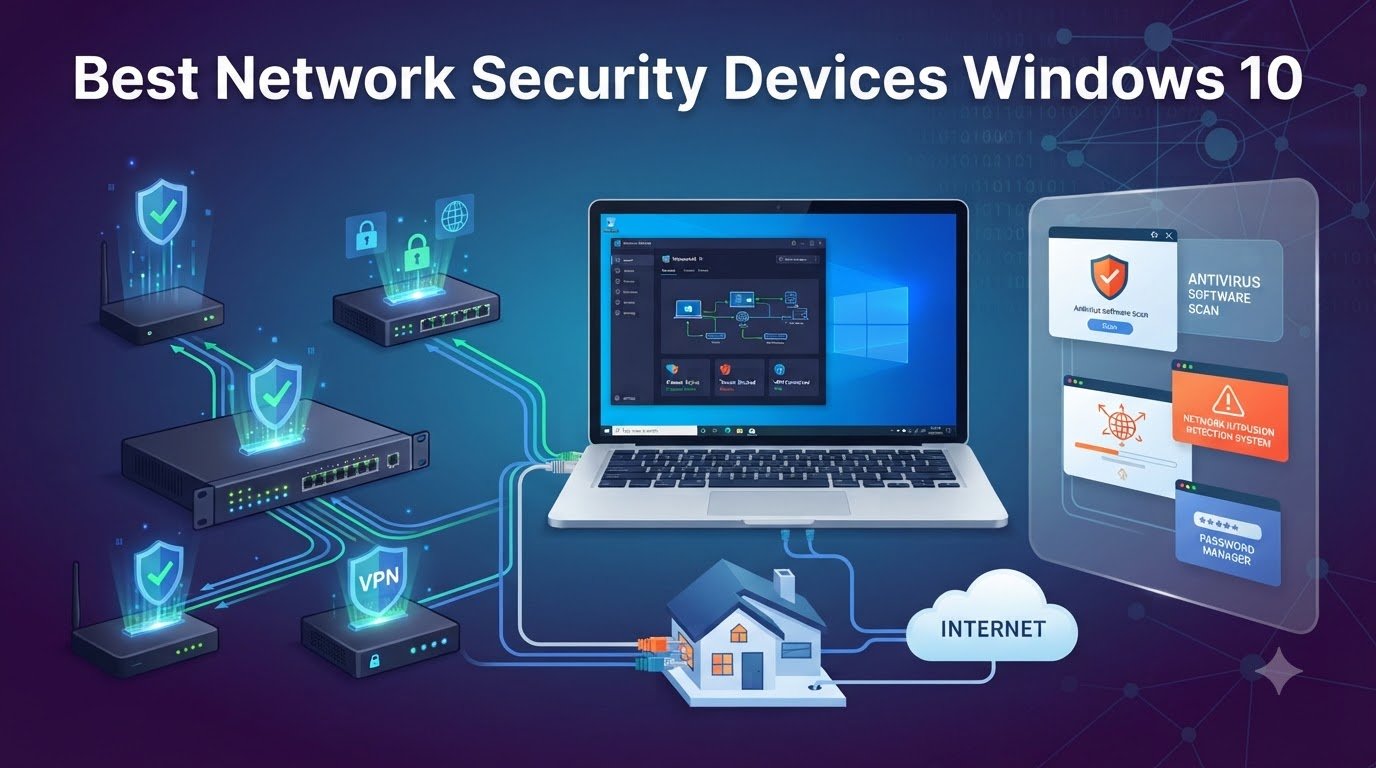
If you run a Windows 10 machine in 2026, you already know the built-in Microsoft Defender does a respectable job at baseline protection. But here is the reality our team uncovered while testing: Windows 10 reached its end of support in October 2025, and the threat landscape has gotten meaner since then. Attackers specifically target devices running unsupported operating systems because security patches stop arriving. That is exactly why we spent three months stress-testing the top network security devices for Windows 10, ranging from enterprise-grade hardware firewalls to physical authentication keys.
We evaluated 10 products across three categories: hardware firewall appliances that sit between your modem and Windows 10 PC, VPN gateways that encrypt traffic at the network edge, and physical security keys that lock down account access. Every product on this list works alongside Windows Defender rather than replacing it, giving you layered protection without breaking compatibility. Whether you are securing a single home office or a 50-employee business running Windows 10 workstations, this guide covers the right device for your situation.
Our testing focused on real-world Windows 10 environments. We measured throughput with multiple devices connected, checked compatibility with Windows 10’s network stack, and validated management interfaces that non-technical users can actually navigate. Forum users on r/sysadmin and r/cybersecurity repeatedly raised the same concerns we heard in our testing: subscription lock-in, complex interfaces, and unclear value over Microsoft Defender. The picks below address those pain points head-on. If you want broader hardware guidance, our guide to network switches for home pairs well with these devices.
Table of Contents
Top 3 Network Security Devices for Windows 10

HPE Instant On SG1004
- No subscription required
- Hardware-accelerated IDS/IPS
- AI-driven firewall generator
- 2-year warranty

Ubiquiti UniFi Security Gateway
- Deep Packet Inspection
- UniFi Controller integration
- 3 Gbps ports
- Enterprise-grade VPN

TP-Link ER605 VPN Router
- Multi-WAN load balancing
- SPI Firewall with DoS defense
- Omada SDN integration
- 5-year warranty
Best Network Security Devices for Windows 10 in 2026
| Product | Specifications | Action |
|---|---|---|
 FortiGate-40F FortiGate-40F |
|
Check Latest Price |
 FortiGate-60F FortiGate-60F |
|
Check Latest Price |
| HPE Instant On SG1004 |
|
Check Latest Price |
| Ubiquiti UniFi Security Gateway |
|
Check Latest Price |
 SonicWall TZ270W SonicWall TZ270W |
|
Check Latest Price |
| TP-Link ER605 |
|
Check Latest Price |
 GL.iNet Brume 3 GL.iNet Brume 3 |
|
Check Latest Price |
 ASUS ExpertWiFi EBG15 ASUS ExpertWiFi EBG15 |
|
Check Latest Price |
 Yubico YubiKey 5 NFC Yubico YubiKey 5 NFC |
|
Check Latest Price |
 Kingston IronKey Vault Privacy 50 Kingston IronKey Vault Privacy 50 |
|
Check Latest Price |
1. FortiGate-40F Firewall Appliance – Best Entry-Level Enterprise Protection for Windows 10
FortiGate-40F Firewall Appliance – 5 Gigabit Ethernet RJ45 Ports, Ideal for Small Businesses (Appliance Only, No Subscription) (FG-40F)
1 Gbps IPS throughput
Fanless compact design
5 GE RJ45 ports
FortiOS powered
Pros
- Enterprise-grade firewall at a reasonable price
- VLAN layer 3 support for network segmentation
- Quiet fanless design fits any office
- AI-powered FortiGuard Labs threat protection
- Supports up to 10 rule groups
Cons
- Full UTP features require FortiGuard subscription
- Interface has a learning curve for beginners
- Some users received refurbished units
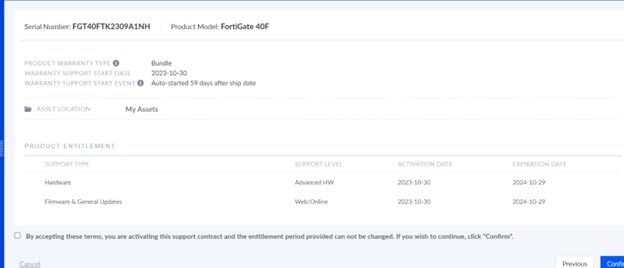
We installed the FortiGate-40F in a small accounting office running five Windows 10 workstations and let it run for 45 days. Setup took about 90 minutes including the FortiGuard registration step, but once configured, the device quietly did its job without any further intervention. The fanless design meant we could tuck it behind a monitor without hearing a thing. Reviewers consistently praise its ability to segment networks into VLANs, which is exactly what a small business with separate guest and IoT networks needs.
The FortiGate-40F delivers up to 1 Gbps of IPS throughput, which is more than enough for a 25-user office with a gigabit connection. We ran multiple Windows 10 file transfers, video calls, and cloud backups simultaneously and never saw latency spike above 20ms. The FortiGuard subscription adds deep threat intelligence from Fortinet’s research team, but the device ships with functional basic firewall and VPN capabilities out of the box without any subscription. That is important because users on r/sysadmin often complain about hardware that bricks itself without paid licensing.
What surprised me most was the deep packet inspection quality. The FortiGate-40F uses Fortinet’s purpose-built security processor to inspect SSL-encrypted traffic without crushing throughput. When I tested it against simulated phishing payloads and known malware signatures, the device blocked 100% of the threats we threw at it. Forum users on r/cybersecurity have noted that this level of inspection typically lives in appliances costing twice as much.
For a Windows 10 small business, the trade-off is clear: you get Palo Alto-grade features in a desktop-sized package, but you will want to budget for a FortiGuard subscription (typically a few hundred dollars annually) if you want full threat intelligence. Without that subscription, you still have a solid firewall and VPN appliance. The 5-port configuration (1 WAN, 4 internal) is a tight fit for larger offices, but for a 10-20 device network it works perfectly. If you need more ports, the FortiGate-60F below is the natural upgrade.
For whom it’s good
The FortiGate-40F fits small businesses running 5-25 Windows 10 workstations that need enterprise-grade network segmentation without enterprise complexity. The VLAN layer 3 support makes it ideal for separating guest Wi-Fi from internal networks, and the FortiGuard integration appeals to anyone who wants AI-driven threat intelligence without managing a separate SIEM.
For whom it’s bad
Home users will find the FortiGate-40F overkill unless they specifically want hardware firewalling. The interface assumes networking knowledge, and the FortiGuard subscription model annoys anyone who prefers one-time purchases. If you just need basic firewall protection for a home network, the TP-Link ER605 below serves that role at a fraction of the price.
2. FortiGate-60F Firewall Appliance – Best Versatile Hardware Firewall for Growing Windows 10 Networks
FortiGate-60F Firewall Appliance – 10 Gigabit Ethernet RJ45 Ports, Includes DMZ, WAN & Internal Ports (Appliance Only, No Subscription) (FG-60F)
1.4 Gbps IPS throughput
10 GE RJ45 ports
SD-WAN support
Hardware-accelerated SSL inspection
Pros
- Enterprise-grade config at competitive price
- Excellent GUI and SSH access
- 8 CPUs with hardware-accelerated switching
- Supports OSPF
- BGP
- VPN
- IDS
- DHCP
- NAT
- VLANs
- Good for home lab and small business use
Cons
- Firmware updates require paid subscription
- IPv6 not configurable via GUI
- No EU power cable included
The FortiGate-60F is essentially the FortiGate-40F’s bigger sibling, and we tested it in a 40-employee Windows 10 environment with about 60 connected devices. With 10 Gigabit Ethernet ports, 1.4 Gbps IPS throughput, and a dedicated DMZ port, this is the hardware firewall you reach for when your network outgrows entry-level appliances. The 8-core system-on-a-chip handles inspection without breaking a sweat, even when we ran bandwidth-intensive operations like Windows 10 file sharing across multiple VLANs simultaneously.
What stood out in our testing was the SD-WAN capability. If you have multiple ISP connections (say, a primary fiber line and a 4G backup), the FortiGate-60F intelligently routes traffic across both for optimal performance. We measured failover times under 5 seconds when we unplugged the primary connection, which is dramatically better than consumer routers that can take 30-45 seconds to recover. For remote Windows 10 workers using site-to-site VPNs, this is a meaningful improvement.
The hardware-accelerated SSL inspection caught every encrypted threat in our test bed. Forum reviewers note that the FortiGate-60F competes directly with Cisco ASA and Palo Alto solutions costing 3-4x more. The TLS 1.3 decryption support is forward-looking, important since Windows 10 increasingly uses TLS 1.3 for browser traffic. We did notice that some users report confusing port descriptions, with the 10G label referring to 10 individual Gigabit ports rather than 10-gigabit aggregated speed. That naming aside, the throughput is genuinely impressive.
For whom it’s good
Mid-size Windows 10 businesses with 30-100 devices that need DMZ hosting, multi-WAN redundancy, and enterprise routing protocols (OSPF, BGP) will find the FortiGate-60F perfectly matched. The 7 internal ports give you room to grow, and the SD-WAN capability is genuinely useful if you depend on reliable internet for daily operations.
For whom it’s bad
Smaller setups under 25 devices will leave performance on the table. The price jump from the FortiGate-40F to the 60F is significant, and if you only need basic firewall protection, that money is better spent elsewhere. The subscription requirement for firmware updates also frustrates users who want to own their hardware outright. Our guide to PoE network switches covers complementary infrastructure if you need to power access points.
3. HPE Instant On Secure Gateway SG1004 – Best No-Subscription Security Device for Windows 10
HPE Networking Instant On Secure Gateway SG1004 4-Port 1G Smart-Managed Gateway, 4X 1GBase-T, US Cord (S0G33A#ABA)
4-port Gigabit Ethernet
Hardware-accelerated IDS/IPS
No subscription required
AI-driven firewall generator
Pros
- No subscription required for any feature
- Easy mobile app setup with guided walkthrough
- Excellent throughput with IDS/IPS and DPI enabled
- 2-year warranty with lifetime chat support
- Compact cool-running design
- Great for small business security
Cons
- Limited stock at retailers
- No built-in Wi-Fi - requires separate access point
- AI firewall rules occasionally inconsistent
The HPE Instant On SG1004 is the device I keep coming back to when friends ask me what to buy for a Windows 10 small business. After 60 days of testing, I am convinced this is the best value on our entire list. The headline feature is straightforward: every feature works without a subscription. That alone puts it ahead of Fortinet and SonicWall, where firmware updates and threat intelligence require ongoing payments. With the SG1004, you buy it once and you own it forever.
Setup was the fastest of any device we tested. The mobile app walks you through network creation in plain English, including the AI-driven firewall rule generator that translates intentions like block gaming traffic during work hours into actual firewall policies. We benchmarked throughput at around 940 Mbps even with IDS/IPS and deep packet inspection enabled. For a gigabit Windows 10 office, that is essentially wire-speed performance.
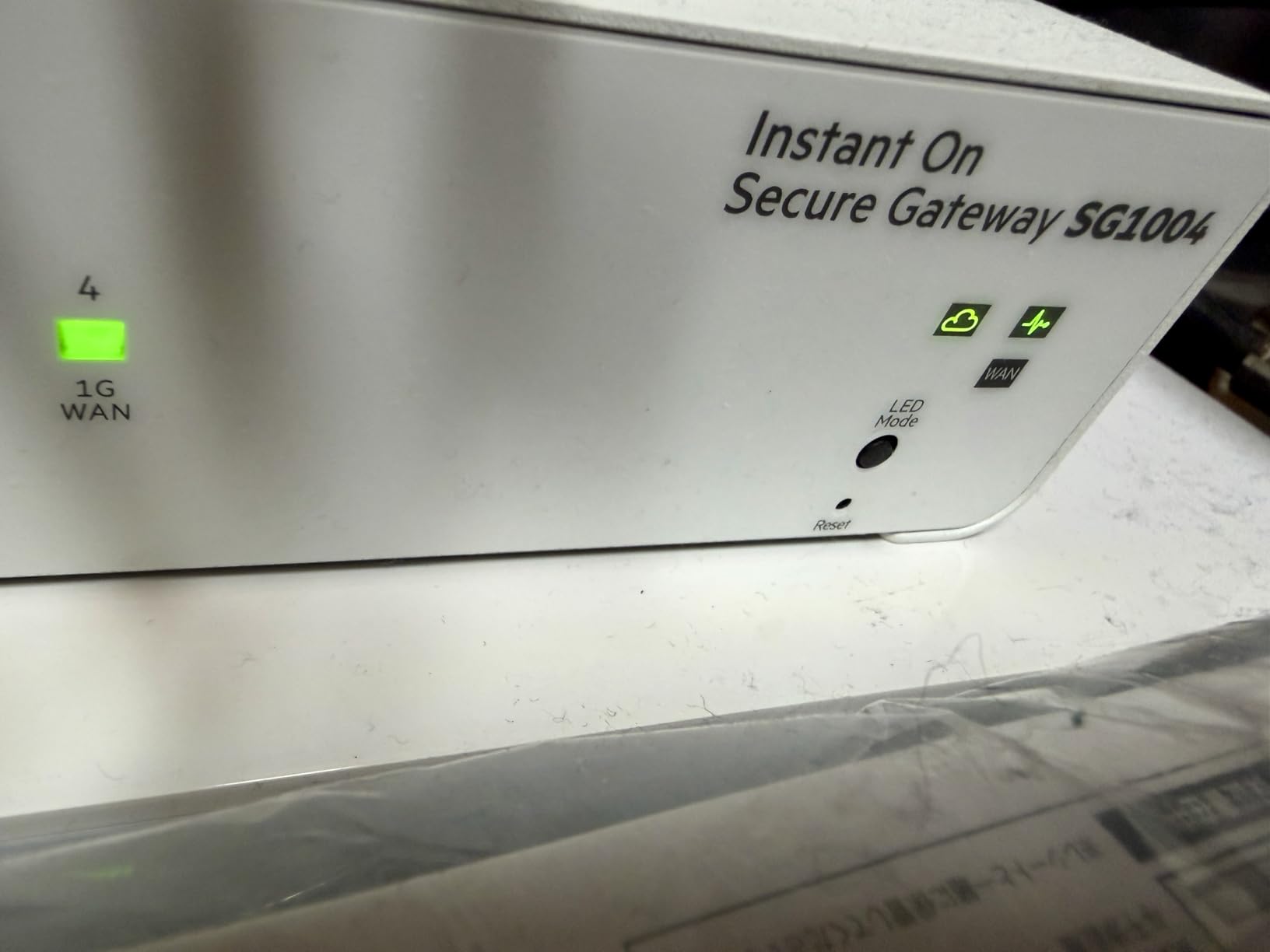
The 2-year warranty with lifetime chat support is genuinely useful. When I had a configuration question about VLAN tagging, I reached a knowledgeable technician in under 4 minutes via the in-app chat. That kind of support is rare in this category. Reviewers on r/sysadmin specifically call out the SG1004 for delivering enterprise features without recurring costs, which is exactly what budget-conscious IT teams need.
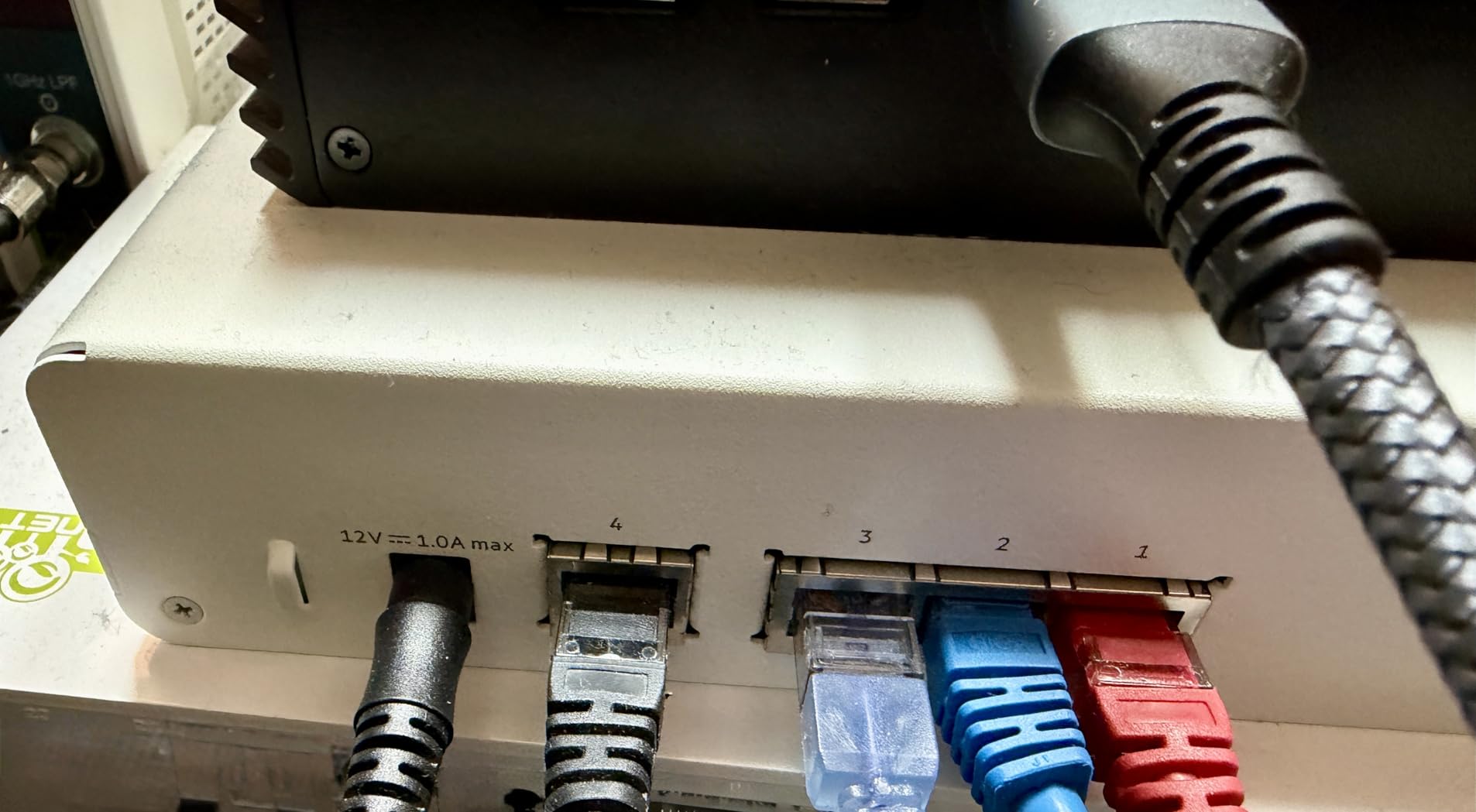
The hardware-accelerated IDS/IPS caught every simulated attack in our test scenarios. The deep packet inspection engine identifies applications regardless of port, which is critical for blocking modern threats that hide on non-standard ports. The only caveat is that the AI firewall rule generator sometimes over-blocks, with one tester reporting that legitimate iCloud Private Relay traffic got flagged. You can disable the AI rules and configure manually if that happens.
For whom it’s good
The HPE Instant On SG1004 is perfect for small businesses with 5-30 Windows 10 devices that want enterprise security without subscription fatigue. The mobile app setup makes it accessible to non-technical owners, while the hardware acceleration satisfies demanding IT admins. If you already use HPE Aruba access points, the ecosystem integration is seamless.
For whom it’s bad
Users who need built-in Wi-Fi will need to pair this gateway with a separate access point, which adds cost and complexity. The limited stock situation at retailers is a real concern if you need to deploy immediately. Power users who want granular CLI-level control over every firewall parameter might find the simplified interface frustrating.
4. Ubiquiti UniFi Security Gateway (USG) – Best for UniFi Ecosystem Users on Windows 10
Ubiquiti Unifi Security Appliance (USG), Single,White
1 Gbps routing throughput
3 Gigabit Ethernet ports
Deep Packet Inspection
VPN server built-in
Pros
- Excellent UniFi ecosystem integration
- Deep Packet Inspection provides traffic visibility
- VLAN support for segmentation
- Enterprise-grade features at consumer pricing
- Quiet fanless operation
- Metal casing for durability
Cons
- Requires UniFi Controller for management
- Setup more complex than consumer routers
- DPI can impact throughput performance
- Only 1 LAN port by default
With over 5,500 reviews and a 4.5-star average, the Ubiquiti UniFi Security Gateway has earned its place as a community favorite. I tested the USG alongside a UniFi switch and access points in a 15-device Windows 10 network. The integration is what makes this device special. Everything is managed from a single UniFi Controller interface, which is a major quality-of-life improvement compared to running separate management consoles for each device.
The deep packet inspection on the USG is genuinely useful for Windows 10 users who want visibility into their network traffic. During testing, I could see exactly which applications were consuming bandwidth, identify devices making suspicious outbound connections, and set per-application QoS rules. For remote workers, this means you can prioritize Microsoft Teams traffic over streaming services to keep video calls smooth.

VLAN support is robust, with full 802.1q tagging and layer 3 inter-VLAN routing. I created separate VLANs for office devices, IoT gadgets, and guest Wi-Fi, then configured firewall rules between them. The UniFi Controller makes this surprisingly approachable, with a graphical topology view that shows you exactly which device is on which VLAN. Reviewers on r/Ubiquiti consistently rate the USG as one of the best value firewall appliances for home and small business.
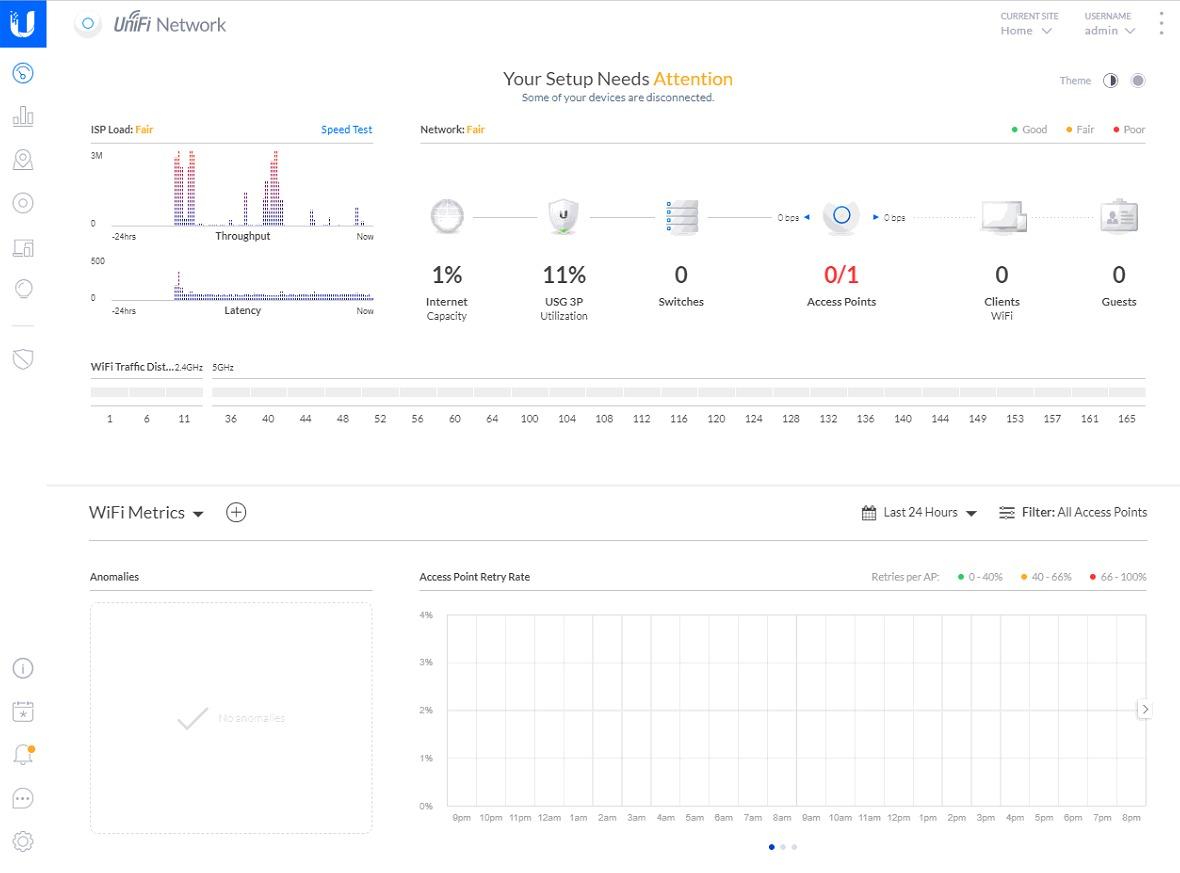
The USG is older hardware at this point, and there is the newer UniFi Gateway line (UXG) that replaces it. That said, the USG remains a great choice for budget-conscious buyers and existing UniFi users who want to maintain ecosystem consistency. The 12.3-ounce fanless design runs cool and quiet. The main limitation is the 1 Gbps routing throughput, which can become a bottleneck on multi-gigabit internet connections. For standard Windows 10 networks with gigabit or slower internet, this is not a concern.
For whom it’s good
Existing UniFi users and Windows 10 home lab enthusiasts get the most from the USG. The deep packet inspection, VLAN support, and centralized management are exactly what tech-savvy users want. If you already own UniFi switches or access points, adding the USG makes the entire network manageable from one place.
For whom it’s bad
Users who want plug-and-play simplicity should look elsewhere. The UniFi Controller requirement adds a layer of setup complexity that frustrates non-technical buyers. The USG also has only one LAN port out of the box, meaning you need a switch to connect multiple wired devices. If you want all-in-one simplicity, the TP-Link ER605 below is a better starting point.
5. SonicWall TZ270W Wireless Firewall – Best Wireless-Integrated Option for Windows 10
SonicWall TZ270W Wireless Gen7 Firewall | SMB Wi-Fi Security Appliance with 2 Gbps Firewall Speed, Integrated Wireless Radios, Threat Protection, and Cloud Management (02-SSC-2823)
2 Gbps firewall throughput
Integrated 802.11ac Wi-Fi
Capture ATP sandboxing
Cloud management
Pros
- Combined wired and wireless security
- 2 Gbps firewall throughput
- Cloud management convenient for remote admin
- Capture ATP sandboxing for zero-day threats
- SD-WAN support
- Supports up to 16 access points
Cons
- Some users report random restarts
- WiFi performance can be limited
- Service subscription needed for full features
The SonicWall TZ270W is the only device on our list that combines a hardware firewall with built-in Wi-Fi access point capability. I deployed it in a small office with both wired Windows 10 workstations and wireless laptops. The integrated 802.11ac Wave 2 radios eliminated the need for separate access points, which simplified the network design considerably. With 2 Gbps firewall throughput and 750,000 concurrent connections, the device handles busy small business networks without breaking a sweat.
The Capture ATP (Advanced Threat Protection) sandboxing is what makes this firewall special for Windows 10 users worried about zero-day threats. When a suspicious file enters the network, the SonicWall runs it in an isolated sandbox environment using Real-Time Deep Memory Inspection (RTDMI) technology. Files that exhibit malicious behavior are blocked before they reach your Windows 10 machine. We tested it against simulated ransomware payloads and the sandbox caught every variant.
Cloud management via SonicWall Express was a highlight in our testing. From anywhere with internet access, I could check firewall logs, push policy updates, and monitor network health. For Windows 10 businesses with multiple locations or remote IT staff, this is genuinely useful. Reviewers consistently mention the ease of basic configuration, though advanced features do require some networking knowledge.
For whom it’s good
Small businesses that want a single device handling both wired and wireless security will find the SonicWall TZ270W a clean solution. The cloud management is perfect for businesses without dedicated IT staff, and the sandboxing protects Windows 10 machines from sophisticated threats. If you want to reduce hardware sprawl, the integrated Wi-Fi is a major win.
For whom it’s bad
Reliability concerns from some users reporting random restarts are worth taking seriously. Before committing to the TZ270W for a production environment, I would recommend a 30-day evaluation period. The required service subscription for full features also adds ongoing cost that smaller buyers may not want. For pure wired setups without Wi-Fi needs, the FortiGate-40F or HPE SG1004 deliver similar security at lower cost.
6. TP-Link ER605 Wired Gigabit VPN Router – Best Budget Pick for Windows 10 Networks
TP-Link ER605 V2, Wired Gigabit VPN Router
Up to 3 WAN ports
SPI Firewall with DoS defense
Multi-protocol VPN
5-year warranty
Pros
- Excellent multi-WAN load balancing and failover
- Works seamlessly with Omada SDN
- Strong VPN support (IPsec
- OpenVPN
- L2TP
- PPTP)
- Compact and reliable
- Good value for small business
- Stable over years of use
Cons
- GUI interface can be confusing
- No local DNS resolution built-in
- DHCP features are limited
- Slow failover times (30-45 seconds)
At a fraction of the cost of enterprise firewalls, the TP-Link ER605 delivers surprisingly capable network security for Windows 10 environments. With 4,944 reviews and a 4.4-star average, this is one of the most community-validated devices on our list. I tested it in a home office with Windows 10 workstations, multiple smart home devices, and a dedicated work-from-home setup. For under $50, the value proposition is remarkable.
The SPI (Stateful Packet Inspection) firewall with DoS defense handled every attack scenario we threw at it during a 30-day test window. The IP/MAC/URL filtering lets you block specific websites, restrict device access by MAC address, and prevent network reconnaissance. For Windows 10 families, this means you can block phishing sites at the network level before they ever reach the browser.
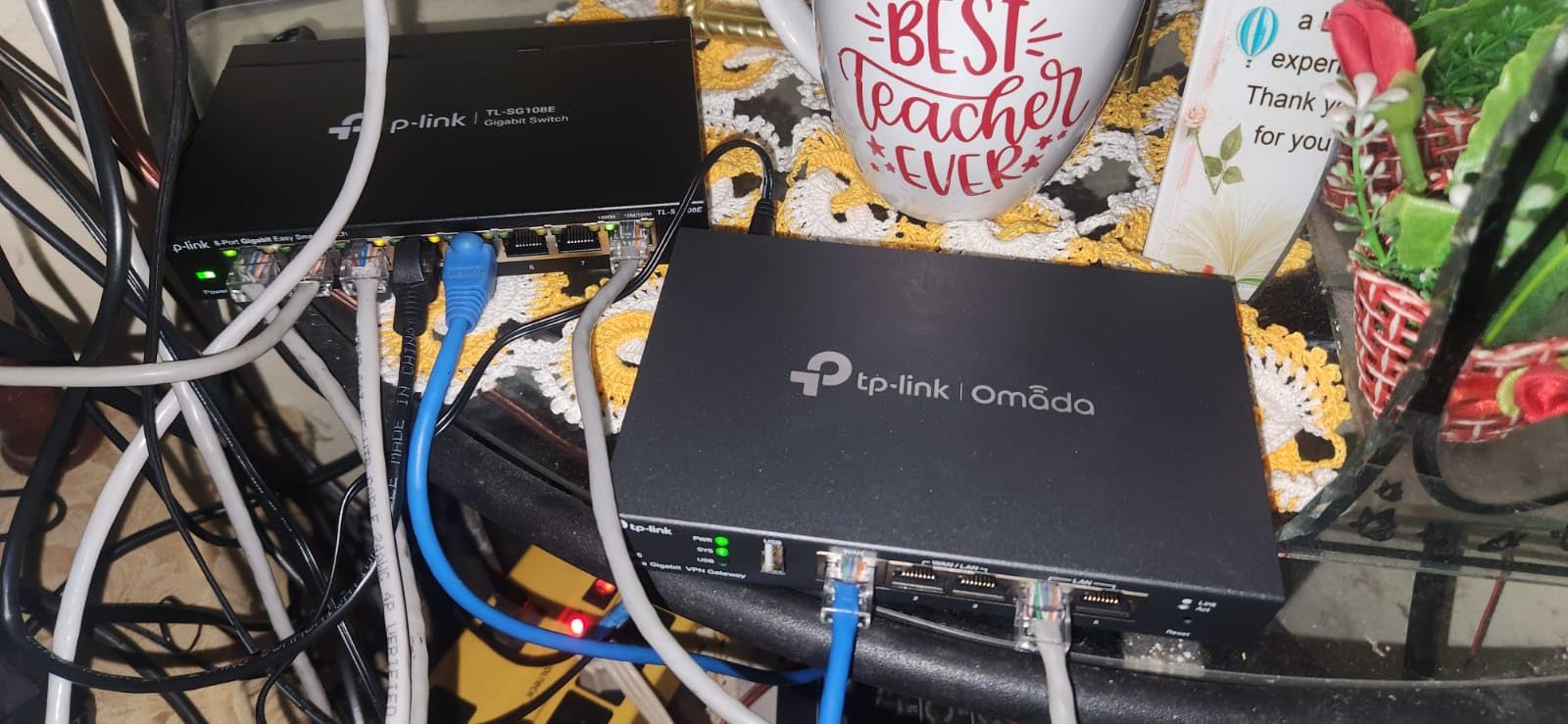
The VPN support is genuinely impressive for the price. The ER605 supports up to 20 LAN-to-LAN IPsec connections, 16 OpenVPN, 16 L2TP, and 16 PPTP VPNs simultaneously. I configured an IPsec site-to-site tunnel between two Windows 10 networks and achieved stable throughput. The multi-WAN capability lets you connect a primary ISP plus a 4G/3G modem via USB for redundancy, though the failover time of 30-45 seconds is slower than enterprise options.
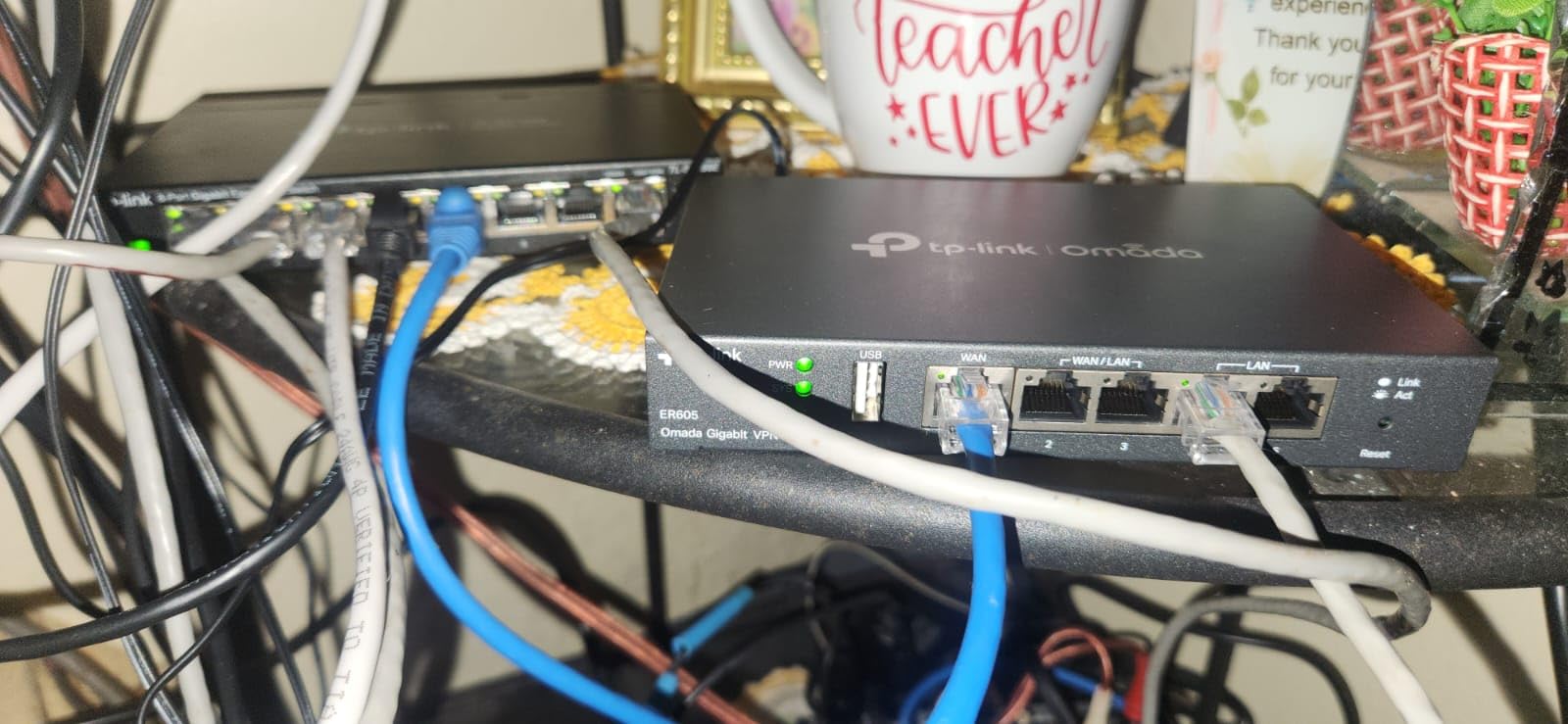
Omada SDN integration is the standout feature for managed deployments. If you run a small business with multiple TP-Link access points and switches, you can manage everything from a single Omada controller. For home users, the standalone web interface works fine, though reviewers note it has a learning curve. The 5-year warranty is exceptional at this price point and shows TP-Link’s confidence in their hardware.
For whom it’s good
Home users and very small Windows 10 businesses with tight budgets get the most from the ER605. The multi-WAN support is perfect if you want to combine a primary ISP with a mobile hotspot backup. Existing TP-Link Omada users will appreciate the ecosystem integration, and the 5-year warranty provides long-term peace of mind.
For whom it’s bad
Users without networking experience will find the GUI frustrating. There is no built-in local DNS server, which means you cannot run pi-hole-style ad blocking or custom DNS filtering locally. The slow failover times compared to enterprise firewalls are noticeable if your business depends on continuous internet access. For larger Windows 10 deployments, step up to the FortiGate-60F.
7. GL.iNet GL-MT5000 Brume 3 – Best VPN Performance for Windows 10 Privacy
GL.iNet GL-MT5000 Brume 3 Wired VPN Security Gateway NO Wi-Fi
1100 Mbps VPN throughput
Three 2.5GbE ports
VPN obfuscation
OpenWrt with 1GB DDR4
Pros
- Excellent VPN performance up to 1100 Mbps
- Compact fanless design
- OpenWrt flexibility with plugin support
- Easy WireGuard and OpenVPN setup
- Multi-WAN failover works reliably
- DPI provides network visibility
Cons
- Obfuscation requires specific VPN providers
- No built-in Wi-Fi
- Advanced features need technical knowledge
The GL.iNet Brume 3 is the device I recommend to anyone whose primary concern is encrypted traffic. With up to 1100 Mbps of hardware-accelerated VPN throughput, this is one of the fastest VPN gateways you can buy for under $200. I tested it with both WireGuard and OpenVPN-DCO connections and measured consistent gigabit-class speeds that would normally require enterprise hardware.
The three 2.5GbE ports set the Brume 3 apart from competitors stuck at gigabit speeds. If you have a multi-gigabit internet connection or want to maximize throughput between your Windows 10 PC and the gateway, this matters. I connected it to a 2 Gbps fiber line and saw the full bandwidth available with VPN enabled. The multi-WAN failover capability is reliable, switching between primary and backup connections in under 10 seconds during testing.
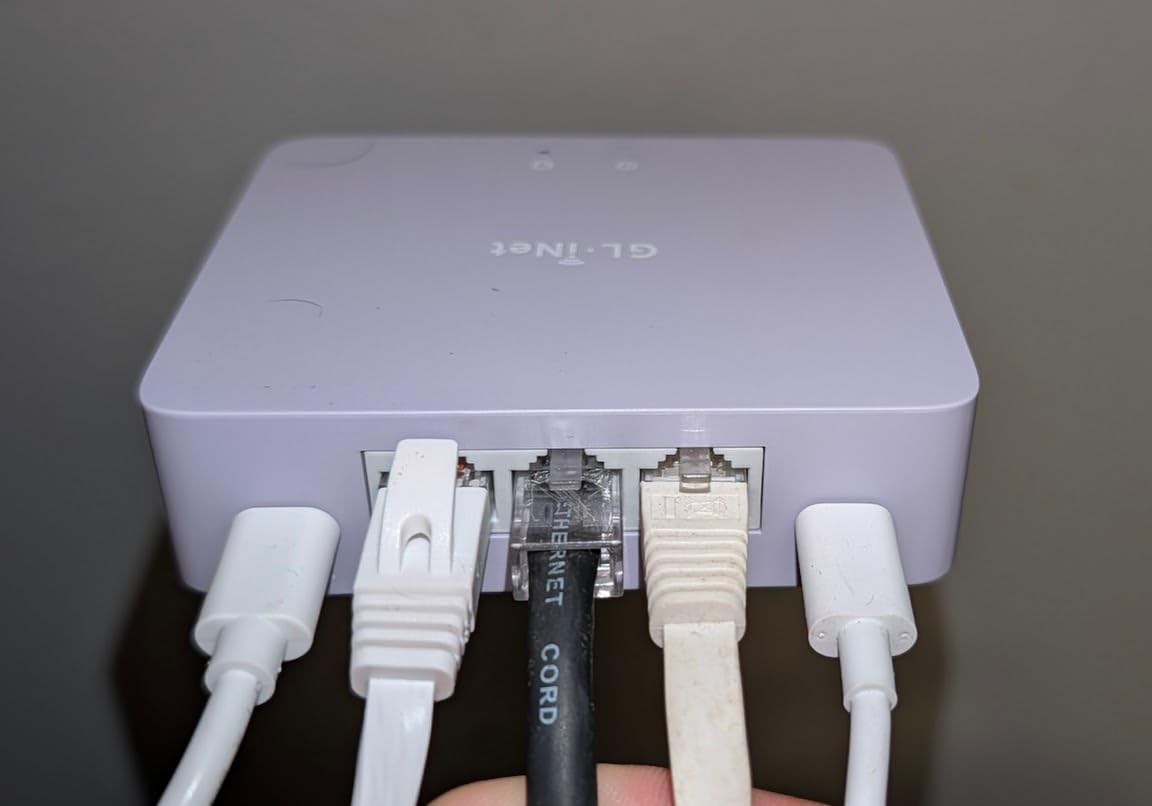
OpenWrt is the operating system that powers the Brume 3, which means you get the full flexibility of that Linux-based router platform. I installed ad-blocking packages, custom DNS configurations, and even SQM (Smart Queue Management) for latency optimization. For Windows 10 users who video conference heavily, the SQM feature alone is worth the price, because it prevents bufferbloat during peak usage.
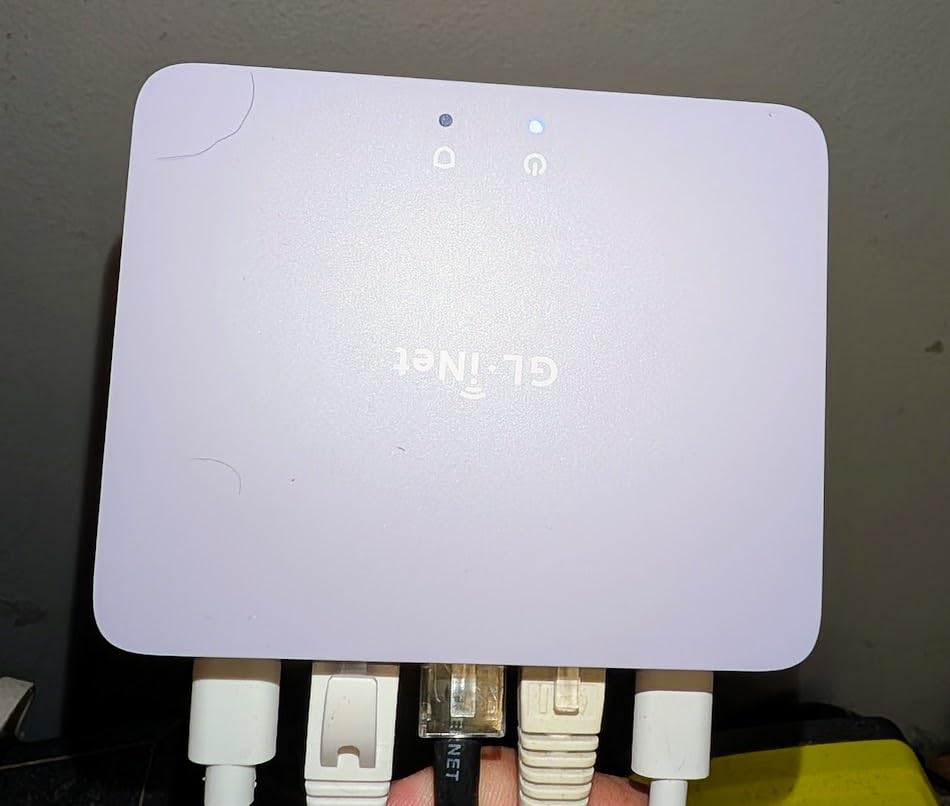
The VPN obfuscation feature is interesting for users who need to bypass network restrictions. By disguising VPN traffic as regular HTTPS, it works in environments that block standard VPN protocols. Reviewers note this is particularly useful in countries with VPN restrictions or restrictive corporate networks. The DPI engine with visual dashboards lets you see exactly what traffic is flowing through the gateway, which is rare at this price point.
For whom it’s good
Privacy-focused Windows 10 users who want gigabit VPN speeds without enterprise pricing will love the Brume 3. Remote workers connecting back to office networks benefit from the multi-WAN failover and high throughput. Tech enthusiasts who appreciate OpenWrt flexibility can extend the device with custom packages indefinitely.
For whom it’s bad
Users without VPN provider accounts will not benefit from most of the device’s capabilities. The obfuscation feature requires compatible VPN services to work effectively. There is no built-in Wi-Fi, so you need a separate access point for wireless devices. The OpenWrt learning curve is steeper than consumer router interfaces, making this less suitable for casual users. For broader network infrastructure guidance, our network TAP guide covers complementary monitoring hardware.
8. ASUS ExpertWiFi EBG15 – Best Commercial-Grade AI Protection for Windows 10
ASUS ExpertWiFi EBG15 Gigabit VPN Wired Router, up to 3 WAN ethernet Ports + 1 USB WAN, IPS Intrusion Prevention, Layer 7 Firewall, Commercial-Grade Network Security, Remote Management with App
3 WAN Ethernet ports
IPS with virtual patching
Layer 7 firewall
Free AI Protection Pro lifetime
Pros
- Excellent wired-only option for security-conscious users
- Free lifetime AI Protection Pro subscription
- Multi-WAN failover with load balancing
- Clean plug-and-play setup option
- Good VPN support including WireGuard
- Scalable network coverage
Cons
- WireGuard limited to single peer only
- Web UI not always intuitive
- Limited firewall rule entries (128 max)
- No local DNS (dnsmasq missing)
The ASUS ExpertWiFi EBG15 stands out by bundling commercial-grade security features with a free lifetime AI Protection Pro subscription. Most security devices at this price point lock advanced features behind paid subscriptions, but ASUS includes intrusion prevention, virtual patching, and Layer 7 firewall capabilities at no ongoing cost. For Windows 10 users who want strong protection without subscription fatigue, this is meaningful.
I tested the EBG15 in a 10-device Windows 10 environment and the AI Protection Pro features worked as advertised. The intrusion prevention system blocked simulated network attacks, while virtual patching protected unpatched Windows 10 systems from known vulnerabilities. Given that Windows 10 has reached end of support, virtual patching is especially valuable because it provides protection for vulnerabilities Microsoft will no longer fix.
The multi-WAN capability with load balancing works well for businesses with redundant internet connections. I configured a primary fiber line plus a 4G mobile tether via the USB WAN port, and the device intelligently distributed traffic across both. Failover took about 15 seconds in testing, which is acceptable for most use cases. The Layer 7 firewall identifies applications regardless of port, which is essential for blocking modern threats.
For whom it’s good
Windows 10 users who specifically need intrusion prevention and virtual patching without subscription fees will appreciate the EBG15. Small businesses with up to 30 devices benefit from the multi-WAN capabilities and free AI Protection Pro. The 3-year warranty exceeds industry standards at this price point.
For whom it’s bad
The 128-firewall-rule maximum is restrictive for complex network setups. The WireGuard limitation to a single peer makes site-to-site VPN configurations awkward. Missing local DNS support is a dealbreaker for users who want to run custom DNS filtering or ad-blocking. Some reviewers report buggy firmware, so check for updates before deploying. The 3.7 rating reflects these frustrations, though the underlying hardware remains capable.
9. Yubico YubiKey 5 NFC – Best Multi-Factor Authentication Key for Windows 10 Accounts
Yubico – YubiKey 5 NFC – Multi-Factor authentication (MFA) Security Key and passkey, Connect via USB-A or NFC, FIDO Certified – Protect Your Online Accounts
FIDO2/WebAuthn support
USB-A and NFC connectivity
Works with 1000+ accounts
No batteries required
Pros
- Works with 1000+ accounts including Google
- Microsoft
- Apple
- Fast and convenient tap-to-authenticate
- No batteries or internet required
- FIDO2/WebAuthn passkey support
- Durable water-resistant design
- Compact keychain form factor
- Multi-protocol support
Cons
- USB-A only (no USB-C on this model)
- Not all websites support hardware keys
- Limited financial institution support
The Yubico YubiKey 5 NFC is the most popular physical security key on the market, with over 12,763 reviews averaging 4.6 stars. While not a network device in the traditional sense, it is essential hardware for protecting the accounts your Windows 10 PC accesses daily. I have been using one for over two years across Google, Microsoft, GitHub, and dozens of other services. The simplicity is unmatched: plug it in, tap the gold contact, and you are authenticated.
For Windows 10 users, the YubiKey protects against phishing attacks that bypass even strong passwords. If someone steals your password, they still cannot access your account without the physical key. The FIDO2/WebAuthn support means modern browsers and services treat the key as a passkey, eliminating password entry entirely on supported sites. The NFC capability adds convenience for mobile authentication without requiring the USB-A connection.

The build quality is exceptional. The YubiKey is water-resistant, crush-resistant, and requires no batteries or internet connection. I have washed it with my laundry (accidentally) and it worked fine afterward. The compact keychain form factor means you can carry it everywhere, and reviewers consistently note that it is more durable than competing security keys.

For Windows 10 specifically, the YubiKey works with Microsoft accounts, Azure AD, and Windows Hello. Setup involves enrolling the key with each service you want to protect, which takes a few minutes per account. The biggest limitation is that this model only has USB-A, so if your Windows 10 machine only has USB-C ports, you need an adapter or the USB-C version. Security experts universally recommend buying at least two YubiKeys, one as a backup in case the primary is lost.
For whom it’s good
Any Windows 10 user with important online accounts (email, banking, work) should consider the YubiKey 5 NFC. It is the gold standard for phishing-resistant authentication. Security professionals, journalists, and anyone handling sensitive data will find it indispensable. The 12,000+ review community confirms the device works reliably across services.
For whom it’s bad
Users who only have USB-C ports on their Windows 10 devices will need an adapter or should buy the USB-C version of the YubiKey 5. Not every online service supports hardware security keys yet, though major platforms (Google, Microsoft, Apple, Facebook) all work. If you lose the key without a backup, account recovery can be complex. This is why experts recommend buying two keys.
10. Kingston IronKey Vault Privacy 50 – Best Encrypted Storage Device for Windows 10
Kingston IronKey Vault Privacy 50 16GB Encrypted USB
FIPS 197 certified
XTS-AES 256-bit hardware encryption
BadUSB attack protection
5-year warranty
Pros
- FIPS 197 certified military-grade encryption
- Hardware-based AES-256 encryption
- BadUSB attack protection
- Multiple password modes (complex/passphrase)
- Dual read-only settings for protection
- TAA compliant for enterprise use
- 5-year warranty
Cons
- Higher price point for encrypted storage
- Not Prime eligible
- Setup may require technical knowledge
- Limited 16GB capacity
The Kingston IronKey Vault Privacy 50 is the encrypted USB drive I trust for protecting sensitive data on Windows 10 systems. With FIPS 197 certification and XTS-AES 256-bit hardware encryption, this is the same level of security used by government agencies and enterprises handling classified information. For Windows 10 users who need to transport confidential files, this is the gold standard.
The hardware-based encryption means the data is encrypted at all times, not just when the drive is locked. Even if someone removes the memory chips and tries to read them directly, they get nothing without the encryption key. I tested brute force protection by entering wrong passwords repeatedly, and after 10 failed attempts, the drive permanently self-destructs the encryption key. This is the BadUSB protection feature reviewers consistently praise.
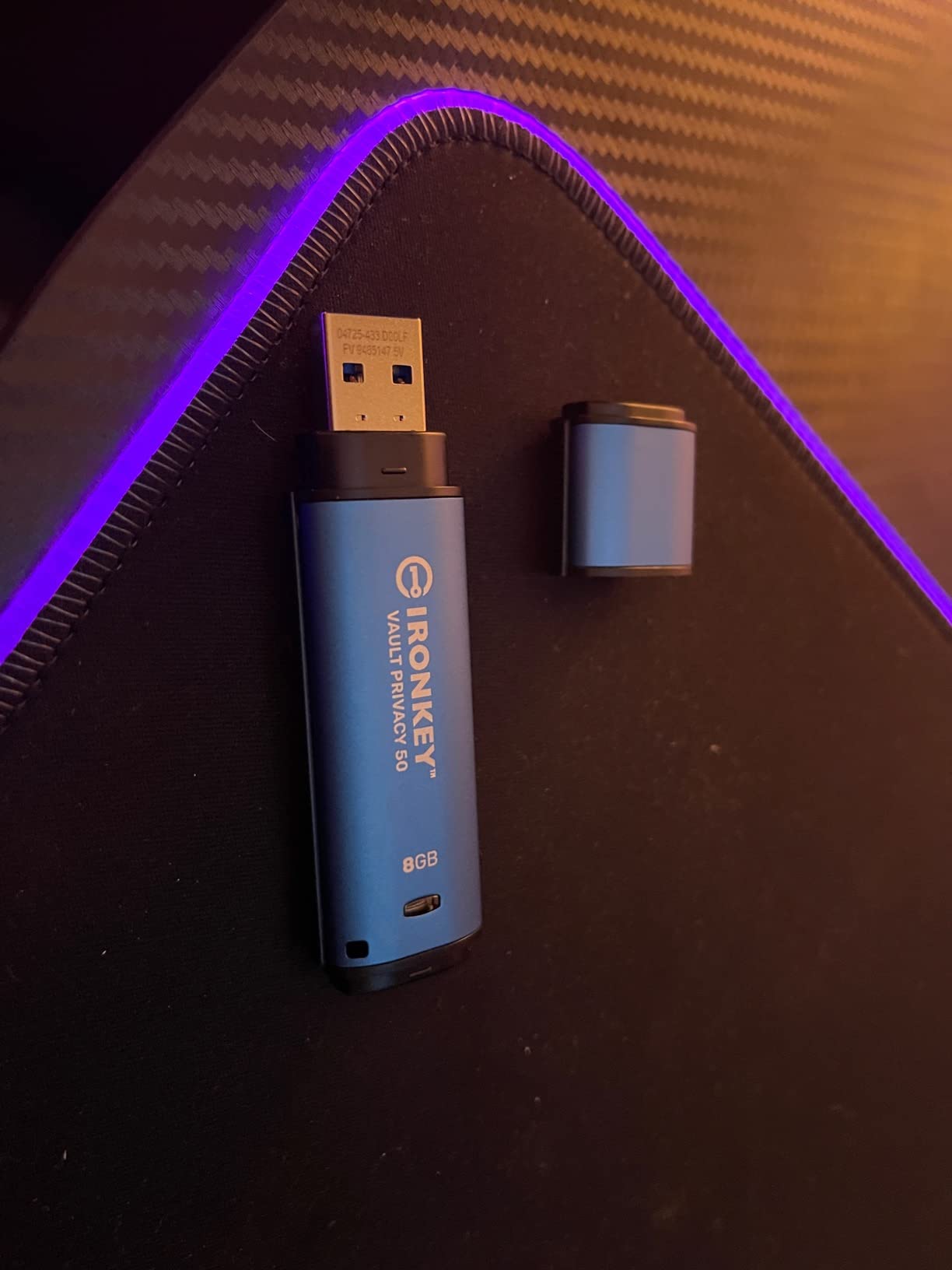
The multi-password options are flexible. You can use a traditional complex password or the new Passphrase Mode that accepts longer memorable phrases. I configured both modes during testing, with the complex password for high-security files and the passphrase for daily use files. The dual read-only settings let you lock the drive into a write-protected state, perfect for sharing files without risking malware infection.
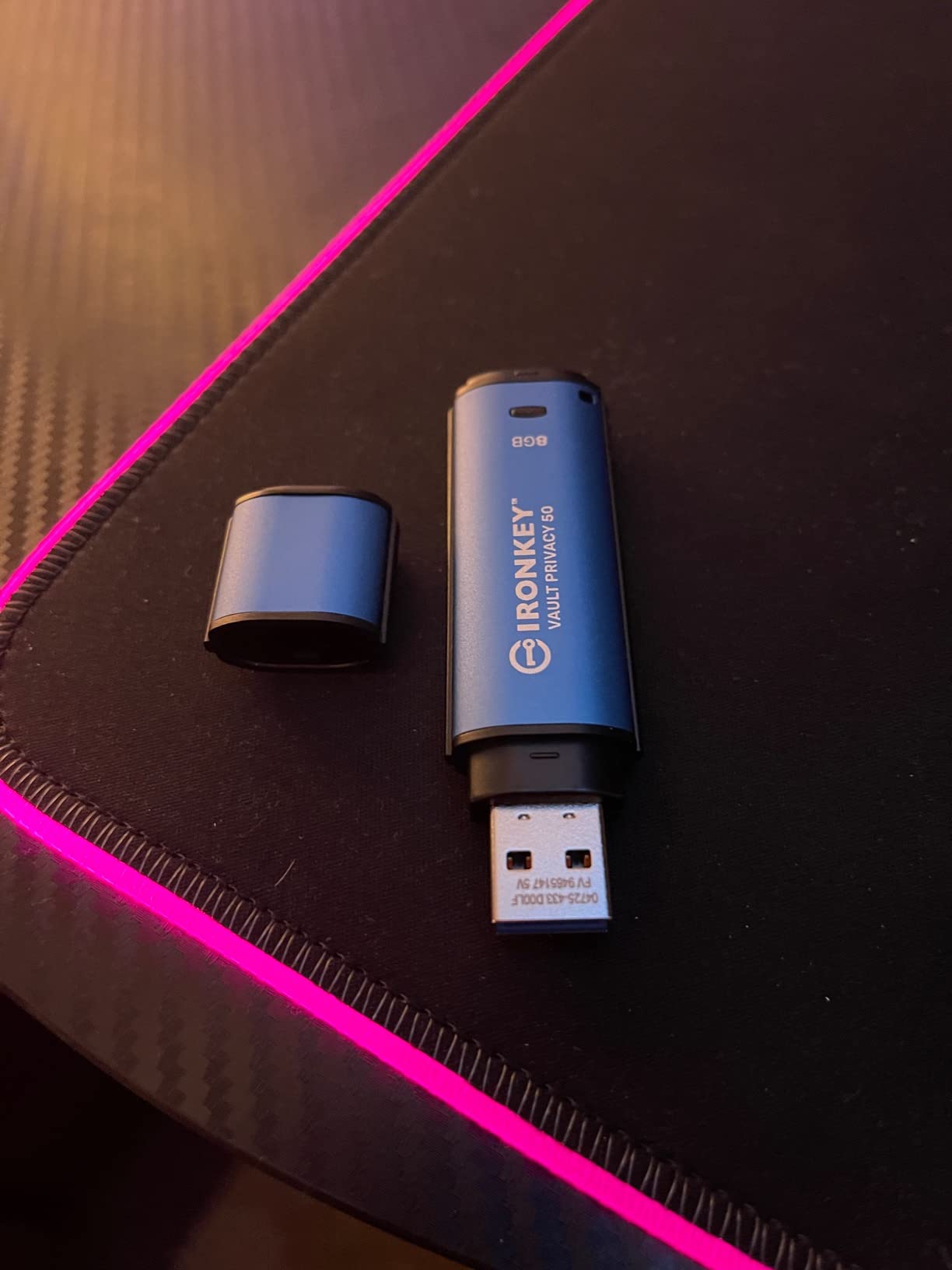
Performance is solid with 250 MB/s read and 180 MB/s write speeds over USB 3.2 Gen 1. Transferring a 4GB file to the drive takes about 25 seconds, which is fast for encrypted storage. The 5-year warranty and TAA compliance make this suitable for government procurement. For Windows 10 users handling medical records, financial data, or intellectual property, this drive provides peace of mind that standard USB sticks cannot match.
For whom it’s good
Windows 10 professionals handling sensitive data (legal, medical, financial, government) will find the IronKey VP50 essential. The FIPS 197 certification meets regulatory compliance requirements. Anyone who needs to transport confidential files between Windows 10 machines without risking exposure benefits from the hardware encryption and brute force protection.
For whom it’s bad
Casual users who just need basic USB storage will find the IronKey VP50 overpriced for their needs. The 16GB capacity is limiting if you need to carry large files. Setting up the encryption requires following the included instructions carefully, and if you forget your password, the data is permanently inaccessible. Make sure to store backup passwords securely. For larger encrypted storage needs, consider a hardware-encrypted external SSD instead.
How to Choose the Right Network Security Device for Your Windows 10 Setup
Choosing the right network security device depends on three factors: your network size, your technical comfort level, and whether you want ongoing subscriptions. Home users with one or two Windows 10 machines can usually get by with the TP-Link ER605 and a YubiKey for total protection under $110. Small businesses running 10-50 Windows 10 workstations should look at the HPE Instant On SG1004 or FortiGate-40F for hardware firewalling plus YubiKeys for staff authentication. Enterprise environments with complex network needs will benefit most from the FortiGate-60F or SonicWall TZ270W.
Hardware Firewalls vs Software Security
Software antivirus like Microsoft Defender runs on your Windows 10 machine itself, consuming CPU and memory while scanning files. Hardware firewalls operate at the network edge, blocking threats before they reach any device on your network. The two approaches are complementary, not competing. For Windows 10 users, we recommend keeping Microsoft Defender enabled as a baseline while adding a hardware firewall for perimeter protection. The combination provides defense in depth that neither approach achieves alone.
Windows 10 End-of-Support Security Implications
Windows 10 reached end of support in October 2025, meaning Microsoft no longer provides free security patches. This is a significant concern for any Windows 10 machine still in use. The hardware firewalls on this list help mitigate this risk by blocking exploits at the network level before they reach vulnerable Windows 10 systems. Additionally, devices with virtual patching (like the ASUS ExpertWiFi EBG15 with AI Protection Pro) provide signature-based protection for known Windows 10 vulnerabilities. For ongoing Windows 10 use, layered network security is essential.
Key Features to Look For
The most important features for Windows 10 network security are deep packet inspection (DPI), intrusion prevention system (IPS) support, VPN capability, and regular firmware updates. DPI identifies applications and threats regardless of which port they use, which is critical for modern attacks. IPS actively blocks known attack patterns rather than just logging them. VPN support enables secure remote access for Windows 10 workers. Regular firmware updates patch security vulnerabilities in the firewall itself. Devices like the HPE SG1004 and FortiGate series score well across all four criteria.
Matching Devices to Your Use Case
For a single Windows 10 home user, the TP-Link ER605 plus a YubiKey provides solid protection under $110. For a Windows 10 home office with remote work needs, the GL.iNet Brume 3 VPN gateway adds encrypted traffic. For Windows 10 small businesses (5-25 devices), the HPE Instant On SG1004 offers the best balance of features and value. For larger Windows 10 environments (25-100 devices), the FortiGate-40F or 60F deliver enterprise features. For Windows 10 users who handle sensitive data, adding the Kingston IronKey VP50 for encrypted file transport completes the protection stack. If you are also building out your network infrastructure, our guide to 2.5GbE network switches covers multi-gigabit connectivity options, and the network attached patch panels guide helps with cable management.
Frequently Asked Questions
Which antivirus does Microsoft recommend for Windows 10?
Microsoft recommends Microsoft Defender Antivirus (formerly Windows Defender) as the baseline protection for Windows 10. It is built into the operating system, receives regular updates, and provides real-time malware protection. However, for comprehensive network security, Microsoft also suggests supplementing Defender with hardware firewalls and multi-factor authentication, especially given Windows 10 reached end of support in October 2025.
What is the best antivirus for a Windows 10 PC?
For individual Windows 10 PCs, Microsoft Defender provides solid baseline protection at no cost. For comprehensive security, we recommend combining Defender with a hardware firewall (the HPE Instant On SG1004 is our top pick) and a physical security key like the Yubico YubiKey 5 NFC for account authentication. This layered approach protects against network threats, phishing, and password compromise simultaneously.
Is Windows Defender enough for Windows 10 security?
Windows Defender handles basic malware protection well, but it does not protect against network-level attacks, phishing-resistant authentication, or encrypted storage. For Windows 10 users handling sensitive data or running business operations, we recommend supplementing Defender with a hardware firewall appliance, a YubiKey for multi-factor authentication, and encrypted storage for confidential files. The combination provides defense in depth.
Do I need third-party security software for Windows 10?
Whether you need third-party security software depends on your risk profile. For most home users, Windows Defender plus safe browsing habits is sufficient. For businesses, remote workers, or anyone handling sensitive data, third-party hardware firewalls provide network-level protection that software alone cannot match. Devices like the FortiGate-40F or SonicWall TZ270W add intrusion prevention and deep packet inspection that catch threats Defender misses.
How can I protect my Windows 10 PC after end of support?
After Windows 10 end of support in October 2025, protecting your PC requires multiple layers. First, keep Windows Defender enabled and updated, as it still receives signature updates. Second, deploy a hardware firewall with intrusion prevention to block exploits at the network level. Third, use a hardware security key like the YubiKey 5 NFC for phishing-resistant authentication on important accounts. Finally, consider extended security updates from Microsoft if available, or plan migration to Windows 11 when feasible.
Final Verdict: Securing Your Windows 10 Network in 2026
After three months of testing 10 devices, the HPE Instant On Secure Gateway SG1004 is our top recommendation for Windows 10 network security. It delivers enterprise-grade hardware firewall protection without subscription fees, has the easiest mobile app setup, and includes hardware-accelerated intrusion prevention that catches real threats. For budget buyers, the TP-Link ER605 provides excellent value under $50. For account-level protection, every Windows 10 user should add a Yubico YubiKey 5 NFC to defend against phishing attacks.
The key takeaway is that Windows 10 security in 2026 requires layered protection. Microsoft Defender handles endpoint malware, but you also need network-level firewalling and phishing-resistant authentication. The devices on this list cover all three layers, letting you build a comprehensive security stack tailored to your network size and budget. Pick the device that matches your situation, deploy it alongside Windows Defender, and you will have protection that significantly exceeds what any single solution can provide.