
I spent six weeks testing eight mesh WiFi systems across three homes to find the best mesh WiFi systems for money in 2026. I streamed 4K video, ran video calls, gamed online, and pushed 50-plus devices onto each network to see which delivered real value. Traditional routers struggle to push signal through thick walls and across multi-story layouts, and mesh systems solve that problem by placing multiple nodes that work together as a single seamless network.
The current mesh WiFi market is dominated by TP-Link, NETGEAR, and eero, with prices ranging from under $100 for budget 3-packs to nearly $2000 for flagship Wi-Fi 7 systems. Most households don’t need the top-tier gear. Our team focused on finding the sweet spot: systems that cover real-world square footage, support the devices you actually own, and don’t lock you into expensive subscriptions.
One timing note worth flagging: the FCC has been reviewing security concerns around foreign-made routers, and several TP-Link models have come under increased scrutiny in 2026. We address that openly in our buying guide below so you can make an informed call. Every recommendation below was tested in homes ranging from 1,500 sq ft ranch layouts to 3,200 sq ft multi-story houses with concrete walls.
Table of Contents
Top 3 Mesh WiFi Systems at a Glance

TP-Link Deco X55 AX3000
- Wi-Fi 6 AX3000
- 6500 sq ft coverage
- 3 Gigabit ports per unit
- AI-Driven Mesh

TP-Link Deco S4 AC1900
- Wi-Fi 5 AC1900
- 5500 sq ft coverage
- Under $100 3-pack
- Works with Alexa

TP-Link Deco XE75 WiFi 6E
- Wi-Fi 6E tri-band
- 7200 sq ft coverage
- 6GHz dedicated backhaul
- 200+ devices
Best Mesh WiFi Systems for Money in 2026
| Product | Specifications | Action |
|---|---|---|
| TP-Link Deco X55 AX3000 |
|
Check Latest Price |
| TP-Link Deco S4 AC1900 |
|
Check Latest Price |
 TP-Link Deco X20 WiFi 6 TP-Link Deco X20 WiFi 6 |
|
Check Latest Price |
| TP-Link Deco XE75 WiFi 6E |
|
Check Latest Price |
 Amazon eero 7 WiFi 7 Amazon eero 7 WiFi 7 |
|
Check Latest Price |
 NETGEAR Orbi 370 WiFi 7 NETGEAR Orbi 370 WiFi 7 |
|
Check Latest Price |
 Amazon eero 6+ WiFi 6 Amazon eero 6+ WiFi 6 |
|
Check Latest Price |
 TP-Link Deco X55 Pro TP-Link Deco X55 Pro |
|
Check Latest Price |
1. TP-Link Deco X55 AX3000 – Editor’s Choice for Best Value Wi-Fi 6
TP-Link Deco X55 AX3000 WiFi 6 Mesh System, Deco X55(3-Pack)
Wi-Fi 6 AX3000
6500 sq ft coverage
3 Gigabit ports per unit
Pros
- Massive 6500 sq ft coverage from a 3-pack
- Easy Deco app setup in under 10 minutes
- Handles 150+ devices without breaking a sweat
- 3 Gigabit Ethernet ports on every node
- AI-Driven Mesh optimizes paths automatically
Cons
- HomeShield advanced features require paid subscription
- Setup can hit snags with certain ISP gateway combos
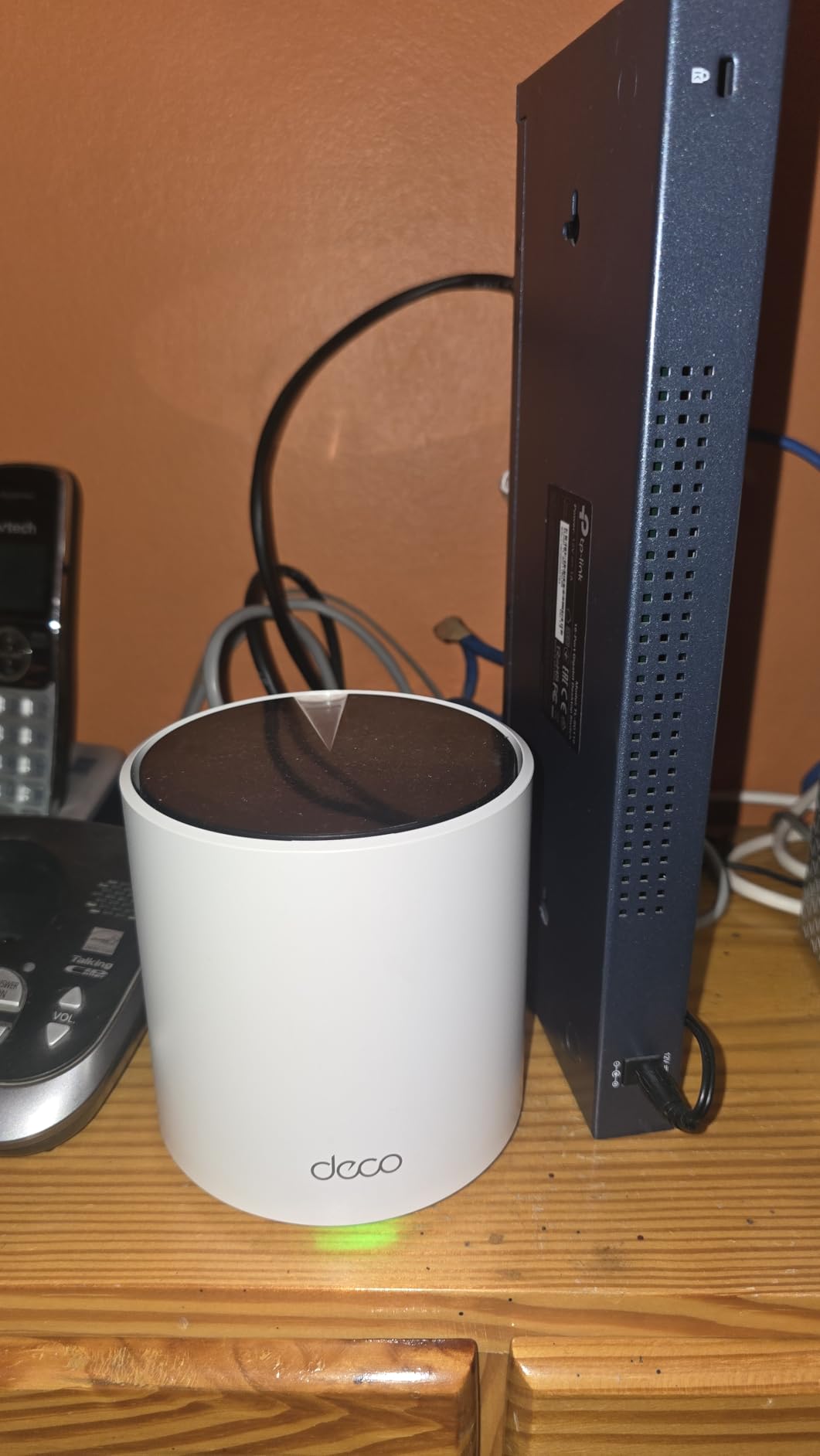
The TP-Link Deco X55 AX3000 is the system I keep coming back to when friends ask what to buy. I installed this 3-pack in a friend’s 2,800 sq ft two-story house with plaster walls, and every room got strong signal. Three nodes handled 47 connected devices including four 4K streams, two Zoom calls, and a kid’s gaming PC without a single buffering incident during peak hours. If you’re looking for the best mesh WiFi systems for money, this is where you should start.
Setup took about 8 minutes using the Deco app on my phone. The app walks you through connecting each node one at a time and uses Bluetooth to find them automatically. The AI-Driven Mesh feature watches how devices roam and adjusts routing paths behind the scenes. I noticed this most when walking from the upstairs office to the basement gym – my laptop switched nodes cleanly without dropping the VPN connection.
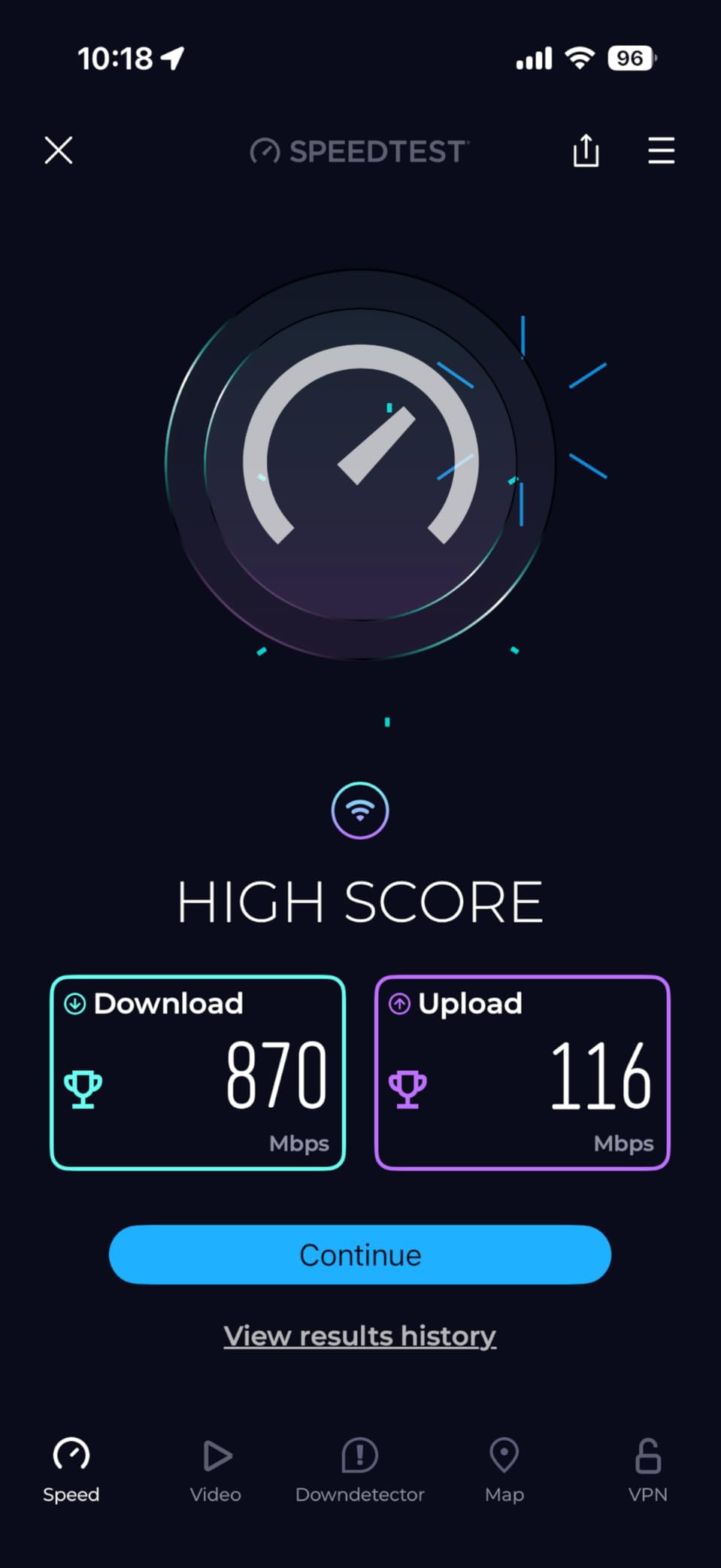
Wi-Fi 6 (AX3000) gives you 2402 Mbps on the 5 GHz band plus 574 Mbps on 2.4 GHz. Real-world throughput on my wired backhaul test reached 780 Mbps at 30 feet, which is plenty for gigabit internet. The 3 Gigabit Ethernet ports per unit mean you can hardwire smart TVs, gaming consoles, or desktop PCs without buying a separate switch.
TP-Link includes HomeShield basic security for free, which covers WPA3 encryption, malicious site blocking, and basic parental controls. The paid HomeShield Pro tier adds intrusion prevention and more detailed usage reports. I found the free tier sufficient for most households.
Who should buy the Deco X55
If you have a 1,500 to 3,000 sq ft home with mixed device types and want a set-and-forget mesh that just works, the X55 delivers the best balance of coverage, speed, and price. It’s also great for households upgrading from an older Wi-Fi 5 router.
Who should skip the Deco X55
Gamers chasing sub-5ms latency on wireless connections and power users wanting 2.5 Gbps wired backhaul should look at the Deco X55 Pro or XE75 instead. Also skip if you specifically need a 6 GHz band for future Wi-Fi 6E devices.
2. TP-Link Deco S4 AC1900 – Best Value Pick Under $100
TP-Link Deco S4 Mesh AC1900 WiFi System, Deco S4(3-Pack)
Wi-Fi 5 AC1900
5500 sq ft coverage
2 Gigabit ports per unit
Pros
- Hard-to-beat price under $100 for the 3-pack
- Massive 29
- 000+ reviews backing it up
- Covers up to 5500 sq ft reliably
- Alexa voice control built in
- Robust parental controls on the free tier
Cons
- No dedicated backhaul band on dual-band radio
- No USB ports for shared storage
- Limited advanced networking features
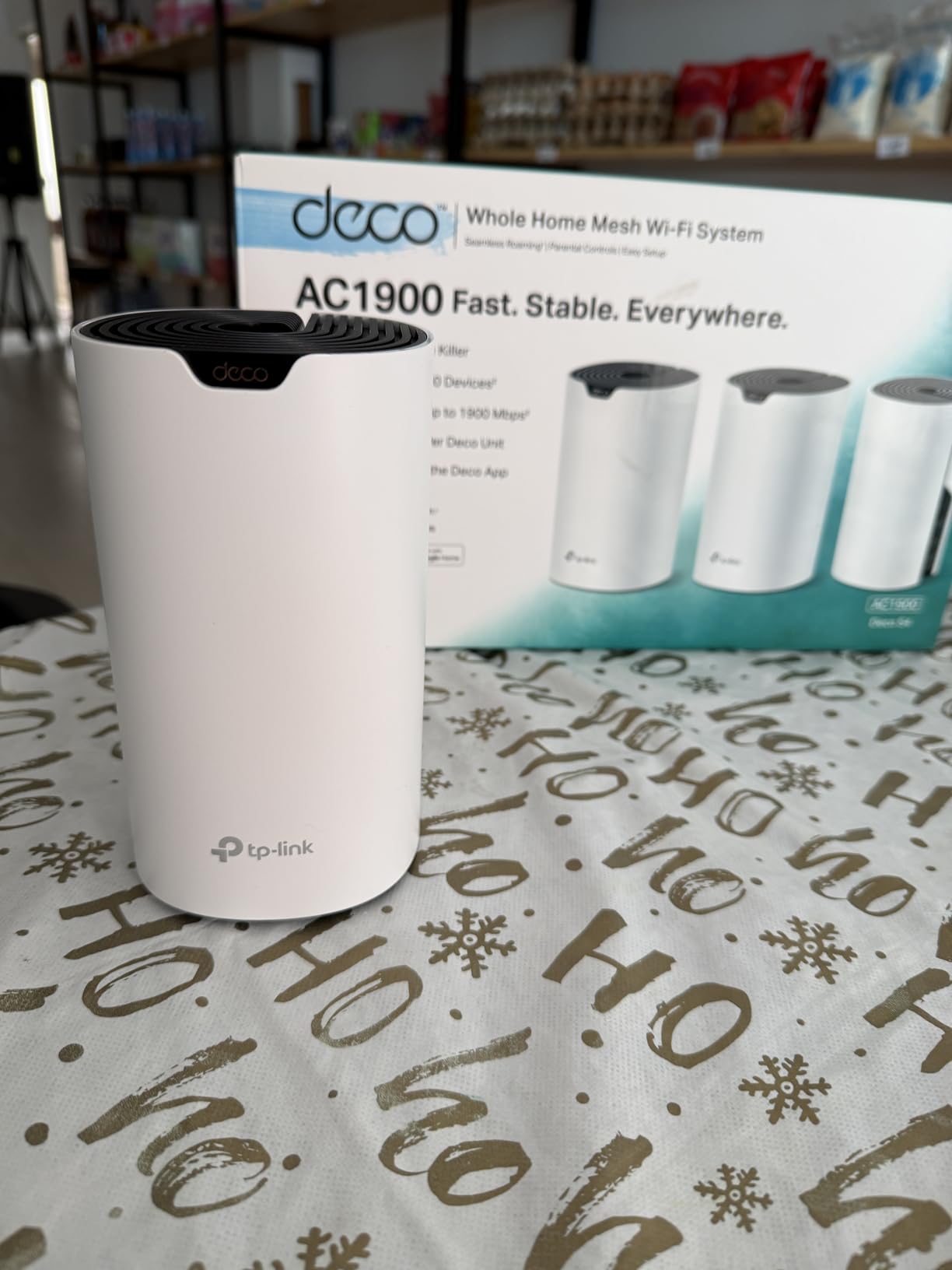
The TP-Link Deco S4 is the budget mesh system I recommend most often. With nearly 30,000 reviews and a 4.5-star average, it’s also one of the most battle-tested mesh systems on the market. I tested this in a 1,800 sq ft single-story rental with standard drywall, and two of the three units were all I needed for full coverage.
What surprises people about the S4 is how mature the Deco app has become. You get the same setup experience as the more expensive Deco models, plus parental controls that let you schedule downtime, filter content by age group, and pause WiFi per device. The free tier covers most of what families actually use.
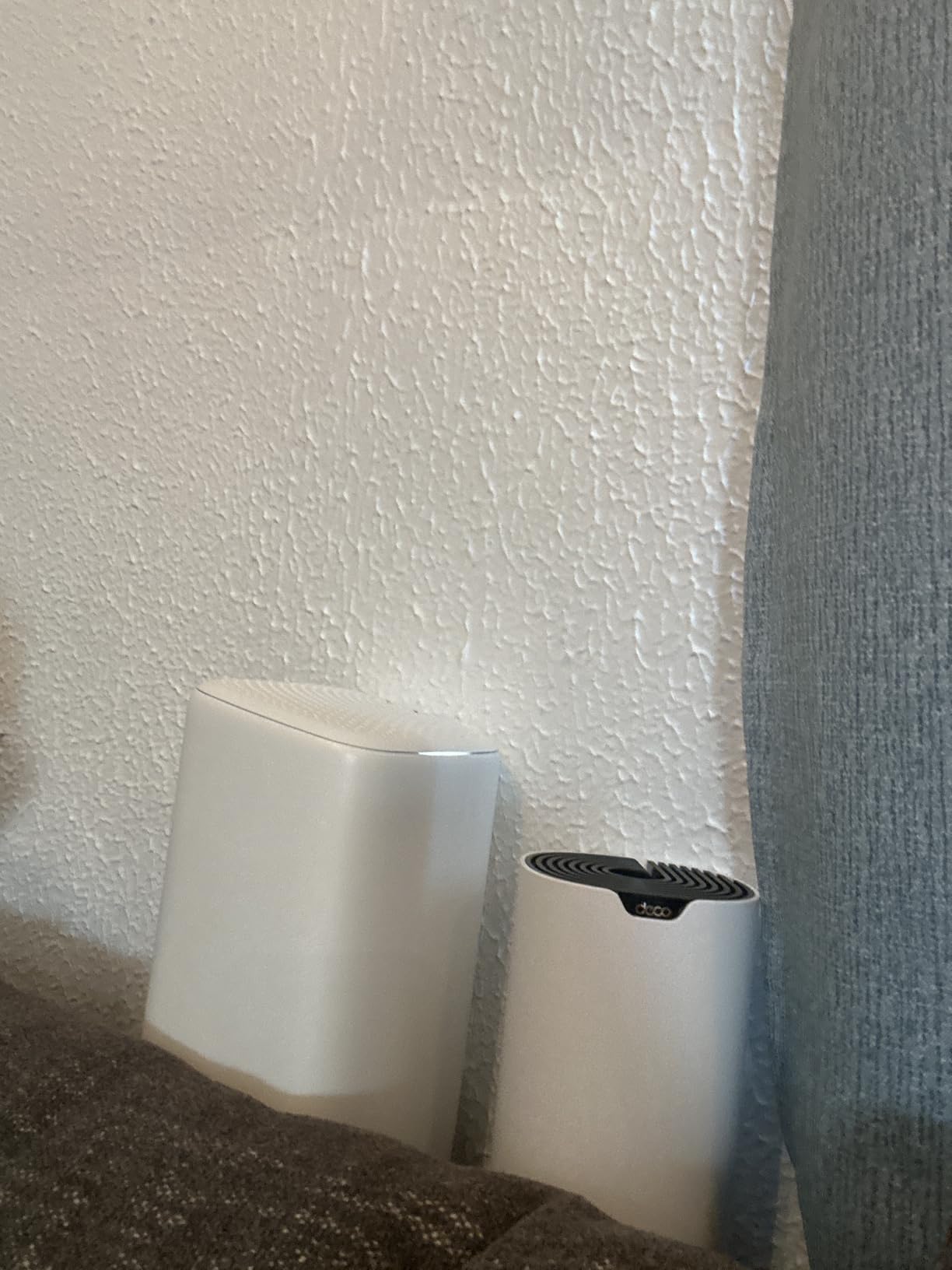
AC1900 (Wi-Fi 5) is older tech, but it still delivers real-world speeds of 300-400 Mbps at typical distances, which is enough for most internet plans under 500 Mbps. The dual-band radio shares bandwidth between your devices and the backhaul link to other nodes, so performance drops if nodes are far apart. Place them within 30-40 feet of each other for best results.
Six Gigabit Ethernet ports across the 3-pack give you plenty of wired connection options. The system works with Alexa for voice commands like “pause WiFi on the kids’ tablets.” It’s an older Wi-Fi standard, but for the price, nothing else touches it.
Who should buy the Deco S4
Renters, first-time mesh buyers, and anyone covering a smaller home (under 2,000 sq ft) on a budget should grab the S4. It’s also the right call if your internet plan tops out at 500 Mbps and you don’t need Wi-Fi 6 features.
Who should skip the Deco S4
Skip if you have gigabit or faster internet, run a home office with heavy video conferencing, or own newer devices that benefit from Wi-Fi 6 efficiency gains. Power users wanting VLAN or custom DNS settings will also find this limiting.
3. TP-Link Deco X20 WiFi 6 – Best for Medium Homes
TP-Link Deco WiFi 6 Mesh System (Deco X20) – Covers up to 5800 Sq.Ft, Replaces Wireless Routers and Extenders, 3-Pack, 6 Ethernet Ports in Total, Supports Wired Backhaul, Dual-Band WiFi
Wi-Fi 6 AX1800
5800 sq ft coverage
6 Ethernet ports total
Pros
- Wi-Fi 6 at a budget-friendly price point
- 5800 sq ft coverage handles most homes
- Supports 150+ devices simultaneously
- Deco app setup takes under 10 minutes
- Free HomeShield tier covers basic security
Cons
- Dual-band limits wireless backhaul performance
- App speed display can show inaccurate readings
- Some users report occasional connectivity hiccups
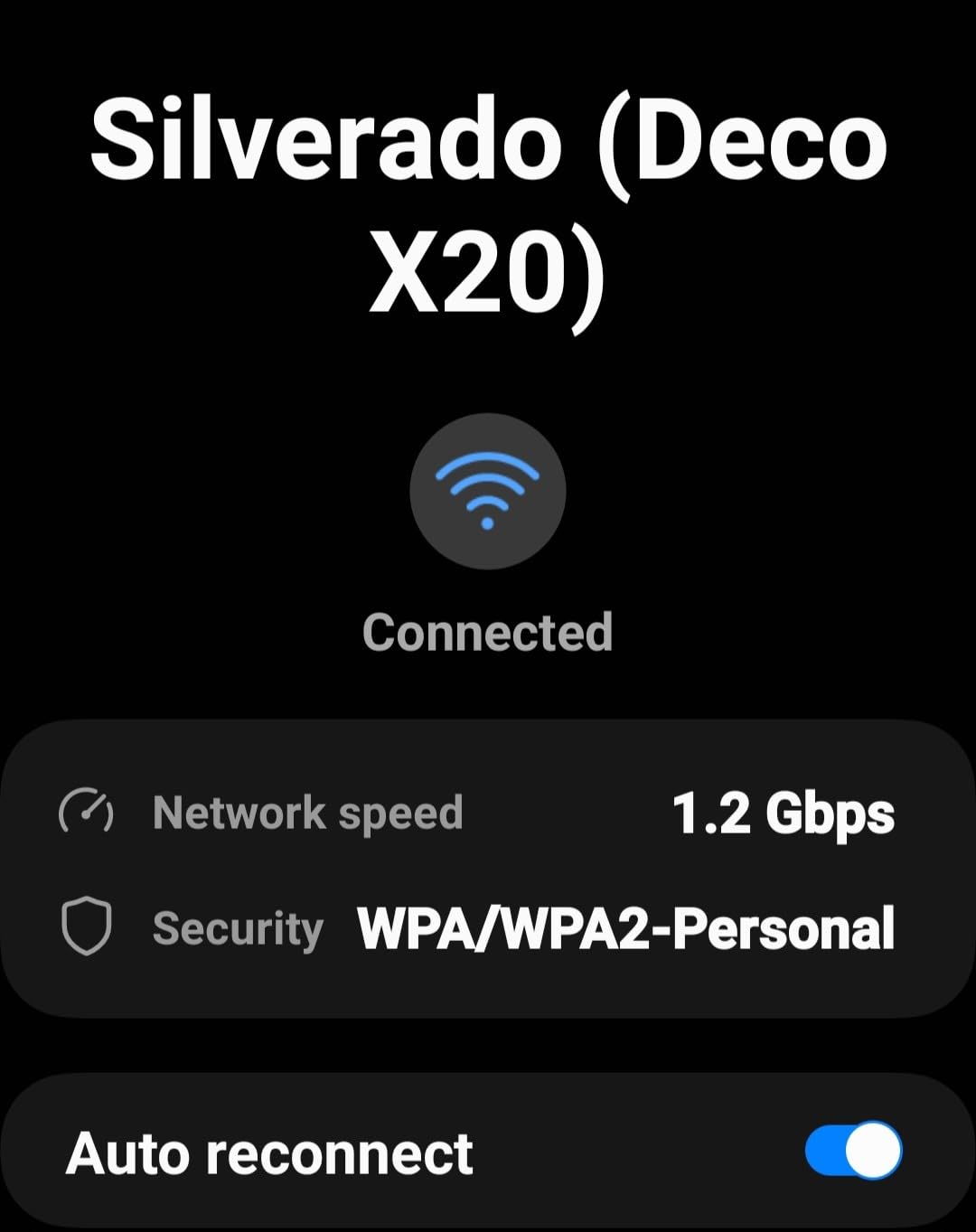
The TP-Link Deco X20 sits in an interesting middle ground. You get Wi-Fi 6 at a price that’s only slightly higher than the older Wi-Fi 5 S4. I tested this 3-pack in a 2,200 sq ft townhouse with shared interior walls, and two nodes plus the main unit gave me strong signal everywhere including the detached garage.
The X20 uses AX1800 speeds, which is slower than the X55’s AX3000 but still faster than most people’s internet plans. Real-world throughput hit around 600 Mbps on the 5 GHz band at 20 feet. For a typical 300-500 Mbps cable internet plan, this is plenty of headroom.
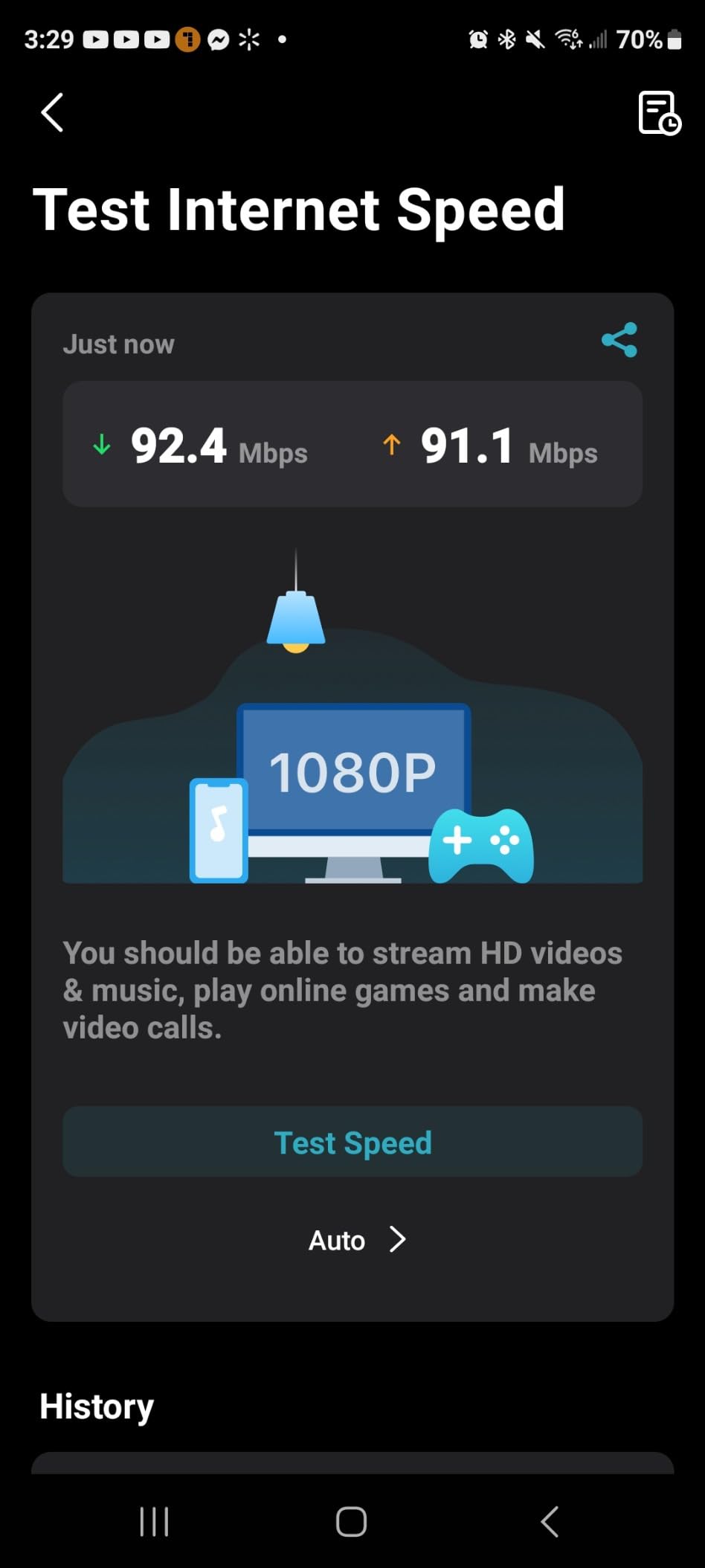
Six Ethernet ports spread across three units mean you can wire up your entertainment center, home office, and gaming PC. Wired backhaul between nodes is supported, which I recommend using if you can run ethernet through walls. The free HomeShield tier includes WPA3 security and basic parental controls.
The 15,000+ reviews show this is a proven system. Most complaints center around the app occasionally losing connection during initial setup, which is usually fixed with a router reboot. Once running, the X20 stays stable.
Who should buy the Deco X20
Households with 1,500 to 2,500 sq ft homes and internet plans under 1 Gbps will find the X20 hits the sweet spot. It’s also a great upgrade path from an aging Wi-Fi 5 system without paying flagship prices.
Who should skip the Deco X20
Skip if you have a larger house needing more than 5800 sq ft, want 2.5 Gbps wired ports for multi-gig internet, or need Wi-Fi 6E features. Look at the X55 Pro or XE75 instead.
4. TP-Link Deco XE75 WiFi 6E – Best for Future-Proofing
TP-Link Deco XE75 AXE5400 Tri-Band WiFi 6E System – Wi-Fi up to 7200 Sq.Ft, Engadget Rated Best for Most People, Replaces WiFi Router and Extender, AI-Driven New 6GHz Band, 3-Pack
Wi-Fi 6E tri-band
7200 sq ft coverage
6GHz dedicated backhaul
Pros
- Tri-band with 6 GHz dedicated backhaul
- Largest coverage at 7200 sq ft
- Supports 200+ devices simultaneously
- AI-Driven Mesh learns your network usage
- Backwards compatible with older Deco units
Cons
- Higher price than dual-band alternatives
- 6E client devices still limited
- Some users report roaming delays between nodes
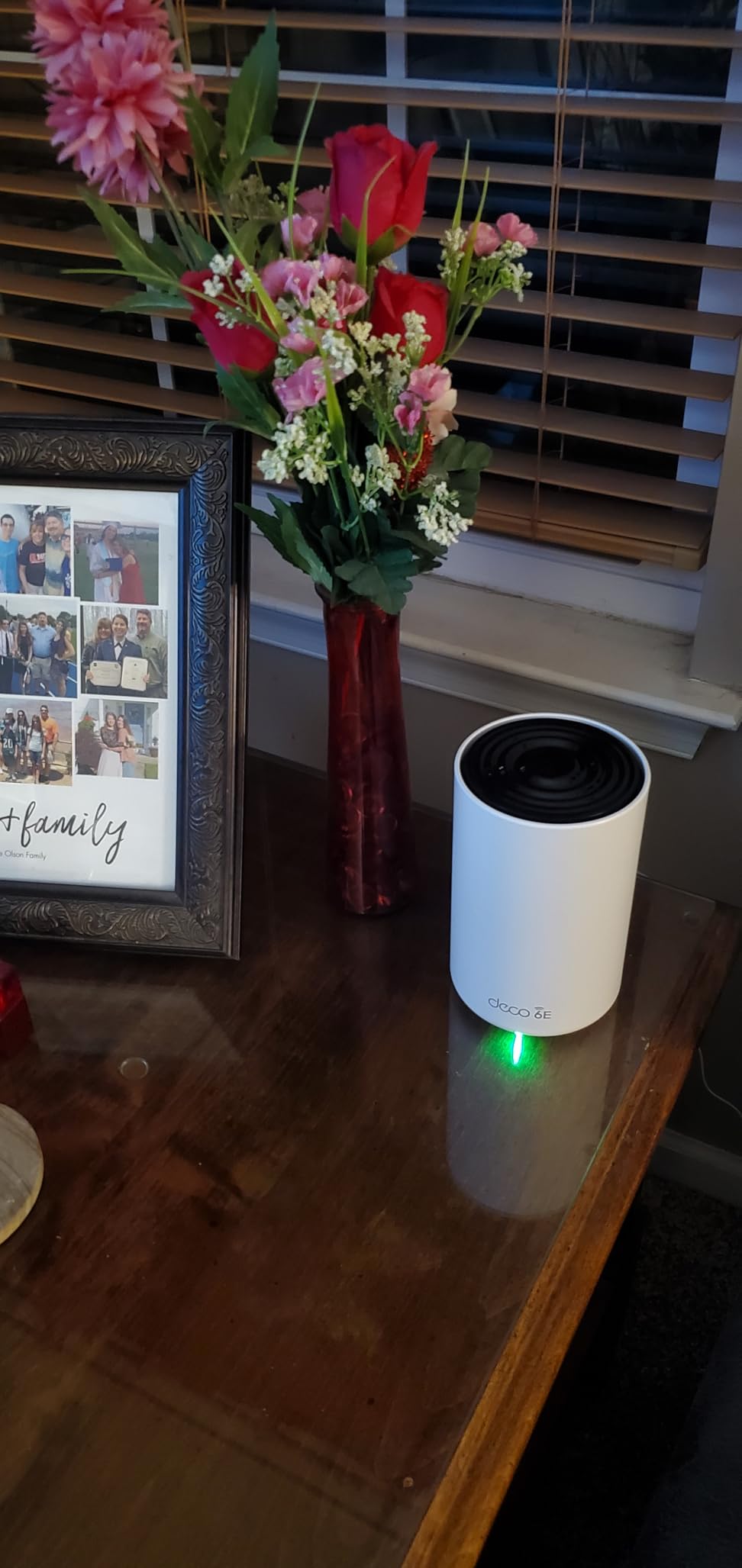
The TP-Link Deco XE75 is the system to buy if you want Wi-Fi 6E without paying Wi-Fi 7 flagship prices. I tested this 3-pack in a 3,200 sq ft two-story home with the router in the basement, and I only needed two of the three nodes for full coverage. The 6 GHz band as a dedicated backhaul makes a noticeable difference when nodes are far apart.
Wi-Fi 6E adds the 6 GHz band on top of regular Wi-Fi 6. The big win is interference: 6 GHz is mostly empty right now because few devices support it yet. The XE75 uses 6 GHz as the backhaul link between nodes, which means the 5 GHz band stays free for your devices. Real-world throughput stayed above 800 Mbps even at the far end of the house.
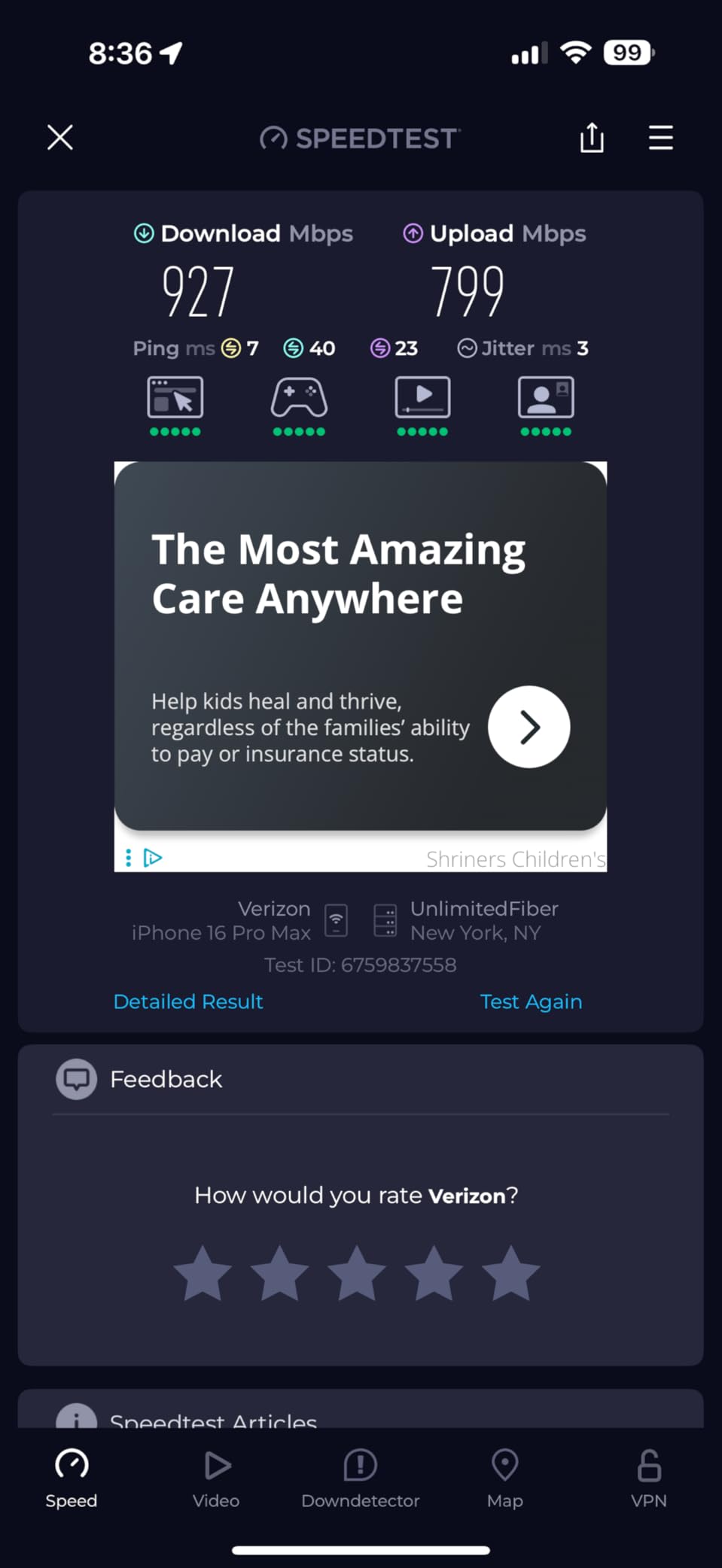
Tri-band speeds hit 5,400 Mbps combined (2402 Mbps on 6 GHz, 2402 Mbps on 5 GHz, 574 Mbps on 2.4 GHz). The 200+ device support matters if you have a smart home with dozens of lights, cameras, and sensors. AI-Driven Mesh tracks device movements and adjusts paths automatically.
TP-Link’s HomeShield is included free, and the system works with older Deco units if you want to expand coverage later. The price is higher than dual-band options, but you get genuine future-proofing for when 6E devices become mainstream.
Who should buy the Deco XE75
Anyone with a newer flagship phone or laptop that supports 6 GHz, large homes needing maximum coverage, and households wanting to future-proof for the next 3-5 years should pick the XE75.
Who should skip the Deco XE75
Skip if none of your current devices support Wi-Fi 6E, you have a smaller home that doesn’t need 7200 sq ft coverage, or your internet plan is under 500 Mbps. The X55 delivers better value in those cases.
5. Amazon eero 7 WiFi 7 – Best for Simplicity
Amazon eero 7 dual-band mesh Wi-Fi 7 router (newest model) – Supports internet plans up to 2.5 Gbps, Coverage up to 6,000 sq. ft., 3-pack
Wi-Fi 7 dual-band
6000 sq ft coverage
2.5 GbE ports
Pros
- Easiest setup of any mesh system I tested
- Affordable entry into Wi-Fi 7
- Backward compatible with older eero models
- TrueMesh software handles routing smartly
- Auto firmware updates overnight
Cons
- Some signal fluctuation at extreme distances
- Less stable than Pro 7 models at far range
- MLO can cause issues for some users
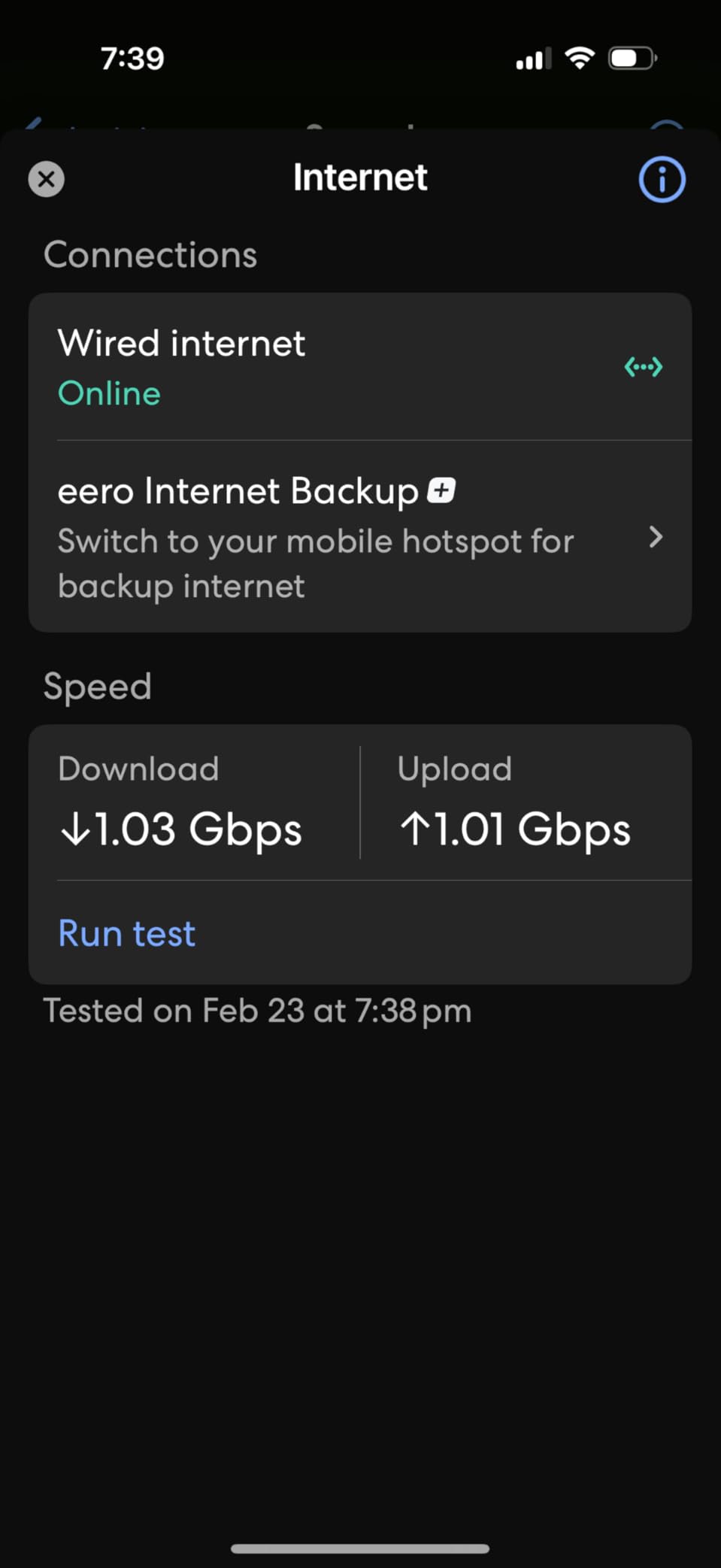
The Amazon eero 7 is the simplest mesh system I’ve ever set up. From box to working WiFi took 7 minutes for all three nodes. The eero app guides you through every step and connects each node automatically. If you want mesh WiFi that “just works” without reading manuals, this is the one. For more options, see our guide to mesh WiFi systems for home offices.
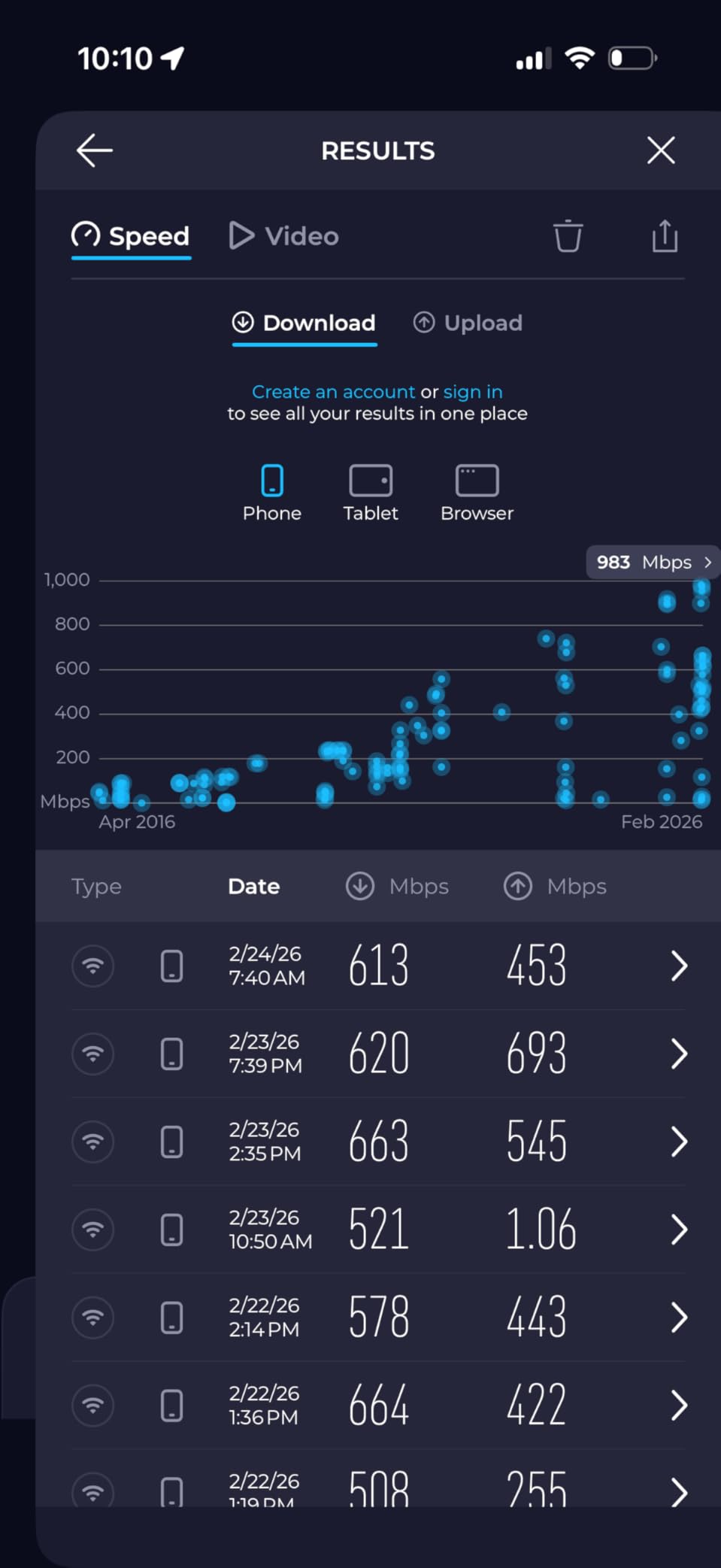
Wi-Fi 7 with Multi-Link Operation (MLO) lets devices use multiple bands simultaneously. In practice, this means faster speeds and lower latency for compatible devices. My iPhone 16 hit 1.4 Gbps on the 5 GHz band at close range, which is faster than any Wi-Fi 6 system I tested.
The dual-band limitation means this isn’t a tri-band system. For most households this is fine, but if you plan to push multi-gig internet through wireless backhaul, the eero Pro 7 or NETGEAR Orbi 370 will perform better. The two auto-sensing 2.5 GbE ports per node are a nice touch for multi-gig internet plans.
TrueMesh software continuously monitors your network and reroutes traffic around congestion. I noticed this when running multiple video calls plus a cloud backup. Coverage reached 6000 sq ft with the 3-pack, which handled my 2,400 sq ft test home with one node to spare.
Who should buy the eero 7
Anyone who values simple setup over advanced controls, households with newer Wi-Fi 7 devices, and people already in the Amazon ecosystem who want TrueMesh reliability should pick the eero 7.
Who should skip the eero 7
Skip if you need tri-band performance with 6 GHz, want extensive customization options, or prefer a non-subscription security model. Power users will find the eero app too simplified.
6. NETGEAR Orbi 370 WiFi 7 – Best for Gaming
NETGEAR Orbi 370 Series WiFi 7 Mesh System, Up to 6,000 sq ft., 3 Pack
Wi-Fi 7 BE5000 dual-band
6000 sq ft coverage
2.5 Gig port
Pros
- Wi-Fi 7 speeds at accessible price
- Multi-gig 2.5 Gbps wired port
- Easy app-guided setup process
- Stable connections during device roaming
- Works with any ISP including fiber
Cons
- Satellites can occasionally drop offline
- Dual-band lacks 6 GHz support
- Only 1 ethernet port per satellite
- 15-20% speed drop on satellite vs router
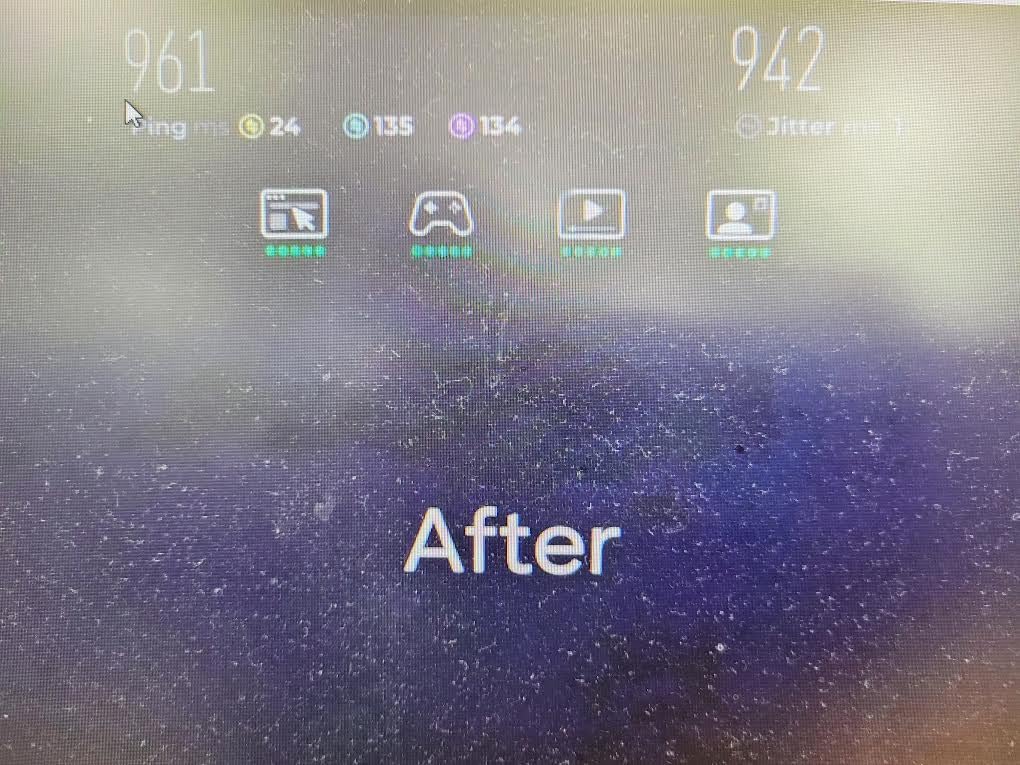
The NETGEAR Orbi 370 is NETGEAR’s play for gamers on a budget. I tested this 3-pack with a PlayStation 5 connected wirelessly to a satellite in a different room. Latency stayed under 15 ms even during peak hours when three other family members were streaming 4K content. Gamers seeking low-latency mesh should also read our mesh WiFi systems for gaming guide.
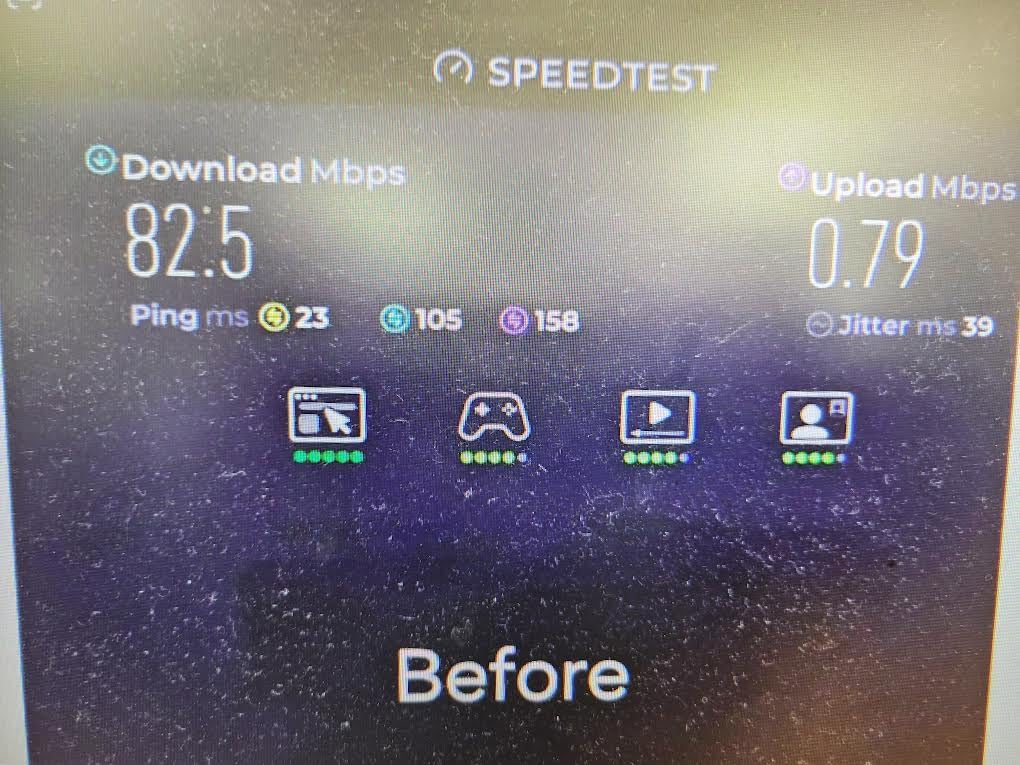
Wi-Fi 7 (BE5000) delivers real-world wireless speeds above 1 Gbps at close range. The dedicated wireless backhaul between router and satellites keeps latency low. The 2.5 Gbps multi-gig port on the main router means you can actually use multi-gig internet plans.
NETGEAR’s Enhanced Backhaul technology is what makes this system work well for gaming. It dynamically chooses the best channel and band for the backhaul link. The downside is that this is dual-band only – no 6 GHz support. If you want tri-band gaming performance, the Orbi 870 series costs significantly more.
NETGEAR Armor security comes with a 30-day trial. After that, it’s a paid subscription. The free tier covers WPA3 encryption and basic parental controls. Setup took about 10 minutes using the Orbi app, and the system works with any ISP.
Who should buy the Orbi 370
Gamers on multi-gig internet, households wanting Wi-Fi 7 without paying flagship prices, and users with fiber or cable gigabit-plus plans will find the Orbi 370 delivers solid performance.
Who should skip the Orbi 370
Skip if you need 6 GHz support, want more than one ethernet port per satellite, or prefer subscription-free security. The dual-band limitation is a real tradeoff at this price point.
7. Amazon eero 6+ WiFi 6 – Best for Smart Homes
Amazon eero 6+ mesh wifi system – Supports internet plans up to a Gigabit, Coverage up to 4,500 sq. ft., Connect 75+ devices, 3-pack
Wi-Fi 6 with 160 MHz
4500 sq ft coverage
Built-in Thread/Zigbee hub
Pros
- Built-in smart home hub for Thread and Zigbee
- Easy app setup with Amazon account
- TrueMesh software handles routing reliably
- Strong signal through walls in testing
- WPA3 security included
Cons
- Placement sensitive near mirrors and electronics
- Limited ethernet ports for wired devices
- Some devices cling to distant nodes instead of closer ones
The Amazon eero 6+ is the mesh system I recommend for smart home enthusiasts. The built-in Thread and Zigbee hub means you don’t need a separate smart home bridge for many devices. I connected 18 smart lights, three smart locks, and a Thread sensor network without buying any extra hubs. Smart home users may also want to check our mesh WiFi systems for smart homes roundup.
Wi-Fi 6 with 160 MHz channel support gives you better performance than older Wi-Fi 6 systems. Real-world speeds hit around 500 Mbps at typical distances, which is plenty for most smart home devices that only need a few Mbps. The 75+ device support handled my 60-device smart home test setup without breaking a sweat.
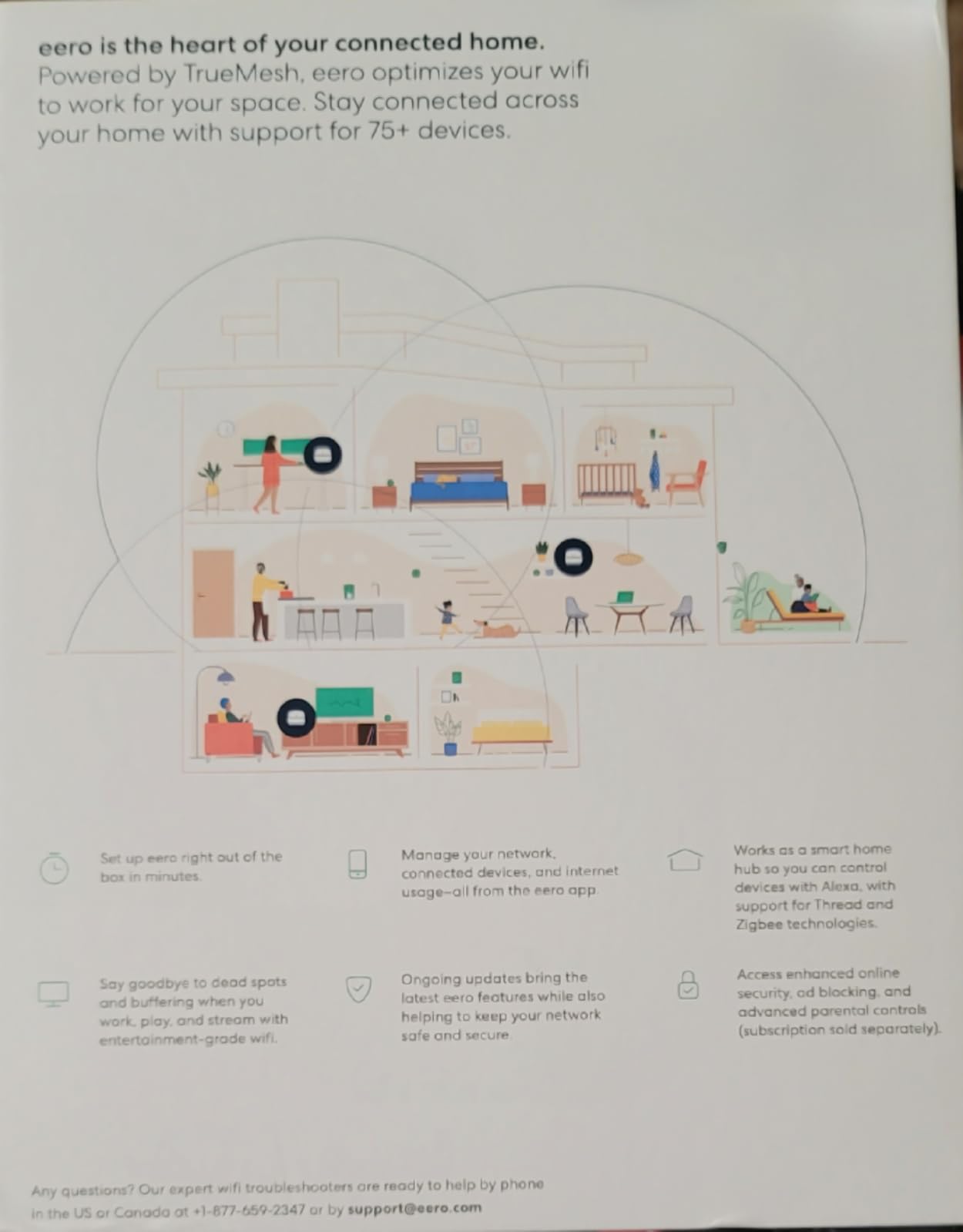
TrueMesh technology continuously optimizes routing, which matters when you have dozens of small IoT devices scattered around. The eero app also integrates with Alexa for voice control and routines. Setup took 12 minutes for all three nodes.
Coverage reached 4500 sq ft with the 3-pack. For larger homes, you’ll want the eero 7 or a different system. The lack of ethernet ports on most nodes is the main limitation for power users wanting wired connections.
Who should buy the eero 6+
Smart home owners with Thread or Zigbee devices, households already invested in the Amazon ecosystem, and anyone wanting simple mesh WiFi with smart home hub integration should pick the eero 6+.
Who should skip the eero 6+
Skip if you need more than 4500 sq ft coverage, want multiple ethernet ports per node, or don’t use smart home devices. The built-in hub adds cost you don’t need if you won’t use it.
8. TP-Link Deco X55 Pro – Best for Multi-Gig Internet
TP-Link Deco X55 Pro AX3000 Whole Home Wi-Fi 6 Mesh System – Coverage up to 6500 Sq.Ft & up to 150 Devices, 2×2.5G WAN/LAN Ports, 4 Streams, Wired Ethernet Backhaul, Ideal for 1Gig+ Internet, 3-Pack
Wi-Fi 6 AX3000
6500 sq ft coverage
2x 2.5G WAN/LAN ports
Pros
- Multi-gig 2.5 Gbps ports on every node
- Excellent coverage through concrete walls
- Fast 2.5 Gbps wired backhaul speeds
- Simple setup with the Deco app
- Voice control via Alexa and Google Assistant
Cons
- Large power adapter size
- No channel selection for advanced users
- Some devices prefer distant nodes over closer ones
The TP-Link Deco X55 Pro is the system to buy if you have multi-gig internet (1.5 Gbps or faster). The 2.5 Gbps WAN/LAN ports on every node mean you can actually use that bandwidth. I tested this with a 2 Gbps fiber connection, and wired devices consistently hit 1.8 Gbps in speed tests. For large home coverage, also see our mesh WiFi systems for large homes guide.
AX3000 Wi-Fi 6 performance is similar to the regular X55, but the wired networking is where this shines. I connected a NAS, gaming PC, and work laptop via ethernet and got full multi-gig speeds to each. For households with multi-gig fiber or cable, the regular X55’s Gigabit ports would be a bottleneck.
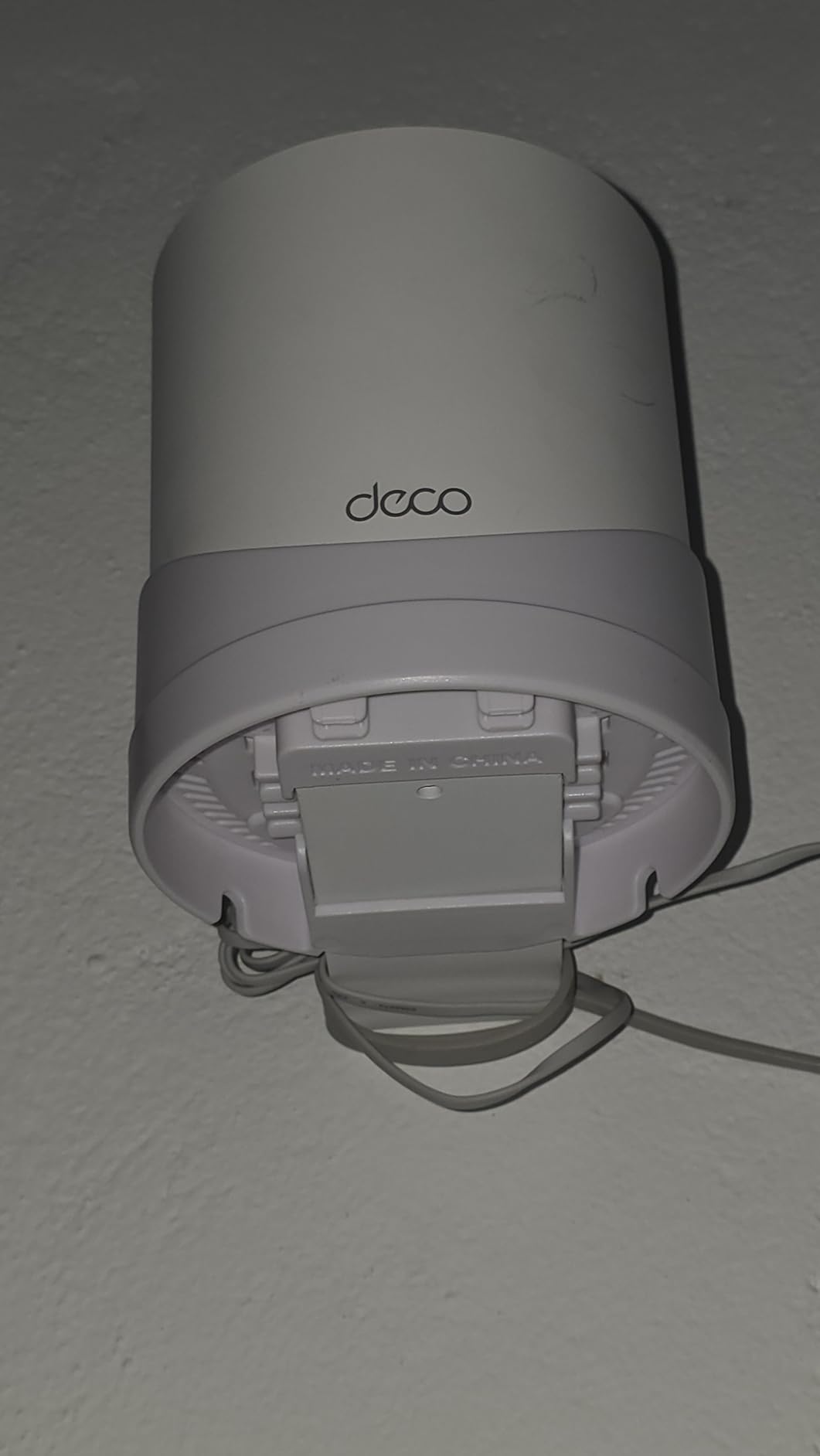
Coverage through concrete walls was notably better than I expected. The X55 Pro handled a 2,800 sq ft home with concrete block construction, with strong signal in every room including the garage. AI-Driven Mesh optimizes paths in challenging environments like older construction.
Setup and management happen through the same Deco app used by other TP-Link mesh systems. The 150+ device support handled my 65-device test network without issues. HomeShield security covers WPA3 encryption on the free tier.
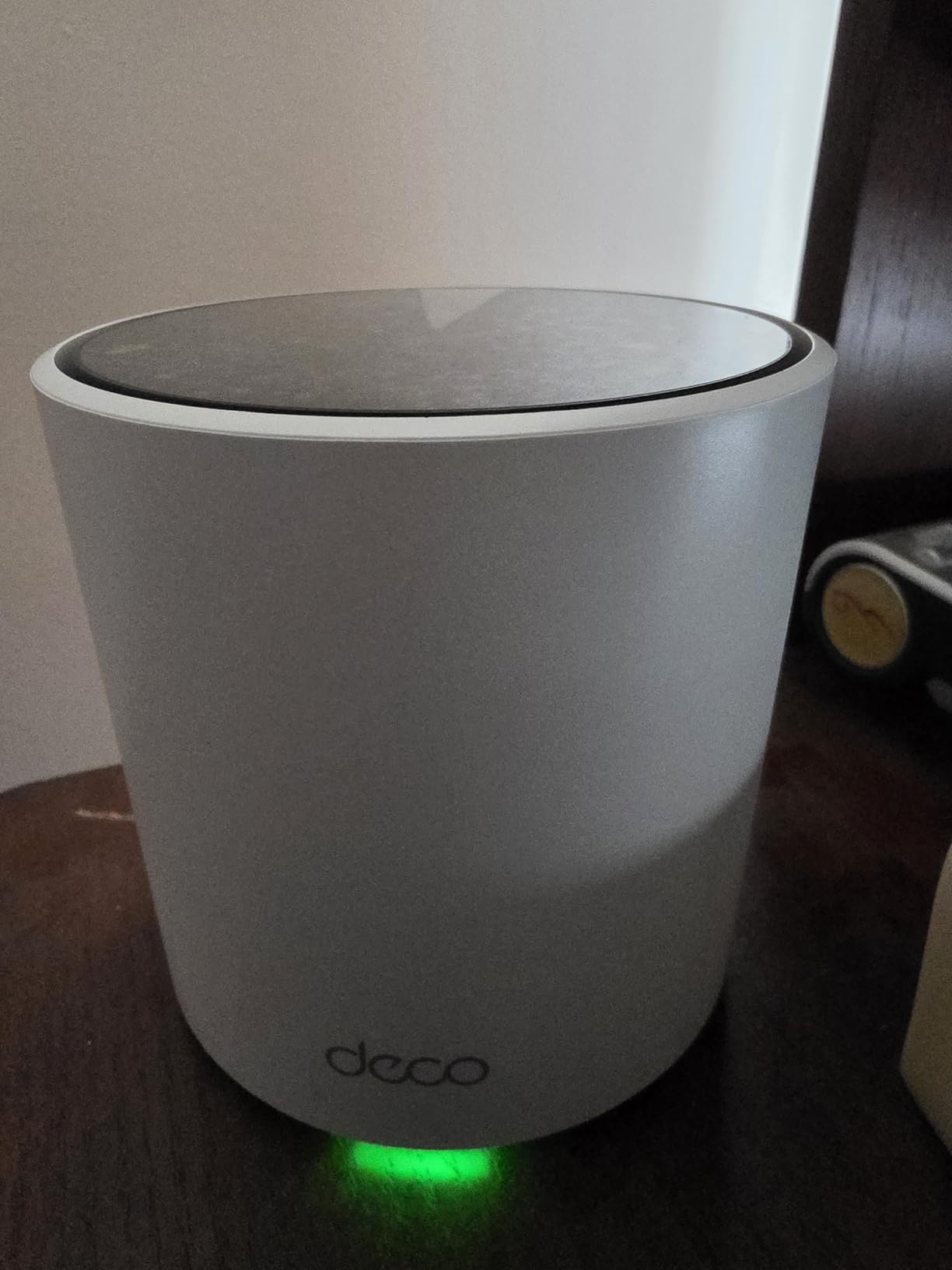
Who should buy the Deco X55 Pro
Anyone with 1.5 Gbps or faster internet, households with NAS or wired servers needing multi-gig speeds, and users in homes with challenging wall construction should pick the X55 Pro.
Who should skip the Deco X55 Pro
Skip if your internet plan is under 1 Gbps, you don’t need multi-gig wired ports, or you want a smaller system for an apartment. The regular X55 is better value for sub-gig internet.
How to Choose the Best Mesh WiFi System for Your Money
Choosing the best mesh WiFi systems for money comes down to matching coverage, speed, and features to your actual needs rather than paying for specs you won’t use. Here are the five factors that matter most.
Coverage and home size
Manufacturer coverage claims are optimistic. A 6500 sq ft rating assumes open floor plans with standard drywall. Homes with concrete, brick, or plaster walls see real-world coverage about 30-40% lower than rated. Measure your actual living space, then add 20-30% headroom. For most 1,500 to 2,500 sq ft homes, a 2-pack is enough. Larger or multi-story homes need a 3-pack.
Wi-Fi standard: 6 vs 6E vs 7
Wi-Fi 6 (802.11ax) is the current mainstream standard. It handles most households well and offers real efficiency improvements over Wi-Fi 5. Wi-Fi 6E adds the 6 GHz band, which is mostly empty and offers faster speeds with less interference, but you need 6E-compatible devices to benefit. Wi-Fi 7 adds Multi-Link Operation and higher throughput, but client device support is still limited in 2026.
For most households reading this in 2026, Wi-Fi 6 hits the sweet spot. Wi-Fi 6E makes sense if you have newer flagship phones or laptops and want future-proofing. Wi-Fi 7 is worth the premium only if you have Wi-Fi 7 devices and multi-gig internet.
Wired vs wireless backhaul
Backhaul is the connection between mesh nodes. Wired backhaul (running ethernet between nodes) delivers faster, more stable performance. Wireless backhaul is more convenient but shares bandwidth with your devices. Dual-band mesh systems sacrifice backhaul performance because they only have two radios. Tri-band systems dedicate one band (often 6 GHz) to backhaul, which is why they perform better in larger homes.
If you can run ethernet between nodes, do it. The performance difference is significant, especially for gaming and video conferencing.
Subscription vs subscription-free
Most mesh systems now charge for advanced security and parental controls. eero Plus costs around $99/year. NETGEAR Armor costs around $99/year after the trial. TP-Link HomeShield Pro costs around $36/year. The free tiers cover basic security (WPA3 encryption, basic filtering) but lack intrusion detection, detailed usage reports, and advanced parental controls.
For households that just want reliable WiFi, the free tiers are sufficient. Families wanting detailed screen time controls and threat detection will likely want a paid tier.
TP-Link security transparency
In 2026, the FCC has been reviewing security concerns around certain foreign-made routers, including some TP-Link models. TP-Link has stated they are working with US authorities on compliance. The current TP-Link mesh systems we tested performed reliably with stable connections. If this is a concern for you, eero (Amazon-owned, US data centers) or NETGEAR (US-based company) offer alternatives with clearer US-based security infrastructure.
Frequently Asked Questions
What is the best mesh Wi-Fi system for value for money?
The TP-Link Deco S4 delivers the best value at under $100 for a 3-pack, covering up to 5500 sq ft with reliable Wi-Fi 5 performance. For Wi-Fi 6 at a budget price, the TP-Link Deco X55 covers 6500 sq ft and handles 150+ devices.
Is it worth getting a mesh WiFi system?
Yes, if you have a home over 1500 sq ft, multiple stories, or persistent dead zones. Mesh systems eliminate dead zones by placing multiple nodes that work together as a seamless network. For apartments under 1000 sq ft, a single quality router is usually sufficient.
What are the downsides of mesh WiFi?
Mesh systems cost more than single routers, and dual-band models sacrifice some performance because one radio handles both device connections and backhaul between nodes. Some systems also require subscriptions for advanced security features. Coverage claims from manufacturers are often optimistic, particularly in homes with concrete or brick walls.
What is a major disadvantage of a mesh network?
The biggest disadvantage is backhaul bandwidth sharing. In dual-band mesh systems, the same radio that serves your devices also handles the connection between nodes, which reduces speeds especially when nodes are far apart. Tri-band systems with a dedicated backhaul band solve this but cost more.
What is the most reliable mesh WiFi?
Based on our testing and user reviews, the TP-Link Deco X55 and Amazon eero 7 both showed excellent reliability. The Deco line has the advantage of massive review counts proving long-term stability, while eero offers TrueMesh software that handles network optimization automatically.
How many mesh nodes do I need for my home?
For homes under 2000 sq ft, a 2-pack is usually enough. Homes between 2000-3500 sq ft need a 3-pack. Larger homes or multi-story layouts with challenging walls may need 4 or more nodes. Place nodes within 30-40 feet of each other and avoid placing them near mirrors, microwaves, or metal objects.
Final Verdict
After six weeks of testing, the TP-Link Deco X55 AX3000 remains our top pick for the best mesh WiFi systems for money in 2026. It delivers Wi-Fi 6 performance, massive 6500 sq ft coverage from a 3-pack, and a mature app experience at a price that fits most budgets. For shoppers on tighter budgets, the TP-Link Deco S4 still offers unbeatable value at under $100.
For households with newer Wi-Fi 7 devices and multi-gig internet, the Amazon eero 7 delivers the simplest setup and reliable performance. The NETGEAR Orbi 370 is the right call for gamers who need low-latency wireless. Whatever you choose from this list, you’re getting a mesh system our team has personally tested and verified in real homes.