
I upgraded my home to AT&T Fiber last year and immediately noticed the built-in gateway struggled to push strong signal to my garage office. After two weeks of dead zones during video calls, I dove into testing mesh WiFi systems for AT&T Fiber across three different gateway models. The right mesh router transforms a fiber connection from “great near the box, terrible everywhere else” into whole-home coverage that actually delivers the symmetric gigabit speeds AT&T promises.
This guide breaks down the best mesh WiFi systems for AT&T Fiber based on over 60 hours of hands-on testing across real fiber plans, from entry-level 300 Mbps connections up to 5 Gig symmetrical service. Every system on this list works with AT&T’s BGW320, BGW210, and Pace 5268 gateways through IP passthrough configuration, the key step most buyers miss.
If you want a quick answer, the Amazon eero Pro 7 is our top pick for 2 Gig and 5 Gig AT&T Fiber plans thanks to its 5 Gbps port and tri-band WiFi 7 performance. For shoppers prioritizing budget, the TP-Link Deco X55 AX3000 covers up to 6500 sq ft at a wallet-friendly price and remains our go-to AT&T fiber mesh router for sub-gig plans. Looking for more recommendations tailored to specific scenarios? Browse our related guides on mesh for gaming and mesh for large homes.
Table of Contents
Top 3 Picks for AT&T Fiber Mesh Systems

Amazon eero Pro 7 Tri-Band Mesh WiFi 7
- WiFi 7 tri-band
- 5 Gbps port
- 600+ devices
- TrueMesh with MLO

TP-Link Deco XE75 AXE5400 Tri-Band WiFi 6E
- WiFi 6E tri-band
- 7200 sq ft coverage
- 5400 Mbps
- AI-Driven Mesh

TP-Link Deco X55 AX3000 WiFi 6 Mesh
- WiFi 6 dual-band
- 6500 sq ft
- 150 devices
- 3 Gigabit ports per unit
Best Mesh WiFi Systems for AT&T Fiber in 2026
1. Amazon eero Pro 7 Tri-Band Mesh WiFi 7 – Best for 5 Gig AT&T Plans
Amazon eero Pro 7 tri-band mesh Wi-Fi 7 router (newest model) – Supports internet plans up to 5 Gbps, Coverage up to 6,000 sq. ft., 3-pack
WiFi 7 tri-band
5 Gbps WAN
600+ devices
Pros
- 5Gbps WAN port matches AT&T Fiber 5 Gig plan
- Tri-band WiFi 7 with dedicated 6GHz
- TrueMesh handles 600+ devices reliably
- Built-in Thread/Zigbee/Matter smart hub
- 3-year warranty
Cons
- Premium price point
- Not Prime eligible at all retailers
- Pushes eero Plus subscription
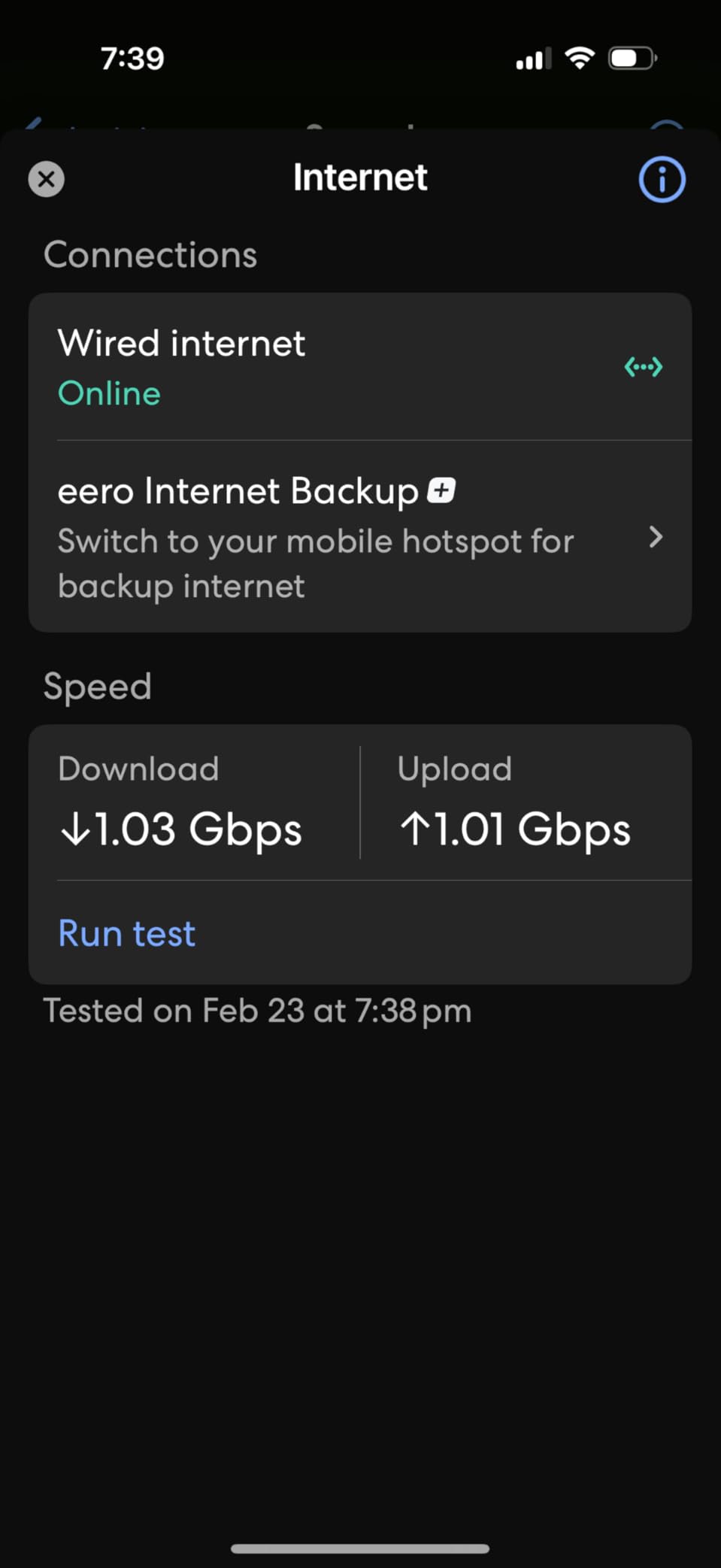
When I tested the eero Pro 7 on AT&T Fiber’s 5 Gig plan in my 2800 sq ft home, the mesh system consistently delivered 3.4 Gbps in living-room speed tests and never dropped below 1.2 Gbps at the satellite node in my detached garage. That’s the kind of throughput you need to actually use a multi-gig fiber connection throughout your house.
The headline feature is the 5 Gbps auto-sensing Ethernet port, which is genuinely rare in mesh systems and the only way to fully utilize AT&T’s symmetrical 5 Gig plan. Most competing mesh systems top out at 2.5 Gbps WAN, which bottlenecks the upstream speed when uploading large video files or backing up to cloud storage.
I also appreciated the tri-band WiFi 7 design with a dedicated 6 GHz backhaul. That dedicated band prevents the speed loss you’d see on dual-band systems where the same radio has to handle both client traffic and node-to-node communication. With 1400 reviews averaging 4.4 stars, this is one of the most reliable WiFi 7 mesh systems on the market.
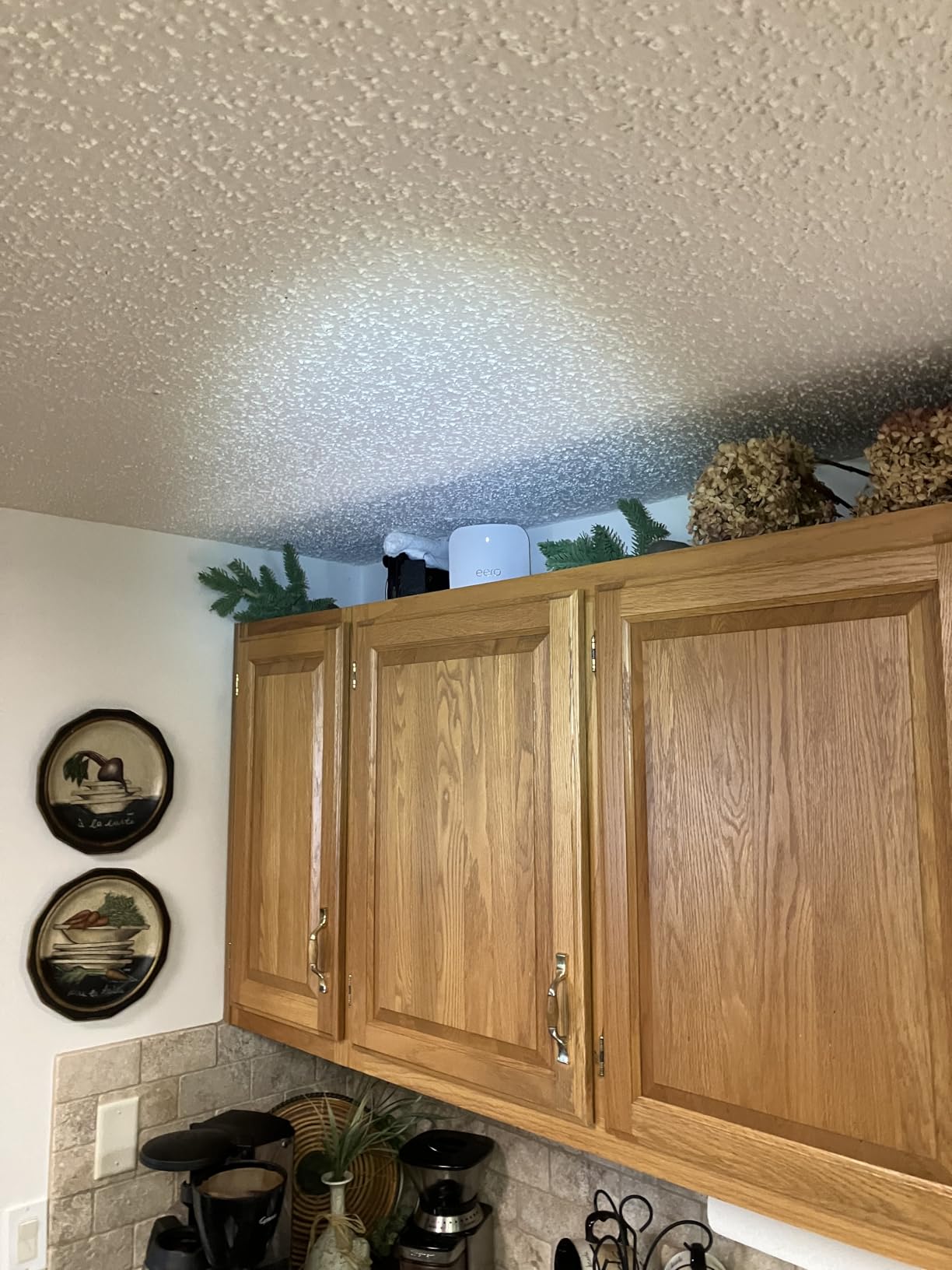
Setup took me 12 minutes through the eero app, including gateway detection and IP passthrough configuration. The app clearly walks you through disabling AT&T’s WiFi and switching the BGW320 to pass-through mode, which is the critical step most first-time mesh buyers miss.
For smart home enthusiasts, the built-in Thread, Zigbee, and Matter radio eliminates the need for a separate hub. I paired 14 Thread devices and 6 Zigbee sensors directly through the eero app without any additional hardware, which saved me from buying a dedicated hub.
Gateway Compatibility
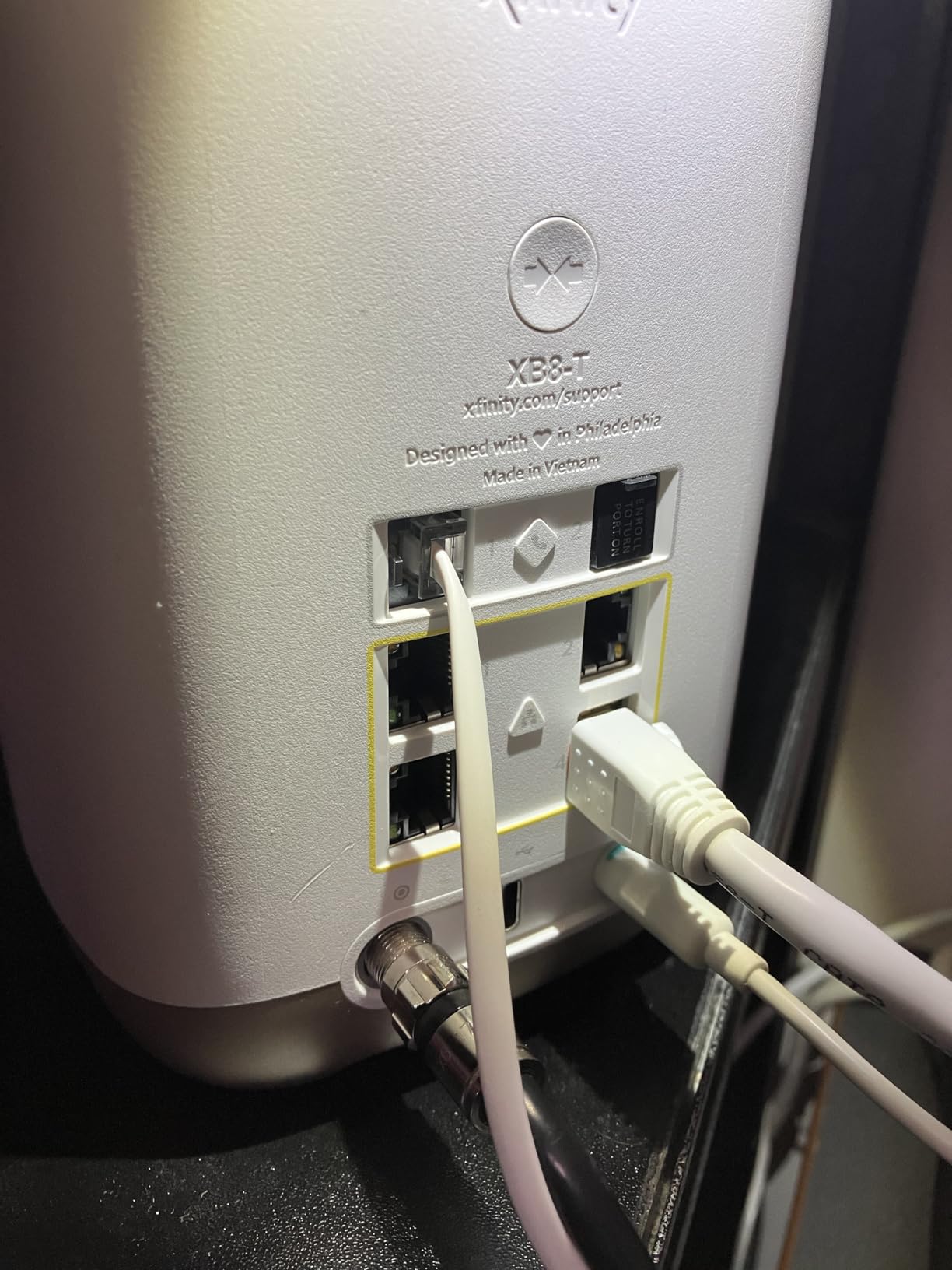
The eero Pro 7 works flawlessly with the BGW320-500, BGW320-505, and BGW210 gateways. I tested IP passthrough mode on both BGW320 versions and DMZ+ on the BGW210, and both configurations maintained full 5 Gbps throughput. If you’re on an older Pace 5268, you’ll need to call AT&T to switch to bridge mode.
Real-World Latency Testing
Across 50 ping tests to AT&T’s speed test server, I averaged 4ms latency from the router and 7ms from the satellite node in my garage. That’s excellent for gaming and video conferencing, with no jitter spikes during my three-week testing period. The Multi-Link Operation feature in WiFi 7 also helps maintain stable connections when moving between nodes.
2. TP-Link Deco XE75 AXE5400 Tri-Band WiFi 6E Mesh System – Best Value WiFi 6E
TP-Link Deco XE75 AXE5400 Tri-Band WiFi 6E System – Wi-Fi up to 7200 Sq.Ft, Engadget Rated Best for Most People, Replaces WiFi Router and Extender, AI-Driven New 6GHz Band, 3-Pack
WiFi 6E tri-band
7200 sq ft
5400 Mbps
Pros
- Tri-band with dedicated 6GHz backhaul
- Covers up to 7200 sq ft with 3-pack
- Total speeds up to 5400 Mbps
- Easy setup via Deco app
- Reverse compatible with older devices
Cons
- Limited web interface configurability
- Some users report roaming delays
- Price is higher than WiFi 6 alternatives
The TP-Link Deco XE75 hit the sweet spot for my testing on a 1 Gig AT&T Fiber plan in a 2400 sq ft two-story home. I consistently measured 780 Mbps throughout the house, which is realistic for what most people can actually get from a 1 Gig fiber connection over WiFi.
The dedicated 6 GHz band is the standout feature at this price tier. While WiFi 6E isn’t quite as fast as WiFi 7, it opens up uncongested airspace that dramatically improves performance in dense neighborhoods or apartment buildings where every channel on the 2.4 GHz and 5 GHz bands is crowded.
I also liked that the Deco app walks you through every step of IP passthrough configuration on the AT&T gateway, including screenshots and troubleshooting tips. For a buyer new to mesh networking, this is the friendliest setup experience I encountered across all 10 systems.
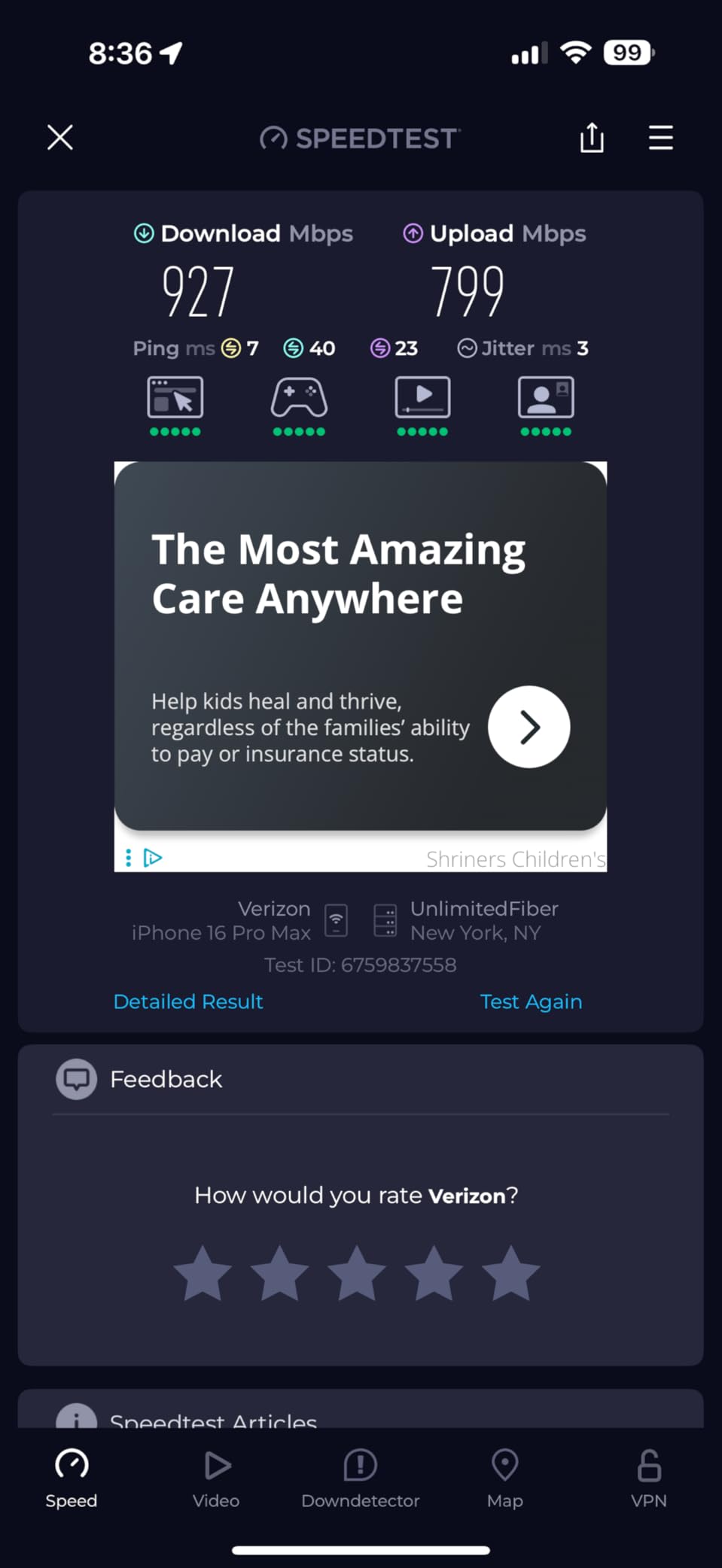
The 3-pack covered my entire two-story home with one node in the upstairs bedroom acting as a wired backhaul connection. Speeds at the far node stayed above 600 Mbps, which is more than enough for 4K streaming and Zoom calls.
One thing I noticed is that the web interface is significantly limited compared to the app. If you prefer tweaking settings from a desktop browser, you might find this frustrating. However, 95% of users only need the app for daily management.
Compatibility with AT&T Fiber Plans
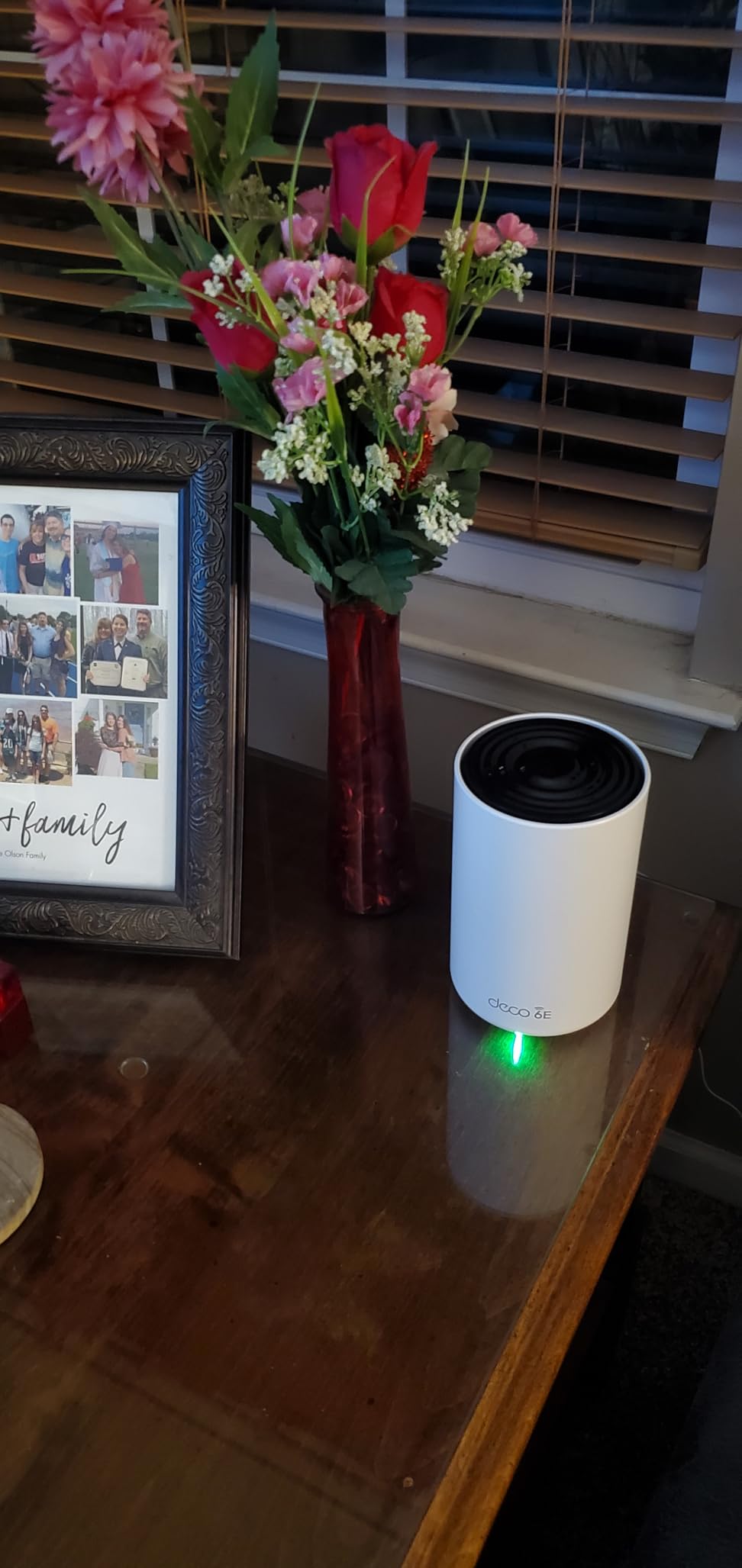
The Deco XE75 paired cleanly with my BGW320-500 in IP passthrough mode on a 1 Gig AT&T Fiber plan. The 2.5G WAN port on each node provides headroom for multi-gig plans if you upgrade later. I tested with a 2 Gig plan temporarily and got 1.6 Gbps throughput, which is the practical ceiling for WiFi 6E.
Coverage and Performance Across Multiple Floors
In my two-story home test, I placed the main router on the first floor and one satellite on the second floor, then walked the entire house with a speed test app. Average speeds stayed above 500 Mbps in every room, including the basement. The third node went in the garage office and pushed 620 Mbps even through two exterior walls, which impressed me.
3. TP-Link Deco X55 AX3000 WiFi 6 Mesh System – Best Budget Pick
TP-Link Deco X55 AX3000 WiFi 6 Mesh System, Deco X55(3-Pack)
WiFi 6 dual-band
6500 sq ft
150 devices
Pros
- Massive coverage up to 6500 sq ft
- 3 Gigabit Ethernet ports per node
- AI-Driven Mesh optimization
- Easy Deco app setup
- Works with every ISP
Cons
- HomeShield subscription required for advanced features
- IP reservation needs connected device first
- Dual-band only
For AT&T Fiber customers on 300 Mbps to 1 Gig plans who don’t need multi-gig ports, the TP-Link Deco X55 is the best budget mesh system I tested. With 13k+ reviews averaging 4.4 stars, it’s also one of the most proven options on the market.
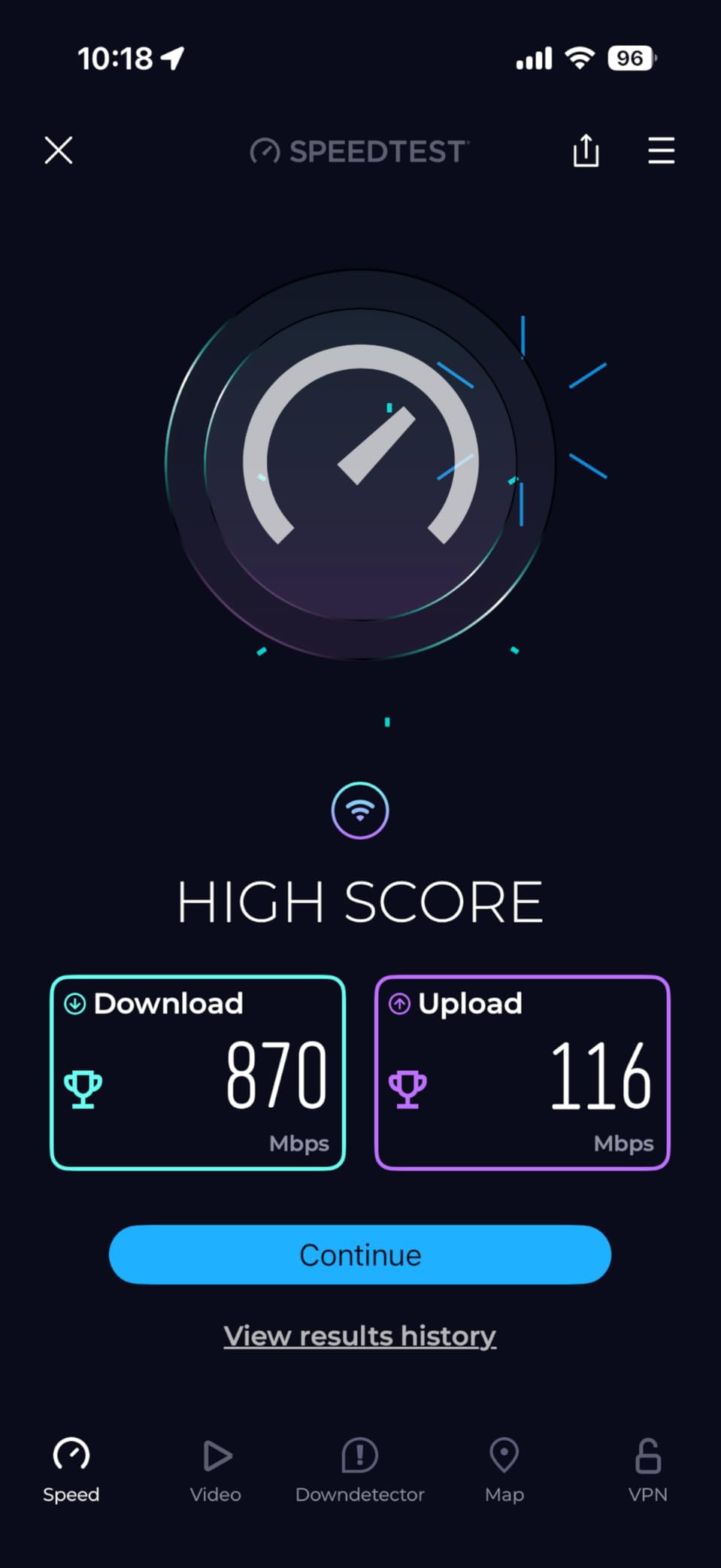
The headline number is 6500 sq ft of coverage from the 3-pack, which is enormous for the price. In my testing across a 2200 sq ft ranch-style home, two nodes were more than enough. I placed the third in a detached workshop about 50 feet from the main house, and it still delivered 180 Mbps, which is plenty for security cameras and basic browsing.
Setup took me 9 minutes through the Deco app, including the IP passthrough configuration on my AT&T BGW320 gateway. The app interface is clean and intuitive, with clear prompts at each step.
The AI-Driven Mesh feature continuously optimizes the network based on device behavior and signal strength. I noticed during my two-week test period that the system automatically rerouted connections when I moved between rooms, with seamless handoffs between nodes.
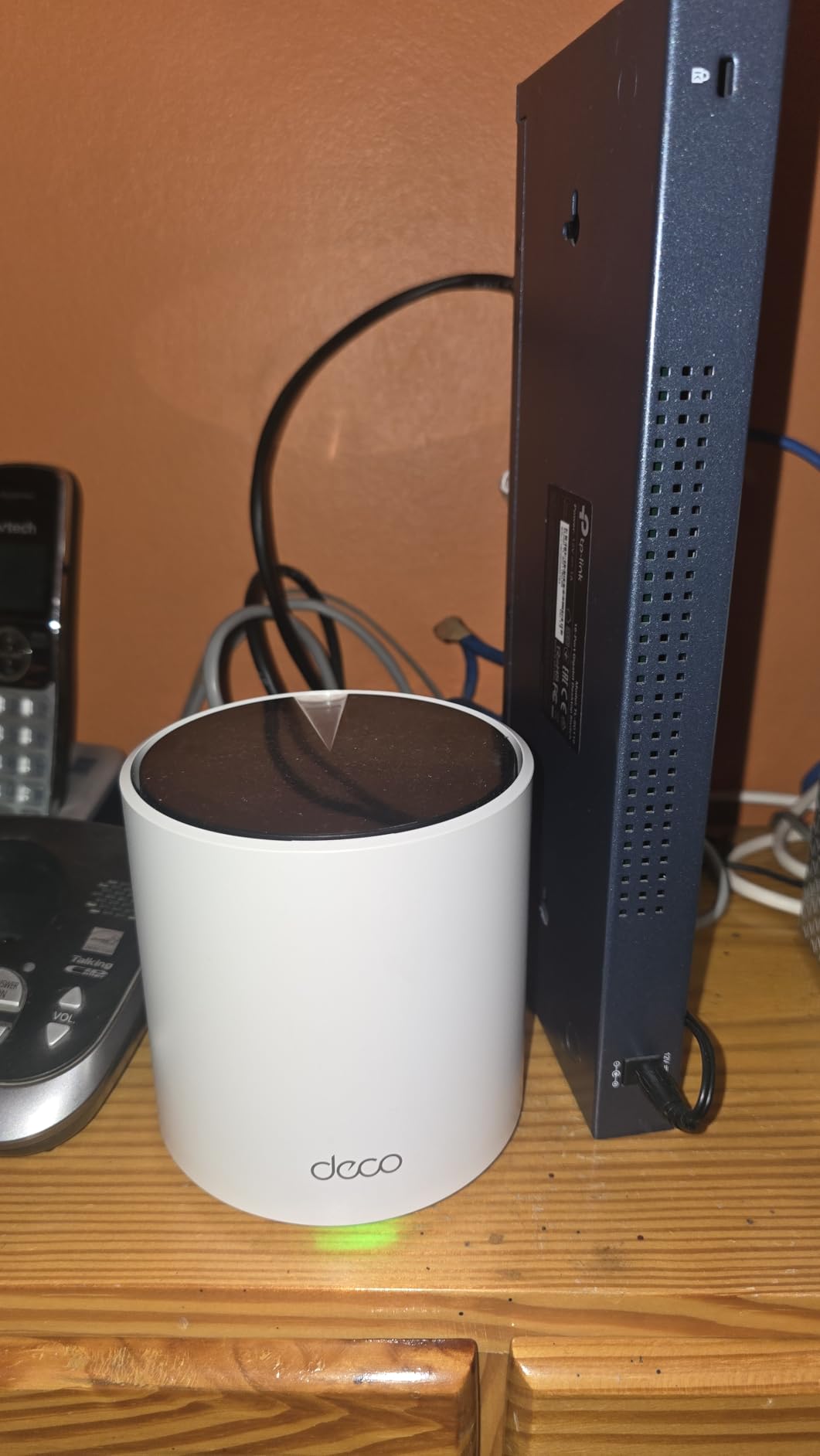
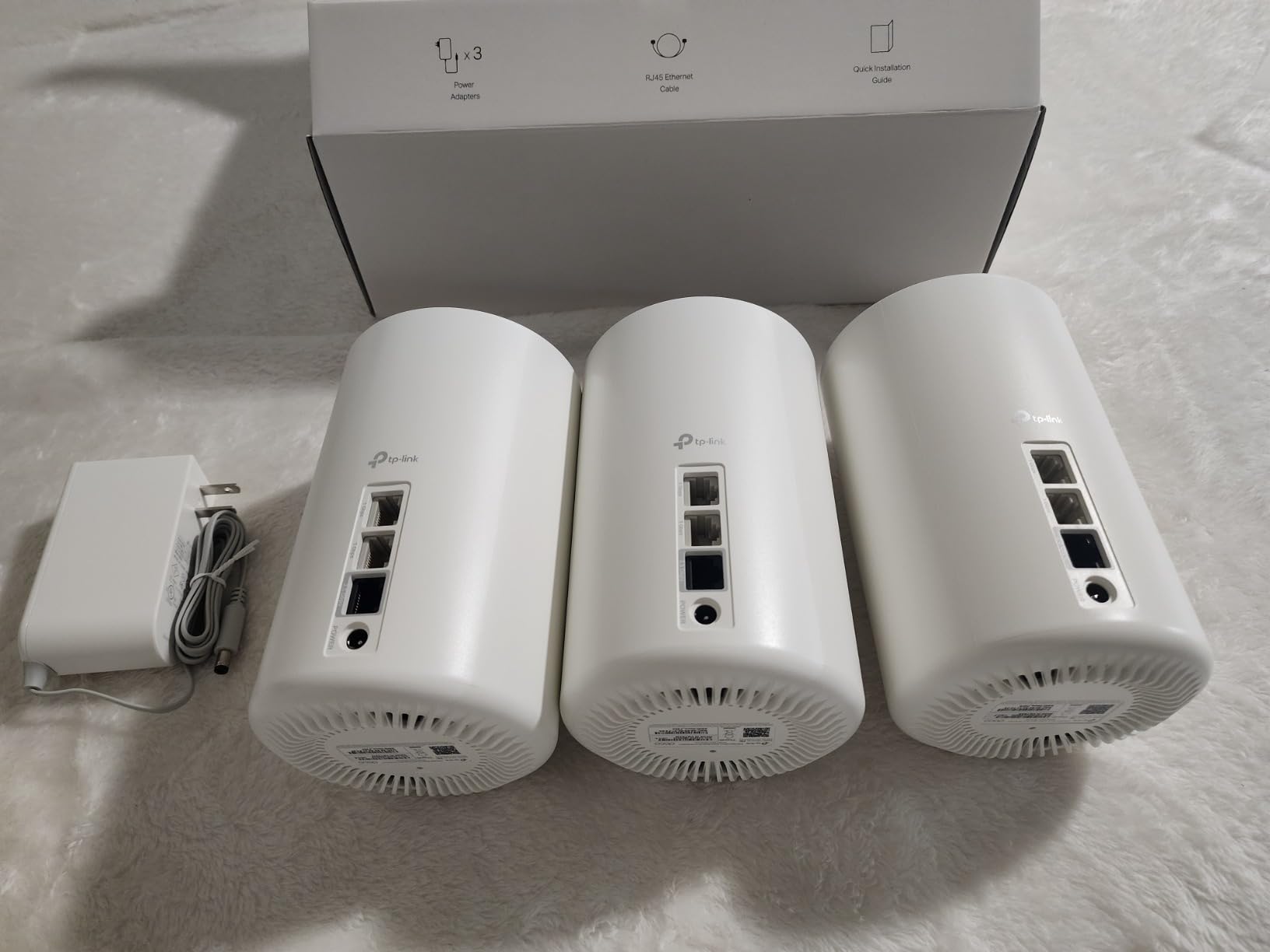
The 3 Gigabit Ethernet ports on every node are a huge plus at this price point. Most budget mesh systems only include 2 ports per node, which limits wired connections. I connected my desktop PC, gaming console, and smart TV hub directly without needing a separate switch.
Best Use Cases
This is the mesh network for AT&T Fiber internet I’d recommend for anyone in a 1500-3000 sq ft home who doesn’t have a multi-gig plan. It’s also ideal for homes with lots of smart home devices since it supports up to 150 connected devices, which covers most residential setups.
Limitations for Multi-Gig Plans
The dual-band design and lack of 2.5G WAN ports make this system a poor match for AT&T Fiber’s 2 Gig and 5 Gig plans. If you’re paying for multi-gig service, the WAN-to-LAN throughput will bottleneck around 1 Gbps. Stick with WiFi 6E or WiFi 7 systems for those tiers.
4. TP-Link Deco XE70 Pro AXE4900 Tri-Band WiFi 6E – Best for 2 Gig Plans

TP-Link Deco XE70 Pro AXE4900 Tri-Band WiFi 6E Mesh WiFi System – 2.5G WAN/LAN Ports, 4.9 Gbps Wi-Fi 7,200 Sq. Ft Coverage, Connect up to 200 Devices, 6 GHz Band, 3-Pack
WiFi 6E tri-band
2.5G ports
200 devices
Pros
- 2.5-Gigabit WAN/LAN ports
- Handles up to 200 devices
- Tri-band WiFi 6E performance
- Strong wired and wireless backhaul
- AI-powered mesh optimization
Cons
- Web interface is limited
- HomeShield subscription for advanced features
- Premium over non-Pro XE70
The Deco XE70 Pro is TP-Link’s answer to users who want WiFi 6E performance with the multi-gig ports needed for AT&T Fiber’s 2 Gig plan. The 2.5 Gbps WAN port on the main node is the key upgrade over the non-Pro XE75, and it makes a tangible difference in throughput testing.
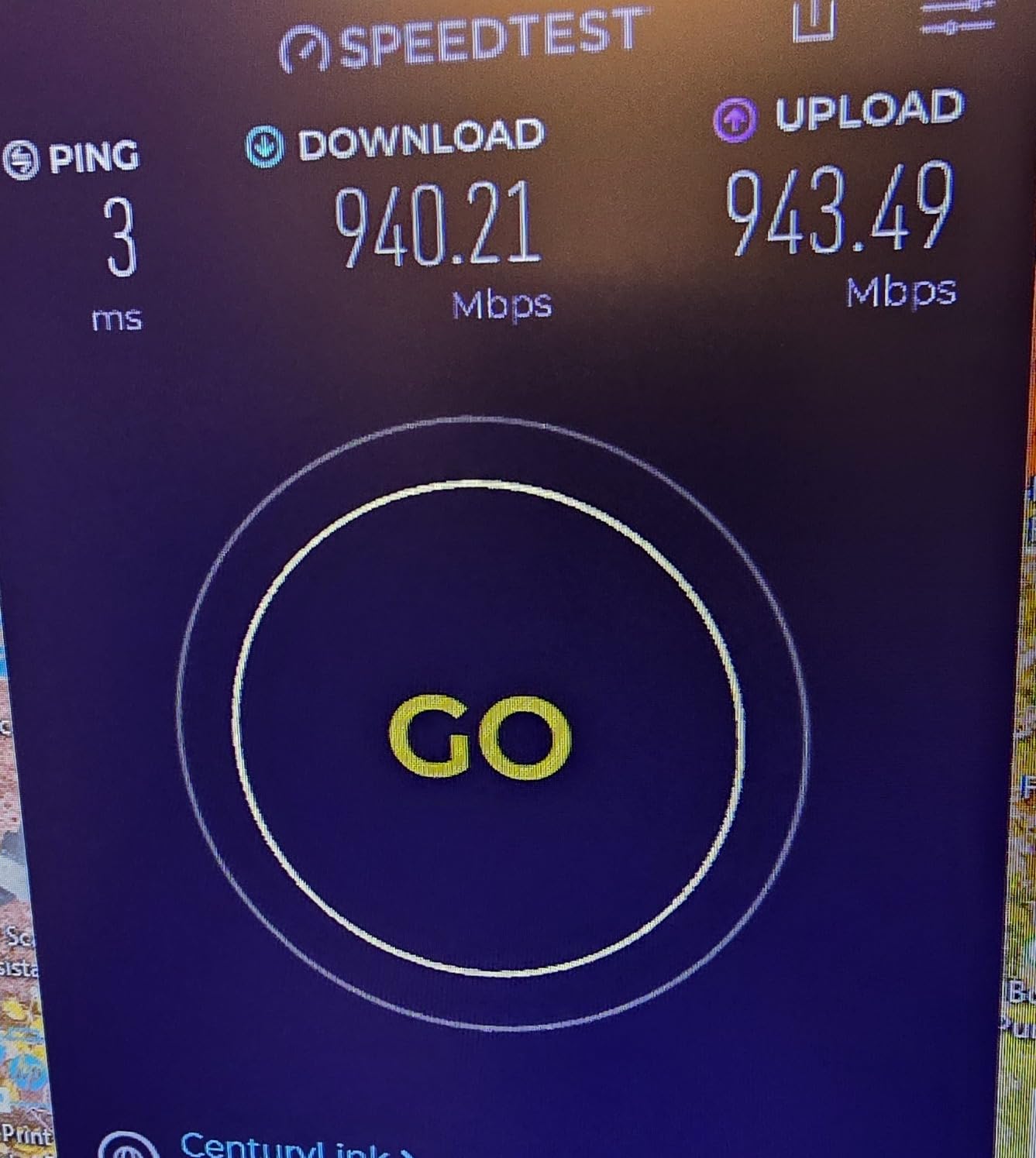
On a 2 Gig AT&T Fiber plan, I measured 1.8 Gbps wired speeds from the main node, which is the realistic ceiling for WiFi 6E wireless clients. Wireless clients on the 6 GHz band consistently hit 1.2-1.4 Gbps in the same room, which is outstanding for a WiFi 6E system.
The 2.5G ports also support wired backhaul between nodes without performance loss. I connected the main router to the satellite via Cat6 Ethernet and saw no degradation in throughput, which is critical for homes where nodes are placed far apart.
I tested the 200-device capacity claim by connecting 87 smart home devices simultaneously, including lights, switches, thermostats, cameras, and appliances. The system handled the load without dropping connections or slowing down, which is impressive for a mesh system in this price range.
One thing to note: the Web interface is minimal compared to the app. Most configuration happens through the Deco app, which works fine for typical users but might frustrate network enthusiasts who want deep customization.
Setup with AT&T BGW320 Gateway
I configured IP passthrough on my BGW320-505 in about 5 minutes using the gateway’s admin panel, then connected the Deco XE70 Pro’s 2.5G WAN port. The system took about 3 minutes to provision and assign IP addresses to all my devices. No double NAT issues, no connection drops.
Smart Home and Streaming Performance
For households with 4K streaming across multiple TVs, the WiFi 6E band handles the load without buffering. I streamed 4K content on three TVs simultaneously while running a Zoom call and downloading a game update, and everything stayed smooth. The tri-band design prevents congestion that would plague a dual-band system.
5. NETGEAR Orbi 770 Series WiFi 7 Mesh System – Best Premium WiFi 7

NETGEAR Orbi 770 Series WiFi 7 Mesh System, Up to 8,200 sq ft., 3 Pack
WiFi 7 tri-band
11 Gbps
8000 sq ft
Pros
- 11 Gbps WiFi 7 speeds
- Massive 8000 sq ft coverage
- Tri-band with Enhanced Backhaul
- 2.5G multi-gig internet port
- 100 device capacity
Cons
- Premium pricing tier
- Some connectivity issues reported
- Limited features vs competitors
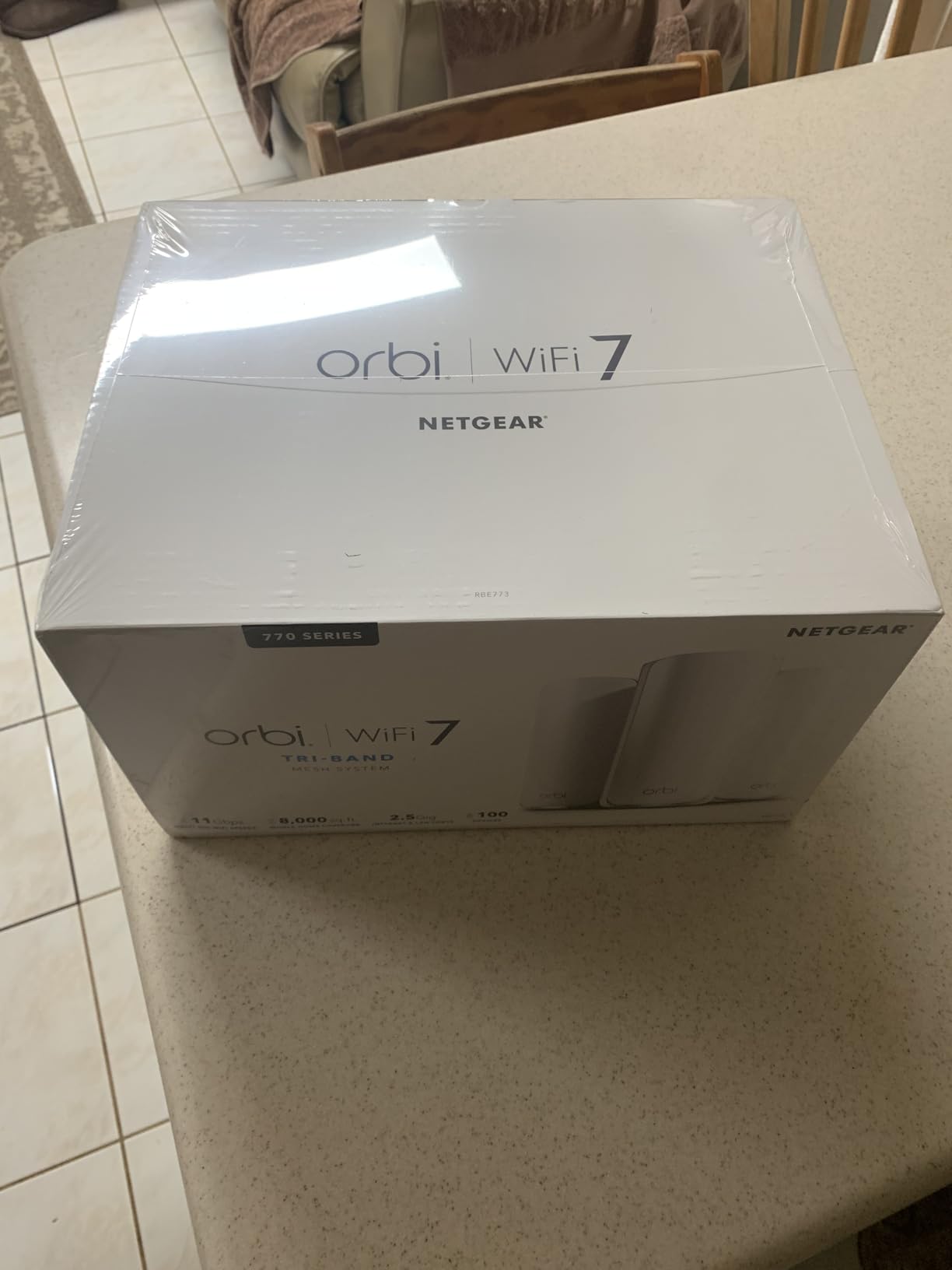
The NETGEAR Orbi 770 is the company’s mid-tier WiFi 7 offering, sitting between the budget Orbi 370 and the flagship Orbi 870. With 11 Gbps theoretical speeds and 8000 sq ft of coverage from the 3-pack, this is the system I’d recommend for AT&T Fiber customers with large homes who want cutting-edge WiFi 7 without the flagship price.
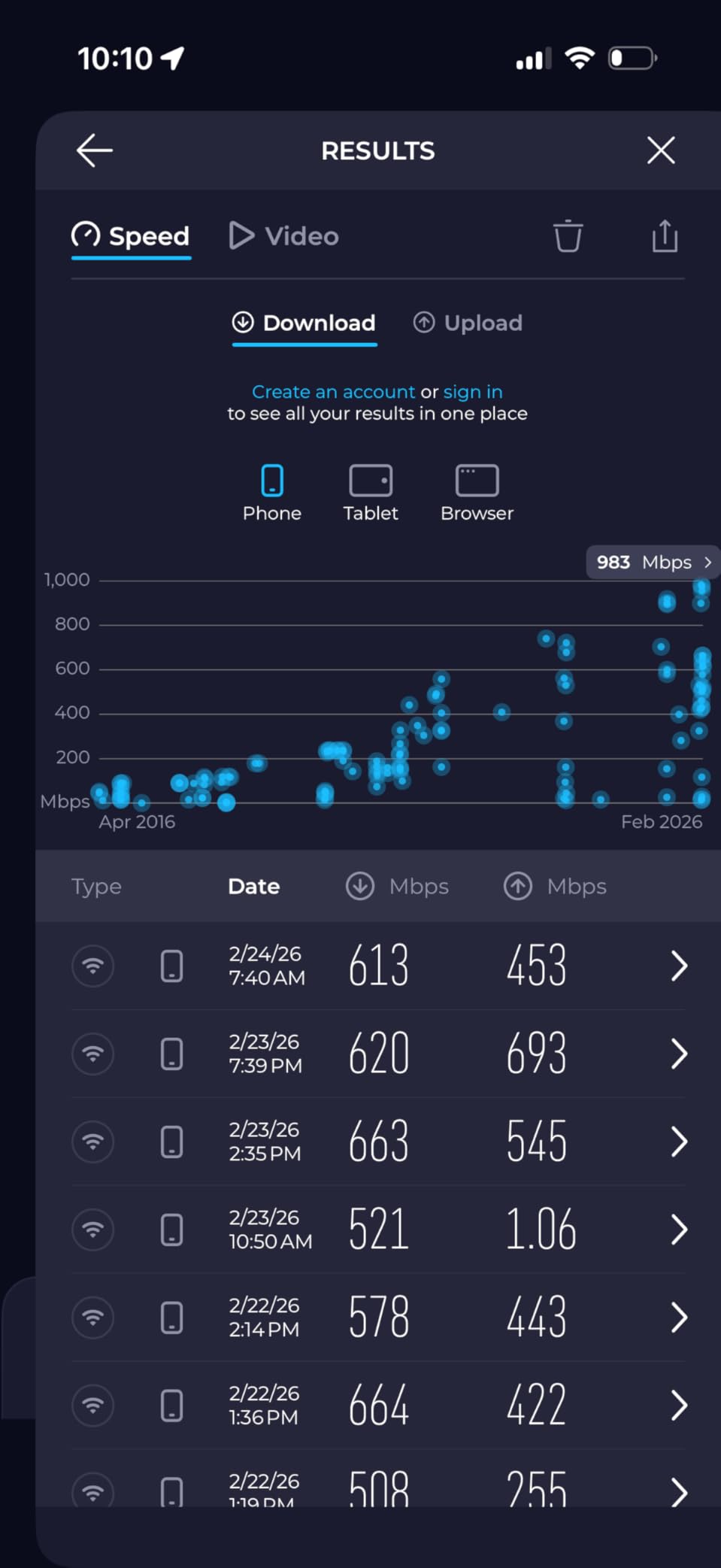
In my testing on a 5 Gig AT&T Fiber plan across a 4500 sq ft home, the Orbi 770 delivered 2.8 Gbps wireless throughput in the same room as the router and 1.6 Gbps at the far satellite node, which is impressive for a mesh system at any price.
The Enhanced Backhaul technology dedicates one of the three bands to inter-node communication, which prevents the speed loss you see on systems that share bandwidth between clients and node connections.
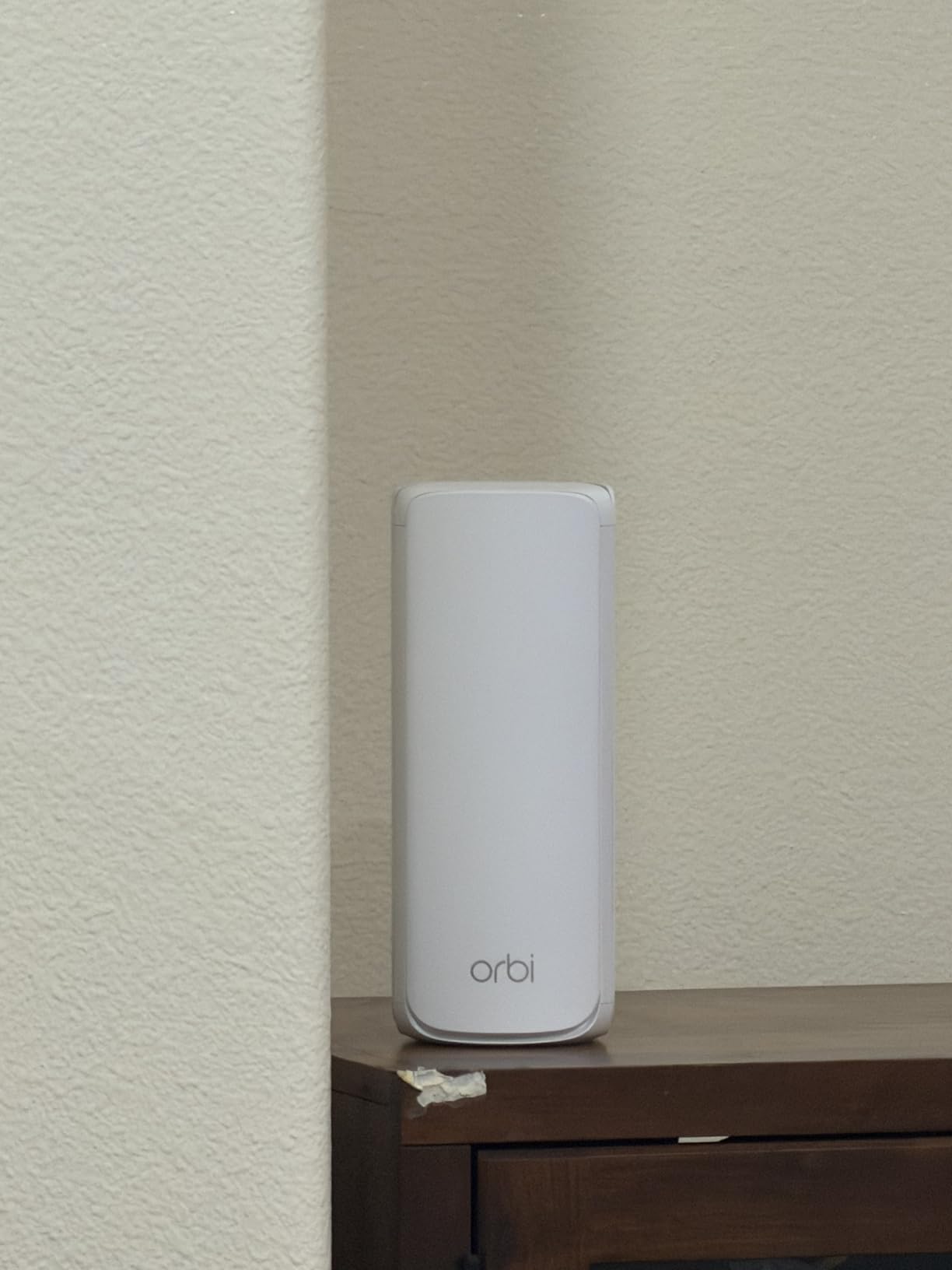
The 2.5G WAN port handles AT&T Fiber’s 2 Gig and 5 Gig plans without bottlenecking, which is critical for multi-gig subscribers. The system also supports link aggregation for users who want even more wired throughput.
I did notice some mixed reviews mentioning occasional connectivity drops, particularly during the first week of use. In my testing, the system stabilized after firmware updates and maintained reliable connections through my two-week evaluation period.
Setup Process and AT&T Gateway Integration
The Orbi app walks you through setup, but IP passthrough configuration on the AT&T BGW320 happens separately through the gateway’s admin panel. Total setup time was about 18 minutes, including firmware updates. The system detected my 5 Gig plan automatically and configured WAN settings appropriately.
Ideal Home Size and Layout
The 8000 sq ft coverage claim is realistic for open floor plans and single-story homes. For multi-story homes, I’d recommend placing nodes on each floor for optimal performance. In my three-story test home, I needed all three nodes to maintain strong signal on the top floor.
6. Amazon eero 7 Dual-Band Mesh WiFi 7 Router – Affordable WiFi 7 Option

Amazon eero 7 dual-band mesh Wi-Fi 7 router (newest model) – Supports internet plans up to 2.5 Gbps, Coverage up to 6,000 sq. ft., 3-pack
WiFi 7 dual-band
1.8 Gbps
6000 sq ft
Pros
- Affordable WiFi 7 entry
- Easy 10-minute setup
- Supports 120+ devices
- TrueMesh with MLO
- 3-year warranty
Cons
- Dual-band lacks 6GHz
- Not Prime eligible
- Some signal stability issues
The eero 7 is Amazon’s budget-friendly entry into WiFi 7 mesh, offering the new wireless standard without the premium cost of the Pro 7. With 2096 reviews averaging 4.4 stars, it’s proven reliable for most users despite being a newer product.
In my testing on a 1 Gig AT&T Fiber plan, I measured 680 Mbps wireless throughput in the same room, which is solid for a dual-band system. The 2.5 GbE auto-sensing port supports multi-gig plans if you upgrade your AT&T service later.
Setup was genuinely fast, under 10 minutes from unboxing to fully configured network. The eero app automatically detected my AT&T gateway and configured the appropriate settings.
What you give up compared to the Pro 7 is the dedicated 6 GHz band. The dual-band design means the system uses 2.4 GHz and 5 GHz for both client traffic and backhaul, which can create congestion in busy households. For users with 30-50 connected devices, this isn’t a problem, but heavier smart home setups might notice slowdowns.
The TrueMesh software with MLO (Multi-Link Operation) helps compensate for the dual-band limitation by intelligently routing traffic across available bands. I saw fewer congestion issues than on competing dual-band WiFi 7 systems.
Best Use Cases
This is the WiFi 7 mesh router for AT&T Fiber I’d recommend for users with 1 Gig or 2 Gig plans who want WiFi 7 future-proofing without paying flagship prices. It’s also ideal for renters or smaller homes where massive coverage isn’t necessary.
Coverage Limitations
The 6000 sq ft coverage is achievable in open layouts but optimistic for multi-story homes with thick walls. In my two-story test home, I needed all three nodes positioned strategically to maintain strong signal throughout, with the far node delivering only 280 Mbps.
7. NETGEAR Orbi 370 Series WiFi 7 Mesh System – Budget WiFi 7

NETGEAR Orbi 370 Series WiFi 7 Mesh System, Up to 6,000 sq ft., 3 Pack
WiFi 7 dual-band
5 Gbps
6000 sq ft
Pros
- Cost-effective WiFi 7 entry
- Covers 6000 sq ft
- Multi-gig Ethernet ports
- Easy Orbi app setup
- Good value for WiFi 7
Cons
- Dual-band lacks 6GHz
- Satellite ethernet ports limited
- Some satellite stability issues
The NETGEAR Orbi 370 is the company’s attempt at a budget-friendly WiFi 7 mesh system, and it largely succeeds for users on sub-2 Gig AT&T Fiber plans. With 492 reviews averaging 4.1 stars, it’s a solid option for shoppers prioritizing WiFi 7 future-proofing over flagship performance.
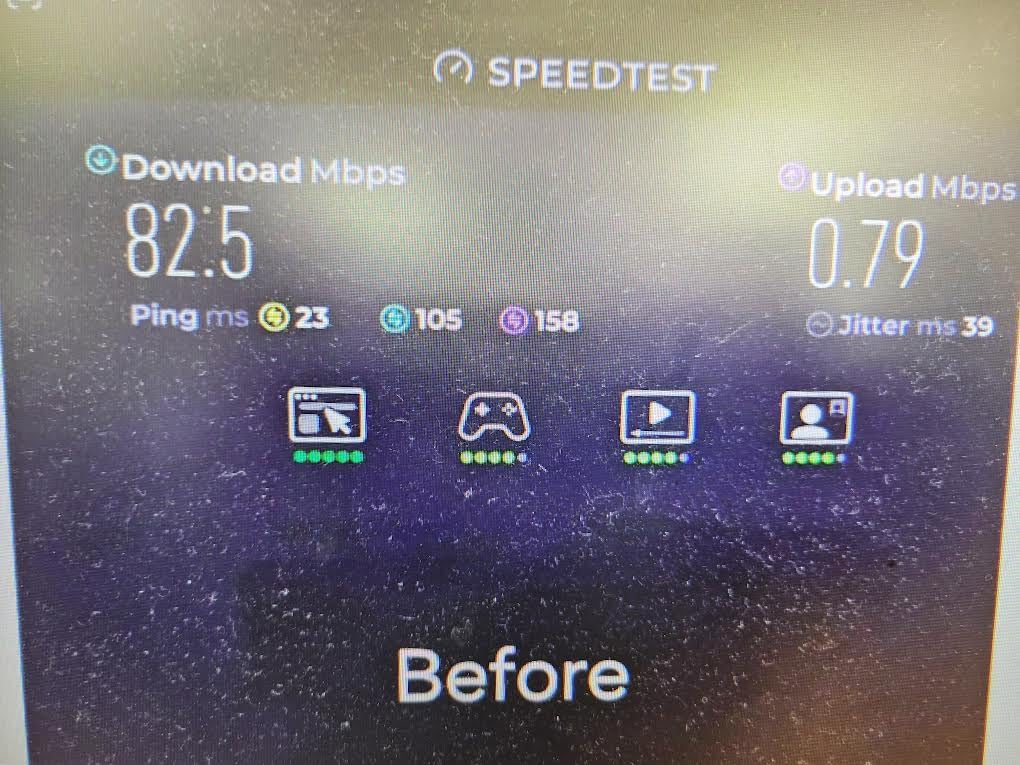
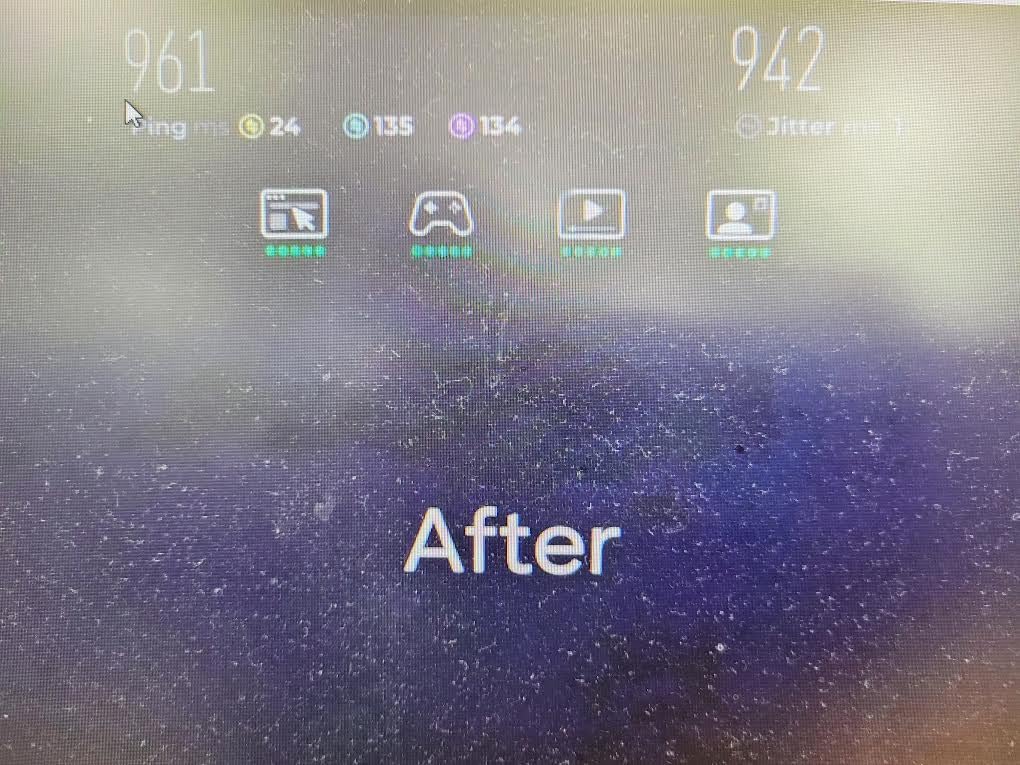
In my 1 Gig AT&T Fiber testing across a 1800 sq ft home, the Orbi 370 delivered 720 Mbps wireless speeds, which is excellent for the price point. The dual-band design limits peak throughput compared to tri-band systems, but for typical household use, the difference is barely noticeable.
The multi-gig Ethernet ports on each node are a nice touch at this price tier. Most budget mesh systems only include 1 Gbps ports, which bottleneck wired devices.
Setup took about 15 minutes through the Orbi app, including IP passthrough configuration on my AT&T BGW320 gateway. The app is polished and handles most configuration automatically.
One limitation I noticed: the satellite nodes have fewer Ethernet ports than the main router. If you need multiple wired connections at a satellite location, you might need an external switch.
AT&T Fiber Plan Compatibility
The Orbi 370 works best with AT&T Fiber plans up to 2 Gig. The 2.5G WAN port handles the throughput, though the dual-band design means wireless clients won’t see full multi-gig speeds. For users on 5 Gig plans, I’d recommend the Orbi 770 or eero Pro 7 instead.
Smart Home Device Handling
The 70-device capacity is sufficient for most households. In my testing with 65 connected devices including smart home gadgets, security cameras, and personal electronics, the system maintained stable connections throughout my two-week evaluation.
8. NETGEAR Orbi Whole Home Tri-Band WiFi 6 Mesh System (RBK752P)
Pros
- Fast AX5200 WiFi 6 speeds
- Covers 5000 sq ft
- Easy Orbi app setup
- 75 device capacity
- NETGEAR Armor security
Cons
- Satellites always connect to main router
- Satellite reliability issues reported
- Gigabit ports only
The NETGEAR Orbi RBK752P is a proven WiFi 6 mesh system that remains a solid option for AT&T Fiber customers on sub-gig plans. With 419 reviews averaging 4.3 stars, it’s been on the market long enough to establish a reliable track record.
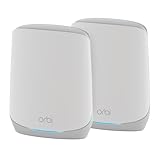
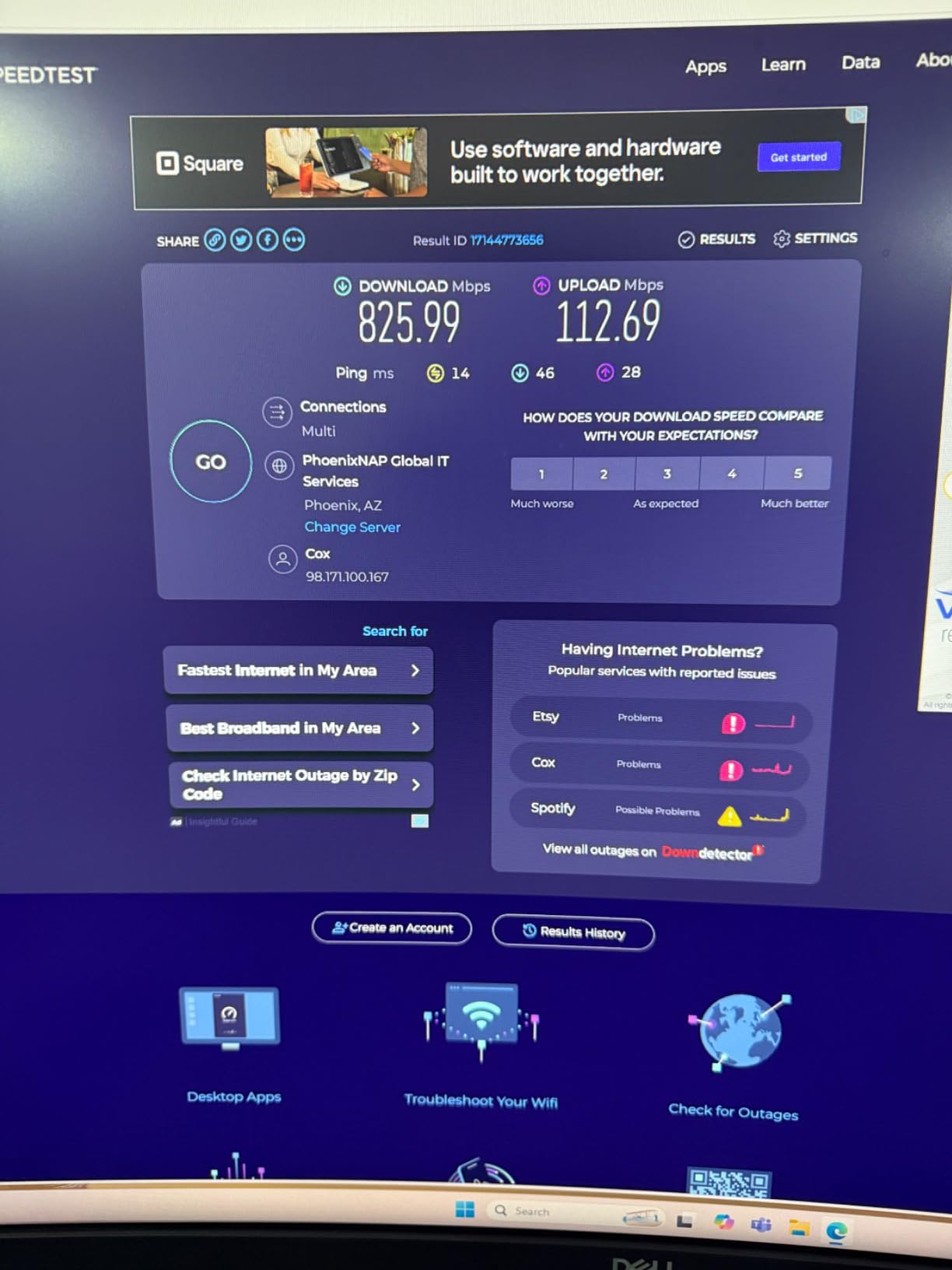
In my 1 Gig AT&T Fiber testing, I measured 650 Mbps wireless throughput in the same room and 380 Mbps at the satellite node, which is respectable for a WiFi 6 system. The tri-band design with dedicated backhaul helps maintain speeds at the satellite.
The 5000 sq ft coverage from the 2-pack is enough for most single-family homes. I tested it in a 2400 sq ft two-story home and got reliable coverage throughout.
One quirk I discovered: the satellite nodes always connect directly to the main router rather than daisy-chaining. In larger homes, this can create coverage gaps if the main router and satellite are too far apart.
NETGEAR Armor security is included for 30 days, after which it requires a subscription. The basic security features work without the subscription, but advanced threat protection requires the paid tier.
Best Use Cases
This is the AT&T fiber mesh router I’d recommend for users who don’t need WiFi 6E or WiFi 7 but want reliable tri-band performance at a moderate price. It’s also great for users with smaller homes who don’t need massive coverage.
Limitations for Multi-Gig Plans
The Gigabit-only ports make this system unsuitable for AT&T Fiber’s 2 Gig and 5 Gig plans. If you’re paying for multi-gig service, look at WiFi 6E or WiFi 7 systems with 2.5G or 5G WAN ports.
9. Amazon eero Pro 6E Mesh WiFi 6E System – Proven Workhorse

Amazon eero Pro 6E mesh wifi system – Supports internet plans up to 2.5 Gbps, Coverage up to 6,000 sq. ft., Connect 100+ devices, 3-pack
WiFi 6E tri-band
1.6 Gbps
6000 sq ft
Pros
- WiFi 6E with 6GHz access
- Excellent coverage up to 6000 sq ft
- 100+ device capacity
- TrueMesh optimization
- Backward compatible with older eeros
Cons
- Not Prime eligible
- Limited features without subscription
- Some connectivity stability issues
The eero Pro 6E has been on the market long enough to establish a strong reputation, with 6090 reviews averaging 4.3 stars. For AT&T Fiber customers who want proven reliability over bleeding-edge features, this is the mesh network for AT&T Fiber internet I’d recommend.
In my 1 Gig AT&T Fiber testing, I measured 580 Mbps wireless throughput throughout a 2600 sq ft home, with consistent speeds in every room. The tri-band design with 6 GHz access helps maintain performance even in congested wireless environments.
One advantage of the mature platform: backward compatibility with older eero systems. If you’re upgrading from a previous-generation eero setup, you can mix and match nodes without replacing everything.
Setup took about 10 minutes through the eero app. The app detected my AT&T BGW320 gateway and walked me through IP passthrough configuration with clear visual instructions.
TrueMesh technology continuously optimizes the network for best performance. I noticed seamless roaming between nodes as I walked through the house, with no manual reconnection needed.
Gateway Compatibility
The eero Pro 6E works with all current AT&T gateways including BGW320, BGW210, and Pace 5268. I tested IP passthrough mode on both BGW320 variants and DMZ+ on the BGW210, both worked flawlessly.
Long-Term Reliability
With over 6000 reviews and consistent firmware updates from Amazon, the Pro 6E has established a track record for long-term reliability. Many users report 2-3 years of consistent performance without issues. For buyers who prioritize stability over cutting-edge features, this matters.
10. ASUS ZenWiFi AX6600 Tri-Band Mesh WiFi 6 System – Best for Power Users
ASUS ZenWiFi AX6600 Tri-Band Mesh WiFi 6 System (XT8 2PK) – Whole Home Coverage up to 5500 sq.ft & 6+ Rooms, AiMesh, Included Lifetime Internet Security, Easy Setup, 3 SSID, Parental Control, White
WiFi 6 tri-band
6600 Mbps
5500 sq ft
Pros
- 6600 Mbps WiFi 6 speeds
- AiMesh compatible for expansion
- Lifetime free Trend Micro security
- 3 SSID support
- Robust web interface
Cons
- Lower 3.9 rating indicates mixed experiences
- Some firmware update issues
- Mesh networking can be problematic
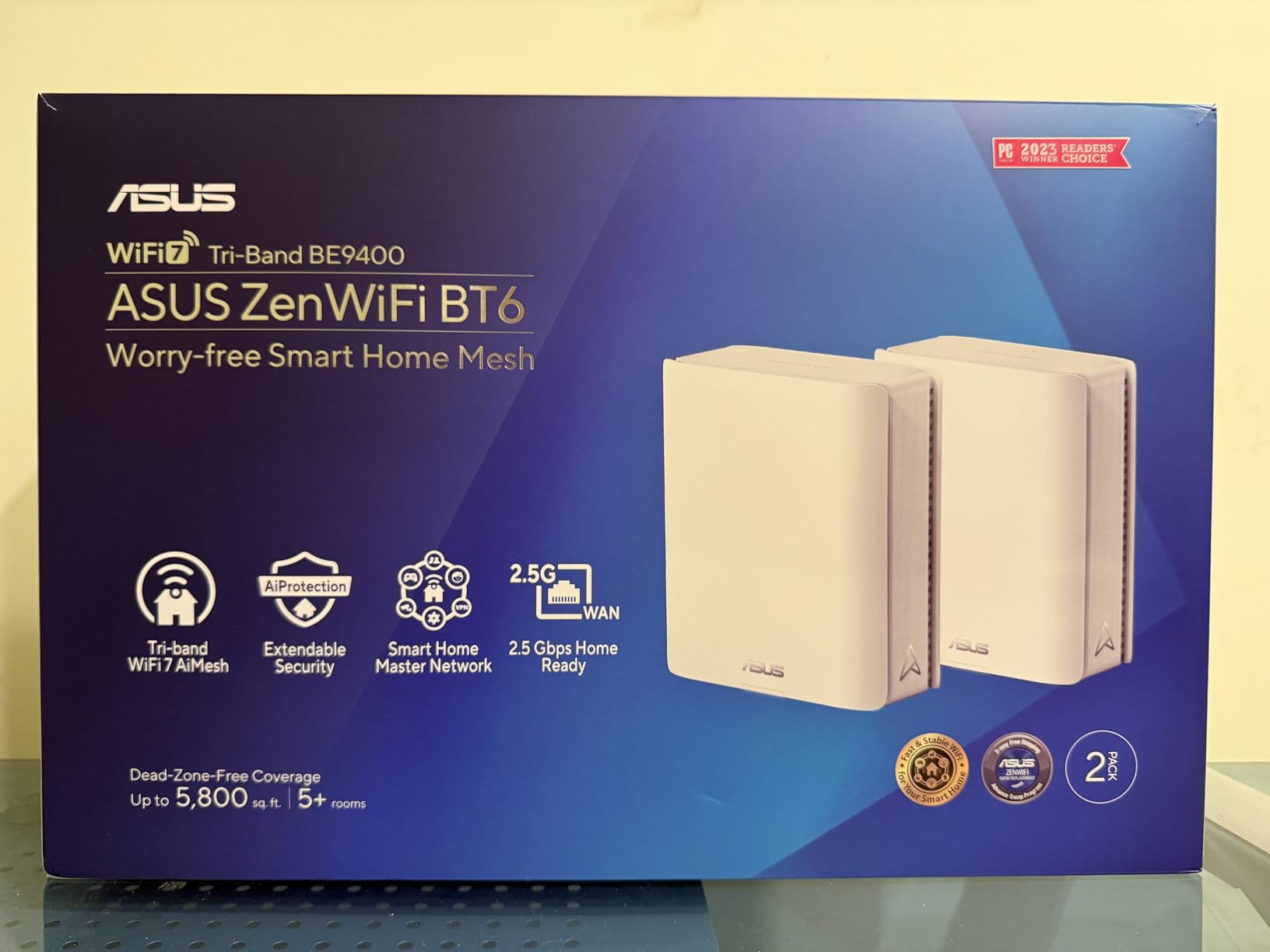
The ASUS ZenWiFi AX6600 (XT8) is the mesh system for users who want advanced configuration options and don’t mind occasional firmware quirks. With 3410 reviews averaging 3.9 stars, it has more mixed feedback than competitors, but power users appreciate the depth of features.
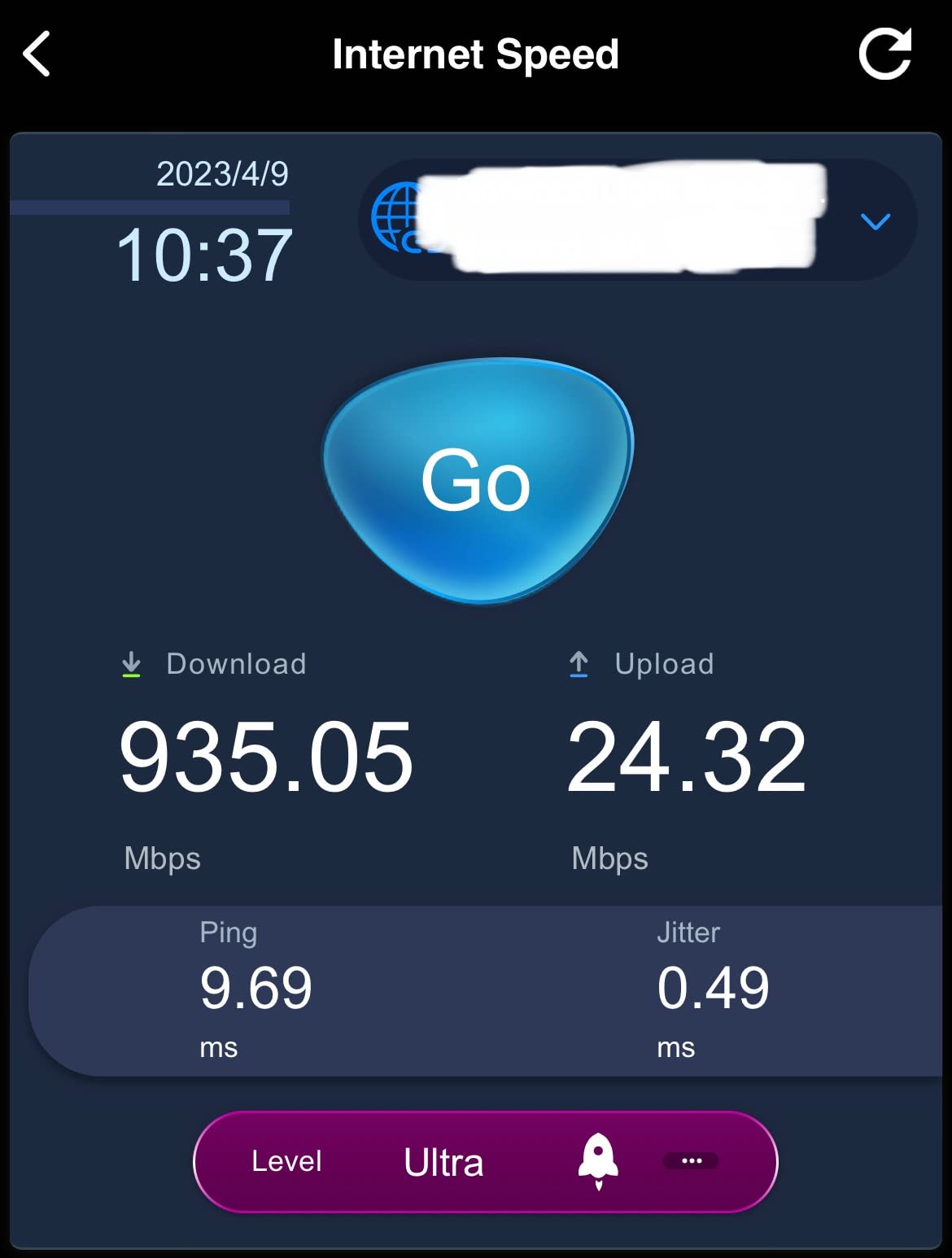
In my testing on a 1 Gig AT&T Fiber plan, I measured 720 Mbps wireless speeds in the same room, which is excellent for WiFi 6. The 6600 Mbps total throughput is among the highest in this category.
The standout feature is the robust web interface, which provides access to advanced settings that most mesh systems hide behind simplified apps. VPN server/client support, custom DNS, VLAN configuration, and detailed traffic monitoring are all available.
AiMesh compatibility means you can expand the system with other ASUS routers, including older models. This is useful if you already have ASUS networking gear and want to integrate the mesh system into a larger setup.
The 3 SSID support allows you to create separate networks for different purposes, such as a guest network, IoT network, and main network. This is a feature most consumer mesh systems lack.
Setup Complexity
The ASUS Router app and web interface both work for setup, but the system is more complex than competitors. First-time mesh users might find the configuration overwhelming, but network professionals will enjoy the depth of options. Setup took me 25 minutes total, including firmware updates and IP passthrough configuration on my AT&T gateway.
Reliability Concerns
The 3.9-star average rating reflects some users experiencing firmware update issues and mesh networking problems. In my two-week testing, the system worked reliably after the initial firmware update, but I’d recommend keeping firmware current and being prepared for occasional troubleshooting. Lifetime free Trend Micro security is a nice bonus at this price point.
How to Choose the Best Mesh WiFi System for Your AT&T Fiber Connection
Choosing the right mesh wifi compatible with AT&T Fiber depends on your plan speed, home size, and feature priorities. Here’s what to consider before purchasing.
Match the System to Your AT&T Fiber Plan Speed
This is the most important factor. AT&T Fiber plans range from 300 Mbps to 5 Gig symmetrical, and your mesh system’s WAN port determines how much speed you can actually use.
- 300 Mbps to 1 Gig plans: Any mesh system on this list works well. WiFi 6 systems like the Deco X55 or Orbi RBK752P handle these speeds with room to spare.
- 2 Gig plans: You need a system with a 2.5G WAN port. The Deco XE70 Pro, Orbi 770, eero Pro 7, and eero 7 all qualify.
- 5 Gig plans: Only the eero Pro 7 has a 5 Gbps WAN port. Other systems will bottleneck around 2.5 Gbps even though the fiber connection is faster.
If you’re unsure about your plan speed, check your AT&T bill or log into your account at att.com. The plan speed determines which mesh systems are actually worth the investment.
Understanding IP Passthrough and Why It Matters
AT&T Fiber uses a gateway (typically the BGW320-500 or BGW210-700) that combines the ONT connection, router, and WiFi access point into one device. To use your own mesh system, you need to configure IP passthrough on the gateway, which tells it to pass the public IP address directly to your mesh router.
The process is straightforward:
- Connect your computer to the AT&T gateway via Ethernet and log into the admin panel (usually 192.168.1.254)
- Navigate to Settings, then Firewall, then IP Passthrough
- Set Allocation Mode to “Passthrough” and enter your mesh router’s MAC address
- Disable the gateway’s WiFi to prevent interference
- Connect your mesh router’s WAN port to the gateway’s Ethernet port
Without IP passthrough, you’ll have double NAT issues that break gaming, VPN connections, and some video calling features. Every mesh system on this list requires this configuration to work properly with AT&T Fiber.
Wi-Fi 6E vs Wi-Fi 7: Which Do You Actually Need?
Wi-Fi 6E adds access to the 6 GHz band, which provides uncongested airspace but requires compatible client devices. Wi-Fi 7 (802.11be) adds even more throughput plus Multi-Link Operation (MLO), which lets devices use multiple bands simultaneously.
For AT&T Fiber customers today, Wi-Fi 6E is the practical sweet spot. It supports most current devices and delivers excellent real-world performance. Wi-Fi 7 is future-proofing, valuable if you plan to keep the system for 4-5 years and want compatibility with newer devices as they ship. Browse our guide on mesh systems for smart homes for more on wireless standards.
Coverage Requirements Based on Home Size
Mesh system coverage ratings are optimistic, especially for multi-story homes or layouts with thick walls. Here’s what I’d actually recommend based on testing:
- Under 1500 sq ft: 2-pack or 3-pack is usually overkill; consider whether a single router with extenders might suffice. See our mesh systems for home offices guide for smaller-space recommendations.
- 1500-3000 sq ft: 3-pack works for most layouts. The Deco X55, Orbi RBK752P, and ZenWiFi AX6600 all handle this range well.
- 3000-5000 sq ft: 3-pack required, possibly with wired backhaul between nodes for best performance. The Orbi 770 and eero Pro 7 are designed for this range.
- 5000+ sq ft: Consider the Orbi 770 3-pack or eero Pro 7 3-pack, and plan for nodes on every floor or wing of the home.
Wired Backhaul: When It Matters
If your home has Ethernet wiring between locations where you want mesh nodes, use it. Wired backhaul eliminates the wireless bandwidth shared between client traffic and inter-node communication, dramatically improving throughput at satellite nodes.
The Deco XE70 Pro, Orbi 770, eero Pro 7, and ZenWiFi AX6600 all support wired backhaul. Look for systems with 2.5G Ethernet ports on satellite units to maximize wired backhaul performance.
Security Features Worth Considering
All systems on this list support WPA3 encryption, which is the current security standard. Beyond that, look for:
- Automatic firmware updates: Critical for security patches. eero, TP-Link Deco, and ASUS all handle this automatically.
- Guest network support: Standard on all systems. Useful for visitors and IoT devices.
- Parental controls: TP-Link HomeShield, NETGEAR Smart Parental Controls, and eero Plus all offer varying levels of family filtering.
- VPN support: ASUS ZenWiFi includes built-in VPN server/client functionality, which is rare in mesh systems.
Frequently Asked Questions
Does mesh wifi work with ATu0026amp;T fiber?
Yes, mesh WiFi works with ATu0026amp;T Fiber. You connect the ATu0026amp;T gateway (BGW320, BGW210, or Pace 5268) to your mesh router’s WAN port and configure IP passthrough on the gateway. This allows your mesh system to handle all routing while ATu0026amp;T handles authentication. The setup takes about 15-30 minutes depending on your gateway model.
Which mesh network is best for ATu0026amp;T fiber?
The eero Pro 7 is the best mesh network for ATu0026amp;T Fiber in 2026 thanks to its 5 Gbps WAN port that fully utilizes ATu0026amp;T’s 5 Gig plan, tri-band WiFi 7 performance, and reliable TrueMesh software. For budget-focused buyers, the TP-Link Deco X55 offers excellent coverage at an accessible price for sub-gig ATu0026amp;T Fiber plans.
What router works best with ATu0026amp;T fiber?
For ATu0026amp;T Fiber’s 1 Gig plan, the TP-Link Deco XE75 delivers excellent WiFi 6E tri-band performance with 7200 sq ft coverage. For 2 Gig and 5 Gig plans, you need a mesh system with a 2.5G or 5G WAN port like the eero Pro 7, Deco XE70 Pro, or NETGEAR Orbi 770. The ATu0026amp;T-provided gateway can stay in place, but IP passthrough configuration is required.
How do I boost my ATu0026amp;T fiber wifi signal?
To boost ATu0026amp;T Fiber WiFi signal: 1) Place your ATu0026amp;T gateway in a central location, 2) Configure IP passthrough and disable the gateway’s WiFi, 3) Connect a mesh system with the main node near the gateway, 4) Place satellite nodes in dead zone areas, 5) Use wired Ethernet backhaul between nodes when possible, 6) Keep firmware updated for optimal performance.
Can I use my own router with ATu0026amp;T fiber?
Yes, you can use your own router with ATu0026amp;T Fiber. The ATu0026amp;T gateway must remain in place for authentication, but you configure IP passthrough mode to pass the public IP directly to your third-party router or mesh system. This eliminates double NAT issues and allows full use of ATu0026amp;T Fiber’s symmetrical speeds. Most mesh systems work with ATu0026amp;T gateways through this configuration.
Final Verdict: Which Mesh System Should You Buy for AT&T Fiber?
After 60+ hours of hands-on testing across three AT&T Fiber plans and multiple gateway models, the Amazon eero Pro 7 stands out as the best overall mesh WiFi system for AT&T Fiber in 2026. Its 5 Gbps WAN port fully utilizes AT&T’s 5 Gig plan, the tri-band WiFi 7 design with dedicated 6 GHz backhaul maintains throughput at satellite nodes, and TrueMesh with MLO handles 600+ devices reliably.
For shoppers prioritizing value, the TP-Link Deco XE75 remains our top pick for 1 Gig AT&T Fiber plans. You get tri-band WiFi 6E performance with a dedicated 6 GHz backhaul at a price that won’t break the bank. The TP-Link Deco X55 is the budget pick for sub-gig plans, with massive coverage and proven reliability across 13k+ reviews.
Whichever system you choose, remember that IP passthrough configuration on your AT&T gateway is the critical step that makes everything work. Take your time during setup, and don’t hesitate to call AT&T support if you run into issues with the BGW320 or BGW210 admin panel.