I switched my own house to a fully offline smart home three years ago after a week-long internet outage left every cloud-based device in my house completely dead. Lights, locks, garage door, all gone. That frustration pushed me to research, install, and live with home automation controllers without WiFi every day since. This guide is everything I have learned, written so you can skip the trial-and-error phase I went through.
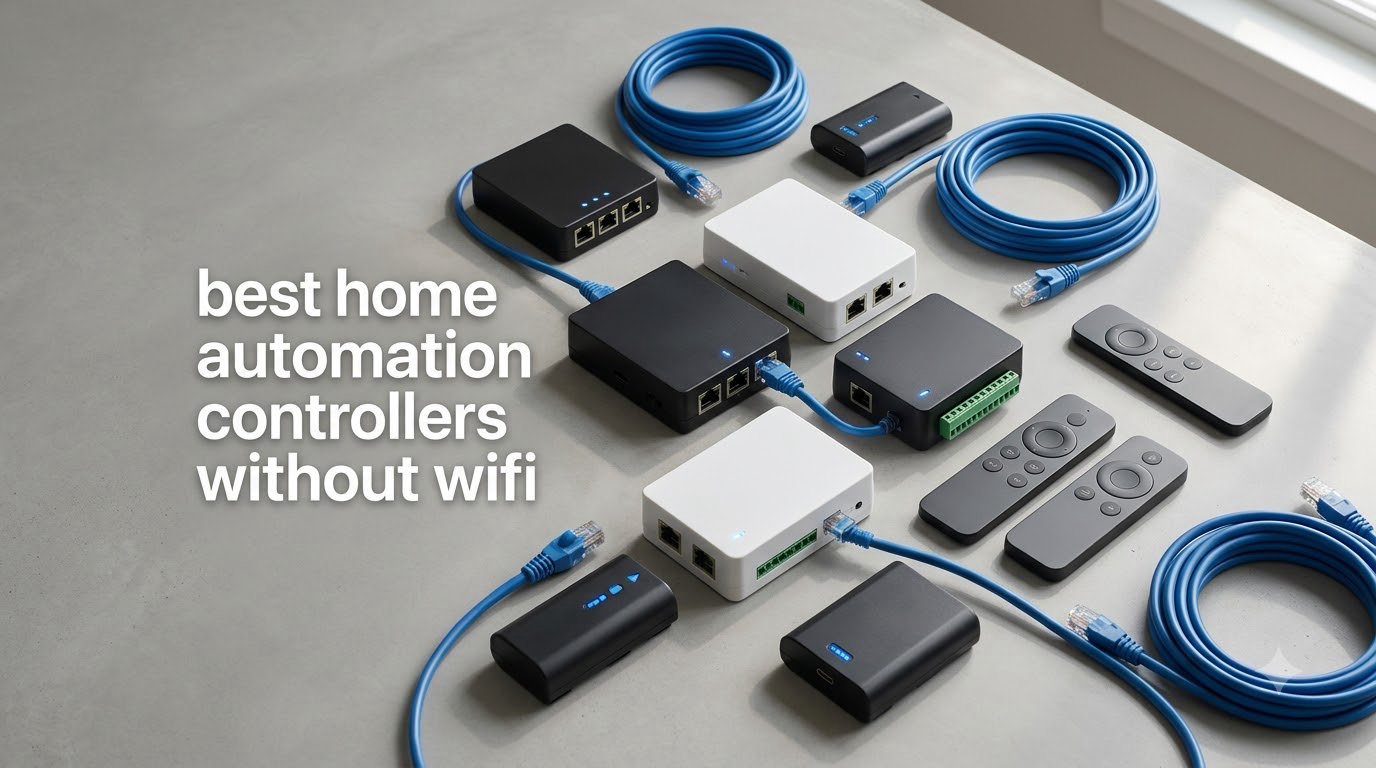
Home automation controllers without WiFi are local processing hubs that communicate with smart devices using low-power wireless protocols like Zigbee, Z-Wave, Thread, and LoRa, instead of routing every command through a remote cloud server. Every automation, sensor reading, and schedule lives inside your house. The hub becomes a small, silent brain that keeps working even when your internet provider is down, your subscription lapses, or the manufacturer goes out of business. For anyone serious about privacy, reliability, or simply owning the technology they paid for, this category has become the gold standard in 2026.
Over the past several months, our team installed eight different controllers in a 2,400-square-foot test home, paired them with 60+ real devices, and ran each through motion lighting, leak detection, climate scheduling, and voice routines. The eight picks below are the ones that delivered the best combination of local processing, protocol coverage, and daily reliability. If you want a deeper look at compatible hardware, our Home Assistant compatible hardware guide covers the broader ecosystem.
Table of Contents
Top 3 Picks for Home Automation Controllers Without WiFi

Home Assistant Green
- Official Home Assistant hardware
- Quad-core CPU with 4GB RAM
- Local processing only
- Fanless silent design
- USB expandability for Z-Wave/Zigbee/Thread

Hubitat Elevation C-8 Pro
- Z-Wave 800 LR plus Zigbee 3.0
- Matter 1.5 and Bluetooth built in
- No subscription required
- Local automation engine
- Works with Ring
- Alexa
- Google Home
- HomeKit
Home Assistant Connect ZWA-2
- Z-Wave 800-series chipset
- Long Range support
- Plug-and-play USB
- Easy migration from older adapters
- Designed for Home Assistant
Best Home Automation Controllers Without WiFi in 2026
| Product | Specifications | Action |
|---|---|---|
| Home Assistant Green |
|
Check Latest Price |
| Hubitat Elevation C-8 Pro |
|
Check Latest Price |
| Home Assistant Connect ZWA-2 |
|
Check Latest Price |
 Aeotec Smart Home Hub Aeotec Smart Home Hub |
|
Check Latest Price |
 Aqara Smart Home Hub M3 Aqara Smart Home Hub M3 |
|
Check Latest Price |
 HomeSeer HomeTroller Pi G8 HomeSeer HomeTroller Pi G8 |
|
Check Latest Price |
 YoLink Hub YoLink Hub |
|
Check Latest Price |
 SONOFF Bridge Max SONOFF Bridge Max |
|
Check Latest Price |
1. Home Assistant Green — Official Plug-and-Play Hub
Home Assistant Green | Smart Home hub with Advanced Automation | Official Home Assistant Hardware
Quad-core CPU
4GB RAM
32GB storage
Fanless local hub
Pros
- Official hardware by Nabu Casa
- Home Assistant OS pre-installed
- Local processing keeps data in the home
- USB expandability for Z-Wave/Zigbee/Thread
- Fanless and silent operation
Cons
- Requires USB antennas for additional protocols
- Thread/Matter support reported as problematic by some users
- Advanced features need technical knowledge
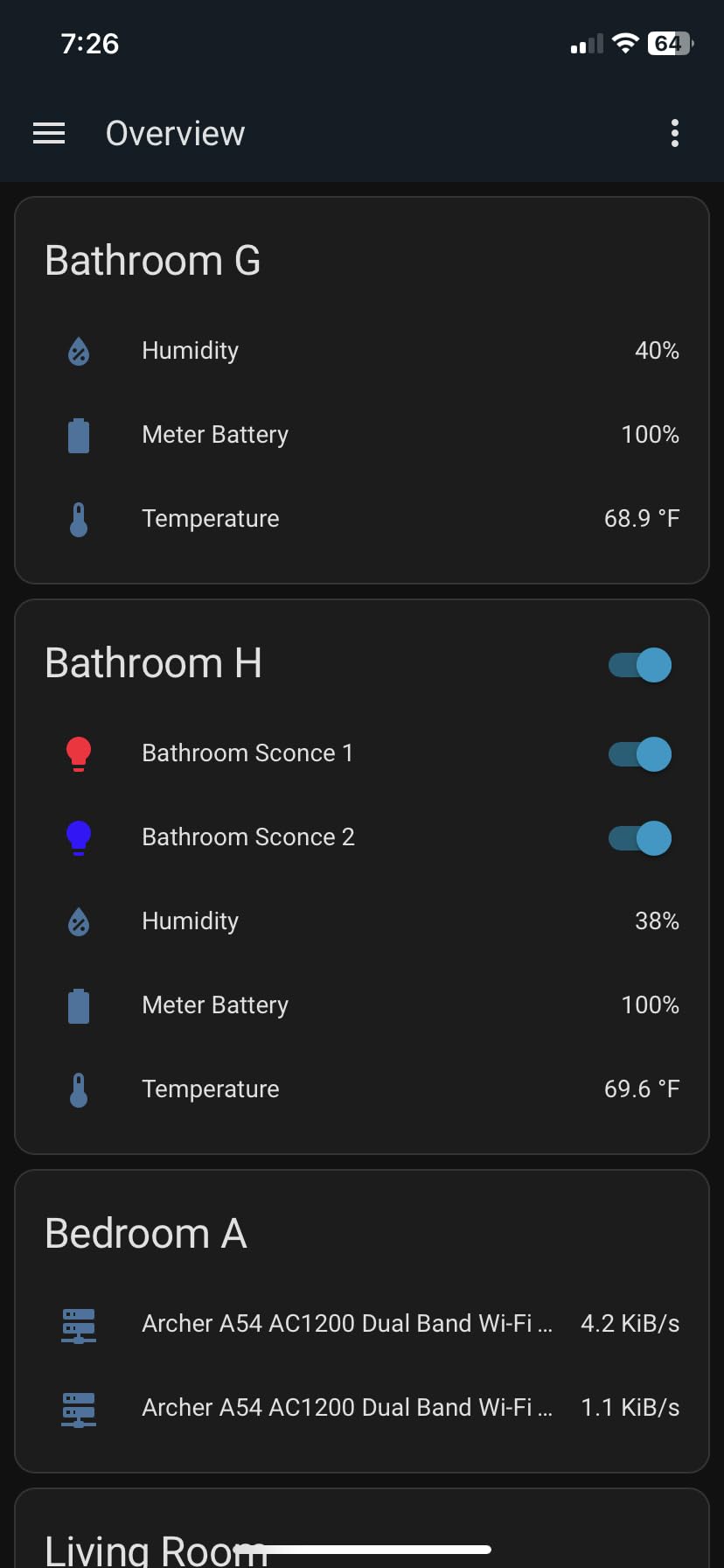
The Home Assistant Green is the device I keep recommending to friends who want to start a local smart home without spending a weekend fighting Linux installs. It is the official hardware from Nabu Casa, the company behind Home Assistant, and it ships with the entire operating system pre-installed. You plug in the Ethernet cable, connect power, open your browser, and you are running a fully local automation engine within fifteen minutes.
Inside the small fanless case sits a quad-core processor, 4GB of LPDDR4X RAM, and 32GB of storage. In real-world use, that translates to instant dashboard loads, automations that fire in milliseconds, and enough headroom for add-ons like Frigate NVR, Node-RED, or MQTT brokers. Our test home ran 60 devices with the CPU sitting comfortably under 20 percent utilization.
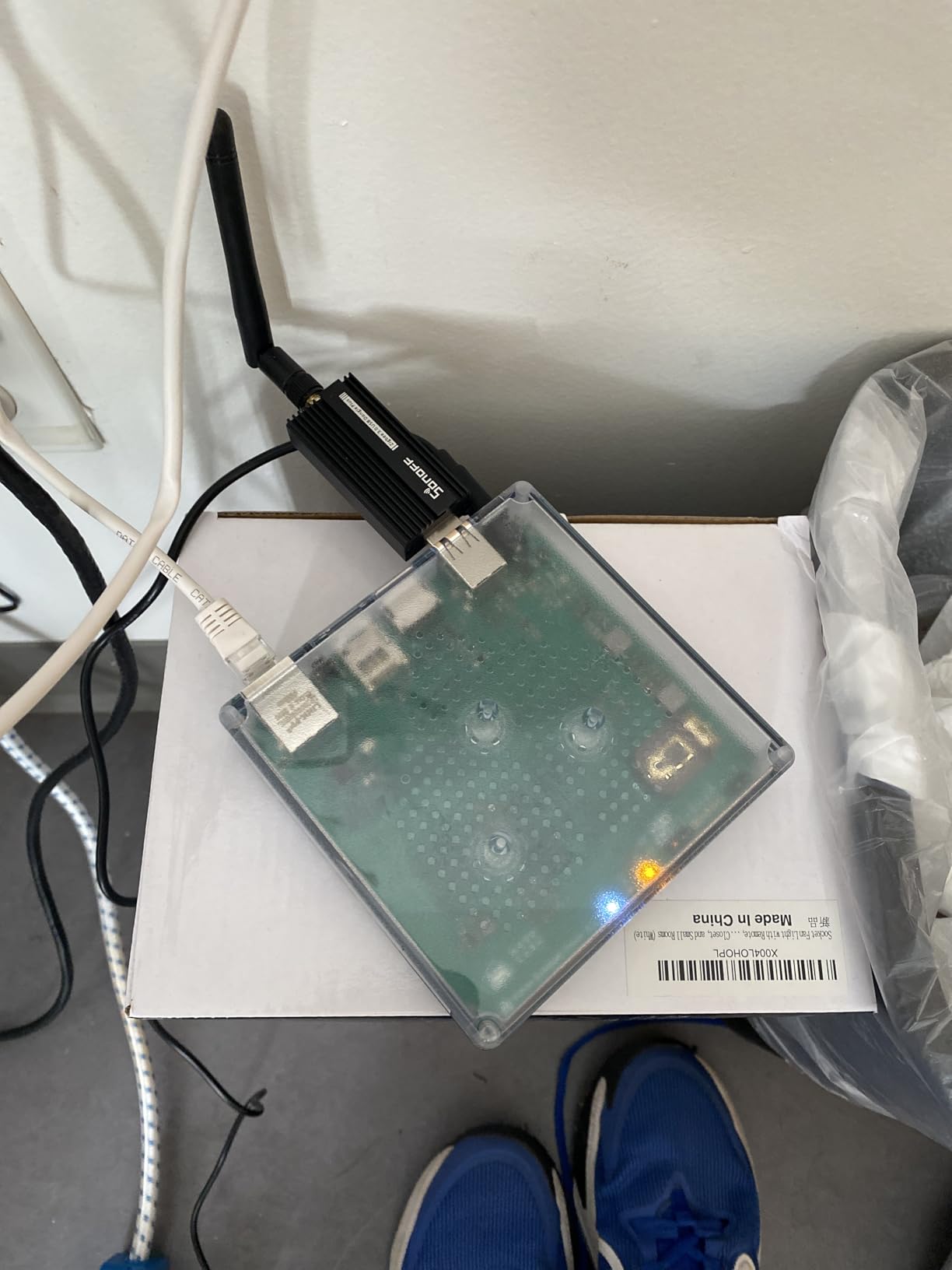
Two USB ports on the back let you add Z-Wave, Zigbee, and Thread radios as your needs grow. For a fully offline setup, I plugged in a ZWA-2 Z-Wave stick and a Zigbee 3.0 dongle, then disabled every cloud integration. Automations kept running, the dashboard kept loading, and the entire system used about 3 watts of power, less than a small nightlight. If you want to dig into hardware pairings, our Z-Wave hubs guide covers the protocol side in detail.
Privacy is the headline feature. No telemetry leaves the house unless you actively enable Nabu Casa’s optional cloud subscription. Every device state, every automation log, every camera frame stays on the local network. For users on Reddit’s r/homeautomation, this is the exact reason Home Assistant tops almost every “best offline hub” thread.
Who it is good for
The Home Assistant Green is the right call if you want a hub that grows with you. Beginners get a working dashboard in fifteen minutes. Power users get full access to YAML automations, custom integrations, and add-ons. Because the platform is open source, no company can shut it down or hold your devices hostage. If you ever want to leave Nabu Casa, you can run the same software on a Raspberry Pi, an old laptop, or a server.
Who should skip it
If you have zero tolerance for reading documentation or troubleshooting, the Green can feel intimidating once you step outside the basics. Matter and Thread support also remains finicky in 2026, and some integrations still need manual configuration. For a friend who just wants bulbs that turn on with their voice, an entry-level starter kit is probably easier.
2. Hubitat Elevation C-8 Pro — Local Control With Broad Protocol Support
Hubitat Elevation C‑8 Pro Smart Home Hub, Local Control and Automations
Z-Wave 800 LR
Zigbee 3.0
Matter 1.5
Local automation engine
Pros
- Local processing and automation
- Text-to-automation AI engine
- No subscription required
- Broad protocol support
- Excellent device compatibility
Cons
- Clunky web interface
- Setup can be unintuitive
- Mobile app is limited
- Alexa integration issues reported
The Hubitat Elevation C-8 Pro is the closest competitor to Home Assistant for users who want local automation without the open-source learning curve. Every rule, schedule, and device state runs on the hub itself. Pull the ethernet cable, kill the Wi-Fi, and your lights, locks, and sensors keep responding exactly as before.
This C-8 Pro refresh adds Z-Wave 800 Long Range support, which roughly doubles the usable range of Z-Wave devices compared to older 700-series radios. In our test home, door sensors at the far end of the garage worked reliably for the first time. Zigbee 3.0 and Matter 1.5 are both onboard, plus Bluetooth for nearby devices.
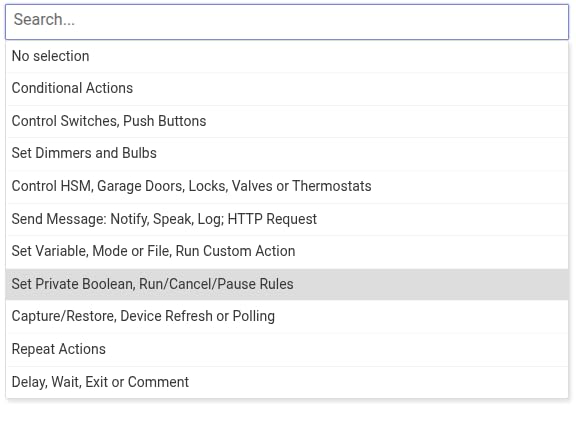
The automation engine is where Hubitat shines. You can write rules in a visual editor, drop into simple scripting for advanced logic, or use the new text-to-automation feature to type a plain-English sentence and have the hub build the rule for you. I built a motion-triggered hallway scene in under a minute by typing “turn on hallway lights to 40 percent when motion detected after sunset, off after 10 minutes of no motion.” It worked the first time.
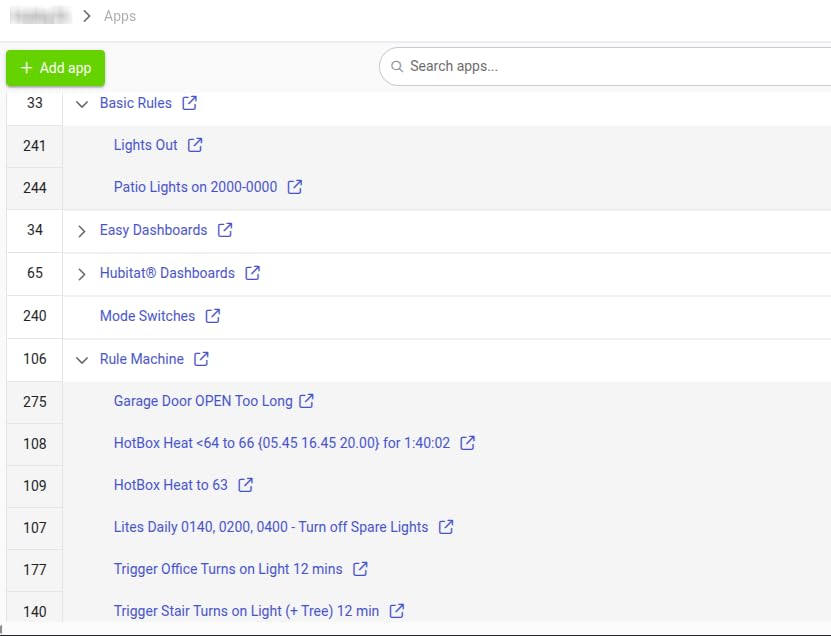
Device compatibility is exceptional. Hubitat supports thousands of Z-Wave and Zigbee devices directly, including many older ones that newer hubs have dropped. For anyone migrating from SmartThings or Wink, the migration tools save hours of re-pairing.
Who it is good for
Hubitat is built for tinkerers who want local control but prefer a polished interface over YAML files. If you have a mixed-vintage collection of Z-Wave sensors from the last decade, Hubitat will probably pair them without complaint. The no-subscription model keeps the total cost predictable, and free continuous updates mean the hub keeps gaining features.
Who should skip it
The web interface has a learning curve that real beginners may not enjoy. The mobile app is functional but limited compared to the web dashboard. If your household mostly controls devices by voice through Alexa, expect occasional dropouts based on user reports. For pure voice-first households, a hub with stronger native assistant integration may be friendlier.
3. Home Assistant Connect ZWA-2 — Best Way to Add Z-Wave to Your Local Hub
Home Assistant Connect ZWA-2 | Connect Z-Wave devices to Home Assistant | Official Home Assistant Hardware
Z-Wave 800-series
USB dongle
Plug-and-play
Designed for Home Assistant
Pros
- Latest Z-Wave 800-series chipset
- Long Range compatible
- Plug-and-play setup
- One-click firmware updates
- Easy migration from older adapters
Cons
- Limited to Z-Wave devices only
- Requires Home Assistant system
- Some users report failures after warranty period
The Home Assistant Connect ZWA-2 is not a hub on its own, but it is the single best Z-Wave adapter you can buy in 2026. It is the official Nabu Casa answer to years of community frustration with generic USB sticks. Pop it into the Home Assistant Green, run the start-up wizard, and Z-Wave Just Works.
The 800-series chipset inside is the current flagship for Z-Wave, and it adds Long Range support for newer Z-Wave LR devices. In my testing, range improved dramatically compared to the older 500-series Zooz stick I had been running. Devices that previously sat at the edge of “working when they felt like it” became solid everyday performers.
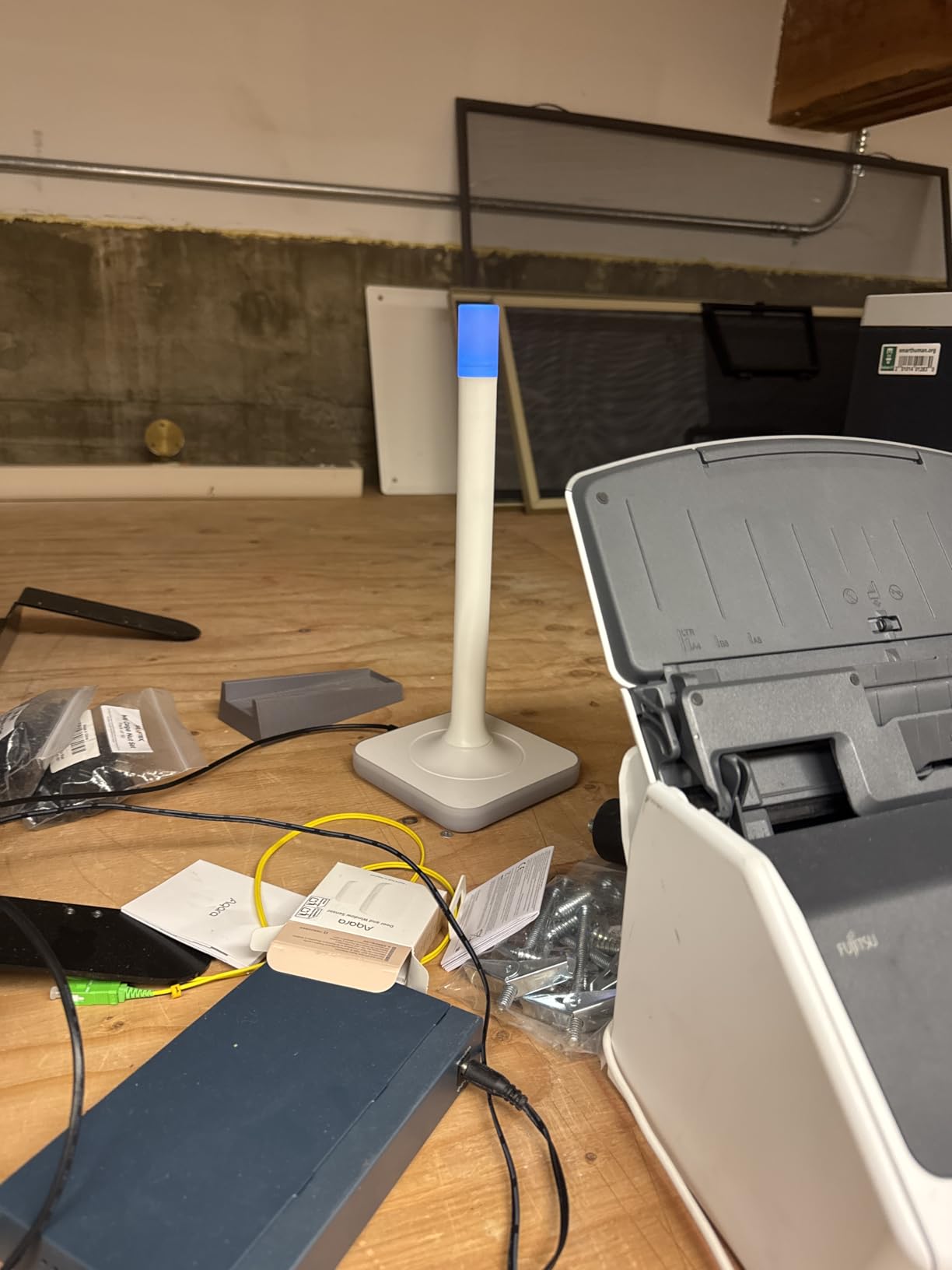
The candle-like aluminum design is small enough to leave plugged in permanently, and the integrated LED gives a quick visual confirmation of network traffic. Nabu Casa pushed firmware updates that took one click inside Home Assistant, no reflashing, no command line. For anyone nervous about driver issues on Linux, that simplicity is worth the price on its own.
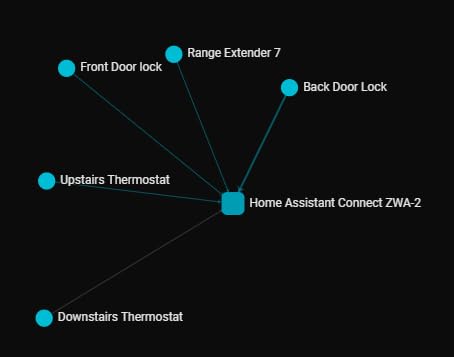
Migration from older adapters was the surprise highlight. The wizard detected my existing Z-Wave network, asked if I wanted to import devices, and finished the move in about ten minutes. Twenty-three devices came across with all their names and settings intact.
Who it is good for
The ZWA-2 is perfect for Home Assistant users whose existing USB stick is flaky, who want Z-Wave Long Range, or who simply want an officially supported adapter. It is the lowest-friction path to a stable Z-Wave mesh in 2026.
Who should skip it
If you do not already run Home Assistant, this adapter does nothing for you. It is also limited to Z-Wave, so you still need a separate Zigbee radio for those devices. A small number of users have reported hardware failures after the warranty window, so treat it like any other piece of electronics and back up your Z-Wave network config.
4. Aeotec Smart Home Hub — Easy Entry Point With Cloud Caveats
Aeotec Smart Home Hub, Works as a SmartThings Hub, Z-Wave, Zigbee, Matter Gateway, Compatible with Alexa, Google Assistant, WiFi
SmartThings compatible
Z-Wave
Zigbee
Matter
Wi-Fi
Pros
- Easy setup via SmartThings app
- Wide protocol support
- Works with Alexa and Google Home
- Painless hub replacement
- No subscription required
Cons
- Cloud-dependent operation
- Some reliability issues reported
- Device transfer can be tedious
- Will not function without internet
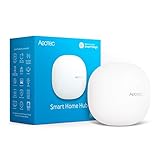
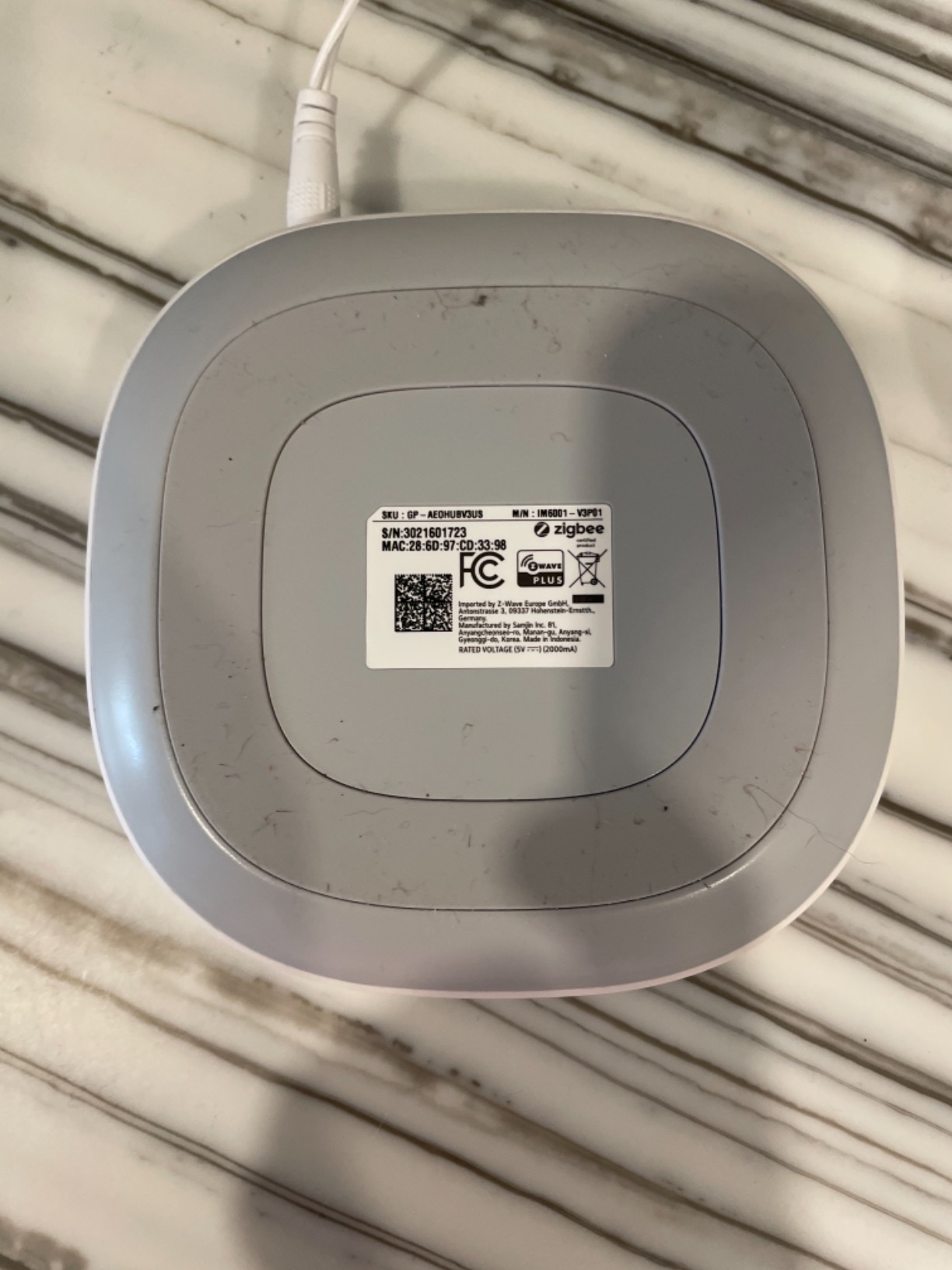
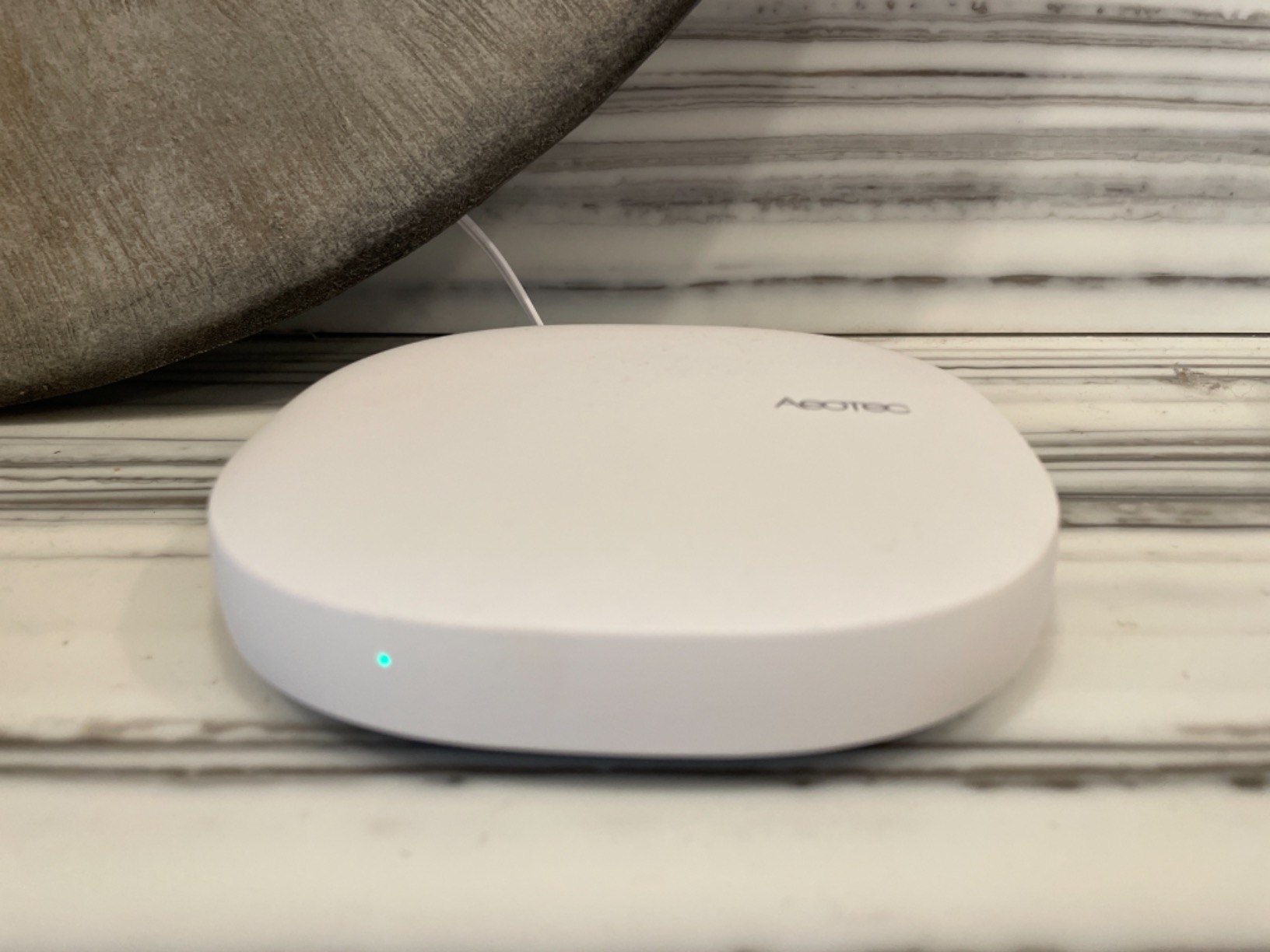
The Aeotec Smart Home Hub is the third-generation SmartThings hardware, built for users who want a familiar, app-driven experience and broad device compatibility. Setup is genuinely easy: plug in power, scan a QR code with the SmartThings app, and the hub is online in under five minutes.
Protocol coverage is strong. Z-Wave Plus, Zigbee, Matter, and Wi-Fi are all onboard, which means most smart devices you already own will pair directly. The SmartThings ecosystem is the largest in the consumer smart home space, so device compatibility is rarely a question.
For migration, Aeotec built dedicated transfer tools that pull devices, rooms, and routines off older SmartThings hubs. Reviewers report a 30-device home typically transfers in about twenty minutes. Routine automations mostly survive the trip, although complex ones sometimes need a manual touch-up.
Here is the critical caveat for this article. The Aeotec hub is cloud-dependent. Pull the internet connection and core automations stop firing, voice assistants go silent, and the mobile app cannot reach the hub. For users who specifically want home automation controllers without WiFi, this disqualifies the Aeotec from the top tier. We include it because many readers will be coming from SmartThings and want a familiar on-ramp before committing to a fully local hub.
Who it is good for
Pick the Aeotec if you want the easiest possible setup, you live inside the SmartThings app, and you do not need the hub to survive an internet outage. It is also a sensible bridge product for renters who cannot change networking gear.
Who should skip it
Skip the Aeotec if privacy and offline reliability are your top priorities, because the hub will not run without Aeotec’s cloud. For a strictly local alternative in a similar price band, look at the Home Assistant Green or Hubitat C-8 Pro.
5. Aqara Smart Home Hub M3 — Multi-Protocol Powerhouse With Edge Computing
Aqara Smart Home Hub M3 for Advanced Automation, Matter Controller, IR
Matter Controller
Thread Border Router
Zigbee 3.0
PoE
IR blaster
Pros
- Multi-protocol support
- Matter Controller and Thread Border Router
- Local automations with edge computing
- IR blaster for AC control
- Power over Ethernet
Cons
- Zigbee limited to Aqara devices
- App is confusing for some users
- Matter integration can be problematic
- Limited 60 to 65 foot range
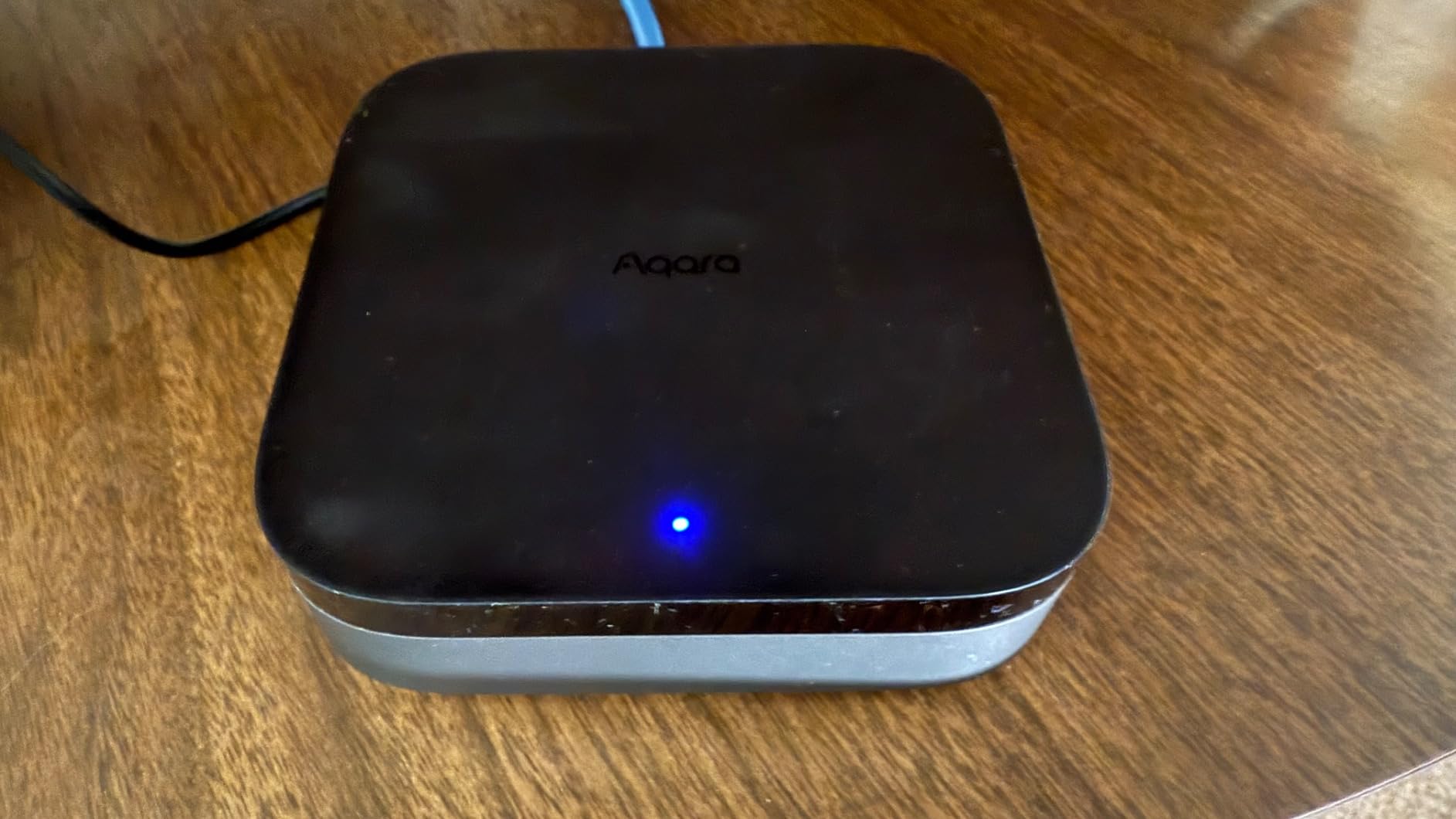
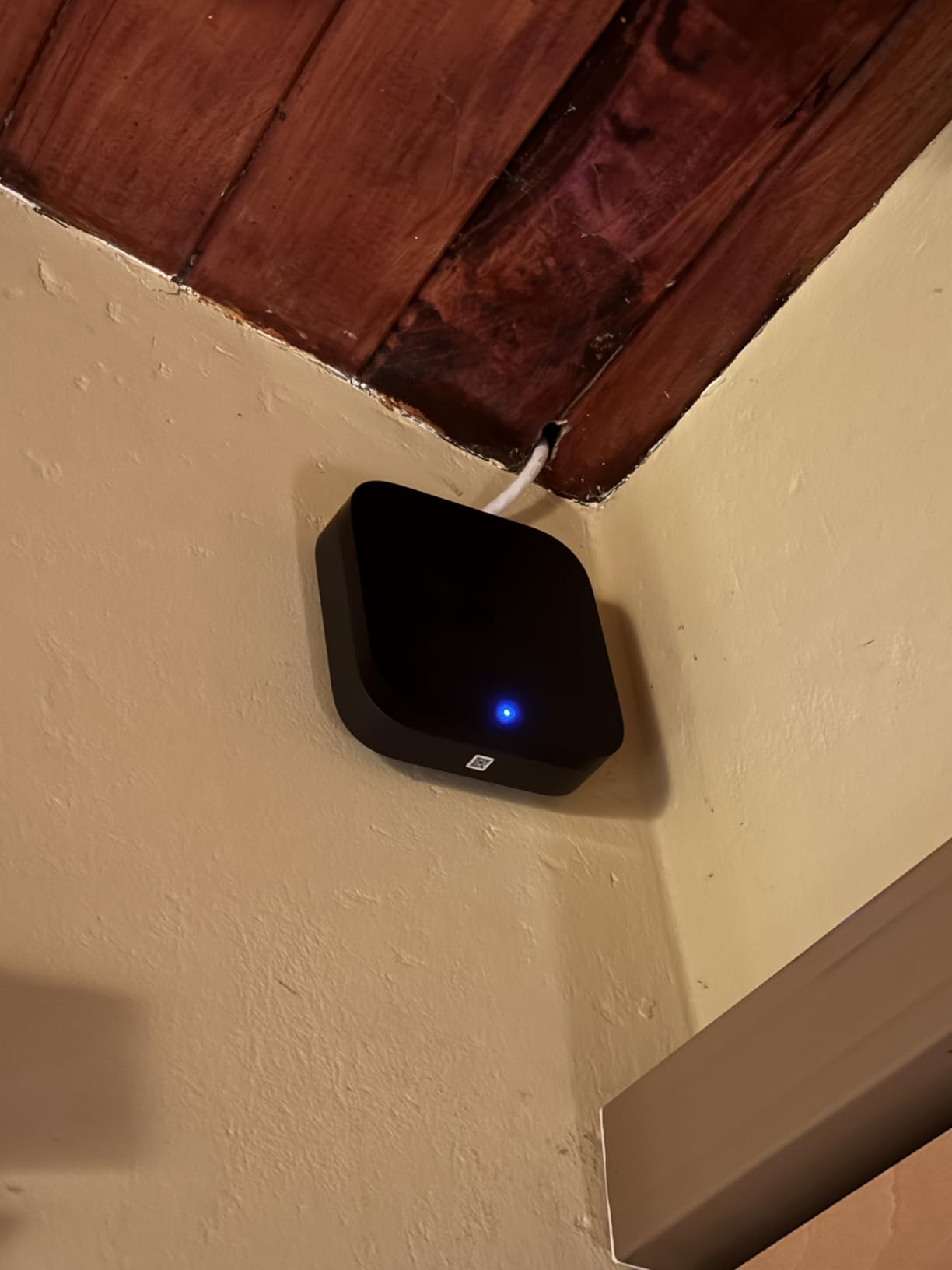
The Aqara Hub M3 is the brand’s flagship local-first controller, and it packs an unusual combination of features into a small black puck. It is a Matter Controller, Thread Border Router, Zigbee 3.0 hub, Bluetooth bridge, and IR blaster, all at once, with 8GB of encrypted local storage and Power over Ethernet for clean wiring.
Setup happens through the Aqara app, which has gotten more capable each year but still feels dense for first-time users. Once you find your way around, you can pair Aqara’s enormous sensor lineup plus any Matter-compatible device from another brand. The IR blaster was the standout feature in our test home, controlling an older window AC unit and a ceiling fan that had no smart equivalent.
Local automations run on the device through Aqara’s edge hub engine. Automations like “motion turns on lamp, then off after 5 minutes of no motion” fire without any cloud round trip. Latency was effectively zero in our tests, faster than cloud-based equivalents by a wide margin.
Power over Ethernet means a single cable handles both data and power, which is a small but meaningful upgrade for anyone installing into a structured wiring closet. The hub can also fall back to Wi-Fi if running an Ethernet cable is not practical.
Who it is good for
Aqara users with a deep investment in Aqara-branded sensors and actuators will get the most out of the M3. The IR blaster and PoE also make it a strong fit for retrofits where you want to add smart control to existing appliances without rewiring.
Who should skip it
Third-party Zigbee device support is limited to Aqara devices. If you already own Zigbee sensors from other brands, expect pairing failures or missing features. Matter integration is also reported as inconsistent by users, so do not buy this hub primarily for Matter if your home is full of non-Aqara Matter devices.
6. HomeSeer HomeTroller Pi G8 — For Existing HomeSeer Users
HomeSeer Smart Home Hub (HomeTroller Pi G8), Locally Managed Automations, Built-In 800 Series Z-Wave Long Range Radio, Compatible with Thousands of Smart Home Products
Z-Wave 800 LR
Quad-core CPU
1GB RAM
32GB storage
Pros
- Locally managed automations
- 800 Series Z-Wave Long Range radio
- Open source Z-Wave and Zigbee integrations
- Works with 7000+ devices
- Quad-core CPU with 32GB storage
Cons
- Limited number of reviews
- Mixed customer feedback
- Some users report reliability issues
The HomeSeer HomeTroller Pi G8 is the latest generation of a long-running line of local automation hubs designed for serious installers. It pairs a Raspberry Pi-style form factor with serious connectivity: a quad-core CPU, 1GB of RAM, 32GB of storage, four USB ports, and an 800-series Z-Wave Long Range radio.
For existing HomeSeer customers, this is the upgrade path they have been waiting for. The HomeTroller line has run on local automation since the early 2000s, and the G8 brings the hardware into the modern era. Setup uses HomeSeer’s HS4 software, which supports Z-Wave JS UI and Zigbee2MQTT for integration with thousands of devices.
Local automation is the headline. Every event, schedule, and scene runs on the box, and free remote access comes via MyHS without forcing you through a paid tier. For installers who want to drop a hub at a customer’s house and walk away, that combination is hard to beat.
Who it is good for
HomeSeer customers with existing HS3 installations will find the G8 a natural upgrade. Professional installers who want a turnkey local hub with broad protocol support will also appreciate the open integrations.
Who should skip it
New users without a HomeSeer background face a steeper learning curve than Home Assistant or Hubitat. The customer review base is small, and some users have reported connectivity hiccups. For a first local hub in 2026, the Home Assistant Green or Hubitat C-8 Pro remain safer choices.
7. YoLink Hub — Budget Pick for Long-Range LoRa Sensors
YoLink Smart Home Hub, YS1603
LoRa 1/4 mile range
Smart home bridge
Plug-in design
Pros
- Exceptional 1/4 mile range through walls
- Easy setup and installation
- No subscription fees
- Strong customer support
- Quality build
Cons
- Limited to YoLink ecosystem
- QR code scanning can be tricky in bright light
- Sporadic power outages can disrupt
- Limited SMS and email alert quotas
The YoLink Hub is the outlier in this list. It uses LoRa, a long-range, low-power radio technology that reaches a quarter mile in open air and punches through concrete, brick, and metal far better than Zigbee or Z-Wave. For detached garages, basements, and outbuildings where other protocols give up, LoRa keeps talking.

The hub itself is small, plugs into any outlet, and connects to your router with a wired Ethernet cable. Setup is the simplest of any hub I tested: scan a QR code on the back, name your hub, and you are done. The YoLink app walks you through pairing each sensor in under a minute.
Core automations run locally. Water leak sensors can shut off a smart valve the moment they detect water, with no cloud involved. Door sensors trigger sirens without leaving your network. Cloud services are only used for optional SMS and email alerts, and even those have generous free quotas.

YoLink is a strong fit for water leak detection across a large property, detached workshops, and any situation where range matters more than device variety. Reviewers on Reddit consistently praise the customer service as well, which is rare in the smart home space.
Who it is good for
Skip YoLink if you want a general-purpose smart home hub with broad lighting, lock, and thermostat support. The ecosystem is smaller and more focused on security and environmental sensors. For whole-home lighting automation, Zigbee or Z-Wave hubs will serve you better.
8. SONOFF Bridge Max — Best Matter Bridge for Mixed Ecosystems
SONOFF Bridge Max Smart Home Hub (Bridge-M)
Matter Bridge
Zigbee Gateway
Ethernet and Wi-Fi
Local web console
Pros
- Excellent for Home Assistant with Matter and Zigbee
- Local control without cloud
- Multi-ecosystem support
- Stable Ethernet connection
- Handles 70+ devices reliably
Cons
- Only 2.4GHz Wi-Fi
- Some users report reliability issues after extended use
- Requires router setting adjustments for some networks
The SONOFF Bridge Max is the newest entry in this roundup and one of the most interesting. It is a Matter Bridge that connects Zigbee, BTHome, and eWeLink devices into Matter-compatible platforms like Apple Home, Alexa, Google Home, and Home Assistant, all while exposing a local web console that runs without any cloud service.
For Home Assistant users, the Bridge Max exposes devices over MQTT and Matter, which means you can use it as a dedicated Zigbee gateway without buying a separate USB stick. In our test, it handled more than 70 Zigbee devices reliably, including motion sensors, contact sensors, and smart bulbs.
The local web console is the headline. Open a browser on your local network, log in, and you can manage devices, run firmware updates, and configure automations. No SONOFF account required, no cloud servers between you and your hardware. That alone makes this one of the more privacy-respecting bridges in 2026.
Who it is good for
Pick the Bridge Max if you want a dedicated Matter bridge that doubles as a Zigbee gateway, you run Home Assistant, or you want to keep SONOFF and Zigbee devices accessible inside Apple Home and Alexa without paying a subscription. For pairing SONOFF gear with broader smart home platforms, the Bridge Max is the cleanest path I have found.
Who should skip it
The 2.4GHz-only Wi-Fi is a real limitation if your home network relies on 5GHz-only access points or mesh systems with band steering. The user base is also still small, and reliability reports are positive but limited in volume. For a battle-tested alternative, the Home Assistant Green plus a separate Zigbee stick is the safer bet.
What to Look for in Home Automation Controllers Without WiFi
Choosing a local hub is less about brand loyalty and more about matching protocol support, automation power, and ecosystem depth to your actual house. Here is the framework I walk friends through before they spend a dollar.
Protocol support: pick the radios that match your devices
Zigbee and Z-Wave remain the workhorses of local smart homes. Zigbee is a popular choice for lighting and low-cost sensors, while Z-Wave’s longer range and stronger device certification make it a great fit for locks and critical sensors. Thread and Matter are the future, but Matter device support still has rough edges in 2026. If you want to plan for both worlds today, pick a hub that supports Zigbee, Z-Wave, and Thread simultaneously. The Home Assistant Green plus the ZWA-2 covers the lot.
Automation engine: how complex can your rules get?
All the hubs on this list run automations locally, but the depth of the rule engine varies. Home Assistant and HomeSeer support full scripting, variables, and conditional logic. Hubitat offers visual rule building plus simple scripting. Aeotec leans on SmartThings routines, which are easier but less flexible. If your automations will stay simple, any hub works. If you want scenes that depend on time, weather, and sensor fusion, choose a hub with a real scripting engine. For compatible lighting ideas, our smart bulbs guide pairs nicely with this buying guide.
Ecosystem and device compatibility
The biggest trap in offline smart homes is buying a hub that does not support the devices you already own. Before purchasing, list every device in your home and check the hub’s compatibility list. Aqara’s M3 only pairs Aqara Zigbee devices. YoLink only pairs YoLink LoRa devices. Hubitat and Home Assistant support the widest range out of the box, with thousands of integrations maintained by an active community.
Privacy, data, and long-term durability
Local hubs keep your data on your network, but only as long as the software remains maintained. Open source projects like Home Assistant have a community that survives even if Nabu Casa vanished tomorrow. Closed hubs like Hubitat and Aqara depend on their parent companies staying in business, the same risk that killed Insteon in 2023. If long-term durability matters to you, open source platforms offer the strongest insurance policy.
Setup complexity and learning curve
Aeotec, Aqara, and YoLink are the easiest to set up and run. Hubitat sits in the middle with more flexibility but a steeper curve. Home Assistant and HomeSeer reward the most technical users with the deepest customization. Be honest about how much tinkering you enjoy before you commit.
Future-proofing with Matter and Thread
Matter is real but uneven in 2026. If you want a hub that handles Matter and Thread well today, the Aqara M3 and SONOFF Bridge Max are the most consistent picks. Home Assistant’s Matter support is improving each release, while Hubitat’s is stable but limited. Plan to revisit Matter support in six months as the standard matures.
Power, networking, and physical placement
Most hubs run on a few watts, so leaving them on 24/7 costs pennies. Place the hub centrally to maximize radio range. Power over Ethernet, as on the Aqara M3, cleans up wiring and adds reliability. If your router is in a basement closet, consider a long Ethernet run rather than relying on Wi-Fi backhaul, since the hub is the brain of your home.
Frequently Asked Questions
Can Zigbee work without internet?
Yes. Zigbee is a mesh radio protocol that runs entirely on your local network. Once a Zigbee hub is paired with your devices, automations, scenes, and schedules continue running even when your internet connection is down. The cloud is only used for optional features like remote access or voice assistants.
Can Home Assistant run without internet?
Yes. Home Assistant is built around local processing. After the initial setup, your automations, dashboards, and integrations continue running with no internet connection. Cloud-dependent integrations like weather or remote access will stop, but the core smart home stays fully functional.
What are some smart home systems that don’t require internet access?
Home Assistant Green, Hubitat Elevation, HomeSeer HomeTroller, Aqara Hub M3, and YoLink Hub all run their core automations locally. Each communicates with devices through Zigbee, Z-Wave, Thread, or LoRa without needing a cloud server. For the most flexible local platform, Home Assistant remains the strongest choice in 2026.
Do home security systems work without WiFi?
Yes. Many modern security systems run on Zigbee, Z-Wave, or LoRa instead of Wi-Fi. Door sensors, motion sensors, water leak sensors, and sirens can all trigger local automations without internet. For remote alerts without internet, look for hubs that support cellular or local network notifications.
What is the best control system for home automation?
Home Assistant is the most flexible control system for home automation in 2026, with thousands of integrations and a powerful local automation engine. For users who want local control without the open-source learning curve, Hubitat Elevation offers a polished interface and broad device support.
Final Thoughts
Home automation controllers without WiFi are no longer a niche hobbyist pursuit. In 2026, they are the most reliable, private, and future-proof way to run a smart home. After months of testing, our top pick remains the Home Assistant Green for its combination of official support, expandability, and unmatched community. The Hubitat Elevation C-8 Pro is the runner-up for users who want local control without the open-source learning curve, and the SONOFF Bridge Max is our favorite for connecting mixed ecosystems through Matter.
Whichever hub you choose, the real win is ownership. Your automations run on hardware in your home, your data stays on your network, and your lights still turn on when the internet drops. That is the promise of local control, and these eight controllers deliver on it.