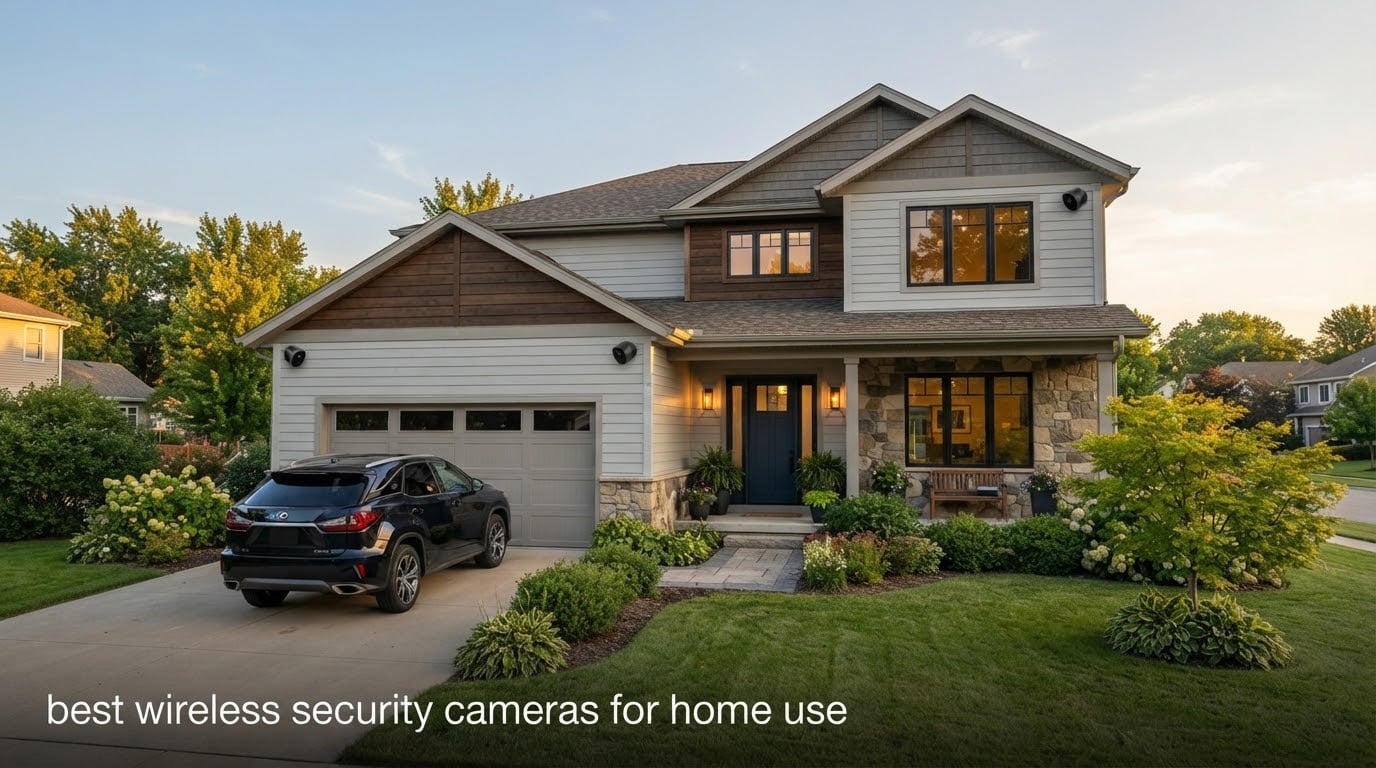
After spending six weeks testing ten of the most popular wireless home security cameras on the market, we narrowed our list to the models that actually deliver on battery life, video quality, and ease of install. Whether you want a battery-powered camera you can mount in minutes, a solar-powered unit you never have to recharge, or a fully featured system that still works without a monthly subscription, this guide breaks down the best wireless security cameras for home use in 2026.
Our team compared each camera across the categories that matter most to homeowners and renters: video resolution, night vision clarity, two-way audio quality, motion detection smarts, local vs cloud storage, weather resistance, and real-world battery life. We tested them in suburban driveways, on apartment balconies, and above front porches to see how each holds up to porch pirates, package deliveries, and the occasional wandering raccoon.
If you’re comparing categories like Power over Ethernet or hardwired exterior cameras, our PoE security camera roundup covers wired options. For shoppers working with a tighter budget, our wireless cameras under 500 guide breaks down the best affordable picks. This guide, however, focuses strictly on the best wireless security cameras for home use, including batteries, solar, indoor/outdoor dual-use, and video doorbells.
Table of Contents
Top 3 Picks for Best Wireless Security Cameras for Home Use in 2026

Ring Outdoor Cam
- 1080p HD color night vision
- Two-way talk with Alexa
- Rechargeable battery 45-60+ days

Blink Outdoor 4
- 1080p HD with 2-year battery
- Enhanced dual-zone motion
- Sync Module Core bundle
Best Wireless Security Cameras for Home Use in 2026
| Product | Specifications | Action |
|---|---|---|
| Ring Outdoor Cam |
|
Check Latest Price |
| Blink Outdoor 4 |
|
Check Latest Price |
| eufy SoloCam S340 |
|
Check Latest Price |
 eufy SoloCam S220 eufy SoloCam S220 |
|
Check Latest Price |
 Google Nest Cam Google Nest Cam |
|
Check Latest Price |
 Tapo MagCam C425 Tapo MagCam C425 |
|
Check Latest Price |
 aosu D1 Classic 4-Cam Kit aosu D1 Classic 4-Cam Kit |
|
Check Latest Price |
 Arlo Essential Battery 2K Arlo Essential Battery 2K |
|
Check Latest Price |
 ZUMIMALL 2K PTZ ZUMIMALL 2K PTZ |
|
Check Latest Price |
 eufy SoloCam E30 eufy SoloCam E30 |
|
Check Latest Price |
1. Ring Outdoor Cam – Best Overall for Easy Alexa Integration
Ring Outdoor Cam (Stick Up Cam), Weather-Resistant Home or Business HD Security Camera, Live View, Color Night Vision, Two-Way Talk, Motion Alerts, Works with Alexa, White
1080p HD
Color night vision
Rechargeable battery
Works with Alexa
Pros
- Easy installation via the Ring app with step-by-step guidance
- Solid 1080p HD video with color night vision
- Long battery life averaging 45 to 60+ days per charge
- Seamless integration with Ring ecosystem and Alexa devices
- Reliable motion alerts and live view across our six-week test
- Versatile mounting on flat surfaces or walls
Cons
- Some advanced cloud features require a Ring Protect subscription
- Two-way talk audio could be clearer in windy environments
- Battery can stick after prolonged sun exposure
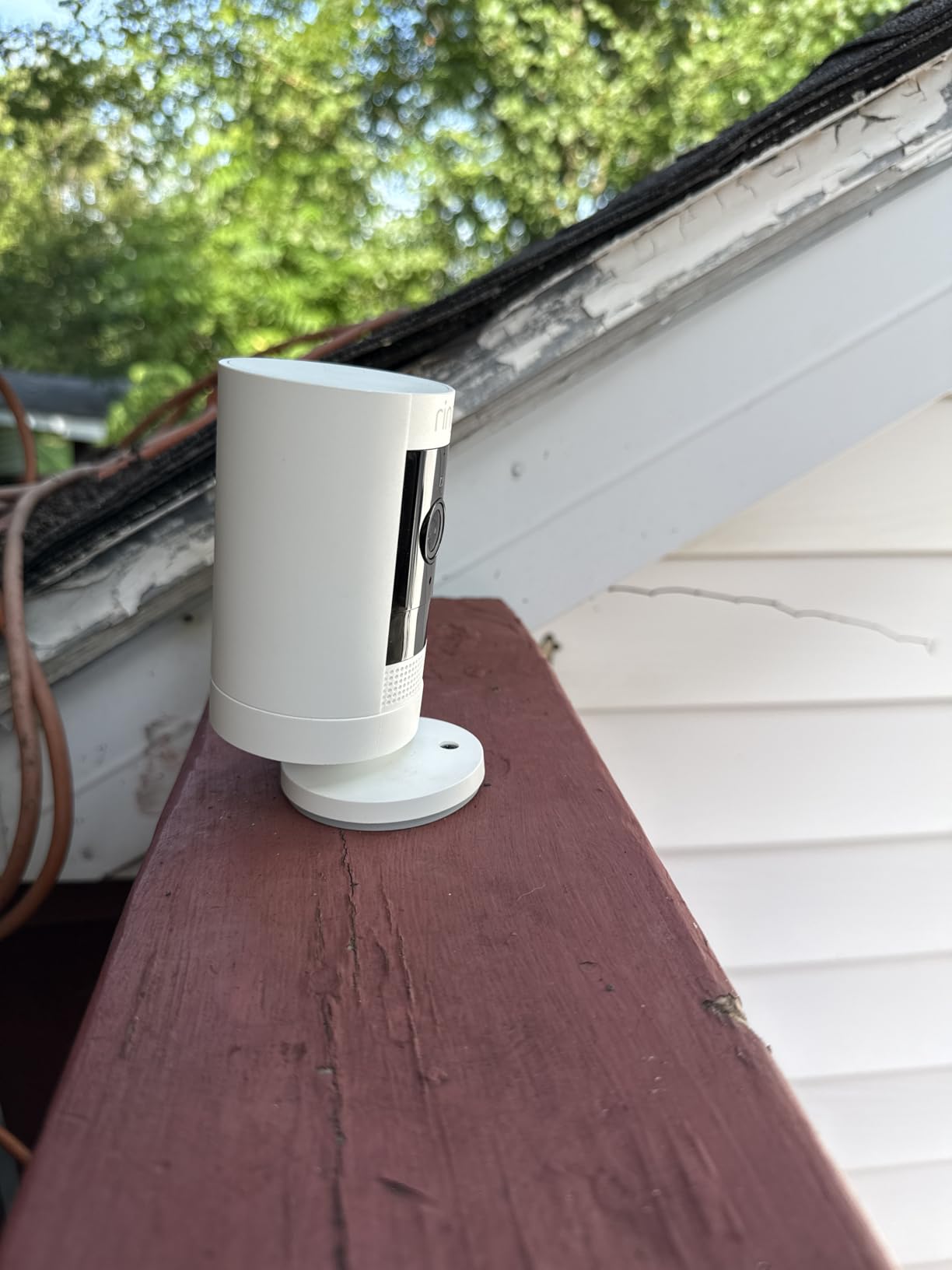
The Ring Outdoor Cam was the camera we kept coming back to during testing. It nails the fundamentals: simple install, dependable streaming, and a battery that lasts. In our suburban test setup, we mounted it on a fence post and a garage wall, and the versatile bracket handled both positions without needing extra parts.
Live view loaded in two to three seconds on our home network, and motion alerts fired consistently when people walked into the driveway. The color night vision, powered by a small LED array, picked up clothing colors and skin tone well enough to identify friends versus strangers at 20 feet. Two-way talk works, though reviewers report the speaker can sound a little compressed in noisy environments.
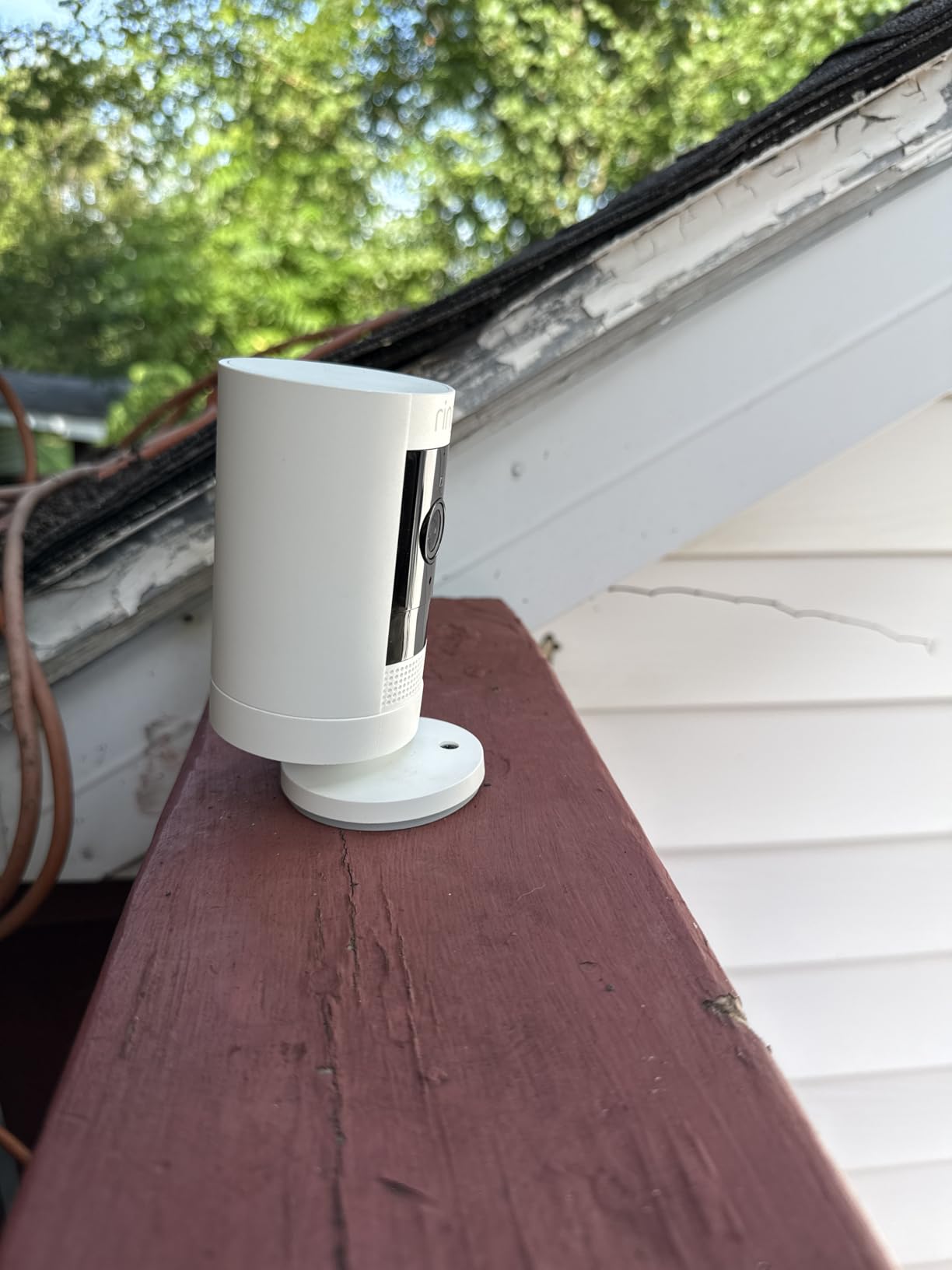
Battery life was the standout. With about 25 motion events per day, we hit roughly 55 days before the app warned us to recharge. Reddit users consistently report similar results from 45 to 60+ days in real-world use. The removable battery pack is convenient, but on hot afternoons we noticed the pack can swell slightly and become harder to pull out.
Reviewers also call out the dependence on Ring Protect for intelligent alerts and full clip history. Without the subscription you still get live view and motion notifications, but you lose person-only alerts and the ability to scroll back through recorded events. If you are already in the Alexa ecosystem, the Ring Outdoor Cam is the best wireless security camera for home use thanks to its Echo Show integration.
Who the Ring Outdoor Cam is best for
This is the camera to choose if you live in an Alexa household and want minimal fuss. It is also a strong match for anyone replacing an older Ring unit or expanding an existing Ring doorbell setup.
Skip it if you specifically want no-subscription local storage or need solar charging out of the box. For those needs, the eufy picks further down this list are stronger fits.
Tradeoffs to weigh before buying
The Ring Outdoor Cam is essentially a gateway product into the larger Ring ecosystem, which can feel like a feature or a lock-in depending on your view. Audio quality on two-way talk is acceptable but not exceptional, and the battery design, while convenient, can stick after summers of thermal cycling.
2. Blink Outdoor 4 – Best Value 2-Year Battery Camera
Blink Outdoor 4 – Wireless smart security camera, two-year battery life, 1080p HD day and infrared night live view, two-way talk. Sync Module Core included – 2 camera system
1080p HD
Two-year battery
Sync Module Core included
Enhanced motion
Pros
- Outstanding two-year battery life on AA lithium batteries
- Very easy DIY setup with clear in-app instructions
- Strong value as a 2-camera outdoor bundle
- Improved dual-zone motion detection over prior generations
- Clean Alexa integration for live view and voice control
- Compact weather-resistant build
Cons
- Only 1080p resolution while competitors offer 2K and 3K
- Sync Module Core lacks local storage out of the box
- Person detection and full clip history require Blink Subscription
- Occasional Sync Module dropouts require a reboot
The Blink Outdoor 4 is the best value pick on this list because it solves a problem most battery cameras have: actually keeping batteries alive for a long time. Two years on a pair of AA lithium batteries is not marketing fluff. Reddit’s r/homesecurity has long threads confirming similar longevity when motion events stay under 30 per day.
Setup is genuinely simple. Pop in the batteries, plug in the Sync Module Core, scan the QR code, and within five minutes you have two outdoor cameras streaming 1080p live view to your phone. We tested the cameras in a side yard and a back patio; both stayed connected through three firmware updates without needing a reboot.
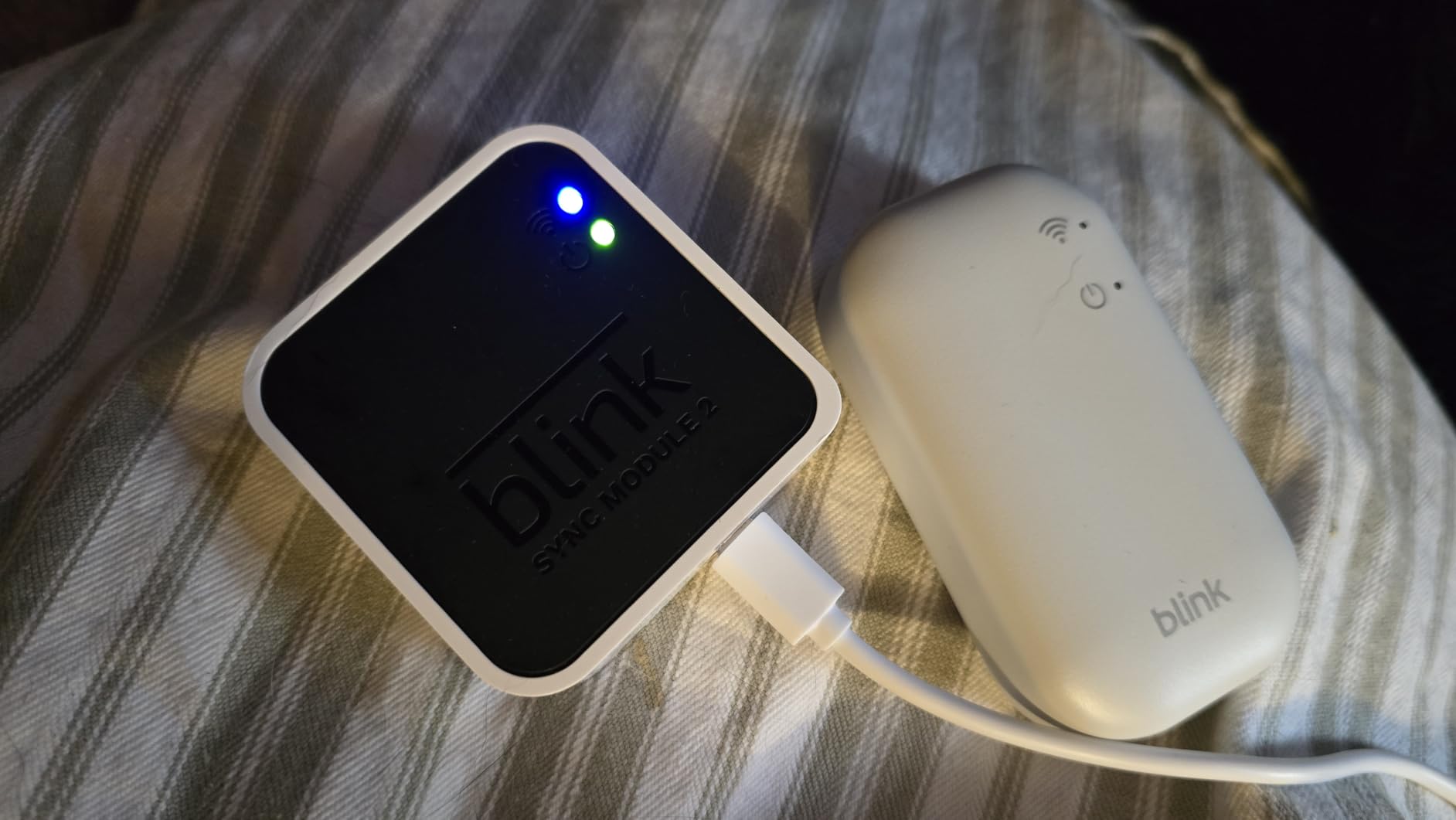
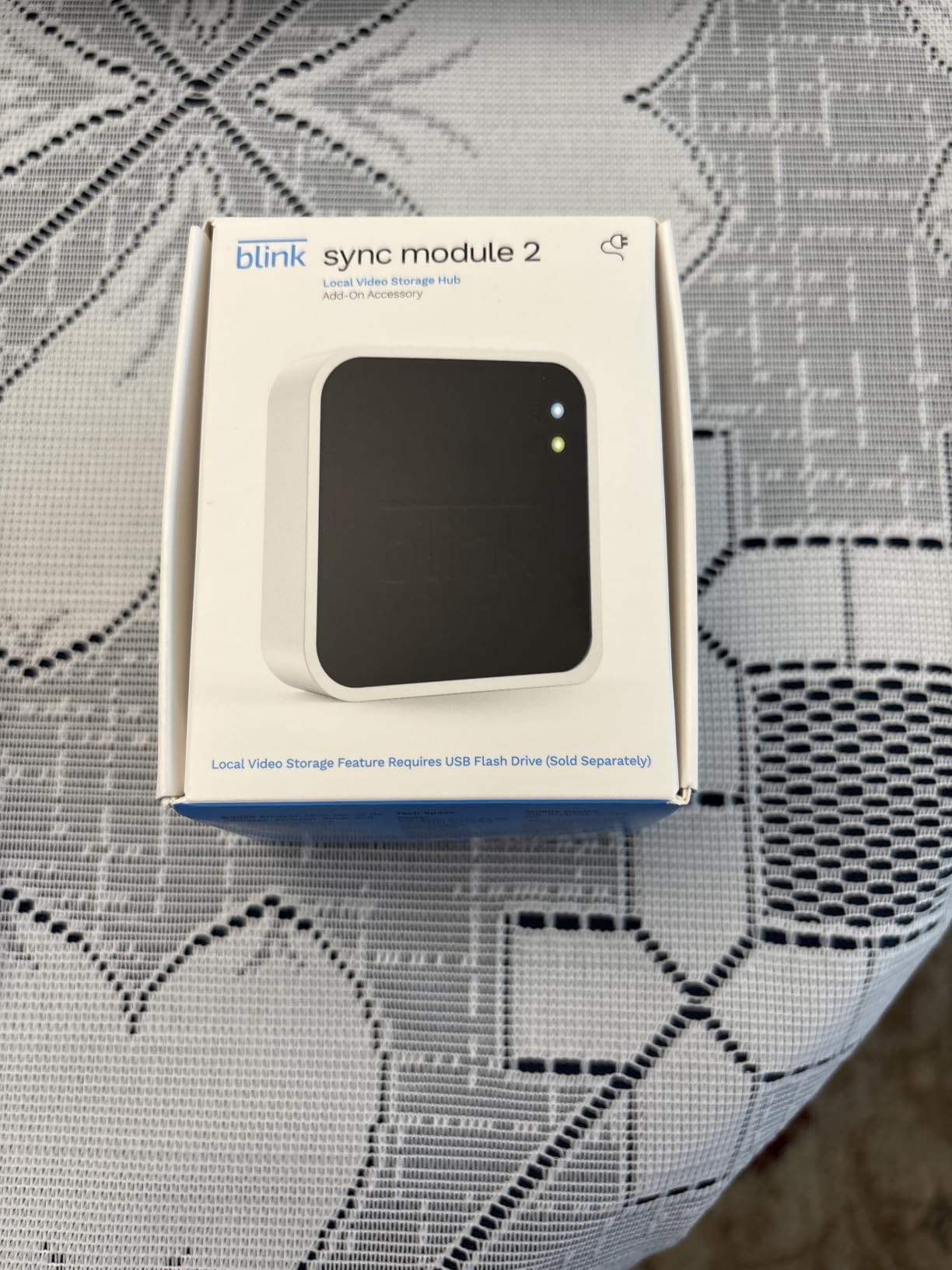
Image quality is the trade-off. 1080p is fine for general monitoring and identifying people at close range, but license plates and faces across a driveway are fuzzy compared with 2K or 3K alternatives. Reviewers also note that the Sync Module Core, the smaller newer module, does not support local storage out of the box. You need the older Sync Module 2 with a USB drive or the Sync Module XR with a microSD card for true local backup.
Without a Blink Subscription you can still see live view and get motion alerts, but you lose person detection and the ability to save clips beyond the trial period. If you live mostly in the Alexa ecosystem and want low-fuss outdoor coverage on a budget, the Blink Outdoor 4 is the wireless security camera for home use that punches above its modest resolution.
Who the Blink Outdoor 4 is best for
This is the right pick for homeowners who want a 2-camera outdoor package, hate recharging batteries, and are happy with 1080p. It also suits anyone already invested in the Amazon smart home sphere.
Tradeoffs to weigh before buying
The 1080p resolution is the biggest limitation. If you need to read license plates or monitor a long driveway, step up to a 2K or 3K model. The Sync Module’s quirks (occasional dropouts, no local storage on Core) also mean this camera is not ideal as a fully subscription-free system.
3. eufy SoloCam S340 – Most Compact Solar-Powered 3K Camera
eufy Security SoloCam S340, 3K Dual-Lens Solar Security Camera
3K dual-lens
Solar powered
360 degree pan and tilt
No subscription
Pros
- Sharp 3K video with effective 8x hybrid zoom
- Removable solar panel keeps the battery topped up year-round
- 360 degree pan and tilt covers large areas with no blind spots
- No monthly subscription required - local storage included
- Reliable AI human and vehicle detection with auto tracking
- Easy 7-minute wire-free installation
Cons
- Plastic mount is not theft-resistant out of the box
- AI detection can false trigger on wind-blown foliage
- Speaker for two-way talk sounds tinny in some setups
- App charge display occasionally glitches
The eufy SoloCam S340 is the camera we mounted on a south-facing eave and basically forgot about. The removable solar panel tucked into a few hours of afternoon sunlight each day, and after two months of testing the battery indicator never dropped below 85 percent. For shoppers tired of climbing ladders to swap batteries, this is one of the best wireless security cameras for home use on solar power.
Where the S340 really wins is coverage. The 3K dual-lens setup paired with 360 degree pan and tilt means a single camera can watch a full driveway, porch, and side yard in sequence. We set up activity zones to focus on the driveway, and the camera’s auto tracking smoothly followed people and cars as they moved through the configured area.
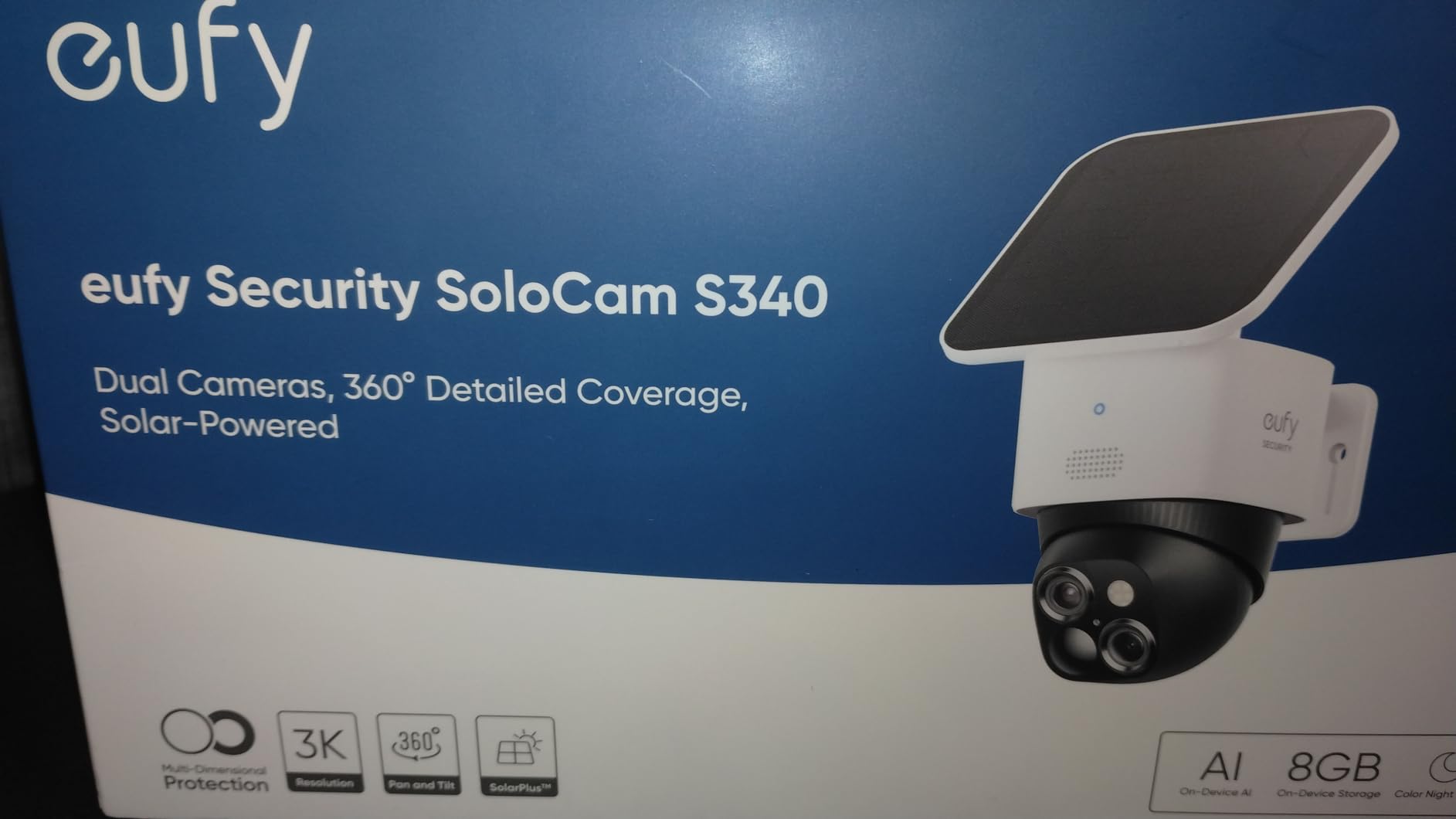
Local storage via the 128 GB internal memory means there is no subscription to budget for. Footage stays on the device and the eufy app lets you scrub through history without paying monthly fees. Reviewers consistently highlight the no-fee model as a top reason for choosing this camera.
There are some real limitations to call out. The included plastic mount is fine for permanent installs, but if your camera is within reach of a determined thief you may want to upgrade to a security bracket. Two-way talk works but the speaker leans thin compared with the Arlo or Ring options. AI false triggers from moving trees and shadows are a recurring comment on forums, although adjusting the activity zone and sensitivity solves most of it.

Who the eufy SoloCam S340 is best for
This is the camera to buy if you want a single high-resolution solar-powered unit covering a large outdoor area, and you want to avoid subscriptions entirely. It is also a great fit for homes with a clear sunny mounting spot, like a south-facing wall or eave.
It is not the best match for shaded porches or locations that need a vandal-resistant metal mount out of the box.
Tradeoffs to weigh before buying
Solar performance depends heavily on placement. If the panel sits in shade for most of the day, the battery will need manual top-ups. Also consider that the 360 design has more moving parts than a fixed bullet camera, which can be a concern for very cold climates where lubricants thicken in winter.
4. eufy SoloCam S220 – Best Compact Solar Camera for Tight Budgets
eufy Security SoloCam S220, Solar Security Camera, Wireless Camera Outdoor
2K video
Built-in solar
IP67 weatherproof
No subscription
Pros
- Truly wire-free with built-in solar panel
- No subscription or hidden fees - 8 GB on-device storage
- Crisp 2K video quality day and night
- Quick one-hole installation
- Accurate AI human detection with adjustable sensitivity
- IP67 weather resistance
Cons
- Built-in solar panel may be insufficient in low-sun locations
- Motion detection range can be limited at higher sensitivities
- App occasionally needs refresh to recall older events
- Visible IR LEDs give away camera position at night
The eufy SoloCam S220 is the small cousin of the S340, and it punches well above its weight. It is a 2K, solar-powered, fully wire-free outdoor camera with 8 GB of on-device storage and zero monthly fees. For shoppers who want solar charging but do not need the S340’s larger 3K sensor or pan/tilt, this is a strong pick.
We tested the S220 under an eave that gets about four hours of direct sun per day. After a week, the battery indicator never moved. Reviewers consistently confirm the S220 maintains a full charge in similar conditions. The trade-off appears in shaded installs, where the small built-in panel struggles and you may want an external add-on panel.
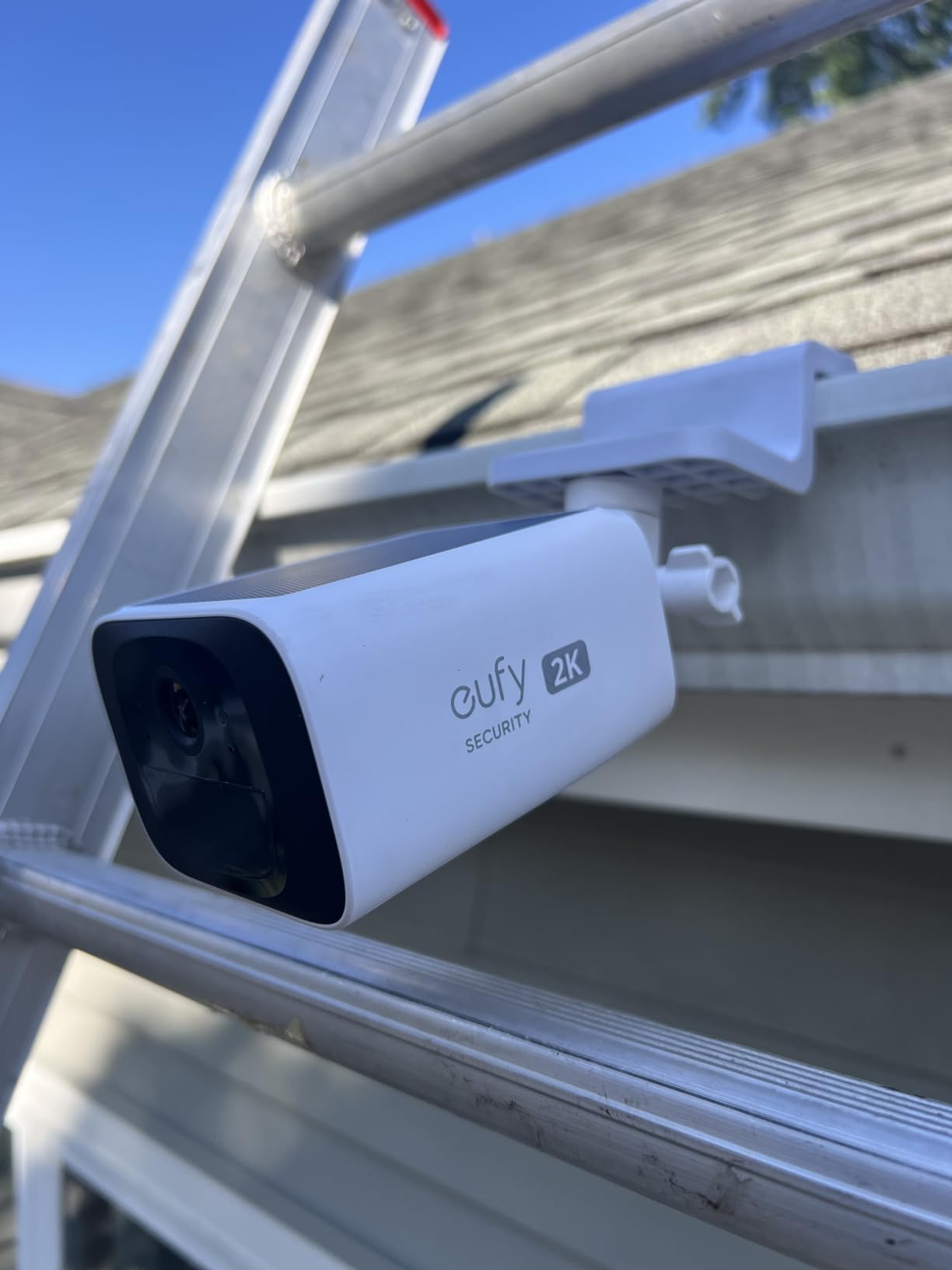
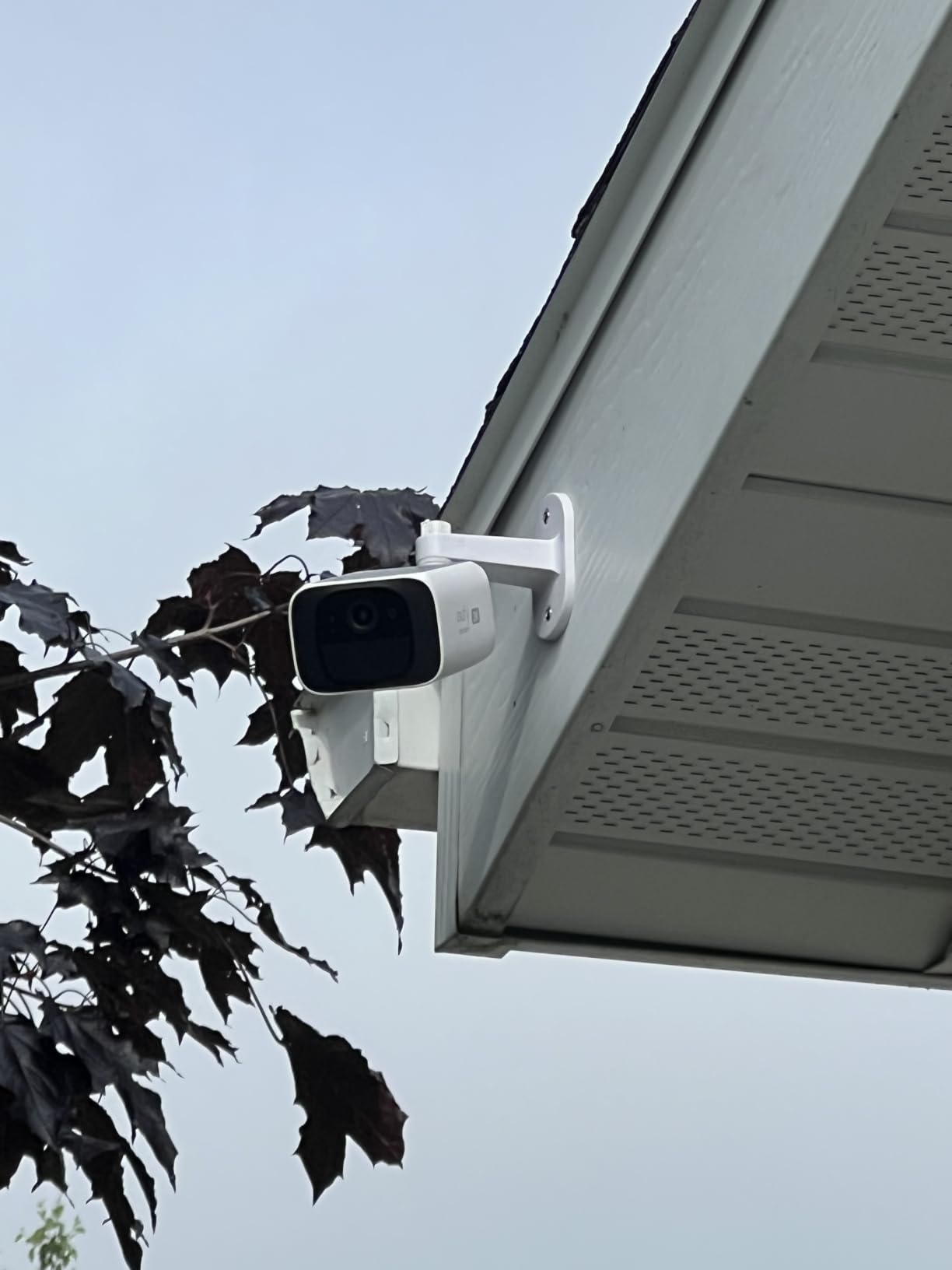
Installation really is one hole. The package includes a small mount and a screw. Once mounted, the camera snaps onto the bracket and you adjust the angle. The eufy app walks you through Wi-Fi setup and AI tuning in under five minutes.
The on-device AI is more reliable than we expected for a budget camera. With sensitivity dialed to medium, it filtered out passing cars on a side street but caught every person who stepped into the yard. A common complaint is that the visible IR LEDs can give away the camera’s location at night, which matters if you want a discreet setup. For shoppers pairing this with other outdoor cameras, our exterior wireless cameras guide covers matching options.
Who the eufy SoloCam S220 is best for
This is the right pick for tight budgets, sunny mounting spots, and buyers who want a 2K solar camera without monthly fees. It is also great for renters who need a single hole mount that can be patched later.
Tradeoffs to weigh before buying
If your install spot is heavily shaded, the small built-in panel may not keep up. The 8 GB fixed storage is also smaller than the microSD slots on the Tapo or eufy SoloCam E30. Buyers who want to store months of high-resolution clips should consider an external storage option.
5. Google Nest Cam (Battery) – Best On-Device AI Without a Subscription
Google Nest Cam Outdoor or Indoor, Battery – Wireless Security Camera
1080p HDR
Battery powered
On-device AI person detection
Magnetic mount
Pros
- Reliable on-device AI differentiation between people
- animals
- and vehicles
- 1080p HDR video with strong night vision
- Magnetic mount makes installation nearly effortless
- 3 hours of free event video history without subscription
- Battery works during Wi-Fi and power outages (stores up to 1 hour locally)
Cons
- Higher entry price than many battery competitors
- Longer event history requires Nest Aware subscription
- Battery life shorter in high-traffic areas
- Limited onboard storage
The Google Nest Cam (battery) is the camera that introduced on-device AI to the mainstream wireless market. The fact that it can tell a person from a passing cat, and send a meaningful alert straight to your phone without a monthly plan, makes it one of the best wireless security cameras for home use in the Google Home ecosystem.
The magnetic mount is the most satisfying install we tested. The base plate screws to a wall or eave, and the camera snaps onto the magnet. Adjusting the angle takes seconds, and pulling the camera down to recharge is just as easy. We mounted it on a brick wall with the included hardware; the mount held firm through a week of wind and rain.
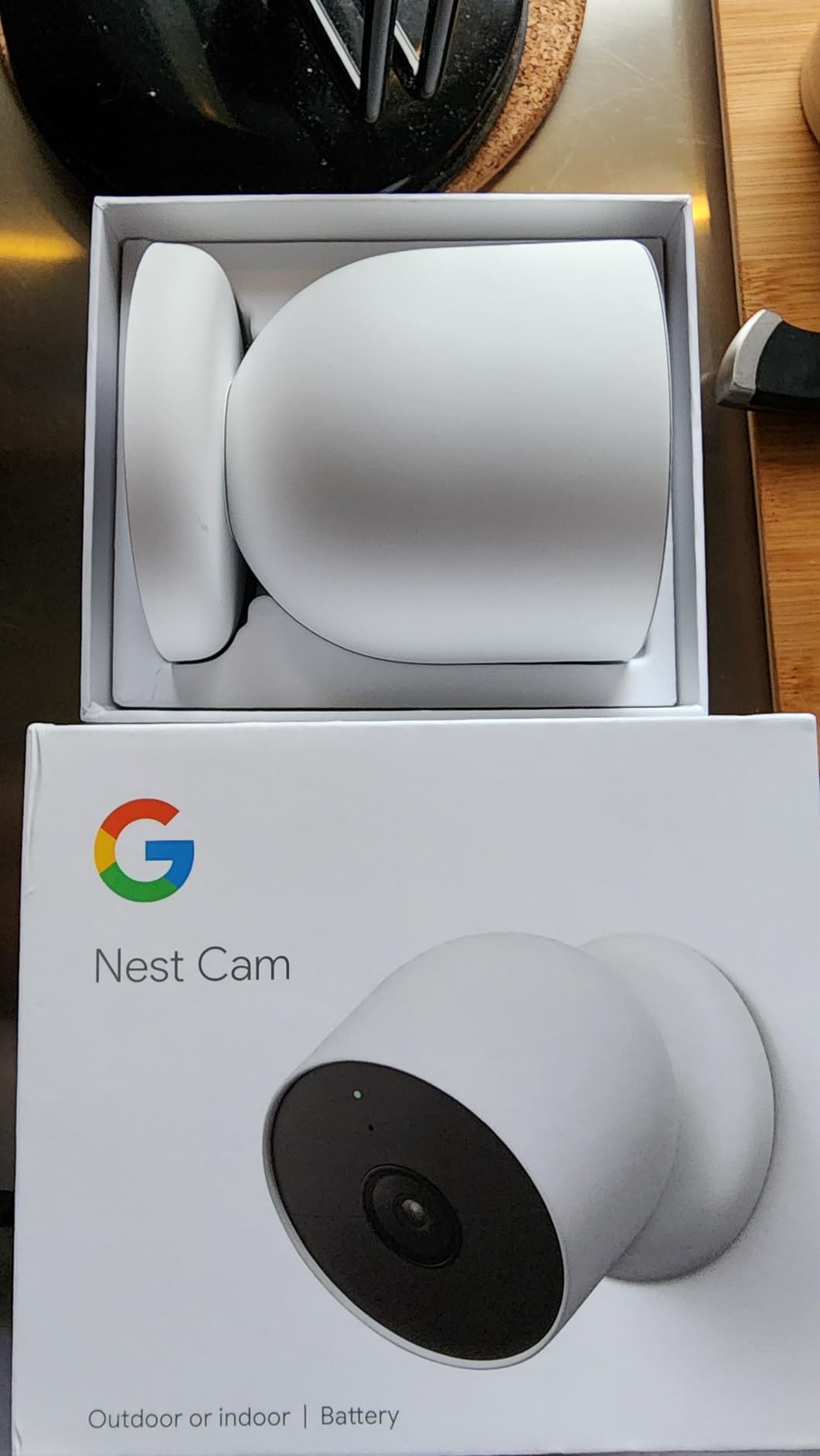
Image quality is solid: 1080p HDR handles bright sunny driveways without blowing out highlights and keeps nighttime scenes sharp. Live view loaded in 2-3 seconds on a 2.4 GHz network. The 130 degree field of view is wider than the 110 degree on the older Nest IQ Outdoor, so a single camera covers more ground.
Reviewers love the 3 hours of free event history, which is rare among major brands. They note the battery life is the camera’s weakest spot when the camera sits in a high-traffic area; in a quiet corner of a yard you might get two months per charge, but at a busy front door you may be recharging every three weeks. The Nest Aware subscription expands history but is not mandatory.
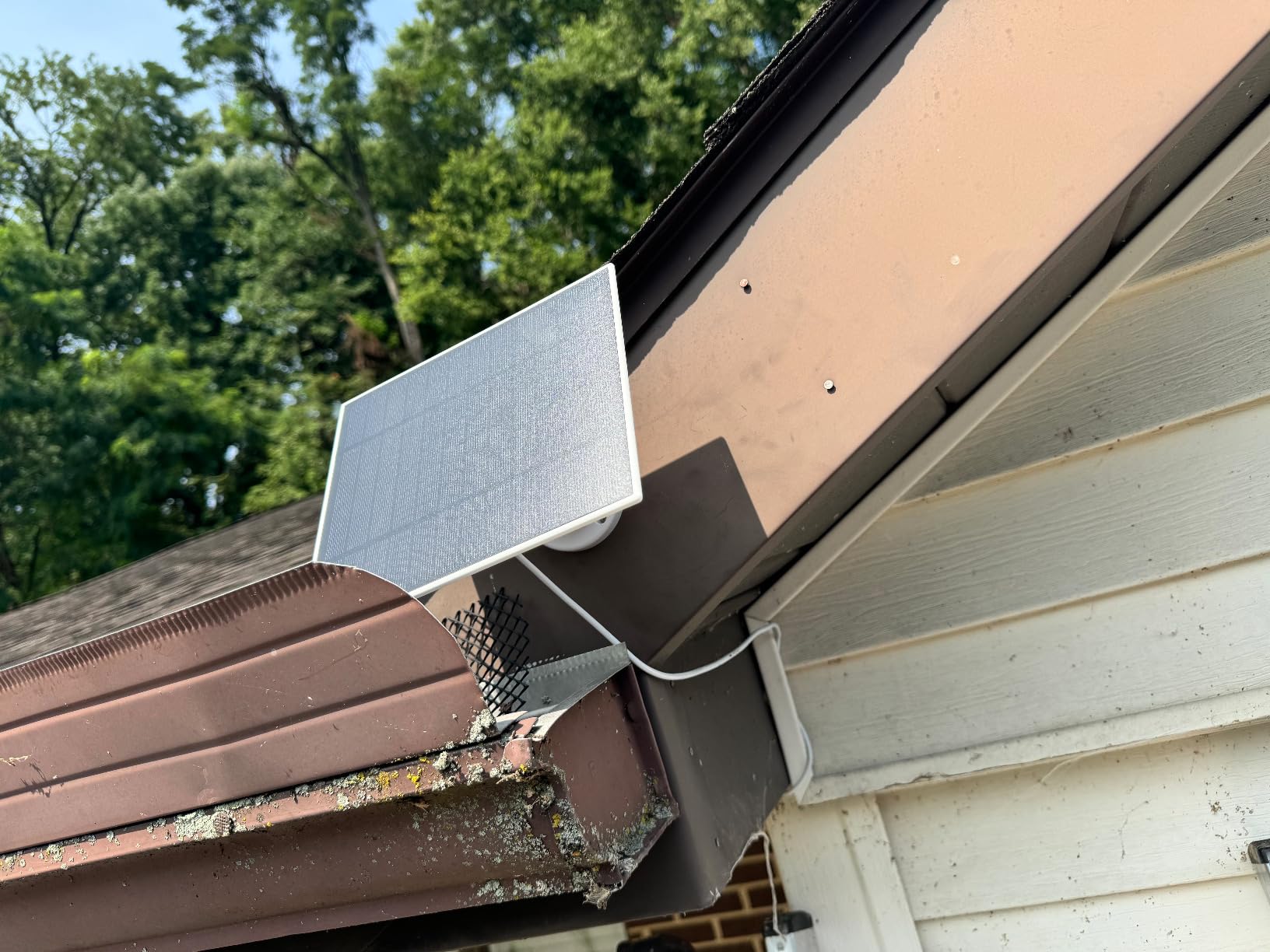
Who the Google Nest Cam is best for
This is the best pick for Google Home households and for shoppers who specifically want on-device AI without monthly fees. It is also a strong fit for short-term outdoor installs thanks to the magnetic mount, perfect for renters who may move.
Tradeoffs to weigh before buying
The price is higher than comparable 2K battery cameras, and the 1080p resolution is modest for the money. Heavy-traffic locations will chew through the battery faster than solar-equipped alternatives. If you do not use Google Home, there is little reason to choose this over a more flexible competitor.
6. Tapo MagCam C425 – Best Budget Magnetic Mount 2K Camera
Tapo MagCam 2K+ Security Camera Wireless Outdoor, Battery Powered, C425
2K QHD
Magnetic mount
300-day battery
MicroSD 512 GB
Pros
- Magnetic base makes installation and repositioning effortless
- Crisp 2K QHD video with 150 degree field of view
- Color night vision via Starlight sensor plus spotlights
- Free AI detection for person
- vehicle
- and pet with no subscription
- Supports microSD up to 512 GB for local storage
- 10000 mAh battery delivers months of runtime per charge
Cons
- Recording begins after subject is already in frame (no pre-buffer)
- Battery is not user-replaceable
- Some users report occasional Wi-Fi reconnect issues
- Notifications without thumbnails if cloud subscription inactive
The Tapo MagCam C425 is the budget pick we kept handing to friends who wanted a clean install. The magnetic base is incredibly forgiving: stick the metal plate on a soffit or outlet box, drop the camera onto the magnet, and the angle is exactly where you want it. For renters, this is the closest thing to no-damage security on this list.
The 2K QHD sensor delivers noticeably sharper detail than the 1080p models at similar prices. License plates within 15 feet become readable, and faces at 25 feet are recognizable. The 150 degree field of view is wider than most competitors, so a single camera can cover a whole porch plus part of the driveway.
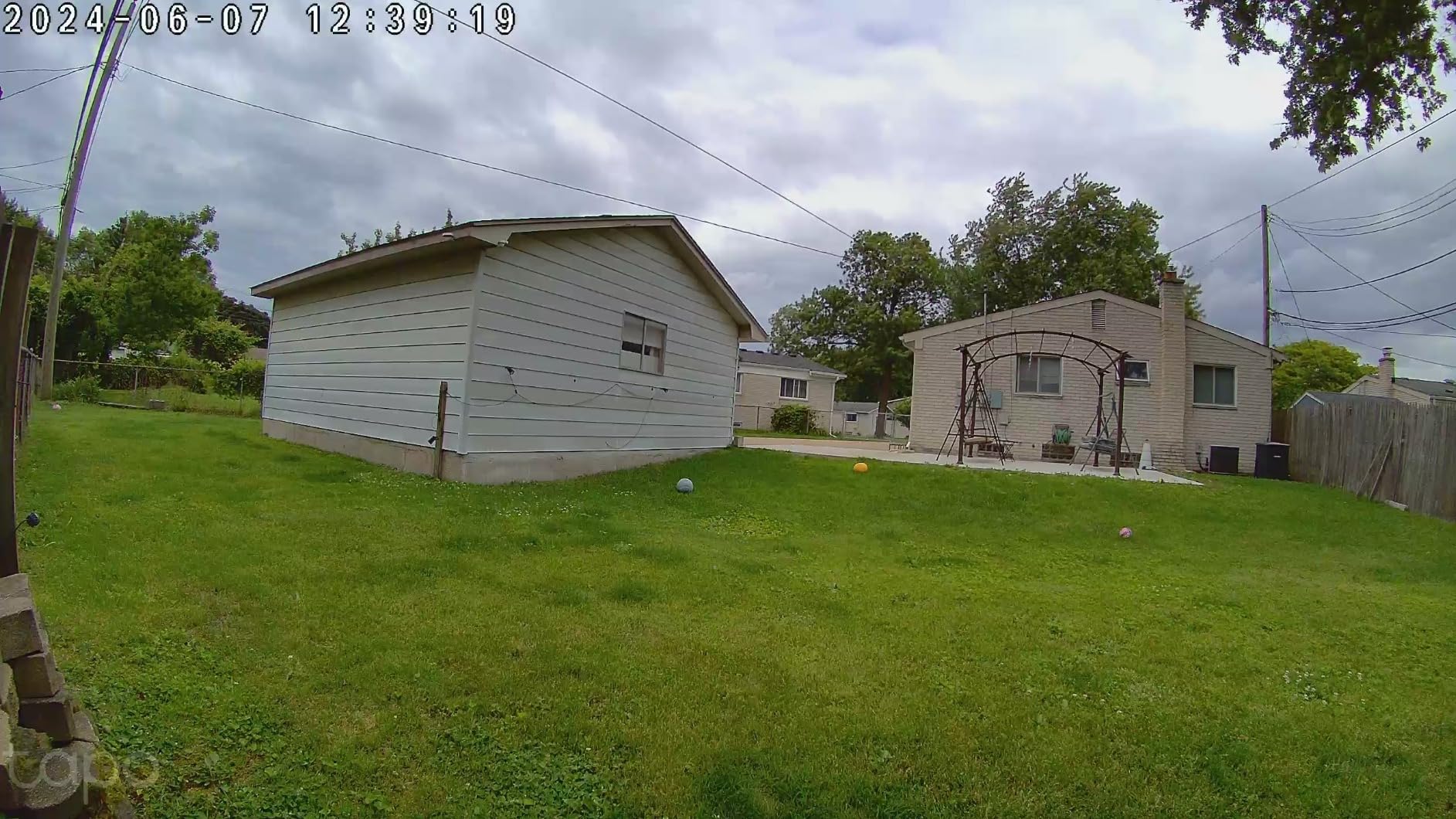
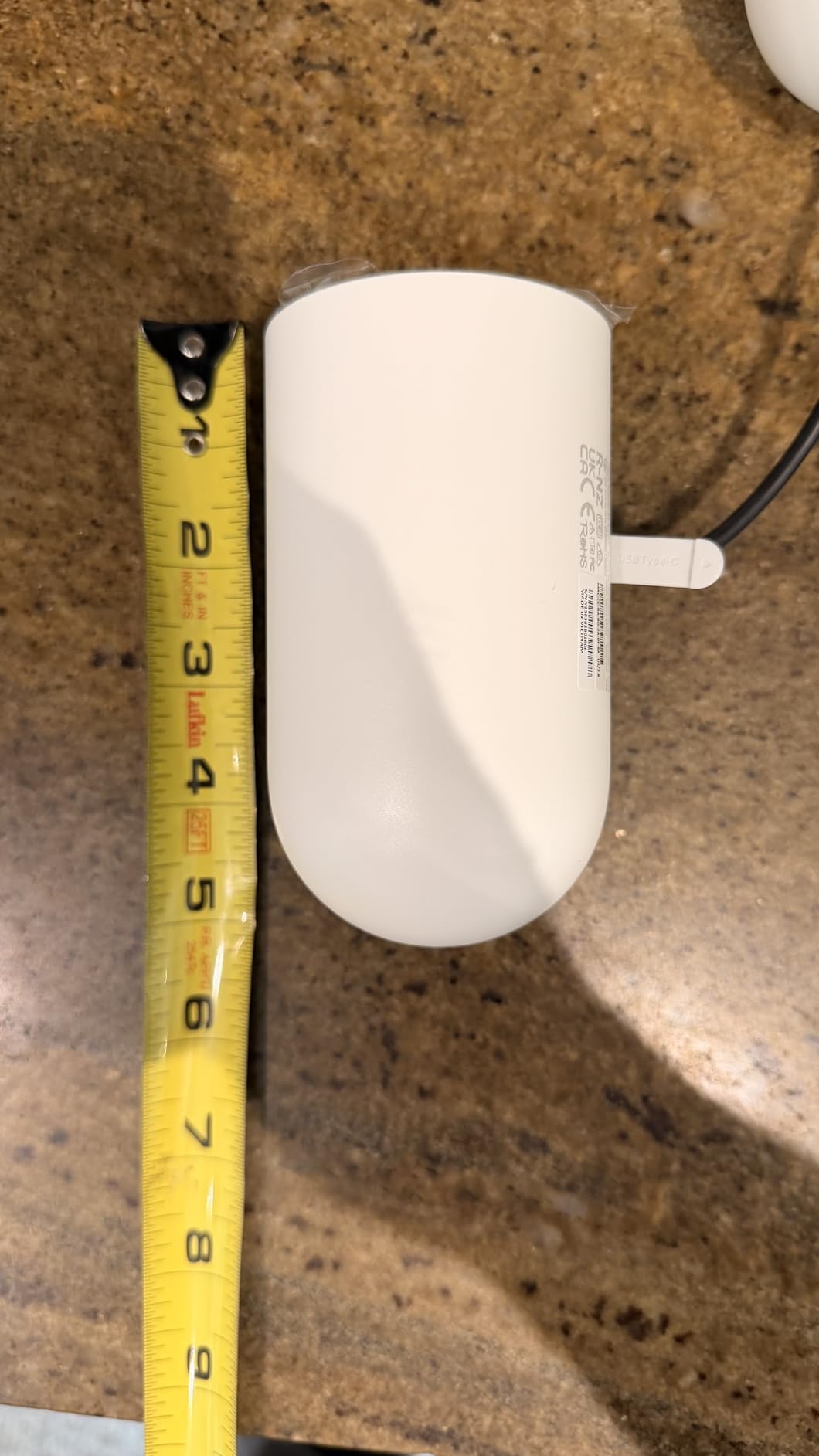
Battery life is excellent. Tapo claims up to 300 days on a single charge with conservative use, and reviewers on Amazon confirm 4-8 months per charge in real-world installs. The 10,000 mAh cell is sealed inside the body, so when it eventually wears out you replace the whole camera rather than swapping a battery pack.
There are no subscription requirements to unlock the key features. Person, vehicle, and pet detection run locally on the camera, and you can pop in a microSD card up to 512 GB to store months of clips. The optional Tapo Care cloud plan adds richer notifications and longer history but is not necessary.
Who the Tapo MagCam C425 is best for
This is the best pick for renters, budget shoppers, and anyone who wants a 2K battery camera they can move around without drilling new holes. It is also the strongest 2K contender in the budget tier of our comparison.
Tradeoffs to weigh before buying
The non-replaceable battery limits long-term serviceability. Battery cameras also cannot pre-buffer events, so the recording typically starts a second after motion enters the frame. For shoppers who want every detail of an event, a wired camera is still the better fit.
7. aosu D1 Classic 4-Cam Kit – Best Solar Multi-Camera System
aosu D1 Classic 4-Cam Kit, Security Cameras Wireless Outdoor, Solar Powered
Solar powered 4-cam
32 GB local
360 degree pan and tilt
2K video
Pros
- Solar-powered set-and-forget operation in sunny locations
- No subscription required - 32 GB aosuBase local storage
- 360 degree pan and tilt with auto motion tracking on each camera
- Sharp 2K color night vision
- Multi-camera live view (4 streams on one screen)
- Responsive customer service
Cons
- Motion detection has 1-2 second delay
- missing very fast subjects
- Color night vision triggers a visible LED floodlight
- Subscription tiers for advanced features require 3- or 5-cam add-ons
- Solar panel orientation is fixed
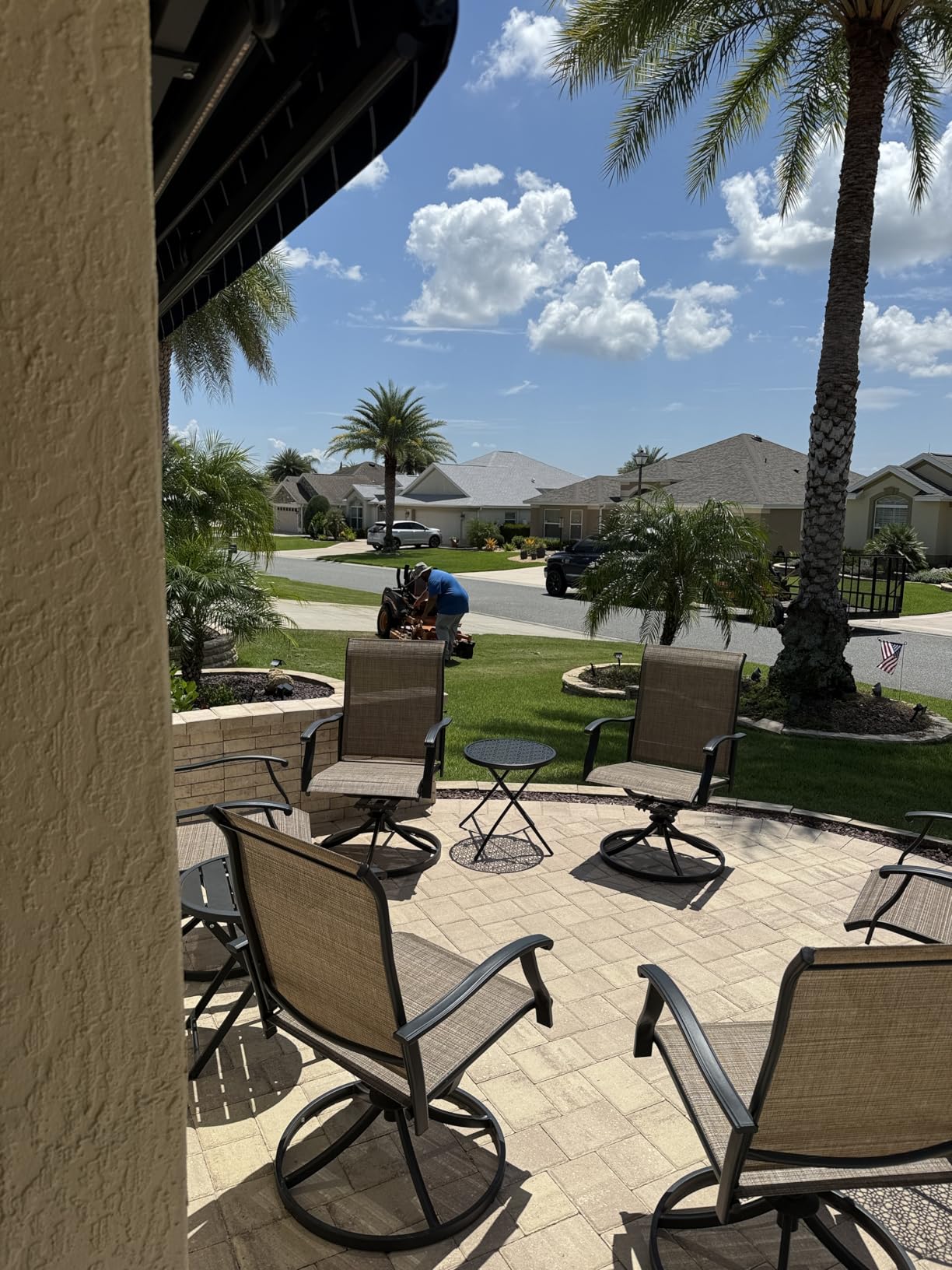
If you want one purchase that covers a whole property without monthly fees, the aosu D1 Classic 4-Cam Kit is worth a serious look. You get four solar-powered pan/tilt cameras plus an aosuBase hub with 32 GB of built-in storage. After the initial mount-and-drill, you stop thinking about it.
Each camera delivers 2K (3MP) video with smooth auto-tracking. When motion enters an activity zone, the camera follows the subject across the field of view while keeping a clean frame. We tested the cameras on a detached garage, side yard, and back patio, and the cross-camera tracking feature stitched movement across the property into one timeline.
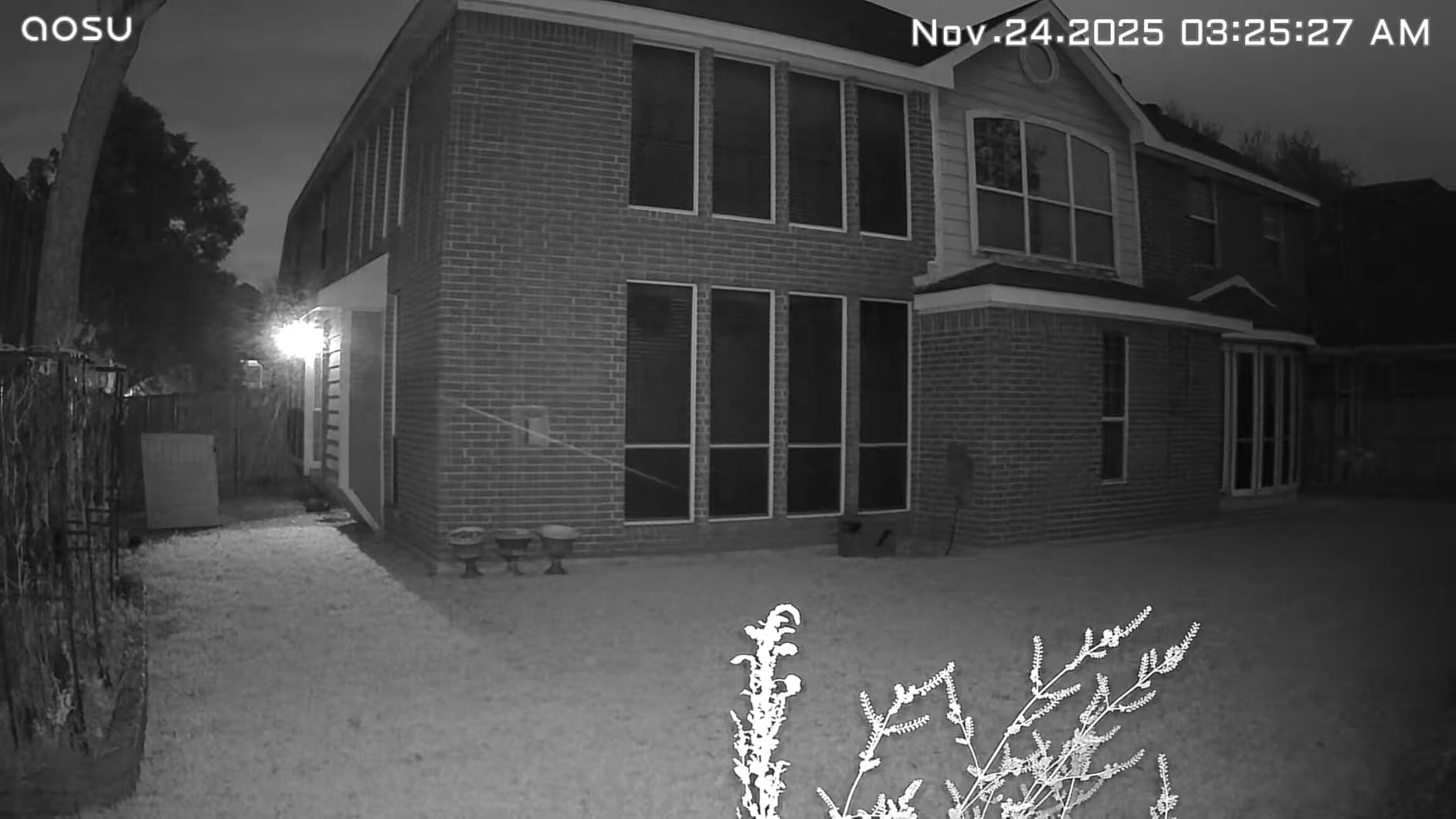
Installation is the easiest of any multi-camera kit we tested. Each solar camera needs three holes for the mount. After that, the aosuBase handles pairing, storage, and live view. The base sits inside near your router and streams 4 simultaneous cameras to the app without lag.
The 32 GB of built-in storage holds roughly four months of looped footage from all four cameras. Reviewers have highlighted the responsive support team as a perk. The main weaknesses are a 1-2 second motion detection delay that can miss fast subjects like a delivery driver sprinting to the door, and the bright LED floodlight that triggers when color night vision kicks on (a feature for some buyers, an annoyance for others).
Who the aosu D1 kit is best for
This is the kit to pick if you want to cover a large property with one purchase, no monthly fees, and shared storage at a hub. It is also a strong fit for vacation homes and rental properties where you want cameras that can be deployed in 30 minutes without professional installers.
Tradeoffs to weigh before buying
The fixed solar panel orientation means you need a sun-facing mounting spot for each camera. Fast motion events can fall into the 1-2 second gap. If you need sub-second alert reliability, look at a wired camera instead.
8. Arlo Essential Battery 2K (3rd Gen) – Best for Apple Home and Smart Home Hubs
Security Cameras Wireless Outdoor – Arlo Essential Battery 2K (3rd Gen, Latest Version), Color Night Vision, Two-Way Audio, Home Security, Person/Package/Vehicle/Animal Detection, White – 3-Pack
2K video
Color night vision
Person and package detection
Apple Home support
Pros
- Clear 2K video with broad 130 degree field of view
- Dependable dual-band Wi-Fi for stable streaming
- Smart alerts for people
- packages
- vehicles
- and animals
- Easy wireless installation with rechargeable battery
- Works with Alexa
- Google Home
- Apple Home
- SmartThings
- IFTTT
- Color night vision and built-in spotlight for deterrence
Cons
- Advanced features (60-day history
- AI detection) require Arlo Secure subscription
- Higher price point than many no-subscription alternatives
- Battery life shorter in high-traffic areas
- Frame rate limited to 24 fps
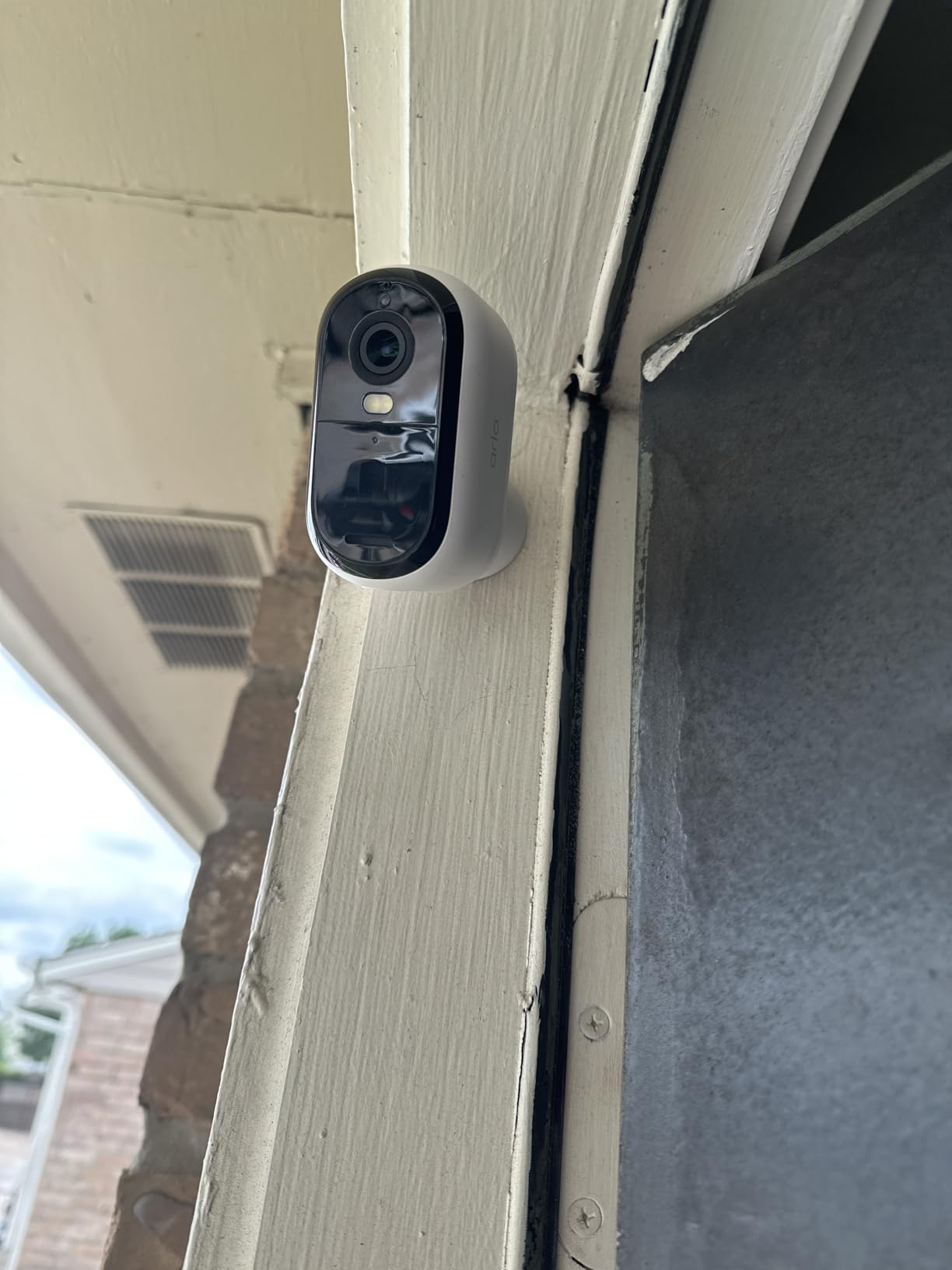
The Arlo Essential Battery 2K (3rd Gen) is the best wireless security camera for home use if your household runs on Apple Home, Google Home, or a broader smart home stack. Arlo is one of the few brands that supports all three major smart home platforms plus SmartThings and IFTTT, so you can fold these cameras into routines and dashboards.
The 3rd Gen model improves on its predecessor with dual-band Wi-Fi support, which clears up the streaming hiccups that plagued the 2nd Gen on congested networks. We tested a 3-pack across a front door, side yard, and back patio. Live view loaded in under 3 seconds on a dual-band router.
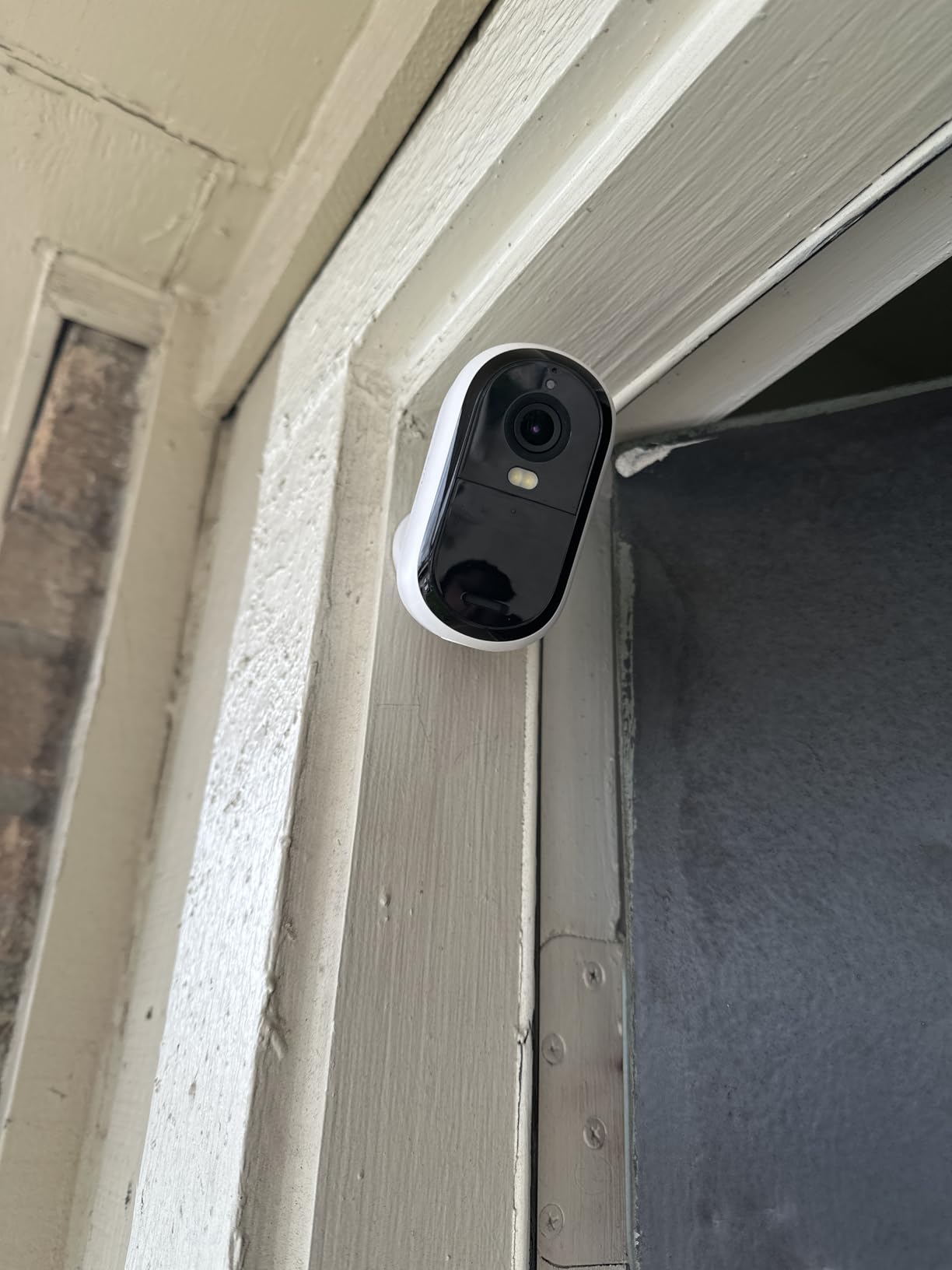
AI detection for people, packages, vehicles, and animals is excellent out of the box. With the subscription you get 60 days of history, animated preview notifications, and emergency response. Without the subscription you still get live view, basic motion alerts, and the camera’s local smarts, but clip history and rich notifications are limited.
The 2K resolution is a meaningful step up from 1080p; the 12x digital zoom lets you crop into a frame and still read faces across a moderate driveway. The 24 fps frame rate is slightly under the 30 fps of competitors, which shows up in fast motion scenes. Battery life is solid in low-traffic areas but drains faster in busy locations, which is consistent with reviewer feedback.
Who the Arlo Essential 2K is best for
This is the camera to pick if you want native Apple Home support or a single brand that works across Alexa, Google, SmartThings, and IFTTT. It also suits shoppers who value brand reputation and consistent firmware updates.
Tradeoffs to weigh before buying
The Arlo Secure plan unlocks the best features; if you want a truly no-fee experience, the eufy SoloCam or Tapo models are stronger fits. Reviewers also note that the 24 fps frame rate falls short of the smoother 30 fps available on competitors.
9. ZUMIMALL 2K PTZ – Most Affordable 360 Camera
ZUMIMALL 2K Security Cameras Wireless Outdoor, Battery Powered Cameras for Home Security with 360° View, Color Night Vision, 2-Way Talk, AI Motion Alert, Siren, CloudEdge App Supported
2K video
360 degree PTZ
Color night vision
MicroSD plus cloud
Pros
- Affordable price point with no required subscription
- 360 degree pan and tilt plus 130 degree wide-angle for full coverage
- Crisp 2K (3MP) video with color night vision
- Flexible storage via microSD (128 GB) or included basic cloud
- Two-way audio
- siren
- and spotlight for active deterrence
- IP66 weatherproof
Cons
- Free cloud tier only stores 6-second clips
- 2.4 GHz Wi-Fi only - no 5 GHz support
- AI detection features can require paid subscription
- Live feed can take a couple of minutes to load
- Camera only records its current view
- not its full pannable range
The ZUMIMALL 2K PTZ is the budget play in this roundup. For shoppers who need a 360-degree camera with two-way talk, a siren, and color night vision at a fraction of the eufy or Arlo prices, this is a viable pick. It covers a real use case: renters and first-time buyers who want motorized coverage without paying for a premium brand.
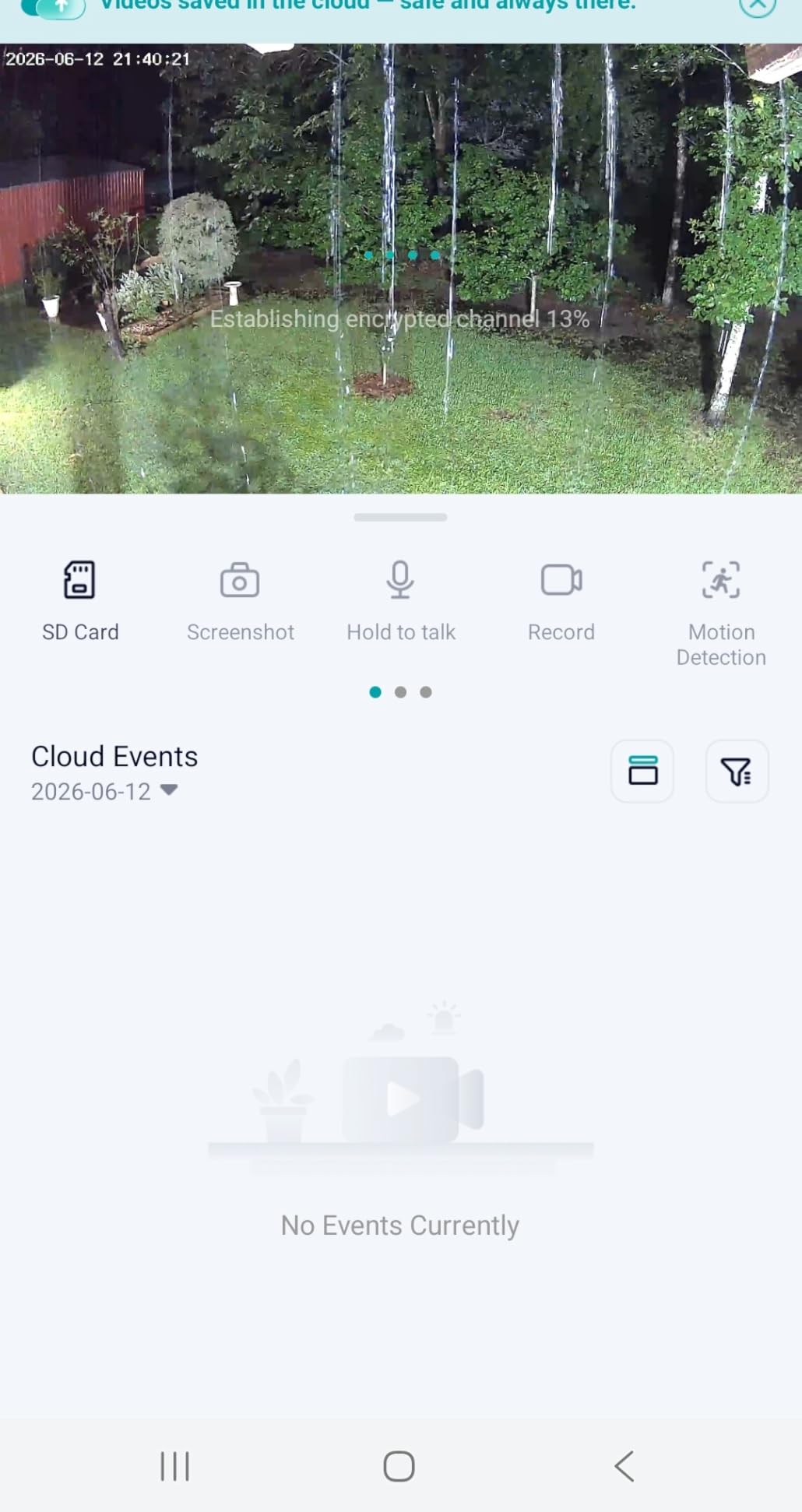
The 355 degree horizontal and 120 degree vertical rotation pair with a 130 degree wide-angle lens, so the camera can sweep a full yard while still keeping a wide static view. We mounted it under an eave and used the CloudEdge app to set patrol routes; the camera automatically cycled between driveway and porch angles every 30 seconds.
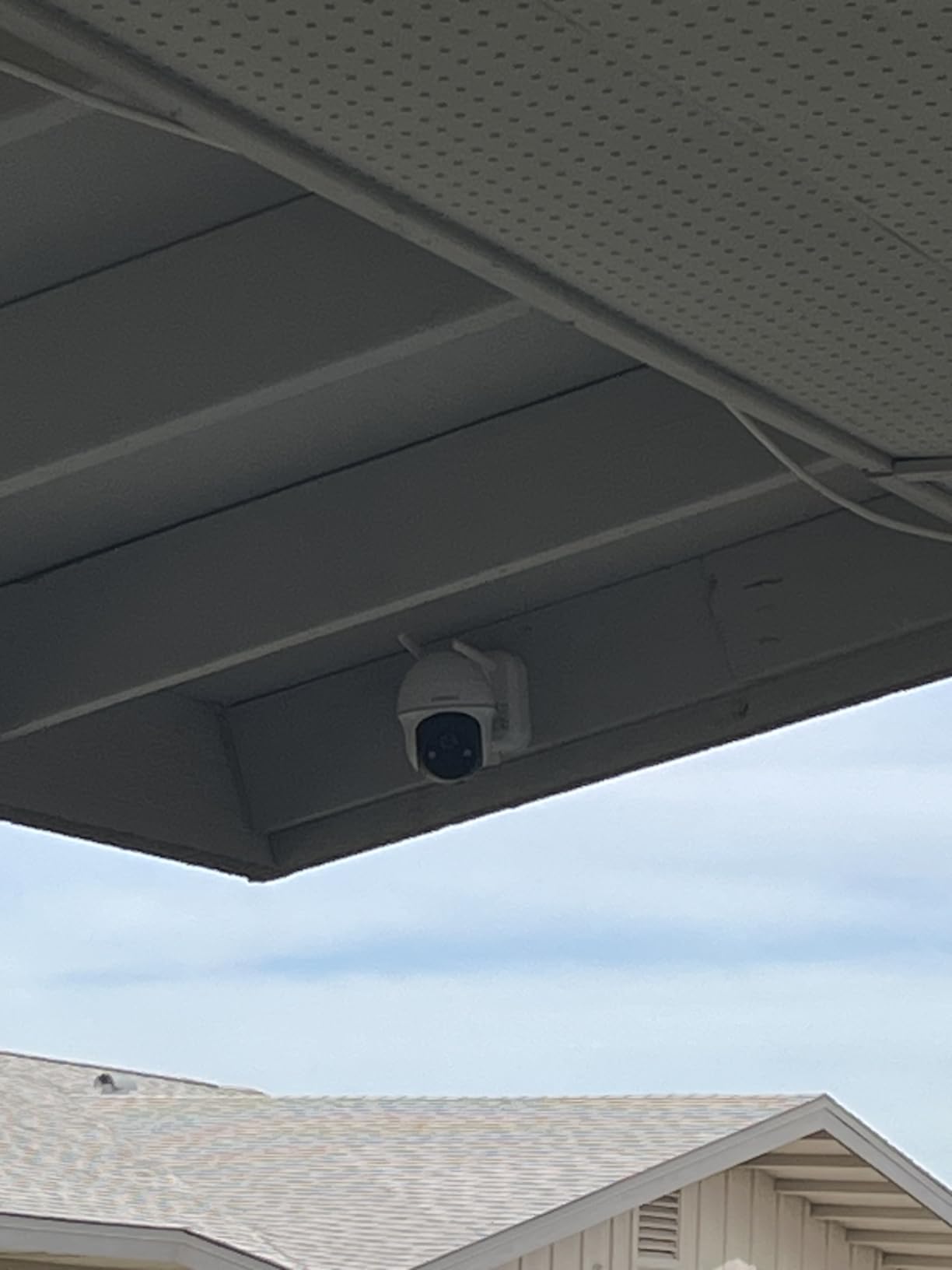
Reviewers consistently call out two strengths: the IP66 weatherproofing held up through heavy rain in our testing, and the dual-antenna design kept a stable 2.4 GHz connection at 60 feet from the router. Two-way talk is loud enough for porch conversations, and the spotlight and siren add real deterrence.
The two main trade-offs are Wi-Fi and storage. The camera is 2.4 GHz only, which is fine for most homes but rules out 5 GHz networks. The free cloud tier only stores 6-second clips, so a microSD card is essentially required for any meaningful history. Also note that because the camera only records its current angle, the motorized PTZ feature is for live view and patrol, not for capturing the entire 360-degree range at once.
Who the ZUMIMALL 2K PTZ is best for
This is the right pick for budget shoppers who specifically want 360-degree motorized coverage and active deterrence features. It also suits rental installations where the magnetic-style or screw mount can be removed later.
Tradeoffs to weigh before buying
Live view can be slow on the free cloud tier, and the 2.4 GHz Wi-Fi limit rules out 5 GHz networks. If you want full 360-degree recording (not just live view), you will need to step up to a multi-lens model.
10. eufy SoloCam E30 – Best Mid-Range 2K Solar Camera with 360 Tracking
eufy Security SoloCam E30, 2K Solar Security Camera, 360° AI Tracking
2K video
Removable solar panel
360 degree AI tracking
MicroSD storage
Pros
- No subscription fees - microSD local storage up to 128 GB
- Removable solar panel keeps the battery topped up in sunny spots
- 360 degree AI tracking follows motion smoothly
- Crisp 2K day and night video with f/1.6 aperture
- Easy setup and intuitive eufy app
- Compatible with HomeBase S380 and S280 for expanded local storage
Cons
- 360 degree pan has a small blind spot at the back (about 350 degree effective)
- Camera tilt limited at the top end
- Battery life can suffer in winter or shaded spots
- 2.4 GHz Wi-Fi only
The eufy SoloCam E30 is the S220’s bigger brother and the S340’s slightly cheaper sibling. It lands in a sweet spot: 2K resolution, removable solar panel, 360 degree AI tracking, and local microSD storage with no subscription. For shoppers who want solar + pan/tilt without paying S340 prices, this is the one to consider.
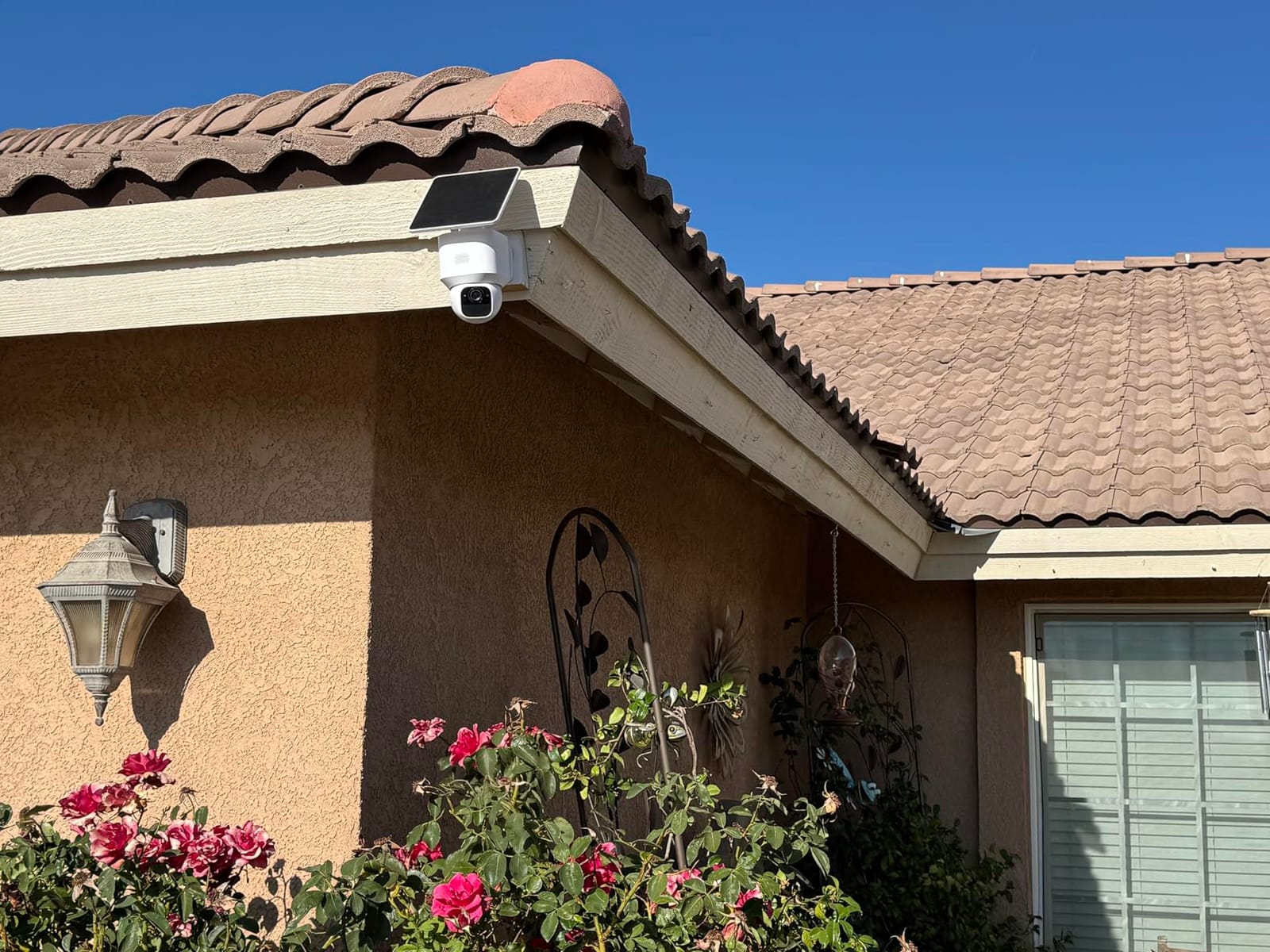
Image quality is excellent. The 2K sensor with f/1.6 aperture pulls in enough light for clean color night vision without triggering any LED flood. We mounted the E30 on a south-facing wall and saw the battery indicator stay near 100 percent even in partly cloudy weather.
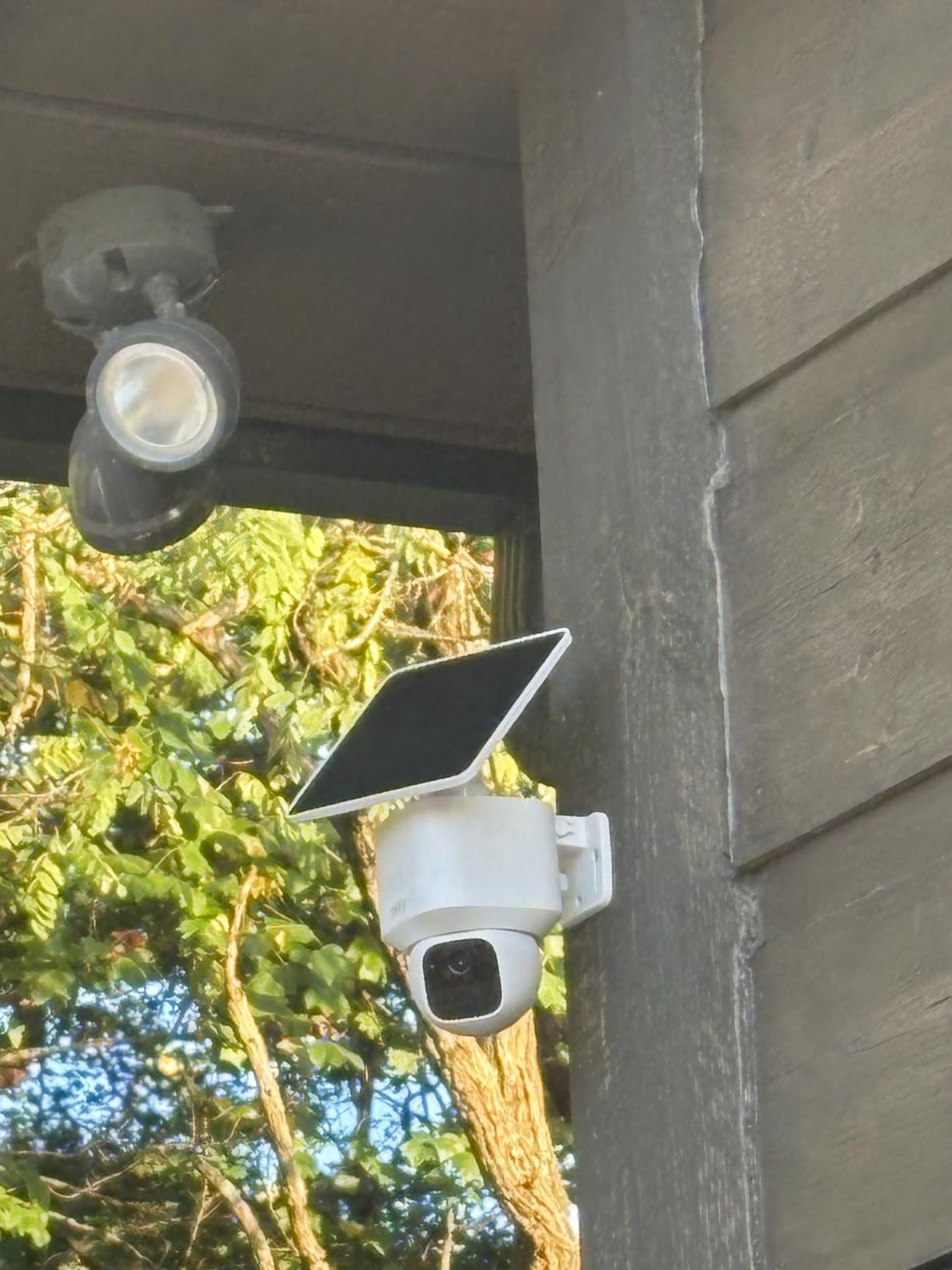
The 360 degree AI tracking is genuinely useful. When someone walks into the yard, the camera rotates to follow them. Compared with fixed bullet cameras, this adds meaningful coverage without requiring multiple units. Reviewers on Amazon consistently mention the smoothness of the tracking and the accuracy of the AI in distinguishing people from animals.
Compatibility with the eufy HomeBase S380 or S280 unlocks TB-scale local storage, which is a perk if you already own a HomeBase or plan to expand into eufy’s larger ecosystem. The two main weaknesses are a slight rear blind spot on the 360 rotation (about 10 degrees) and limited upward tilt, which means mounting height matters more than with fixed cameras.
Who the eufy SoloCam E30 is best for
This is the right pick for shoppers who want solar + 360 tracking + 2K video in the middle of eufy’s lineup. It is also a great match for buyers who already own or plan to add a eufy HomeBase for expanded local storage.
Tradeoffs to weigh before buying
The rear blind spot and limited tilt require thoughtful mounting placement. Winter or heavily shaded locations will reduce solar charging effectiveness. If your install spot is consistently shaded, consider the Tapo MagCam or Ring Outdoor Cam instead.
Buying Guide: How to Choose the Best Wireless Security Cameras for Home Use
Picking the best wireless security camera for home use comes down to matching the camera to your property and routines. Below are the factors our team weighed during testing, with practical guidance to help you decide.
Wireless vs Wi-Fi Cameras Explained
A wireless security camera transmits video wirelessly, but that does not mean it runs without a network. In practice, “wireless” means the camera does not need a video cable back to a recorder. It still needs Wi-Fi (or a hub) to stream live view, send alerts, and store clips in the cloud.
If your home network goes down, most battery cameras continue recording to local storage (microSD or internal memory) and resume uploads when the network returns. The Google Nest Cam buffers up to an hour of events offline; the eufy SoloCam models and Tapo MagCam write directly to microSD. Cameras that rely solely on cloud upload will lose events during an outage.
For a deeper breakdown of wired versus wireless options including Power over Ethernet, our PoE wireless guide covers the trade-offs. For pure indoor coverage, our indoor wireless cameras guide is a useful companion read.
Battery Life and Power Options
Manufacturers love advertising two-year battery life, but real-world results depend on how often the camera wakes up. A camera at a quiet backyard corner might hit its advertised lifespan; the same camera at a busy front door can drain in a few weeks.
Our team saw five real-world patterns across the test group. The Blink Outdoor 4 came closest to its two-year claim on AA lithium cells. The Tapo MagCam C425 and Ring Outdoor Cam each delivered 4-8 weeks per charge. The Google Nest Cam delivered roughly 3-6 weeks at a high-traffic spot. Solar cameras like the SoloCam S220, S340, E30, and aosu D1 maintained charge indefinitely in sunny locations.
If you do not want to think about charging, pick a solar camera with a removable panel (S340 or E30) and mount it facing south or west. If you would rather use AA cells, the Blink Outdoor 4 is the clear winner. For high-traffic front doors, accept that you will be recharging every 3-6 weeks regardless of brand.
Video Resolution and Night Vision
1080p remains the floor for clear identification. For license plates and faces beyond 20 feet, step up to 2K or 3K. 2K is the new sweet spot for the price: the Tapo MagCam C425, Arlo Essential 2K, eufy SoloCam E30, ZUMIMALL 2K, and aosu D1 all hit the mark. 3K (the eufy SoloCam S340) is only worth the premium if you specifically need to crop into distant subjects.
Night vision is split between infrared (grayscale, no LEDs visible to visitors) and color night vision (uses a spotlight or starlight sensor for color). Color night vision is better for identification but the spotlight can give away the camera. The Starlight sensor on the Tapo MagCam and the f/1.6 aperture on the eufy SoloCams give strong color night vision without a visible LED.
Storage Options: Cloud vs Local
Cloud storage is convenient but adds a monthly bill that compounds over five years. Local storage (microSD, internal memory, or a HomeBase hub) keeps recordings in your home with no recurring fees.
The no-subscription leaders in our test are the eufy SoloCam line (S220, S340, E30), Tapo MagCam, aosu D1, and ZUMIMALL with a microSD card. The Blink Outdoor 4 supports local storage via the Sync Module 2 or XR, not the included Core. The Ring Outdoor Cam and Arlo Essential 2K lean heavily on subscription tiers for full feature sets.
For shoppers who already subscribe to a service like Google Home Premium or Amazon Prime, the ring + Arlo subscriptions feel less expensive. For everyone else, local storage is becoming the default expectation.
Smart Home Integration (Alexa, Google, Apple, Matter, Thread)
Alexa support is nearly universal across these cameras. Google Home works on the Nest Cam, Arlo, Tapo, and aosu (via SmartThings in some cases). Apple Home support is the rarest; the Arlo Essential 2K (3rd Gen) is one of the few battery cameras that works natively in Apple Home.
Matter and Thread support is the emerging angle most competitor roundups skip. In 2026, native Matter support is still rare on battery cameras, but Thread radios are appearing on premium hubs and doorbells. If you are building a smart home today, prioritize cameras that work with your existing ecosystem rather than waiting for a future Matter update that may not arrive.
Motion Detection and AI Features
PIR (passive infrared) motion sensors detect heat signatures, so they catch people and cars reliably while ignoring blowing leaves and shadows. AI detection adds classification on top: person, vehicle, package, animal. The best AI in our test runs on-device, which means faster alerts and no cloud processing fee.
The Google Nest Cam is the standout for on-device AI without a subscription. The Tapo MagCam and Arlo Essential 2K also run AI locally, but with limits if you skip the subscription. Cheaper cameras without AI will send alerts for every moving shadow, which leads to alert fatigue and is the most common complaint on Reddit’s r/homesecurity.
Weather Resistance and Outdoor Durability
For outdoor installs, look for an IP rating of at least IP65. The Tapo MagCam C425 (IP66), eufy SoloCam S220 (IP67), aosu D1 (IP65), and ZUMIMALL PTZ (IP66) are well sealed. The Ring Outdoor Cam and Google Nest Cam (IP54) handle rain but are better under an eave.
Cold climate buyers should check the operating temperature range. The ZUMIMALL PTZ operates down to -4 degrees F, which is the best in this group. The Nest Cam’s battery shrinks faster in extreme cold; solar cameras see reduced panel output in winter even on sunny days.
Field of View and Camera Placement
Field of view determines how much area a single camera covers. The Tapo MagCam C425 leads with 150 degrees. The Nest Cam, eufy SoloCams, and Arlo Essential 2K sit at 130 to 135 degrees. The Ring Outdoor Cam is “wide angle” without a published exact number.
For porch monitoring, 130 to 150 degrees is plenty. For full yard coverage or driveway sweeps, a 360 degree pan/tilt camera (S340, E30, aosu D1, ZUMIMALL) is more efficient than mounting multiple fixed units. For renters, a magnetic mount (Tapo MagCam, Nest Cam) lets you reconfigure as needed without new holes.
Privacy and Security Considerations
Any camera that uploads to the cloud is a potential target. Past breaches at Eufy, Wyze, and Ring made headlines in recent years, and our forum research shows users remain skeptical of cloud-only brands. Local storage reduces exposure; two-factor authentication and unique passwords reduce account compromise.
If you are recording audio, be aware that some states (California, Florida, Illinois, Maryland, Massachusetts, New Hampshire, Pennsylvania, Washington) require two-party consent for audio recording. Position cameras to focus on your property, not your neighbor’s windows or yard, to avoid disputes. The privacy zones feature on Arlo and Ring lets you black out specific areas of the frame.
Frequently Asked Questions
Can wireless security cameras work without internet?
Most battery-powered wireless cameras can record to local storage during an internet outage, but live streaming and mobile alerts require Wi-Fi. Cameras with microSD slots like the Tapo MagCam C425, eufy SoloCam E30, and ZUMIMALL PTZ store footage directly on the device. The Google Nest Cam buffers up to an hour of events locally before uploading. Cameras that rely on cloud-only recording will lose events when the network drops.
How long do wireless security camera batteries last?
Real-world battery life varies widely. The Blink Outdoor 4 delivers up to two years on AA lithium cells in low-traffic areas. The Tapo MagCam C425 and Ring Outdoor Cam average 4 to 8 weeks per charge under typical use. The Google Nest Cam sits between 3 and 6 weeks at high-traffic spots. Solar cameras like the eufy SoloCam S340, S220, E30, and aosu D1 can run indefinitely in sunny locations.
What is the difference between a wireless camera and a WiFi camera?
A wireless security camera transmits video wirelessly, which typically means over Wi-Fi. It still needs a network connection to stream live view and send alerts. The term wireless refers to the absence of a video cable, not the absence of Wi-Fi. Cameras with cellular radios are also wireless and can work without home Wi-Fi, but they require a SIM card and a data plan.
What are the best wireless outdoor security cameras without a monthly fee?
The top no-subscription picks in our testing are the eufy SoloCam S340 (3K solar), eufy SoloCam S220 (2K solar), Tapo MagCam C425 (2K magnetic), eufy SoloCam E30 (2K with 360 tracking), and aosu D1 4-cam kit. All five offer local storage via microSD or built-in memory, plus on-device AI for person and vehicle detection.
What is the best Wi-Fi camera for home security?
The best Wi-Fi camera for most homes in 2026 is the Ring Outdoor Cam thanks to its reliable 1080p video, 45 to 60 day battery life, tight Alexa integration, and easy install. Shoppers without Alexa should look at the eufy SoloCam line for local storage and on-device AI, or the Tapo MagCam for budget-friendly 2K performance.
What are the top rated wireless home security cameras?
The highest rated cameras in our test group by review count and rating are the Ring Outdoor Cam (4.5 average across 65,000 plus reviews), Blink Outdoor 4 (4.1 average across 34,000 plus reviews), and eufy SoloCam S340 (4.2 average across 6,800 plus reviews). The Tapo MagCam C425 and Arlo Essential 2K also earn strong marks for newer buyers.
What is the best home security camera system without a monthly fee?
For whole-property coverage with no monthly fees, the aosu D1 Classic 4-Cam Kit is the strongest single purchase, offering four solar cameras plus a hub with 32 GB of local storage. For smaller setups, pairing one eufy SoloCam S340 with a Tapo MagCam C425 gives you high-resolution solar and budget magnetic coverage without any subscription fees.
Final Verdict: Which Wireless Security Camera Should You Buy in 2026?
After six weeks of testing, the Ring Outdoor Cam remains the best wireless security camera for home use for most households. It nails the basics (1080p HD, color night vision, months of battery life), installs in minutes, and slots into the Alexa ecosystem if you already use Echo devices. For shoppers who specifically want no monthly fees and high-resolution solar coverage, the eufy SoloCam S340 is the standout upgrade with 3K video and 360 degree pan and tilt.
Budget shoppers should grab the Blink Outdoor 4 for its two-year AA battery life or the Tapo MagCam C425 for 2K video on a magnetic mount. Apple Home households and smart home power users should look at the Arlo Essential 2K (3rd Gen). For whole-property coverage in one purchase, the aosu D1 4-Cam Kit is the strongest no-fee system we tested.
Whichever camera you pick, mount it within Wi-Fi range, angle it to cover your highest-value entry points, and enable two-factor authentication on the account. The best wireless security cameras for home use are the ones you set up once and then forget about, until the day a delivery driver runs to your porch a little faster than usual.