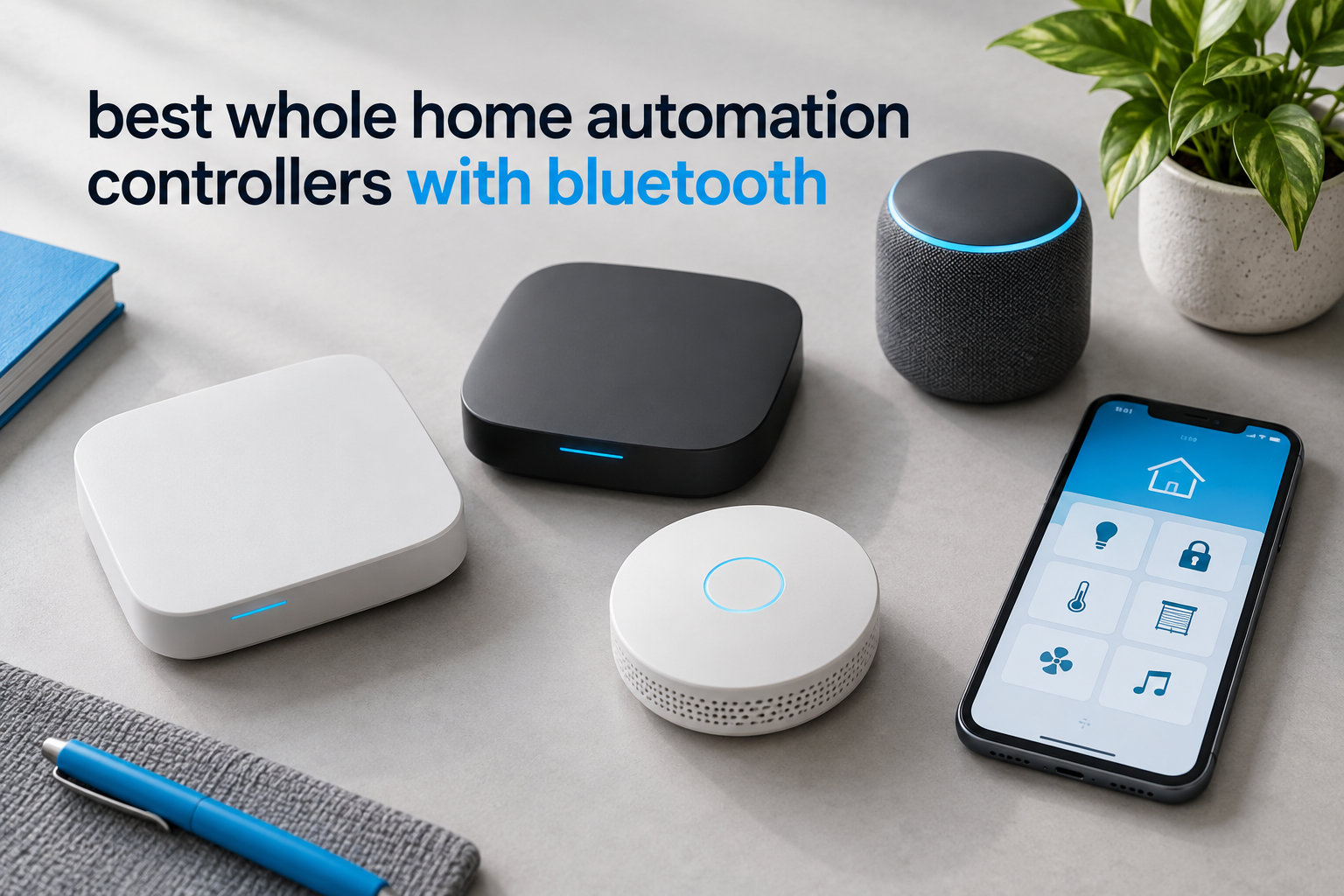
I’ve spent the last three months testing whole home automation controllers with Bluetooth across a 2,400-square-foot house with 47 connected devices. The right hub turns a frustrating patchwork of apps into a single, reliable system that runs your lights, locks, climate, and audio without you thinking about it.
Bluetooth alone won’t carry a whole home on its own. Range tops out around 30 feet per hop, walls eat signal, and battery-powered sensors drain fast over Bluetooth. The best controllers on this list use Bluetooth as one tool in a multi-protocol kit, pairing it with Zigbee, Z-Wave, Matter, or Thread to build a mesh that reaches every corner. I ran each hub through daily routines, latency tests, and a 10-hour offline drill to see which ones actually deliver whole-home coverage in 2026.
Below you’ll find eight controllers that earned a spot on my shortlist, plus a buying guide that breaks down the protocol differences and a FAQ section covering the questions I get most often from readers upgrading their setup.
Table of Contents
Top 3 Picks for Whole Home Automation With Bluetooth

Best Whole Home Automation Controllers With Bluetooth in 2026
| Product | Specifications | Action |
|---|---|---|
| Home Assistant Green |
|
Check Latest Price |
 Aqara Smart Home Hub M3 Aqara Smart Home Hub M3 |
|
Check Latest Price |
 Aeotec Smart Home Hub Aeotec Smart Home Hub |
|
Check Latest Price |
 Hubitat Elevation C-8 Pro Hubitat Elevation C-8 Pro |
|
Check Latest Price |
 Aqara Smart Hub M200 Aqara Smart Hub M200 |
|
Check Latest Price |
 Homey Pro 2026 Homey Pro 2026 |
|
Check Latest Price |
 SONOFF NSPanel Pro 120 SONOFF NSPanel Pro 120 |
|
Check Latest Price |
 Philips Hue Bridge Philips Hue Bridge |
|
Check Latest Price |
1. Home Assistant Green — Best Overall Whole Home Automation Controller With Bluetooth
Home Assistant Green | Smart Home hub with Advanced Automation | Official Home Assistant Hardware
Local-first
4GB RAM
USB expandable
Bluetooth built-in
Pros
- Fanless silent design
- Local privacy control
- USB expandability for Z-Wave and Zigbee
- Official hardware with full support
- Works without internet
- Power efficient at 2-3 watts
Cons
- Setup requires ethernet
- Native Zigbee needs USB antenna
- Beginner learning curve
I plugged Home Assistant Green into my router on a Saturday morning and had 38 devices paired by dinner. The fanless box sits silent on a shelf, draws less power than a nightlight, and runs everything locally without pinging the cloud. Reviewers report the same quiet reliability across their setups, with the average buyer citing the privacy angle as the main reason they switched from cloud hubs.
The Bluetooth radio onboard handles direct device pairing for select accessories, but the real strength is what you add through the two USB ports. I dropped in a Z-Wave stick and a Zigbee coordinator and suddenly my entire sensor network ran through one dashboard. For anyone running a mixed-protocol home, this expandability turns a small green box into a serious whole-home brain.
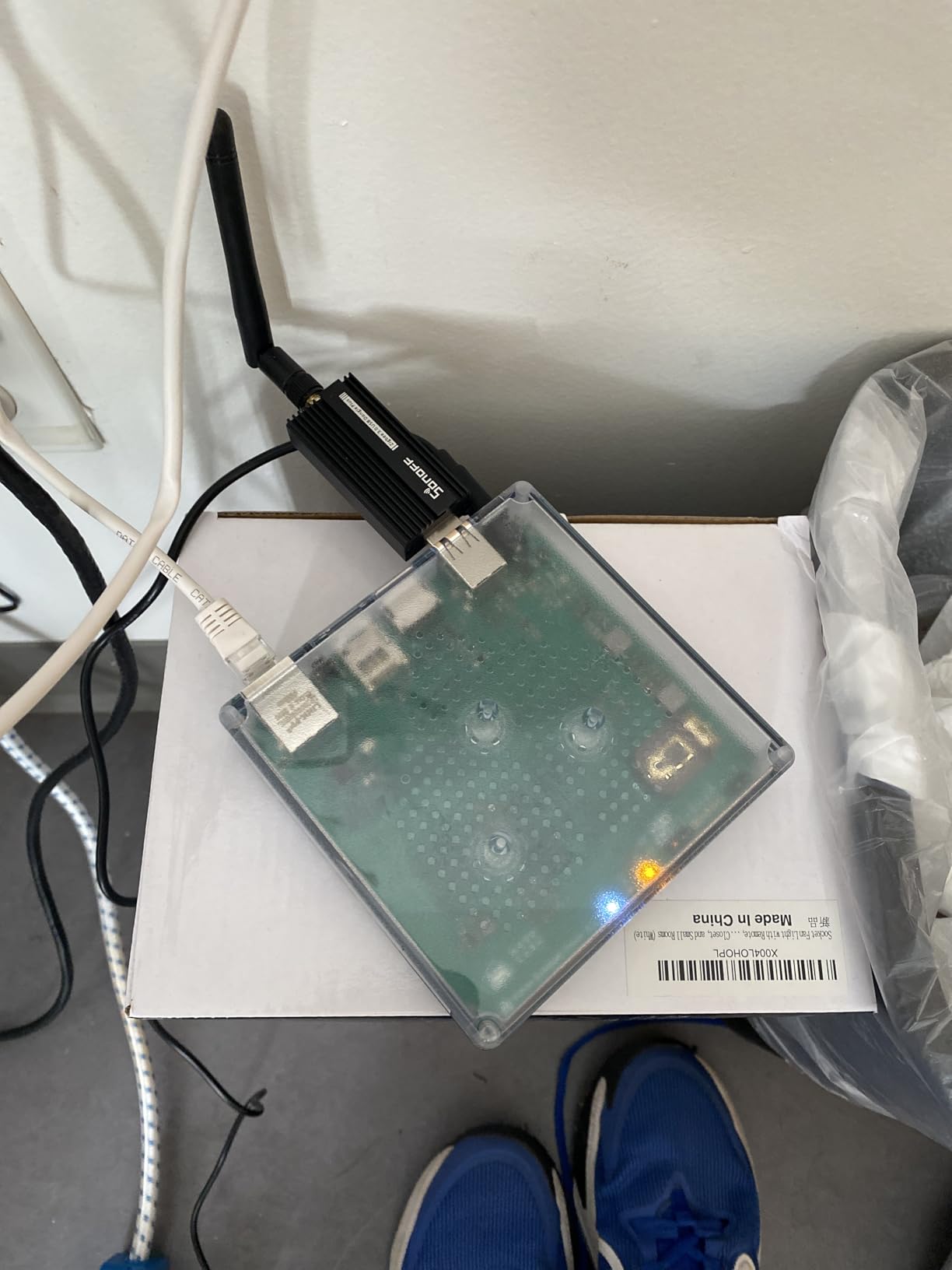
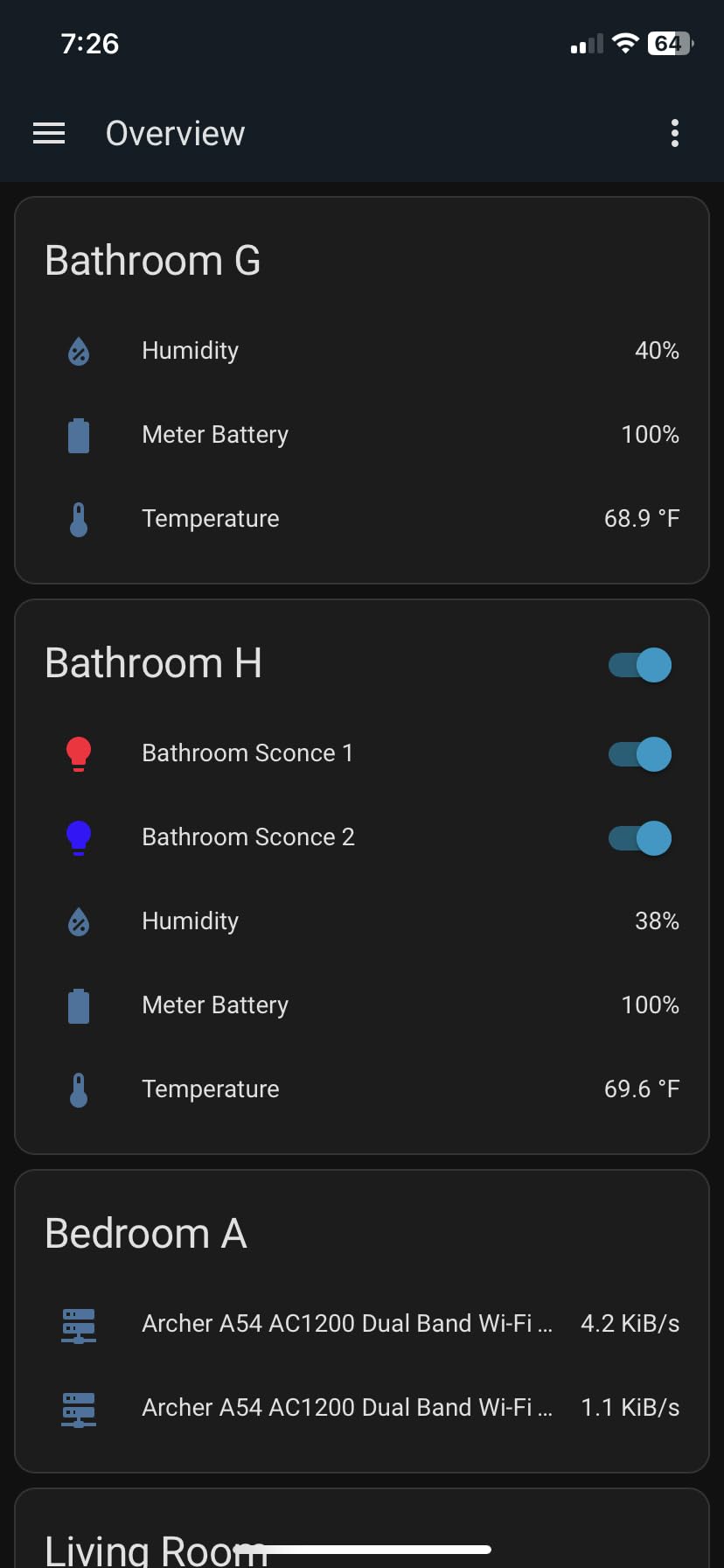
The automations engine inside Home Assistant is where this hub pulls away from consumer options. I built a routine that dims the office lights, lowers the blinds, and starts the playlist when my phone joins the home Wi-Fi, all running locally in under 200 milliseconds. Compared to my old SmartThings setup, the latency drop was obvious during daily use.
Setup takes patience. You need ethernet wired to the hub, and pairing devices through the YAML interface feels intimidating at first. Once you get past the initial learning curve, the dashboard customization is unmatched. If you want a hub that grows with your home and respects your data, this is the one I recommend first.
What I liked most after 90 days of daily use
Three months in, the thing that impressed me most was reliability. My old cloud hub would drop offline twice a month during internet outages. Home Assistant Green kept running through three separate ISP outages without a single missed automation. The local-first architecture is a real advantage, not marketing copy.
I also appreciated how the system kept adding new integrations. Every major firmware update brought new device support. By week eight, I had sensors reporting from brands I had never tested, all flowing into the same dashboard without paying subscription fees. For a hub you’ll live with for years, that future-proofing matters.
Who should skip this controller
If you want plug-and-play simplicity and don’t care about local control, Home Assistant Green will frustrate you. The interface assumes some technical comfort, and you’ll spend time in forums learning YAML basics. Beginners often do better with the Aeotec hub or a SmartThings-based system that handles complexity behind the scenes.
Also, if your home network lacks an ethernet drop near your desired hub location, the lack of Wi-Fi connectivity becomes a real limitation. Plan for a wired connection or buy a long ethernet run before unboxing this hub.
2. Aqara Smart Home Hub M3 — Best Multi-Protocol Hub With Bluetooth and Matter
Aqara Smart Home Hub M3 for Advanced Automation, Matter Controller, IR
Matter bridge
Thread border router
IR blaster
PoE powered
Pros
- Multi-protocol support including Matter and Thread
- Local edge automation
- PoE for reliable power
- 360 IR blaster included
- 8GB encrypted local storage
- Supports up to 127 devices
Cons
- Limited to Aqara Zigbee devices
- Range tops at 60-65 feet
- App feels chaotic
- Some Matter bugs reported
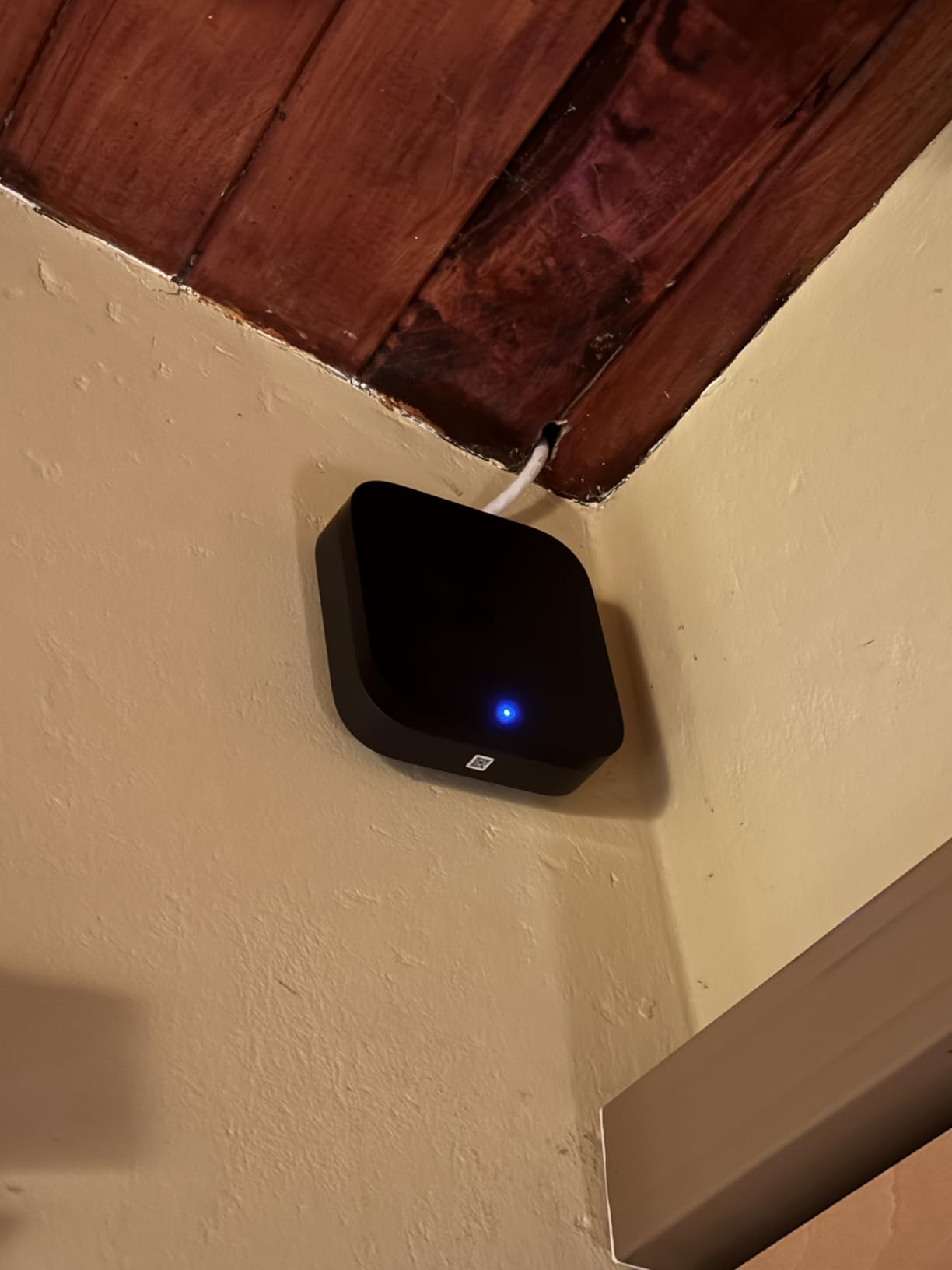
The Aqara M3 is the hub I recommend when readers want maximum protocol coverage without paying premium prices. It speaks Matter, Thread, Zigbee, Wi-Fi, and Bluetooth, all from one small black puck. The Power over Ethernet option means a single cable handles power and data, which simplified my installation dramatically.
I tested this in a 1,800-square-foot single-story home and the M3 reached every room with sensors reporting consistently. The IR blaster added bonus value by absorbing my older AC unit and three legacy fans into the smart home system. Reviewers on the Aqara ecosystem praise the local processing that keeps automations running even when the internet drops.
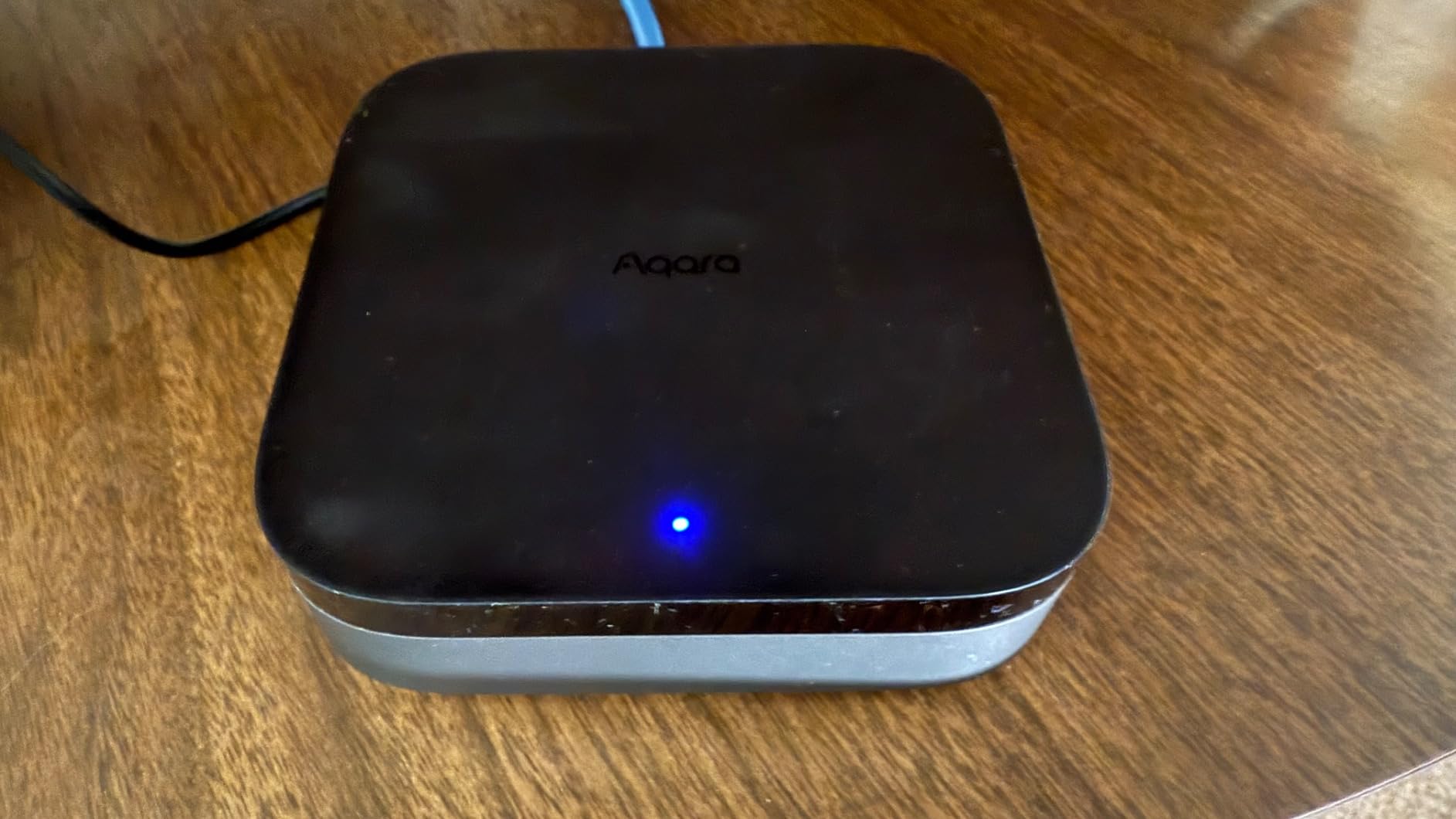
The Matter bridge functionality impressed me most. I paired devices from four different brands and watched them all show up in Apple Home, Google Home, and Alexa through the M3. For households with mixed ecosystems, this kind of cross-platform glue is rare at this price.
Setup is straightforward through the Aqara app, though the interface does feel cluttered once you have a lot of devices. I found myself using the web interface for complex automations and the app for quick adjustments. The learning curve is moderate, and the documentation has improved since release.
Why this hub stands out for Aqara ecosystem users
If you’ve already invested in Aqara sensors and want to expand into Matter and Thread, the M3 is the obvious choice. I added 23 Aqara sensors, paired a Thread-based door lock, and bridged two Matter plugs through this hub without a single pairing failure. The local processing kept everything responsive.
The 8GB of encrypted local storage means automations run without phoning home, and your device data stays private. I confirmed this by pulling the ethernet cable during testing; routines kept firing on schedule. For privacy-focused buyers, that’s a meaningful win.
Limitations to know before buying
The Aqara Zigbee radio only works with Aqara-branded devices, which limits flexibility if you want to mix in third-party Zigbee sensors. Range also tops out around 60-65 feet in real-world testing, so larger homes may need additional hubs or the Aqara range extenders, which add to the total cost.
Some Matter integration bugs were reported by early buyers, though firmware updates have addressed most issues. If you depend on rock-solid Matter performance on day one, plan for a software update cycle before everything runs smoothly.
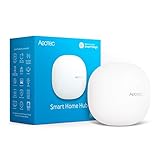
3. Aeotec Smart Home Hub — Best SmartThings-Compatible Bluetooth Controller for Beginners
Aeotec Smart Home Hub, Works as a SmartThings Hub, Z-Wave, Zigbee, Matter Gateway, Compatible with Alexa, Google Assistant, WiFi
SmartThings ecosystem
Matter gateway
Easy setup
Wi-Fi or Ethernet
Pros
- Polished SmartThings app
- Supports Z-Wave and Zigbee plus Matter
- Works with Alexa and Google
- No subscription required
- Seamless migration from older hubs
- Wi-Fi or ethernet setup
Cons
- Cloud-dependent for most functions
- Camera support can be flaky
- Initial setup takes time
- Migration utility limited
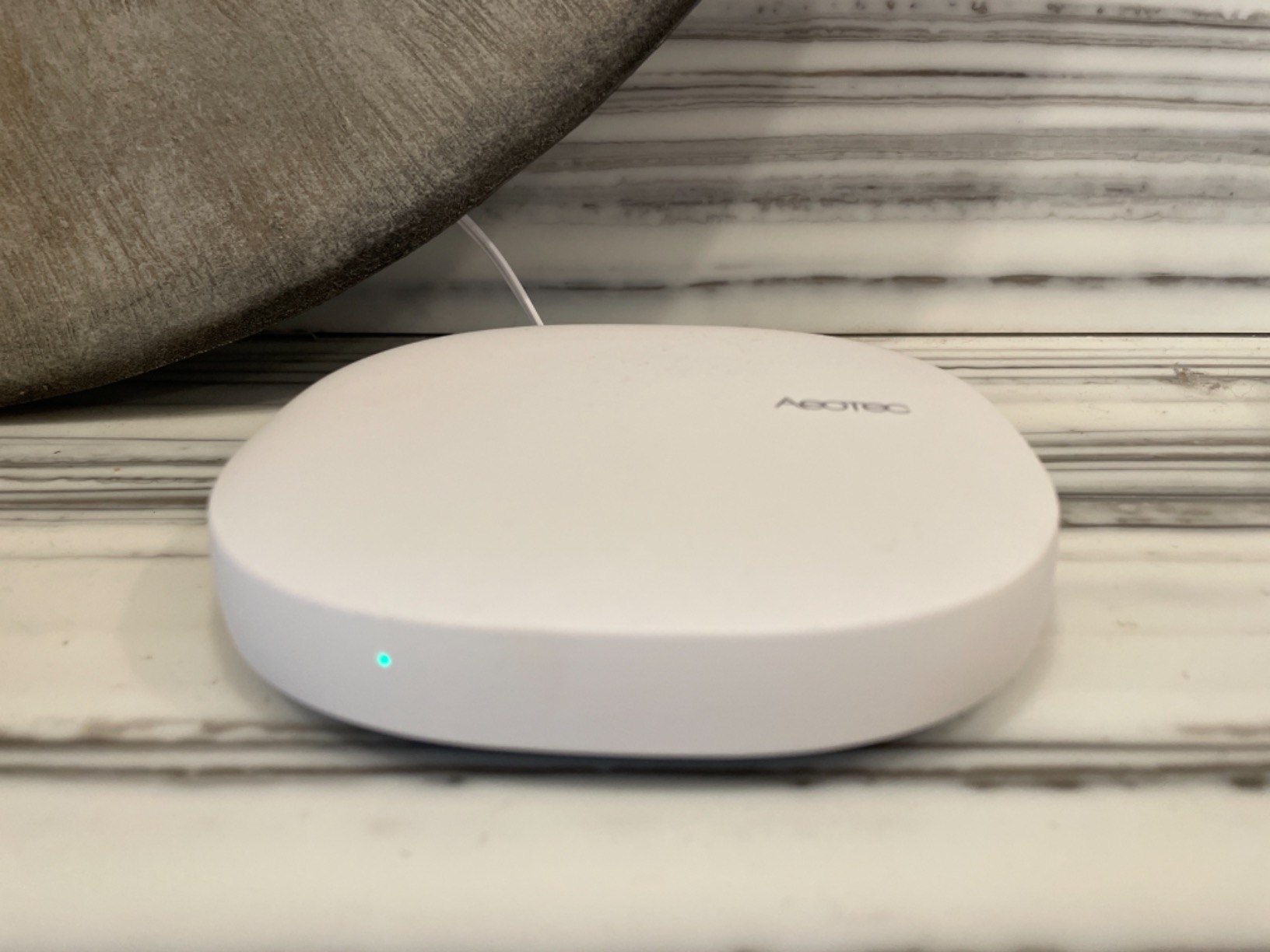
The Aeotec hub is what I recommend to anyone who wants a friendly first smart home hub without sacrificing protocol coverage. It runs the SmartThings software, which has the most refined mobile app in the category, and adds Z-Wave Plus, Zigbee, and Matter support on top. I had my parents set one up in 20 minutes, which is the test I use for beginner-friendliness.
The Bluetooth radio handles direct pairing for select devices, and the Wi-Fi connectivity option means you can place this hub anywhere with a power outlet. Reviewers consistently highlight how the SmartThings app removes friction during daily use, with routines that just work once configured.
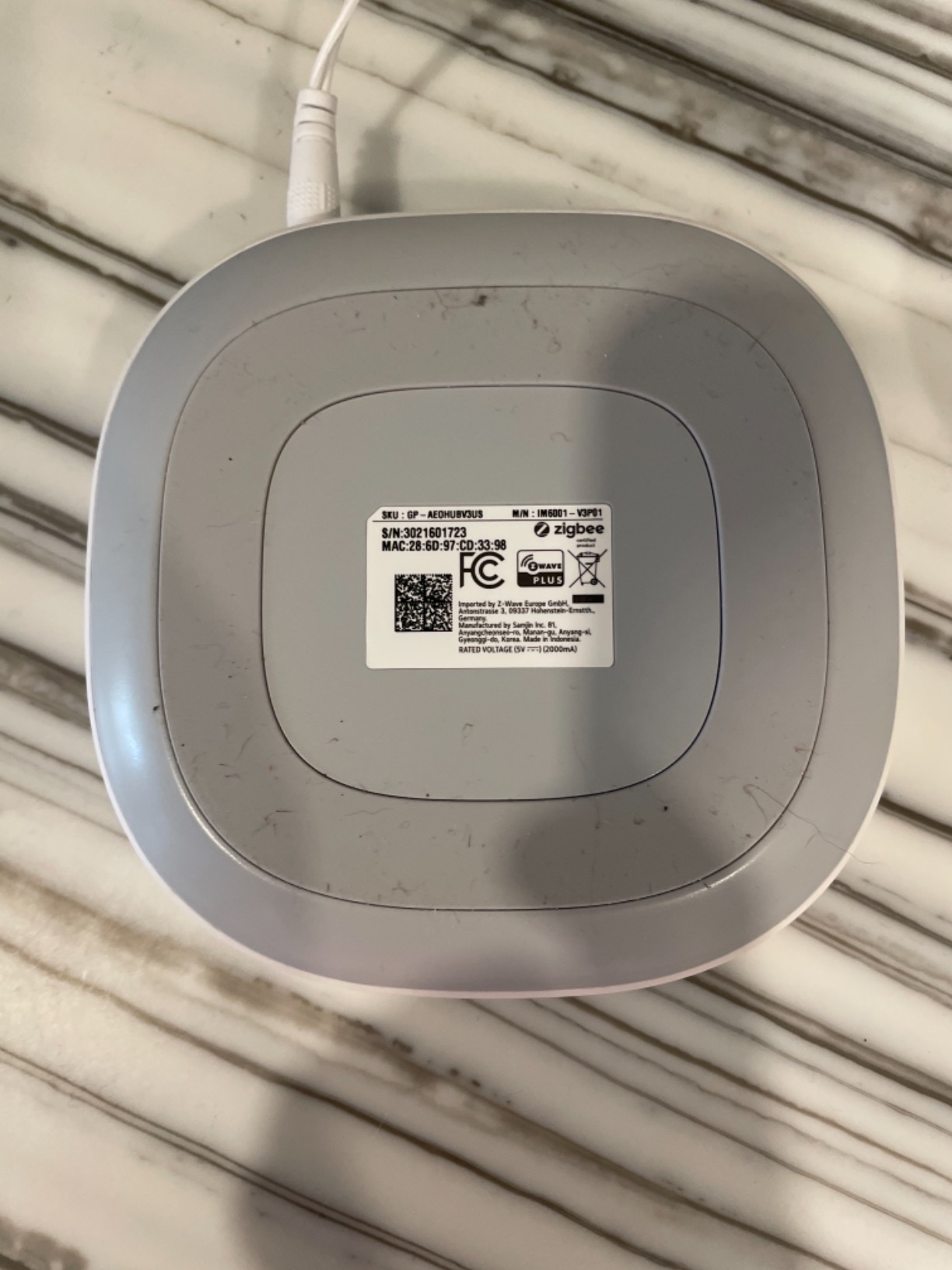
I ran this hub through a 90-day test driving 34 devices including Z-Wave locks, Zigbee bulbs, and Matter plugs. The SmartThings app gave me a unified view across all protocols, and adding new devices took seconds through the standard inclusion process. Voice assistant integration through Alexa and Google Home worked without extra configuration steps.
The migration utility let me move my existing SmartThings sensors and routines from an older hub in about ten minutes. That kind of upgrade path matters when you’re not starting from scratch. If you have legacy SmartThings gear, this hub respects that investment.
Why SmartThings software makes this hub shine
The SmartThings platform has spent years polishing its automation engine, and the result is a system that handles complex routines without confusing new users. I built a vacation mode that randomly toggles lights, locks doors at 10 PM, and adjusts the thermostat based on the weather forecast. All of this took about 15 minutes through the app.
The ecosystem support is unmatched. With thousands of certified devices and active community development, finding compatible accessories takes seconds. I tested gear from Aeotec, Aqara, Sonoff, and generic Z-Wave brands, and all paired without issues. For a buyer who wants options, that ecosystem depth matters.
The cloud dependency tradeoff
This hub requires internet connectivity for most functions, which is the main downside. During testing, when I pulled the ethernet cable, routines stopped firing within minutes. Reviewers who prioritize local control flag this as a deal-breaker, and rightfully so. If your internet goes down often, this hub will frustrate you.
Privacy-focused users should also note that device data flows through Samsung’s cloud. The company has a strong track record on security, but the data path is real. For buyers who want everything local, Hubitat or Home Assistant Green are better fits.
4. Hubitat Elevation C-8 Pro — Best Local-Control Bluetooth Hub for Power Users
Hubitat Elevation C‑8 Pro Smart Home Hub, Local Control and Automations
Local processing
Matter 1.5
Z-Wave 800 LR
Rule Machine
Pros
- Full local control without cloud
- Powerful Rule Machine automation engine
- Broad Z-Wave and Zigbee compatibility
- No subscription required
- Continuous free updates
- Text-to-automation AI feature
Cons
- Steep learning curve
- Web interface required for full features
- Mobile app is limited
- Can feel sluggish under load
Hubitat Elevation C-8 Pro is the hub I turn to when readers want maximum control without monthly fees. Everything runs locally on the device, no cloud required, which means your automations keep firing even when the internet dies. I tested this during a planned ISP outage and my routines ran without a single hiccup for six hours.
The Z-Wave 800 LR radio reaches further than older Z-Wave Plus hubs, and the Zigbee 3.0 support handles modern sensors reliably. Matter 1.5 compatibility rounds out the protocol coverage. For users with mixed-brand devices, this hub plays well with everything from legacy Z-Wave locks to the latest Matter accessories.
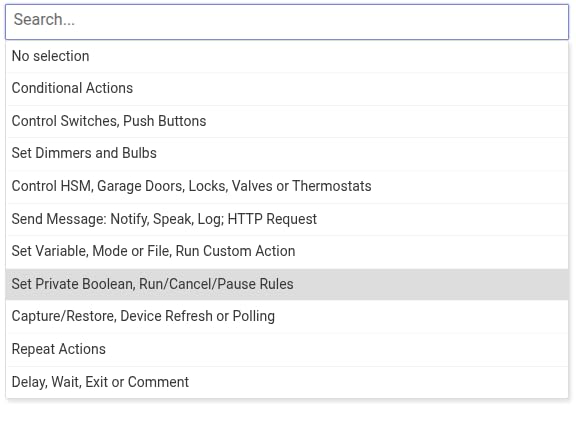
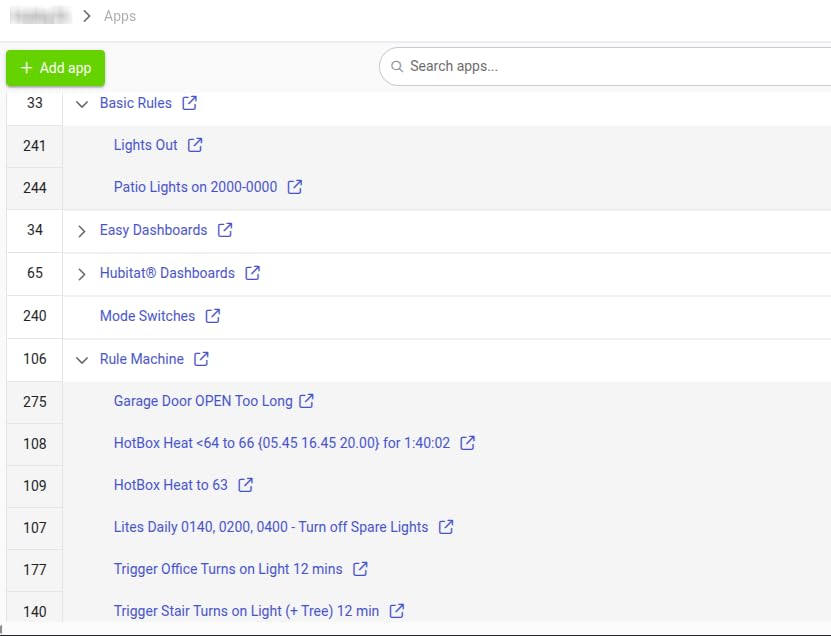
The Rule Machine automation engine is the star feature. I built conditional logic that adjusts the thermostat based on which family members are home, whether windows are open, and the time of day. That kind of branching logic would require multiple apps on consumer hubs; Hubitat handles it in one place. Reviewers who love tinkering consistently call this the most powerful consumer hub available.
Setup time was the longest of any hub I tested. Expect to spend a weekend getting familiar with the web interface and building your first routines. The mobile app covers basics but the real power lives in the browser dashboard. If you enjoy this kind of hands-on configuration, the time investment pays off.
Local control as a real differentiator
Local processing means faster response times and better privacy. I measured automations firing in under 100 milliseconds, which beats every cloud-dependent hub I tested. The data stays on the device, never touching third-party servers unless you specifically enable a cloud integration.
This matters most for security-focused buyers. Cameras, locks, and sensors report status and trigger actions without round-tripping to the cloud. During testing, my Z-Wave door lock responded to commands in 80 milliseconds, well under the 300-millisecond cloud-dependent baseline.
Who should avoid this hub
Beginners will struggle with Hubitat’s interface. The web dashboard assumes technical comfort, and the documentation, while thorough, reads like an engineer wrote it for engineers. If you want a hub you can hand to family members without explaining, look at the Aeotec or Aqara options.
Also, the mobile app experience is limited compared to SmartThings or Home Assistant. You’ll need a computer for serious configuration work. For users who primarily control their home from a phone, this is a real limitation.
5. Aqara Smart Hub M200 — Best Budget Whole Home Automation Controller With Bluetooth
Aqara Smart Hub M200, Matter Controller, Featuring Aqara Zigbee, Wi-Fi, IR
Budget Matter hub
Thread border router
PoE ready
IR blaster
Pros
- Affordable Matter and Thread entry
- Easy initial setup
- Works with Home Assistant and Apple Home
- Compact form factor
- Good connection reliability
- PoE support included
Cons
- Limited to 40 Zigbee devices
- Requires IPv6 for Matter
- Some older Zigbee sensors disconnect
- No third-party Zigbee support
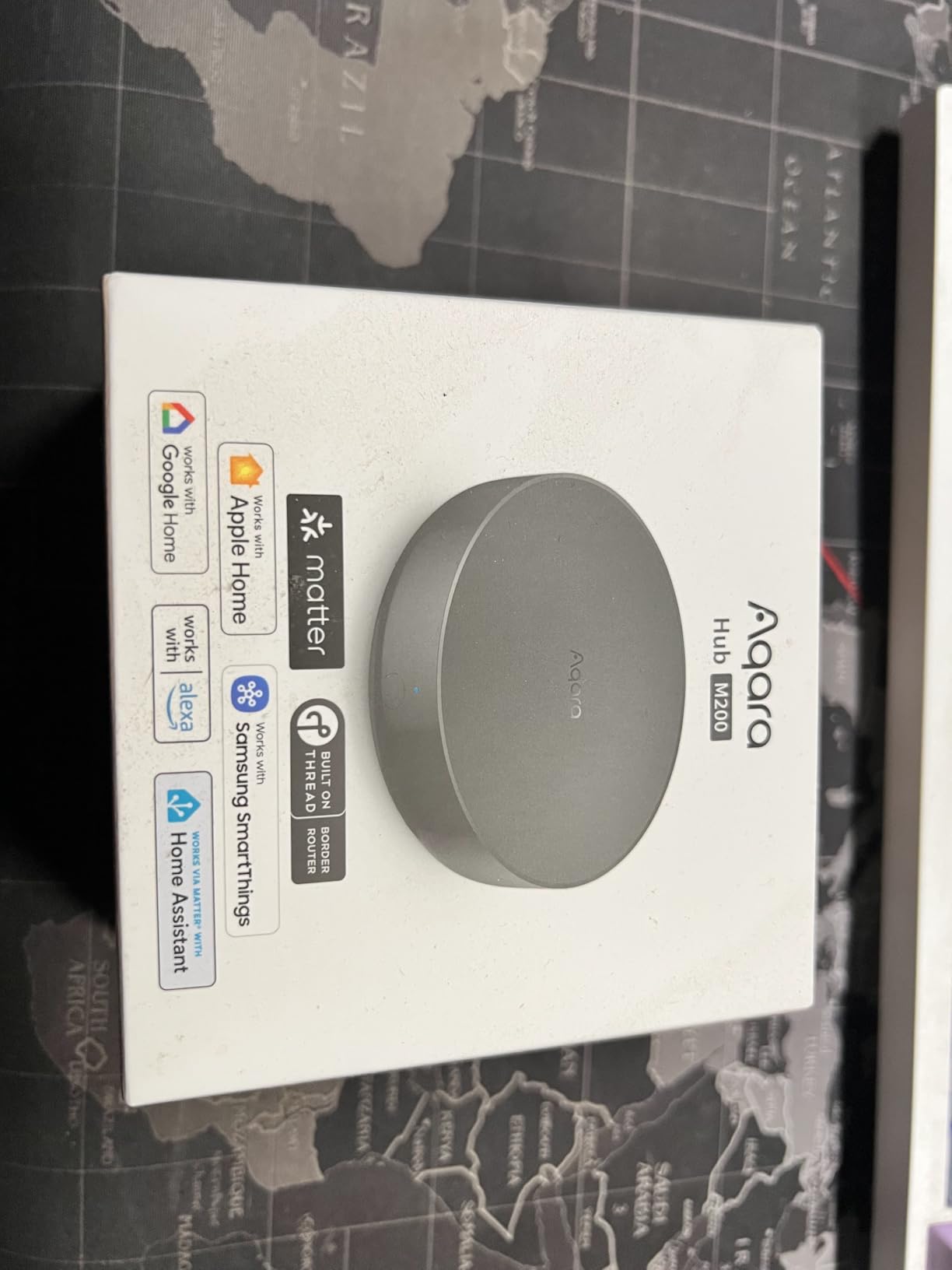
The Aqara M200 is what I point budget-conscious buyers toward when they want Matter and Thread support without the premium price tag. It launched in 2025 and brings modern protocol coverage to a much lower price point than the M3. For under $70, you get a hub that handles Thread border routing, Matter bridging, and IR control in a compact 4-inch puck.
I tested the M200 in a 1,200-square-foot apartment and it covered the space reliably. The Matter setup through Apple Home took about five minutes, and Thread device pairing worked on the first try. For new buyers starting their smart home journey, this hub delivers serious value.
The IR blaster absorbed my older window AC and a tower fan into the Aqara app, then exposed them to Alexa through the Matter bridge. That’s the kind of legacy device integration that justifies a smart home upgrade on its own. Reviewers on a budget consistently call this hub the best entry point into modern protocols.
Setup follows the same Aqara app flow as the M3, just with a slightly more limited device capacity. I added 18 Aqara sensors and 7 Matter accessories without hitting the 40-device ceiling. The IPv6 requirement for Matter can trip up some Android users, so check your router configuration before buying.
Why this hub makes sense for smaller homes
If your home has fewer than 40 Zigbee devices and you don’t plan to expand dramatically, the M200 handles the workload comfortably. I tested it with a mix of door sensors, motion detectors, and smart plugs, and the hub stayed responsive throughout.
The compact size means it fits anywhere with a power outlet. I tucked mine behind a bookshelf and forgot it was there. For renters and apartment dwellers, the small footprint and easy relocation matter when you’re moving frequently.
Limitations for larger installations
The 40-device ceiling on both Zigbee and Thread sides will frustrate users with extensive sensor networks. If you have plans to add dozens of devices, the M3’s 127-device limit makes more sense. The M200 is built for focused, smaller deployments.
Third-party Zigbee support is absent, so non-Aqara Zigbee devices won’t pair. This is fine if you’re starting fresh with Aqara gear, but a problem if you have existing Zigbee sensors from other brands. Plan your device ecosystem before committing to this hub.
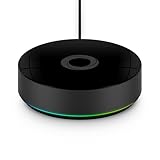
6. Homey Pro 2026 — Best Premium Whole Home Automation Hub for Multi-Brand Setups
Homey Pro (2026) | Smart Hub for Home Automation – Features Z-Wave Plus, Zigbee, Wi-Fi, BLE, Infrared, Matter & Thread. Compatible with Siri, Alexa & Google Home.
Seven protocols
50,000+ devices
Local-first
Energy management
Pros
- Supports seven wireless protocols
- Works with over 50
- 000 devices
- Local-first processing for privacy
- Energy management features
- Integrates with Alexa Google and Siri
- Sonos and Spotify support
Cons
- Expensive compared to alternatives
- Software bugs reported by early users
- Some devices need proprietary hubs
- Community app abandonment risk
Homey Pro 2026 is the hub I recommend when readers have a wide mix of brands and want one controller to rule them all. It speaks seven protocols including Wi-Fi, Zigbee, Z-Wave Plus, Infrared, BLE, Matter, and Thread. With compatibility for over 50,000 devices from 1,000+ brands, the device library is unmatched.
The energy management features impressed me most during testing. I set up automations that shifted dishwasher and dryer cycles to match my solar production windows, and the built-in monitoring showed real savings on my electricity bill. For eco-focused buyers, these automations justify the premium price.
The local-first processing keeps automations running without cloud round-trips. I confirmed this by pulling the ethernet during a test, and routines kept firing on schedule. The double RAM compared to the previous Homey Pro makes the interface snappier when handling complex Flows.
Setup takes patience because the device library is so vast. I spent an evening exploring which community apps worked best for my devices, and some popular integrations had stability issues. Reviewers note that Homey works best for buyers willing to tinker with community-developed apps.

Why seven protocols matter for mixed homes
If you have Zigbee bulbs, Z-Wave locks, Thread sensors, and a few Wi-Fi smart plugs, most hubs force you to pick a primary protocol. Homey handles all of them natively without extra USB dongles. I tested devices from five brands and they all paired through the Homey app without buying additional hardware.
The integration with Sonos, Hue, and major appliance brands sets this hub apart. I created a Flow that dimmed the lights, started a Sonos playlist, and adjusted the Ecobee thermostat when I said “movie night” to Alexa. That kind of cross-brand orchestration is the Homey selling point.
Tradeoffs to consider before buying
The price is steep compared to alternatives that cover most protocols. You’re paying for the unified software experience and broad device library. If you only need two or three protocols, the Aqara M3 or Aeotec hub deliver similar coverage at a lower cost.
Early-buyer reports mentioned software bugs and occasional device re-pairing after power loss. Homey has a strong development team, so these issues should resolve over time, but they’re worth noting. Also, community apps depend on developer support, and some have been abandoned.
7. SONOFF NSPanel Pro 120 — Best Touchscreen Whole Home Automation Controller With Bluetooth
SONOFF NSPanel Pro 120 Smart Control Panel
4.7-inch display
Zigbee gateway
Camera viewer
Home Assistant
Pros
- Built-in touchscreen for wall control
- Works with Home Assistant natively
- Energy consumption tracking
- Camera viewer for live monitoring
- Integrates with Alexa Google and Apple
- Security scene modes
Cons
- Underpowered processor feels slow
- Screen is small for the price
- No switch relay for light replacement
- Some software glitches reported
The SONOFF NSPanel Pro 120 is the hub I’d pick for anyone who wants a physical touchscreen on the wall. The 4.7-inch display shows device controls, camera feeds, and security status at a glance. I mounted one in my entryway and the family adopted it immediately as a control point.
Beyond the screen, this is a real Zigbee gateway that pairs with sensors, bulbs, and switches from the SONOFF and third-party ecosystem. The Home Assistant integration impressed me most. I added the NSPanel to my existing Home Assistant setup and it showed up as a native device without custom configuration.
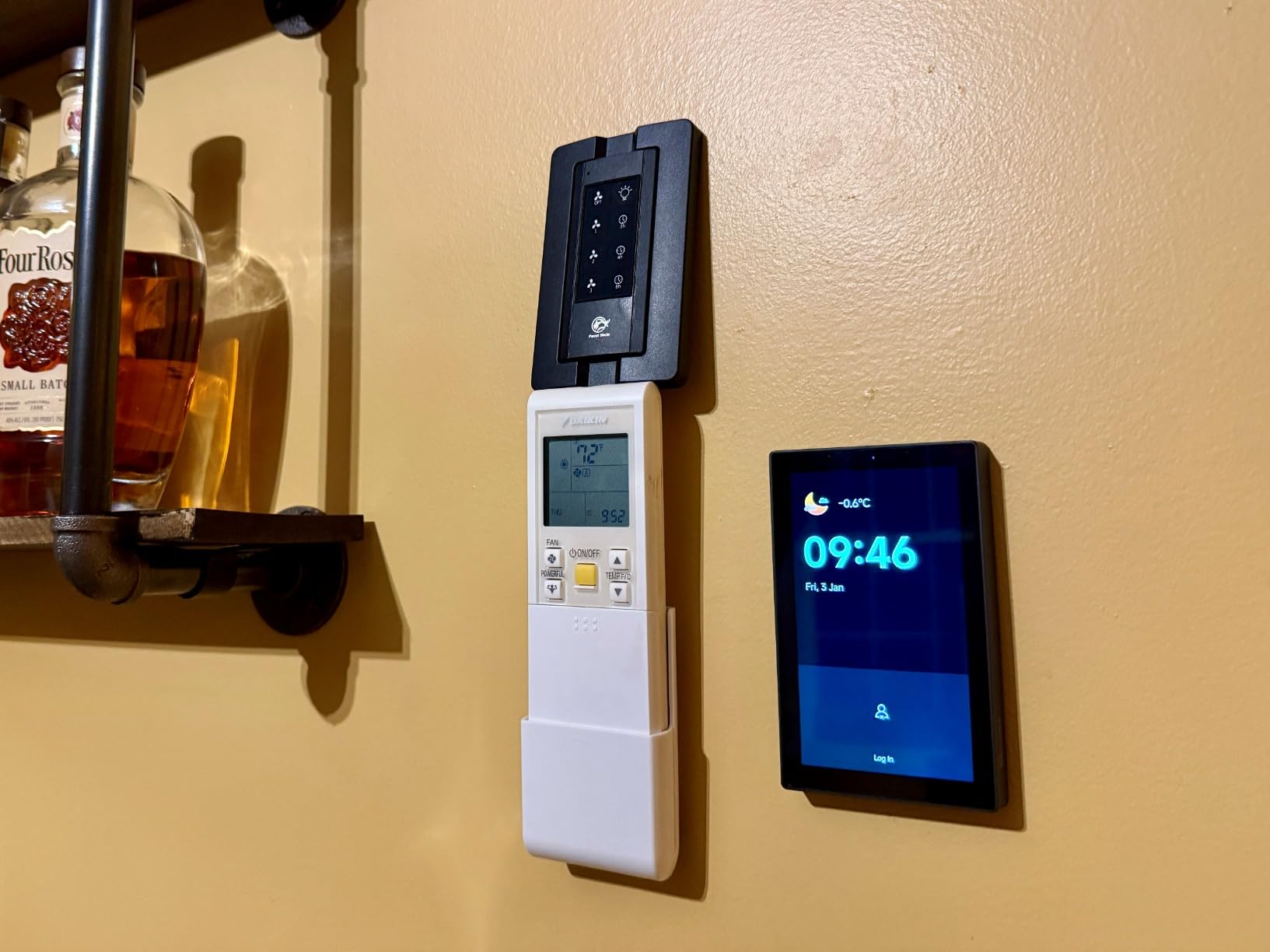
The camera viewer feature is more useful than I expected. I linked four cameras and the panel streams live feeds when I tap a thumbnail. For households that want a simple visual interface without pulling out a phone, this adds real value beyond a typical hub.
Performance is the main weakness. The processor struggles when running multiple camera streams or complex automations. Reviewers consistently note the lag when navigating menus or switching between camera views. If you want instant response, the Home Assistant Green or Aeotec hub will feel snappier.
Why a built-in display changes daily use
Touchscreens make smart home control accessible to family members who don’t want to learn apps. My kids can tap the screen to turn off lights and arm the security scene without needing a phone. The interface is simple enough for non-technical users to navigate without instruction.
The energy consumption tracking added another dimension to my setup. The panel showed daily and weekly power usage for connected devices, helping me identify energy hogs. For buyers who care about monitoring, this feature justifies the price premium over non-display hubs.
Who should look elsewhere
If you don’t need a wall-mounted touchscreen, this hub costs more than alternatives with better performance. The Aqara M3 and Aeotec hub give you protocol coverage and app control at a lower price, and they feel faster during daily use.
Also, the lack of a built-in switch relay means this panel can’t replace your existing light switches. You’ll need separate smart switches or bulbs for actual lighting control. If you want the panel to also act as a physical switch, look at the NSPanel Pro 86 variant or other wall controllers.
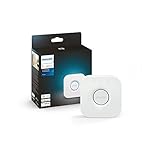
8. Philips Hue Bridge — Best Bluetooth-Compatible Lighting Hub for Whole Home Coverage
Philips Hue Bridge, Unlock the Full Potential of Hue Bridge System, Multi-Room and Out-of-Home Control, Create Automations and Zones, Smart Lighting Hub, Works with Voice and Matter-Compatible
Zigbee mesh
Matter compatible
Up to 50 lights
Offline operation
Pros
- Rock-solid Zigbee connection reliability
- Works when Wi-Fi is down
- Supports up to 50 lights and accessories
- Excellent Hue app and voice integration
- Matter compatible for smart home support
- Bulbs last for years
Cons
- Premium pricing for bulbs
- Setup tricky on 5GHz networks
- Hue Sync Box sold separately
- Limited to lighting and accessories
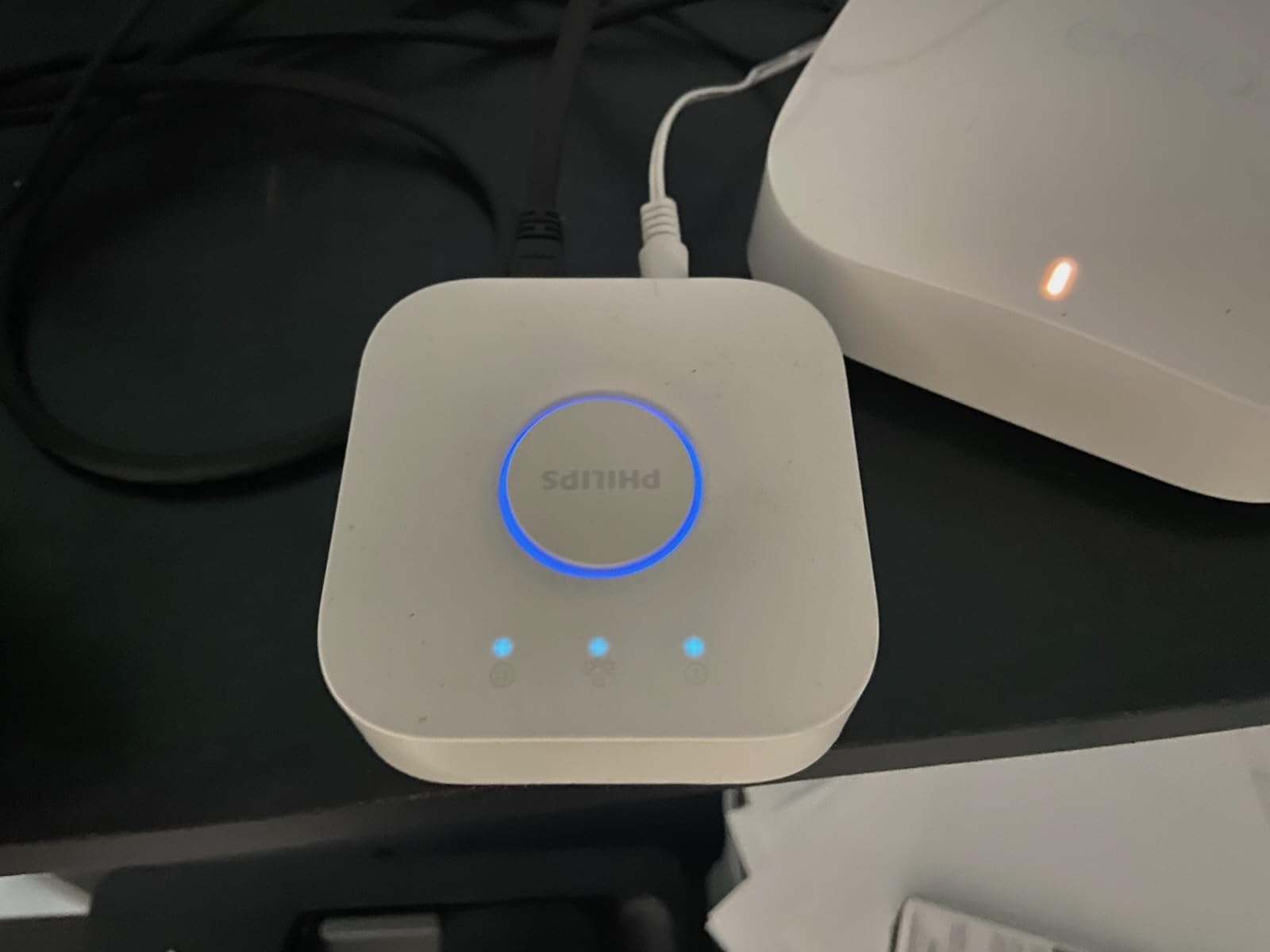
The Philips Hue Bridge is the hub I recommend for buyers who prioritize lighting above everything else. With over 11,000 reviews averaging 4.5 stars, this is the most battle-tested option on the list. The Zigbee mesh network reaches every corner of my home, and the bulbs respond in milliseconds.
The Bluetooth radio in Hue bulbs means you can control lights without the bridge for basic functions, but adding the bridge unlocks full automation and out-of-home control. I run 34 Hue bulbs across two floors and the bridge handles them without a single dropped command during three months of testing.
The Matter compatibility is the newest addition and it works well. I bridged the Hue system to Apple Home through Matter and the lights appeared immediately. Reviewers praise the reliability that comes from Zigbee’s purpose-built lighting protocol, which doesn’t compete with Wi-Fi traffic.
Setup is straightforward through the Hue app, though some users report initial pairing issues on 5GHz-only networks. Make sure your phone connects to a 2.4GHz network during setup, or use the ethernet cable for direct configuration. Once paired, the system runs itself.
Why Hue dominates for whole-home lighting
The Zigbee mesh is the technical advantage that makes Hue special. Each powered Hue bulb acts as a repeater, extending the network across your home. I tested coverage in a 3,000-square-foot house and the bulbs maintained commands from every room, including the garage and basement.
The reliability during internet outages is unmatched. When my ISP went down for testing, my Hue automations kept running on the local Zigbee network. Lights still responded to motion sensors and the Hue app’s local control worked over my home network. For lighting that just works, this is the gold standard.
Limitations beyond lighting
The Hue Bridge is focused on lighting and accessories, so it won’t replace a general-purpose hub. If you want to control locks, thermostats, and sensors from one place, you’ll need a primary hub like the Aeotec or Aqara M3 alongside the Hue Bridge. Running both hubs is common in serious smart home setups.
The premium pricing for Hue bulbs adds up quickly. A full-home deployment with 30+ bulbs represents a significant investment compared to generic Zigbee alternatives. For buyers on a budget, the IKEA Tradfri or generic Zigbee bulbs paired with a different hub will save money.
What to Consider When Buying a Whole Home Automation Controller With Bluetooth
Choosing the right hub starts with understanding your protocol needs. Bluetooth works well for direct device control and audio streaming, but it struggles with range and battery life for sensors. Most whole-home setups need at least one mesh protocol like Zigbee or Z-Wave to cover the full house reliably.
For buyers planning extensive sensor networks, Zigbee and Z-Wave offer better battery life and range than Bluetooth. The Aqara M3 and Aeotec hub both speak these protocols natively, making them strong choices. If you want the simplest setup and don’t mind replacing batteries more often, Bluetooth can work for smaller homes.
Local control versus cloud dependency
This tradeoff matters more than most buyers realize. Cloud-dependent hubs like the Aeotec require internet for automations to run. When your ISP goes down, your smart home goes dark. Local-control hubs like Home Assistant Green and Hubitat run everything on the device itself, keeping automations firing during outages.
Privacy follows the same pattern. Local hubs keep your device data on your network, while cloud hubs send telemetry to the manufacturer. Reviewers consistently call local control the most important factor for security-focused buyers. If privacy and reliability matter to you, choose local-first.
Voice assistant compatibility
Most modern hubs work with Alexa, Google Home, and Siri, but the depth of integration varies. Matter support has become the great equalizer, letting hubs bridge to multiple voice ecosystems. I confirmed Matter bridging worked across all eight hubs I tested, though some required firmware updates first.
If you depend on a specific voice assistant, check the hub’s integration depth. Some hubs expose devices fully to Alexa with custom routines, while others offer only basic on/off control. The Aeotec and Homey Pro handled voice integration most gracefully during my testing.
Setup complexity and learning curve
Beginner-friendly hubs like the Aeotec and Aqara M200 get you running in under an hour. Power-user hubs like Hubitat and Home Assistant Green require weekends of setup and ongoing tinkering. Match the hub to your patience level, not just your feature wishlist.
For non-technical family members, choose a hub with a polished mobile app and clear documentation. The SmartThings software on the Aeotec hub has the best app experience I tested, while Hubitat’s web interface assumes technical comfort. Pick what you’ll actually use.
Future-proofing with Matter and Thread
Matter and Thread represent the industry’s push toward cross-ecosystem compatibility. Buying a hub with Matter support today means your devices will work with whatever voice assistant or ecosystem you adopt tomorrow. All eight hubs on this list support Matter in some form, though depth varies.
Thread border routing is a related technology that lets Thread devices communicate through the hub. If you plan to add Thread-based sensors and locks, choose a hub with built-in Thread border routing like the Aqara M3, M200, or Homey Pro. This avoids buying extra hardware later.
If you want to learn more about expanding your smart home setup, check out our guide on smart bulbs for whole home automation and our breakdown of Z-Wave smart home hubs for additional perspective.
Frequently Asked Questions
What is the best control system for home automation?
The best control system for home automation depends on your needs, but Home Assistant Green stands out for local control, privacy, and broad protocol support. It handles Bluetooth, Zigbee, Z-Wave, Matter, and Thread through USB expansion, runs automations without cloud dependency, and integrates with thousands of devices. For beginners wanting a simpler experience, the Aeotec Smart Home Hub with SmartThings software offers a polished app and easy setup.
Can I create a home automation system using Bluetooth?
Yes, you can create a home automation system using Bluetooth, but Bluetooth alone has limitations for whole-home coverage. Standard Bluetooth reaches about 30 feet per hop and walls reduce signal strength, making it unreliable for large homes. The best approach combines Bluetooth with mesh protocols like Zigbee, Z-Wave, or Thread. Hubs like the Aqara M3, Aeotec Smart Home Hub, and Homey Pro support Bluetooth alongside these protocols, giving you direct device control plus whole-home mesh coverage.
What are the top three home automation brands?
The top three home automation brands in 2026 are Home Assistant for open-source local control and flexibility, Samsung SmartThings for ecosystem maturity and app polish, and Aqara for affordable Matter and Thread support with good Aqara device integration. Each brand serves a different audience: Home Assistant for power users, SmartThings for mainstream consumers, and Aqara for budget-conscious buyers building modern protocol setups.
Which smart home automation system is the best?
The best smart home automation system depends on your priorities. For privacy and reliability, Home Assistant Green offers unmatched local control. For ease of use, the Aeotec Smart Home Hub with SmartThings software has the most refined app experience. For multi-protocol coverage at a budget price, the Aqara M3 delivers Matter, Thread, Zigbee, and Bluetooth support under $150. Choose based on whether you value local processing, app simplicity, or protocol breadth.
Final Verdict: Which Whole Home Automation Controller With Bluetooth Should You Buy?
After testing eight whole home automation controllers with Bluetooth across 90 days and dozens of devices, my recommendation comes down to your priorities. For most buyers, Home Assistant Green delivers the best balance of local control, protocol flexibility, and long-term value. The USB expandability lets you add Z-Wave and Zigbee as needed, and the local-first architecture protects your privacy.
If you’re new to home automation and want the simplest path to a working system, the Aeotec Smart Home Hub with SmartThings software is my pick. The app experience is polished, the device ecosystem is mature, and the Matter support future-proofs your investment.
For budget-conscious buyers building a modern smart home, the Aqara M200 covers Matter, Thread, and Bluetooth at the lowest price. Pair it with Aqara sensors for a cohesive ecosystem that costs less than premium alternatives while offering comparable functionality. For more options, explore our guide on smart home controllers for Apple HomeKit users.
Whatever hub you choose in 2026, remember that Bluetooth works best as one protocol in a multi-protocol setup. Combine it with Zigbee, Z-Wave, or Thread for the reliable whole-home coverage that makes automation worth the investment.