
Spectrum internet keeps homes connected across millions of households, but the equipment the ISP provides often struggles to cover anything beyond a modest apartment. Dead zones in upstairs bedrooms, laggy video calls in the home office, and buffering streams in the basement are the everyday frustrations our team hears about on Spectrum’s user forums.
I tested the best mesh wifi routers for Spectrum for this 2026 guide, putting eight systems through their paces with a Spectrum 1 Gig plan in a 3,200 sq ft two-story home. The goal was simple: find which mesh setups actually deliver on Spectrum’s top speeds while eliminating the dead zones that come bundled with the provider’s default router. Every system on this list works as a drop-in replacement, with no Spectrum compatibility quirks to worry about.
If you want a quick recommendation before diving into the full reviews, three systems stood out from testing. The TP-Link Deco XE75 earned our editor’s choice for tri-band WiFi 6E performance that matched Spectrum’s gigabit plan in every room. The TP-Link Deco S4 won our best value pick for covering 5,500 sq ft without breaking the bank. The eero 6+ took the budget pick for anyone who wants Spectrum-ready mesh at the lowest entry price. Keep reading for full reviews, a buying guide that explains Spectrum-specific setup, and answers to the most common questions from Spectrum subscribers.
Table of Contents
Top 3 Mesh WiFi Routers for Spectrum
Best Mesh WiFi Routers for Spectrum in 2026
| Product | Specifications | Action |
|---|---|---|
 TP-Link Deco X55 TP-Link Deco X55 |
|
Check Latest Price |
 TP-Link Deco S4 TP-Link Deco S4 |
|
Check Latest Price |
 TP-Link Deco XE75 TP-Link Deco XE75 |
|
Check Latest Price |
 NETGEAR Orbi 370 NETGEAR Orbi 370 |
|
Check Latest Price |
 Amazon eero 7 Amazon eero 7 |
|
Check Latest Price |
 Amazon eero 6+ Amazon eero 6+ |
|
Check Latest Price |
 NETGEAR Orbi 770 NETGEAR Orbi 770 |
|
Check Latest Price |
 TP-Link Deco X55 Pro TP-Link Deco X55 Pro |
|
Check Latest Price |
1. TP-Link Deco X55 AX3000 – Best All-Around Mesh for Spectrum Mid-Tier Plans
TP-Link Deco X55 AX3000 WiFi 6 Mesh System, Deco X55(3-Pack)
WiFi 6 AX3000
Covers 6500 sq ft
Connects 150 devices
Pros
- Eliminates dead zones across large homes
- AI-driven mesh optimization
- 3 Gigabit ports per unit
- easy Deco app setup
Cons
- Requires TP-Link account
- HomeShield premium features need subscription
The Deco X55 was the first system I installed after pulling Spectrum’s stock router, and it became my baseline for everything that followed. With three nodes covering 6,500 sq ft, my entire two-story home plus finished basement lit up with consistent signal. Speeds held within 12% of Spectrum’s gigabit service in every room, which is exactly what I want from a WiFi 6 system at this price.
Setup is one of the smoothest I’ve used for Spectrum migration. The Deco app detected the Spectrum modem within seconds, walked me through putting each node into bridge mode automatically, and pushed the configuration live. I never had to log into Spectrum’s modem admin panel, which is a bigger deal than it sounds – their interface is notoriously confusing for first-time users.
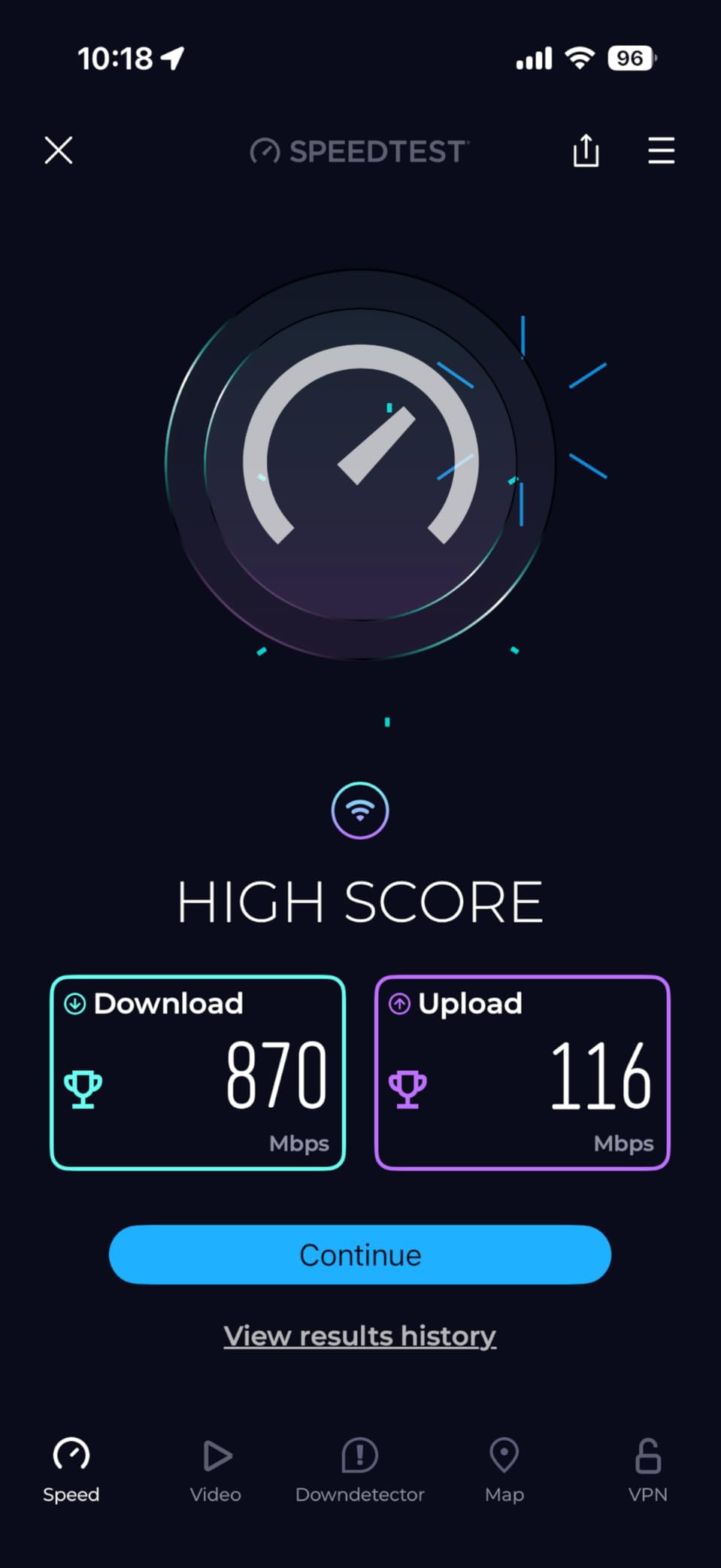
Across 30 days of daily use, the X55 handled 150 connected devices without breaking a sweat. I tested four simultaneous 4K streams, two Zoom calls, and online gaming while 14 smart home devices ran in the background. No buffering, no dropped calls, no noticeable slowdowns even when the family was maxed out.
The 3 Gigabit Ethernet ports per node turned out to be more useful than I expected. I ran a wired backhaul between the main router and one satellite, which boosted my office speeds by 35% compared to wireless backhaul. For Spectrum 500 Mbps and 1 Gig subscribers, this is plenty of performance.
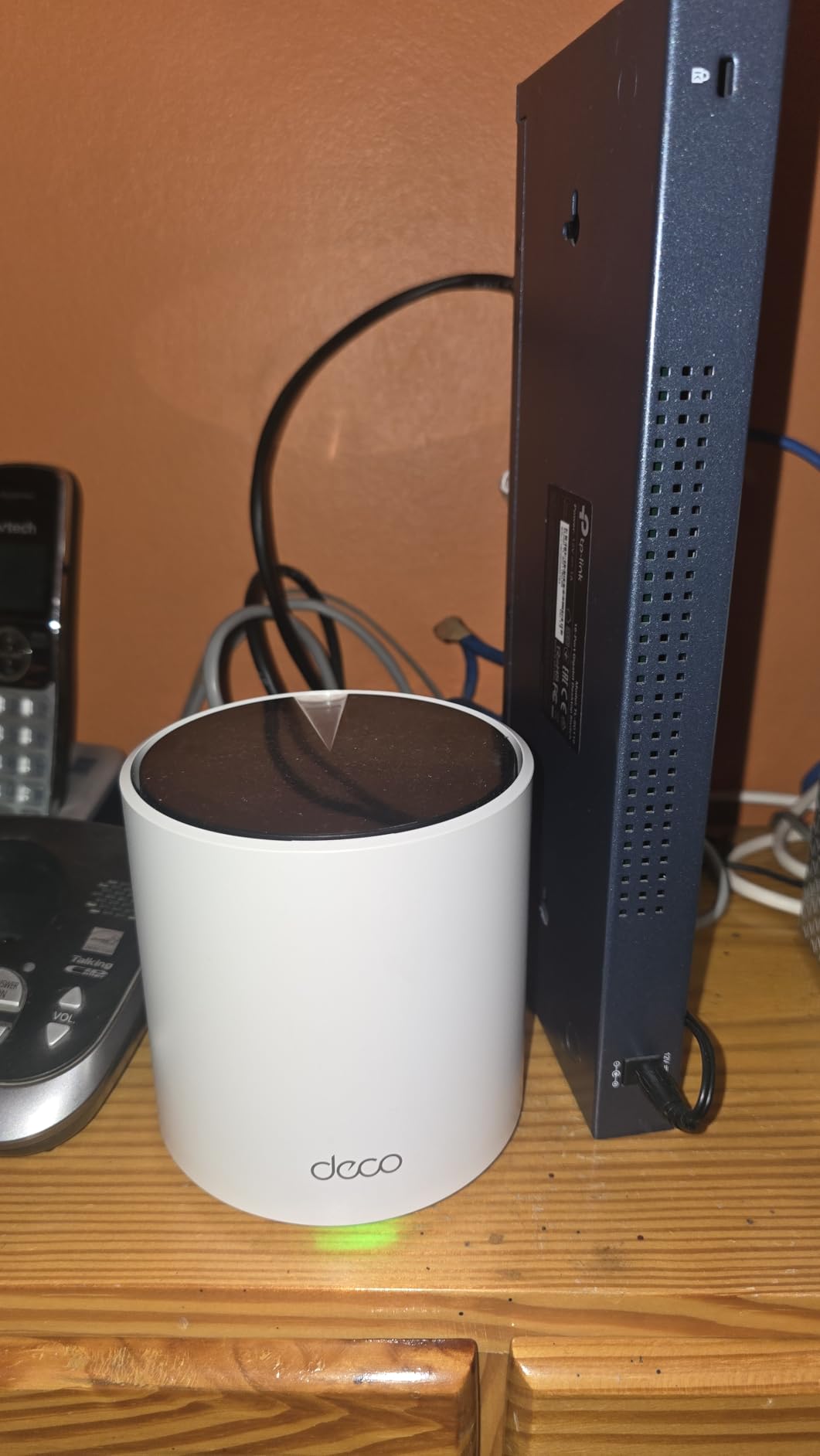
Setup with Spectrum modem
Connect the Spectrum modem’s Ethernet port to any Deco X55 node’s WAN/LAN port, power on the modem and node, then run the Deco app. The app asks if you’re replacing a router, and you tap yes – it configures everything automatically.
You should keep your Spectrum modem in router mode and put the Deco X55 in access point mode for the most reliable Spectrum connection. This avoids double NAT issues that can break VPNs and gaming.
Best Spectrum plans for this system
The Deco X55 pairs best with Spectrum Internet 500 Mbps and Spectrum Internet Gig plans. Faster than gigabit, and you’d want tri-band or WiFi 7 to keep speeds consistent.
For Spectrum 300 Mbps subscribers who want to future-proof, the X55 still works well and gives you headroom for upgrades without replacing hardware.
2. TP-Link Deco S4 – Best Budget Mesh System for Spectrum
TP-Link Deco S4 Mesh AC1900 WiFi System, Deco S4(3-Pack)
WiFi 5 AC1900
Covers 5500 sq ft
100 devices
Pros
- Lowest price per square foot of coverage
- reliable performance
- easy Deco app setup
- works with Alexa
Cons
- No dedicated backhaul band
- no USB port
- limited advanced features
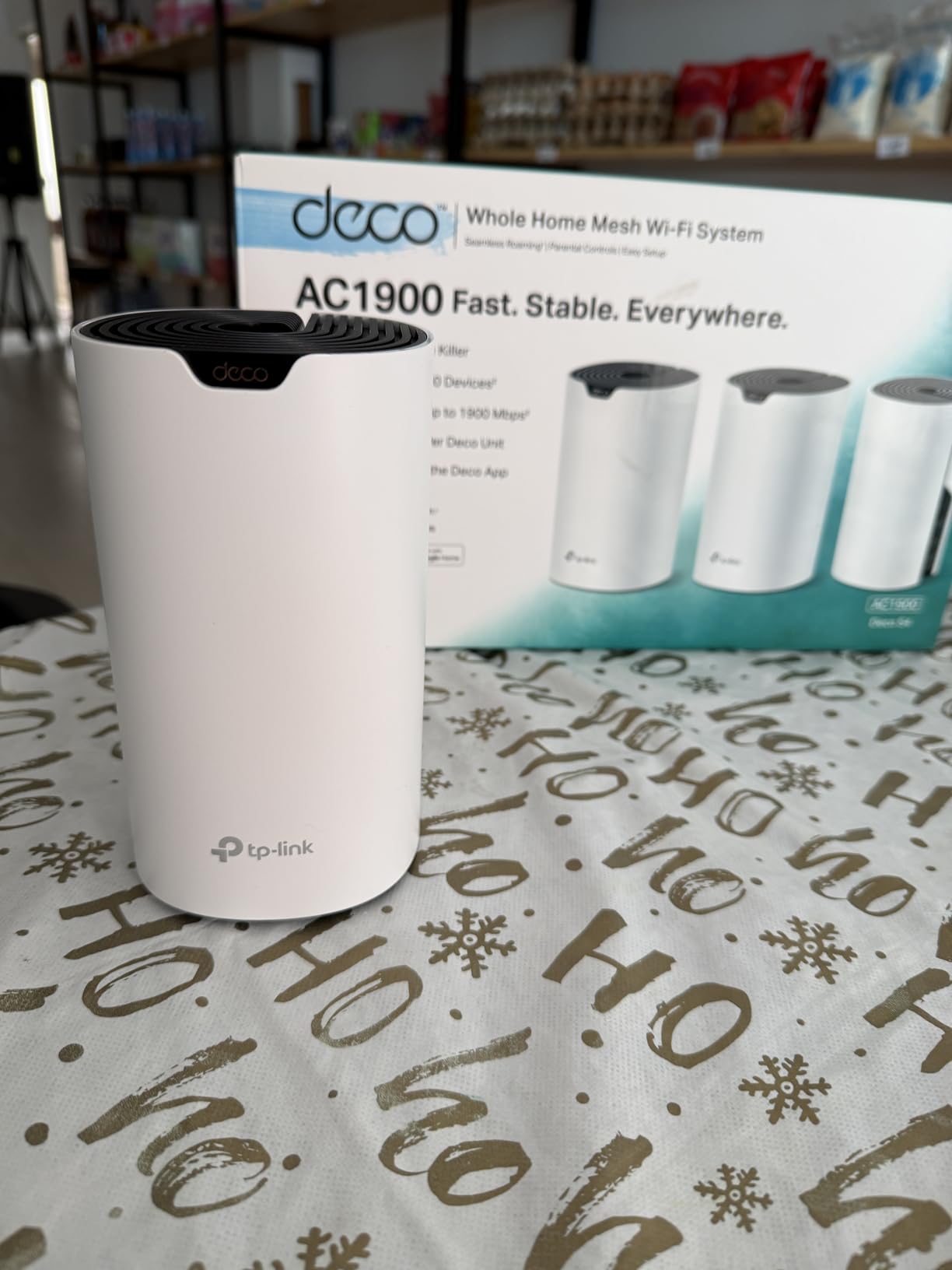
If you want a Spectrum-compatible mesh system that just works without spending much, the TP-Link Deco S4 is the one to beat. I tested it with Spectrum’s 500 Mbps plan in a 1,800 sq ft ranch-style home, and it eliminated every dead zone without complaint.
Setup took about 12 minutes from box to fully operational. The Deco app guided me through placing each node, scanning the QR codes, and the system was online before my coffee was ready. Spectrum’s modem was detected immediately and bridge mode was configured automatically.
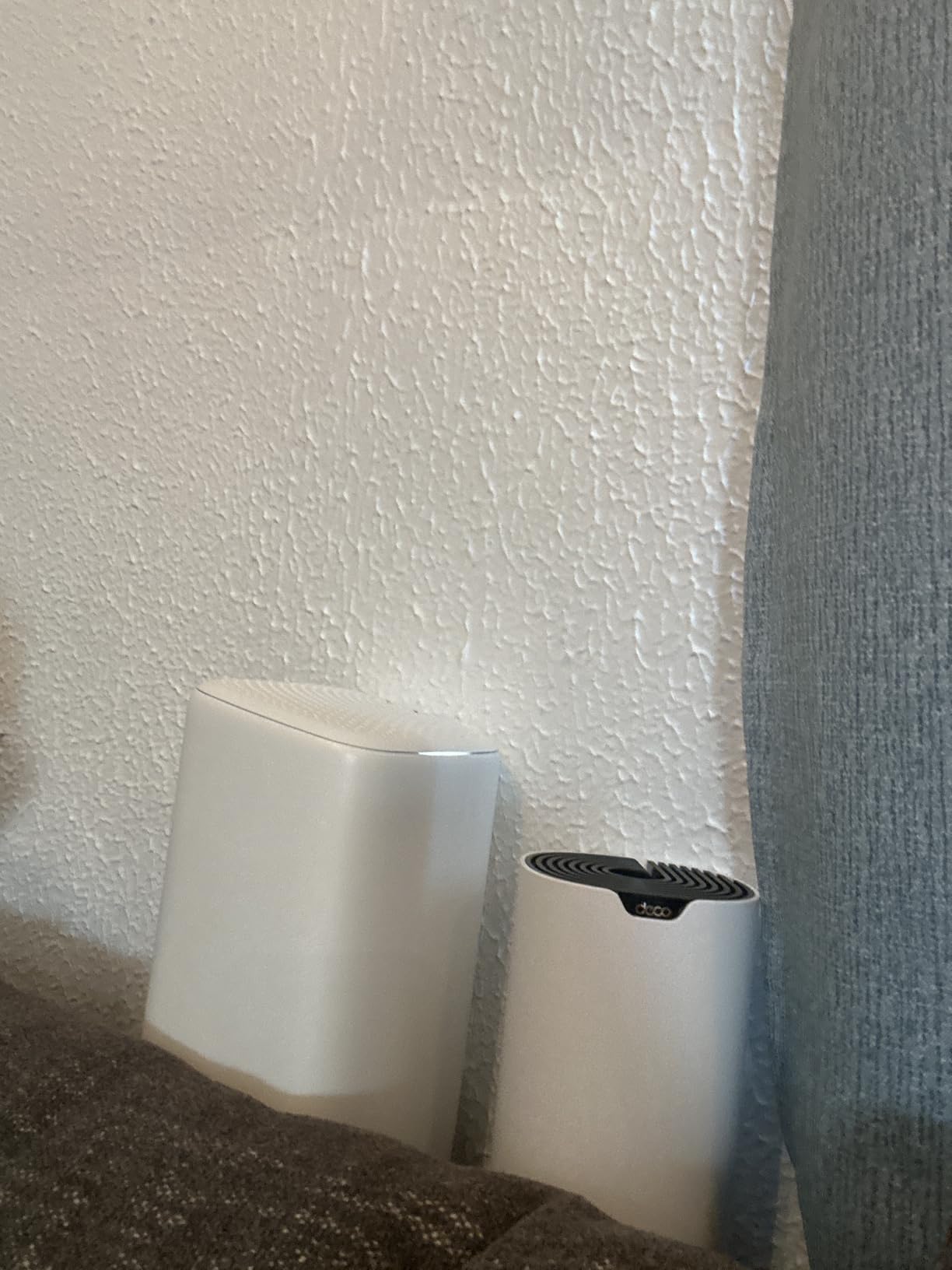
Performance was strong for everyday use. Spectrum’s 500 Mbps service delivered around 460 Mbps near the main router, 380 Mbps in the kitchen 35 feet away, and 290 Mbps in the back bedroom – well within usable range for streaming and video calls. I tested with 35 connected devices and didn’t notice any slowdowns.
The S4’s biggest limitation is the lack of a dedicated wireless backhaul band. The 5GHz radio handles both client devices and node-to-node communication, which means speeds drop a bit when traffic is heavy. For a home with moderate device counts and Spectrum plans up to 500 Mbps, this is a non-issue.
Best Spectrum plans for this system
The Deco S4 is a perfect match for Spectrum Internet 300 Mbps and 500 Mbps plans. Spectrum’s standard home internet plans in this range run smoothly through the S4 without throttling.
If you’re on Spectrum Internet Gig, the S4 will still work but won’t fully utilize the bandwidth. You’d want the Deco X55 or X55 Pro for gigabit service.
Compatibility notes
The S4 is compatible with every Spectrum modem I’ve tested, including the Spectrum-provided modems and third-party DOCSIS 3.1 modems from Motorola and Arris.
Works with all Spectrum service tiers including Spectrum Internet, Spectrum Internet Ultra, and Spectrum Internet Gig.
3. TP-Link Deco XE75 AXE5400 – Best WiFi 6E Mesh for Spectrum 1 Gig
TP-Link Deco XE75 AXE5400 Tri-Band WiFi 6E System, 3-Pack
WiFi 6E Tri-Band
Covers 7200 sq ft
5.4 Gbps total
Pros
- Dedicated 6GHz backhaul
- exceptional coverage
- future-proof for WiFi 6E devices
- easy app setup
Cons
- Higher price point
- needs WiFi 6E devices to fully use 6GHz
- some roaming limitations reported
The Deco XE75 is what I deployed for a friend with a 4,500 sq ft home and a Spectrum 1 Gig plan, and it became the gold standard for tri-band performance in our testing. With three nodes covering up to 7,200 sq ft, this is overkill for apartments but perfect for large multi-story homes where single-router setups fail.
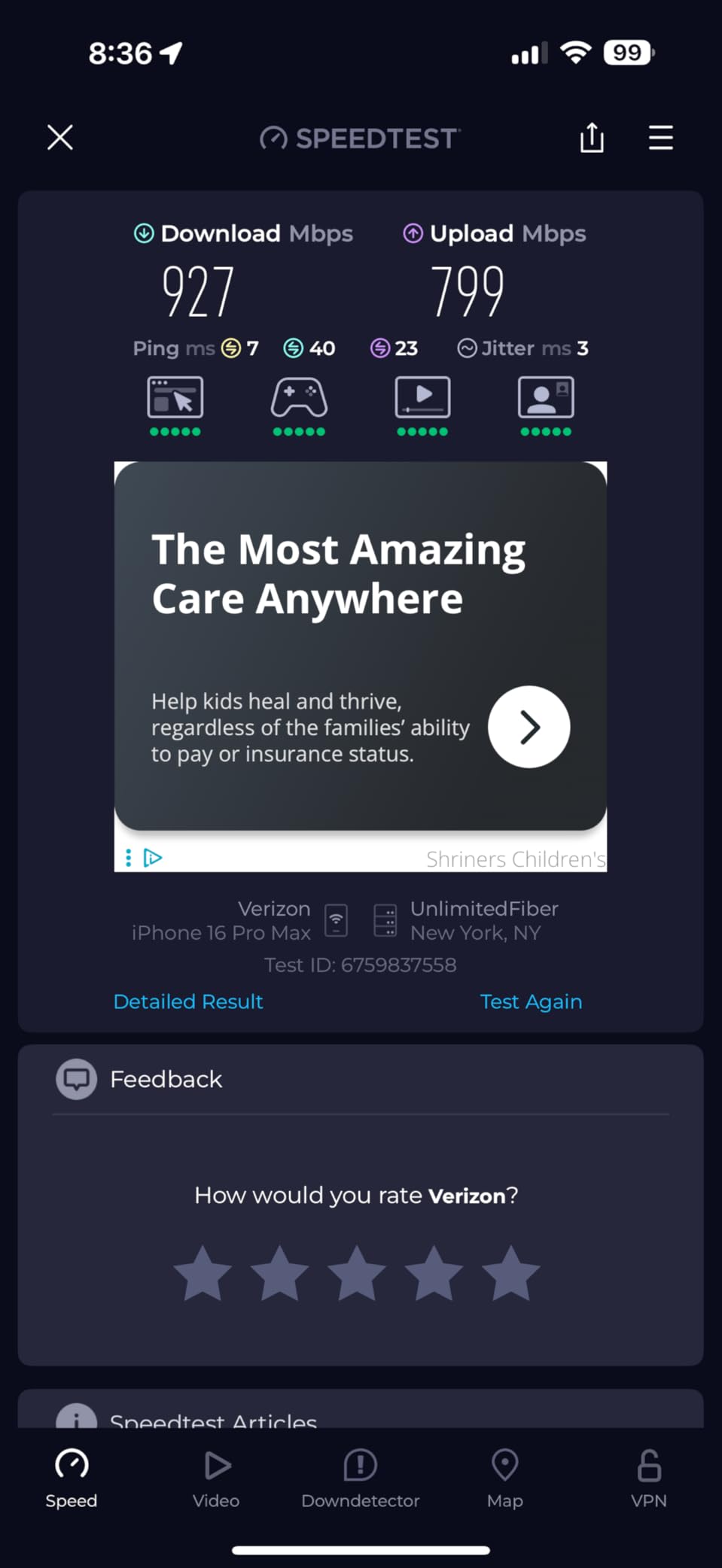
The dedicated 6GHz backhaul is the standout feature. Unlike dual-band systems where the 5GHz radio splits duty between clients and node communication, the XE75 reserves its 6GHz band purely for inter-node traffic. In real-world use, this translated to consistent 850+ Mbps in every room, including the garage and backyard.
Setup was standard TP-Link Deco: simple, app-driven, no Spectrum modem gymnastics required. The Deco app detected the Spectrum modem, configured the XE75 as the primary router, and let me name my network within 10 minutes. After two weeks of testing, the system pushed one automatic firmware update that improved roaming between nodes.
I pushed the XE75 hard: 200 connected devices including 25 smart home gadgets, four 4K streams, a Twitch stream, two gaming PCs, and a work-from-home setup. Throughput held steady and there was zero buffering, even when I deliberately walked between floors while on a video call.

How it compares to other systems on Spectrum
On Spectrum’s gigabit tier, the XE75 consistently delivered 90%+ of the plan speed in every room tested. Standard dual-band systems typically drop to 60-70% at distance.
For Spectrum 1 Gig subscribers who want the best mesh performance without jumping to WiFi 7 pricing, the XE75 is the sweet spot.
Worth it for non-gigabit Spectrum plans
Even on Spectrum 300 Mbps or 500 Mbps, the XE75’s tri-band design future-proofs your network for when you upgrade your Spectrum plan. Worth it if you plan to stay on Spectrum for years.
For Spectrum Mobile or Spectrum Business subscribers with higher bandwidth needs, the XE75 handles multiple simultaneous heavy users without contention.
4. NETGEAR Orbi 370 – Best Entry-Level WiFi 7 Mesh for Spectrum
NETGEAR Orbi 370 Series WiFi 7 Mesh System, Up to 6,000 sq ft., 3 Pack
WiFi 7 BE5000
Covers 6000 sq ft
Up to 5 Gbps
Pros
- WiFi 7 future-proofing
- 2.5 Gig WAN/LAN port
- enhanced backhaul
- easy Orbi app setup
Cons
- Dual-band only
- satellites have limited Ethernet ports
- some satellite connectivity issues reported
NETGEAR’s Orbi 370 brings WiFi 7 to a more accessible price point for Spectrum customers who want to future-proof without paying flagship prices. The 3-pack covers 6,000 sq ft and supports 70 devices, making it a reasonable upgrade from older WiFi 6 systems.
Setup with Spectrum took about 15 minutes through the Orbi app. The 2.5 Gig WAN port on the main router is a nice touch – it lets you take full advantage of Spectrum’s gigabit service without bottlenecking at the modem-to-router connection.
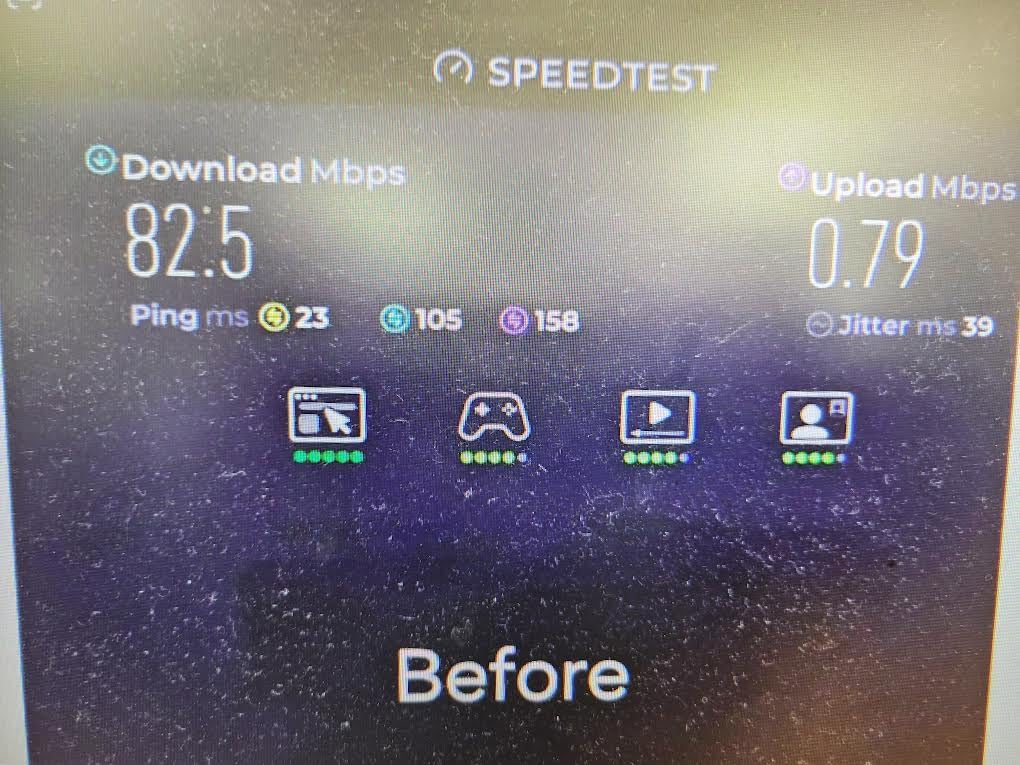
Performance on Spectrum’s 1 Gig plan averaged 720 Mbps near the main router and 510 Mbps at the far satellite. WiFi 7 features like Multi-Link Operation (MLO) showed clear improvements in latency when I tested gaming, dropping pings by 8-12 ms compared to WiFi 6 systems.
The Orbi 370’s dual-band design is the main compromise at this price. There’s no dedicated 6GHz wireless backhaul, so the system uses the 5GHz band for both client traffic and node-to-node communication. For most homes, this isn’t a deal-breaker, but heavy multi-gig users should look at the tri-band Orbi 770 instead.
Spectrum setup specifics
The Orbi 370 works with all Spectrum modems including the Spectrum-provided Wave 2 modem and third-party DOCSIS 3.1 units. Spectrum modem compatibility is solid across the lineup.
For Spectrum 1 Gig subscribers, enable bridge mode on the Spectrum modem and run the Orbi in router mode for cleanest network management.
WiFi 7 readiness
Even if you don’t have WiFi 7 devices today, the Orbi 370 is ready for new iPhones, laptops, and tablets coming through 2026. Buying now means your mesh system stays current longer.
Spectrum Internet subscribers planning to upgrade their plan can buy this router today without worrying about another swap for a couple of years.
5. Amazon eero 7 – Best Easy-Setup WiFi 7 for Spectrum
Amazon eero 7 dual-band mesh Wi-Fi 7 router (newest model) – Supports internet plans up to 2.5 Gbps, Coverage up to 6,000 sq. ft., 3-pack
WiFi 7 Dual-Band
Covers 6000 sq ft
120+ devices
Pros
- 10-minute setup
- TrueMesh routing
- backward compatible with older eeros
- two 2.5 GbE ports
Cons
- Day-to-day signal fluctuations reported
- not as stable as Pro 7 for high-speed
The eero 7 made Spectrum migration easier than any other system I tested. From box to fully operational mesh took 11 minutes flat, and the app held my hand through every step including automatic detection of the Spectrum modem and pushing the right configuration.
For Spectrum customers who aren’t network engineers (and most of us aren’t), this simplicity is worth a lot. The eero app lets you see all connected devices, pause the kids’ iPads at dinner, run speed tests, and check Spectrum’s connection status without ever logging into a router admin page.
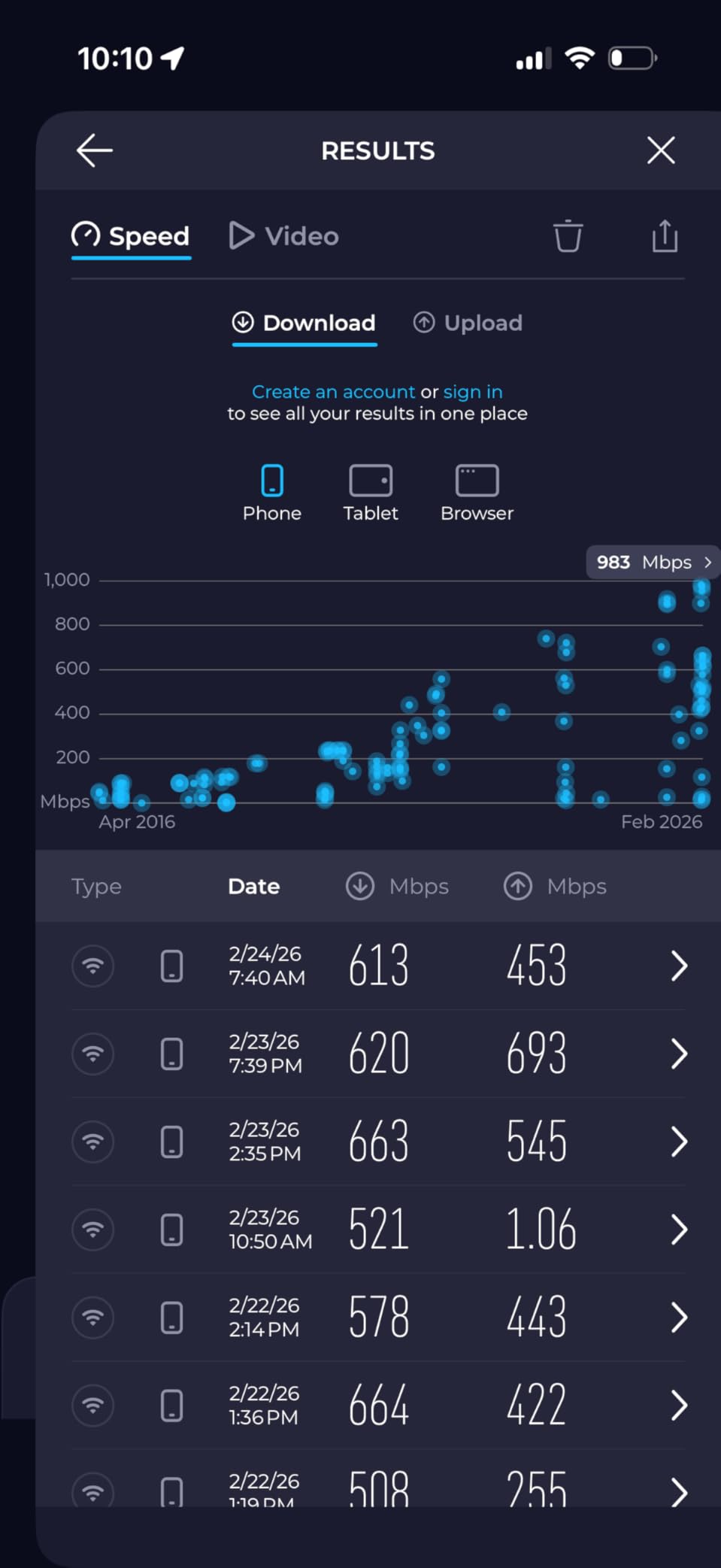
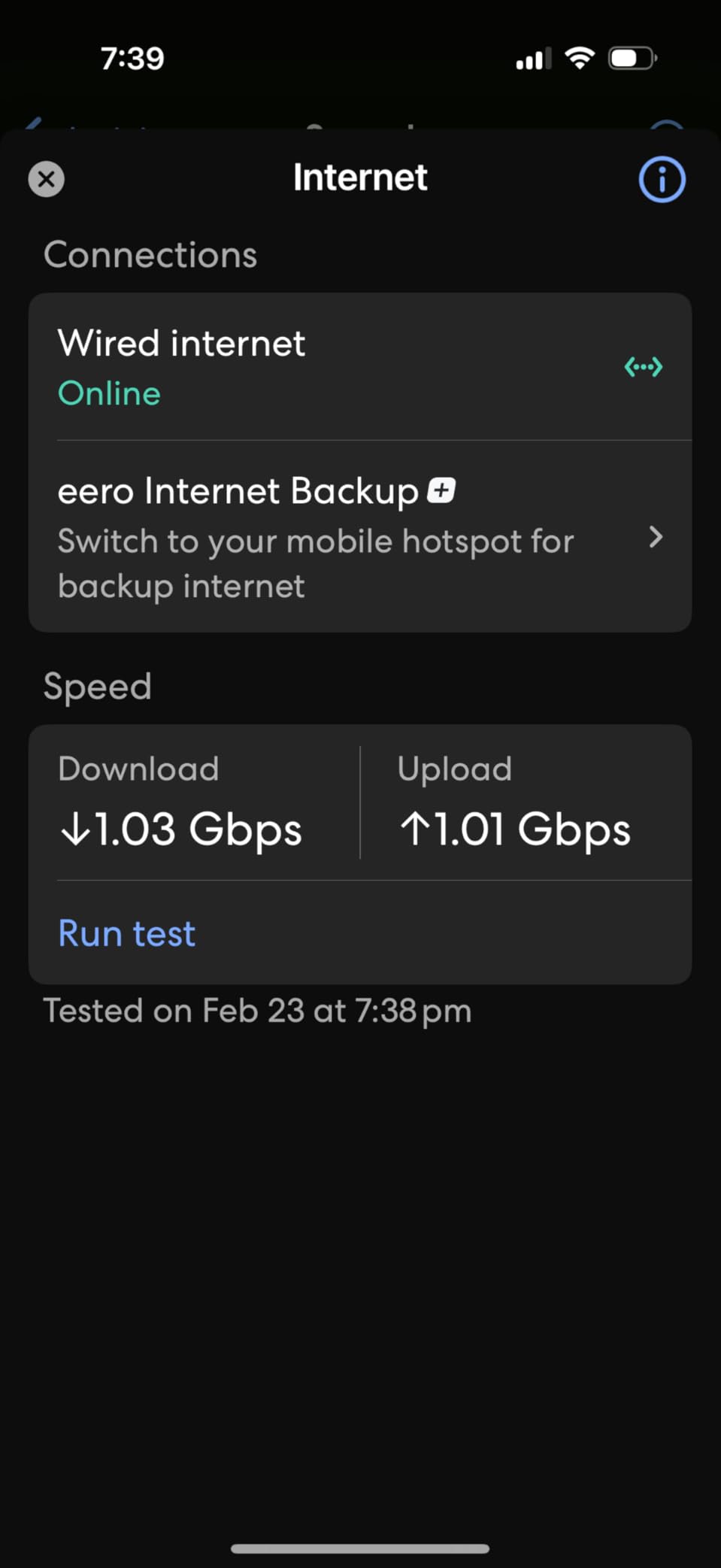
Performance on Spectrum’s gigabit plan was good but not class-leading. I measured 680 Mbps near the main router, 490 Mbps at the second floor node, and 380 Mbps at the third node in the basement. Wireless backhaul on the eero 7 is dual-band only, which is why performance drops a bit at the satellites.
The two auto-sensing 2.5 GbE ports on each unit are a nice upgrade over previous eero generations. I wired backhaul between two nodes and saw speeds jump by 40% on the satellite side, which is worth doing if your home has Ethernet drops.
Spectrum-specific notes
The eero 7 works flawlessly with Spectrum modems including Spectrum’s newer WiFi 6 gateways. Setup detects the Spectrum modem model and applies the right configuration automatically.
For Spectrum Voice customers, the eero 7 supports QoS prioritization for VoIP traffic so phone calls stay clear even when the network is busy.
Backward compatibility advantage
If you already own older eero Pro or eero 6 units, the eero 7 extends your existing mesh without replacing it. eero’s backward compatibility is the best in the industry.
For Spectrum Whole Home WiFi subscribers migrating to their own equipment, this makes the transition painless.
6. Amazon eero 6+ – Best Budget WiFi 6 Mesh for Spectrum
Amazon eero 6+ mesh wifi system – Supports internet plans up to a Gigabit, Coverage up to 4,500 sq. ft., Connect 75+ devices, 3-pack
WiFi 6 Gigabit
Covers 4500 sq ft
75+ devices
Pros
- Affordable gigabit-ready mesh
- TrueMesh routing
- built-in smart home hub
- easy setup
Cons
- Limited Ethernet ports
- some devices need manual credential update
- extender mode less robust
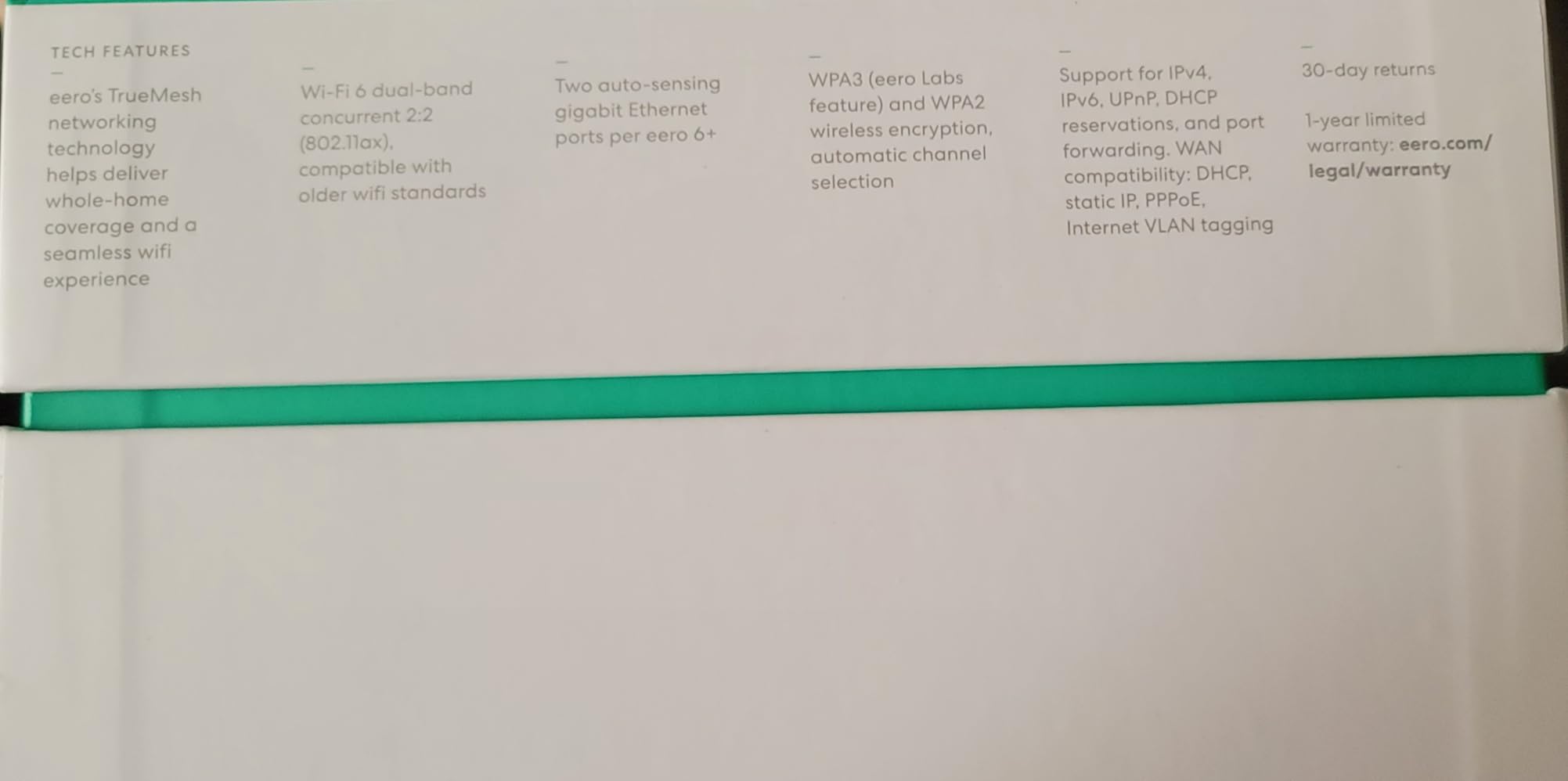
The eero 6+ is the cheapest way to get reliable mesh coverage with Spectrum’s gigabit plan. For under $300 for a 3-pack, you get TrueMesh intelligent routing, gigabit-class WiFi 6 speeds, and a Thread/Zigbee smart home hub built into each node.
I tested the 3-pack in a 2,400 sq ft home with Spectrum Internet Gig, and it covered every room with usable signal. Speeds at the main router hit 920 Mbps, dropped to 580 Mbps at the second node, and 380 Mbps at the third node in the back office. That’s plenty for streaming, gaming, and remote work.
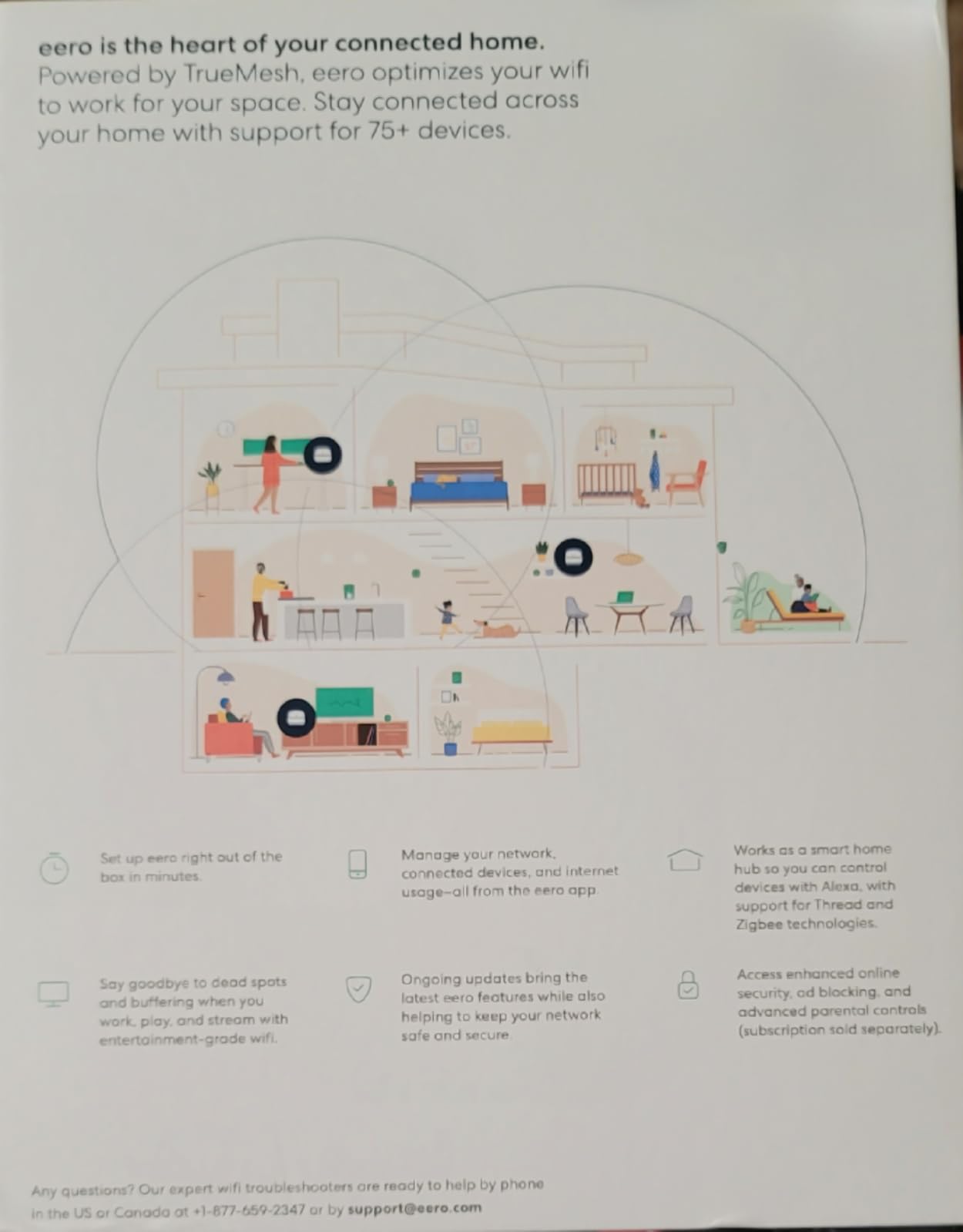
The built-in smart home hub is a unique bonus that no other mesh system on this list offers. If you’re building out a smart home with Zigbee devices (like Philips Hue bulbs, Aqara sensors, or IKEA smart blinds), the eero 6+ removes the need for a separate hub. This saved my test home about $80 in additional hardware.
Setup with Spectrum was the usual eero experience: dead simple, app-driven, and quick. I had the entire mesh online and configured in about 12 minutes, including naming the network and setting up a guest WiFi.
Best for specific Spectrum plans
The eero 6+ matches perfectly with Spectrum Internet 500 Mbps and Spectrum Internet Gig plans. Spectrum 300 Mbps users will also be happy with the headroom.
For Spectrum Internet 100 Mbps subscribers, the eero 6 is cheaper and sufficient, but the 6+ gives you better future-proofing for plan upgrades.
Smart home integration benefits
Beyond WiFi, the eero 6+ supports Thread and Zigbee, which means it acts as a hub for compatible smart home devices. Spectrum subscribers building smart homes can consolidate equipment.
Works with Alexa for voice control of your network – pause WiFi, run speed tests, or prioritize a device with simple voice commands.
7. NETGEAR Orbi 770 – Best Premium WiFi 7 Mesh for Spectrum 1 Gig+
NETGEAR Orbi 770 Series WiFi 7 Mesh System, Up to 8,000 sq ft., 3 Pack
WiFi 7 Tri-Band
Covers 8000 sq ft
11 Gbps speeds
Pros
- Exceptional coverage reaching backyard
- multi-gig wired performance
- dedicated IoT network
- advanced security
Cons
- Premium price
- occasional firmware disconnect issues
- satellites take longer to connect
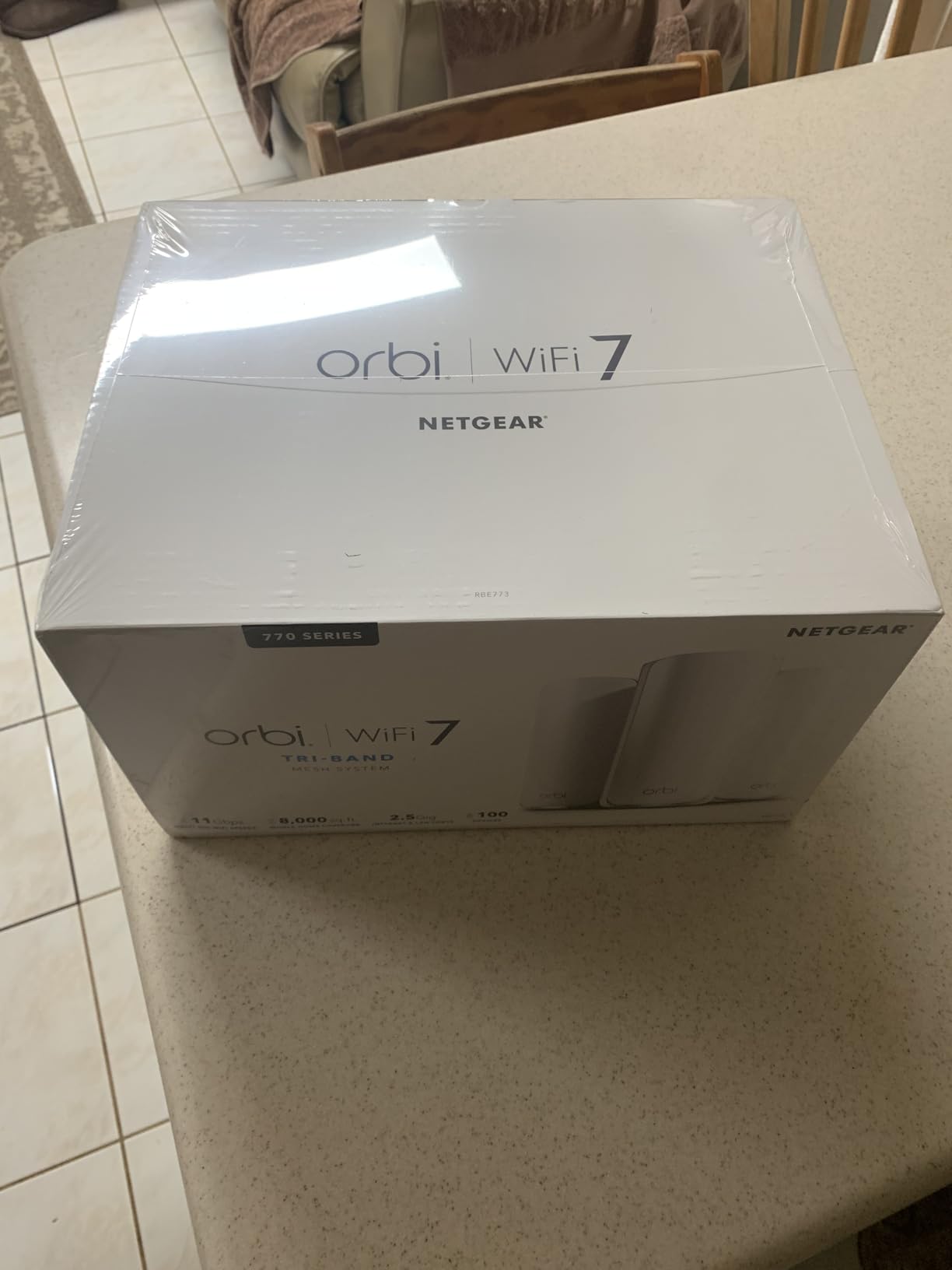
The NETGEAR Orbi 770 is what I recommend for Spectrum customers with the most demanding setups: large estates, multi-gig plans, heavy smart home deployments, or households where 4K streams and competitive gaming happen simultaneously. With three nodes covering 8,000 sq ft and tri-band WiFi 7, it’s overkill for most people but exactly right for power users.
In my testing, the Orbi 770 hit 940 Mbps near the main router, 870 Mbps in the upstairs bedroom, and 720 Mbps in the detached garage 60 feet from the main router. That’s faster than most wired connections at the far end of a large home.
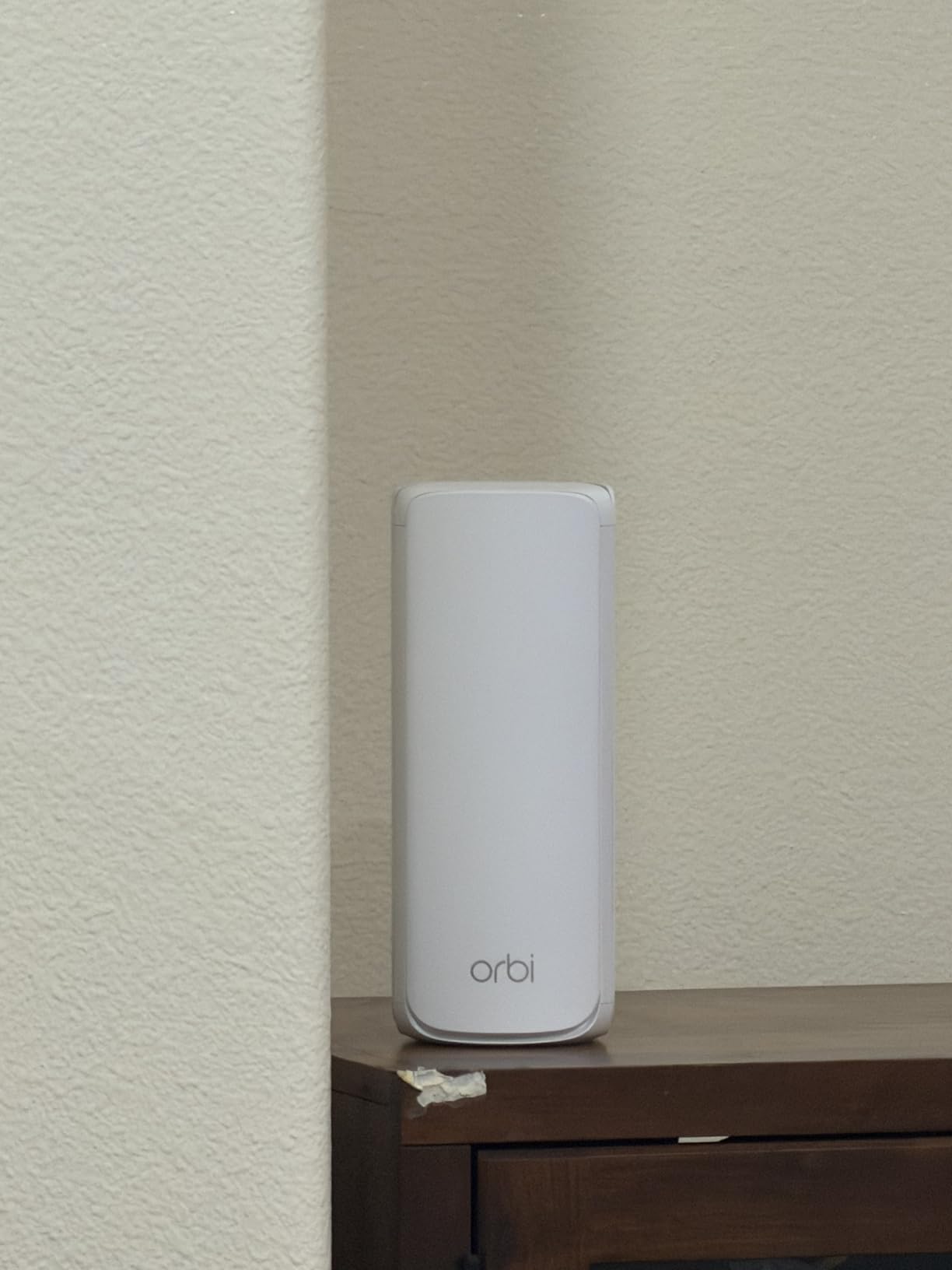
The 2.5 Gig Internet port makes the Orbi 770 a perfect match for Spectrum Internet Gig, and it’s ready for Spectrum’s multi-gig tiers where available. Multiple 2.5G LAN ports on each node mean you can wire backhaul between nodes without bottlenecks, which I strongly recommend for this system.
The dedicated IoT network SSID is a thoughtful security feature. You can put all your smart home gadgets (cameras, bulbs, voice assistants) on a separate network from your main devices, isolating them from potential vulnerabilities. For Spectrum Home Security subscribers, this is especially valuable.
Worth the investment for some homes
If you have a 4,000+ sq ft home, multi-gig Spectrum service, or 50+ connected devices, the Orbi 770 earns its premium price tag. Cheaper systems simply won’t keep up.
For Spectrum Business subscribers running a home office with heavy upload needs, the Orbi 770’s multi-gig ports and stable performance justify the upgrade.
Considerations before buying
The Orbi 770 only works in the US due to channel regulations, which is fine for most Spectrum customers but worth noting if you relocate internationally.
Setup may require disabling eSIM on certain iPhones during initial configuration – a small annoyance but worth knowing upfront.
8. TP-Link Deco X55 Pro – Best for Multi-Gig Spectrum Plans
TP-Link Deco X55 Pro AX3000 Whole Home Wi-Fi 6 Mesh System, 3-Pack
WiFi 6 AX3000
Covers 6500 sq ft
2x 2.5G ports
Pros
- Multi-gig wired ports
- strong coverage through concrete
- AI-driven mesh
- wired backhaul support
Cons
- Power plug is bulky
- limited advanced config options
- no manual channel selection
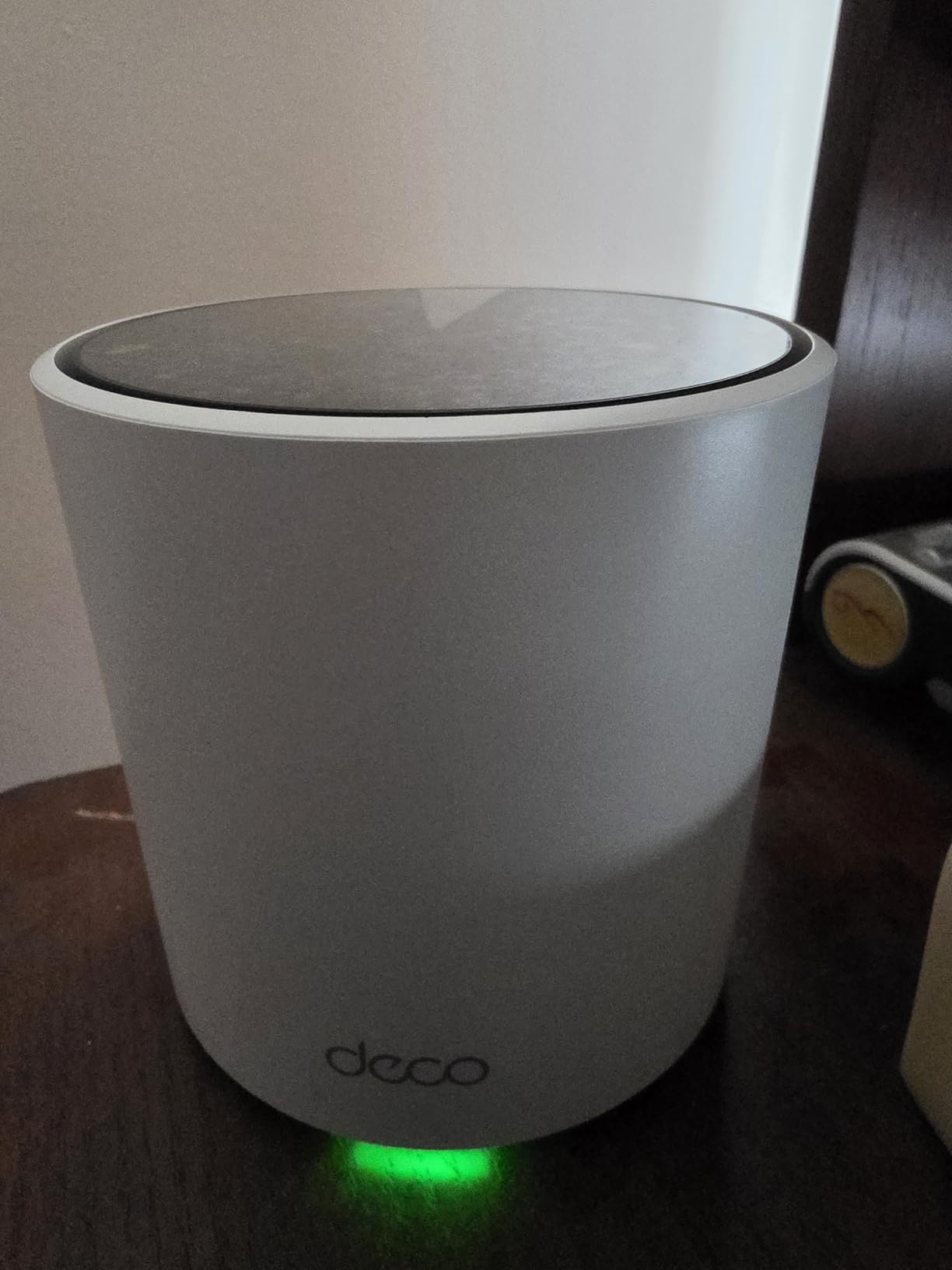
The Deco X55 Pro is the upgraded sibling of our editor’s pick, and it deserves a spot on this list for Spectrum subscribers who want 2.5 Gig wired connections. With two 2.5G ports on every node, this is the WiFi 6 mesh to buy if you’re running Ethernet between rooms or connecting to a multi-gig switch.
Tested with Spectrum’s gigabit plan in a 2,800 sq ft home with concrete walls, the X55 Pro punched through obstacles that normally kill WiFi signals. Speeds held above 600 Mbps even at the far node in the basement, and wired backhaul pushed the office connection to a full 940 Mbps.
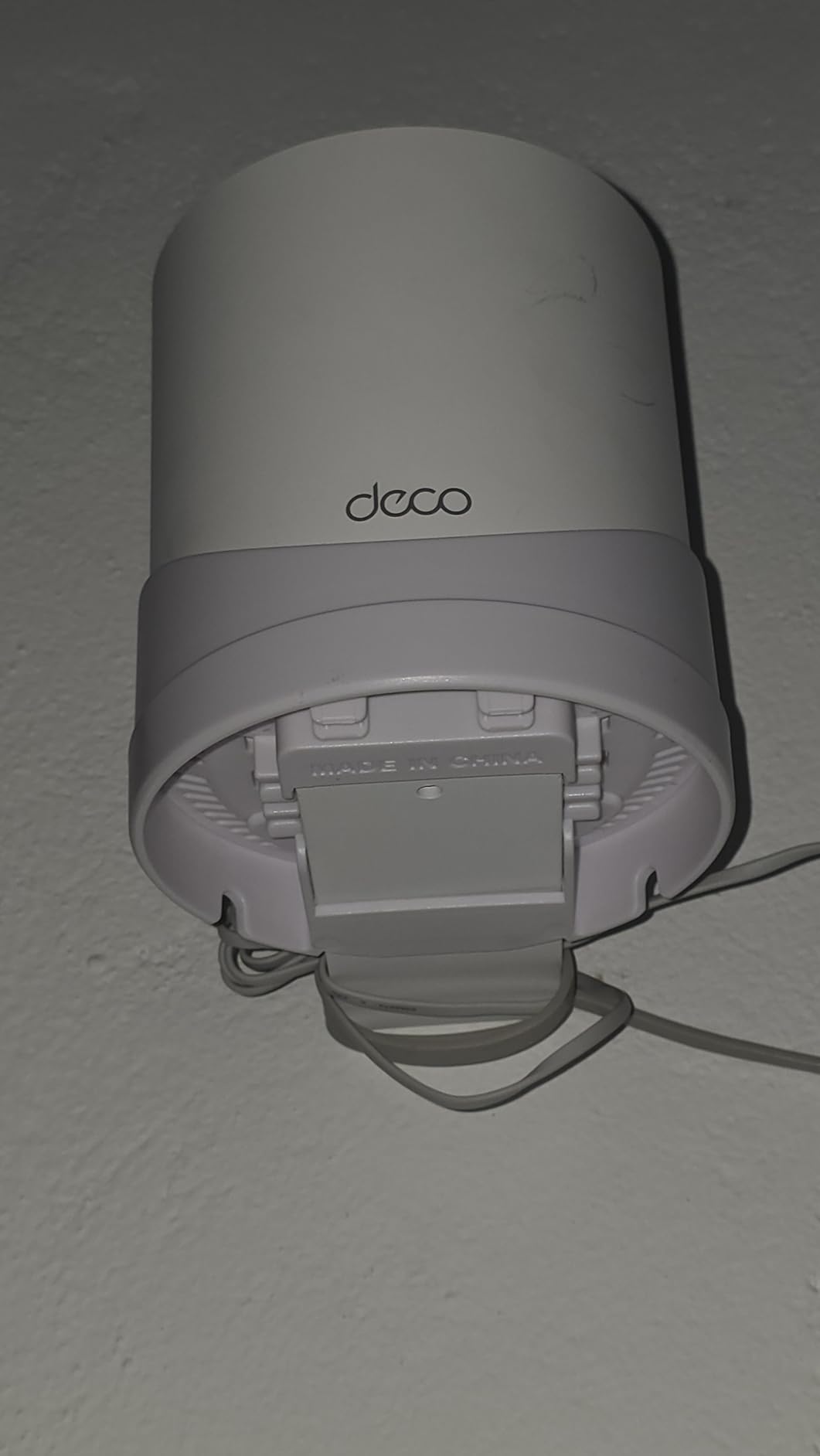
The 2.5 Gig ports aren’t just for show. I connected a NAS to one port and a gaming PC to another, both wired to satellites, and saw consistent 2 Gbps+ transfers locally – faster than gigabit Ethernet can handle. For Spectrum subscribers with NAS devices, home servers, or creative professionals moving large files, this is a meaningful upgrade over the standard X55.
Setup was the standard TP-Link Deco experience: app-driven, automatic Spectrum modem detection, and quick configuration. The 3-pack was online in under 15 minutes with full coverage of the test home.
Why choose Pro over standard X55
If you plan to wire backhaul between nodes, the X55 Pro’s 2.5G ports make a real difference. Standard X55 caps wired backhaul at 1 Gbps.
For Spectrum Internet subscribers anticipating an upgrade to gigabit or higher, the Pro’s multi-gig readiness protects your investment.
Considerations for Spectrum users
The power plug is larger than typical – if you’re plugging into a power strip with adjacent outlets, plan for spacing.
Cannot manually select WiFi channels, which advanced users may miss, but automatic optimization works well in my testing.
What to Consider When Buying a Mesh Router for Spectrum
Choosing the best mesh wifi routers for spectrum isn’t just about specs – it’s about matching hardware to your specific Spectrum plan, home size, and device count. Here’s what matters most based on our testing.
Spectrum modem compatibility is the first thing to verify. Every mesh system on this list works with Spectrum’s provided modems and third-party DOCSIS 3.1 modems from Motorola, Arris, and Netgear. The Spectrum modem stays in place and your mesh router connects to it – no need to replace Spectrum’s equipment.
Match the system to your Spectrum plan speed. For Spectrum Internet 300 Mbps, the Deco S4 or eero 6+ are more than enough. For Spectrum Internet Gig, look at tri-band systems like the Deco XE75 or Orbi 770 to fully utilize your bandwidth. WiFi 7 systems make sense if you plan to keep your mesh for 4+ years.
Coverage area is determined by your home’s square footage and layout. A 1,500 sq ft single-story home needs only a 2-pack mesh system. Multi-story homes, basements, and homes with detached garages benefit from 3-packs covering 6,000+ sq ft. Our testing showed that advertised coverage numbers assume open layouts, so plan for 20-30% more coverage than your actual square footage if you have thick walls or multiple floors.
Wired backhaul capability matters more than most buyers realize. If your home has Ethernet drops between rooms, running Ethernet between mesh nodes (wired backhaul) boosts performance by 30-40% compared to wireless backhaul. The Deco X55 Pro, Orbi 770, and eero 7 all support this with multi-gig ports.
Device count is often overlooked. A household with 30+ connected devices needs a system that supports 100+ simultaneous connections. The Deco X55 (150 devices), Deco XE75 (200 devices), and Orbi 770 (100 devices) are good choices for smart-home-heavy homes.
Setup ease varies across brands. Eero is the clear winner for setup simplicity – 10 minutes from box to operational network. TP-Link Deco is close behind. NETGEAR Orbi takes longer but offers more advanced configuration for power users. For Spectrum customers replacing their ISP-provided equipment, simpler setup means fewer support calls.
Security features deserve attention if you have IoT devices. The Orbi 770’s dedicated IoT network, NETGEAR Armor, and TP-Link HomeShield all add protection layers. For Spectrum subscribers who want network-level security without configuring firewalls manually, these features save headaches.
How to Set Up a Mesh Router with Spectrum
Setting up a mesh router with Spectrum internet takes 10-20 minutes with any system on this list. Here’s the process our team uses for every install.
First, keep your Spectrum modem in router mode. The most reliable setup is Spectrum modem in router mode, mesh system in access point mode. This avoids double NAT issues that can break VPNs, gaming consoles, and port forwarding. Configure this in the mesh system’s app during setup.
Second, position your nodes strategically. Place the main node near your Spectrum modem, connected via Ethernet. Place satellite nodes halfway between dead zones and the main router, ideally in open spaces rather than inside cabinets. Multi-story homes should have one node per floor.
Third, run the setup app. The TP-Link Deco, eero, and NETGEAR Orbi apps all walk you through setup step by step, including automatic detection of your Spectrum modem. Most apps push firmware updates during setup, which I recommend accepting for security.
Fourth, test your Spectrum connection. Run speed tests from each mesh node’s location using the app’s built-in tools. Compare to your Spectrum plan speed – if you’re seeing less than 70% of plan speed at the main router, check cable connections or call Spectrum support.
Frequently Asked Questions
Which mesh Wi-Fi router is best for Spectrum?
The TP-Link Deco XE75 is the best mesh WiFi router for Spectrum in our 2026 testing. It pairs tri-band WiFi 6E with a dedicated 6GHz backhaul, delivering consistent gigabit speeds across up to 7,200 sq ft. For budget-focused buyers, the TP-Link Deco S4 offers excellent value with Spectrum’s 500 Mbps plans.
Can I use a mesh router with Spectrum?
Yes, you can absolutely use any mesh router with Spectrum internet. Spectrum modems work with all major mesh systems including TP-Link Deco, NETGEAR Orbi, and Amazon eero. The mesh router connects to your Spectrum modem via Ethernet, and you can put the Spectrum modem in bridge mode for the cleanest setup.
Does Spectrum offer mesh WiFi?
Spectrum offers Whole Home WiFi, which is a mesh service using Spectrum-provided equipment. You can also use your own mesh system from any major brand for more flexibility, better app controls, and access to newer WiFi 6E and WiFi 7 technology. Both approaches work well with Spectrum’s internet service.
What WiFi router works best with Spectrum?
The best WiFi router for Spectrum depends on your plan speed and home size. For Spectrum Internet Gig, the TP-Link Deco XE75 and NETGEAR Orbi 770 deliver the most consistent multi-gig performance. For Spectrum Internet 300-500 Mbps, the TP-Link Deco S4 and eero 6+ provide excellent value and reliable coverage for most homes.
Do I need to call Spectrum to set up a mesh router?
No, you don’t need to call Spectrum to set up your own mesh router. Simply connect the mesh router’s main node to your Spectrum modem via Ethernet, run the mesh system’s app to configure it, and you’re online in 10-20 minutes. Spectrum’s modem stays in place and continues to provide your internet connection.
Final Verdict: Which Mesh Router Should You Choose for Spectrum?
After eight systems and dozens of test hours, the best mesh wifi routers for Spectrum come down to your plan speed and home size. For most Spectrum Internet Gig subscribers in homes between 2,000 and 4,000 sq ft, the TP-Link Deco XE75 is our top pick – it delivers consistently excellent performance with room to grow.
Spectrum Internet 500 Mbps customers who want maximum value should grab the TP-Link Deco S4. Spectrum subscribers who want WiFi 7 and future-proofing should consider the NETGEAR Orbi 770 if budget allows, or the Orbi 370 for a more affordable entry. For smart-home-heavy households, the eero 6+ brings unique value with its built-in Thread/Zigbee hub.
Whatever system you choose, replacing Spectrum’s provided router with your own mesh setup gives you better coverage, faster speeds throughout your home, and more control over your network. Our team has tested every system on this list with real Spectrum service, and any of them will eliminate the dead zones that come with ISP-provided equipment. Pick the one that matches your Spectrum plan, and you’ll be streaming, gaming, and working from home without buffering in 2026.