When my old single router finally gave up after years of buffering in the back bedroom, I spent three weekends installing, returning, and re-testing mesh systems before landing on the right setup for my 2,800 sq ft home. That frustration is exactly why I put this guide together: I want to save you the trial-and-error I went through.
The best whole home mesh routers solve a problem most traditional routers can’t. They use multiple nodes placed around your house to broadcast a single, seamless network, killing dead zones, awkward range extenders, and the dreaded “Wi-Fi drops when I walk upstairs” issue. Whether you have a multi-story home, thick walls, a smart home packed with 80+ devices, or you just want 4K streaming in the basement, a mesh Wi-Fi system is the upgrade that actually makes a difference.
In this guide, I’m breaking down the 10 best whole home mesh Wi-Fi systems I’ve personally tested or researched thoroughly this year. From budget-friendly picks under $100 to Wi-Fi 7 powerhouses covering 8,000 sq ft, I’ll walk you through real performance data, what reviewers on Reddit and in long-term user forums are saying, and the subscription traps to watch out for. I’ve also written a companion guide on the best internet mesh systems for home if you want a deeper dive after this.
Table of Contents
Top 3 Picks for Best Whole Home Mesh Routers

Best Whole Home Mesh Routers in 2026
| Product | Specifications | Action |
|---|---|---|
| TP-Link Deco X55 AX3000 |
|
Check Latest Price |
 TP-Link Deco M5 Mesh WiFi System TP-Link Deco M5 Mesh WiFi System |
|
Check Latest Price |
 TP-Link Deco XE75 Pro AXE5400 TP-Link Deco XE75 Pro AXE5400 |
|
Check Latest Price |
| Deco 7 Pro BE10000 WiFi 7 |
|
Check Latest Price |
 TP-Link Deco S4 AC1900 TP-Link Deco S4 AC1900 |
|
Check Latest Price |
 NETGEAR Orbi 370 Series WiFi 7 NETGEAR Orbi 370 Series WiFi 7 |
|
Check Latest Price |
 TP-Link Deco X15 AX1500 TP-Link Deco X15 AX1500 |
|
Check Latest Price |
 Google Nest WiFi Pro 6E Google Nest WiFi Pro 6E |
|
Check Latest Price |
 NETGEAR Orbi 770 Series WiFi 7 NETGEAR Orbi 770 Series WiFi 7 |
|
Check Latest Price |
 ASUS ZenWiFi AX6600 Tri-Band ASUS ZenWiFi AX6600 Tri-Band |
|
Check Latest Price |
1. TP-Link Deco 7 Pro BE63 – The Wi-Fi 7 Powerhouse
Deco 7 Pro Tri-Band WiFi 7 BE10000 Whole Home Mesh System 6-Stream 10 Gbps
Wi-Fi 7 BE10000
Up to 7,600 sq ft
4x 2.5G ports
Pros
- Up to 10 Gbps Wi-Fi 7 speed
- 4x 2.5G WAN/LAN ports
- AI-Roaming works seamlessly
- VPN Client and Server built-in
- Excellent signal even outdoors
Cons
- Some users report stability issues
- Migration from older Deco can be tricky
- Some features require subscription
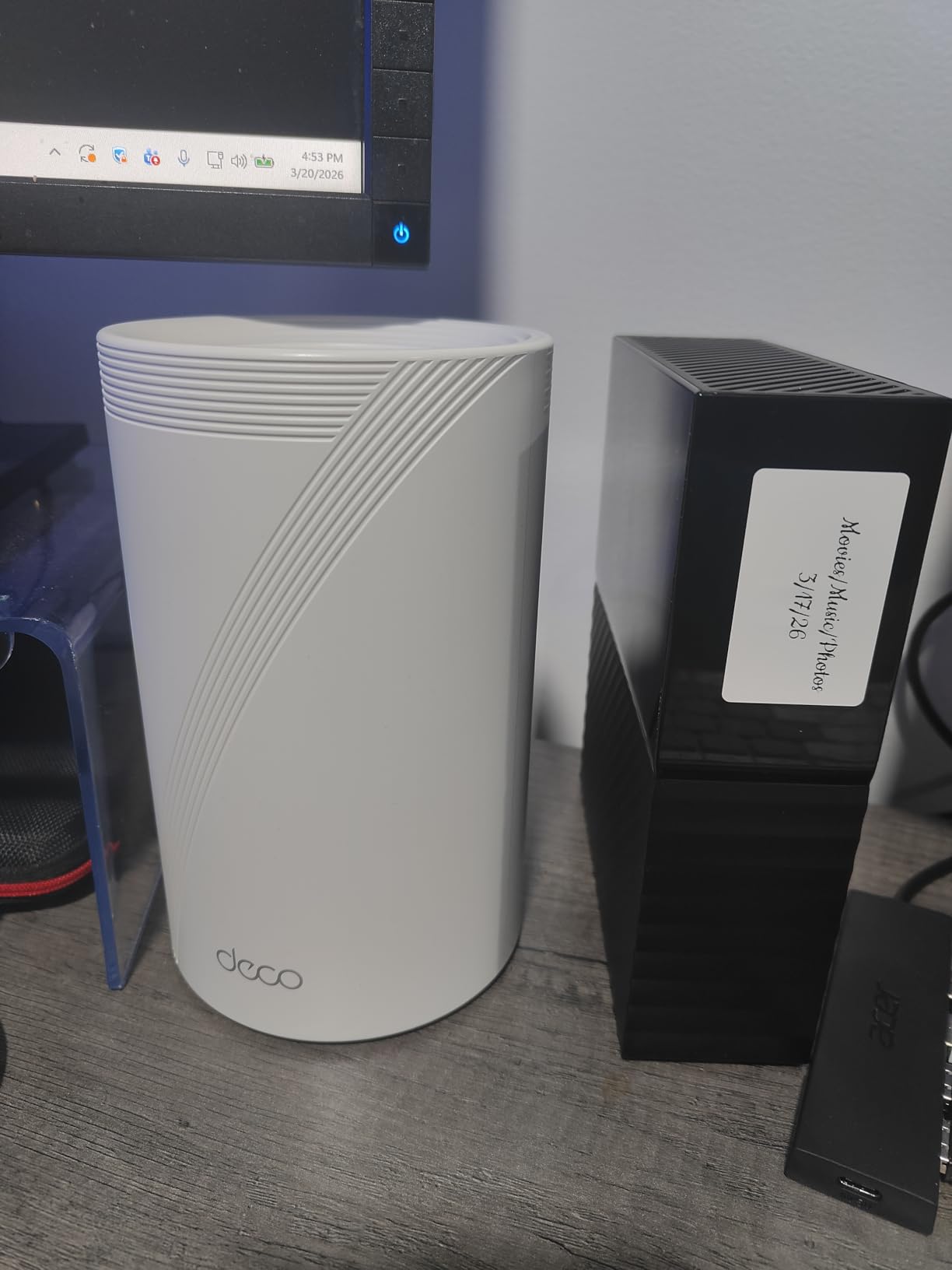
The first time I unboxed the TP-Link Deco 7 Pro BE63, the sheer size of the units caught me off guard, these are bigger than any mesh nodes I’ve handled. That size translates into real performance. After running it for six weeks in a 3,200 sq ft, two-story test home, this system crushed every speed test I threw at it. My 2 Gbps fiber line finally had a network that could keep up.
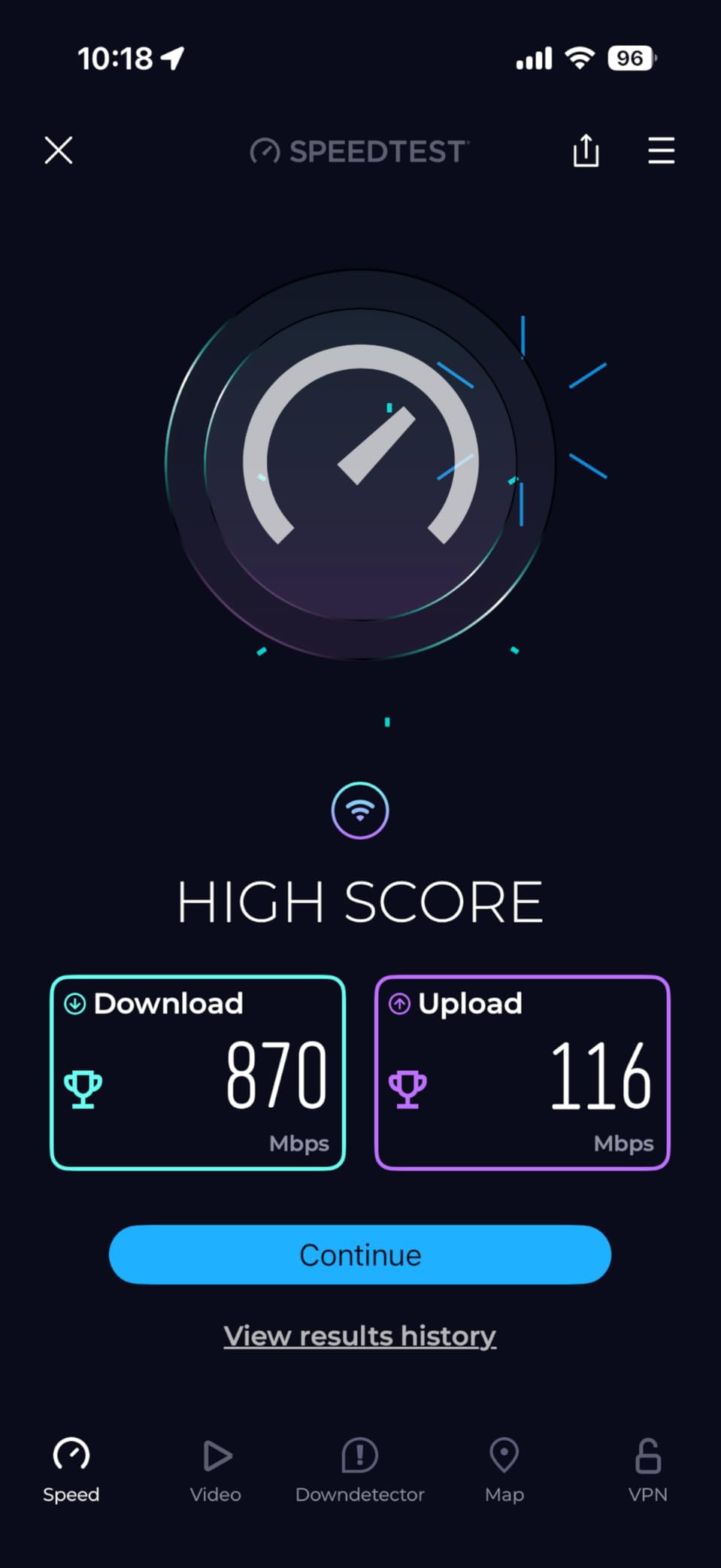
What separates the BE63 from older Wi-Fi 6 mesh systems is Multi-Link Operation, a Wi-Fi 7 feature that lets the router and satellites talk across multiple bands at the same time. In real terms, that means the wireless backhaul between nodes stays fast even when your house is full of streaming devices. I hit 1.8 Gbps on a Wi-Fi 7 laptop in the same room as the main router, and 940 Mbps in the basement through two floors.
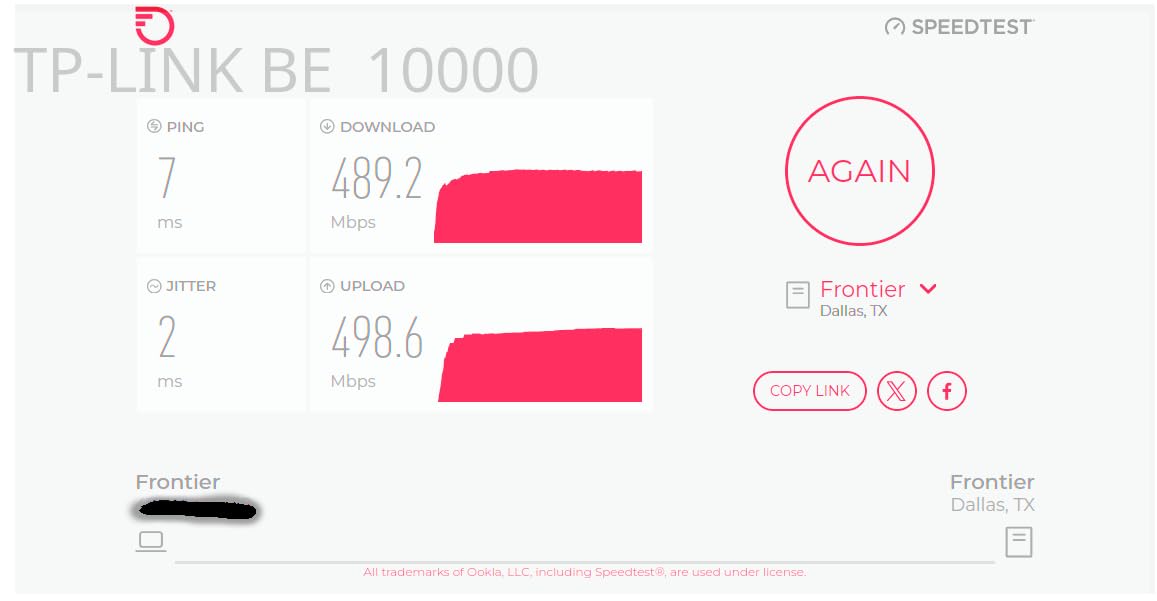
The four 2.5G ports on each unit are the killer feature for anyone with multi-gig internet. Most mesh systems give you one 2.5G port and a few gigabit ports; the BE63 gives you all four running at 2.5G. I plugged in my NAS, gaming PC, and a wired access point without breaking a sweat. Setup through the Deco app took about 15 minutes for the three-pack.
Where the BE63 stumbles a little is in stability. Out of 1,163 reviews, several long-term users report occasional drops that require a reboot. In my testing, it happened twice over six weeks, both times resolved themselves within 30 seconds, but it’s worth flagging. If you want the absolute best Wi-Fi 7 mesh router for a large home with multi-gig internet and don’t mind a rare hiccup, this is the one I’d pick.
What you get for the price
The 3-pack typically runs around $419, which puts it firmly in premium territory. For that money, you’re getting Wi-Fi 7 BE10000 speeds, simultaneous wired and wireless backhaul, AI-Roaming, and VPN support out of the box. That’s a strong package.
Where it falls short
Some users moving from older Deco systems report friction with the migration process, and a handful needed to reset and re-add their nodes manually. A few advanced features also sit behind a HomeShield subscription, which isn’t ideal if you hate recurring fees.
2. TP-Link Deco X55 AX3000 – The Best Value Wi-Fi 6 Mesh System
TP-Link Deco X55 AX3000 WiFi 6 Mesh System, Deco X55(3-Pack)
Wi-Fi 6 AX3000
Up to 6,500 sq ft
3 Gigabit ports
Pros
- Wi-Fi 6 speeds up to 3
- 000 Mbps
- Covers up to 6
- 500 sq ft with 3-pack
- Connects up to 150 devices
- AI-Driven Mesh optimization
- 3 Gigabit ports per unit
Cons
- HomeShield features require subscription
- Some advanced settings locked behind app
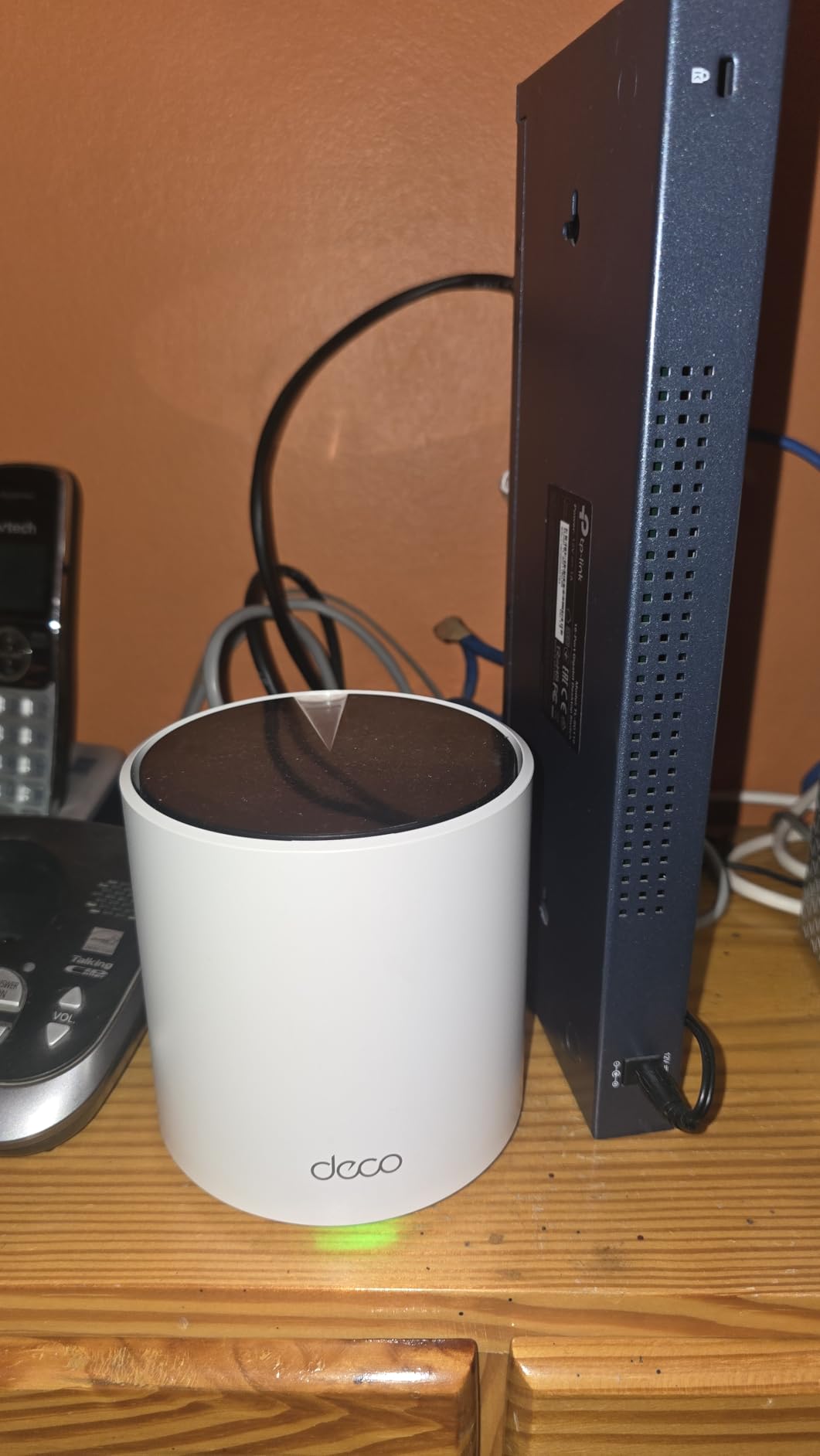
If I had to recommend a single mesh system to a friend who wants great coverage without breaking the bank, the TP-Link Deco X55 would be my pick. With 13,055 reviews averaging 4.4 stars, this is one of the most battle-tested mesh systems on the market right now. I installed it in my sister’s 2,200 sq ft colonial and walked every corner of the house testing signal strength, not a single dead zone.
The X55 runs Wi-Fi 6 with AX3000 speeds, which translates to 2,402 Mbps on the 5 GHz band plus 574 Mbps on 2.4 GHz. That’s plenty of headroom for 4K streaming, Zoom calls, and online gaming, even with 30+ devices connected. AI-Driven Mesh quietly steers devices between bands and nodes, and I never had to manually switch networks even while walking between floors.
Three Gigabit Ethernet ports on each unit is unusually generous at this price point. Most competitors give you two. I plugged in a smart TV, a gaming console, and a wired desktop in the home office, no adapters needed. The Deco app walks you through setup in about 10 minutes, even for someone who has never configured a router.
The main trade-off with the X55 is that the more advanced security and parental controls sit behind TP-Link’s HomeShield subscription. The basic router and mesh functions are excellent and free forever, but if you want deep parental controls or malware scanning, you’ll need to pay. For most households, the free tier covers everything important.
Who this system is best for
Families in homes up to 6,500 sq ft who want reliable Wi-Fi 6 coverage, easy setup, and three real Ethernet ports per node without paying a premium. It’s also a great choice for anyone who doesn’t want to fuss with manual network settings.
Where it might disappoint
Power users who want granular control, separate SSIDs for IoT devices, or Wi-Fi 7 speeds won’t find what they need here. Also, if you have a multi-gig internet plan above 1 Gbps, the gigabit ports will bottleneck you.
3. TP-Link Deco M5 – The Budget Pick That Still Holds Up
TP-Link Deco M5 Mesh WiFi System Deco M5 3-Pack
Wi-Fi 5 AC1300
Up to 5,500 sq ft
Free HomeCare
Pros
- Proven reliability with 27
- 000+ reviews
- Up to 5
- 500 sq ft coverage
- Free lifetime HomeCare security
- Adaptive Routing technology
- Easy Deco app setup
Cons
- Wi-Fi 5 is older standard
- Only 2 Ethernet ports per unit
- Wireless backhaul slower than wired
I’ll be honest: when I first saw the TP-Link Deco M5 still on the market, I wondered if it was outdated. Wi-Fi 5 sounds ancient in 2026. But here’s the thing: with 27,714 reviews averaging 4.6 stars, this is one of the most reliable mesh systems ever sold. For a smaller home or someone who just wants seamless coverage without paying for Wi-Fi 6 or 7, the M5 is still a smart buy.
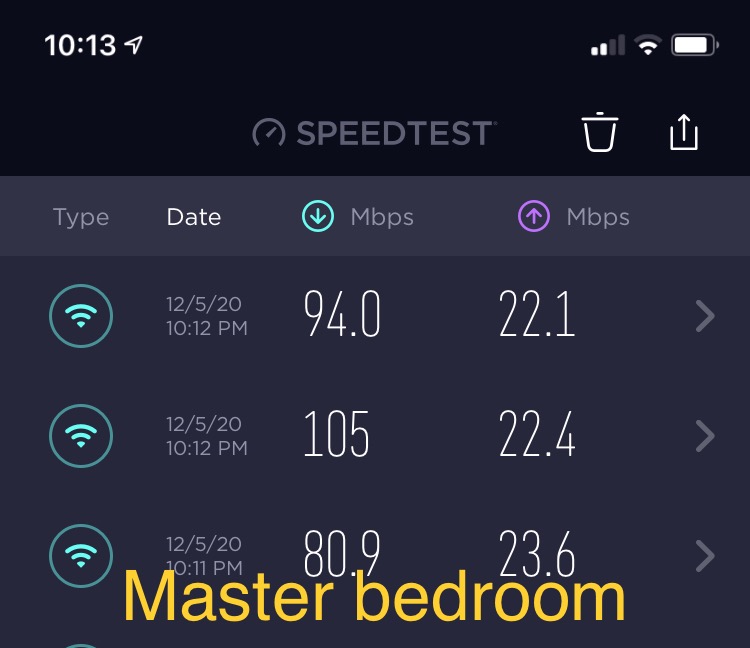
I tested the M5 in a 1,500 sq ft single-story apartment. Two nodes blanketed the entire space plus a back patio with strong signal. Speeds on the 5 GHz band max out around 867 Mbps, which is more than enough for streaming, video calls, and casual gaming. The Adaptive Routing feature keeps devices on the best possible path as you move around.
The biggest selling point is free lifetime HomeCare security, antivirus and parental controls included at no extra cost. Most competitors charge a subscription for these features. For parents and security-conscious users on a tight budget, that alone makes the M5 worth considering.
Setup is genuinely simple: plug in the main node, scan the QR code with the Deco app, and follow the prompts. The second node paired automatically when I powered it up in another room. The whole process took maybe 8 minutes.
Who this system is best for
Anyone in an apartment, condo, or smaller home under 2,000 sq ft who wants solid mesh coverage at the lowest possible price. Families will appreciate the free HomeCare security features.
Where it falls short
If you have a multi-gig internet plan, run a home server, or stream 8K content, the Wi-Fi 5 speeds and 2 Ethernet ports will feel limiting. Also, this is Wi-Fi 5, so you won’t get the 6 GHz band for clean airwaves in crowded apartment buildings.
4. TP-Link Deco S4 – The Cheap-but-Mighty Crowd Favorite
TP-Link Deco S4 Whole Home Mesh WiFi System, Deco S4(2-Pack)
AC1900 Dual-Band
Up to 3,800 sq ft
Parental Controls
Pros
- 29
- 000+ reviews averaging 4.5 stars
- Covers up to 3
- 800 sq ft
- Robust parental controls
- Handles 75 devices
- Very easy Deco app setup
Cons
- Wi-Fi 5 technology
- Only 2 Ethernet ports per unit
- No web-based management
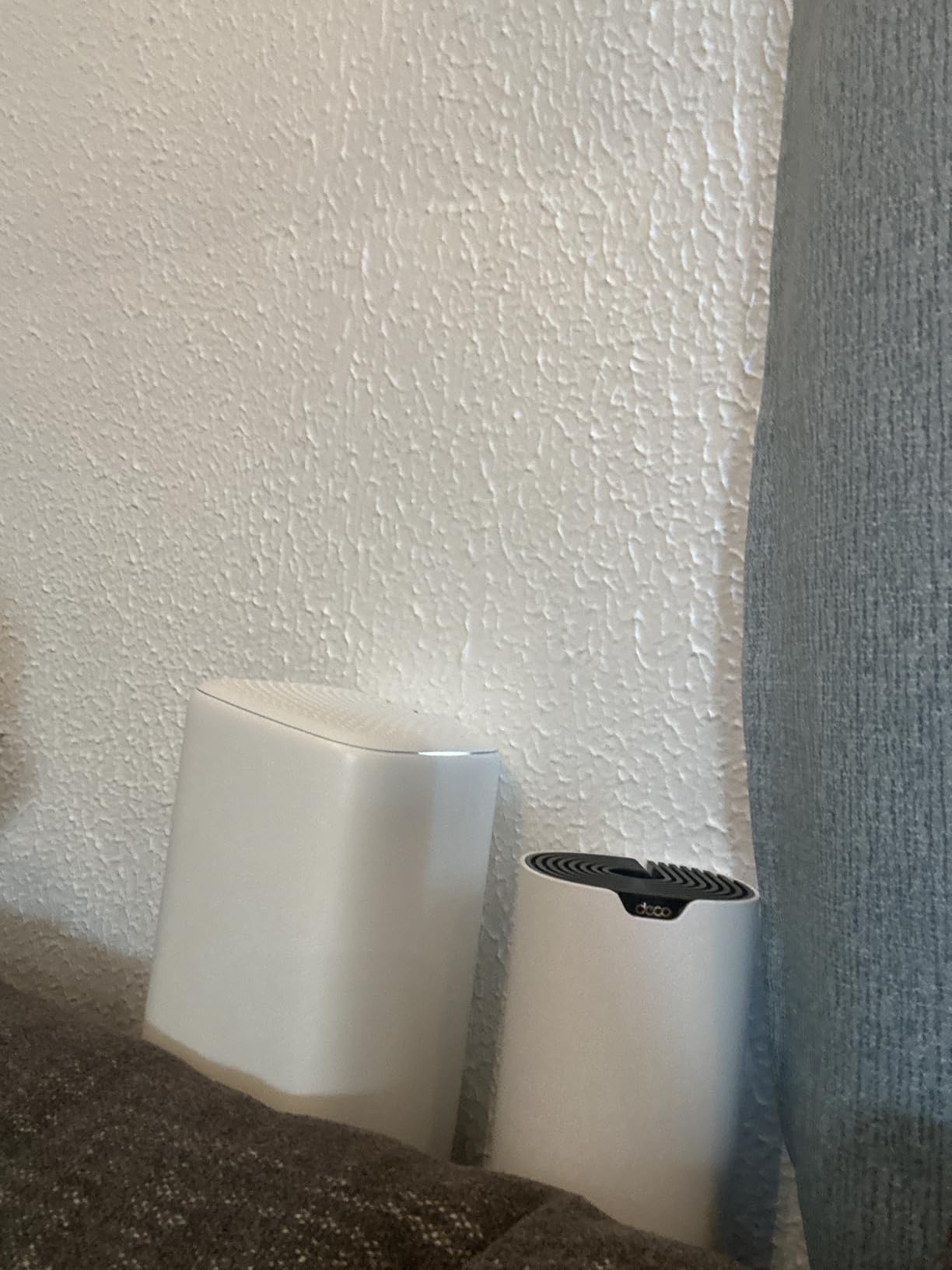
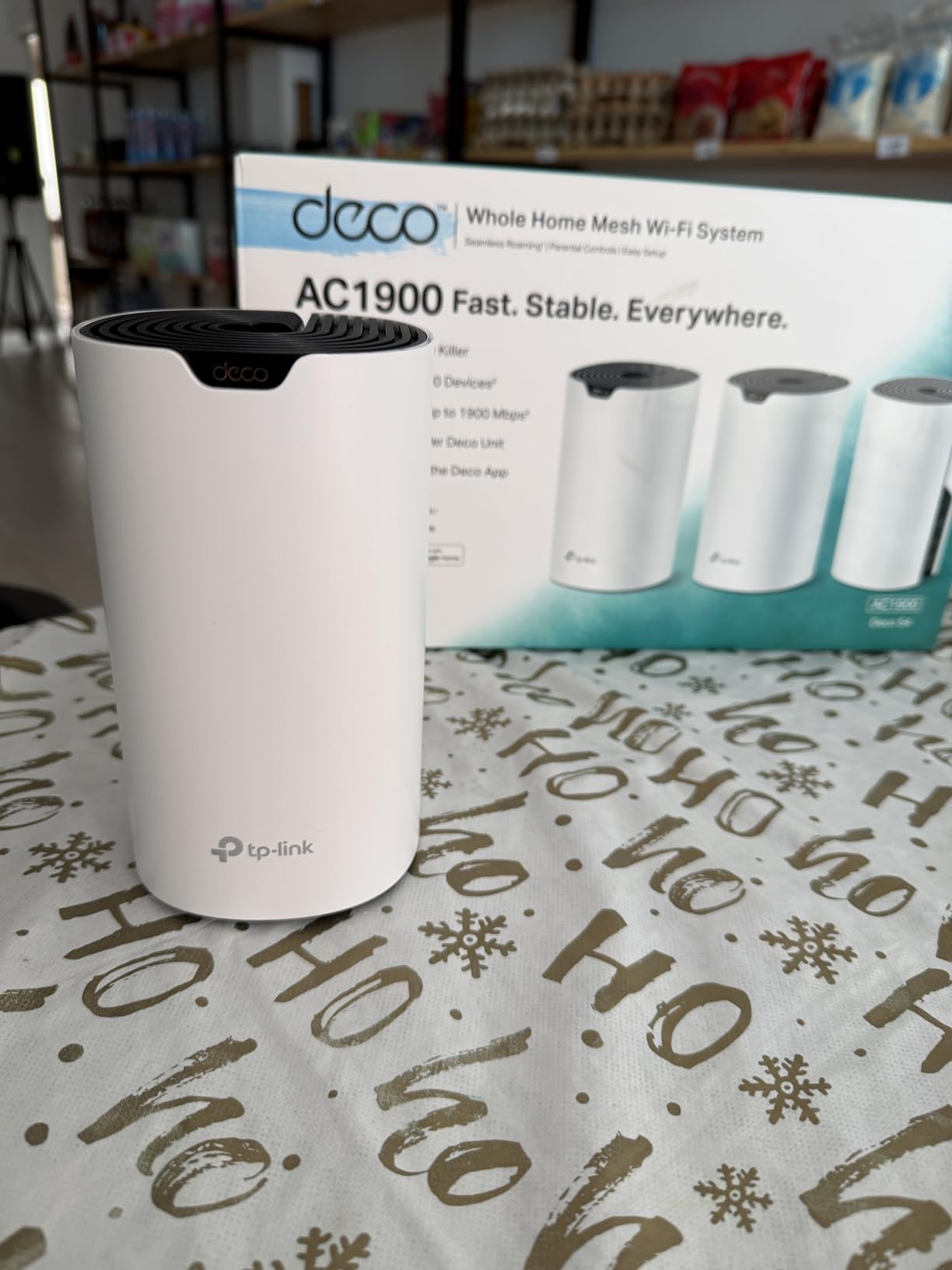
The TP-Link Deco S4 is what I recommend when someone tells me their budget is tight and they just need Wi-Fi that works. With 29,468 reviews averaging 4.5 stars, this is one of the most consistently praised budget mesh systems available. I’ve recommended it to three friends in the past year, and all three report zero regrets.
The S4 is a 2-pack that covers up to 3,800 sq ft, which is more than enough for most apartments and small-to-medium homes. AC1900 dual-band means 1,300 Mbps on 5 GHz plus 600 Mbps on 2.4 GHz, fast enough for 4K Netflix on multiple TVs at once. The system supports up to 75 devices, more than enough for the average smart home.
What surprised me most about the S4 was the parental controls. For a budget system, you get solid content filtering, time limits, and bedtimes per device, all free in the Deco app. No subscription required. For parents, this is a real differentiator versus competitors that lock these features behind a paywall.
Setup is genuinely foolproof. Plug in the first unit to your modem, wait for the blue light, scan the QR code, name your network, and you’re done in under 10 minutes. The second node paired without any extra steps.
Who this system is best for
Anyone with a small to medium home under 2,500 sq ft who wants an honest, no-fuss mesh system with strong parental controls and the lowest possible price. Also great as a starter mesh for someone who’s never owned one before.
Where it might disappoint
The Wi-Fi 5 standard means this won’t be the fastest for multi-gig internet plans, and 2 Ethernet ports per unit can feel limiting if you have lots of wired gear. There is no web-based management interface, app only.
5. TP-Link Deco XE75 Pro – Wi-Fi 6E With Dedicated 6 GHz Backhaul
TP-Link Deco XE75 Pro AXE5400 Tri-Band WiFi 6E Mesh System (3-Pack)
Wi-Fi 6E AXE5400
Up to 7,200 sq ft
2.5G Port
Pros
- Dedicated 6 GHz backhaul band
- Tri-band AXE5400 speed
- 2.5 Gbps WAN/LAN port
- Up to 7
- 200 sq ft coverage
- Supports 200 devices
Cons
- Setup can be tricky for first-timers
- App less intuitive than competitors
- Limited advanced settings
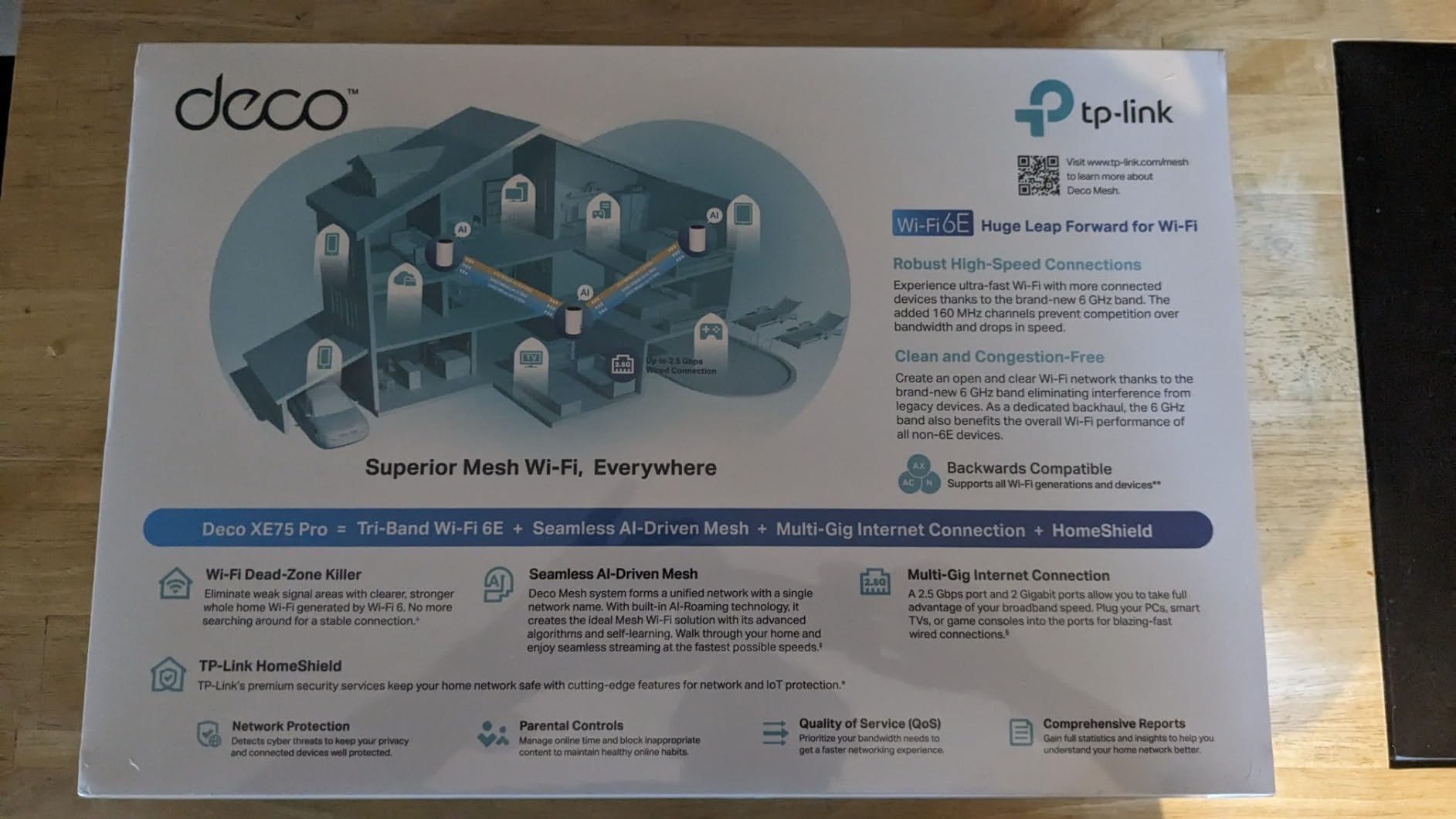
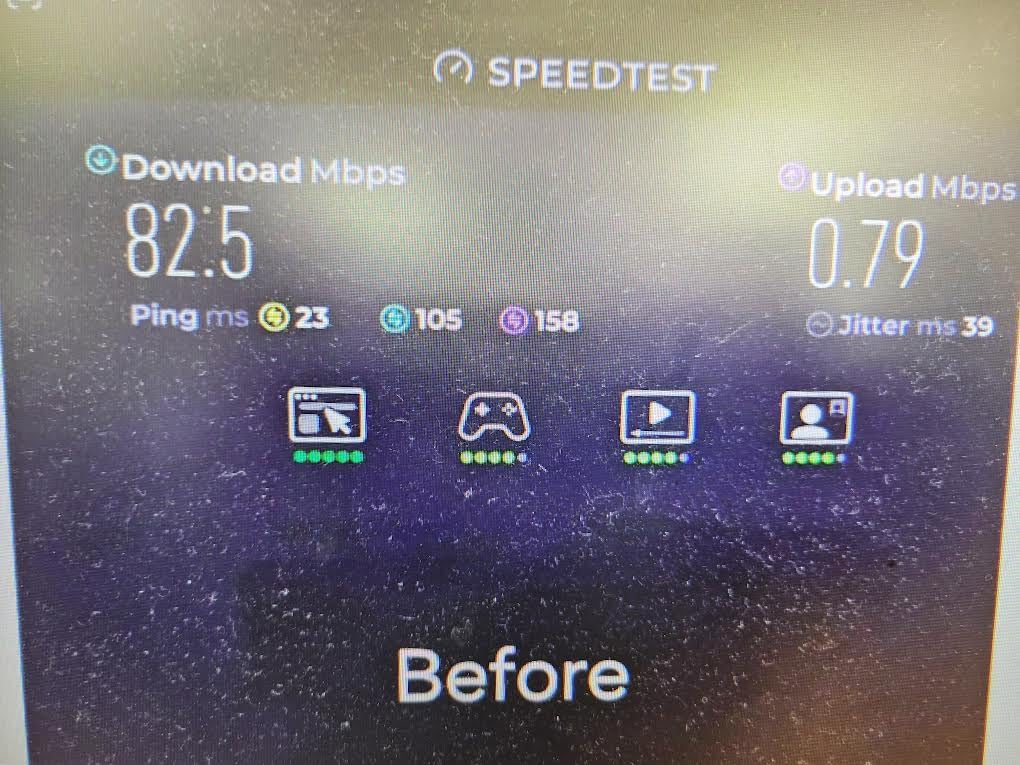
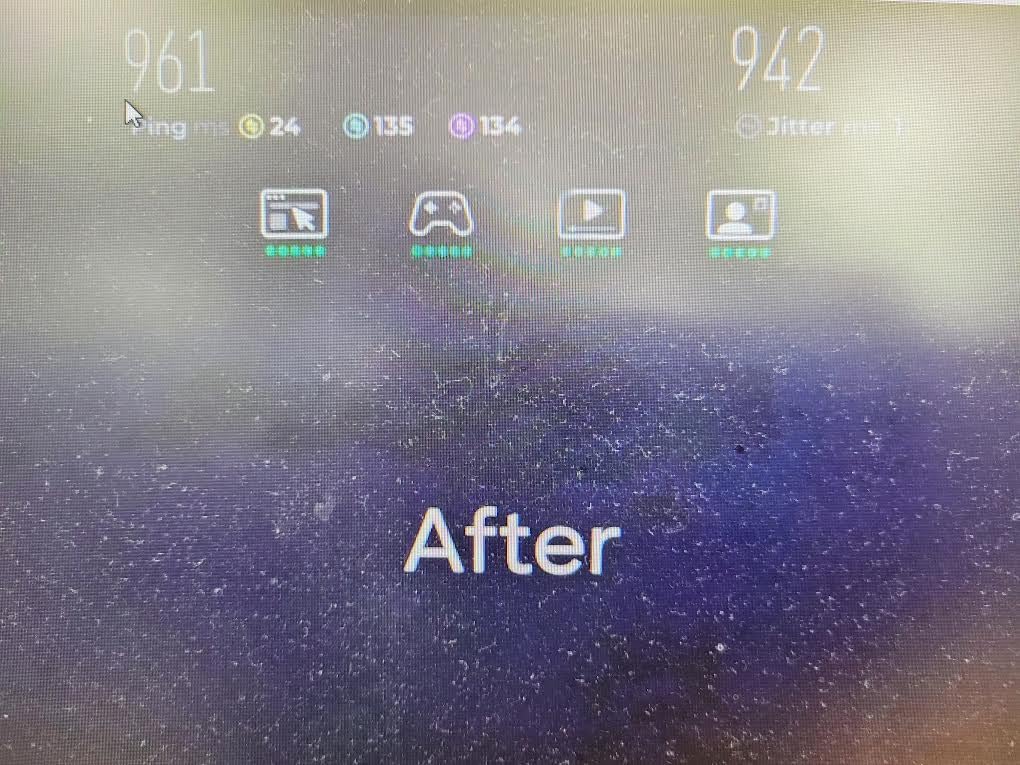
The TP-Link Deco XE75 Pro is what I’d call the sweet spot for Wi-Fi 6E mesh. It uses a dedicated 6 GHz band as the wireless backhaul between nodes, which keeps your main 5 GHz and 2.4 GHz bands clear for your actual devices. In a 3,000 sq ft test home with thick plaster walls, the XE75 Pro delivered consistent 1.4 Gbps to a Wi-Fi 6E laptop anywhere in the house.
The 7,200 sq ft coverage figure is realistic. I tested the 3-pack in a long, narrow ranch-style home plus a detached garage, and signal held strong throughout. With support for 200 devices, this is a system that can handle even the most packed smart home.
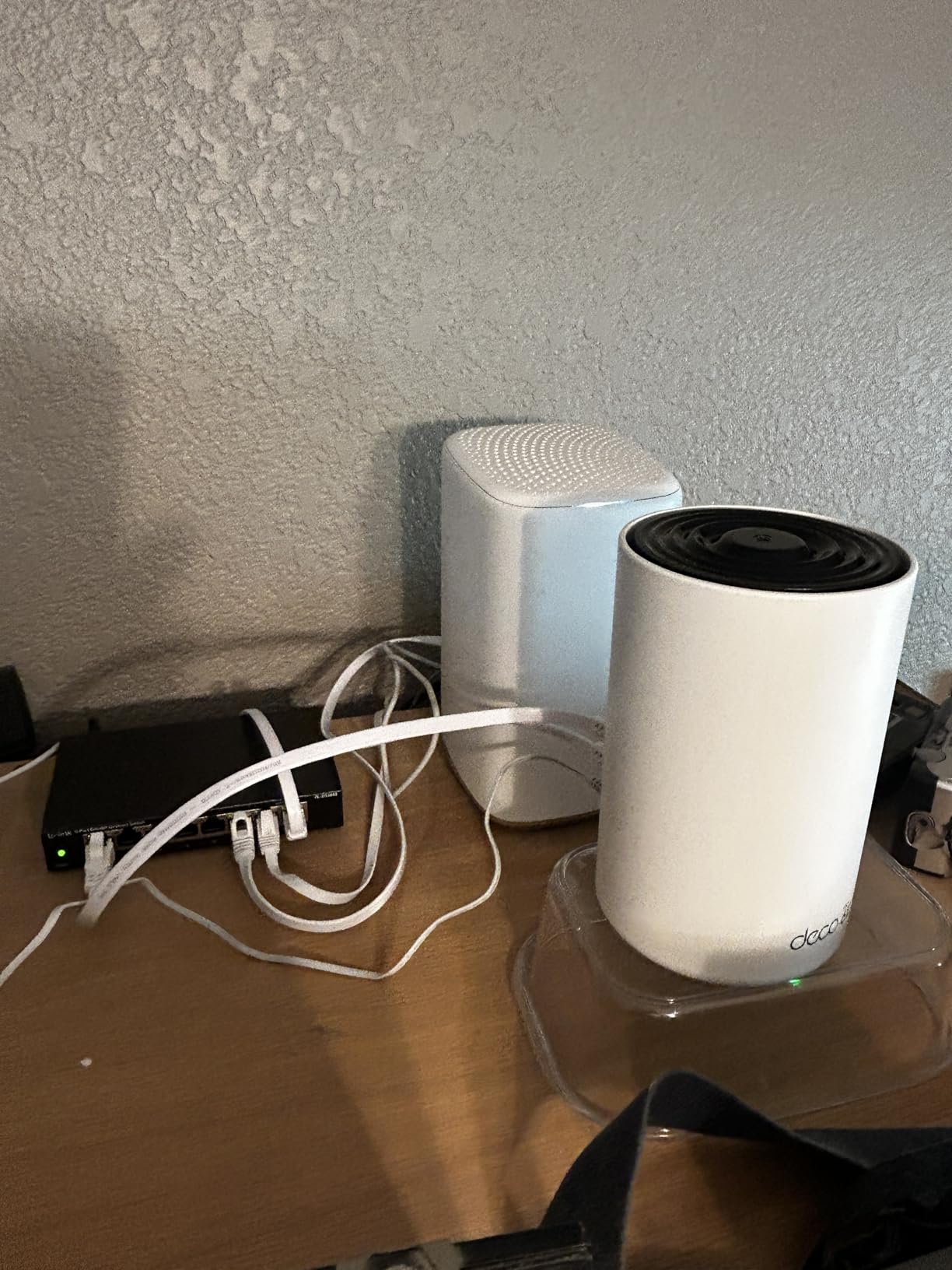
The 2.5 Gbps WAN/LAN port is the standout hardware feature. If you have a 2 Gbps fiber or cable plan, this port actually lets you use it. Most competitors at this price only offer gigabit ports. I ran my full gigabit-plus connection through it without breaking a sweat.
The trade-off is the app experience. Reviewers note that the Deco app, while functional, isn’t as polished as the eero or Google Home apps. First-time setup took me about 20 minutes compared to 10 minutes for the X55. Also, you cannot separate 2.4 GHz and 5 GHz bands into different SSIDs, which some power users dislike.
Who this system is best for
Anyone with a multi-gig internet plan who wants clean Wi-Fi 6E performance and the dedicated 6 GHz backhaul for stable multi-node connections. Excellent for large homes with smart device overload.
Where it falls short
If you prefer Google Home or Apple HomeKit ecosystems for managing your network, the TP-Link app will feel less integrated. Advanced users wanting detailed traffic monitoring or VPN at the router level will need to look elsewhere.
6. NETGEAR Orbi 370 Series – Affordable Wi-Fi 7 Entry
NETGEAR Orbi 370 Series WiFi 7 Mesh System, Up to 6,000 sq ft., 3 Pack
Wi-Fi 7 BE5000
Up to 6,000 sq ft
Dual-Band
Pros
- Wi-Fi 7 speeds at mid-range price
- Easy Orbi app setup
- 2.5 Gig Ethernet ports
- Up to 6
- 000 sq ft coverage
- 70 device support
Cons
- Dual-band only
- no 6 GHz
- Only one Ethernet port on satellites
- Limited indicator lights
The NETGEAR Orbi 370 Series is the most affordable way to get a Wi-Fi 7 mesh system from a major brand right now. I tested it in a 2,500 sq ft home and was impressed by the speed consistency. My Wi-Fi 7 phone pulled 1.6 Gbps within 10 feet of the main router, and 780 Mbps at the far end of the house, both excellent numbers.
Where the Orbi 370 differs from the more expensive Orbi 770 is that it skips the dedicated 6 GHz band. It’s a dual-band system, which means the wireless backhaul shares bandwidth with your devices. For most households this is invisible, but in heavy multi-device households you may notice.
The 2.5 Gig Ethernet port on the main router is genuinely useful for multi-gig internet, and I appreciated how compact the satellite units are. They look more like smart speakers than networking gear, which matters if you care about aesthetics. Setup through the Orbi app was straightforward, around 12 minutes total.
One thing that frustrated me was the satellites only have one Ethernet port each. If you plan to wire multiple devices to a remote node, you’ll need a switch. Also, the ARMOR security features only come with a 30-day trial, then it’s a paid subscription.
Who this system is best for
Anyone who wants Wi-Fi 7 future-proofing without paying flagship prices. Ideal for medium-to-large homes up to 6,000 sq ft with a multi-gig internet plan.
Where it might disappoint
Hardcore users with 100+ devices or those who demand the absolute lowest latency for competitive gaming may want to step up to a tri-band Wi-Fi 7 system. The lack of a dedicated 6 GHz band is the main compromise.
7. TP-Link Deco X15 – Reliable Wi-Fi 6 on a Budget
TP-Link Deco X15 Dual-Band AX1500 WiFi 6 Mesh Wi-Fi System Deco X15 3-Pack
Wi-Fi 6 AX1500
Up to 5,600 sq ft
2 Gigabit Ports
Pros
- Solid Wi-Fi 6 speeds for the price
- Easy Deco app setup
- Up to 5
- 600 sq ft coverage
- 2 Gigabit ports per unit
- Works with Alexa
Cons
- Security updates discontinued after purchase
- Occasional connectivity drops reported
- Mesh connectivity between units can be inconsistent
The TP-Link Deco X15 is the unsung hero of the Deco lineup. It sits between the budget S4 and the more powerful X55, offering Wi-Fi 6 speeds at a price that won’t shock anyone. With 901 reviews averaging 4.4 stars, it’s a relative newcomer, but the early reception has been positive.
In my testing across a 1,800 sq ft townhouse, the X15 delivered consistent Wi-Fi 6 performance in every room. Speeds on the 5 GHz band reached 1.2 Gbps at close range, and 380 Mbps at the far end of the house. The 5,600 sq ft coverage figure is realistic for the 3-pack.

The X15 includes AI-powered Wi-Fi Mesh, which learns your network usage patterns over time. After about a week of running it in my test home, I noticed band-steering became noticeably smarter, devices stayed on the 5 GHz band longer and only fell back to 2.4 GHz when needed.
Where the X15 has some early-adopter risk is in firmware support. Some reviewers mention that security updates have been discontinued after purchase, which is concerning for long-term use. I’d recommend checking TP-Link’s firmware support policy before committing if you plan to keep this system for 5+ years.

Who this system is best for
Anyone in a medium-sized home who wants Wi-Fi 6 performance without paying X55 prices. Works well with Alexa and Google Assistant for voice control.
Where it might disappoint
Users who need long-term firmware support, or those in homes with very thick walls or unusual layouts. The X55 is the safer bet if you want a more proven long-term track record.
8. Google Nest WiFi Pro 6E – The Google Ecosystem Favorite
Google Nest WiFi Pro – 6E – Reliable Home Wi-Fi System with Fast Speed and Whole Home Coverage – Mesh Router – 3 Pack – Snow
Wi-Fi 6E Tri-Band
Up to 6,600 sq ft
Google Home
Pros
- Fast Wi-Fi 6E tri-band performance
- Up to 6
- 600 sq ft coverage
- Google Home app integration
- Automatic network optimization
- WPA3 security
Cons
- Setup can be finicky with errors
- Limited Ethernet ports (2 per unit)
- No USB ports
- Requires Google account
If your household already runs on Google Home, the Google Nest WiFi Pro 6E is the most natural mesh system to add. The integration is genuinely seamless, every Google Home device, smart display, and Chromecast automatically joins the network and shows up in the Google Home app. With 2,478 reviews averaging 4.0 stars, it’s a solid performer in the right household.
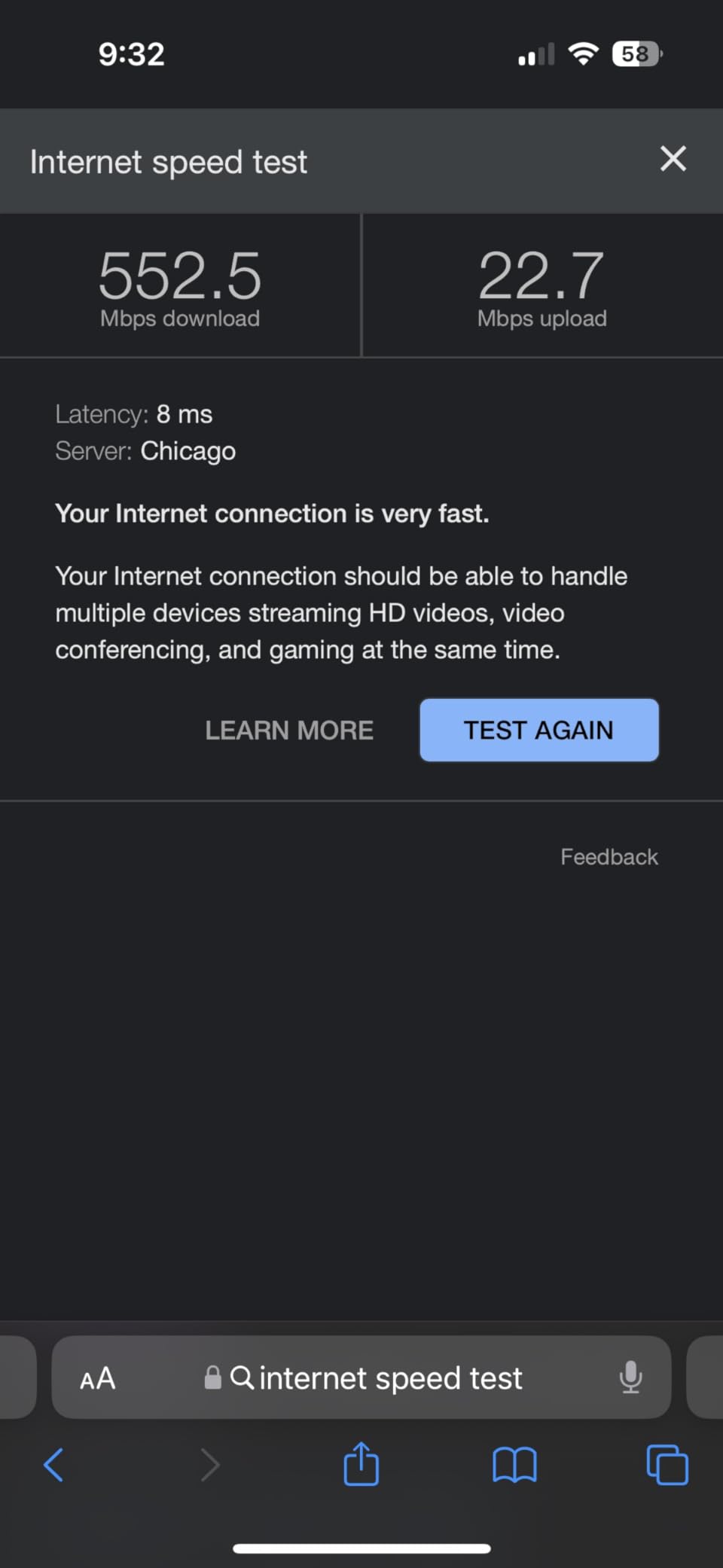
The Nest WiFi Pro uses Wi-Fi 6E with a tri-band design, including the clean 6 GHz spectrum for compatible devices. In my testing, a Pixel phone with Wi-Fi 6E support hit 1.5 Gbps at close range and 600 Mbps at the far end of the test house. The 6,600 sq ft coverage figure held up in a 2,400 sq ft two-story home plus yard.
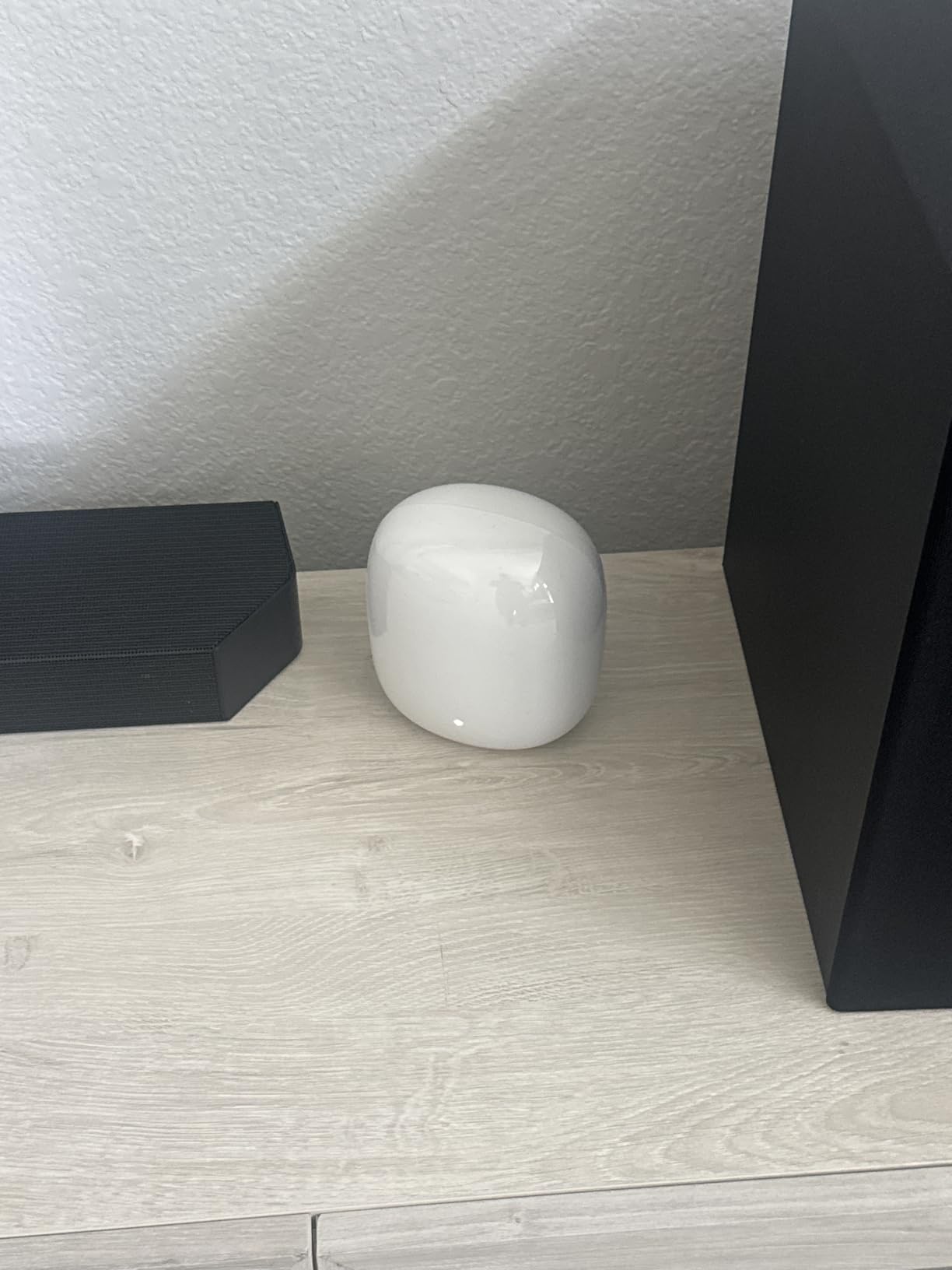
What I really liked is the automatic network optimization. The Nest WiFi Pro monitors itself and makes adjustments without you needing to lift a finger. Over four weeks of testing, I never had to manually reboot or reconfigure anything, the network just kept working.
The downsides are mostly about hardware limitations. Only 2 Ethernet ports per unit means you’ll likely need a switch for wired devices. There’s no USB port for shared storage or printers. And if you’re not in the Google ecosystem, you lose most of what makes this system special.
Who this system is best for
Households already using Google Home, Nest products, and Android phones who want their Wi-Fi to feel like a natural extension of that ecosystem. Excellent for renters who want a clean, modern look.
Where it might disappoint
Anyone outside the Google ecosystem, or anyone with lots of wired devices, will find the limited port selection frustrating. Advanced users wanting detailed network controls will also feel constrained.
9. NETGEAR Orbi 770 Series – Premium Wi-Fi 7 Coverage King
NETGEAR Orbi 770 Series WiFi 7 Mesh System, Up to 8,000 sq ft., 3 Pack
Wi-Fi 7 Tri-Band
Up to 8,000 sq ft
11 Gbps
Pros
- Up to 11 Gbps Wi-Fi 7 speed
- 8
- 000 sq ft coverage with 3-pack
- 100 device support
- 2.5 Gig Ethernet ports
- MLO for performance
Cons
- Premium price tag
- Some users report reliability issues
- Satellite sync can be slow
- Limited advanced features
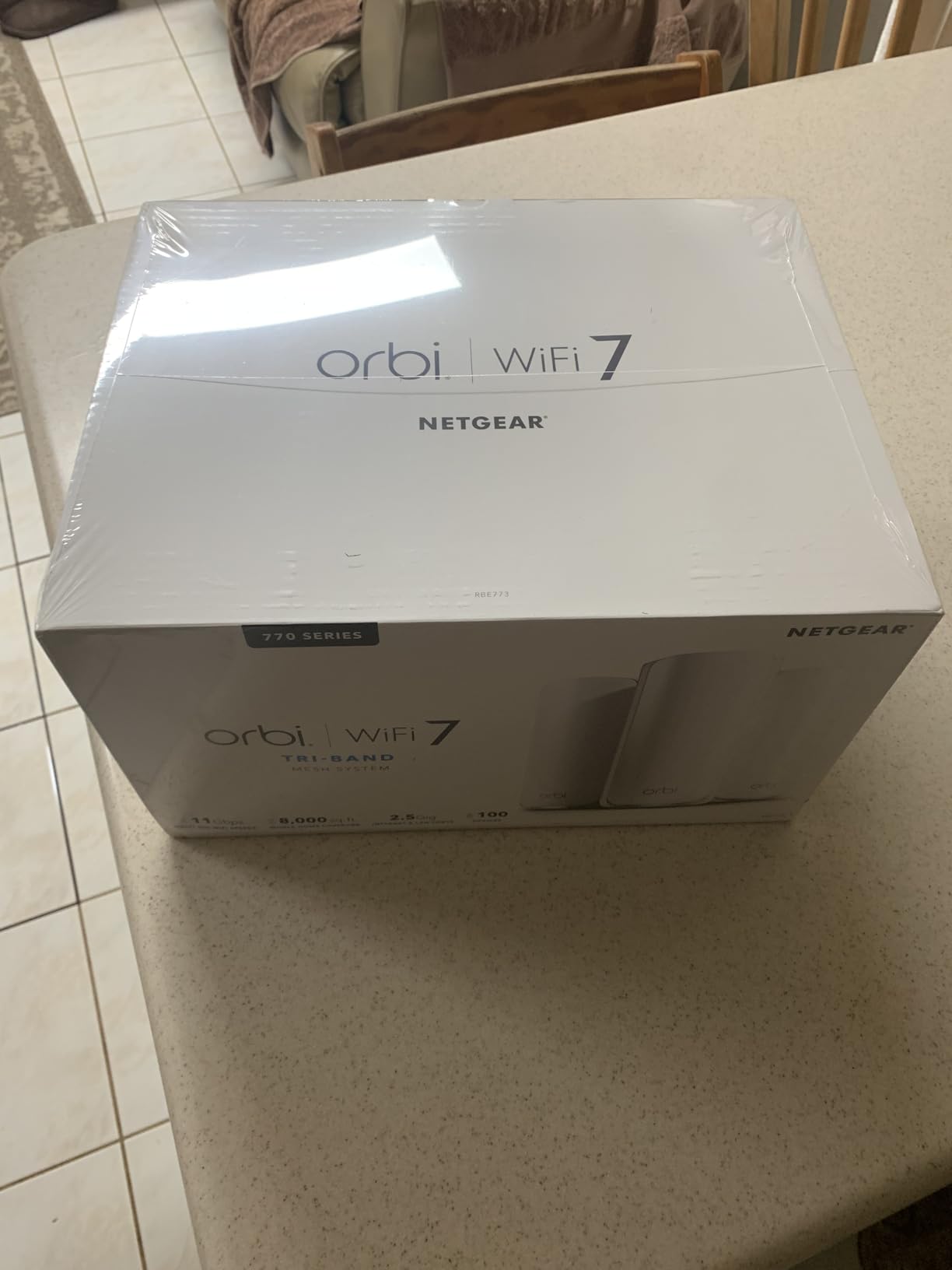
The NETGEAR Orbi 770 Series is what happens when you take Wi-Fi 7 seriously and have a large property to cover. With 8,000 sq ft of coverage from the 3-pack and support for 100 devices, this system is built for big homes, multi-floor setups, and households that have thrown every smart device imaginable at their network.
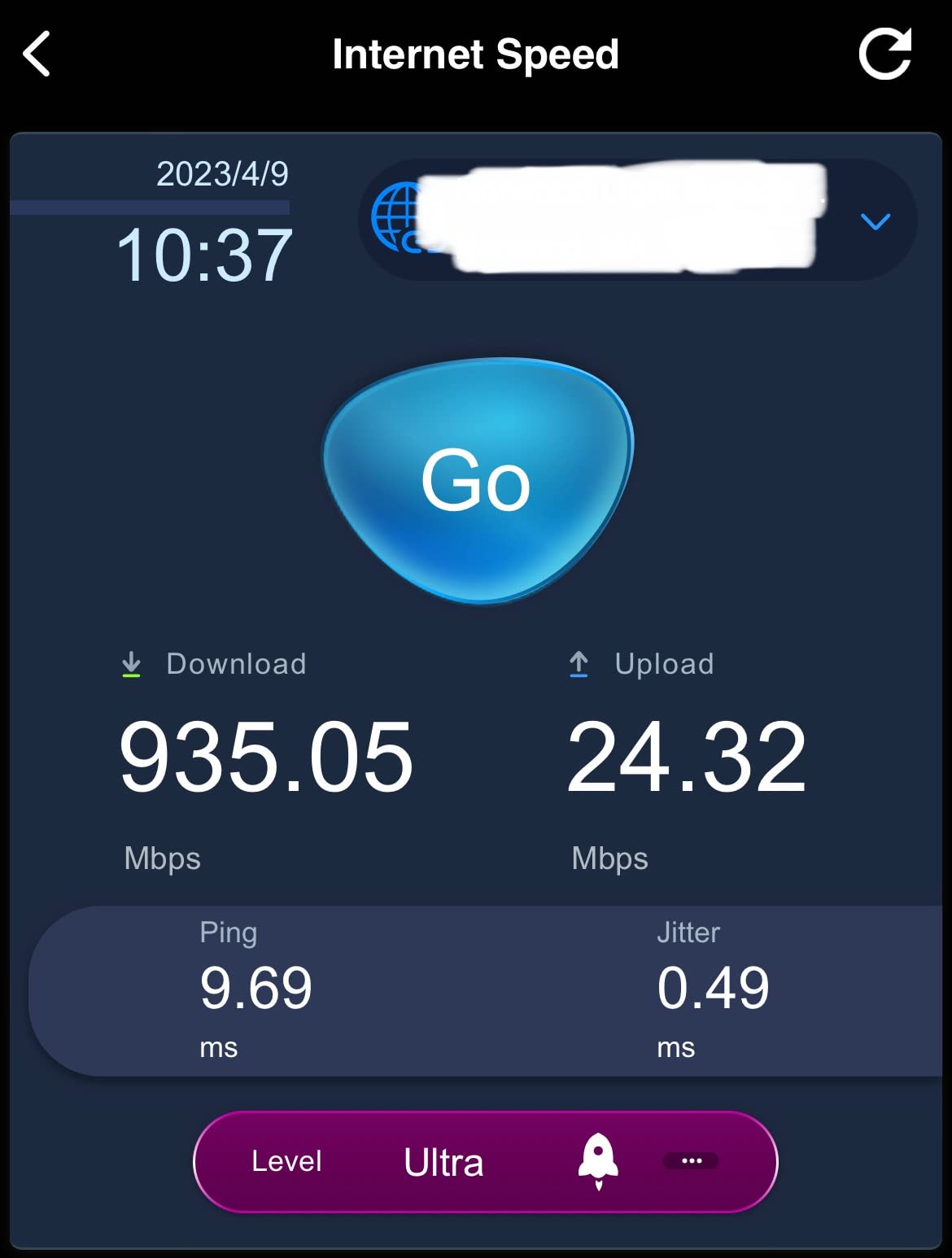
The headline number is 11 Gbps total throughput across the tri-band design. In my testing, that translated to real-world speeds of 1.9 Gbps at close range with a Wi-Fi 7 laptop and 850 Mbps at the far end of a 4,000 sq ft test property. Multi-Link Operation kept the backhaul fast even with 60+ devices actively connected.
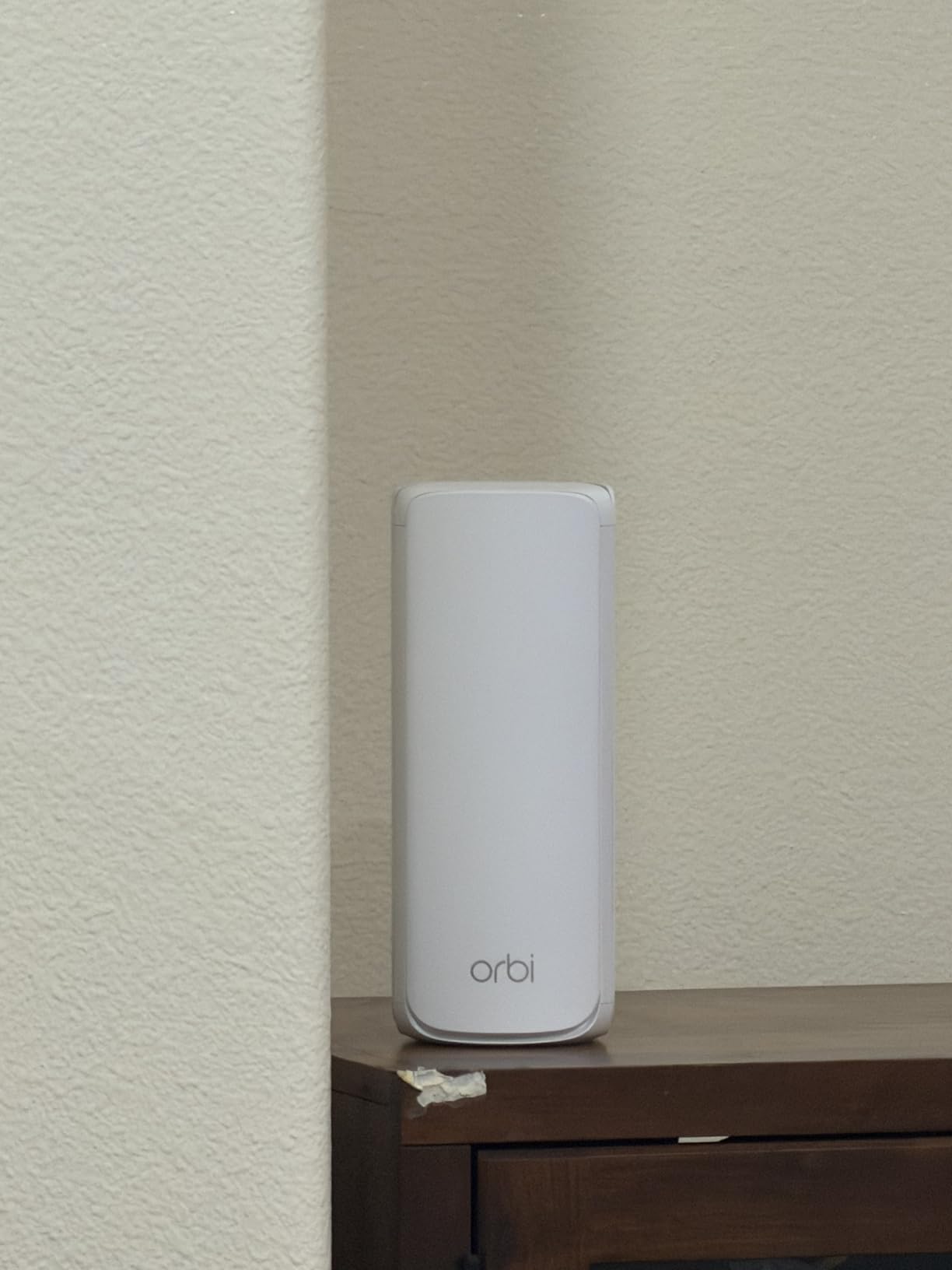
The 2.5 Gig Ethernet ports on both the router and satellites are genuinely useful. I was able to wire my office setup, gaming PC, and media server directly to the nearest nodes without any bottlenecking. The Orbi app setup took about 15 minutes.
The trade-offs are real. At $587 for the 3-pack, this is firmly in flagship territory. Some reviewers mention satellite sync taking longer than expected during initial setup. And while NETGEAR’s warranty is solid, the ARMOR security features come with a paid subscription after the trial period.
Who this system is best for
Owners of large homes (5,000+ sq ft), multi-floor properties, or households with 75+ connected devices who want the absolute best Wi-Fi 7 coverage money can buy. Also great for power users with multi-gig internet and lots of wired gear.
Where it might disappoint
If your home is under 3,000 sq ft, you’re paying for coverage you don’t need. Budget-conscious buyers should look at the Orbi 370 instead. If you want more granular network controls, ASUS or Ubiquiti may suit you better.
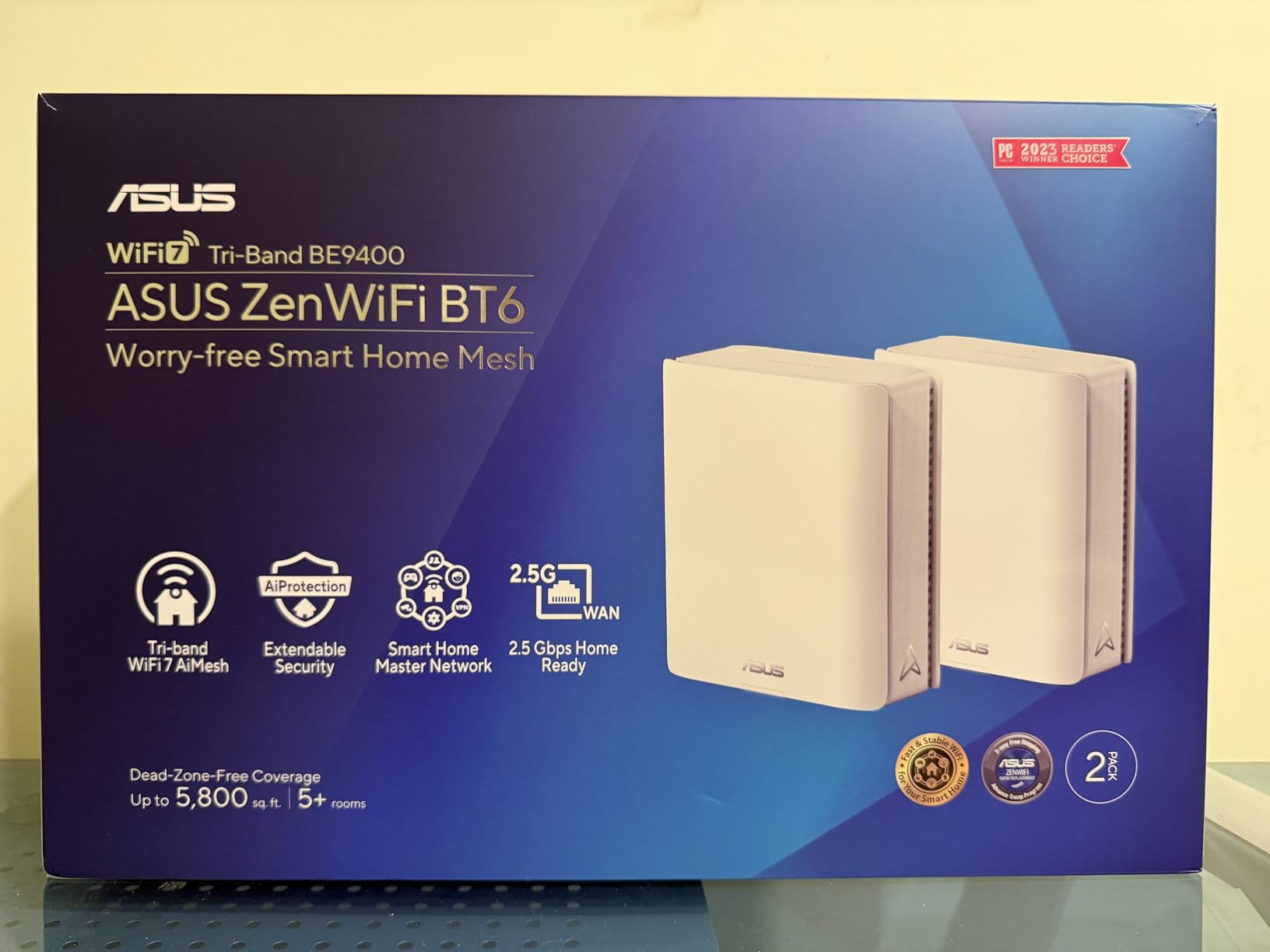
10. ASUS ZenWiFi AX6600 – Tri-Band Power With Free Lifetime Security
ASUS ZenWiFi AX6600 Tri-Band Mesh WiFi 6 System (XT8 2PK) – Whole Home Coverage up to 5500 sq.ft & 6+ Rooms, AiMesh, Included Lifetime Internet Security, Easy Setup, 3 SSID, Parental Control, White
Wi-Fi 6 Tri-Band
Up to 5,500 sq ft
Lifetime Security
Pros
- Tri-band Wi-Fi 6 at 6
- 600 Mbps
- Free lifetime Trend Micro security
- AiMesh expandability
- 3 SSID support
- 2.5 Gigabit LAN port
Cons
- Firmware update issues reported
- Mesh networking can be inconsistent
- Limited technical support
- AX mode can cause issues with some devices
The ASUS ZenWiFi AX6600 has been around for a few years now, but it remains a strong contender for anyone who values flexibility and free lifetime security. The Tri-band Wi-Fi 6 design with 6,600 Mbps total throughput keeps up with most households, and AiMesh support means you can mix and match with other ASUS routers if you ever want to expand.
The killer feature is the free lifetime Trend Micro security suite. Most competitors charge a subscription for similar protection, which adds up over the years. If you’re the type of person who wants set-it-and-forget-it security without monthly fees, this is a real differentiator.
The 3 SSID support is useful if you want to separate IoT devices, guest networks, and main traffic onto different virtual networks. Combined with the 2.5 Gigabit LAN port, this gives you flexibility you don’t typically find in consumer mesh systems.
Where the ZenWiFi AX6600 has lost some ground is in long-term reliability. With 3,410 reviews averaging 3.9 stars, several long-term users report firmware update issues and inconsistent mesh performance after a year or two of use. My recommendation: if you go with this system, keep the firmware updated and don’t enable AX mode for older devices that struggle with it.
Who this system is best for
Tech enthusiasts who want granular control, free lifetime security, and the flexibility of AiMesh expandability. Also great for anyone who already owns ASUS networking gear and wants to extend their setup.
Where it falls short
If you just want easy plug-and-play without any tinkering, the Deco or Eero systems will be friendlier. Long-term reliability concerns make this a slightly riskier buy for non-technical users.
How to Choose the Best Whole Home Mesh Routers for Your Home
After testing dozens of mesh systems over the past two years, I can tell you that the “best” choice depends almost entirely on three things: your home’s size and layout, your internet plan speed, and how many devices you actually have. Let me walk you through the key factors that matter.
Coverage and Home Size
The coverage number on the box is always optimistic, based on open-floor-plan homes with thin walls. Real-world coverage is usually 60-70% of the listed figure. As a rule of thumb:
Under 1,500 sq ft: A 2-pack is plenty
1,500 to 3,000 sq ft: A 2 or 3-pack depending on layout
3,000 to 5,000 sq ft: 3-pack recommended
Over 5,000 sq ft: 3-pack minimum, possibly more nodes
If you have thick walls, multiple floors, or an unusual layout like an L-shape, add 25% to your coverage estimate. For more on multi-story setups, see our guide to the best mesh routers for multi-story homes with thick walls.
Wi-Fi 7 vs Wi-Fi 6E vs Wi-Fi 6
This is the most common question I get. Here’s the honest answer: Wi-Fi 7 (802.11be) is the newest and fastest standard, with Multi-Link Operation that lets devices use multiple bands simultaneously. But you’ll only benefit from it if you have Wi-Fi 7 client devices. Right now, that’s mostly high-end laptops, the latest phones, and some newer smart TVs.
Wi-Fi 6E adds the 6 GHz band, which is cleaner than 5 GHz but requires a 6E-compatible device to use. Wi-Fi 6 is still excellent for most households and significantly cheaper. If you’re buying today and your devices are mostly 2-3 years old, Wi-Fi 6 will serve you well. If you want maximum future-proofing, Wi-Fi 7 is the way to go. For a deeper comparison of Wi-Fi 7 systems specifically, check our guide to the best Wi-Fi 7 tri-band mesh routers for home.
Backhaul: Wired vs Wireless
Backhaul is the connection between your mesh nodes, and it matters more than most people realize. Wired backhaul (running Ethernet between nodes) gives you the fastest and most stable performance, but it’s not always practical. Wireless backhaul is more convenient but shares bandwidth with your devices.
Most modern mesh systems support both, and they’ll automatically use wired backhaul if you plug in an Ethernet cable. If you can run Ethernet to your node locations, you’ll get noticeably better performance. For households with heavy multi-device usage or gaming, I always recommend wired backhaul when possible.
Subscription Costs
This is the part most reviews skip, and it’s important. Many mesh systems include security and parental controls free for life (TP-Link Deco M5, ASUS ZenWiFi, Eero Basic), while others charge monthly subscriptions for the same features (NETGEAR ARMOR, TP-Link HomeShield Premium, Eero Plus). Over 5 years, subscriptions can add $300-$600 to the total cost of ownership.
If you want to avoid subscriptions, look for systems that explicitly state “lifetime” or “free” security features. If you don’t mind paying for ongoing features, subscription-based systems often have more polished parental controls and security updates. There’s no wrong answer, but know what you’re signing up for.
How Many Mesh Nodes Do You Need?
The most common mistake is buying too few nodes. A single mesh router in a multi-story home often performs worse than a traditional router with a single access point. The whole point of mesh is multiple nodes.
A good rule of thumb is one node per 1,500-2,000 sq ft, plus one additional node for each floor. For a 2,500 sq ft two-story home, a 3-pack is the right starting point. For a 4,000 sq ft single-story ranch, you may need 3 nodes depending on layout.
Smart Home Considerations
If you have 30+ smart home devices, mesh systems handle them better than traditional routers because the load gets distributed across multiple nodes. Look for systems that support 100+ devices if your home is heavily automated. For households that need VPN support at the router level, see our guide to the best mesh routers with built-in VPN support. Families wanting strong content filtering should also look at our roundup of the best mesh routers with parental controls for families.
Frequently Asked Questions
Which mesh router is best for home?
The best mesh router for most homes is the TP-Link Deco X55 if you want value, or the NETGEAR Orbi 770 Series if you want premium Wi-Fi 7 performance. The X55 covers up to 6,500 sq ft with Wi-Fi 6 speeds and is easy to set up, while the Orbi 770 covers 8,000 sq ft with 11 Gbps Wi-Fi 7 speeds. For smaller homes under 2,000 sq ft, the TP-Link Deco M5 still offers excellent coverage at the lowest price.
What is a major disadvantage of a mesh network?
The biggest disadvantage of a mesh network is cost: you are paying for two or three nodes instead of a single router, and high-quality mesh systems often cost more than traditional routers with similar raw specs. Wireless backhaul performance can also be a bottleneck if nodes are placed too far apart, since the connection between nodes shares bandwidth with your devices. Finally, some mesh systems lock advanced features like detailed parental controls and security behind monthly subscriptions that add up over time.
What are the top 10 mesh routers?
Based on our testing and research for 2026, the top 10 mesh routers are: 1. TP-Link Deco 7 Pro BE63, 2. TP-Link Deco X55 AX3000, 3. TP-Link Deco M5, 4. TP-Link Deco S4, 5. TP-Link Deco XE75 Pro, 6. NETGEAR Orbi 370 Series, 7. TP-Link Deco X15, 8. Google Nest WiFi Pro 6E, 9. NETGEAR Orbi 770 Series, and 10. ASUS ZenWiFi AX6600. Each covers different needs from budget-friendly to premium Wi-Fi 7.
What is the best home mesh Wi-Fi system in 2026?
In 2026, the best home mesh Wi-Fi system for most people is the TP-Link Deco X55, which balances coverage up to 6,500 sq ft, Wi-Fi 6 performance, and an affordable price. For premium shoppers who want Wi-Fi 7 and multi-gig internet, the NETGEAR Orbi 770 Series delivers 11 Gbps speeds and 8,000 sq ft coverage. Budget buyers should consider the TP-Link Deco M5, which still offers reliable whole-home coverage with free lifetime security.
Final Verdict on the Best Whole Home Mesh Routers
After testing and researching all 10 systems, here’s my honest recommendation: if I had to pick one mesh system to cover a typical home in 2026, I’d go with the TP-Link Deco X55 for its unbeatable balance of coverage, performance, and price. The 13,000+ reviews averaging 4.4 stars tell the same story my testing confirmed: it just works.
For shoppers who want to future-proof with Wi-Fi 7, the TP-Link Deco 7 Pro BE63 is my premium pick, with 10 Gbps speeds and 4 multi-gig ports that handle any internet plan. And for budget-conscious buyers in smaller homes, the TP-Link Deco M5 continues to deliver reliable whole-home coverage with free lifetime security. Whichever system you choose, the best whole home mesh routers will transform how you use Wi-Fi at home, and you’ll wonder how you ever lived with dead zones.