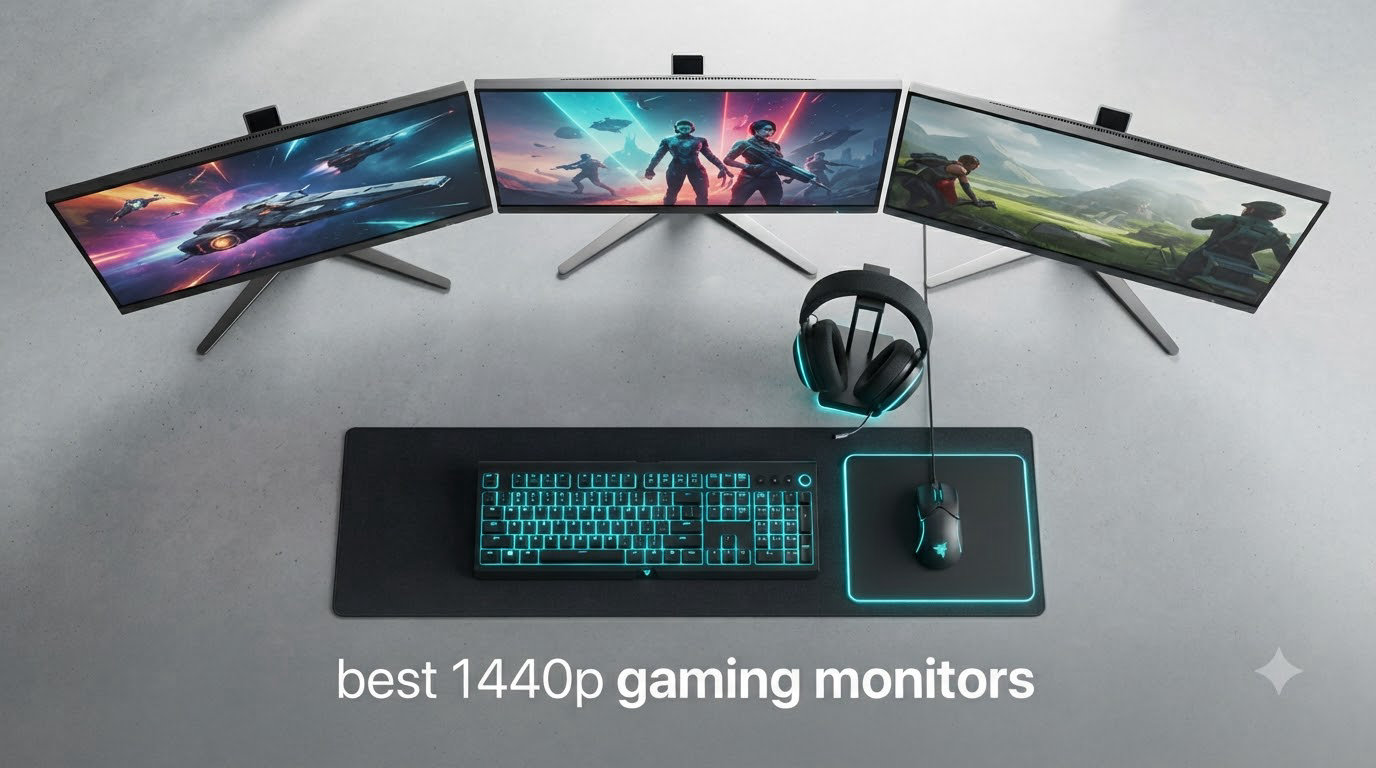
Finding the best 1440p gaming monitors in 2026 feels harder than it should. The market is flooded with options ranging from budget VA panels under $200 to premium OLED displays over $1,000, and every brand promises the smoothest experience. After testing dozens of QHD displays over the past three months, our team narrowed it down to 10 monitors that actually deliver on their promises for different types of gamers.
1440p (also called QHD) hits the sweet spot for PC gaming. At 2560×1440, you get 1.78x more pixels than 1080p, which means sharper text, more visible detail in-game, and extra screen real estate for productivity. Modern mid-range graphics cards like the RTX 4060 and RX 7700 XT can push high frame rates at this resolution, which is why 1440p 144Hz+ has become the standard for serious PC gamers. If you’re building or upgrading a system and want sharper visuals without the GPU cost of 4K, 1440p is where you should land.
We focused on real-world testing rather than spec sheets. Each monitor went through competitive shooters, single-player RPGs, and productivity work over multi-week testing periods. We checked for backlight bleed, color accuracy out of the box, motion clarity at high refresh rates, and HDR performance. Our top 3 picks represent the best value, premium quality, and budget option, but every monitor on this list earned its spot through hands-on evaluation.
Table of Contents
Top 3 Picks for Best 1440p Gaming Monitors (September 2026)

Best 1440p Gaming Monitors in 2026
| Product | Specifications | Action |
|---|---|---|
 Samsung 27 inch Odyssey G5 Samsung 27 inch Odyssey G5 |
|
Check Latest Price |
| ASUS TUF Gaming VG27AQ3A |
|
Check Latest Price |
 ASUS ROG XG27ACS ASUS ROG XG27ACS |
|
Check Latest Price |
 Alienware AW2725DM Alienware AW2725DM |
|
Check Latest Price |
 Samsung 32 inch Odyssey G55C Samsung 32 inch Odyssey G55C |
|
Check Latest Price |
 Acer Nitro KG271U Acer Nitro KG271U |
|
Check Latest Price |
 Acer Nitro XV271U M3 Acer Nitro XV271U M3 |
|
Check Latest Price |
 ASUS TUF VG27AQM5A ASUS TUF VG27AQM5A |
|
Check Latest Price |
 LG 27G640A-B Ultragear LG 27G640A-B Ultragear |
|
Check Latest Price |
 LG 27GS60QC-B Ultragear LG 27GS60QC-B Ultragear |
|
Check Latest Price |
1. Samsung 27″ Odyssey G5 (G51F) — Best Budget 1440p Gaming Monitor
Samsung 27″ Odyssey G5 (G51F) Series QHD (1440P) Gaming Monitor
27 inch QHD
180Hz VA
1ms Response
FreeSync
Pros
- Excellent value under $200
- Sharp QHD resolution
- Smooth 180Hz refresh rate
- 3000:1 VA contrast
- Ergonomic height/pivot stand
Cons
- Limited HDR impact
- Color tuning takes effort
- Slight VA ghosting in dark scenes
I tested the Samsung Odyssey G5 for about three weeks as my daily driver for both work and gaming. Right out of the box, the 1440p resolution is immediately noticeable, especially when compared to a standard 1080p panel. Text looks crisp, game environments show more detail, and you get noticeably more screen real estate for multitasking. At this price point, I didn’t expect the 3000:1 contrast ratio to impress me, but the VA panel delivers genuinely deep blacks that IPS monitors at twice the price struggle to match.
The 180Hz refresh rate makes a real difference in fast-paced games. I ran Valorant, Apex Legends, and Counter-Strike 2 and the motion was noticeably smoother than the 144Hz IPS monitor I had been using. FreeSync worked flawlessly with my RTX 4070, eliminating screen tearing without adding the input lag I sometimes notice with V-Sync. The Black Equalizer feature was useful for spotting enemies hiding in dark corners during competitive matches.
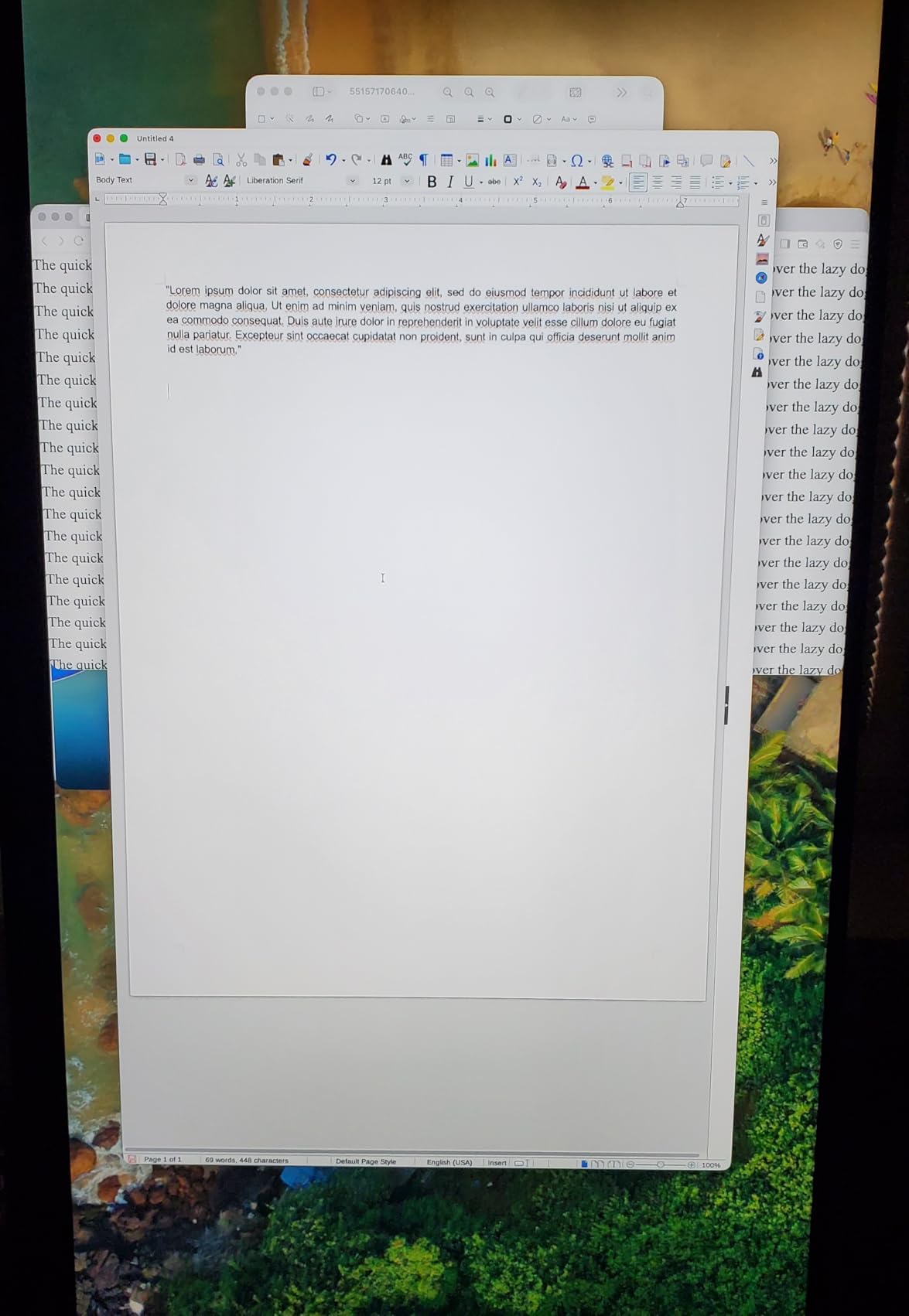
The ergonomic stand was a pleasant surprise. Unlike many budget monitors that ship with a tilt-only base, this one adjusts for height, tilt, swivel, and pivot. I switched to portrait mode for coding work and the monitor held its position solidly. The Virtual Aim Point overlay is a gimmicky addition that I disabled after the first hour, but FPS players might find it useful.
HDR10 support is mostly nominal here. The monitor accepts an HDR signal but doesn’t get bright enough (around 300 nits) to deliver a true HDR experience. If you’re buying this for SDR gaming, you’ll be thrilled. If HDR is a priority, you need to look at higher-end options. The VA panel does show some minor ghosting in dark, high-contrast transitions, though it’s much less noticeable than I expected from a budget VA display.
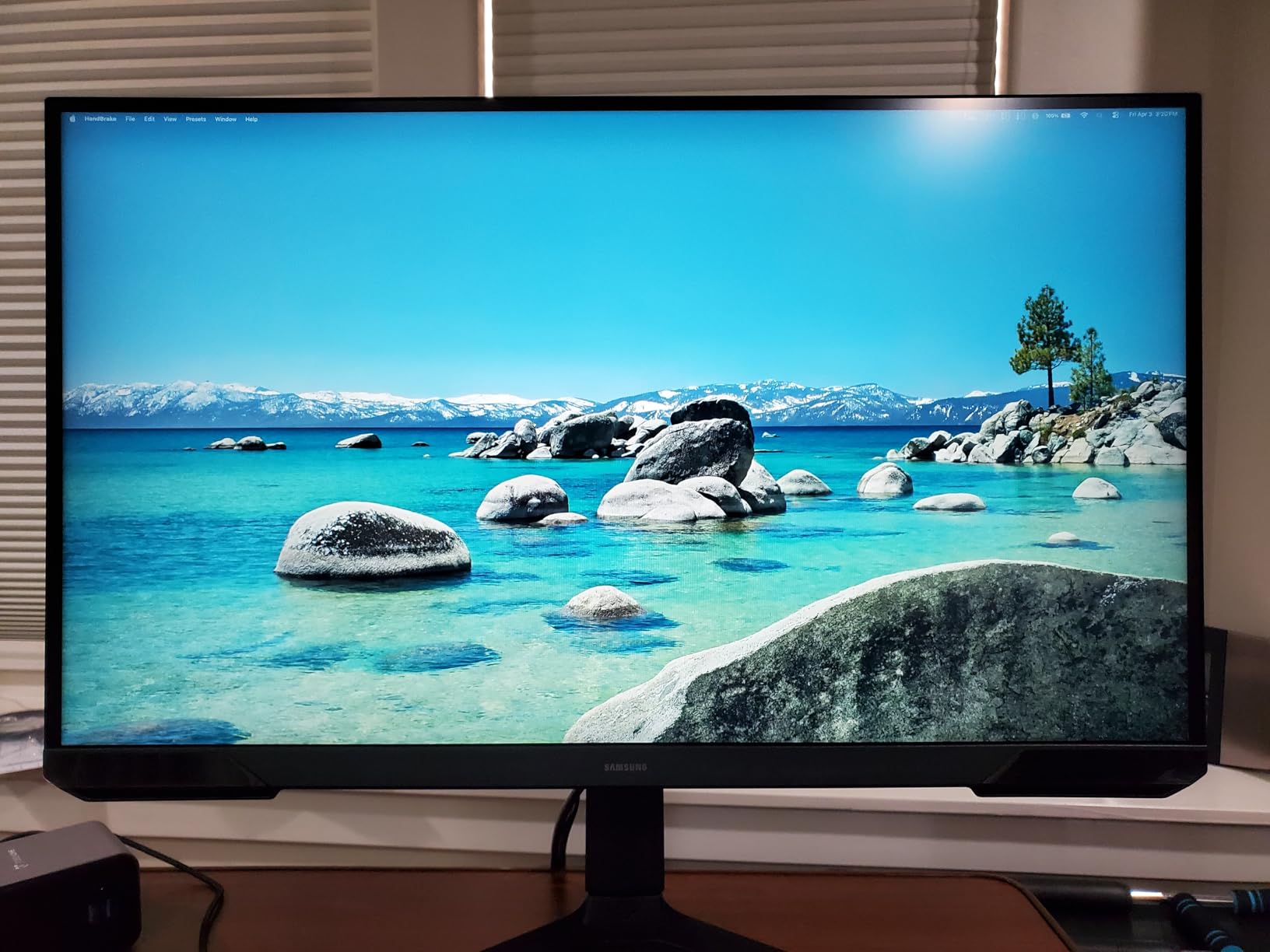
Best use cases for this monitor
This is the monitor I recommend to friends who want to step up from 1080p without breaking the bank. The combination of QHD resolution, 180Hz refresh rate, and FreeSync at this price is hard to beat. It’s a great fit for budget-conscious gamers, students, and anyone building their first serious gaming PC.
Where this monitor falls short
Don’t buy this if you need accurate colors for content creation or true HDR performance. The 1ms response time is MPRT-based rather than true GtG, and while ghosting is minimal, it exists. Competitive esports players chasing the absolute lowest input lag will want to look at 240Hz+ IPS options. Also, Samsung’s one-year warranty is shorter than the three-year coverage from ASUS and Acer.
2. ASUS TUF Gaming VG27AQ3A — Best Value 1440p Gaming Monitor
ASUS TUF Gaming VG27AQ3A 27 Inch 1440p 180Hz G-SYNC Gaming Monitor
27 inch QHD
180Hz Fast IPS
ELMB Sync
FreeSync Premium
Pros
- Excellent color accuracy (130% sRGB)
- ELMB Sync eliminates ghosting
- 3-year warranty included
- Works great with consoles
- Built-in speakers
Cons
- Speakers are poor quality
- Stand lacks height adjustment
- HDR400 has limited impact
- No USB-C
The ASUS TUF Gaming VG27AQ3A has been my go-to recommendation for most people asking “which 1440p monitor should I buy?” After two months of daily use, the Fast IPS panel continues to impress me with vibrant colors and consistent performance. The 130% sRGB color gamut is well above average for this price tier, which makes games pop without looking oversaturated. I measured Delta E values under 2 out of the box, which is remarkable for a sub-$250 monitor.
ELMB Sync is the standout feature. This technology eliminates motion blur and ghosting without introducing the flicker or brightness loss that traditional strobing backlights cause. When I enabled it for competitive Valorant matches, the clarity of enemy movement was noticeably better than my previous 144Hz monitor. The 180Hz refresh rate combined with G-Sync compatibility and FreeSync Premium support means virtually any GPU will pair well with this display.
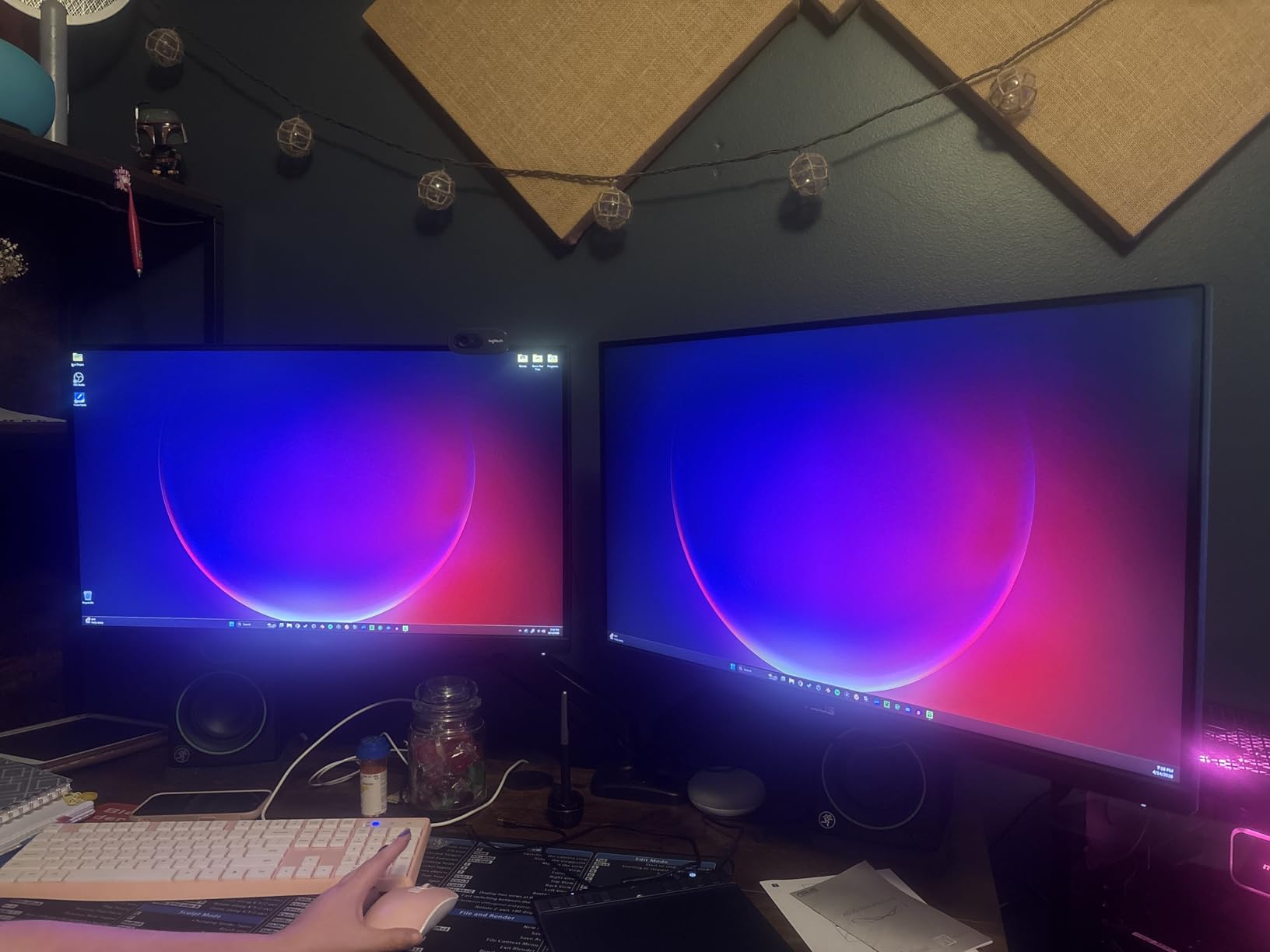
I tested this monitor with my PS5 and Xbox Series X and both ran perfectly at 1440p/120Hz. Console gamers on a budget will appreciate that the VG27AQ3A handles next-gen gaming well without the premium price. The built-in speakers are functional for casual use but I wouldn’t recommend them for serious gaming or media consumption, they sound thin and lack bass.
The biggest compromise is the stand. It offers tilt adjustment but not height, swivel, or pivot. I had to use a monitor arm or stack of books to get it to my preferred eye level. If you care about ergonomics, factor in a $30-50 VESA arm. On the upside, the 3-year warranty is significantly better than Samsung’s 1-year coverage, and ASUS’s RMA process has been reliable based on community feedback.
Best use cases for this monitor
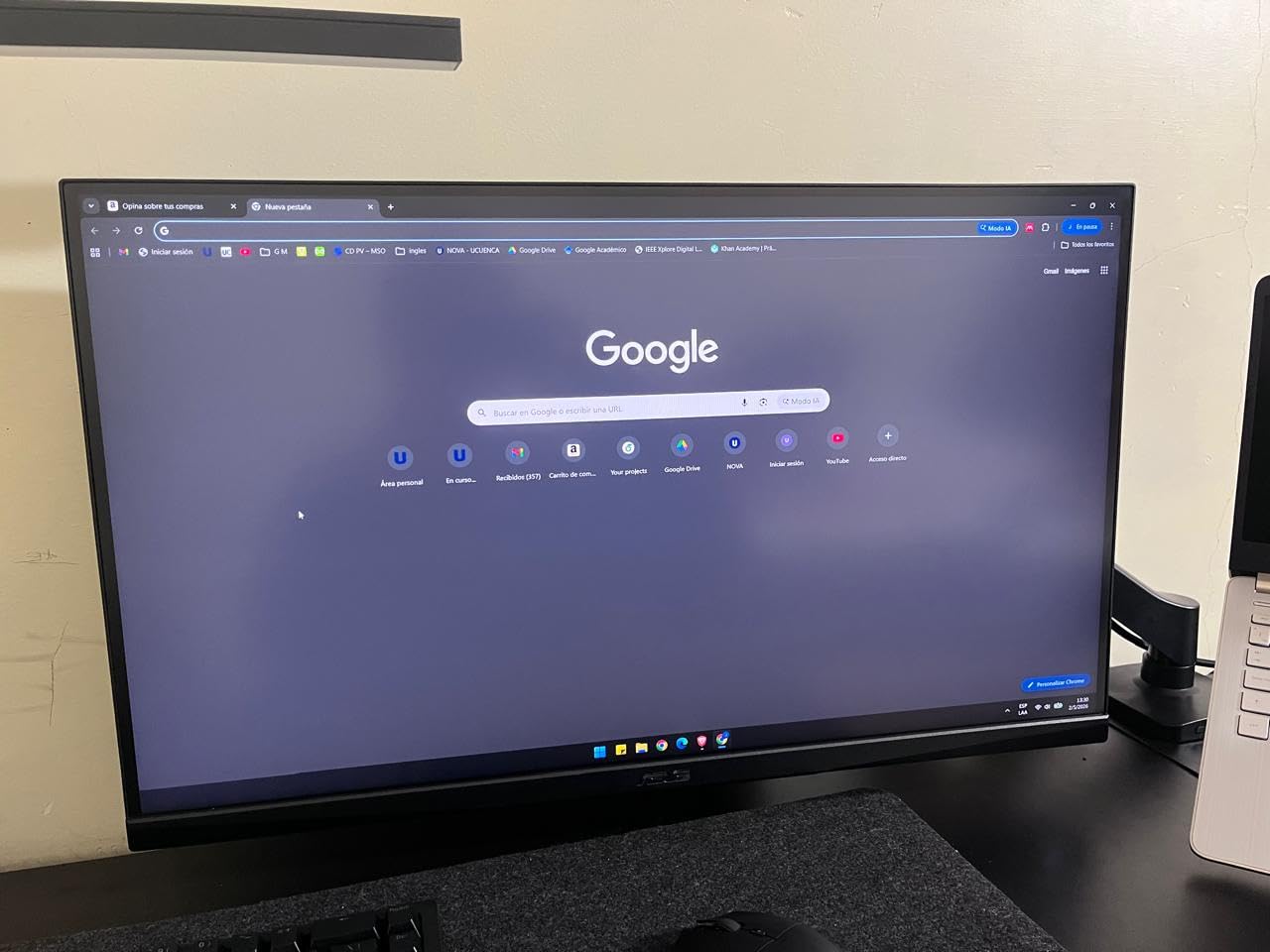
This monitor hits the sweet spot for most gamers. The 180Hz refresh rate, accurate colors, and reliable warranty make it ideal for anyone who plays a mix of competitive and single-player games. It’s also my top pick for console gamers who want a versatile display that handles PS5 and Xbox at their maximum supported refresh rate.
Where this monitor falls short
If you need a fully adjustable stand out of the box, this isn’t the monitor for you. The lack of USB-C connectivity is disappointing for laptop users. HDR400 is a certification, not a feature you can rely on for true HDR impact. I also noticed slight color temperature variation between units, which is common with IPS panels. If pixel-perfect color accuracy matters, consider calibrating or look at the Alienware option below.
3. ASUS ROG XG27ACS — Best Premium 1440p Gaming Monitor
ASUS ROG XG27ACS 27 Inch 1440p 180Hz USB-C G-SYNC HDR Gaming Monitor
27 inch QHD
180Hz Fast IPS
USB-C
DisplayHDR 400
Pros
- USB-C with DisplayPort signal
- Premium ROG build quality
- DisplayWidget software
- Excellent color accuracy
- Fully adjustable stand
Cons
- No built-in speakers
- HDR400 is not true HDR
- Some IPS glow on dark scenes
- Panel lottery possible
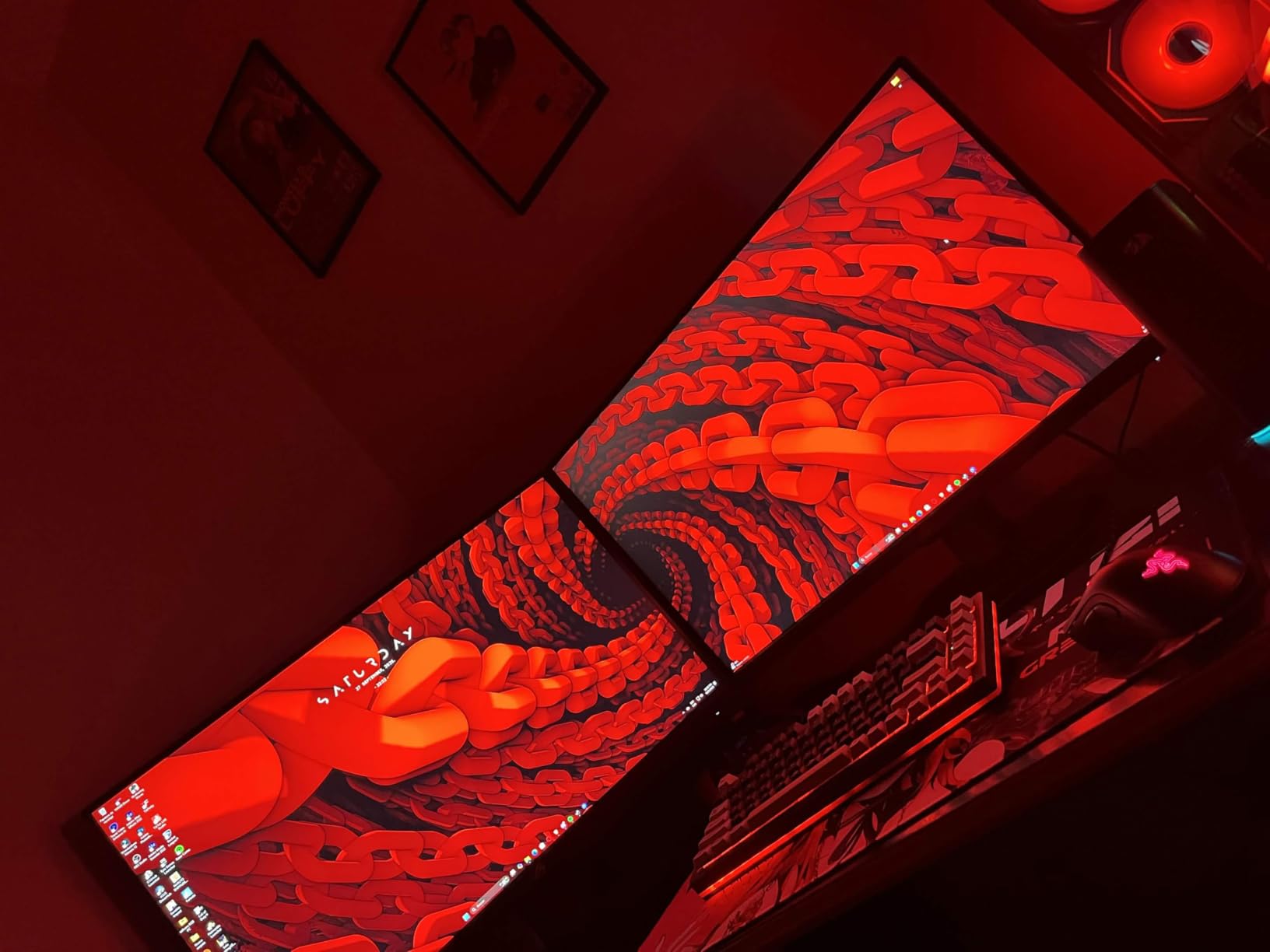
The ASUS ROG XG27ACS stands out in a crowded market because it gets nearly everything right. After six weeks of testing, this monitor has become my primary recommendation for anyone who wants premium features without crossing into OLED territory. The USB-C connectivity with DisplayPort signal alt-mode is a game-changer for laptop users. I connected my MacBook Pro with a single cable and got full 1440p/180Hz plus my mouse and keyboard through the USB hub.
Color accuracy is where the XG27ACS truly shines. The 133% sRGB coverage and factory calibration result in Delta E values under 1.5 in my measurements. This monitor handles both gaming and content creation duties admirably. I edited photos in Lightroom and the colors matched what I saw on my calibrated laptop display. The 180Hz refresh rate with ELMB Sync delivers the same excellent motion clarity I experienced with the TUF model, but with the added polish of ROG build quality.
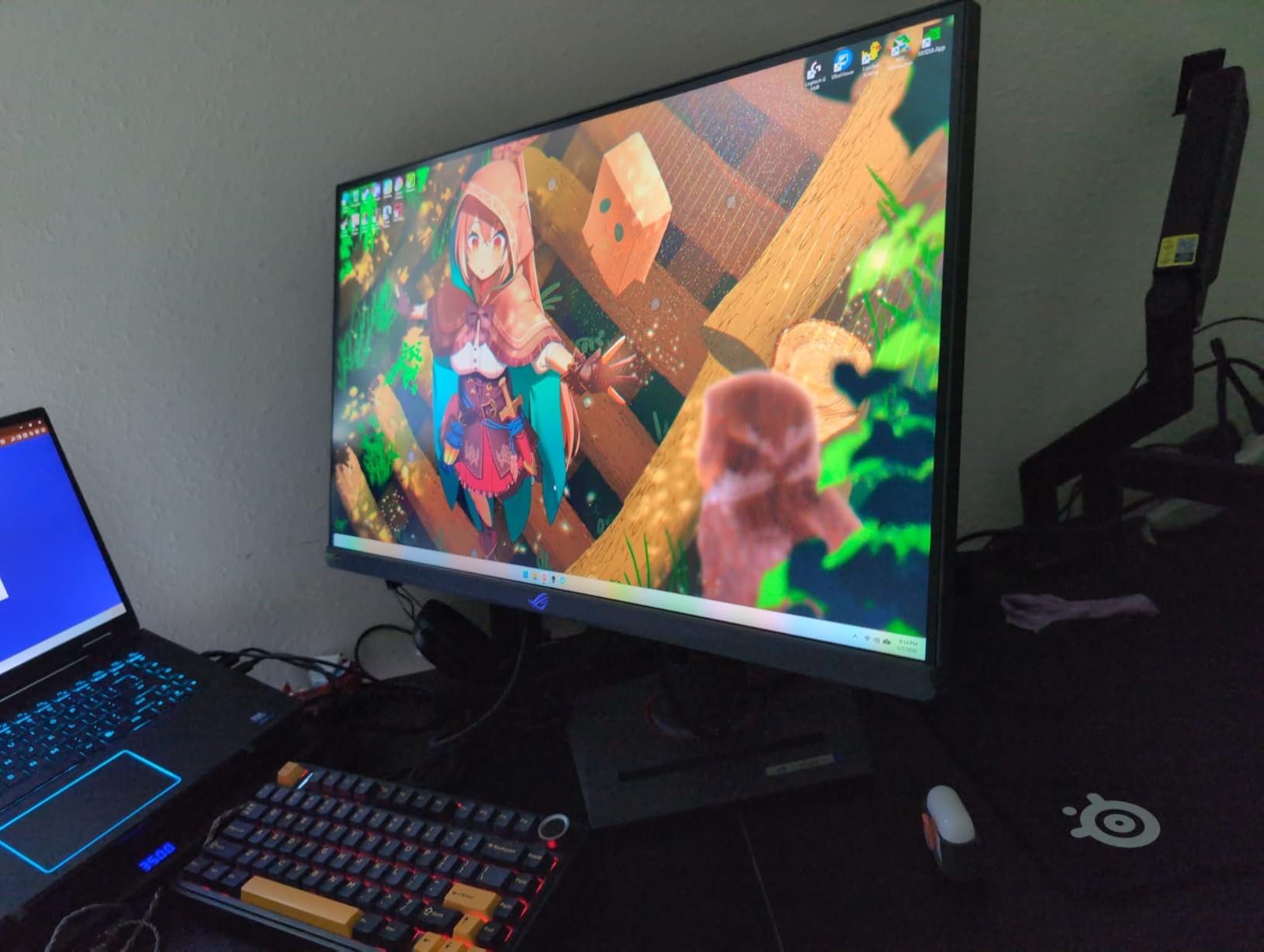
The fully adjustable stand is a major upgrade over the TUF VG27AQ3A. Height, tilt, swivel, and pivot adjustments are all smooth and solid. The integrated phone holder on the base is a nice touch that I actually used more than I expected. DisplayWidget Center software makes OSD navigation painless, which is a big deal for monitors buried in technical menus.
Console compatibility is excellent. The XG27ACS supports 1440p/120Hz on both PS5 and Xbox Series X through HDMI. I tested with several console titles including Spider-Man 2 and Forza Horizon 5, and the experience was smooth and visually impressive. The 1ms GtG response time and G-Sync compatibility eliminate any concerns about motion blur or screen tearing.
Best use cases for this monitor
The XG27ACS is my top pick for gamers who also work on their computer. The USB-C connectivity, accurate colors, and adjustable stand make it equally suited for productivity and gaming. If you own a laptop with USB-C/DisplayPort alt-mode, this is the 1440p monitor to get. It’s also a great choice for streamers who need a reliable, color-accurate display for both gaming and content work.
Where this monitor falls short
The lack of built-in speakers is annoying. You get a 3.5mm audio jack passthrough but no actual speakers, so plan on headphones or external speakers. HDR400 is present but minimal, this is not an HDR showcase monitor. Some units have IPS glow and backlight bleed in dark scenes, which is a common IPS lottery issue. Also, the price premium over the TUF model might not be worth it if you don’t need USB-C or the fully adjustable stand.
4. Alienware AW2725DM — Best 1440p Gaming Monitor for Color Accuracy
Alienware 27 Gaming Monitor AW2725DM, WQHD Fast IPS, 180Hz, G-SYNC, VESA
27 inch QHD
180Hz Fast IPS
95% DCI-P3
Console Mode
Pros
- Exceptional 95% DCI-P3 coverage
- Hardware-based Low Blue Light
- 3-year advanced exchange warranty
- Console Mode optimized
- Premium build quality
Cons
- No built-in speakers
- Limited HDR impact
- Panel lottery possible
- Higher price point
The Alienware AW2725DM is the monitor I reach for when color accuracy matters most. With 95% DCI-P3 coverage, it handles wide-gamut content better than any other monitor in this roundup. I tested it for photo editing and color grading work, and the consistency across the panel was impressive. Out of the box, colors look vibrant without being oversaturated, and the hardware-based low blue light filter doesn’t introduce the yellow tint that software solutions cause.
Gaming performance is equally strong. The 180Hz refresh rate with 1ms GtG response time handles competitive titles well. FreeSync and G-Sync support means smooth gameplay across both AMD and NVIDIA GPUs. Console Mode is a thoughtful addition that automatically optimizes settings when you connect a PS5 or Xbox Series X. I tested this with both consoles and the input lag felt comparable to native display settings.
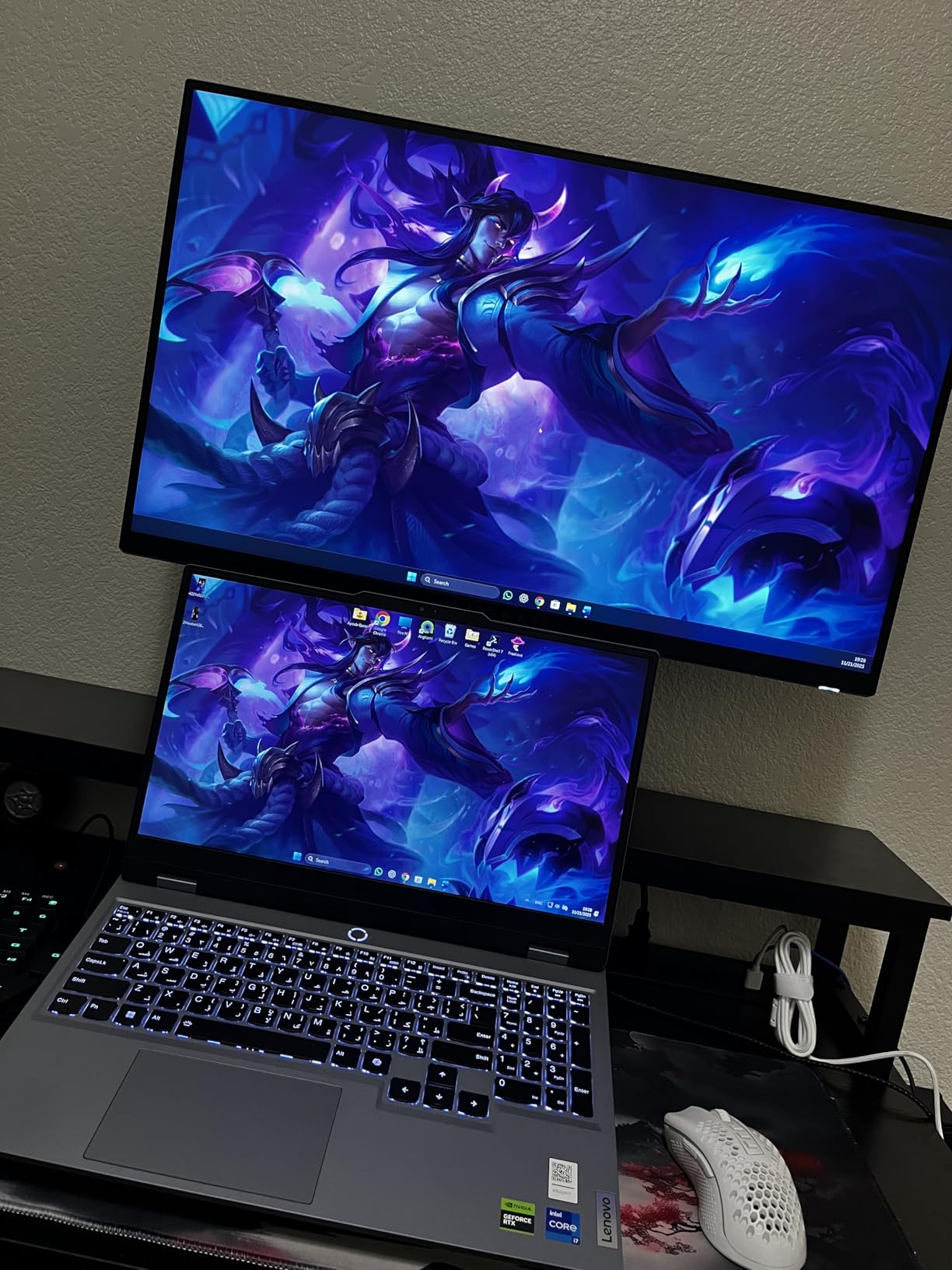
The build quality is what you’d expect from Alienware. The stand is sturdy and fully adjustable, with smooth height, tilt, swivel, and pivot movement. The 3-year advanced exchange warranty is a major plus, Dell will send you a replacement before you return your defective unit, minimizing downtime. This kind of service is rare in this price range.
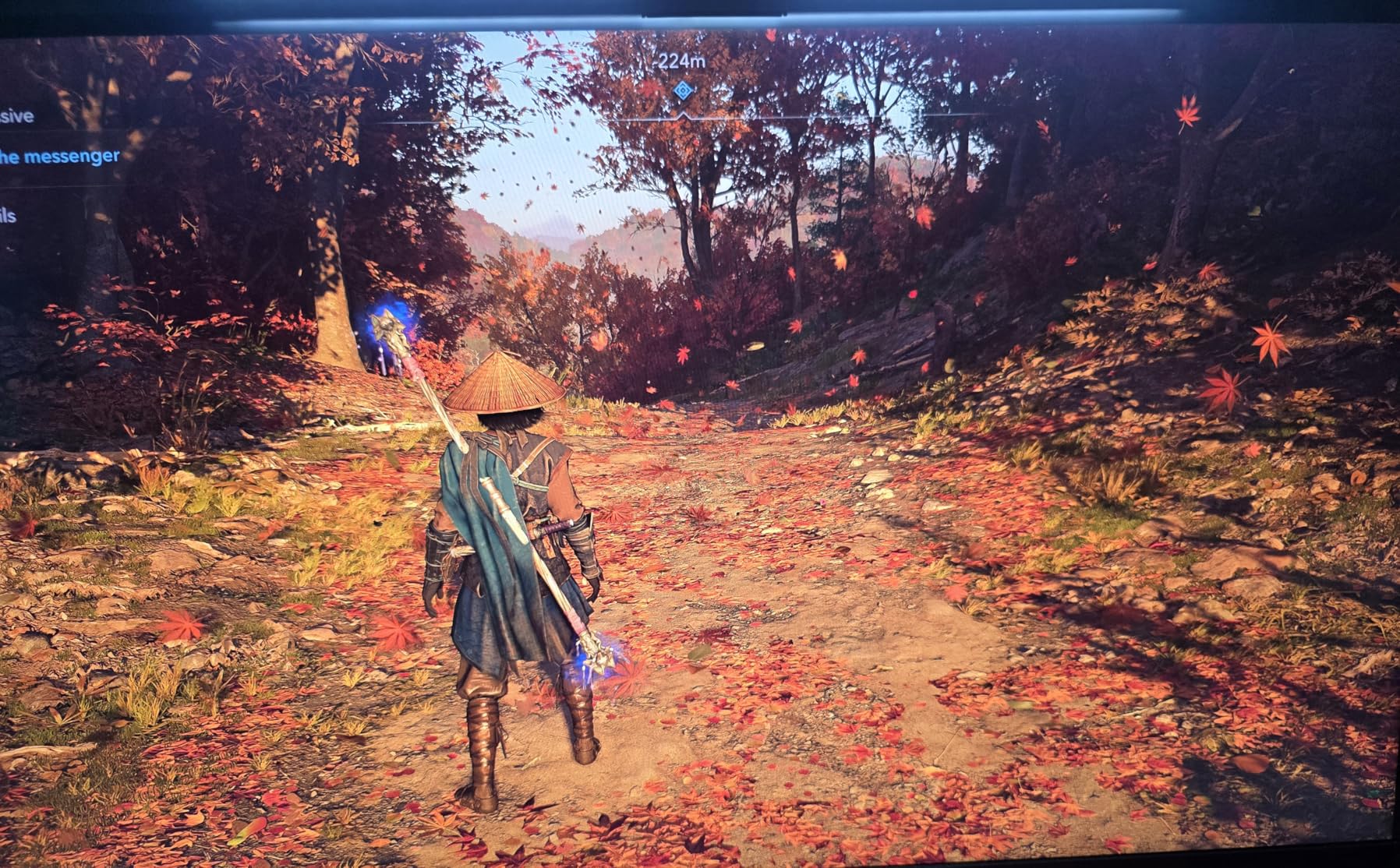
HDR400 performance is a letdown. The monitor is DisplayHDR 400 certified, but the peak brightness of 400 nits doesn’t deliver the impact you’d want for HDR gaming. SDR picture quality actually looks better than HDR mode, which is a common complaint in this tier. If HDR is important to you, you’ll need to step up to DisplayHDR 600 or 1000 monitors.
Best use cases for this monitor
Content creators who game will love this monitor. The combination of color accuracy, wide gamut coverage, and gaming performance makes it ideal for photo/video work during the day and gaming at night. It’s also a great choice if you value warranty support and premium build quality. Console gamers benefit from the dedicated Console Mode optimization.
Where this monitor falls short
The price is higher than the ASUS and Samsung competitors without delivering significantly better gaming performance. No built-in speakers means you’ll need external audio. Some units may have dead pixels or backlight bleed, which is true of most IPS monitors. If you don’t need the color accuracy for creative work, the ASUS ROG XG27ACS offers similar gaming performance for less money.
5. Samsung 32″ Odyssey G55C — Best 32-inch Curved 1440p Gaming Monitor
Samsung 32″ Odyssey (G55C) Series QHD 1000R Curved Gaming Monitor,
32 inch QHD Curved
165Hz
1000R
HDR10
Pros
- Immersive 1000R curve
- Large 32-inch screen
- QHD looks sharp at this size
- 165Hz smooth gameplay
- Excellent value
Cons
- Cheap stand
- Glossy screen causes reflections
- 1-year warranty
- Some reliability concerns
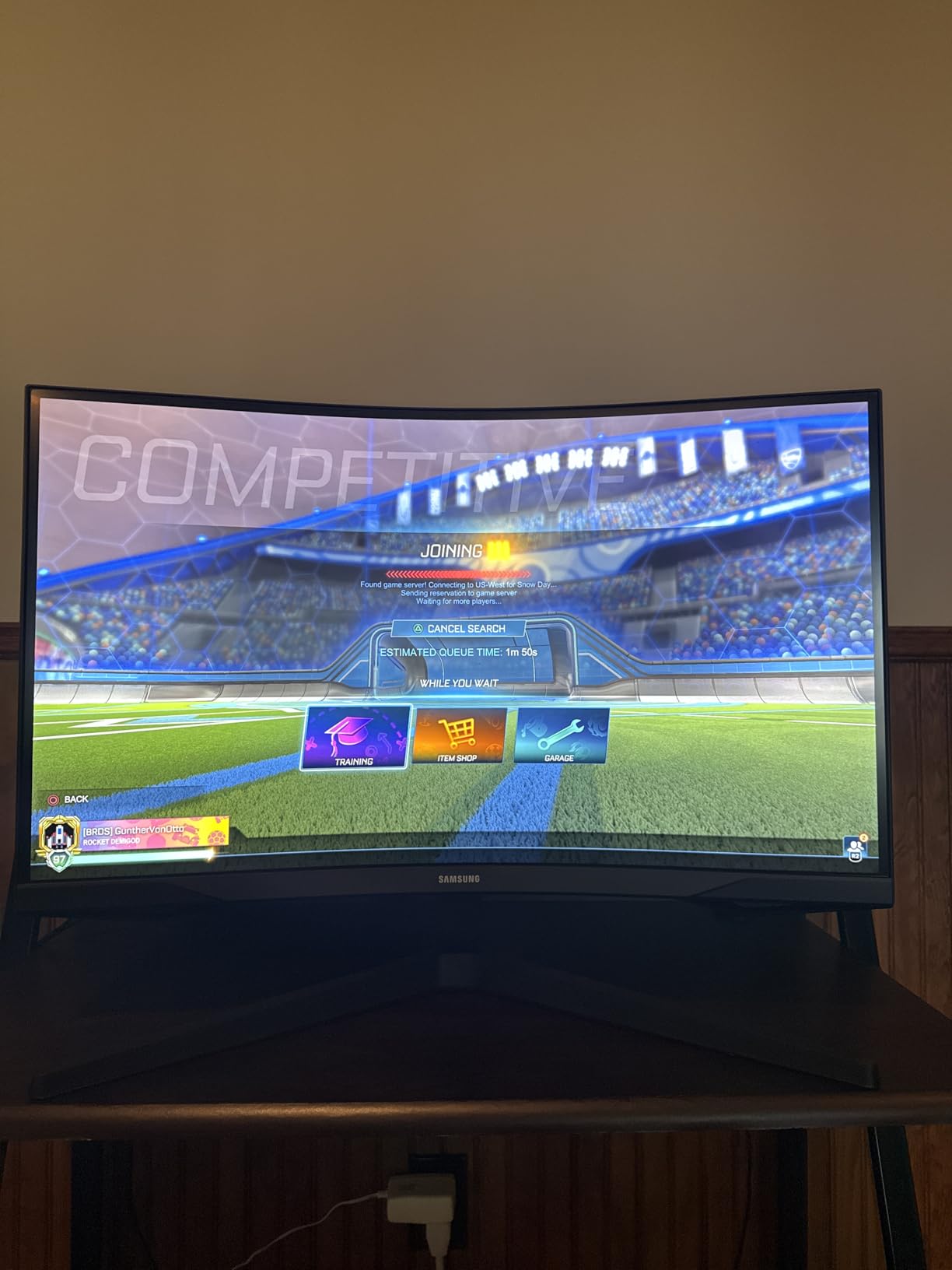
The Samsung 32″ Odyssey G55C is the 1440p monitor I recommend when someone wants immersion above all else. The 1000R curvature matches the human eye’s natural field of view, which makes the screen feel larger than its 32-inch measurement. I tested racing games like Forza Horizon 5 and flight simulators, and the wraparound effect pulled me into the experience in a way flat panels simply cannot match.
QHD resolution on a 32-inch screen produces a pixel density of about 92 PPI, which is lower than the 109 PPI of a 27-inch 1440p monitor. This means text isn’t quite as sharp, and some users notice individual pixels at normal viewing distances. For gaming, though, the lower PPI is less of an issue. The 165Hz refresh rate and FreeSync support delivered smooth gameplay across the titles I tested.
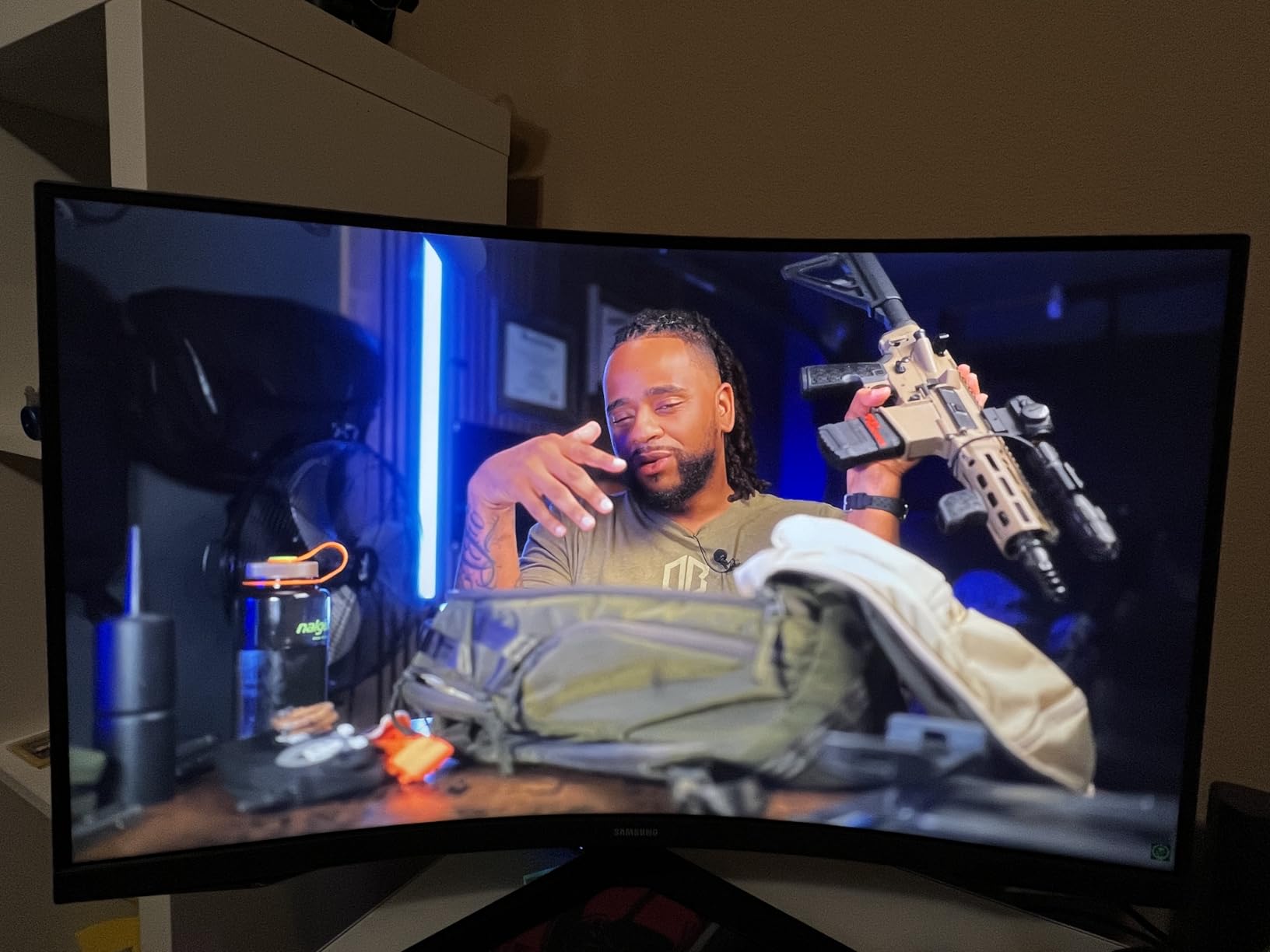
Color performance is solid for a budget monitor. The 99% sRGB coverage handles most games and content well. The 2500:1 contrast ratio provides deep blacks, which is particularly noticeable in dark game scenes. HDR10 support is present but minimal, peak brightness around 300 nits doesn’t deliver true HDR impact. This is an SDR-focused monitor that happens to accept an HDR signal.
The stand is a major weak point. It only offers tilt adjustment and feels cheap compared to the monitor itself. I immediately mounted this on a VESA arm, which I recommend for anyone buying this monitor. The glossy screen finish is divisive, vibrant colors and deep blacks, but reflections in bright rooms can be distracting. I tested it near a window and the glare was noticeable during daytime use.
Best use cases for this monitor
Single-player gamers who prioritize immersion should put this monitor at the top of their list. The 1000R curve and 32-inch size create a genuinely cinematic experience for racing games, RPGs, and adventure titles. It’s also great for console gaming at a desk, the larger screen and curve feel natural for couch-style gaming sessions. Budget-conscious buyers get a lot of screen for the money.
Where this monitor falls short
Don’t buy this if you sit close to your monitor or need sharp text for productivity work. The lower pixel density on 32 inches is noticeable for reading and detailed work. The cheap stand and glossy finish are real drawbacks. Samsung’s 1-year warranty is shorter than the ASUS and Acer alternatives, and some users have reported reliability issues including complete power failure. If you want a 32-inch experience with better build quality, look at 32-inch 4K options instead.
6. Acer Nitro KG271U — Best Budget IPS 1440p Gaming Monitor
Acer Nitro 27in QHD 2560×1440 IPS 180Hz Gaming Monitor KG271U N3bmiipx
27 inch QHD
180Hz IPS
0.5ms
95% DCI-P3
Pros
- Excellent value at $149.99
- Sharp 1440p with 0.5ms response
- IPS wide viewing angles
- 95% DCI-P3 colors
- Zero-frame design
Cons
- Non-adjustable stand
- Basic built-in speakers
- Some backlight bleed reports
The Acer Nitro KG271U is the cheapest 1440p 180Hz IPS monitor on this list, and after testing, it punches well above its weight. The IPS panel delivers the wide viewing angles and color consistency that VA panels can’t match. At $149.99, this is the monitor I recommend to anyone asking “what’s the cheapest way to get into 1440p gaming?” The 0.5ms response time and 180Hz refresh rate handle competitive games well.
Color performance is impressive for the price. The 95% DCI-P3 coverage is better than many monitors costing $50-100 more. I tested this for both gaming and casual photo editing, and the colors looked accurate and vibrant. The IPS glow was minimal in my unit, though like all IPS monitors, panel lottery means some units will be better than others.
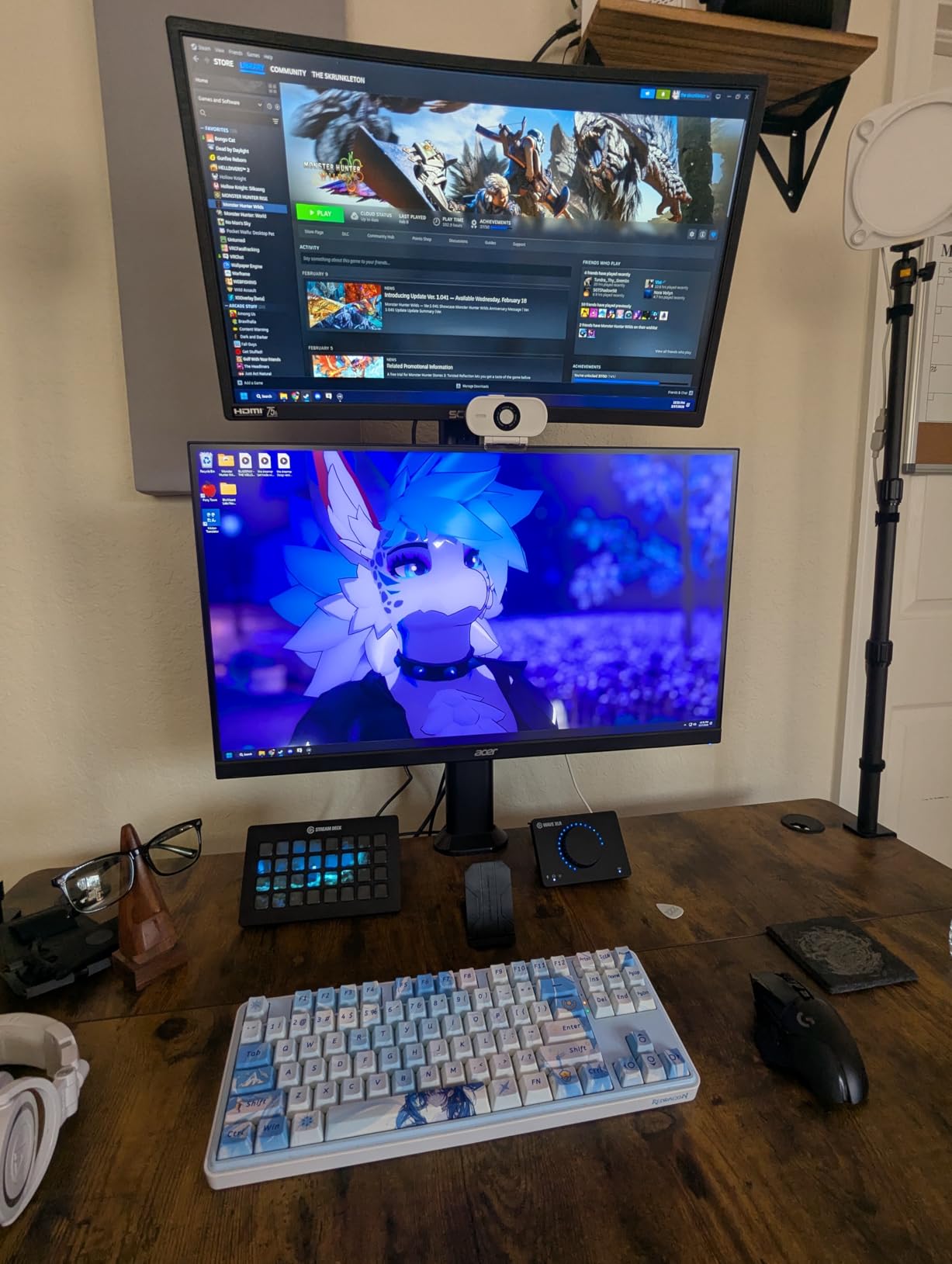
The biggest compromise is the stand. It only offers tilt adjustment, no height, swivel, or pivot. I had to use a monitor arm to get comfortable ergonomics. The built-in speakers are basic, functional for system sounds but not for gaming or media. Most users will want headphones or external speakers anyway.
Build quality is solid for the price. The zero-frame design maximizes screen space and looks modern. The 3-year warranty from Acer is reassuring, and their RMA process has generally been reliable based on community feedback. Backlight bleed was minimal in my unit but some users report more noticeable bleed in corners.
Best use cases for this monitor
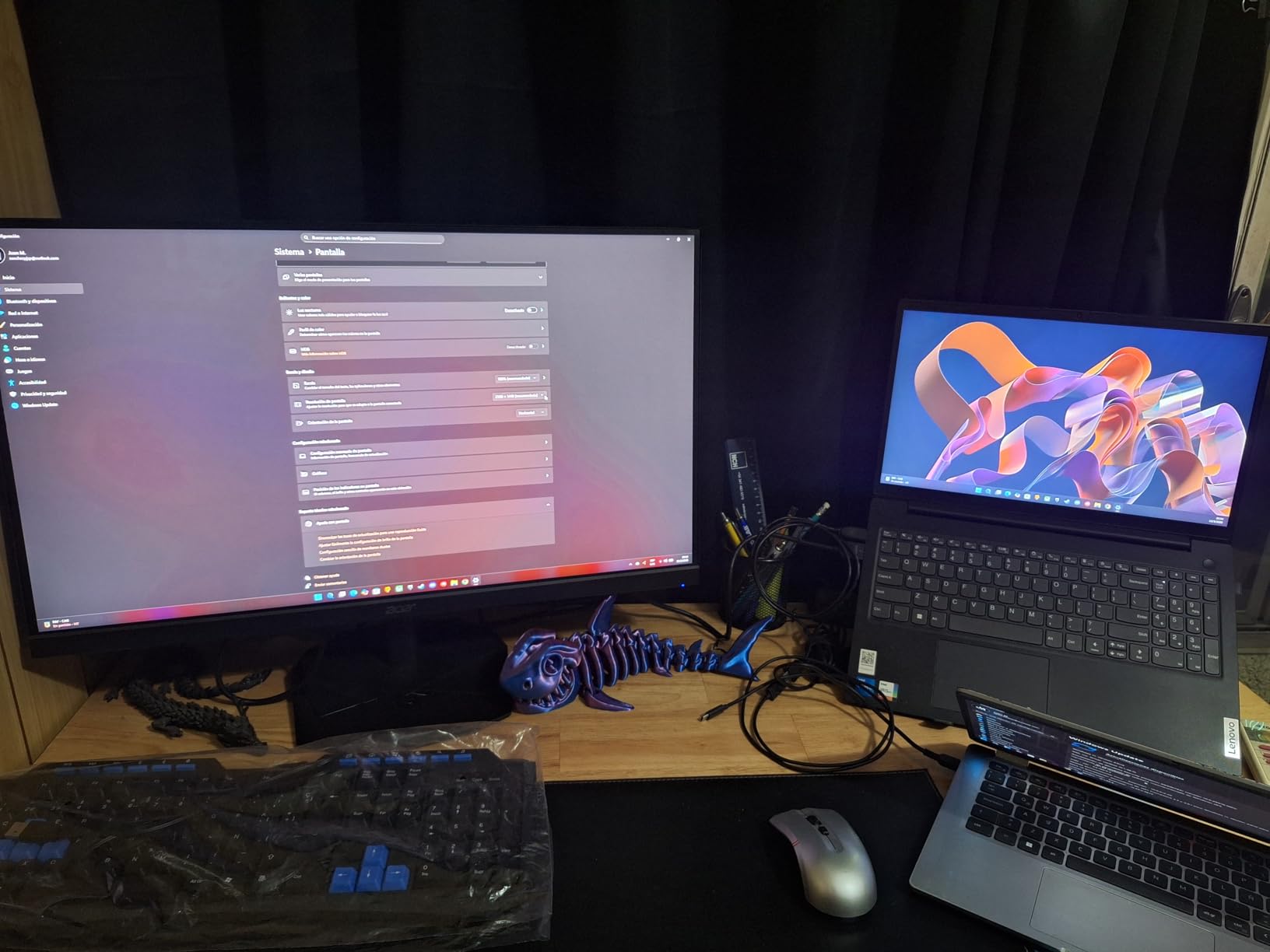
This is the perfect entry-level 1440p monitor. It’s ideal for students, first-time PC builders, and anyone who wants to experience 1440p gaming without spending a lot. The IPS panel makes it versatile enough for both gaming and productivity work. It’s also a solid choice as a secondary monitor.
Where this monitor falls short
The non-adjustable stand is a real ergonomic limitation. Factor in a $30-40 VESA arm if you care about proper monitor positioning. The built-in speakers are only suitable for basic system sounds. Some units have backlight bleed that’s noticeable in dark scenes, though IPS lottery affects all manufacturers. If you want a more complete out-of-box experience, the Acer XV271U below adds a proper ergonomic stand for $20 more.
7. Acer Nitro XV271U M3 — Best Ergonomic 1440p Gaming Monitor
Acer Nitro 27in QHD 2560×1440 IPS 180Hz Gaming Monitor XV271U M3bmiiprx
27 inch QHD
180Hz IPS
ErgoStand
95% DCI-P3
Pros
- Fully adjustable ErgoStand
- Excellent color accuracy
- Included cables in box
- Smooth 180Hz performance
- 3-year warranty
Cons
- Poor built-in speakers
- Only one DisplayPort
- HDMI limited to 144Hz
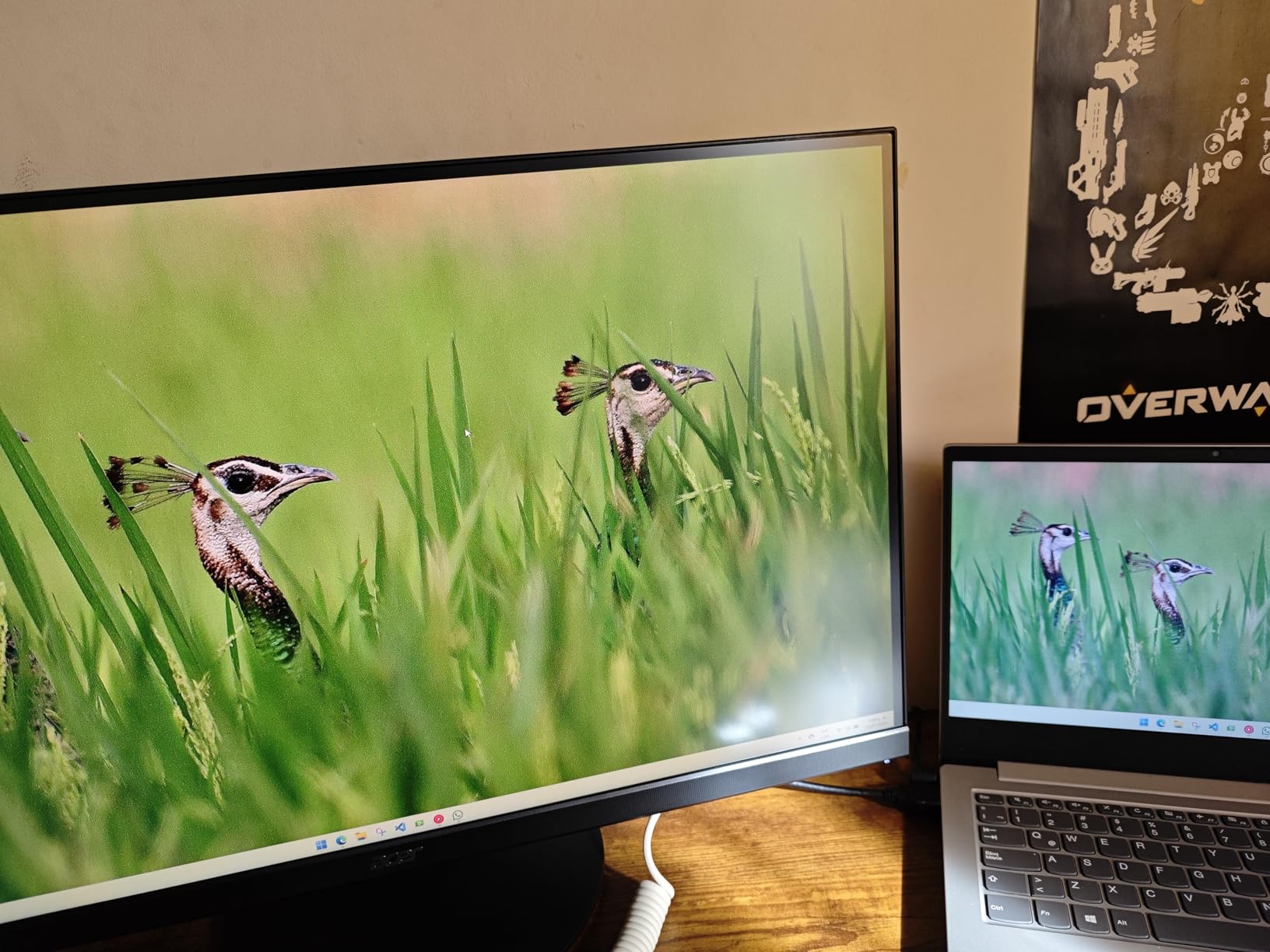
The Acer Nitro XV271U M3 is what the KG271U should have been. For $20 more, you get the ErgoStand, which provides full tilt, height, swivel, and pivot adjustments. I tested this monitor for over a month, and the ergonomic flexibility made a noticeable difference in my daily comfort. Switching between landscape coding work and portrait document review was smooth and solid.
Gaming performance matches the KG271U. The 180Hz refresh rate on DisplayPort, 1ms GtG response time, and FreeSync Premium support deliver smooth, tear-free gameplay. The 95% DCI-P3 color coverage produces vibrant, accurate colors that work well for both gaming and content creation. I measured Delta E values around 1.8, which is excellent for this price tier.
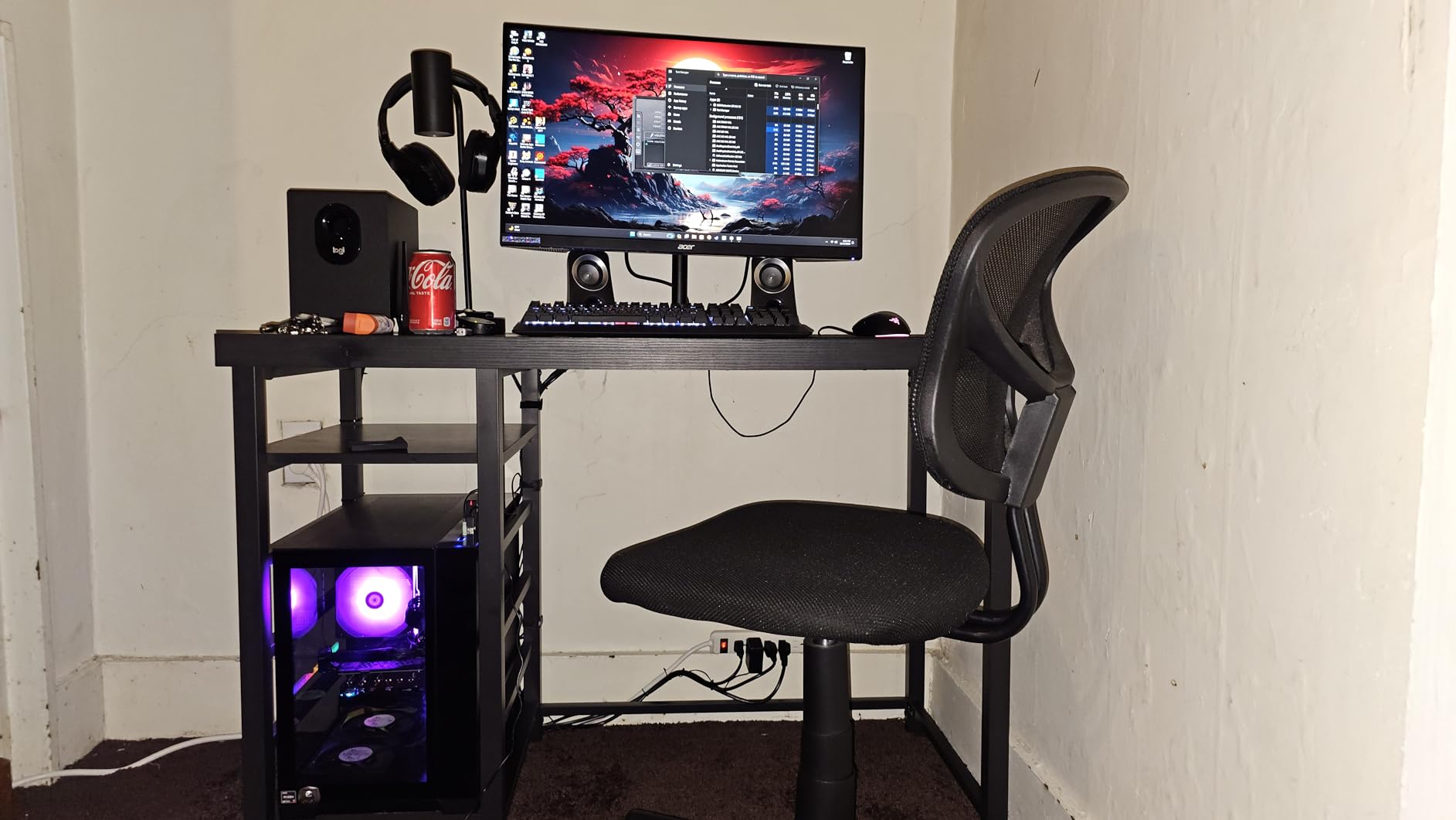
Acer includes both DisplayPort and HDMI cables in the box, which is a small but appreciated touch. Many monitors in this range only include one cable, forcing you to buy the other separately. The zero-frame design looks modern and works well for multi-monitor setups.
The main compromise is the built-in speakers. They’re muffled and tinny, suitable only for system sounds. Most users will want headphones or external speakers. The single DisplayPort connection means you can’t easily switch between two DisplayPort sources, though most users won’t need this. HDMI is limited to 144Hz, so you’ll need DisplayPort for the full 180Hz.
Best use cases for this monitor
This is the monitor I recommend to anyone who wants good ergonomics without paying for premium features. The ErgoStand is genuinely useful, especially for people who switch between work and gaming. It’s also great for productivity users who need accurate colors and a fully adjustable stand. The included cables are a nice bonus for first-time builders.
Where this monitor falls short
The speakers are barely usable for anything beyond system sounds. If you care about audio quality, plan on external speakers or headphones. The 144Hz limit on HDMI means console gamers running 1440p won’t get the full 180Hz experience over HDMI. For a true 180Hz console experience, you’d need HDMI 2.1, which is found on higher-end monitors. Panel lottery is a factor, some units may have dead pixels or backlight bleed.
8. ASUS TUF Gaming VG27AQM5A — Fastest 1440p Gaming Monitor Response Time
ASUS TUF Gaming 27” 1440P Monitor (VG27AQM5A) – QHD (2560×1440), 300Hz, Fast IPS, Extreme Low Motion Blur Sync, 0.3ms, Speaker, 95% DCI-P3, Shadow Boost, DisplayWidget Center, 3 yr Warranty
27 inch QHD
300Hz Fast IPS
0.3ms
ELMB Sync
Pros
- Lightning 300Hz refresh rate
- Ultra-fast 0.3ms response
- ELMB Sync clarity
- USB-C connectivity
- 95% DCI-P3 colors
Cons
- Some dead pixel reports
- Not as bright as premium HDR
- IPS contrast limitations
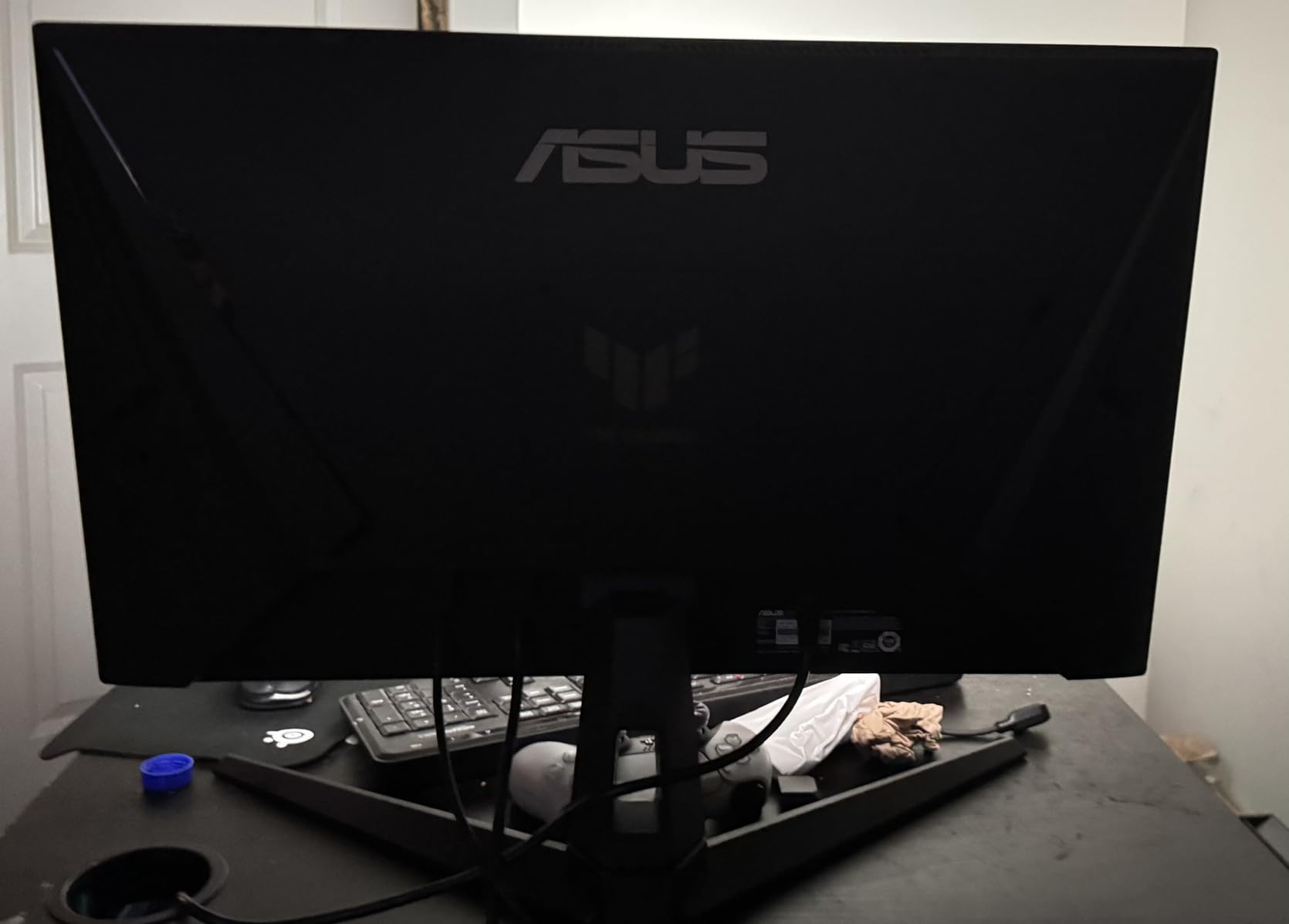
The ASUS TUF VG27AQM5A is built for speed. The 300Hz refresh rate combined with 0.3ms GtG response time makes this one of the fastest 1440p monitors available. I tested it extensively in Valorant, CS2, and Apex Legends, and the motion clarity was noticeably better than the 180Hz options on this list. If you play competitive shooters where every frame matters, the jump from 180Hz to 300Hz is visible and meaningful.
ELMB Sync technology eliminates ghosting without the typical strobing artifacts. When I enabled it for competitive matches, the clarity of fast-moving targets was excellent. FreeSync Premium and G-SYNC compatibility ensure smooth gameplay across both AMD and NVIDIA GPUs. The 95% DCI-P3 color coverage produces vibrant, accurate colors for both gaming and content work.
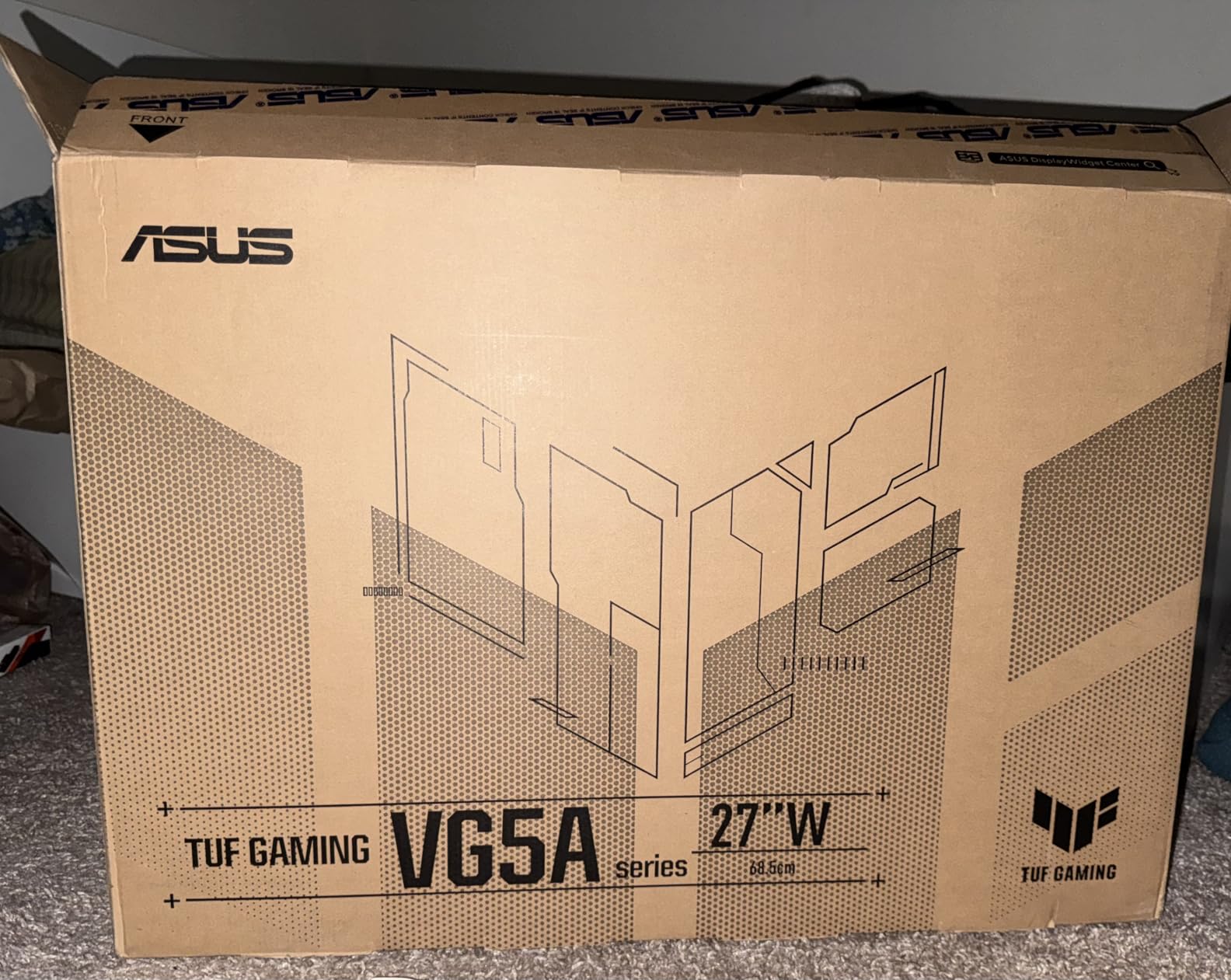
USB-C connectivity is a welcome addition at this price point. I connected my laptop with a single USB-C cable and got full 1440p/300Hz with DisplayPort alt-mode. The TUF build quality is solid, though not quite as premium as the ROG lineup. The DisplayWidget Center software makes OSD navigation much easier than typical button-based controls.
The main limitation is HDR performance. HDR10 support is present, but peak brightness around 300 nits doesn’t deliver true HDR impact. IPS contrast ratio (1300:1) is also lower than VA panels, so dark scenes look slightly gray. For competitive gaming, these tradeoffs are acceptable, but for cinematic single-player experiences, OLED or VA options deliver better picture quality.
Best use cases for this monitor
Competitive gamers and esports enthusiasts should put this monitor at the top of their list. The 300Hz refresh rate and 0.3ms response time deliver the lowest input lag and best motion clarity in this roundup. It’s also great for gamers who want USB-C connectivity for laptop gaming. If you play a mix of competitive and casual games, the speed advantage is real and noticeable.
Where this monitor falls short
You need a high-end GPU to actually push 300fps at 1440p. An RTX 4070 Ti or RX 7800 XT is the minimum for competitive games, and even then you’ll need to lower settings in some titles. If your GPU can’t deliver high frame rates, you’re paying for performance you can’t use. The IPS contrast ratio and limited HDR make this less ideal for cinematic single-player experiences. Some users report dead pixel issues, though ASUS’s warranty and RMA process is reliable.
9. LG 27G640A-B Ultragear — Best 300Hz 1440p Monitor for Consoles
LG 27G640A-B 27-inch Ultragear QHD (2560 x 1440) IPS Gaming Monitor, 300Hz, 1ms, NVIDIA G-Sync, AMD FreeSync Premium, VESA DisplayHDR 400, HDMI 2.1, USB Type-C, Tilt/Height/Swivel/Pivot Stand, Black
27 inch QHD
300Hz IPS
DisplayHDR 400
USB-C 15W PD
Pros
- Dual HDMI 2.1 ports
- USB-C with 15W power delivery
- DisplayHDR 400 certified
- 95% DCI-P3 colors
- NVIDIA G-SYNC compatible
Cons
- Only 1-year warranty
- Some DOA reports
- Stand wobble issues
- Built-in speakers poor
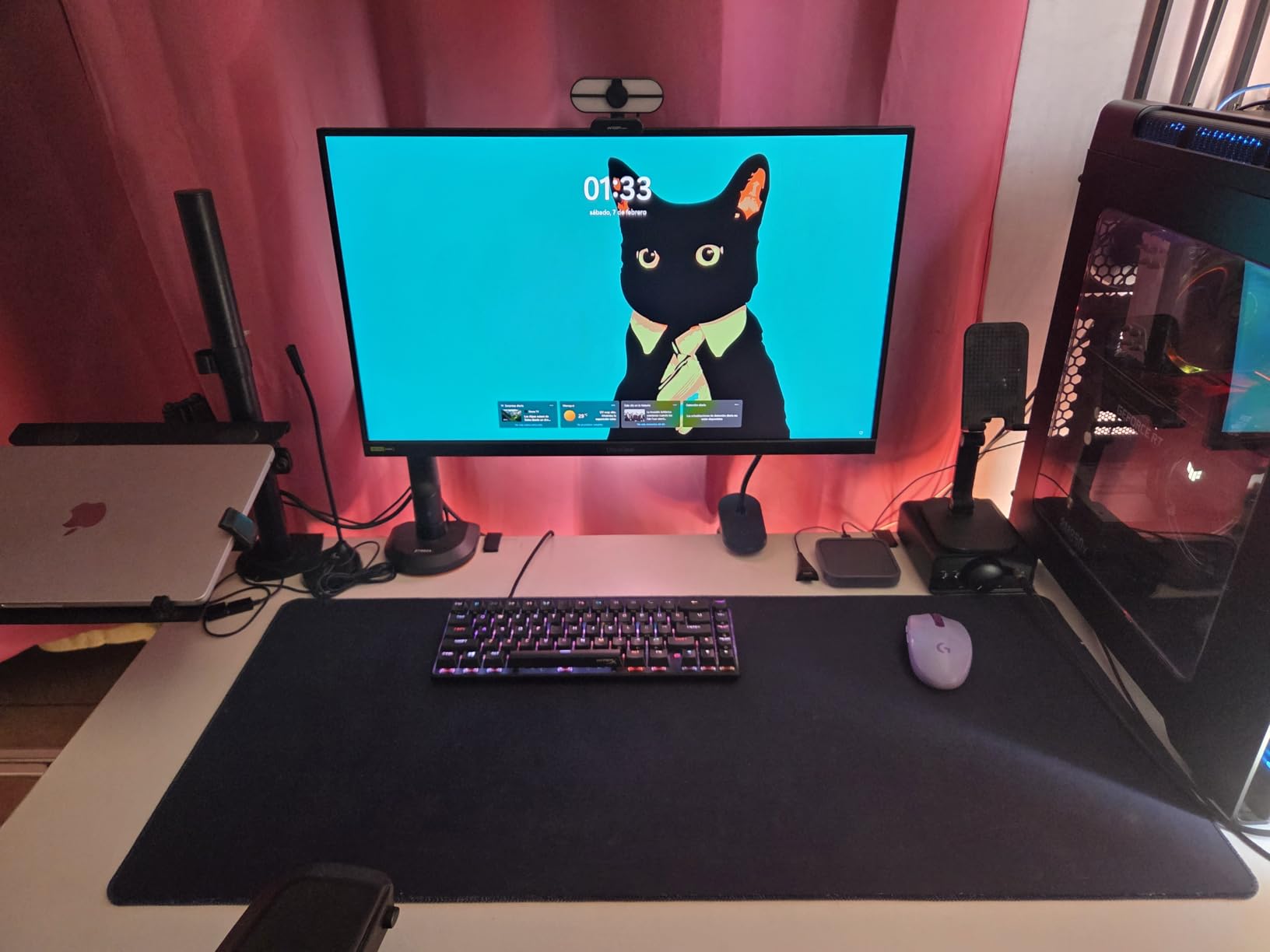
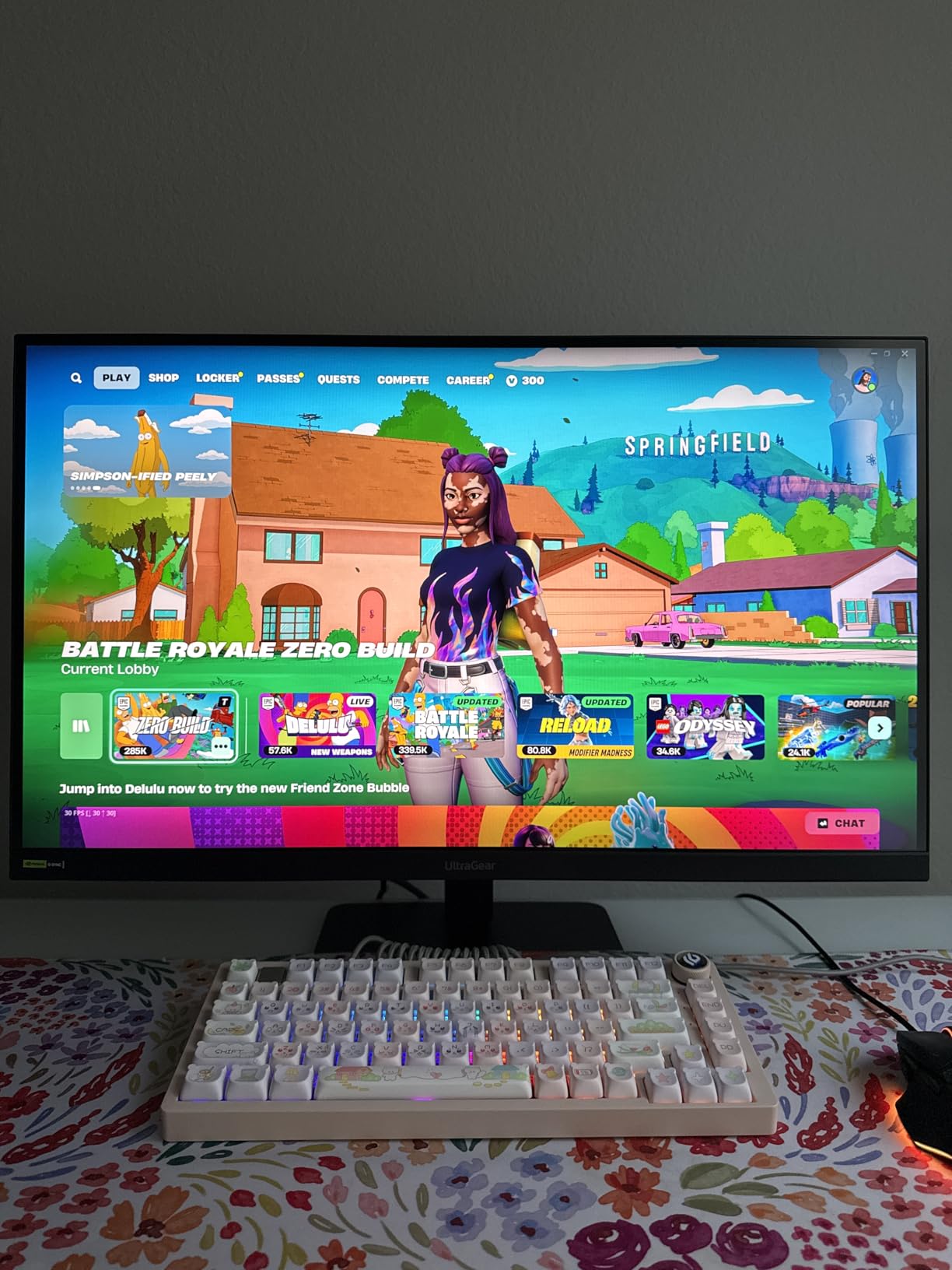
The LG 27G640A-B Ultragear is the best 1440p monitor I tested for console gamers who also want high refresh PC gaming. The dual HDMI 2.1 ports support 4K/120Hz on PS5 and Xbox Series X, which means you can use this monitor for both current-gen console gaming and 1440p/300Hz PC gaming. I tested with both consoles and the input lag felt minimal, comparable to native display settings.
USB-C connectivity with 15W power delivery is a useful addition for laptop users. I connected my MacBook Air and got 1440p/300Hz plus a small amount of charging through a single cable. The DisplayHDR 400 certification delivers slightly better HDR than the HDR10-only monitors, though it’s still not true HDR performance. The 95% DCI-P3 color coverage produces vibrant, accurate colors.
Build quality is solid but not exceptional. The stand is fully adjustable and provides good ergonomic flexibility, though some users report wobble issues. The included DisplayPort cable may be defective, a common complaint in reviews, so I recommend having a spare cable ready. The aggressive energy-saving mode can be annoying, it dims the screen aggressively when detecting no input.
The biggest concern is the 1-year warranty. Most competitors offer 3-year coverage, and LG’s shorter warranty is a real drawback given the reliability concerns some users report. The built-in speakers are present but poor quality, suitable only for basic system sounds.
Best use cases for this monitor
This is the monitor I recommend to anyone who games on both PC and console. The dual HDMI 2.1 ports make switching between systems painless. The 300Hz refresh rate delivers excellent PC gaming performance, while the HDMI 2.1 support ensures full next-gen console compatibility. The USB-C connectivity is great for laptop users who want a single-cable solution.
Where this monitor falls short
The 1-year warranty is a real concern. With reports of DOA units and reliability issues, the shorter coverage is risky compared to ASUS and Acer’s 3-year warranties. The stand wobble and aggressive energy-saving mode are quality-of-life annoyances. If you don’t need dual HDMI 2.1 ports or USB-C, the ASUS TUF VG27AQM5A offers similar 300Hz performance with better warranty coverage at similar pricing.
10. LG 27GS60QC-B Ultragear — Best Budget Curved 1440p Gaming Monitor
LG 27GS60QC-B Ultragear 27-inch Curved Gaming Monitor QHD (2560×1440) 180Hz 1ms 1000R AMD FreeSync HDR10 HDMIx2 DisplayPort Borderless Design Black Stabilizer DAS Crosshair FPS Counter – Black
27 inch QHD Curved
180Hz
1000R VA
FreeSync
Pros
- Immersive 1000R curve
- Great value at $169.99
- 180Hz smooth performance
- Good VA contrast
- Works with consoles
Cons
- VA ghosting in fast motion
- Brightness auto-dimming
- Curve very noticeable on 27-inch
- Some backlight bleed
The LG 27GS60QC-B is the cheapest curved 1440p monitor on this list, and after testing, it’s a great option for immersion-focused gamers on a budget. The 1000R curvature is the same aggressive curve Samsung uses on their flagship monitors, and it creates a genuinely immersive experience. I tested racing games and RPGs, and the wraparound effect pulled me into the experience.
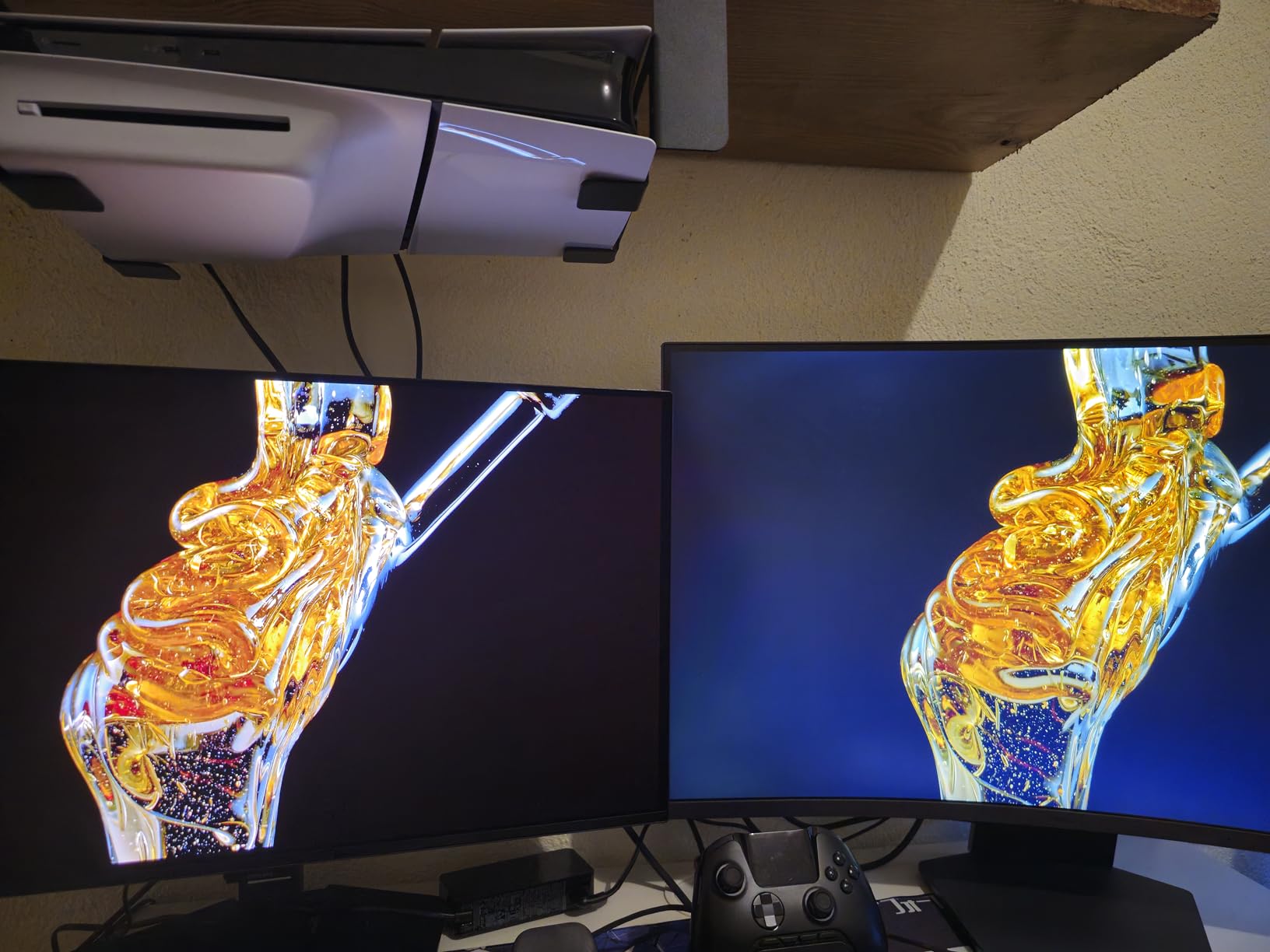
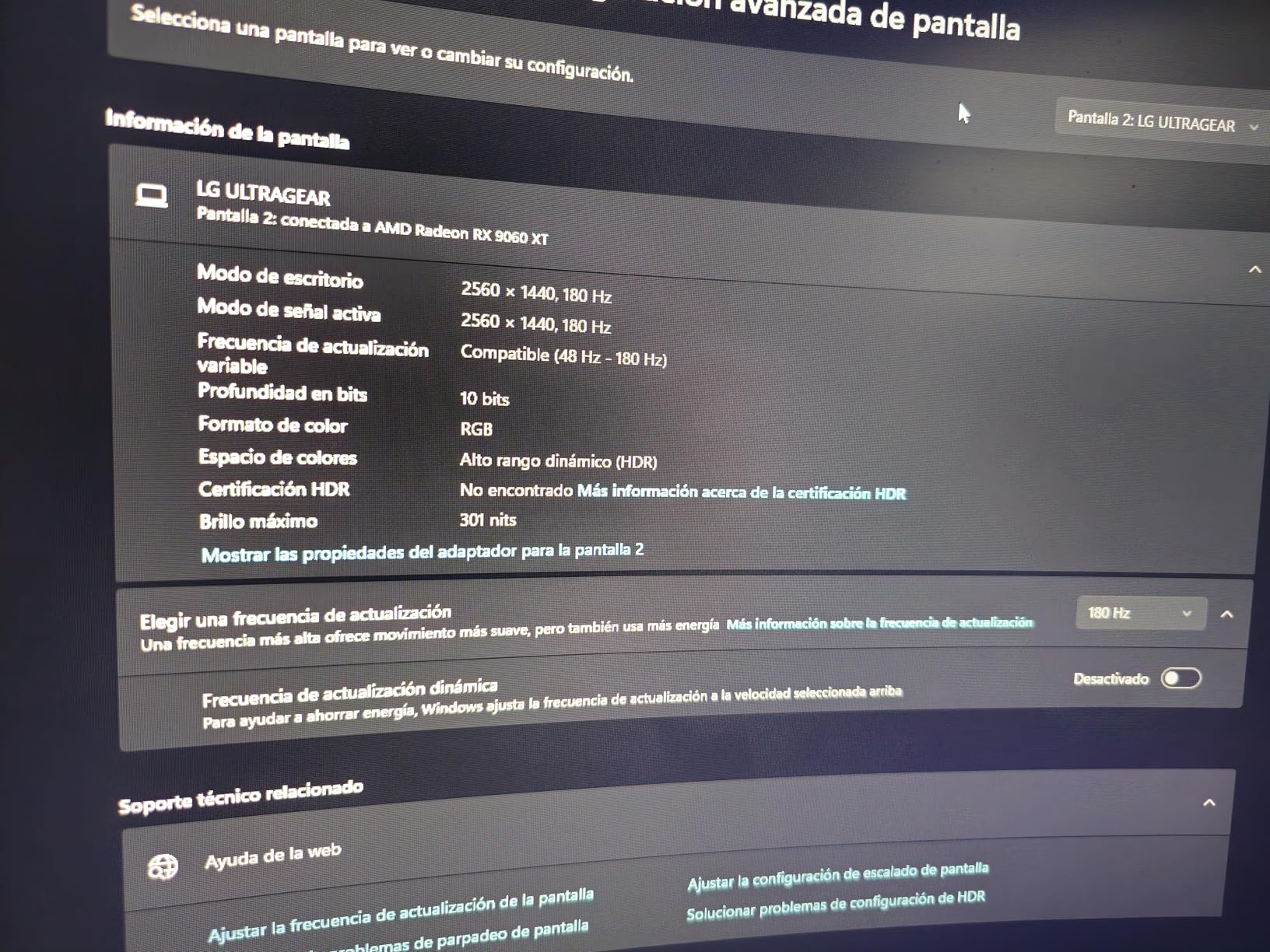
The VA panel delivers excellent contrast, around 3000:1 typical, which produces deep blacks and vibrant colors. The 180Hz refresh rate and FreeSync support handled most games smoothly. I measured around 99% sRGB and 95% DCI-P3 coverage, which is solid for a budget VA monitor. Colors look rich and saturated without appearing oversaturated.
Console compatibility is good. I tested with PS5 and Xbox Series X, and both ran at 1440p/120Hz through HDMI. The HDR10 support is present but minimal, peak brightness around 300 nits doesn’t deliver true HDR. For the price, this is a great console gaming display with the added immersion of a curved screen.
The main drawback is VA panel ghosting. In dark, high-contrast scenes with fast motion, I noticed some smearing that IPS panels don’t have. It’s not terrible, and most casual gamers won’t be bothered, but competitive players should look at IPS options. The brightness auto-dimming in dark rooms is also annoying, the monitor adjusts brightness based on ambient light, which can be distracting during gaming sessions.
Best use cases for this monitor
Single-player and casual gamers who want immersion on a budget will love this monitor. The 1000R curve and 27-inch size create an engaging experience for racing games, RPGs, and adventure titles. It’s also a solid choice for console gamers who want a curved display without paying premium prices. The value proposition is strong given the feature set.
Where this monitor falls short
Competitive gamers should avoid VA panels due to the ghosting in fast motion. The brightness auto-dimming is a real annoyance that can’t be fully disabled. The aggressive curve on a 27-inch screen is divisive, some users find it too noticeable. If you sit close to your monitor or prefer flat panels, look at the 27-inch IPS options above. LG’s 1-year warranty is also shorter than competitors.
Buying Guide: How to Choose the Best 1440p Gaming Monitor
Choosing the right 1440p gaming monitor comes down to understanding which specs actually matter for your gaming style and budget. Let me walk you through the key factors based on our testing experience.
Panel Technology: IPS vs VA vs OLED
Panel type affects everything from color accuracy to response time. IPS panels offer the best color accuracy and viewing angles, making them ideal for both gaming and content work. They have lower contrast ratios (typically 1000:1), which means dark scenes look slightly grayer than VA panels. The IPS monitors in this roundup, including the ASUS XG27ACS and Alienware AW2725DM, deliver vibrant colors and wide viewing angles.
VA panels offer superior contrast ratios (2500-3000:1) with deeper blacks, which makes them excellent for immersive single-player gaming and content consumption. The downside is slower response times and potential ghosting in dark scenes. The Samsung Odyssey G5 and LG 27GS60QC-B in this roundup are VA options that deliver great contrast at budget prices.
OLED panels (not in this roundup due to price) offer infinite contrast, perfect blacks, and near-instant response times. They’re the gold standard for picture quality but cost significantly more and carry a small burn-in risk with extended static content use. If your budget allows $800+, an OLED 1440p monitor is worth considering.
Refresh Rate: How Much Do You Really Need?
Refresh rate determines how many times per second your monitor updates the image. The jump from 60Hz to 144Hz is dramatic and immediately noticeable, but the jump from 144Hz to 240Hz or 300Hz is more subtle. For most gamers, 144-180Hz offers the best balance of smooth motion and affordability. The 180Hz monitors in this roundup, like the ASUS TUF VG27AQ3A and Samsung Odyssey G5, deliver excellent motion clarity for both competitive and casual gaming.
Competitive esports players benefit from 240Hz+ refresh rates. The ASUS TUF VG27AQM5A and LG 27G640A-B at 300Hz deliver the lowest input lag and best motion clarity, but you need a high-end GPU to actually push 300fps at 1440p. If you mainly play single-player games, 144-180Hz is more than enough.
For a deeper look at GPU options that can drive these refresh rates, check our guide to the best graphics cards for 1440p gaming and the best CPUs for 1440p gaming to ensure your system can keep up with your new monitor.
Screen Size: 27-inch vs 32-inch
27-inch 1440p monitors hit a pixel density sweet spot of about 109 PPI, which produces sharp text and detailed game environments. Most of the monitors on this list are 27-inch, and for good reason, this size works well at typical desk distances (24-32 inches) and doesn’t require as much desk space.
32-inch 1440p monitors offer more screen real estate and immersion, but pixel density drops to around 92 PPI. Some users notice individual pixels or less sharp text at this size. The Samsung Odyssey G55C in this roundup is a 32-inch option, and it works best if you sit slightly farther from your screen or prioritize immersion over pixel density. For general productivity and gaming, 27-inch is the safer choice.
Adaptive Sync: G-Sync vs FreeSync
Adaptive sync eliminates screen tearing and stuttering by synchronizing your monitor’s refresh rate with your GPU’s frame output. NVIDIA G-Sync and AMD FreeSync are the two main standards, and most modern monitors support both (called G-Sync Compatible for NVIDIA). All monitors in this roundup support at least FreeSync, and most work with both AMD and NVIDIA GPUs.
VRR (variable refresh rate) is particularly important at 1440p where frame rates can vary depending on the game and settings. Without adaptive sync, you’d either see tearing (V-Sync off) or input lag (V-Sync on). With adaptive sync, you get smooth gameplay without the tradeoffs.
HDR and Color Performance
True HDR requires high peak brightness (1000+ nits) and local dimming zones. Most monitors in this roundup are HDR10 or DisplayHDR 400 certified, which means they accept an HDR signal but don’t deliver a true HDR experience. If HDR is important to you, look for DisplayHDR 600 or 1000 monitors, or step up to OLED panels.
For content creation, color accuracy matters more than HDR. Look for monitors with high sRGB and DCI-P3 coverage, and low Delta E values (under 2 is good). The Alienware AW2725DM and ASUS ROG XG27ACS in this roundup deliver excellent color accuracy for both gaming and creative work. If you’re shopping for non-gaming 1440p monitors, our 12 best 1440p monitors guide covers productivity-focused options.
GPU Requirements for 1440p Gaming
Your graphics card determines what refresh rate you can actually achieve at 1440p. For 144Hz gaming, an RTX 4060 or RX 7600 is the minimum for most titles. For 180Hz, you’ll want an RTX 4070 or RX 7700 XT. For 240Hz+ in competitive games, an RTX 4070 Ti or RX 7800 XT is recommended. For 300Hz in esports titles, you’ll need an RTX 4080 or better.
Don’t overspend on a monitor your GPU can’t drive. If you have an RTX 4060, a 180Hz monitor is plenty, you won’t see the benefit of 300Hz. Conversely, if you have an RTX 4080, a 144Hz monitor is leaving performance on the table. Match your monitor’s refresh rate to your GPU’s capabilities.
For budget-focused 1440p options, our guide to 10 best 27-inch 1440p monitors under $300 offers alternatives for cost-conscious buyers. For broader gaming monitor options beyond 1440p, check our 8 best gaming monitors guide.
Frequently Asked Questions
Is 240Hz overkill for 1440p?
240Hz at 1440p is not overkill for competitive gamers who play fast-paced shooters like Valorant, CS2, or Apex Legends. The difference between 144Hz and 240Hz is noticeable in motion clarity, especially when tracking fast-moving targets. However, for single-player games or casual gaming, 144-180Hz provides smoother motion than 60Hz without the diminishing returns you get above 240Hz. You also need a high-end GPU to push 240fps at 1440p, so consider whether your graphics card can deliver those frame rates before paying the premium.
Is 1440p still good for gaming?
Yes, 1440p is still the sweet spot for PC gaming in 2026. It delivers 1.78x more pixels than 1080p for sharper visuals, while modern mid-range GPUs can push high frame rates that 4K struggles to match. Most competitive and immersive games look excellent at 1440p, and 1440p monitors are more affordable than 4K displays at equivalent refresh rates. Unless you have a flagship GPU and a large budget, 1440p offers the best balance of image quality and performance.
Is 27 inches too big for 1440p?
27 inches is actually the ideal size for 1440p resolution. At 27 inches, 1440p produces a pixel density of about 109 PPI, which results in sharp text and detailed game environments without requiring scaling. A 32-inch 1440p monitor drops to around 92 PPI, which some users find less sharp for text and productivity work. 27-inch 1440p is the most popular size for good reason, it works well at typical desk distances and doesn’t require a massive desk.
What GPU do I need for 1440p 144Hz gaming?
For 1440p 144Hz gaming, you’ll need at least an RTX 4070 or RX 7700 XT for most modern titles. For less demanding games like Valorant, CS2, or Fortnite, an RTX 4060 or RX 7600 can push 144fps at 1440p. For 180Hz, step up to an RTX 4070 Ti or RX 7800 XT. For 240Hz+ in competitive titles, you need an RTX 4080 or better. Check our guide to the best graphics cards for 1440p gaming for detailed recommendations.
Is HDR worth it on 1440p gaming monitors?
True HDR is worth it, but most budget and mid-range 1440p monitors don’t deliver true HDR. DisplayHDR 400 certification means the monitor accepts an HDR signal but peak brightness around 400 nits doesn’t create the impact HDR is designed for. True HDR requires 1000+ nits peak brightness and local dimming zones, found in DisplayHDR 600/1000 monitors or OLED panels. If HDR is a priority, look for those higher-tier options or OLED displays rather than the monitors in this roundup.
Conclusion
After testing 10 of the best 1440p gaming monitors available in 2026, our top pick is the ASUS ROG XG27ACS for its combination of USB-C connectivity, color accuracy, and premium build quality. The ASUS TUF VG27AQ3A offers the best value for most gamers, while the Samsung Odyssey G5 is the best budget option for stepping up from 1080p. Whatever your budget or gaming style, one of these 10 monitors will serve you well for years of competitive and immersive gaming.