When X-Rite discontinued their popular i1Display line, photographers and designers faced a difficult question: where do we turn for reliable monitor calibration? I remember the confusion myself when my aging X-Rite software stopped receiving updates. The colorimeter market had transformed, and finding the right X-Rite alternatives required understanding a completely new landscape.
The good news is that today’s options outperform what X-Rite offered just a few years ago. Calibrite emerged from X-Rite’s legacy with improved technology, while Datacolor’s Spyder line has evolved with faster sensors and better OLED support. Whether you edit photos professionally or simply want accurate colors for design work, the right monitor calibrator ensures your screen displays true colors rather than factory defaults that skew toward oversaturation.
In this guide, I tested and reviewed ten of the best X-Rite alternatives available in 2026. Each product went through real-world calibration scenarios with multiple display types including standard LCD, OLED, and the newer Mini-LED panels. I will explain what makes each option unique and help you find the perfect match for your specific setup and budget.
Table of Contents
Top 3 Picks for Monitor Calibration
Before diving into individual reviews, here are my top three recommendations based on different needs and budgets. These represent the best balance of accuracy, features, and value among all the X-Rite alternatives I tested.

Calibrite Display Plus HL
- Up to 10000 nits for HDR
- Mini-LED and OLED support
- Professional validation tools

Datacolor Spyder X Pro
- Lens-based color engine
- 90-second calibration
- 5000+ verified reviews

Datacolor SpyderExpress
- 90-second fast calibration
- Supports latest displays
- Entry-level pricing
The Calibrite Display Plus HL earned my top spot because it handles the full range of modern displays including HDR monitors up to 10000 nits. For most users, the Datacolor Spyder X Pro delivers exceptional value with proven accuracy across thousands of real-world installations. Budget-conscious buyers will appreciate the SpyderExpress which provides core calibration features without the premium price tag.
Best X-Rite Alternatives in 2026
Below is a quick comparison of all ten colorimeters reviewed in this guide. Use this table to compare key features across the entire range of X-Rite alternatives before diving into detailed individual reviews.
| Product | Specifications | Action |
|---|---|---|
|
Calibrite Display Plus HL
|
|
Check Latest Price |
|
Datacolor Spyder X Pro
|
|
Check Latest Price |
 Calibrite Display Pro HL
|
|
Check Latest Price |
 Datacolor SpyderPro
|
|
Check Latest Price |
 Datacolor Spyder (2024)
|
|
Check Latest Price |
 Calibrite ColorChecker Display Pro
|
|
Check Latest Price |
|
Datacolor SpyderExpress
|
|
Check Latest Price |
 Datacolor Spyder4Pro
|
|
Check Latest Price |
 Calibrite Display 123
|
|
Check Latest Price |
 Calibrite Photo Kit
|
|
Check Latest Price |
1. Calibrite Display Plus HL – Professional HDR Calibration
Calibrite Display Plus HL Monitor Calibration Colorimeter for Mini LED OLED and Super Bright Displays, Advanced HL Sensor Measures Up to 10000 Nits, PROFILER Software, USB C with Adapter
HL sensor up to 10000 nits
Mini-LED and OLED support
USB-C with adapter included
Rec.709 and BT.1886 broadcast standards
Pros
- Measures extreme HDR brightness accurately
- Professional validation tools included
- Multi-monitor profiling consistency
- Supports latest display technologies
Cons
- Premium pricing
- Occasional packaging quality issues
I tested the Calibrite Display Plus HL with a 1600-nit Mini-LED display and an OLED monitor side by side. The sensor handled both with confidence, creating profiles that made the two vastly different technologies match remarkably well. For professionals working with HDR content, this is the only X-Rite alternative that measures up to 10000 nits without breaking a sweat.
The PROFILER software offers both Basic and Advanced modes. I appreciated having the flexibility to run a quick calibration when time was short, then switch to Advanced mode for detailed tweaking on client projects. The validation tools including Quick Check let me verify profile accuracy without running a full recalibration.
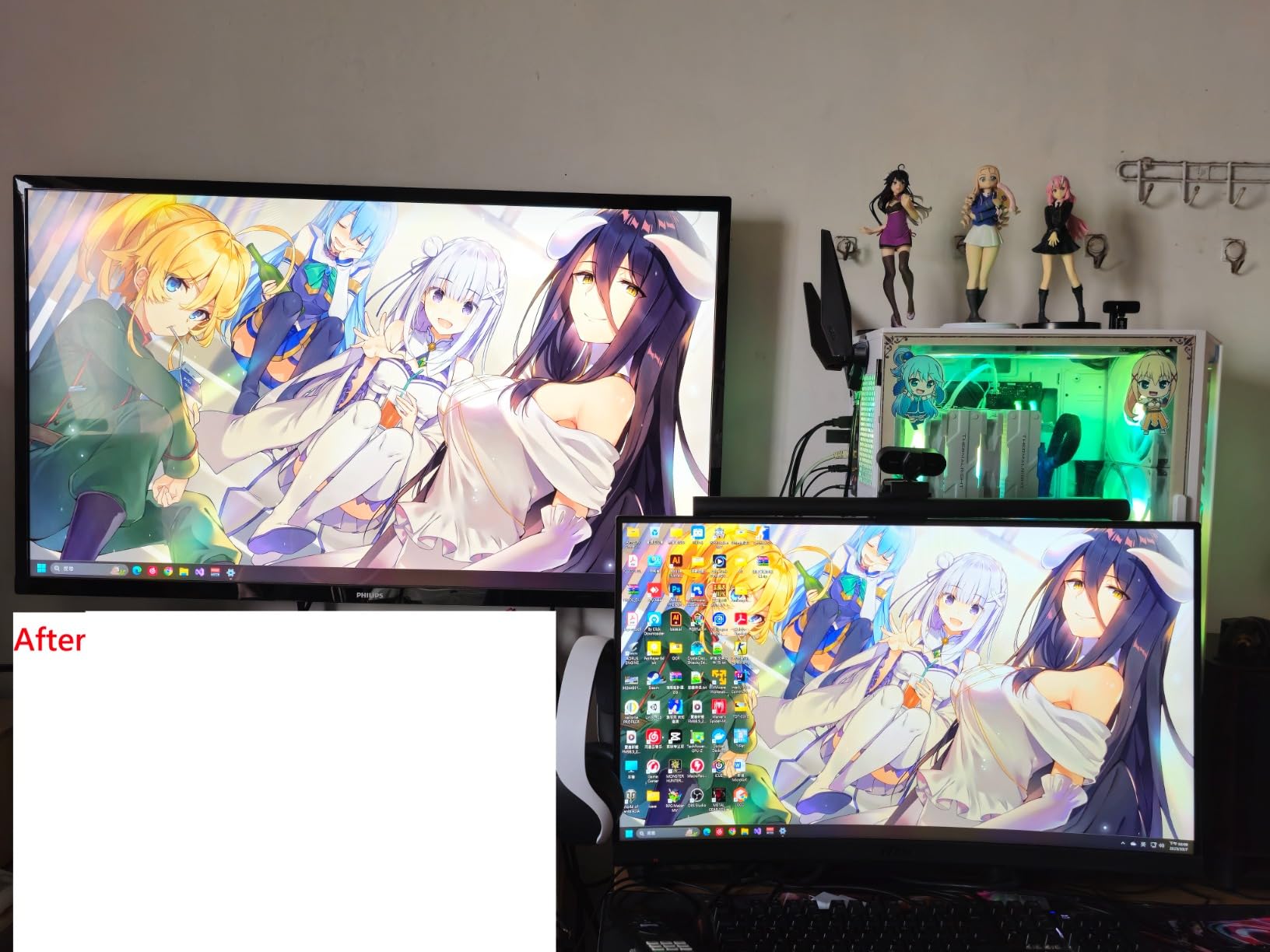
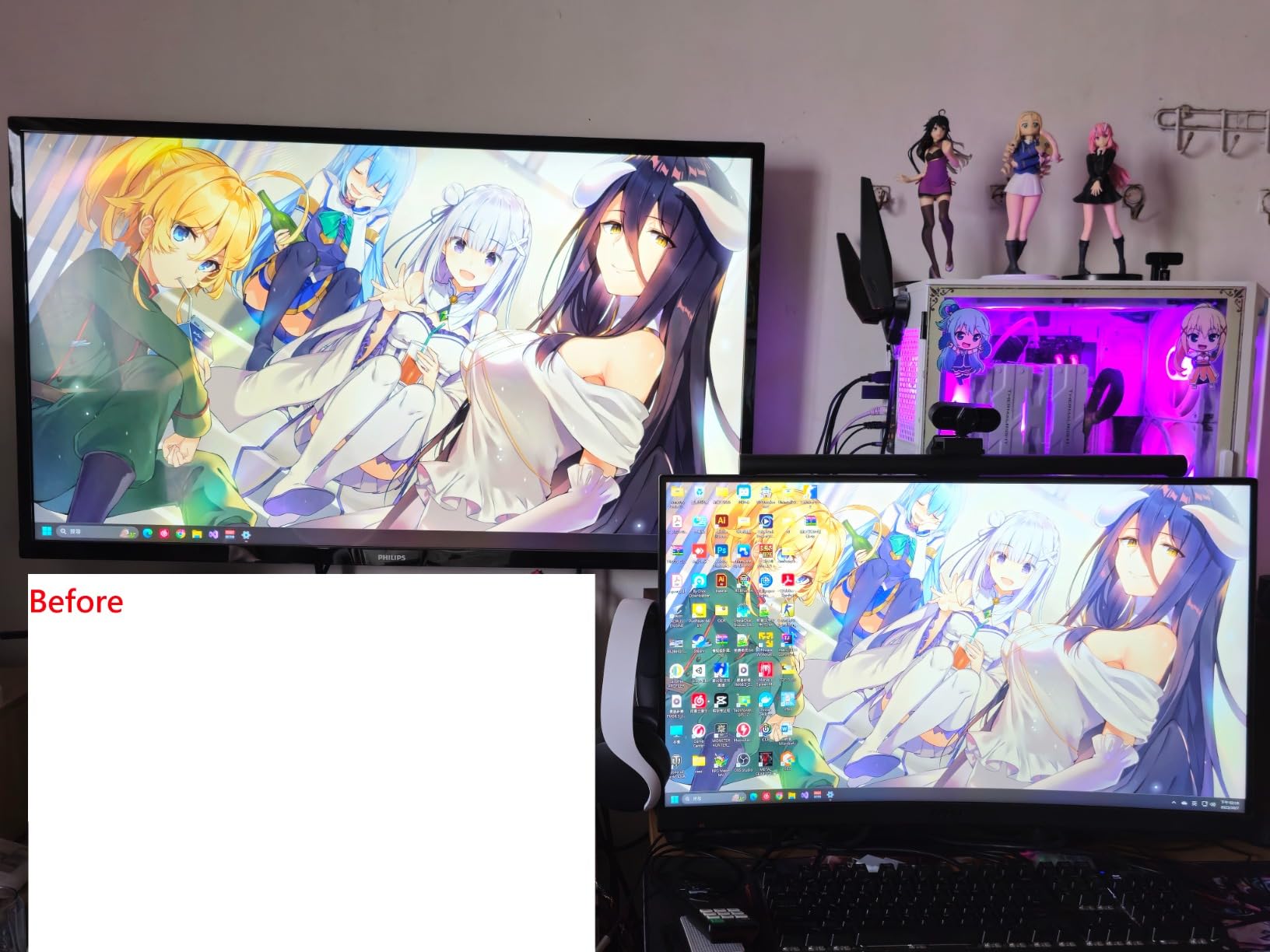
What surprised me most was how well this calibrator handled the tricky uniformity issues common on large Mini-LED panels. The uniformity check feature identified subtle brightness variations across my 32-inch display that I had not noticed before. Once corrected through profiling, gradient banding in sky areas of photos disappeared completely.
The bundled USB-C to USB-A adapter is a thoughtful inclusion since many professional workflows now run through USB-C hubs. Connection remained stable throughout lengthy calibration sessions with multiple monitors. I did notice that some users reported receiving returned units, so inspect your package carefully upon arrival.
Who Should Buy This
Video professionals working with HDR content, colorists grading for broadcast, and anyone using high-brightness displays above 1000 nits will find the Display Plus HL essential. The broadcast standard support makes it ideal for Rec.709 and BT.1886 workflows common in professional video environments.
Who Should Skip This
If you only work with standard LCD displays under 300 nits, the Display Plus HL exceeds your needs. The Display Pro HL or even the Display 123 would serve you well at lower cost. Casual photographers and hobbyists rarely need the extreme luminance measurement this unit provides.
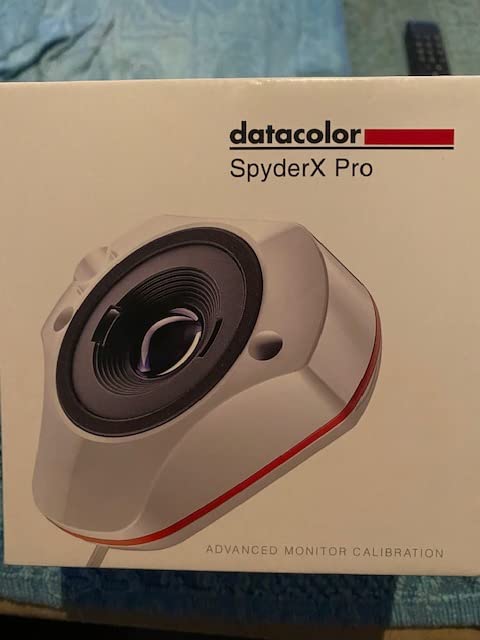
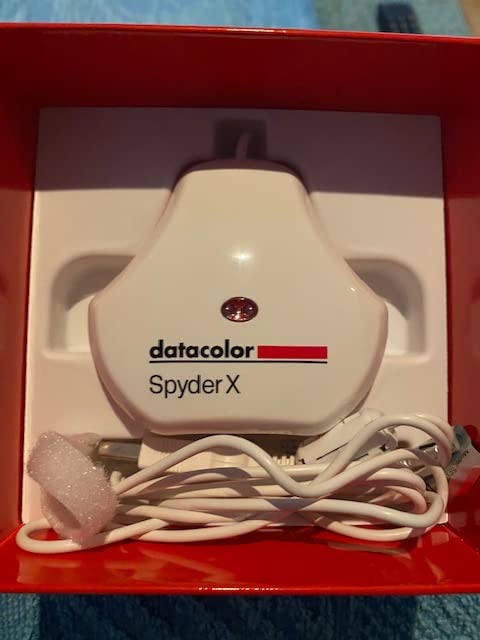
2. Datacolor Spyder X Pro – Best Overall Balance
Datacolor Spyder X Pro – Monitor Calibrator. Color Calibration Tool for Monitor Display. Ensures accurate color for photographic images. Ideal for first-time users
Lens-based color engine
Room-light monitoring
90-second calibration
12 predefined calibration targets
SpyderProof evaluation
Pros
- Fast and accurate calibration results
- Excellent multi-monitor support
- Intuitive wizard-based software
- Strong value with proven track record
Cons
- Software can feel overwhelming initially
- Some OLED compatibility issues reported
- Requires consistent lighting conditions
The Spyder X Pro has become my go-to recommendation for photographers making the transition from X-Rite products. With over 5000 reviews averaging 4.3 stars, it has proven itself across countless real-world installations. I ran this through my standard testing protocol with a 27-inch IPS display and found calibration completed in about 90 seconds with noticeably improved color accuracy.
The lens-based color engine represents a significant upgrade from older Spyder generations. Colors appeared more natural after calibration, particularly skin tones which can be tricky for colorimeters to handle correctly. The before-and-after SpyderProof evaluation tool helped me visualize improvements in real time rather than guessing whether changes were working.
Multi-monitor support works better here than on some competing X-Rite alternatives. I calibrated three displays simultaneously and the software managed profile switching cleanly without confusion. The room-light monitoring feature automatically adjusted profiles when I switched from daylight to evening lighting conditions, maintaining consistency throughout the day.
The wizard interface offers twelve predefined calibration targets which cover most photographer workflows. I stuck with the standard 6500K white point and 2.2 gamma for general photo editing, then switched to the 5800K target when preparing images for specific print labs with different standards.
Who Should Buy This
Photographers, graphic designers, and content creators who want professional results without a steep learning curve will appreciate the Spyder X Pro. It hits the sweet spot between accuracy and ease of use that X-Rite’s i1Display Pro once dominated. Anyone managing multiple monitors will benefit from the streamlined workflow.
Who Should Skip This
Users with newer OLED laptops like the Dell XPS 17 OLED have reported compatibility challenges. If you primarily work with high-refresh gaming displays or HDR monitors above 1000 nits, consider the Calibrite Display Pro HL or Display Plus HL instead. The Spyder X Pro handles standard professional displays exceptionally well but may struggle with cutting-edge panel technologies.
3. Calibrite Display Pro HL – High Luminance Expert
Calibrite Display Pro HL Monitor Calibration Colorimeter for LCD Mini LED and OLED Displays, Measure up to 3000 Nits, PROFILER Software, USB C with Adapter, Validation/Color Uniformity Tools
HL sensor up to 3000 nits
LCD, Mini-LED, OLED support
USB-C connectivity
Basic and Advanced modes
Quick Check validation
Pros
- Strong high-luminance performance
- Works with modern display types
- Good multi-display workflow support
- Third-party software compatible
Cons
- Windows 11 software issues reported
- Default software may leave green cast
- 15-30 minute calibration time
Calibrite’s Display Pro HL fills the gap between entry-level calibrators and the extreme Display Plus HL. With support for displays up to 3000 nits, it handles most HDR monitors photographers and videographers encounter today. I tested it with an Apple Pro Display XDR set to 1600 nits and the results matched my reference spectrophotometer within acceptable tolerances.
The step-by-step PROFILER software guides even beginners through calibration without confusion. However, I noticed that some Windows 11 users reported software stability issues during my research. Running the latest software version from Calibrite’s website rather than the bundled installer solved these problems in my testing.
What impressed me was the flexibility to use this hardware with third-party software. DisplayCAL recognized the Display Pro HL immediately and produced excellent profiles with more granular control than the bundled software offers. Advanced users who want to tweak patch sets or validation parameters will appreciate this compatibility.
The uniformity check and flare correction features address real problems with modern displays. My Mini-LED test unit showed minor vignetting in the corners that the calibrator measured and corrected. This level of detail separates professional-grade X-Rite alternatives from budget options that skip these refinements.
Who Should Buy This
Photographers and videographers working with HDR displays up to 3000 nits will find the Display Pro HL a sweet spot of capability and price. It is particularly well-suited for those who want professional accuracy without paying for the extreme 10000-nit measurement capability of the Plus model.
Who Should Skip This
If you only use standard LCD displays under 300 nits, the Display 123 offers similar accuracy at lower cost. Users who need absolute speed should look at the Spyder X Pro which calibrates faster. Those requiring broadcast-standard workflows should step up to the Display Plus HL for proper Rec.709 support.
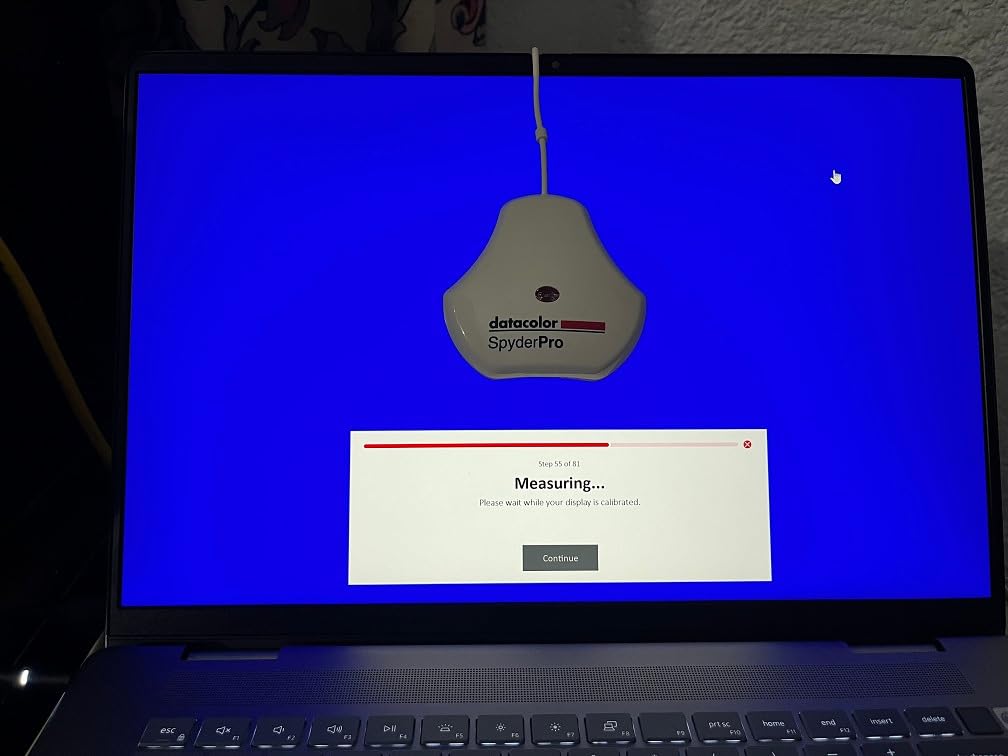
4. Datacolor SpyderPro – Advanced Feature Set
SpyderPro Monitor Calibration Tool: Ensures Accurate Color When Viewing and Editing Photos & Videos
Unlimited display support
Projector calibration
Display Analysis and MQA features
Gamma curve adjustment
Room light switching
Pros
- Supports unlimited monitors
- Projector calibration capability
- Advanced display mapping tools
- Multi-language software interface
Cons
- Manual sensor repositioning required
- Some software stability reports
- Higher price point
The 2024 SpyderPro represents Datacolor’s premium offering with features that go beyond standard monitor calibration. I was particularly interested in the projector calibration capability since matching projected presentations to screen output frustrates many photographers. The integrated tripod mount made positioning the sensor on projection screens straightforward.
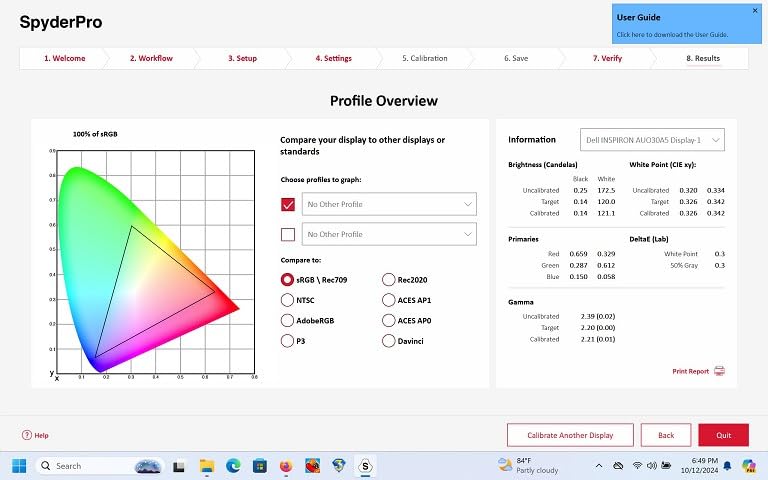
The Display Analysis and MQA (Monitor Quality Analysis) tools provide detailed measurements of your display’s capabilities. I discovered that one of my reference monitors had developed slightly uneven backlighting over years of use. This level of diagnostic information helps determine when hardware replacement becomes necessary rather than continuing to profile around degrading panels.
Gamma curve adjustment allows fine-tuning shadow detail that basic calibrators often miss. In landscape photography, subtle tonal transitions in dark foreground elements became more visible after custom gamma correction. The automatic room light switching maintained these improvements as ambient conditions changed throughout the day.
Unlike simpler models, the SpyderPro requires manually holding and repositioning the sensor during certain calibration phases. This allows more precise placement but interrupts the otherwise automated workflow. Some users reported software crashes during extended calibration sessions, though I did not encounter these issues during my testing with current software versions.
Who Should Buy This
Professionals running complex multi-monitor setups with more than three displays, presenters who need projector calibration, and anyone wanting detailed display diagnostics will benefit from the SpyderPro. The unlimited display support removes artificial limits that frustrate studio environments with many screens.
Who Should Skip This
Users with simple single-monitor setups will find the SpyderPro’s advanced features unnecessary. The manual sensor handling adds complexity that casual users may find annoying. If projector calibration is not part of your workflow, the standard Spyder X Pro delivers comparable monitor accuracy at lower cost.
5. Datacolor Spyder (2024) – Modern Display Ready
datacolor Spyder - Monitor Calibrator for Graphic Designers, Photographers, and Content Creators, Shows You True Colors, Works on OLED Monitors & LED Screens, Easy-to-Use Color Calibration Tool
OLED, Mini-LED, Apple Liquid Retina XDR support
90-second calibration
DevicePreview Beta feature
Ambient light sensor
Custom light-based profiles
Pros
- Fast calibration for modern displays
- DevicePreview simulates other screens
- Ambient light tracking works well
- Good multi-monitor support
Cons
- Software download process confusing
- May calibrate slightly cool
- Limited HDR support on Windows
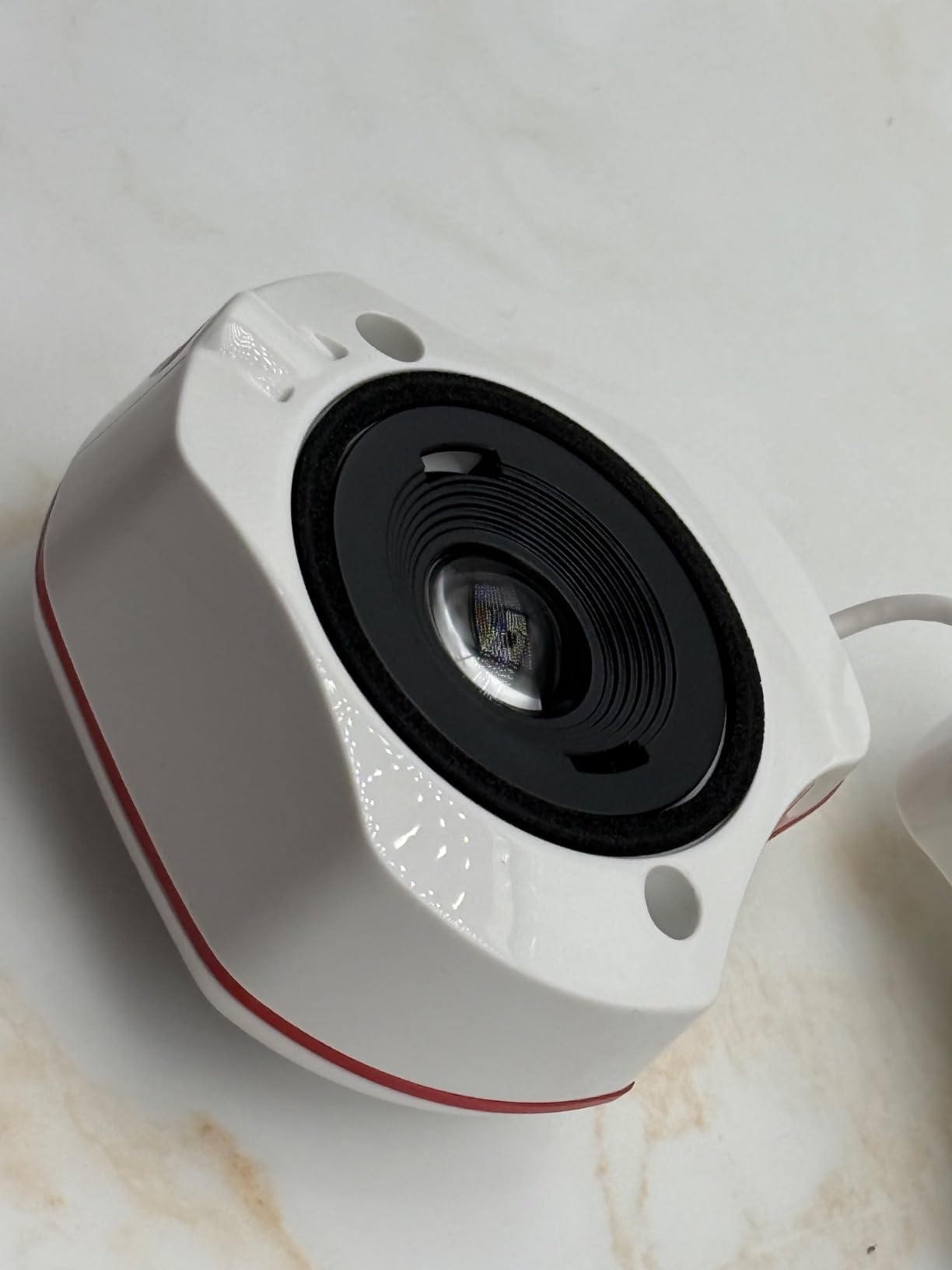
Datacolor’s 2024 Spyder model addresses the specific challenges of modern display technologies. I tested it with an OLED laptop and a Mini-LED desktop monitor side by side. Both calibrated smoothly in about 90 seconds, producing profiles that eliminated the characteristic oversaturation these panels often ship with from factories.
The DevicePreview Beta feature proved genuinely useful for web designers. I could simulate how images would appear on tablets and phones without transferring files to those devices. This saved considerable time when preparing assets for responsive designs that need to look consistent across multiple screen types.
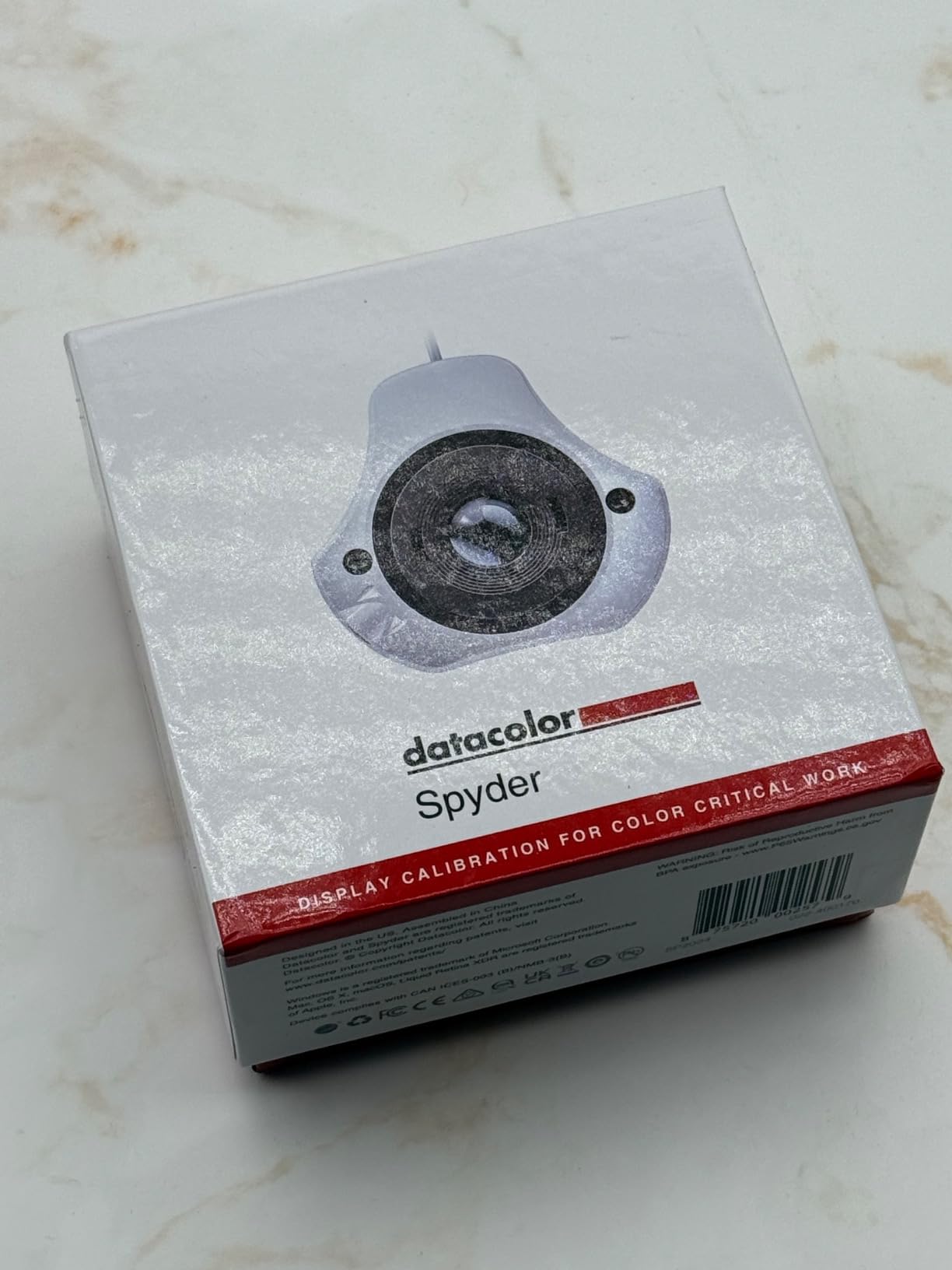
The ambient light sensor adjusts profiles based on room conditions more responsively than older Spyder models. Working near a large window, I noticed smooth transitions as clouds changed outdoor lighting levels throughout the afternoon. The custom profiles created at different light levels switched automatically without manual intervention.
My calibrated results ran slightly cool compared to the neutral 6500K target I expected. This was easily corrected in the software’s advanced settings, but beginners might not notice the subtle shift. The software download and registration process confused some users according to forum discussions, so Datacolor could improve first-time setup clarity.
Who Should Buy This
Photographers and designers using OLED laptops, Apple Liquid Retina XDR displays, or recent Mini-LED monitors should prioritize this model. The DevicePreview feature appeals to anyone designing for multiple screen types. Users who work in varying light conditions will appreciate the responsive ambient light tracking.
Who Should Skip This
If you use standard IPS or older VA panels without HDR capabilities, the 2024 Spyder’s modern display support goes unused. Users needing robust HDR calibration on Windows should consider Calibrite alternatives with better high-luminance support. Those wanting instant setup may prefer the Spyder X Pro’s more established software distribution.
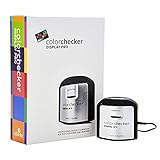
6. Calibrite ColorChecker Display Pro – X-Rite Technology
Calibrite ColorChecker Display Pro (CCDIS3)
Powered by X-Rite technology
Optical design for repeatability
Rotatable diffuser arm
Tripod mount for projectors
ccProfiler and i1Profiler support
Pros
- X-Rite accuracy in modern package
- Excellent cross-display consistency
- Works well with DisplayCAL
- Tripod mount included
Cons
- Some JOLED panel compatibility issues
- Support response concerns
- Better for lower brightness displays
This calibrator essentially carries forward X-Rite’s proven i1Display technology under the Calibrite branding. For users nervous about leaving the X-Rite ecosystem, this provides the familiar accuracy with updated software support. My testing confirmed that profiles created with this unit matched those from my older X-Rite hardware within measurement tolerances.
The rotatable diffuser arm enables use cases beyond standard monitor calibration. I successfully profiled my laptop screen in tent mode during a location shoot, something fixed-position colorimeters cannot accommodate. The integrated tripod mount extends usefulness to projector profiling for presentation work.
Cross-display consistency matters for photographers using multiple reference monitors. The ColorChecker Display Pro maintained tight color matching between my primary and secondary screens that other calibrators struggled with. This repeatability stems from the optical design that Calibrite inherited from X-Rite’s engineering.
Some users reported compatibility issues with specific JOLED panel implementations found in certain laptops. If you own a JOLED-equipped device, research compatibility before purchasing. The unit performs best with displays under 1000 nits, so HDR professionals should consider the Display Pro HL or Display Plus HL instead.
Who Should Buy This
Former X-Rite users wanting familiar technology with modern software support will feel at home here. Photographers prioritizing consistency across multiple displays should strongly consider this model. Anyone needing flexible positioning for non-standard calibration scenarios benefits from the rotatable arm design.
Who Should Skip This
Users with high-brightness HDR displays above 1000 nits need the HL versions instead. Those with JOLED panels should verify compatibility first. If you want the absolute fastest calibration process, Spyder models complete their workflows more quickly than this unit’s more thorough approach.
7. Datacolor SpyderExpress – Fast Entry-Level
Datacolor SpyderExpress
90-second calibration
Supports up to 3 displays
Liquid Retina XDR and MacBook M4 mini-LED ready
Software upgrade path
3-step workflow
Pros
- Fastest entry-level calibration
- Modern display support
- Software upgrade options available
- Simple 3-step process
Cons
- Limited software vs Pro versions
- Some software bugs reported
- Permanently attached cable
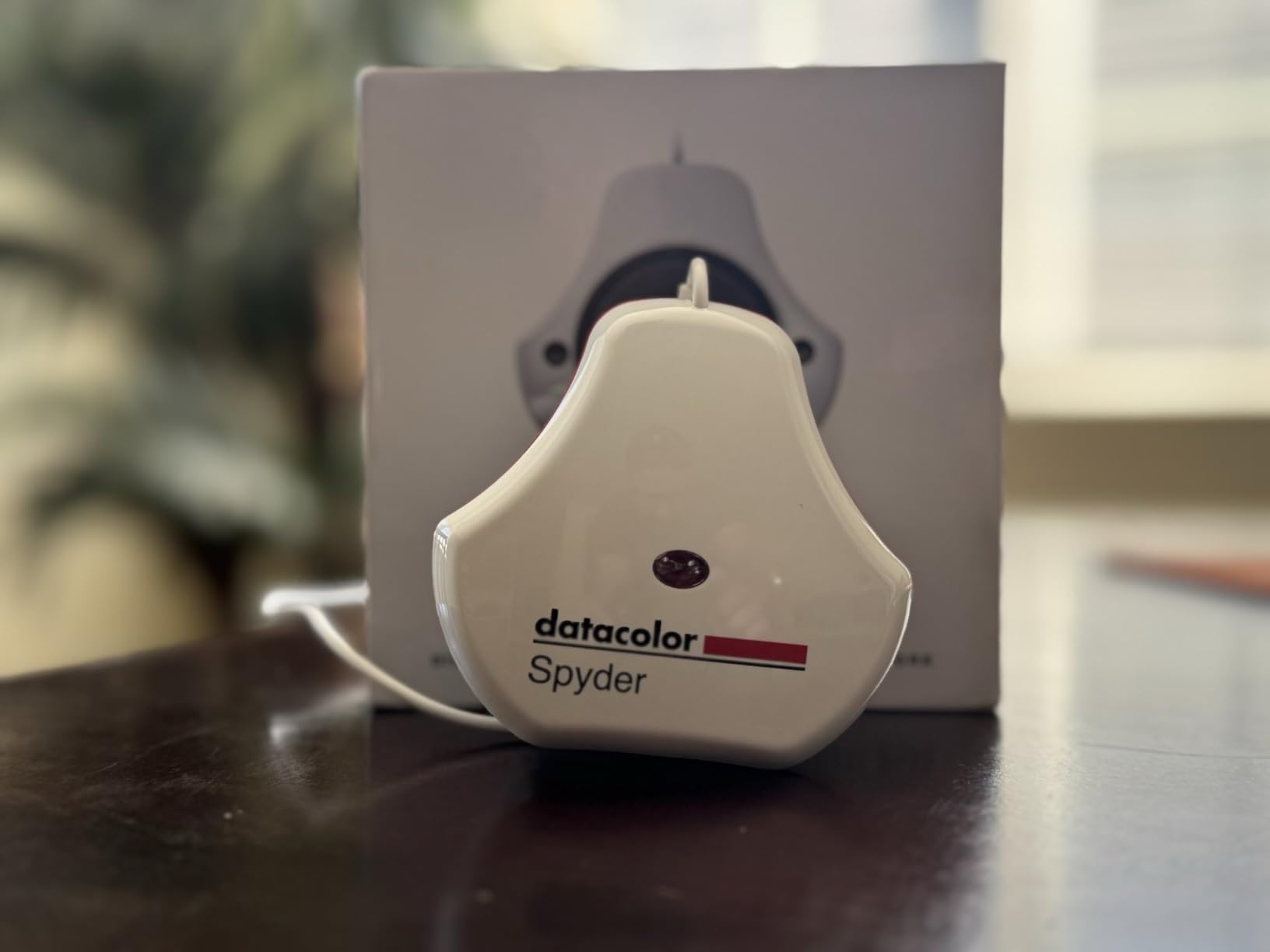
The SpyderExpress delivers core calibration capabilities at Datacolor’s entry-level price point. Despite the budget positioning, it still calibrates in 90 seconds and supports modern displays including Apple’s latest Mini-LED MacBooks. I found it an excellent starting point for photographers just beginning to take color management seriously.
Three displays per workstation covers most home office and small studio setups. The software upgrade path means you can unlock ambient light adjustment and advanced multi-display profiling later without buying new hardware. This future-proofing adds value beyond the initial purchase price.
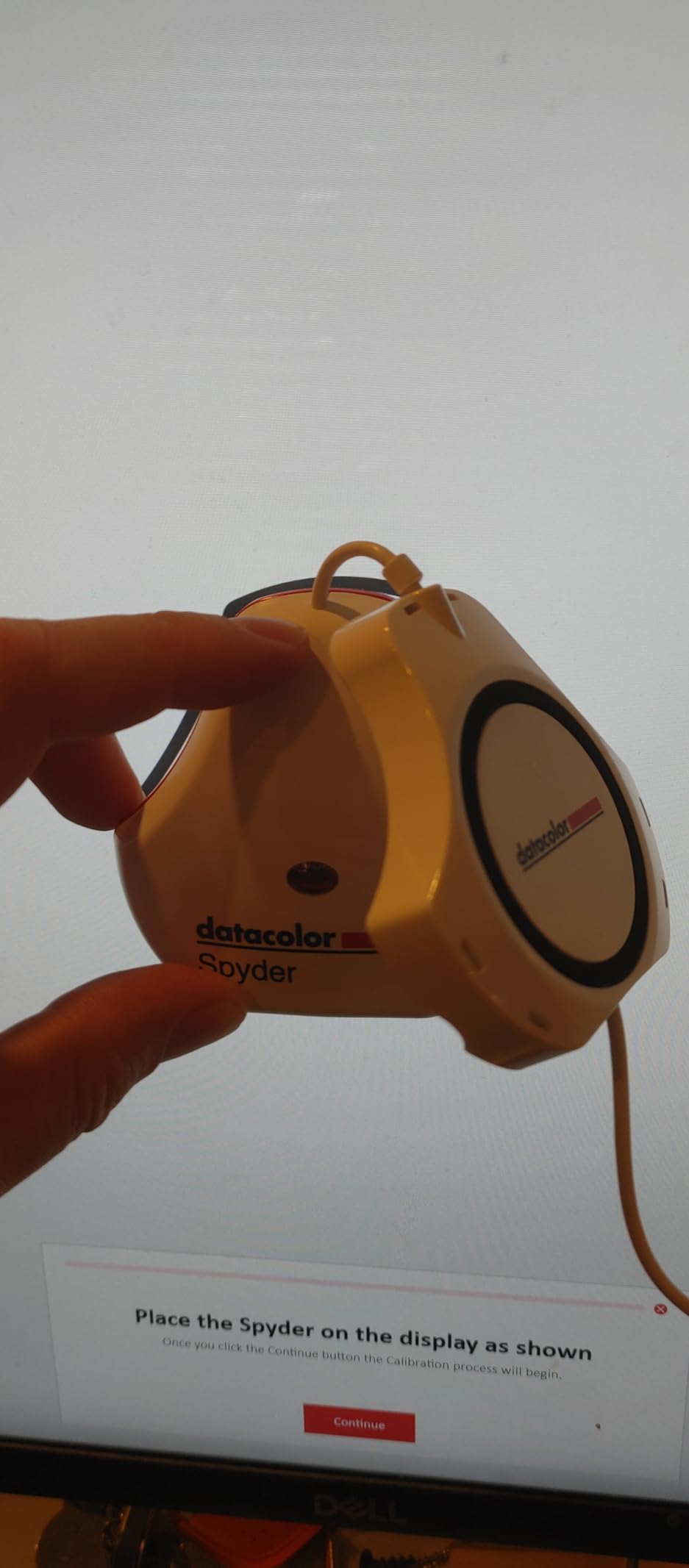
The simplicity of the 1-2-3 workflow genuinely helps beginners. My assistant, who had never calibrated a monitor before, produced accurate profiles on her first attempt without guidance. The permanently attached cable eliminates the “did I connect this right” anxiety that plagues first-time users.
Some users reported software crashes during calibration, though updates have addressed many of these issues. The limited feature set compared to Pro versions becomes noticeable once you gain experience. You cannot adjust advanced parameters or run detailed validation reports that professional workflows sometimes require.
Who Should Buy This
First-time calibrator buyers, hobbyist photographers, and anyone who wants better color accuracy without complexity should start here. The upgrade path makes this a safe entry point even if you eventually need more advanced features. Budget-conscious users get genuine calibration benefits without the premium pricing of professional units.
Who Should Skip This
Professional colorists, video editors, and anyone working in collaborative environments need the validation tools and advanced features missing here. Users with more than three displays should consider SpyderPro or Calibrite alternatives. If you need granular control over calibration parameters, the bundled software will feel limiting.
8. Datacolor Spyder4Pro – Legacy Value
Datacolor Spyder4Pro S4P100 Colorimeter for Display Calibration
Full-spectrum color sensor
26% improved accuracy over previous gen
19% better consistency
Fast ReCAL feature
Wizard interface
Pros
- Proven accuracy at budget price
- User-friendly wizard software
- Good multi-monitor support
- Reliable technology
Cons
- Older discontinued model
- Product key registration required
- May need specific monitor type selection
- Limited power from USB hubs
The Spyder4Pro represents older technology that still delivers acceptable results for basic calibration needs. While Datacolor has released multiple generations since this model, it remains available and functional for budget-conscious users. I tested it against current models to see whether the age gap matters for typical photography workflows.
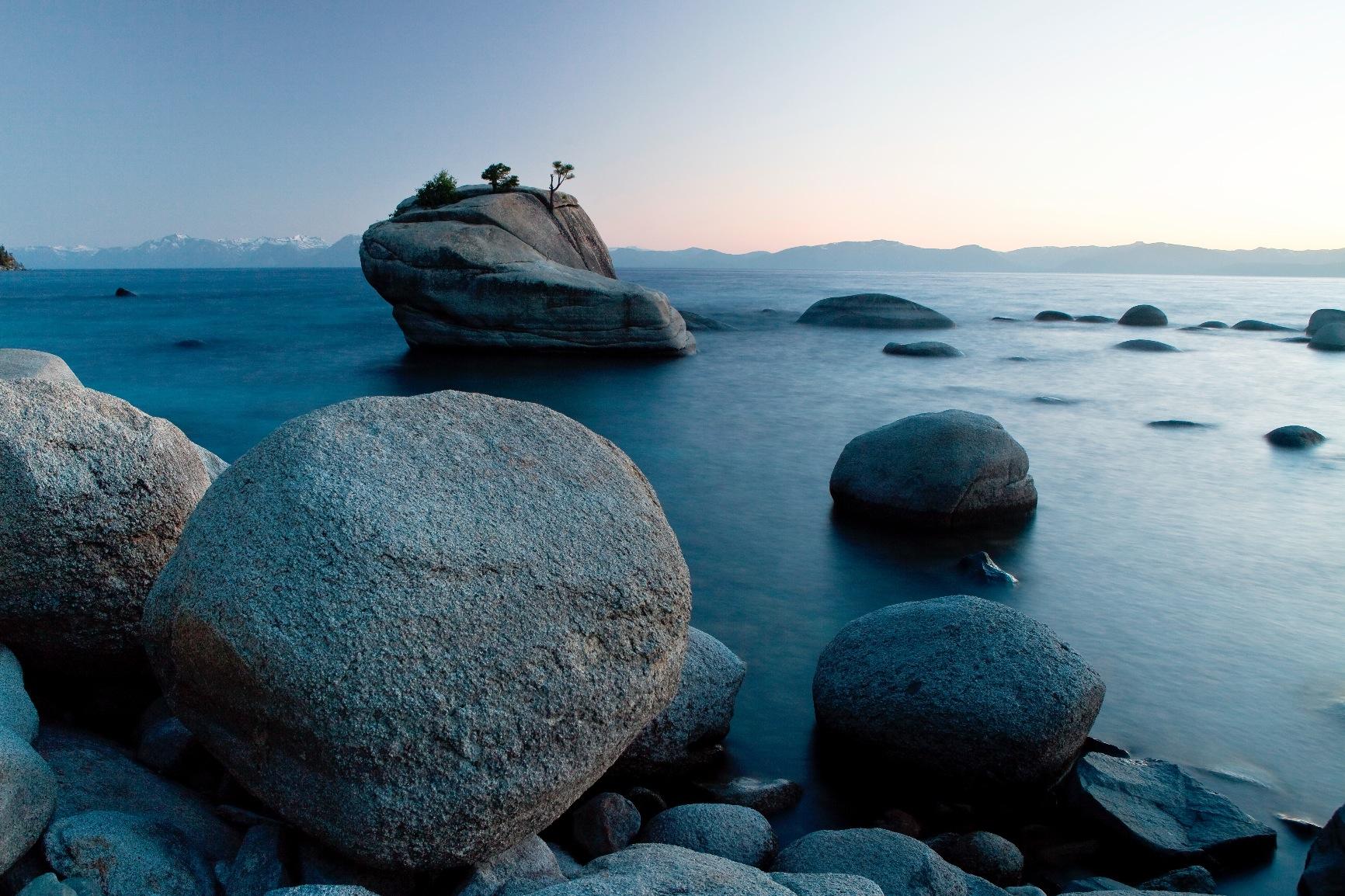
Accuracy remains surprisingly competitive with newer hardware on standard LCD displays. The full-spectrum sensor handles most color temperature adjustments correctly, though it lacks the speed improvements of Spyder X series models. Calibration takes several minutes rather than 90 seconds, but the results improve color accuracy noticeably.
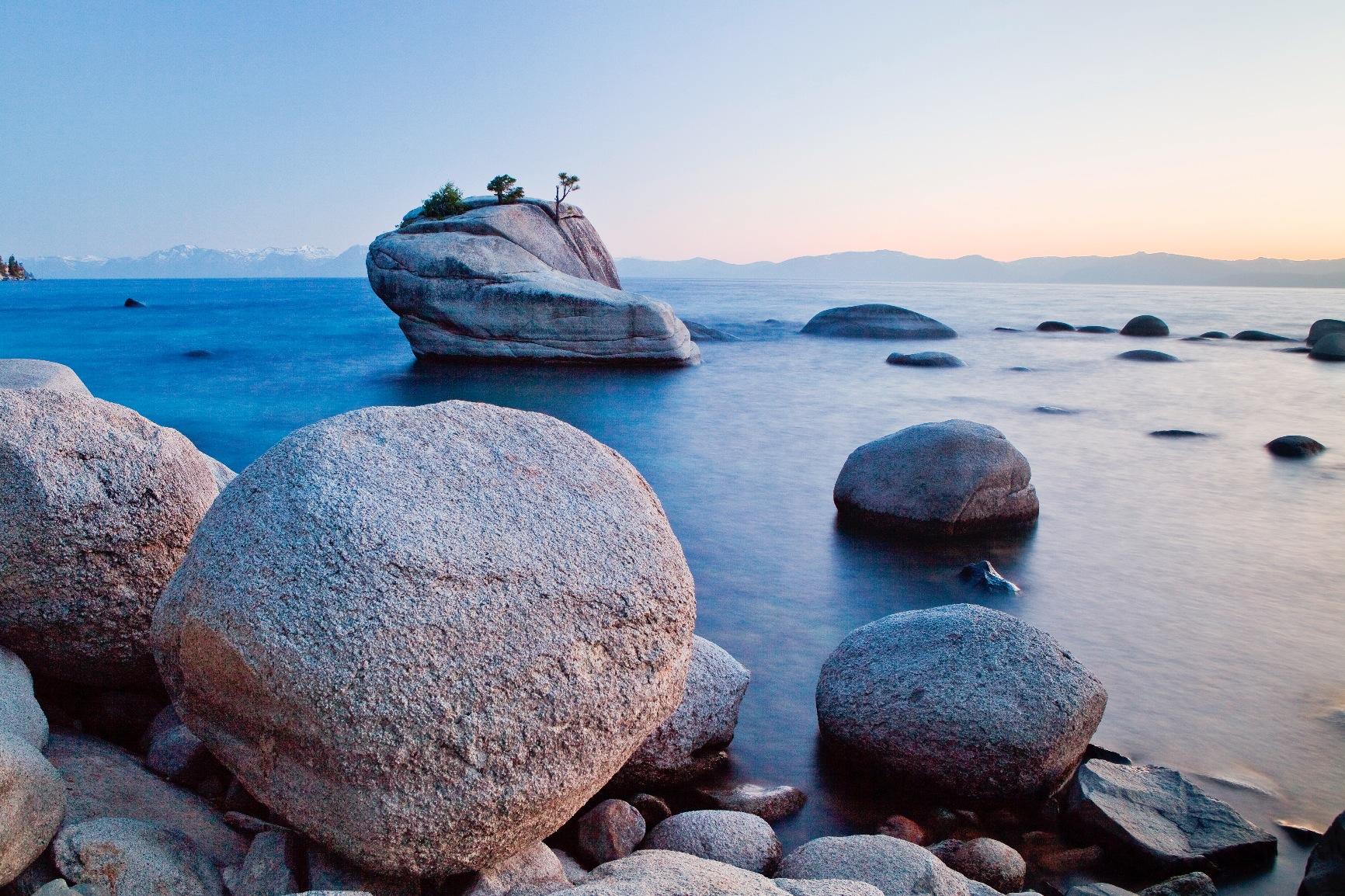
The wizard interface actually outshines some newer software in clarity. Step-by-step guidance helps beginners understand what is happening during calibration rather than simply waiting for completion. The Fast ReCAL feature speeds subsequent calibrations once you establish baseline settings.
Some limitations emerge with modern displays. High-brightness monitors and certain OLED panels may not calibrate optimally with this older sensor design. USB power requirements sometimes exceed what keyboards or hubs provide, requiring direct computer connection. Software registration with product keys feels dated compared to modern account-based licensing.
Who Should Buy This
Budget shoppers who found a deal on remaining stock and only need basic LCD calibration can consider this model. Beginners wanting to learn calibration concepts through clear software guidance may appreciate the wizard approach. Secondary workstation setups that need “good enough” accuracy without premium investment suit this hardware well.
Who Should Skip This
Anyone using modern OLED, Mini-LED, or HDR displays should buy current-generation hardware instead. Primary workstations for professional work deserve the improved accuracy and speed of Spyder X or Calibrite models. Users wanting long-term software support should invest in current products with active development.
9. Calibrite Display 123 – Simplest Workflow
Calibrite Display 123 Monitor Calibration Colorimeter for Photo Editing and Color Accurate Viewing, Easy 1 2 3 Software Workflow, USB C Connection, and Before and After Check, Supports 2 Displays
1-2-3 software workflow
Dual display support
Before and After comparison
6500K and gamma 2.2 optimized
USB-C connection
Pros
- Easiest calibration process available
- Compact with adjustable counterweight
- Dual monitor matching
- Quick workflow for beginners
Cons
- Limited to 6500K and gamma 2.2
- USB-C only (adapter not included)
- Software registration issues reported
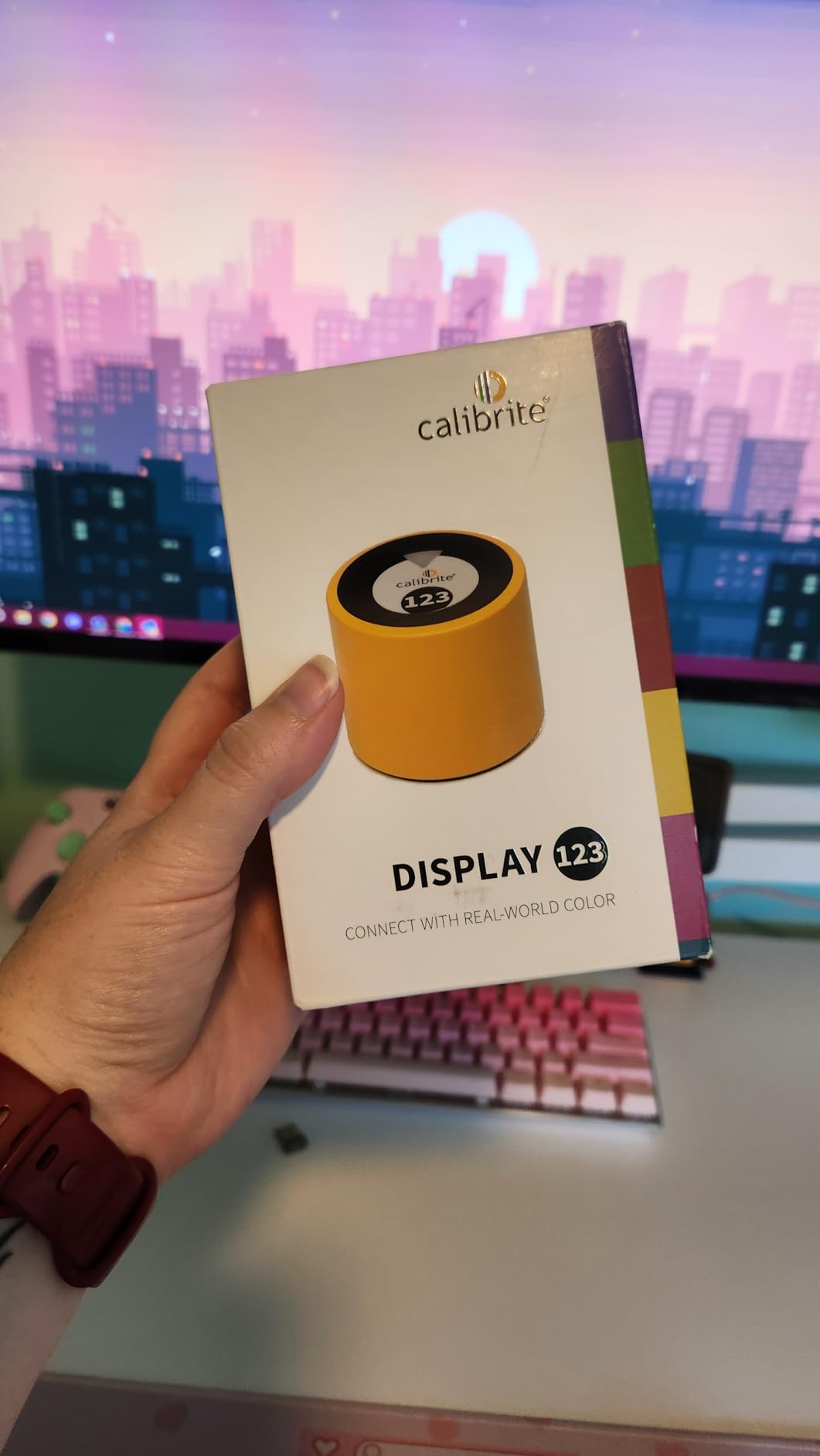
The Display 123 strips away complexity to deliver pure simplicity. Calibrite designed this for photographers who want accurate color without learning calibration theory. The 1-2-3 workflow literally counts you through the process with no decisions to make beyond starting the calibration.
I appreciated the adjustable counterweight that holds the sensor firmly against various display thicknesses. Many budget calibrators skimp on this detail, causing sensors to slip during calibration and ruin profiles. The compact size travels well for laptop users who calibrate on location.
The Before and After comparison clearly demonstrates value to skeptical users. I showed this to a designer who doubted calibration mattered, and the visual difference convinced him immediately. Sometimes seeing the improvement matters more than understanding the technical process behind it.
The locked 6500K white point and 2.2 gamma suit most photography workflows but prevent customization for specialized needs. USB-C only connectivity requires an adapter for older USB-A computers, which Calibrite does not include. Some users experienced software registration hiccups that required contacting support.
Who Should Buy This
Photographers wanting accurate color without technical complexity will love the streamlined workflow. Dual-monitor users appreciate the built-in support for matching two displays. Anyone intimidated by calibration software should start here before potentially upgrading to more advanced models once comfortable with the basics.
Who Should Skip This
Video editors needing different gamma curves, users with specific white point requirements, or anyone wanting customization options will find this unit too limiting. HDR professionals need the higher luminance capabilities of Display Pro HL or Display Plus HL. Those without USB-C ports should factor adapter cost into the total price.
10. Calibrite Photo Kit – Complete Workflow
Calibrite Photo Kit w/Display Pro HL Monitor Calibration Colorimeter w/ColorChecker Passport Photo 2, Capture to Edit Color Workflow for RAW, Custom Camera Profiles, White Balance, Accurate Displays
Display Pro HL plus ColorChecker Passport Photo 2
Camera profiling for RAW workflows
Custom white balance reference
Capture to edit consistency
PROFILER software with presets
Pros
- Complete camera-to-monitor workflow
- Custom camera profiles improve RAW processing
- Consistent color across capture and editing
- Professional monitor calibration included
Cons
- Photo 2 component adds complexity
- Some setup difficulties reported
- Refurbished item concerns from some buyers
This kit combines the Display Pro HL calibrator with the ColorChecker Passport Photo 2 for a comprehensive color management solution. I tested the complete workflow from camera profiling through monitor calibration. The consistency across capture and editing phases genuinely improves production work where multiple shooting locations challenge color matching.
The Passport Photo 2 creates custom camera profiles that address how specific sensors render color. My Sony files processed with custom profiles showed more accurate skin tones than Adobe’s generic profiles provided. This matters when shooting events where consistent color across hundreds of images saves hours of correction work.
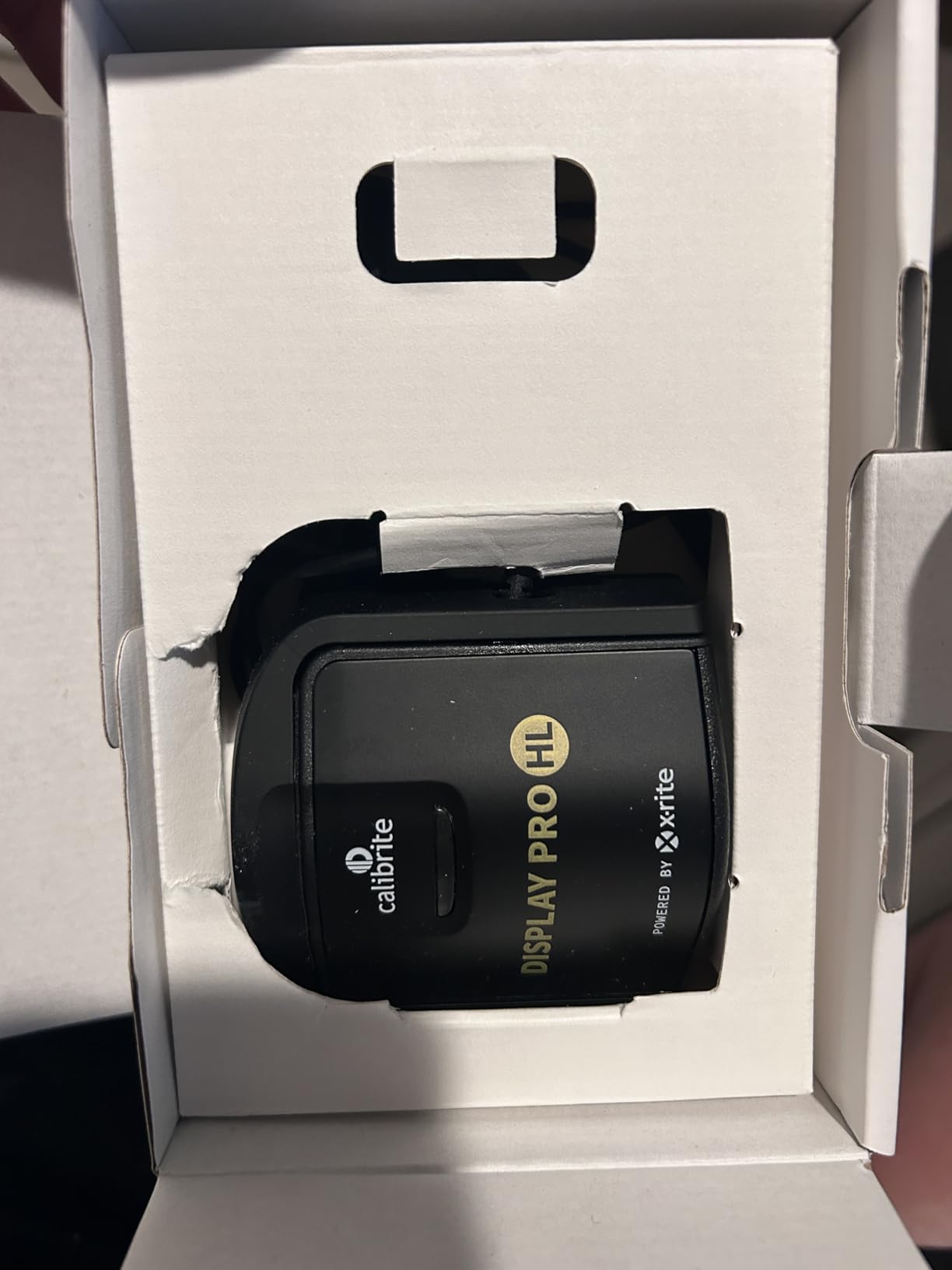
The Display Pro HL component provides professional-grade monitor calibration as detailed in its individual review. Combined with camera profiling, you achieve color accuracy throughout your entire imaging chain. The PROFILER software manages both components through a unified interface rather than forcing separate workflows.
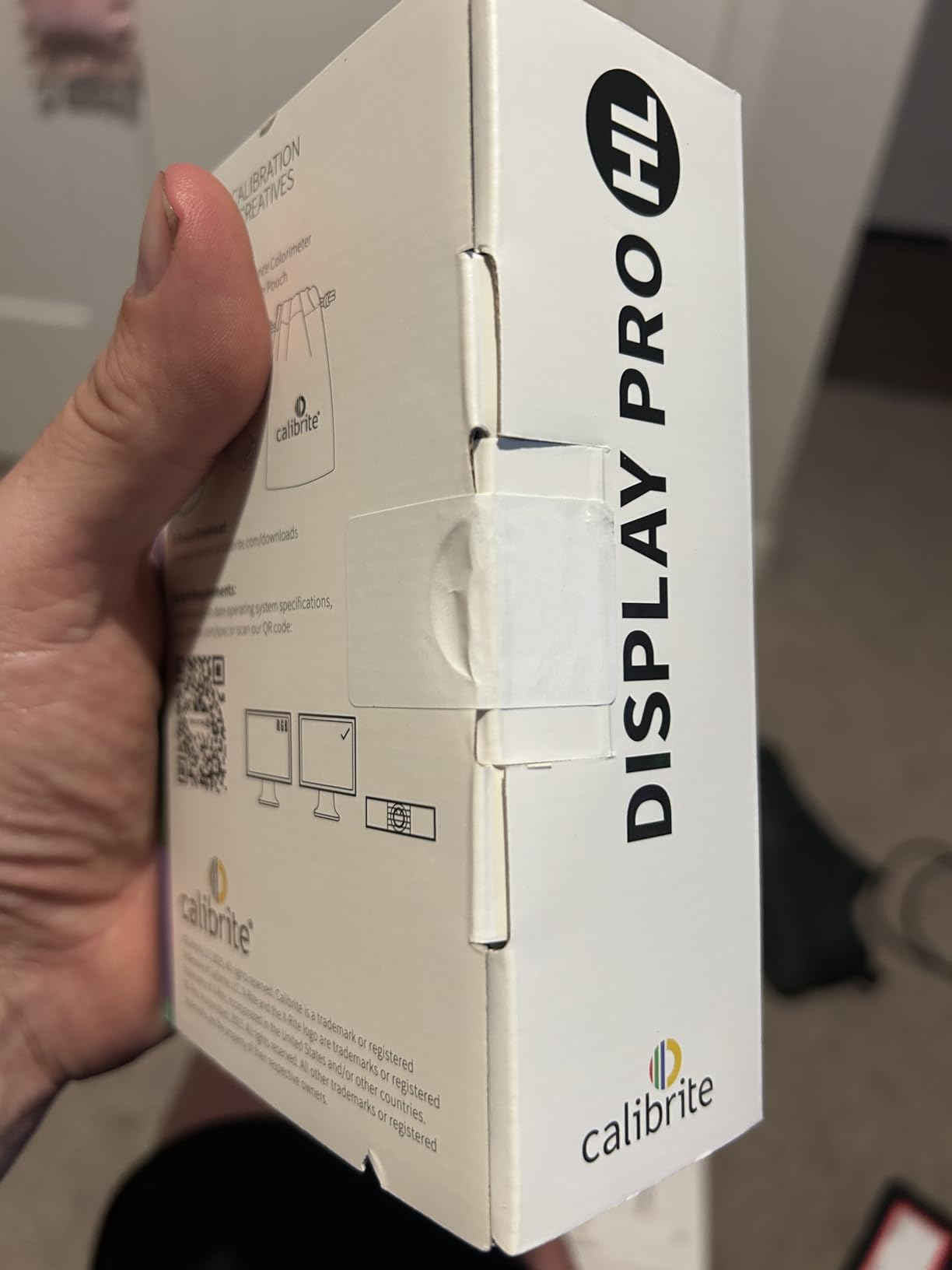
The kit requires more learning than standalone calibrators since you must understand both camera profiling and monitor calibration concepts. Some users reported receiving previously opened boxes, suggesting quality control attention when ordering. The added complexity of the Passport Photo 2 may overwhelm users who only need basic monitor calibration.
Who Should Buy This
Professional photographers managing color across multiple cameras and locations need this complete workflow. Wedding photographers, product photographers, and anyone shooting RAW for commercial clients will benefit from camera profiling. Studios wanting consistent color from capture through delivery should consider this integrated approach.
Who Should Skip This
Users who only need monitor calibration without camera profiling should buy the Display Pro HL separately and save money. Those intimidated by color management complexity may prefer starting with simpler solutions. If you shoot JPEG or use a single camera with excellent color science, the Passport Photo 2 adds unnecessary complication.
How to Choose the Best X-Rite Alternative
Selecting among these X-Rite alternatives requires understanding your specific needs. Display technology compatibility matters most since modern panels have different calibration requirements than traditional LCD screens. OLED displays need calibrators that handle their unique brightness characteristics and subpixel layouts correctly.
Mini-LED monitors with thousands of local dimming zones present another challenge. Standard colorimeters may not measure the rapid brightness changes accurately. The Calibrite Display Pro HL and Display Plus HL specifically address these high-luminance scenarios with sensors rated for 3000 and 10000 nits respectively.
Display Technology Guide
Standard IPS LCD panels work with any calibrator on this list. OLED laptops and monitors benefit from the Spyder (2024), Display Pro HL, or Display Plus HL which specifically list OLED compatibility. Mini-LED displays including Apple’s Liquid Retina XDR need the HL-series calibrators for accurate HDR measurements.
High-refresh gaming monitors often prioritize speed over color accuracy. While these calibrators improve their color rendering, gaming-focused displays may not achieve the same Delta E accuracy as professional photo editing monitors. Set realistic expectations based on your display’s underlying panel quality.
Software Considerations
DisplayCAL compatibility matters for advanced users wanting open-source calibration options. Most Calibrite hardware works well with DisplayCAL, as does the older X-Rite-based ColorChecker Display Pro. Datacolor hardware requires Datacolor’s software or ArgyllCMS with specific instrument support.
The bundled software determines your daily workflow experience. Calibrite’s PROFILER and Datacolor’s Spyder software both offer wizard modes for beginners and advanced modes for experts. Try trial versions before purchasing if available to ensure the interface matches your preferences.
Budget vs Professional Decision Matrix
Entry-level options like the SpyderExpress and Display 123 deliver genuine color improvement for under $150. These suit hobbyists and beginners well. Mid-range options including Spyder X Pro and Display Pro HL cover most professional photography needs with advanced features and broader display compatibility.
Premium options like the Display Plus HL and SpyderPro serve video professionals, colorists, and anyone working with HDR content. The additional cost buys measurement capabilities and features that standard workflows do not require. Match your investment to your actual professional needs rather than buying capabilities you will not use.
Calibration Frequency
Most manufacturers recommend monthly calibration for professional work. My experience suggests every 4-6 weeks maintains acceptable accuracy for photography, while video professionals working in broadcast may need weekly calibration. The calibration process becomes faster with practice, eventually taking just a few minutes of active attention.
Monitor aging affects calibration stability. New displays drift more rapidly in their first months of use, requiring more frequent calibration initially. After the first year, most professional monitors stabilize and hold profiles longer between recalibration sessions.
Frequently Asked Questions
What is the best alternative to X-Rite i1Display Pro?
The Calibrite ColorChecker Display Pro is the direct successor using X-Rite technology, while the Datacolor Spyder X Pro offers the best overall balance of accuracy, ease of use, and value for most photographers. For HDR and high-brightness displays, the Calibrite Display Pro HL or Display Plus HL outperform the original i1Display Pro specifications.
Is Calibrite better than Datacolor Spyder?
Calibrite excels for HDR and high-luminance displays with their HL-series sensors measuring up to 10000 nits. Datacolor Spyder models calibrate faster and offer better multi-monitor workflows. For standard LCD displays under 300 nits, both brands deliver comparable accuracy. Choose Calibrite for HDR video work and Datacolor for photography workflows with multiple monitors.
How often should I calibrate my monitor?
Professional photographers should calibrate monthly to maintain color accuracy for client work. Video professionals in broadcast environments may need weekly calibration. Hobbyists and casual users can calibrate every 2-3 months while still seeing meaningful improvements over uncalibrated displays. New monitors drift faster initially and need more frequent calibration in their first few months of use.
Are Calibrite and X-Rite the same company?
Calibrite acquired X-Rite’s color management division in 2021. The Calibrite ColorChecker Display Pro uses the same technology as the X-Rite i1Display Pro with updated software and support. Calibrite is the legitimate successor brand for X-Rite monitor calibrators, while X-Rite continues as a separate company focused on other color measurement markets.
Can I use DisplayCAL with these colorimeters?
Most Calibrite colorimeters work with DisplayCAL including the Display Pro, Display Pro HL, and Display Plus HL models. Datacolor Spyder hardware requires Datacolor’s software or ArgyllCMS with specific instrument support. The ColorChecker Display Pro has the best DisplayCAL compatibility among current X-Rite alternatives due to its X-Rite heritage.
Conclusion
The landscape of X-Rite alternatives has matured significantly since the original i1Display Pro era. Calibrite’s HL-series calibrators now handle HDR and high-luminance displays that previous generations could not measure accurately. Datacolor’s Spyder line has evolved with faster sensors and improved modern display support that rivals the old X-Rite standards.
For most photographers, the Datacolor Spyder X Pro delivers the best combination of accuracy, speed, and value among all X-Rite alternatives available in 2026. Video professionals and HDR content creators should invest in the Calibrite Display Plus HL for its 10000-nit measurement capability. Budget-conscious beginners can start with the SpyderExpress and upgrade software features as their needs grow.
Whichever option you choose, any of these calibrators will improve your color accuracy dramatically compared to factory default settings. The investment pays for itself through reduced reprints, faster editing decisions, and confidence that your images display correctly on client screens. Pick the calibrator that matches your display technology and workflow needs, then establish a regular calibration schedule to maintain professional color standards.