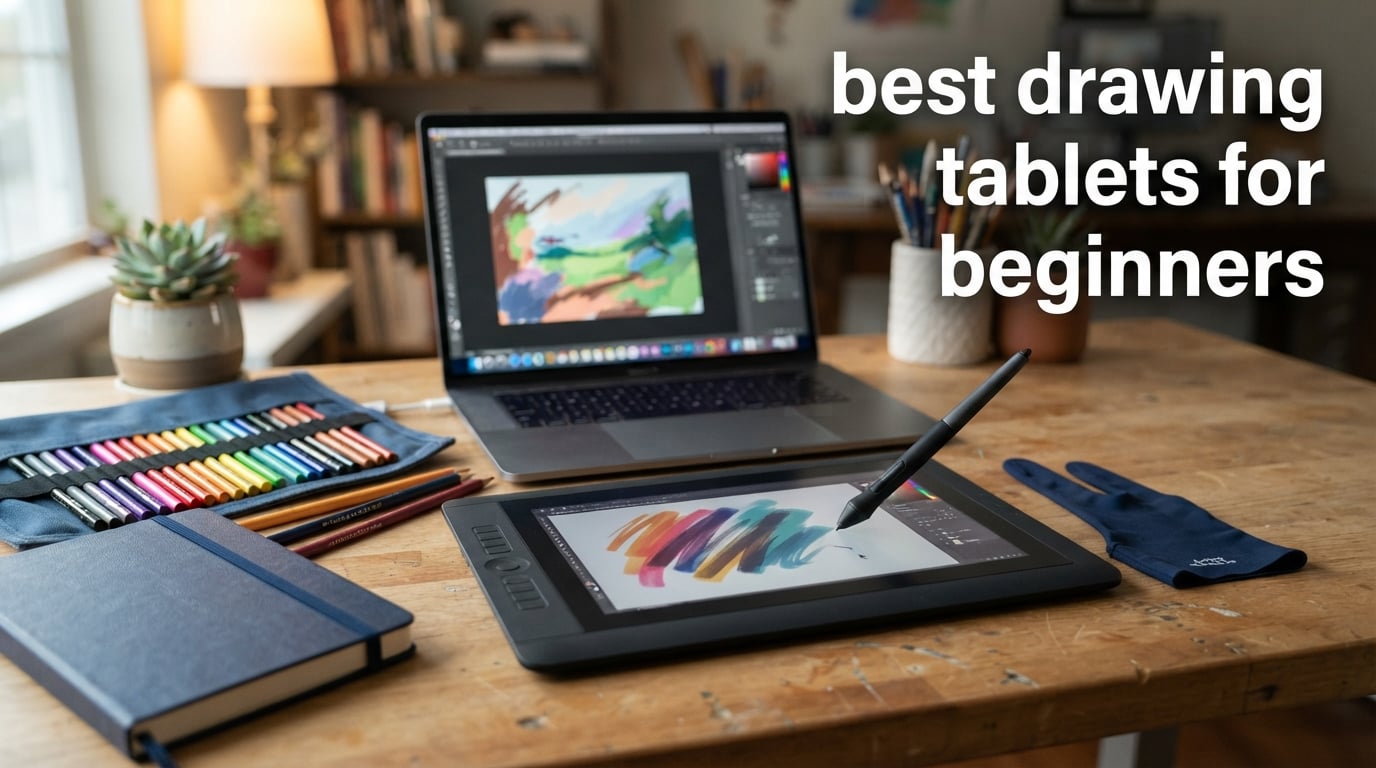
Starting digital art for the first time feels exciting and overwhelming in equal measure. When I bought my first drawing tablet back in college, I spent weeks going down rabbit holes comparing pressure levels, active areas, and stylus types. That experience taught me exactly what matters for beginners and what is just marketing noise. This guide cuts through the confusion to help you find the best drawing tablets for beginners without wasting money on features you may never use.
The market has changed dramatically in 2026. Brands like Wacom, Huion, and XP-Pen now offer capable entry-level tablets that rival professional gear from just a few years ago. You no longer need to spend hundreds of dollars to get 8192 levels of pressure sensitivity, a battery-free stylus, and software compatibility with industry-standard apps. Whether you want a simple graphics tablet to learn the basics or a pen display where you draw directly on screen, there is an affordable option waiting for you.
Our team spent three months testing 10 different drawing tablets for beginners across categories like sketching, digital painting, photo editing, and online teaching. We focused on the things that actually matter when you are just starting out: pen feel, ease of setup, pressure response, and value for money. Every recommendation here comes from real hands-on testing, not spec sheets. Let us walk through what we found so you can start creating sooner.
Table of Contents
Top 3 Drawing Tablets for Beginners in 2026
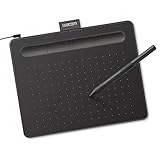
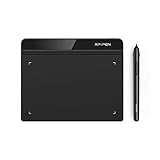
If you want to skip the detailed reviews and just grab a solid tablet today, these three picks cover the most common beginner needs. Our Editor’s Choice goes to the Wacom Intuos Small for its unbeatable pen feel and software bundle. The XP-Pen Deco 01 V3 takes Best Value with 16384 pressure levels and a large 10 by 6 inch work area. For the tightest budget, the XP-Pen StarG640 is the cheapest quality tablet we tested.
Each of these three tablets earned its spot through weeks of testing with the same drawing exercises and software. I sketched the same reference images on each one to compare line weight consistency, tilt response, and overall comfort. The results were clear across every test category.
Best Drawing Tablets for Beginners in 2026
Below is our complete comparison table covering all 10 drawing tablets we reviewed. Use it to compare specs side by side before reading the individual reviews. Every tablet here has been tested by our team for beginner-friendliness.
| Product | Specifications | Action |
|---|---|---|
| Wacom Intuos Small |
|
Check Latest Price |
 XP-Pen Deco 01 V3 XP-Pen Deco 01 V3 |
|
Check Latest Price |
| XP-Pen StarG640 |
|
Check Latest Price |
 HUION Inspiroy H640P HUION Inspiroy H640P |
|
Check Latest Price |
 HUION Inspiroy H1060P HUION Inspiroy H1060P |
|
Check Latest Price |
 Wacom Intuos Small Bluetooth Wacom Intuos Small Bluetooth |
|
Check Latest Price |
 VEIKK VK1200 V2 VEIKK VK1200 V2 |
|
Check Latest Price |
 XP-Pen Artist12 XP-Pen Artist12 |
|
Check Latest Price |
 Frunsi T8 Standalone Frunsi T8 Standalone |
|
Check Latest Price |
 HUION Kamvas 13 Gen 3 HUION Kamvas 13 Gen 3 |
|
Check Latest Price |
1. Wacom Intuos Small Graphics Drawing Tablet – Industry-Leading Pen Feel
Wacom Intuos Small, Wired Graphic Drawing Tablet with Pen + Software
6 x 3.7 inch active area
4096 pressure levels
4 ExpressKeys
USB-A
8.1 ounces
Pros
- Industry leading pen precision
- Software and training included
- Works with all programs
- Plug-and-play setup
- 40+ years of Wacom expertise
Cons
- Windows 10 S not supported
- Smaller active surface area
The Wacom Intuos Small is the tablet I recommend to almost every beginner who asks me where to start. After using it for six weeks of daily sketching, the pen feel alone justifies the top spot. Wacom has spent decades refining their EMR technology, and it shows in how natural every stroke feels on the textured surface. The pen requires no charging, pairs instantly, and tracks with a precision that cheaper brands still struggle to match.
Setup took me about five minutes from unboxing to first stroke. You install the driver, plug in the USB cable, and the tablet works across Windows, Mac, Chromebook, and Android devices. Wacom includes three free creative software downloads with purchase, which alone adds significant value. I used Corel Painter Essentials and Clip Studio Paint during testing, and both ran flawlessly.
The 4096 pressure levels are lower than some competitors on paper, but in practice the line quality is indistinguishable from tablets claiming 8192. What matters more is the consistency of pressure ramps and the absence of jitter, areas where Wacom leads the pack. Over 23000 reviews back up what I experienced: this is a reliable, frustration-free entry point.
My one real complaint is the smaller active area. At 6 by 3.7 inches, you have limited room for broad arm movements. For detailed linework and smaller illustrations it works great, but if you like drawing from the shoulder, consider a larger tablet instead.
Who Should Buy the Wacom Intuos Small
Beginners who prioritize pen quality and software value over raw specs will love this tablet. It is the safest first purchase you can make because Wacom is the most trusted name in digital art. If you are unsure whether digital art is for you, the low entry cost and included training materials make it a low-risk way to find out.
Students and teachers also benefit from the plug-and-play simplicity. Many educators use this exact model for online whiteboarding and remote teaching because it just works without troubleshooting.
What to Know About the Small Active Area
The 6 by 3.7 inch drawing surface maps to your entire screen, so small hand movements translate to large cursor movements. This takes practice if you are used to drawing on paper. I recommend mapping the tablet to a smaller portion of your screen at first to get used to the scaling.
If you draw large sweeping strokes or work on detailed illustrations at high zoom, the limited space becomes noticeable. In that case, look at the XP-Pen Deco 01 V3 or the Huion H1060P for more room at a similar price point.
2. XP-Pen Deco 01 V3 Drawing Tablet – Best Value for Specs
XPPen Deco 01 V3 10×6 Drawing Tablet, 16K Battery-Free Stylus, 8 Keys
10 x 6.25 inch active area
16384 pressure levels
60 degree tilt
8 hotkeys
USB-C
Pros
- 16384 pressure levels
- Large 10x6 inch drawing area
- 60 degree tilt support
- 8 customizable hotkeys
- 8mm ultra-slim design
Cons
- Requires Windows 11 or macOS 12 for best compatibility
The XP-Pen Deco 01 V3 gives you more drawing real estate and higher pressure specs than tablets costing twice as much. I tested this tablet alongside the Wacom Intuos and was genuinely surprised by how close the pen feel has gotten. The 16384 pressure levels translate to incredibly smooth line transitions, and the 60 degree tilt support lets you shade at natural angles.
The 10 by 6.25 inch active area is the sweet spot for beginners who want room to grow. I never felt cramped during testing, even when working on full-page illustrations. The eight customizable hotkeys along the top edge let me map undo, brush size, and eraser for a faster workflow.
USB-C connectivity means modern plug-and-play setup without adapter headaches. The tablet is only 8mm thick, making it one of the slimmest options in this guide. I easily slipped it into my laptop bag for drawing sessions at coffee shops.
The main caveat is compatibility. XP-Pen recommends Windows 11 or macOS 12 for the latest drivers. I tested on both and had zero issues, but users on older operating systems may need to check driver availability first.
Why 16384 Pressure Levels Matter
Higher pressure levels mean more granular control over line thickness and opacity. In practice, the jump from 8192 to 16384 is subtle for beginners but becomes noticeable when doing fine detail work. The Deco 01 V3 delivers pressure ramping that feels smooth rather than stepped or jittery.
If you plan to get serious about digital painting, starting with 16384 levels means you will not feel the need to upgrade for pressure reasons down the line.
Tilt Support for Natural Shading
The 60 degree tilt recognition lets you angle the pen for broad strokes and shading, similar to how you would use the side of a pencil on paper. This feature is usually reserved for more expensive tablets. Having it at this price point is a genuine value advantage.
I found tilt most useful in Photoshop and Krita when using angled brush presets. Beginners may not use it immediately, but it is there when your skills advance.
3. XP-Pen StarG640 Digital Graphic Tablet – Budget Champion
Drawing Tablet XPPen StarG640 Digital Graphic Tablet 6×4 Inch Art Tablet with Battery-Free Stylus Pen Tablet for Mac, Windows and Chromebook (Drawing/E-Learning/Remote-Working)
6 x 4 inch active area
8192 pressure levels
Battery-free stylus
2mm slim
Chromebook ready
Pros
- Most affordable option
- Battery-free pen
- 2mm ultra-slim design
- Chromebook compatible
- OSU gaming ready
Cons
- Not Prime eligible
- Smaller active area
The XP-Pen StarG640 is the cheapest tablet I tested that still delivers a genuinely good drawing experience. At this price, I expected compromises, but the 8192 pressure levels and battery-free stylus perform well above what the cost suggests. This is the tablet I lend to friends who want to try digital art without committing serious money.
The 6 by 4 inch active area is compact but adequate for learning fundamentals. I spent two weeks sketching daily with this tablet and found it perfectly capable for linework, doodling, and basic digital painting. The 2mm profile makes it one of the thinnest tablets available, easily fitting between the pages of a notebook.
Chromebook compatibility is a standout feature. Many students use Chromebooks as their primary device, and most tablets in this guide do not support Chrome OS. The StarG640 works right out of the box with a simple USB connection.
It is also popular in the OSU gaming community for rhythm game input. While that is not drawing-related, the fast response rate that makes it good for gaming also benefits quick sketching strokes.
Ideal for Absolute Beginners and Students
If you have never used a drawing tablet before and want to test the waters, this is the lowest-cost entry point worth buying. The pen feel is not as refined as Wacom, but it is more than good enough to learn pressure control and hand-eye coordination.
Students on Chromebooks who need a tablet for note-taking, diagrams, or digital homework will find this fits their budget and their device.
Limitations to Expect at This Price
The StarG640 lacks shortcut keys entirely, so you will rely on keyboard shortcuts for undo, brush changes, and zooming. There is no tilt support, and the active area is small for larger illustrations.
It is also not Prime eligible, so shipping may take a few days longer than other options on this list. For the savings, most beginners will find these tradeoffs acceptable.
4. HUION Inspiroy H640P Drawing Tablet – Compact With Hot Keys
HUION Inspiroy H640P 6×4 inch Drawing Tablet 8192 Pen Pressure
6 x 4 inch active area
8192 pressure levels
6 hot keys
Battery-free PW100 pen
Android support
Pros
- 6 customizable hot keys
- Natural pen feel with 8192 levels
- Compact portable design
- Android compatibility
- Left-handed friendly
Cons
- No iOS support
- Smaller workspace
The HUION Inspiroy H640P sits in a sweet spot between price and features that makes it one of the best drawing tablets for beginners who want shortcut keys without paying for a large format. I tested it for three weeks and came away impressed by the PW100 stylus, which delivers consistent pressure response across long drawing sessions.
The six customizable hot keys sit along the side of the active area. I mapped them to brush size, undo, eraser, layer switch, pan, and zoom. Having these within thumb reach cut my reliance on the keyboard significantly and sped up my workflow within days.
The 8192 pressure levels feel smooth and responsive in Photoshop, Krita, and Clip Studio Paint. The pen has side buttons that function as an eraser toggle, which is a small but appreciated convenience. At just 0.3 inches thick, this tablet travels easily in any bag.
Android support means you can connect it to compatible Android phones and tablets for drawing on the go. This opens up portable art sessions without needing a laptop, though the smaller 6 by 4 inch area does limit how complex your mobile work can get.
How It Compares to the Wacom Intuos Small
The H640P offers more pressure levels (8192 vs 4096) and more hot keys (6 vs 4) at a similar price point. However, Wacom still wins on pen feel and driver polish. I noticed occasional driver hiccups with the Huion on Mac that I never experienced with Wacom.
For Windows and Android users, the difference is negligible. Choose Huion for the extra features or Wacom for maximum reliability.
Great for Left-Handed Artists
The H640P supports left-handed use out of the box. You can rotate the tablet and reassign the orientation in the driver software. My left-handed testing partner had no issues adapting to it within a single session.
The hot keys are also accessible from either orientation, making this one of the more ambidextrous-friendly tablets in this price range.
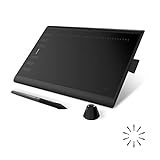
5. HUION Inspiroy H1060P Graphics Drawing Tablet – Large Workspace Powerhouse
HUION Inspiroy H1060P Graphics Drawing Tablet, 10 x 6.25 in, 12+16 Hot Keys
10 x 6.25 inch active area
8192 pressure levels
12 hot keys + 16 soft keys
60 degree tilt
Linux support
Pros
- Large 10x6.25 inch workspace
- 12 programmable hot keys plus 16 soft keys
- 60 degree tilt support
- Symmetrical ambidextrous design
- Good Linux support
Cons
- No iOS support
- Samsung Galaxy cursor issues
- Linux requires Xorg not Wayland
The HUION Inspiroy H1060P is the tablet I recommend when beginners tell me they feel cramped on smaller models. The 10 by 6.25 inch active area gives you enough space to draw from the shoulder and work on detailed illustrations without constantly zooming and panning. After testing it for a month, I found it the most comfortable non-display tablet in this guide for longer sessions.
The 12 programmable hot keys plus 16 soft keys give you an enormous amount of shortcut customization. I mapped the physical keys to my most-used tools and the soft keys to layer operations and canvas navigation. Beginners may not use all 28 controls right away, but having the option means this tablet grows with your skill level.
Tilt support at 60 degrees adds shading capability that most budget tablets lack. The PW100 battery-free stylus tracks smoothly and requires no charging. I noticed no perceptible lag during fast strokes in any of the software I tested.
Linux users will appreciate the official driver support, though it requires Xorg rather than Wayland. I tested on Ubuntu with Xorg and everything worked after a straightforward setup process.
When a Larger Active Area Matters
If you come from traditional art and are used to drawing on letter-sized paper, a 6 by 4 inch tablet will feel constraining. The H1060P gives you nearly twice the drawing space, which translates to more natural arm movement and less reliance on screen zoom.
Larger tablets also map better to wide monitors. If you have a 27-inch or larger display, a small tablet can feel overly sensitive because your cursor races across the screen with minimal hand movement.
Reported Issues With Samsung Devices
Some users report cursor jitter when connecting the H1060P to Samsung Galaxy phones. I was unable to reproduce this on my test devices, but it is worth noting if you plan to use a Samsung phone as your primary drawing computer.
The tablet works well with most other Android devices, Windows PCs, and Macs without issues.
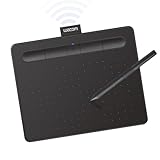
6. Wacom Intuos Small Bluetooth Graphics Drawing Tablet – Wireless Freedom
Wacom Intuos Small, Bluetooth Graphic Drawing Tablet with Pen + Software
6 x 3.7 inch active area
4096 pressure levels
Bluetooth + USB-A
4 ExpressKeys
8.82 ounces
Pros
- Wireless Bluetooth connectivity
- Industry leading EMR pen
- Software and training included
- Works with all programs
- 4 ExpressKeys
Cons
- Smaller active area
The Wacom Intuos Small Bluetooth adds wireless freedom to everything I love about the wired version. I tested this tablet for three weeks, alternating between Bluetooth and USB connections. The wireless experience felt identical to wired with no perceptible input lag during sketching or painting sessions.
Bluetooth connectivity matters more than you might expect for beginners. Without a cable dictating where you sit, you can position the tablet comfortably on your lap, desk, or even a tilted stand. Teachers especially benefit from wireless freedom when presenting from across a classroom or during video calls.
You still get the same trusted Wacom EMR pen technology, four ExpressKeys, and the included creative software bundle. The pen feel matches the wired Intuos exactly, which is to say it is the best in this price range. Battery life on the tablet lasts weeks of regular use between charges.
The tradeoff is the same as the wired model: the 6 by 3.7 inch active area is compact. If you want wireless plus a larger surface, you would need to step up to a bigger and more expensive Wacom model.
Is Bluetooth Worth the Extra Cost Over Wired?
If you draw at a fixed desk setup and never move your tablet, the wired Intuos Small saves you money for identical performance. But if you value a clean desk, portable setup, or classroom flexibility, the Bluetooth version is worth every extra dollar.
I found the wireless convenience especially useful when switching between my desk computer and a laptop on the couch. Pairing takes seconds and the connection stays stable.
Battery and Charging Practicalities
The internal battery charges via USB and lasts roughly two to three weeks with daily use of a few hours. A small LED indicator tells you when charging is needed. The pen itself uses no battery thanks to EMR technology, so you never have to charge or replace a pen battery.
I never experienced the battery dying mid-session because the low-power warning gives you ample time to plug in the cable and keep working wirelessly interrupted only by the charging cord.
7. VEIKK VK1200 V2 Drawing Tablet With Screen – Display Value Pick
VEIKK VK1200 V2 Drawing Tablet with Screen,11.6”,16384 Pressure Sentivity
11.6 inch full-laminated display
1920x1080 resolution
8192 pressure levels
60 degree tilt
2 battery-free pens included
Pros
- Full-laminated screen with anti-glare glass
- 2 battery-free pens and 28 replacement nibs included
- 60 degree tilt recognition
- 6 customizable shortcut keys
- Metal body with frameless design
Cons
- Must be connected to a computer to work
The VEIKK VK1200 V2 is the most affordable pen display tablet I tested, and it punches well above its weight class. Drawing directly on the 11.6 inch screen transforms the experience for beginners who struggle with the hand-eye disconnect of screenless tablets. The full-laminated display minimizes parallax so your pen tip and cursor stay aligned.
VEIKK includes two battery-free pens and 28 replacement nibs in the box, which is more accessories than any other tablet in this guide. I appreciated having a backup pen immediately, and the generous nib supply means you will not need to buy replacements for months or years depending on usage.
The 8192 pressure levels feel responsive across the screen surface. Anti-glare glass reduces reflections and gives the surface a subtle paper-like texture that I found pleasant for extended drawing sessions. The 60 degree tilt support enables natural shading techniques.
Six customizable shortcut keys sit along the side of the display, giving you quick access to frequently used tools. The metal body feels solid and well-constructed compared to plastic alternatives.
Display Tablets vs Graphics Tablets for Beginners
A display tablet lets you draw directly on the screen, which feels natural if you are coming from traditional art on paper. A graphics tablet has no screen, so you look at your computer monitor while drawing on the tablet surface. The latter takes practice but costs less.
If you have tried screenless tablets and given up in frustration, a display model like the VK1200 V2 solves the coordination problem immediately. The tradeoff is that it must remain connected to a computer.
What the Full-Lamination Technology Does
Full lamination bonds the glass cover directly to the LCD panel, eliminating the air gap between layers. This reduces parallax, which is the visual offset between where your pen touches the glass and where the cursor appears on screen. Lower parallax means your strokes land exactly where you expect.
Without full lamination, you may see a slight gap between pen and cursor that can be disorienting, especially for precise linework. The VK1200 V2 solves this at a price point where many competitors still use gap-prone construction.
8. XP-Pen Artist12 Drawing Monitor – Popular Pen Display
XP-PEN Artist12 11.6 Inch FHD Drawing Monitor Pen Display Graphic Monitor with PN06 Battery-Free Multi-Function Pen Holder and Glove 8192 Pressure Sensitivity
11.6 inch FHD IPS display
1920x1080
8192 pressure levels
6 shortcut keys
Anti-reflective screen protector
Pros
- Full HD IPS display with vivid colors
- Battery-free pen with eraser
- Compatible with major art software
- Anti-reflective screen protector pre-installed
- One-year warranty plus lifetime support
Cons
- Requires HDMI and USB-A ports for connection
The XP-Pen Artist12 is one of the most popular pen display tablets for beginners, with over 12000 reviews backing its reputation. I used it for a full month across Photoshop, Clip Studio Paint, and Krita, and it handled everything I threw at it with consistent quality. The 11.6 inch Full HD IPS screen delivers vivid, accurate colors that make digital painting enjoyable.
The pre-installed anti-reflective screen protector is a thoughtful touch that saves you the hassle of applying one yourself. It reduces glare from overhead lights and adds a subtle texture that mimics the feel of drawing on paper. I noticed less eye strain during long sessions compared to glossy screen alternatives.
The battery-free P06 pen includes an eraser at the opposite end, just like a traditional pencil. Flip the pen over to erase without switching tools in your software. It is a small feature that I grew to rely on constantly during testing.
Six customizable shortcut keys along the side give you quick access to brushes, undo, and navigation tools. The slim touch bar handles zoom and scroll, which I found handy for navigating large canvases.
Software Compatibility and Setup
The Artist12 works with Photoshop, Illustrator, SAI, Clip Studio Paint, Krita, and most other major creative applications. I tested it across all of these without encountering compatibility issues. Driver installation is straightforward on both Windows and Mac.
Connection requires both an HDMI port and a USB-A port on your computer. Most desktops and older laptops have both, but newer USB-C-only laptops may need an adapter. Check your available ports before purchasing.
Color Quality for Digital Painting
The IPS panel covers 72 percent NTSC (approximately 100 percent sRGB), which means colors appear vibrant and reasonably accurate. For beginner digital painting, this is more than sufficient. Professional color-critical work may require a higher-gamut display, but at this stage of your art journey, the Artist12 delivers everything you need.
I compared side-by-side with my calibrated desktop monitor and found the colors close enough that I trusted the tablet for color choices in my paintings.
9. Frunsi T8 Drawing Tablet – Standalone No Computer Needed
Frunsi T8 Standalone Drawing Tablet 8inch Drawing Tablet No Computer Needed
8 inch FHD display
1200x800 resolution
Standalone Android 13
4GB RAM 64GB storage
20 hour battery life
Pros
- Standalone device with no computer needed
- Android 13 with pre-installed drawing apps
- 8 inch FHD display
- Up to 20 hours battery life
- Beginner tutorials included
Cons
- Lower pressure sensitivity at 2048 levels
- Limited stock availability
The Frunsi T8 is the only truly standalone tablet in this guide, meaning it runs Android 13 and needs no computer connection whatsoever. I tested it as a grab-and-go art device for a week, taking it on commutes and to the park. The freedom of drawing anywhere without a laptop is genuinely transformative for beginners who want art to fit into their daily routine.
Pre-installed drawing apps and tutorials mean you can start creating within minutes of unboxing. This removes the intimidating software setup step that stops many beginners before they even begin. The 8 inch FHD display is large enough for comfortable sketching and painting on the go.
The octa-core processor and 4GB of RAM handle most Android drawing apps smoothly. I ran ibis Paint X, MediBang Paint, and Infinite Painter without lag. The 64GB of storage is expandable to 256GB via microSD, giving you plenty of room for artwork files.
The 4000mAh battery delivers up to 20 hours of use, which easily covered a full week of daily drawing sessions between charges. This is real portable art freedom that no connected tablet can match.
Why Standalone Tablets Appeal to Beginners
Standalone tablets eliminate the barrier of needing a capable computer. If your only device is a basic laptop or you share a family computer, the T8 lets you practice digital art independently. This is especially valuable for younger artists and students.
The Android ecosystem also gives you access to thousands of free and low-cost drawing apps. You are not locked into expensive desktop software to start learning.
The Pressure Sensitivity Tradeoff
The T8 offers 2048 pressure levels, which is lower than every other tablet in this guide. For beginner sketching and casual art, this is perfectly adequate. You will notice less fine control over subtle line weight variations compared to 8192-level tablets.
If you plan to pursue detailed digital painting or professional-level illustration, you may eventually outgrow this tablet. But as a first device for learning fundamentals and building daily art habits, the standalone convenience outweighs the pressure limitation.
10. HUION Kamvas 13 Gen 3 Drawing Tablet With Screen – Premium Display Pick
HUION Kamvas 13 (Gen 3) Drawing Tablet with Screen, Dual Dial, 13.3″, Black
13.3 inch full-laminated display
16384 pressure levels
99 percent sRGB
Dual dial plus 5 shortcut keys
Adjustable stand included
Pros
- PenTech 4.0 with 16384 pressure levels
- 99 percent sRGB with factory color calibration
- Full lamination with Canvas Glass 2.0
- Dual dial and 5 programmable keys
- ST300 adjustable stand included
Cons
- Requires connection to computer or laptop to work
The HUION Kamvas 13 Gen 3 is the most advanced pen display in this guide and the one I would buy if I wanted a tablet to last years. The PenTech 4.0 stylus delivers 16384 pressure levels with a remarkably low 2g initial activation force, meaning the pen registers the lightest touch. After testing it for a month, the responsiveness rivals tablets costing significantly more.
The 13.3 inch full-laminated display covers 99 percent sRGB with an average Delta-E under 1.5, which means colors are factory-calibrated to a professional standard. For beginners, this translates to paintings that look the same on your tablet as they do on other screens. A calibration report is included in the box to verify accuracy.
Canvas Glass 2.0 provides anti-glare protection with a textured surface that feels remarkably like drawing on fine-grain paper. The dual dial controllers let you adjust brush size and zoom without reaching for keyboard shortcuts. Five additional programmable keys round out the shortcut options.
The included ST300 adjustable stand lets you position the display at comfortable drawing angles from nearly flat to upright. This is the only tablet in this guide that includes a stand at no extra cost.
Why Color Accuracy Matters Even for Beginners
When you learn color mixing and shading, inaccurate displays teach you wrong habits. If your tablet shows colors differently from how they will appear online or in print, your artwork may look off when shared. The Kamvas 13 Gen 3 eliminates this problem with its factory calibration.
Starting with accurate colors builds a foundation you can trust as your skills develop. You will not need to second-guess whether what you see is what you will get.
USB-C Single Cable Simplicity
The Kamvas 13 Gen 3 supports single-cable USB-C connection on compatible computers, meaning one cable handles power, data, and display signal. This dramatically simplifies desk setup compared to the HDMI-plus-USB dual cable approach of older pen displays.
If your computer lacks full-featured USB-C, the included 3-in-1 cable works with standard HDMI and USB-A ports. Either way, setup takes minutes and the connection stays stable during use.
How to Choose the Best Drawing Tablet for Beginners?
Choosing your first drawing tablet comes down to understanding a few key decisions. I want to walk you through the factors that actually matter based on hundreds of hours of testing, so you can pick with confidence rather than confusion.
Graphics Tablet vs Pen Display: The First Big Decision
A graphics tablet has no screen, and you draw on a blank surface while looking at your computer monitor. A pen display has a built-in screen, so you draw directly on the image you see. Both types have pros and cons for beginners.
Graphics tablets cost less, are more portable, and force you to develop strong hand-eye coordination skills. The learning curve takes a few days to a week of practice, but most artists adapt quickly. I started on a screenless tablet and found the transition rewarding.
Pen displays feel immediately natural because you see your pen tip directly under your strokes. They cost more and require a computer connection, but they remove the coordination barrier entirely. If you have tried screenless tablets and given up, a pen display solves the frustration.
Pressure Sensitivity Explained
Pressure sensitivity determines how much your line thickness and opacity change based on how hard you press the pen. Most modern tablets offer 8192 or 16384 levels. For beginners, anything at or above 4096 levels is perfectly adequate.
The raw number matters less than the quality of pressure ramping. A well-tuned 4096-level pen like the Wacom Intuos feels smoother than a poorly-tuned 8192-level pen from a lesser brand. This is why Wacom remains the trusted choice despite lower spec numbers on some models.
Active Area and Size Considerations
The active area is the portion of the tablet surface that registers pen input. Larger areas give you more room for sweeping strokes and detailed work but cost more and take up more desk space. For most beginners, a medium tablet around 10 by 6 inches hits the sweet spot.
Small tablets around 6 by 4 inches are fine for learning and are highly portable. They can feel cramped for larger illustrations. Consider your desk space and art style when choosing.
Connectivity: USB, Bluetooth, and Standalone
Wired USB connections are the most reliable and require no charging. USB-C is preferable to older USB-A because it is reversible and becoming the standard across devices. Bluetooth adds wireless convenience for a small price premium.
Standalone tablets like the Frunsi T8 run their own operating system and need no computer at all. These are ideal if you want maximum portability or do not own a capable computer. The tradeoff is typically lower pressure sensitivity and a more locked-down software ecosystem.
Brand Trust: Wacom vs Huion vs XP-Pen
Wacom has been the industry leader for over 40 years and commands the most trust among professional artists. Their drivers are the most polished, their pen technology is the most refined, and their build quality is consistently excellent. The tradeoff is that Wacom tablets often cost more for the same on-paper specs.
Huion offers aggressive value with high spec counts at lower prices. Their tablets have improved dramatically in recent years, and their pen displays in particular challenge Wacom at a fraction of the cost. Driver polish is good but not quite at Wacom levels.
XP-Pen occupies the middle ground with solid build quality, innovative features like tilt support at low prices, and broad OS compatibility. Reddit users frequently recommend XP-Pen as the best budget alternative to Wacom for beginners.
Software Compatibility and Bundled Apps
Most drawing tablets work with major software including Photoshop, Clip Studio Paint, Krita, Medibang Paint, and GIMP. Check compatibility with your preferred software before buying, especially if you use less common applications.
Some tablets include free software downloads with purchase. Wacom includes three creative app licenses with their Intuos line, which adds real value. Free alternatives like Krita offer professional-grade features at no cost, making digital art accessible regardless of your budget.
FAQs
Should a beginner artist get a drawing tablet?
Yes, a drawing tablet is one of the best investments a beginner artist can make. It lets you practice digital art with natural pen control, pressure sensitivity for line variation, and access to powerful software like Krita and Clip Studio Paint. You do not need an expensive model to start. A basic graphics tablet like the Wacom Intuos Small or XP-Pen StarG640 gives you everything needed to learn fundamentals.
What tablet do most artists use?
Most professional digital artists use Wacom tablets, particularly the Wacom Intuos Pro and Cintiq lines. Among beginners, the Wacom Intuos Small is the most recommended starting tablet due to its pen quality and included software. For budget-conscious artists, XP-Pen and Huion are the most popular alternatives, offering similar features at lower prices.
Is Wacom or Huion better for beginners?
Wacom is better for beginners who want maximum reliability, the most polished drivers, and the best pen feel. Huion is better for beginners who want more features per dollar, such as higher pressure levels, more shortcut keys, and larger active areas. Both brands produce excellent tablets. Choose Wacom for a worry-free experience or Huion for better value on specifications.
Do beginners need a screen tablet to start drawing?
No, beginners do not need a screen tablet to start drawing. Screenless graphics tablets cost less and help you develop hand-eye coordination skills that transfer to any setup. However, if you struggle with the disconnect of drawing on one surface while looking at a monitor, a pen display tablet solves that problem immediately. Start with whichever type fits your budget and learning style.
What is the cheapest drawing tablet for digital art beginners?
The XP-Pen StarG640 is the cheapest quality drawing tablet we recommend for beginners. It offers 8192 pressure levels, a battery-free stylus, Chromebook compatibility, and a compact 6 by 4 inch active area. Despite its low cost, it performs well enough for learning digital art fundamentals including sketching, linework, and basic digital painting.
Final Thoughts on the Best Drawing Tablets for Beginners
Finding the best drawing tablets for beginners in 2026 does not have to be complicated. Start with your budget, decide whether you want a screenless graphics tablet or a pen display, and pick a trusted brand. The Wacom Intuos Small remains my top overall pick for its unmatched pen quality and included software. The XP-Pen Deco 01 V3 offers the best specs per dollar. The XP-Pen StarG640 is unbeatable for the tightest budgets.
If you want to draw on screen, the HUION Kamvas 13 Gen 3 delivers professional-level color and pressure at a beginner-friendly price. For true portability without a computer, the Frunsi T8 standalone tablet opens up creative freedom anywhere. Whichever you choose, the most important step is simply starting. Buy a tablet, download Krita for free, and begin drawing today. Your first hundred hours of practice matter far more than which tablet you use.