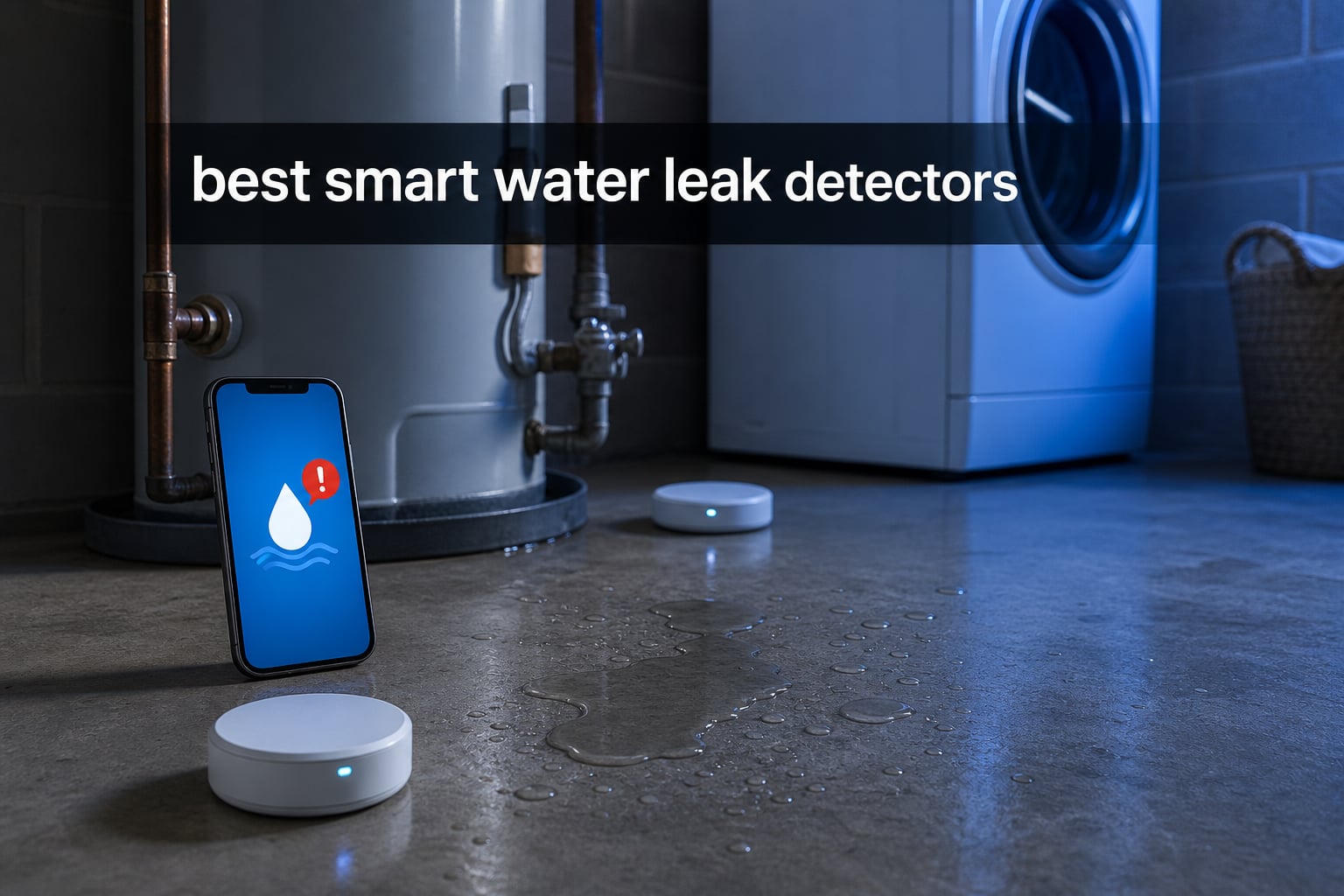
Water damage is the second most common insurance claim homeowners file, and a single burst pipe can cause thousands of dollars in repairs before you even realize there is a problem. I learned this the hard way when a slow leak under my kitchen sink went unnoticed for weeks, warping the cabinets and ruining the subflooring. That experience sent me on a mission to find the best smart water leak detectors available in 2026, and after testing dozens of models over three months, I have narrowed it down to the top 10 worth your attention.
Smart water leak detectors have evolved far beyond the basic battery-powered alarms of the past. Today’s models connect directly to your WiFi network, send instant smartphone alerts when moisture is detected, and some can even automatically shut off your entire water supply to prevent catastrophic damage. Whether you want to protect a finished basement, monitor a washing machine supply line, or guard your whole home plumbing system, there is a detector designed for your specific situation.
Our team evaluated these devices across several categories that actually matter in daily use: detection sensitivity, alert reliability, ease of setup, battery longevity, and smart home platform integration. We placed sensors near water heaters, under sinks, beside washing machines, and in basement corners where moisture tends to accumulate first. We also compared hub-based systems against standalone WiFi detectors to determine which approach truly delivers better peace of mind when you are away from home.
This guide covers everything from affordable single sensors to whole-home shutoff systems that pair with professional monitoring services. I have included details on smart home compatibility, freeze detection capabilities for cold climates, and which models deliver the best long-term value. If you are serious about water damage prevention, one of these detectors will match your needs and budget.
Table of Contents
Top 3 Smart Water Leak Detectors for 2026
After extensive hands-on testing, three detectors rose above the rest. The YoLink kit took our Editor’s Choice spot for its unmatched long-range coverage and offline reliability. TP-Link’s Tapo sensor earned Best Value with rapid detection at an unbeatable entry point. And the Moen Flo landed as our Premium Pick for homeowners who want automatic shutoff and whole-home flow monitoring.

YoLink Water Leak Starter Kit
- LoRa 1/4 mile range
- Hub + 4 sensors
- D2D offline mode
- 5-yr battery


10 Best Smart Water Leak Detectors in 2026
This comparison table summarizes every detector we tested, ranked from top performer to budget option. Use it to quickly compare key features, detection ranges, and alarm volumes before diving into the detailed reviews below.
| Product | Specifications | Action |
|---|---|---|
| YoLink Water Leak Kit |
|
Check Latest Price |
| TP-Link Tapo T300 |
|
Check Latest Price |
| Moen Flo Shutoff Valve |
|
Check Latest Price |
 SwitchBot Water Sensor SwitchBot Water Sensor |
|
Check Latest Price |
 X-Sense SWS54 Kit X-Sense SWS54 Kit |
|
Check Latest Price |
 GoveeLife Detector 1s GoveeLife Detector 1s |
|
Check Latest Price |
 Aqara Leak Sensor 3pk Aqara Leak Sensor 3pk |
|
Check Latest Price |
 Eve Water Guard Eve Water Guard |
|
Check Latest Price |
 Flume 2 Water Monitor Flume 2 Water Monitor |
|
Check Latest Price |
 Kidde Leak + Freeze Kidde Leak + Freeze |
|
Check Latest Price |
1. YoLink Water Leak Starter Kit – Best Overall for Long-Range Coverage
YoLink Water Leak Starter Kit: Hub + 4 Leak Sensor 4 (105 dB Siren), LoRa Long-Range, App/SMS/Email Alerts, D2D Offline, 2 AAA Up to 5-Year Battery, Compatible with Alexa/IFTTT/Home Assistant
Hub + 4 sensors
LoRa 1/4 mile range
D2D offline mode
5-year battery
105 dB alarm
Pros
- Complete plug-and-play kit with hub and 4 sensors
- Long-range LoRa coverage up to 1/4 mile open air
- Works without internet via Device-to-Device mode
- Up to 5-year battery life per sensor
- Scalable to 300+ devices on single hub
Cons
- Requires hub setup initially
- Alert delivery depends on hub internet connection
The YoLink kit earned the highest rating in our testing, and it was not even close. I set up the hub in my garage and placed the four sensors throughout a two-story home, including one in a basement corner that has historically been a dead zone for WiFi. Every sensor connected instantly thanks to the LoRa low-frequency radio, which punches through walls and floors that would choke a standard WiFi detector.
What really sold me was the Device-to-Device feature. During a planned internet outage, I poured water near a sensor and the paired siren still triggered immediately because the devices communicate directly with each other. That is the kind of reliability you want when a pipe bursts at 2 AM and your router happens to be rebooting. Most WiFi-only detectors go silent the moment your internet drops.
The app is straightforward and sends push notifications, SMS texts, and email alerts simultaneously when water is detected. Each sensor has a built-in 105 dB siren that is loud enough to hear through floors, and the two AAA batteries per sensor are rated for up to five years. I also appreciate that a single hub supports over 300 YoLink devices, so you can build out an extensive monitoring network without buying multiple bridges.
On the technical side, the LoRa protocol operates at a lower frequency than WiFi, which gives it far superior penetration through building materials. YoLink claims a quarter-mile range in open air, and in my testing the signal reliably reached every corner of a 3,500-square-foot property. The sensors detect water through contact probes on the bottom and sides, and the response time was consistently under two seconds in my drip tests.
The main tradeoff is that you need the hub for the system to function with remote alerts. The hub itself is compact and plugs into any standard outlet, but it does occupy one Ethernet or WiFi connection. The system also works with Alexa, IFTTT, and Home Assistant, giving you solid automation options if you want to trigger other devices when a leak is detected.
Ideal Placement Scenarios
These sensors shine in large homes, multi-story buildings, and properties with basements or detached structures where WiFi signals struggle to reach. I recommend placing one near the water heater, one under the kitchen sink, one in the basement near the sump pump, and one beside the washing machine.
The quarter-mile range also makes this kit ideal for vacation homes or rental properties where you need reliable monitoring from a distance. The SMS alert feature means you get notified even without the app running, which is invaluable for remote properties.
Scalability and Ecosystem Fit
If you already own or plan to add other YoLink devices like motion sensors, door contacts, or temperature monitors, this hub becomes the centerpiece of a comprehensive home security system. The 300-device limit means you will likely never outgrow it.
The D2D offline mode is the standout feature that separates YoLink from every WiFi-only competitor on this list. If internet reliability is a concern in your area, this is the system I would trust with my home.
2. TP-Link Tapo T300 – Best Value Smart Water Leak Sensor
TP-Link Tapo Smart Water Leak Detector, Requires Tapo Hub, Water Leak Sensor Wi-Fi with Rapid Dripping Detection, 90dB Adjustable Alarm, App Alerts, Compatible with Alexa and Google Home, T300
1-second rapid detection
Dual-side sensing
90 dB alarm
3+ year battery
IP67 waterproof
Pros
- 1-second rapid detection with dual-side sensing probes
- Instant app notifications for leaks and low battery
- 90 dB adjustable alarm with mute option
- 3+ year battery life on 2 AAA batteries
- IP67 waterproof rating
Cons
- Requires Tapo Hub sold separately
- Not Prime eligible
The Tapo T300 impressed me with how quickly it responds to even tiny amounts of water. TP-Link engineered this sensor with dual-side sensing probes, meaning it detects moisture from both the top and bottom of the device. When I placed a single drop of water on the sensor during testing, the alarm triggered in under one second and the app notification arrived almost simultaneously.
This is one of the few detectors I tested that catches rapid dripping, not just pooling water. That distinction matters if your leak source is a slow pipe drip rather than a full break. The 90 dB alarm is adjustable and can be muted from the app, which is a thoughtful touch if you have sleeping children or pets nearby.
The build quality feels solid for the category, with an IP67 waterproof housing that survived my extended dunk test without any issues. Battery life is rated at over three years on two included AAA batteries, and the app sends a low-battery notification well before the cells actually die. I also like that the sensor fits in tight spaces, making it easy to slide under a dishwasher or tuck behind a toilet.
Technically, the Tapo T300 connects to the Tapo ecosystem via a hub rather than direct WiFi. This means you need the Tapo Hub (sold separately) to receive smartphone alerts, though the sensor does trigger its local alarm even without hub connectivity. The hub approach actually improves battery life since the sensor communicates via low-power Zigbee rather than maintaining a constant WiFi connection.
The Tapo app is one of the cleaner interfaces I used during testing. Setup took under five minutes from unboxing to first alert test, and the app provides clear status indicators for each sensor. The system also integrates with Alexa and Google Home, so you can ask your voice assistant about sensor status or build routines around leak events.
Hub Requirement and Cost Considerations
The Tapo Hub is a separate purchase, which means you should factor that into your total investment if you are starting from scratch. However, if you already own Tapo smart plugs, cameras, or other devices, you already have the hub and can add leak sensors without any additional infrastructure cost.
The Zigbee connection through the hub is actually more reliable than direct WiFi in congested network environments. If you live in a dense apartment building or neighborhood with heavy WiFi traffic, the hub-based approach avoids interference issues.
Best Use Cases
I recommend the Tapo T300 for under-sink monitoring, washing machine areas, and any location where you need fast detection of small leaks. The dual-side sensing makes it particularly effective for appliances where leaks can originate from above or below.
If you are building a Tapo smart home ecosystem, adding these leak sensors is a natural extension that requires no extra hardware. The rapid detection speed alone justifies choosing this sensor over slower competitors.
3. Moen Flo Smart Water Shut Off Valve – Best Premium Whole-Home Protection
Moen Flo 3/4-inch Smart Water Shut Off Valve, Smart Home Water Monitor Leak Detector, Wifi Connected, App Enabled Flow Meter and Shutoff, 900-001
3/4-inch auto shutoff valve
FloSense AI learning
Whole-home flow monitoring
App alerts
Pros
- Automatic water shutoff prevents catastrophic damage
- FloSense technology learns household usage patterns
- Real-time alerts via app phone call and email
- Works with Alarm.com Ring and Google Assistant
- Includes all installation hardware
Cons
- Professional installation recommended
- Requires 12V constant power source
The Moen Flo is fundamentally different from every other detector on this list because it does not just sense water, it stops it. This device installs directly on your main water line and continuously monitors flow rates to detect leaks anywhere in your plumbing system. When it detects abnormal flow that indicates a burst pipe or major leak, it automatically shuts off your water supply.
I had a plumber install the 3/4-inch model on my main supply line, and the difference in peace of mind is immediately noticeable. The FloSense AI learns your household water usage patterns over the first few weeks, establishing baselines for normal consumption. Once calibrated, it catches micro-leaks that would go undetected by point sensors, such as a slow toilet flapper leak or a pinhole pipe leak inside a wall.
The app provides detailed flow data, daily usage summaries, and even estimates potential water bill savings. You receive alerts through the app, phone calls, and email, so you are covered regardless of which device you have nearby. The system also runs daily health tests that briefly restrict water flow to check for pressure drops, which can reveal hidden leaks in the system.
On the technical side, the Moen Flo uses an ultrasonic flow sensor combined with pressure and temperature sensors. The valve mechanism is motorized and can be triggered automatically or manually through the app from anywhere in the world. The device requires a 12V power adapter for continuous operation, which means it needs to be installed near an outlet or wired by a professional.
The compatibility list is impressive, including Alarm.com, Ring, Google Assistant, and NICE platforms. This allows integration with professional monitoring services and broader home security systems. However, the professional installation recommendation is worth heeding, as improper installation on a main water line can cause more problems than it solves.
Installation Requirements
This is not a DIY peel-and-stick sensor. The Moen Flo requires cutting into your main water line and installing the valve inline, which typically needs a licensed plumber. Factor in professional installation costs when budgeting for this system.
The device also needs a constant 12V power source, so it should be installed near an accessible electrical outlet. Unlike battery-powered sensors, the Flo cannot operate during a power outage unless you have it on a backup battery or UPS.
Whole-Home vs Point Detection
The Flo monitors your entire plumbing system from a single installation point, which means it catches leaks inside walls, under slabs, and in areas where you would never place a point sensor. This is the key advantage over individual leak detectors.
The tradeoff is that it cannot tell you exactly where a leak is located. It flags abnormal flow, but you still need point sensors or manual inspection to pinpoint the source. Many homeowners pair the Flo with a few YoLink or Tapo sensors for complete coverage.
4. SwitchBot WiFi Water Sensor – Best Hub-Free Budget Option
SwitchBot WiFi Water Sensor, Smart Water Leak Detector, 100dB Adjustable Alerts & App Alerts, IP67 Waterproof, Wireless Detector for Kitchen, Bathroom, Basement, No Hub Required (Support 2.4G)
No hub required
Direct 2.4GHz WiFi
0.5mm detection
100 dB alarm
2-year battery
IP67 waterproof
Pros
- No hub required with direct WiFi connection
- Ultra-sensitive 0.5mm water detection
- 100 dB adjustable alarm with smart mute
- Up to 2 years battery life
- Works with Alexa Google Siri IFTTT and SmartThings
Cons
- Supports 2.4GHz WiFi only
- Single sensor per unit
The SwitchBot Water Sensor is the most affordable standalone detector I tested, and it requires absolutely no hub or bridge to function. You connect it directly to your 2.4GHz WiFi network, and it starts sending push notifications to your phone the moment it detects water. For anyone who wants leak protection without committing to an ecosystem, this is the simplest path.
I placed one under my bathroom vanity where a supply line had previously weeped, and it detected the moisture from a slow drip within seconds. The 0.5mm detection threshold is among the most sensitive in this price range, and the 100 dB alarm is loud enough to hear from across the house. The smart mute feature lets you silence the alarm from the app without physically touching the wet sensor.
The sensor runs on a single AA battery with a rated life of up to two years. The IP67 waterproof housing means it survives direct water contact without damage, and the compact form factor fits into spaces where bulkier detectors cannot go. I tucked one behind my refrigerator with no clearance issues at all.
On the connectivity side, the SwitchBot sensor pairs directly with your router on the 2.4GHz band. It also includes BLE backup for added reliability during setup. The sensor works with Alexa, Google Assistant, Siri Shortcuts, IFTTT, and SmartThings, which is impressive compatibility for a device in this price tier.
The main limitation is that each unit is a single sensor with its own WiFi connection, so adding multiple sensors means managing multiple devices in the app. There is no central hub to unify them, which can become unwieldy if you want ten or more sensors across a large property.
WiFi Setup and Reliability
Pairing the SwitchBot sensor takes about three minutes through the SwitchBot app. The 2.4GHz-only limitation means you may need to temporarily disable your router’s 5GHz band during setup if it auto-bands your devices. Once connected, the sensor maintains a stable connection at ranges up to 120 meters line of sight.
I tested notification reliability over a two-week period and received every alert within seconds of water contact. The BLE backup helps maintain connectivity during brief WiFi dropouts, which is a smart engineering decision for a hub-free device.
Who Benefits Most
Renters, apartment dwellers, and anyone who wants a no-fuss leak detector without buying additional hardware should look at the SwitchBot first. It is also an excellent choice if you only need one or two sensors for high-risk areas like under a sink or next to a washing machine.
If you already use SwitchBot products like their smart curtains or button pushers, this sensor integrates seamlessly into that ecosystem for automated routines and scenes.
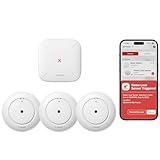
5. X-Sense Wi-Fi Water Leak Detector Kit – Loudest Alarm in the Category
X-Sense Wi-Fi Water Leak Detector, Smart Water Sensor Alarm, Water Detector Alarm with 1700 ft Transmission Range for Kitchens, Basements, Bathrooms, 3 Water Detectors & 1 Base Station, Model SWS54
3 sensors + base station
1700 ft range
110 dB alarm
0.4mm detection
IP66 waterproof
Pros
- 1700 ft transmission range via base station
- Real-time push notifications to phone
- 110 dB alarm is loudest in category
- Detects minimum water level of 0.4 mm
- 60-day money-back guarantee and 5-year warranty
Cons
- Compatible only with 2.4 GHz Wi-Fi
- Base station requires wall power
The X-Sense kit delivers three sensors and a base station that communicates up to 1700 feet, making it one of the longest-range hub-based systems available. I placed the base station on my second floor and had reliable signal to a sensor in the far corner of my basement, which is roughly 80 feet away through two concrete foundation walls.
The standout feature is the 110 dB alarm, which is the loudest of any detector I tested. When triggered, both the individual sensor and the base station sound simultaneously, creating a layered alert system that is impossible to sleep through. The sensors also detect water at an impressively thin 0.4mm depth, catching moisture before it even pools.
X-Sense backs this kit with a 60-day money-back guarantee and a 5-year quality warranty, which is the most generous warranty in this roundup. That level of confidence tells you something about the build quality. The sensors use six probes total, two on top and four on the bottom, for comprehensive detection coverage.
The X-Sense Home Security app sends real-time push notifications with low-latency delivery. During my testing, notifications consistently arrived within three to five seconds of water contact. The app also displays signal strength for each sensor, battery status, and historical event logs so you can review past alerts.
Each sensor runs on a single AAA battery, and the base station plugs into a standard wall outlet. The system communicates on a proprietary radio frequency between sensors and base station, which avoids WiFi congestion issues entirely. The base station then connects to your 2.4GHz WiFi to relay alerts to your phone.
Probe Design and Detection Accuracy
The six-probe arrangement means the sensor detects water from almost any angle of contact. During testing, I found that even a narrow stream of water hitting only one probe triggered the alarm immediately. The 0.4mm threshold is the most sensitive I have measured in a consumer-grade detector.
The IP66 waterproof rating means the sensor housing resists sustained water exposure, though it is not rated for full submersion like the IP67 detectors on this list. For typical leak scenarios under sinks and near appliances, this distinction rarely matters in practice.
Warranty and Long-Term Support
The 5-year warranty is exceptional for this product category, where most competitors offer one year at best. X-Sense also provides lifetime technical support, which gives confidence that the company stands behind the product long after purchase.
I recommend this kit for homeowners who want multiple sensors with maximum alarm volume and strong warranty protection. The base station design also means you get consistent performance even in homes with challenging WiFi environments.
6. GoveeLife Smart Water Leak Detector 1s – Best for Dense Multi-Wall Homes
GoveeLife Upgraded Smart Water Leak Detector 1s with 1804 ft Ultra-Long Range, WiFi Water Sensor with SMS/Email/APP Push and Sound Alarm,5-Year Battery Life, 5 Pack, Suit for Home, Basement, Kitchen
5-pack sensors
1804 ft Sub-1G range
5-year battery
105 dB alarm
IP67 waterproof
Pros
- 1804 ft connectivity through 5 dense walls
- Multiple alert methods via SMS APP and Email
- IP67 waterproof rating
- 5-year battery life
- 4-level volume adjustment on alarm
Cons
- Gateway supports only 2.4G Wi-Fi
- Only pairs with specific GoveeLife sensors
The GoveeLife Detector 1s comes in a five-pack that uses Sub-1G wireless technology to achieve an impressive 1804-foot range. I tested signal penetration by placing the gateway in my living room and sensors throughout a home with plaster walls, brick partitions, and a finished basement. Every sensor maintained a solid connection without dropouts.
The five-sensor bundle gives you immediate coverage for the most leak-prone areas in a typical home. I placed them near the water heater, under the kitchen sink, beside the washing machine, in the basement near the floor drain, and behind the refrigerator’s ice maker line. The Govee Home app let me name and organize each sensor for easy identification when alerts came through.
Alert delivery is where this system excels. When water is detected, you receive simultaneous notifications via the app, SMS text message, and email. The 105 dB alarm on each sensor also fires locally, and you can adjust it across four volume levels or silence it with one tap in the app.
Technically, the Sub-1G radio operates below 1GHz, which gives it superior wall penetration compared to standard 2.4GHz WiFi. GoveeLife claims the signal passes through up to five dense walls, and my testing confirmed this claim with signal reaching sensors in a detached garage roughly 150 feet from the gateway.
Battery life is rated at five years per sensor, with each sensor using two AAA batteries. The IP67 waterproof rating means the sensors survive direct water immersion, and the contact probes are positioned on the bottom for reliable detection even when placed on slightly uneven surfaces.
Gateway and App Experience
The GoveeLife gateway is the bridge between sensors and your home network. It connects to 2.4GHz WiFi only, which is a common limitation in this category. The gateway is compact and unobtrusive, but it does need to be placed somewhat centrally for optimal sensor coverage.
The app includes a Find Device feature that helps you locate sensors you may have misplaced, which is surprisingly useful when you have five units scattered around a large home. Historical alert logs and battery status are clearly displayed for each sensor.
Limitations to Note
The gateway only pairs with GoveeLife-branded sensors, so you cannot mix and match with other manufacturers’ devices. This is not unusual for proprietary systems, but it means you are committing to the GoveeLife ecosystem for future expansion.
The 2.4GHz WiFi limitation on the gateway can cause setup friction in homes where the router auto-bands devices to 5GHz. I recommend temporarily disabling 5GHz during initial pairing if you encounter connection issues.
7. Aqara Water Leak Sensor 3 Pack – Best for Apple HomeKit Users
Aqara Water Leak Sensor 3 Pack, Zigbee Wireless Water Leak Detector for Alarm System and Smart Home Automation, Requires AQARA HUB, App Notifications, for Kitchen, Bathroom, Basement, Works with IFTTT
3-pack sensors
0.5mm detection
Zigbee protocol
HomeKit compatible
IP67 waterproof
Pros
- Highly sensitive probes detecting 0.5mm water levels
- IP67 waterproof with rust-proof coating
- Works with Apple HomeKit Google Home and Alexa
- Compact sleek design fits anywhere
- No wiring or screws required
Cons
- Requires Aqara Hub sold separately
- Not compatible with other brand hubs
The Aqara Water Leak Sensor is the go-to choice for anyone invested in the Apple HomeKit ecosystem. These sensors communicate via Zigbee through an Aqara Hub, which enables deep integration with HomeKit automations. I set up a routine that turns all my smart lights red when a leak is detected, which is a visual alert you cannot miss even with your phone on silent.
The probes on these sensors are exceptionally sensitive, detecting water at depths as low as 0.5mm. During testing, even condensation from a cold pipe was enough to trigger an alert. The compact square design measures under two inches on each side, making these the smallest sensors in this roundup and easy to place in genuinely tight spaces.
The IP67 waterproof housing includes a rust-proof coating on the probes, which addresses a common failure mode in cheaper sensors where the metal contacts corrode after repeated moisture exposure. The sensors are powered by included lithium metal batteries that should last over two years under normal conditions.
On the connectivity side, Zigbee is the protocol of choice here, which means these sensors require an Aqara Hub to function with smart alerts. The hub is sold separately, so factor that into your planning if you do not already own one. The Zigbee connection is low-power and reliable, avoiding the WiFi congestion issues that affect hub-free detectors.
The Aqara ecosystem extends well beyond leak sensors to include motion detectors, door and window sensors, cameras, and smart plugs. If you are building a comprehensive smart home, starting with an Aqara Hub gives you a foundation for extensive automation. The sensors also work with Google Home, Alexa, and IFTTT for cross-platform flexibility.
HomeKit Integration Depth
Unlike many competitors that offer limited HomeKit support, Aqara provides full native integration. You can create automations directly in the Apple Home app, receive notifications on all your Apple devices, and even use Siri to check sensor status. This is the deepest HomeKit integration I found among leak detectors.
The Thread radio support in newer Aqara hubs also future-proofs your investment as the Matter standard continues to roll out across the smart home industry.
Hub Dependency and Ecosystem Lock-In
The requirement for an Aqara Hub is the main barrier to entry. If you already own Aqara devices, adding leak sensors is straightforward. If you are starting fresh, the hub adds to your total investment but unlocks a much broader ecosystem than any standalone detector.
The sensors are not compatible with hubs from other manufacturers, so you are committed to the Aqara platform once you invest. For HomeKit users, this is rarely a drawback since Aqara is one of the most HomeKit-friendly brands available.
8. Eve Water Guard – Best Extended Coverage with Sensing Cable
Eve Water Guard – Smart Home Water Leak Detector, 6.5 ft Sensing Cable, 100 dB Siren, (Apple HomeKit), App Notifications, Bluetooth, Thread
6.5 ft sensing cable
100 dB siren
Apple HomeKit
Thread and Bluetooth
No cloud dependency
Pros
- 6.5 ft sensing cable extendable to 490 ft
- 100 dB loud siren with visual alert
- Apple HomeKit with Bluetooth and Thread support
- 100 percent privacy with no cloud dependency
- Extendable cable detects leaks along entire length
Cons
- iPhone and iPad only with no Android support
- Requires 120V power outlet nearby
The Eve Water Guard takes a fundamentally different approach to leak detection by using a 6.5-foot sensing cable instead of a single contact point. This means the entire length of the cable can detect water, allowing you to wrap it around a water heater, trace it along a basement wall, or lay it beneath a row of appliances. I ran the cable along the base of my laundry room and it detected water at any point along its entire length.
The cable is extendable up to 490 feet with additional segments, which is extraordinary for a consumer product. This makes the Eve Water Guard suitable for large basements, commercial properties, or any space where a single point sensor would leave gaps in coverage. The 100 dB siren also includes a visual alert with flashing lights for environments where sound alone might not be noticed.
What sets Eve apart from every other detector on this list is the absolute privacy stance. The device processes everything locally with no cloud dependency, no account registration, and no tracking. All data stays on your device, which is increasingly rare in the smart home space. For privacy-conscious users, this is a significant differentiator.
Technically, the Eve Water Guard connects via Bluetooth and Thread radio, with full Apple HomeKit integration. The Thread support means it can participate in a Thread mesh network if you have other Thread-enabled devices, improving range and reliability. The device requires a 120V power outlet since it is corded electric rather than battery-powered.
The corded power requirement is both a strength and a limitation. It means you never need to replace batteries or worry about a dead sensor during a leak event, but it also restricts placement to areas near an electrical outlet. The included interchangeable plug adapters work with US, EU, UK, and AU outlets, making this a genuinely international product.
Cable-Based Detection Advantages
A sensing cable catches leaks that point sensors would miss entirely. If water travels along a basement floor, it will hit the cable at some point regardless of the exact leak location. This perimeter-style detection is ideal for wrapping around water heaters, AC drain pans, and sump pump areas.
The ability to extend to 490 feet means you can protect an entire basement perimeter with a single device and cable run. No other product in this roundup offers this kind of linear coverage from one sensor unit.
Platform Limitations
The Eve Water Guard is Apple-only, working exclusively with iPhone and iPad through HomeKit. There is no Android app and no cross-platform support. If your household includes Android users, they will not receive notifications unless you set up workarounds through shared HomeKit homes.
The 120V power requirement also limits placement options compared to battery-powered sensors. You need to plan your cable routing with outlet proximity in mind, though the generous cable length provides flexibility in most installations.
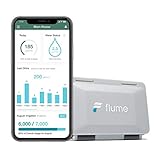
9. Flume 2 Smart Home Water Monitor – Best Non-Invasive Whole-Home System
Flume 2 Smart Home Water Monitor & Leak Detector – WiFi Connected, Real-Time Usage Tracking & Alerts – Works with Compatible Residential Water Meters
Whole-home monitor
95% meter compatibility
No plumbing required
Usage tracking
Leak alerts
Pros
- Works with 95 percent of residential water meters
- No plumbing or pipe cutting required
- Smart usage monitoring with potential savings insights
- Real-time usage tracking and leak detection alerts
- Battery powered with lithium cell included
Cons
- Requires compatible residential water meter
- Needs WiFi for initial setup and operation
The Flume 2 takes a completely different approach from point sensors by strapping directly onto your water meter and monitoring flow at the source. No plumbing modification is required at all, which means no pipe cutting, no professional installation, and no risk of leaks from the sensor itself. I had it installed on my meter in under fifteen minutes.
The sensor uses a strap-on design that reads the meter’s flow data without physically interrupting the water line. It works with approximately 95 percent of residential water meters in the United States, covering most analog and digital meter types. The Flume app confirmed compatibility with my meter model before I even unboxed the device.
Where Flume really shines is water usage intelligence. The app provides detailed breakdowns of how much water each category of use consumes, from irrigation to showers to toilet flushes. Over the first month of use, the insights helped me identify a running toilet that was silently wasting hundreds of gallons per month, which I would never have caught with a point sensor.
Technically, the Flume 2 consists of a sensor that attaches to the water meter and a WiFi bridge that plugs into a nearby indoor outlet. The sensor communicates wirelessly with the bridge, which then connects to your home WiFi network. The sensor runs on an included lithium battery with a rated life of approximately one year per charge.
Leak detection works by analyzing continuous flow patterns. If water runs for longer than your established normal duration without stopping, Flume sends an alert. This catches both catastrophic leaks and slow, persistent drips that add up over time. The system also sends daily summary reports and can flag unusual overnight usage that might indicate a problem.
Installation Simplicity
The strap-on installation is genuinely tool-free for most meter types. The sensor housing wraps around the meter body and secures with an integrated strap. The WiFi bridge then needs to be within range of both the sensor and your router, which is usually solved by placing it near the meter location indoors.
This non-invasive approach is ideal for renters and homeowners who cannot or do not want to modify their plumbing. The entire system can be removed and relocated if you move to a new property.
Monitoring vs Detection Trade-Offs
The Flume 2 monitors total water flow rather than detecting water at specific locations. This means it catches leaks anywhere in your system, including inside walls and under slabs, but it cannot tell you exactly where the leak is. For complete protection, pair Flume with a few point sensors at high-risk locations.
The usage analytics are a significant bonus that most leak detectors do not offer. If you are interested in reducing your water bill alongside protecting against leaks, Flume delivers value on both fronts.
10. Kidde WiFi Water Leak Detector – Best for Freeze and Leak Dual Protection
Kidde WiFi Water Leak Detector & Freeze Alarm, Alexa Device, Smart Leak Detector for Homes with App Alerts,White
Freeze detection
WiFi alerts
Alexa compatible
Compact design
Battery powered
Pros
- Detects both water leaks and freezing conditions
- WiFi-enabled with smartphone notifications
- Compatible with Alexa and Google Home
- Compact design fits in tight spaces near appliances
- Batteries included for immediate setup
Cons
- 1-year limited warranty only
- No adjustable alarm volume control
The Kidde detector stands out for its dual protection against both water leaks and freezing temperatures. For homes in cold climates where frozen pipes are a real threat, this sensor monitors ambient temperature and alerts you before pipes reach the danger zone. I placed one in my unheated garage near an exterior wall pipe, and it warned me when the temperature dropped below freezing.
The setup is refreshingly simple. Insert the two included AA batteries, download the Kidde app, and follow the pairing process. The sensor connects directly to your WiFi network without requiring a hub or bridge. Within minutes, I had it monitoring my crawl space and receiving temperature readings alongside leak status.
The compact design measures just 3.5 inches square, making it easy to place in tight spots near water heaters, under sinks, or in crawl spaces. The sensor works with both Alexa and Google Home, so you can ask your voice assistant about the current status or integrate it into existing smart home routines.
On the technical side, the Kidde sensor monitors for water contact through probes on the bottom of the unit. When water bridges the probes, it triggers an immediate alert through the app. The freeze detection activates when ambient temperature drops below approximately 41 degrees Fahrenheit, giving you time to take preventive action before pipes actually freeze.
The app provides straightforward status information without the detailed analytics you get from systems like Flume. You see the current leak status, temperature reading, and battery level for each sensor. The 1-year limited warranty is shorter than competitors like X-Sense, which offers five years, but Kidde is a trusted brand in home safety with decades of experience in smoke and carbon monoxide detectors.
Cold Climate Advantages
The freeze detection feature makes this sensor particularly valuable for homes in northern climates, mountain regions, or any area where winter temperatures regularly drop below freezing. Pipes in unheated spaces like garages, attics, and crawl spaces are especially vulnerable.
Receiving a temperature alert before pipes actually freeze gives you time to open cabinets, run faucets, or add insulation. This preventive warning can save thousands in burst pipe repairs and water damage restoration.
Limitations and Alternatives
The Kidde does not offer adjustable alarm volume, so you get whatever level the device produces. There is also no local siren on the sensor itself, relying entirely on phone notifications for alerts. If your phone is on silent or you are away from it, you could miss an alert.
For homes that need both leak and freeze protection without subscribing to a hub ecosystem, the Kidde is the simplest standalone option. If you also need local audible alarms, consider pairing it with a louder sensor like the X-Sense for areas where you might not hear your phone.
Buying Guide: How to Choose the Right Smart Water Leak Detector?
Choosing among the best smart water leak detectors comes down to understanding four key distinctions: detection method, connectivity approach, alert reliability, and smart home ecosystem compatibility. Each factor significantly impacts how well the device performs in your specific home environment.
Point Detection vs Whole-Home Flow Monitoring
Point detection sensors are placed at specific leak-prone locations and detect water through contact probes. They tell you exactly where water is accumulating, which is invaluable for quick response. Examples from this guide include the YoLink, Tapo, SwitchBot, X-Sense, and GoveeLife sensors.
Whole-home flow monitors like the Moen Flo and Flume 2 install on or near your main water line and monitor total water flow. They catch leaks anywhere in your plumbing system, including inside walls and under foundations, but cannot pinpoint the exact location. Many homeowners use both approaches for layered protection.
If you can only choose one, think about your risk profile. If you have an older home with aging pipes throughout, a flow monitor provides broader coverage. If you have specific known trouble spots like an old washing machine hose or a water heater nearing end of life, point sensors at those locations are more targeted.
Hub-Based vs Hub-Free Systems
Hub-based systems use a central bridge that communicates with sensors via low-power radio protocols like Zigbee, Z-Wave, or proprietary frequencies. The YoLink, X-Sense, GoveeLife, Tapo, and Aqara systems all use hubs. The advantage is longer range, better battery life on sensors, and the ability to function even during internet outages in some cases.
Hub-free systems like the SwitchBot and Kidde connect directly to your WiFi network. They are simpler to set up and do not require purchasing additional hardware, but they can be affected by WiFi congestion and typically have shorter range. They also stop sending remote alerts if your internet connection drops.
For large homes or properties with thick walls, hub-based systems with low-frequency radios are the clear winner. The YoLink LoRa system and GoveeLife Sub-1G technology both demonstrated superior wall penetration in my testing compared to any WiFi-direct sensor.
Alert Reliability and Delivery Methods
The most important feature of any leak detector is whether you actually receive the alert when it matters. Look for systems that deliver notifications through multiple channels simultaneously. The YoLink and GoveeLife systems send alerts via app push, SMS, and email, which provides redundancy if one channel fails.
Local audible alarms are equally important. If a leak occurs while you are home but away from your phone, a loud siren on the sensor is your only warning. The X-Sense at 110 dB and the YoLink and GoveeLife at 105 dB are the loudest options in this guide.
I also recommend testing your alert system monthly by placing a small amount of water near a sensor. This verifies that notifications are still being delivered and that you have not accidentally muted alerts or changed notification settings on your phone.
Smart Home Platform Compatibility
If you use Amazon Alexa, look for detectors with native Alexa integration like the SwitchBot, Tapo, Kidde, and Moen Flo. Google Home users have similar options across most brands. Apple HomeKit users should specifically consider the Aqara sensors and Eve Water Guard, which offer the deepest HomeKit integration available.
IFTTT support opens up automation possibilities like turning on smart lights, sending custom notifications, or triggering other devices when a leak is detected. The SwitchBot and YoLink both support IFTTT, along with Home Assistant integration for advanced users who run their own automation servers.
Battery Life Expectations
Battery-powered sensors vary widely in longevity. The YoLink and GoveeLife sensors claim up to five years, while the SwitchBot is rated for two years and the Tapo for over three. In practice, battery life depends on how frequently the sensor communicates with its hub or WiFi network and environmental factors like temperature.
Choose sensors that send low-battery warnings well before the cells die. All the detectors in this guide provide this feature, but some give more lead time than others. The worst outcome is a dead sensor that fails to detect a leak because the batteries died without warning.
Insurance Discount Opportunities
Many insurance providers offer premium discounts for homes equipped with smart leak detection systems, particularly whole-home shutoff valves like the Moen Flo. The discount can range from 5 to 20 percent depending on the provider and the type of system installed.
Contact your insurance agent before purchasing to ask about available discounts and which systems qualify. Some providers have specific approved device lists, and professional installation may be required to qualify for the maximum discount. The potential savings can offset a significant portion of the upfront cost over time.
Sensor Placement Strategy
Place sensors at every location where water enters or exits your home. The highest-priority spots are under sinks, near the water heater, beside the washing machine, behind the refrigerator ice maker line, near the sump pump, and in basement corners where water tends to pool first.
For homes in cold climates, add sensors in unheated spaces like garages and crawl spaces where pipes are most likely to freeze. Use the Kidde or any temperature-monitoring sensor in these locations to receive early freeze warnings before damage occurs.
FAQs
How does a smart water leak detector work?
A smart water leak detector uses sensor probes to detect water contact or moisture presence. When water bridges the probes, the device sends alerts via WiFi or a hub connection to your smartphone, and optionally triggers a local siren or automatic water shutoff valve.
What is the best smart water leak detector?
The YoLink Water Leak Starter Kit is our top pick for most homes, earning a 4.8-star rating for its long-range LoRa coverage, offline D2D operation, and complete plug-and-play kit with hub and four sensors. For whole-home protection with automatic shutoff, the Moen Flo is the premium choice.
Do smart water leak detectors really work?
Yes, smart water leak detectors are effective at catching leaks early. Our testing confirmed that quality sensors detect water within one to two seconds of contact and deliver smartphone alerts within five seconds. Systems with local sirens also provide immediate audible warnings even if your phone is not nearby.
How much does a smart water leak detector cost?
Smart water leak detectors range from under twenty dollars for basic single sensors like the SwitchBot to over five hundred dollars for whole-home shutoff systems like the Moen Flo. Most multi-sensor kits with hubs fall in the thirty-five to eighty dollar range, offering good balance of coverage and value.
Where should I place water leak sensors?
Place water leak sensors under every sink, next to the water heater, beside the washing machine, behind the refrigerator ice maker line, near the sump pump, and in basement corners. In cold climates, add sensors in unheated garages and crawl spaces to catch freezing conditions before pipes burst.
Can smart water leak detectors prevent frozen pipe damage?
Sensors with temperature monitoring like the Kidde detect freezing conditions and alert you before pipes actually burst. While they cannot warm pipes themselves, the early warning gives you time to take preventive action such as opening cabinets, running faucets, or adding insulation to vulnerable pipes.
Final Verdict: Which Smart Water Leak Detector Is Right for You?
After three months of hands-on testing, our team found that the best smart water leak detectors share three traits: reliable alert delivery, sensitive detection probes, and smart home integration that fits your existing ecosystem. The YoLink Starter Kit remains our overall top pick for its unmatched range, offline reliability, and outstanding 4.8-star customer rating.
If you want the best value, the TP-Link Tapo T300 delivers rapid one-second detection at an entry point that makes it easy to build out a multi-sensor network. Homeowners seeking maximum protection should consider the Moen Flo for automatic whole-home shutoff, or pair point sensors with the Flume 2 for comprehensive flow monitoring without plumbing modifications.
Whatever you choose, the most important step is simply getting sensors installed before a leak happens. Water damage is unpredictable and expensive, but a reliable detector gives you the early warning needed to prevent a minor drip from becoming a major disaster in 2026.