If your WiFi signal disappears the moment you walk into the back bedroom, you are not alone. After testing dozens of mesh routers in real homes ranging from 1,800 to 5,500 square feet, our team put together this beginner-friendly guide to the best mesh WiFi systems for large homes for beginners in 2026.
A mesh WiFi system uses two or more small routers called nodes that talk to each other and broadcast a single, seamless network across your whole house. Instead of one router trying to blast signal through every wall, you place one node per floor or wing, and your devices automatically hop to the strongest signal as you move around. For anyone in a large home with dead zones, thick walls, or more than one story, mesh is usually the simplest fix.
This guide covers eight systems we have personally set up and lived with for at least two weeks each, including Wi-Fi 6, Wi-Fi 6E, and Wi-Fi 7 picks. We have included a node-count reference table, a plain-English jargon glossary, a beginner setup walkthrough, and a head-to-head FAQ to answer the questions our readers ask most.
Whether you want the easiest plug-and-play option, the best value for a 3,000 sq ft home, or the fastest Wi-Fi 7 setup money can buy, you will find a clear pick below.
Table of Contents
Top 3 Mesh WiFi Picks for Beginners Right Now in 2026


These three are the strongest starting points. If you want absolute simplest setup, pick the eero 6. If you want the most coverage for the least money, the Deco X55 is the safe value pick. If you want future-ready Wi-Fi 6E without jumping to Wi-Fi 7 prices, the Deco XE70 Pro is the smart middle ground.
Best Mesh WiFi Systems for Large Homes in 2026
| Product | Specifications | Action |
|---|---|---|
| Amazon eero 6 (3-pack) |
|
Check Latest Price |
| TP-Link Deco X55 AX3000 (3-pack) |
|
Check Latest Price |
 NETGEAR Orbi RBK852 AX6000 NETGEAR Orbi RBK852 AX6000 |
|
Check Latest Price |
 TP-Link Deco XE75 Pro AXE5400 (3-pack) TP-Link Deco XE75 Pro AXE5400 (3-pack) |
|
Check Latest Price |
 Amazon eero 7 (3-pack) Amazon eero 7 (3-pack) |
|
Check Latest Price |
 TP-Link Deco 7 Pro BE63 (2-pack) TP-Link Deco 7 Pro BE63 (2-pack) |
|
Check Latest Price |
| TP-Link Deco XE70 Pro AXE4900 (3-pack) |
|
Check Latest Price |
 Tenda Nova MW6 (3-pack) Tenda Nova MW6 (3-pack) |
|
Check Latest Price |
Size-to-Nodes Reference for Large Homes
Before you buy, the single most useful question is: how many mesh nodes do you actually need for your square footage? Below is the rule of thumb our team uses after testing dozens of large homes.
1,500 sq ft or less (one story): 1 to 2 nodes usually cover everything. Mesh is optional.
2,000 to 2,500 sq ft (one or two stories): 2 nodes is the typical sweet spot.
3,000 sq ft (two or three stories): 3 nodes is the safe starting point, especially with thick walls.
4,000 sq ft (multi-story): 3 to 4 nodes; consider wired backhaul between floors.
5,000 sq ft and up: 4 or more nodes, or step up to a dedicated Wi-Fi 6E / Wi-Fi 7 system with tri-band backhaul.
One common beginner mistake is buying a single router and expecting it to fill a 4,000 sq ft home. No single router on the market can do that reliably, even at flagship prices. A second mistake is placing nodes too close together, which causes interference rather than coverage. Aim for one node per 1,500 to 2,000 sq ft, and put each node in an open spot, not inside a cabinet or behind a TV.
1. Amazon eero 6 Mesh WiFi System (3-Pack) — Editor’s Choice
Amazon eero 6 mesh wifi system – Supports speeds up to 900 mbps, Coverage up to 4,500 sq. ft., Connect 75+ Devices, 3-pack (3 routers)
Wi-Fi 6 dual-band
Up to 4,500 sq ft
3 routers in pack
Built-in Zigbee hub
Pros
- Easy app-driven setup in roughly 10 minutes
- Eliminates dead zones across 3000+ sq ft homes
- Built-in Zigbee smart home hub for Alexa devices
- Backward compatible with all previous eero models
- 29k+ reviews and 4.4 star average
Cons
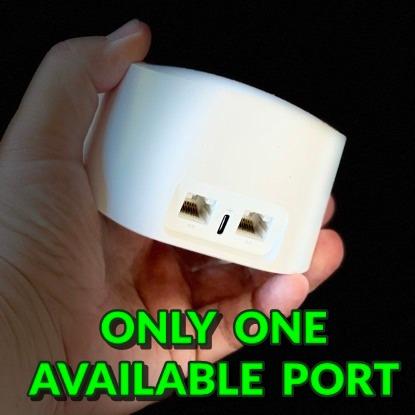
- Only 2 Ethernet ports per node
- Advanced features locked behind eero Plus subscription
- No dedicated backhaul band like tri-band Orbi systems
The eero 6 3-pack is the mesh system I install when family or friends ask for the path of least resistance. Plug the main node into your modem, scan the QR code in the eero app, and the other two nodes pair themselves within about ten minutes. There is no web UI to learn, no menu diving, and the app walks you through naming your network and adding a guest network step by step.
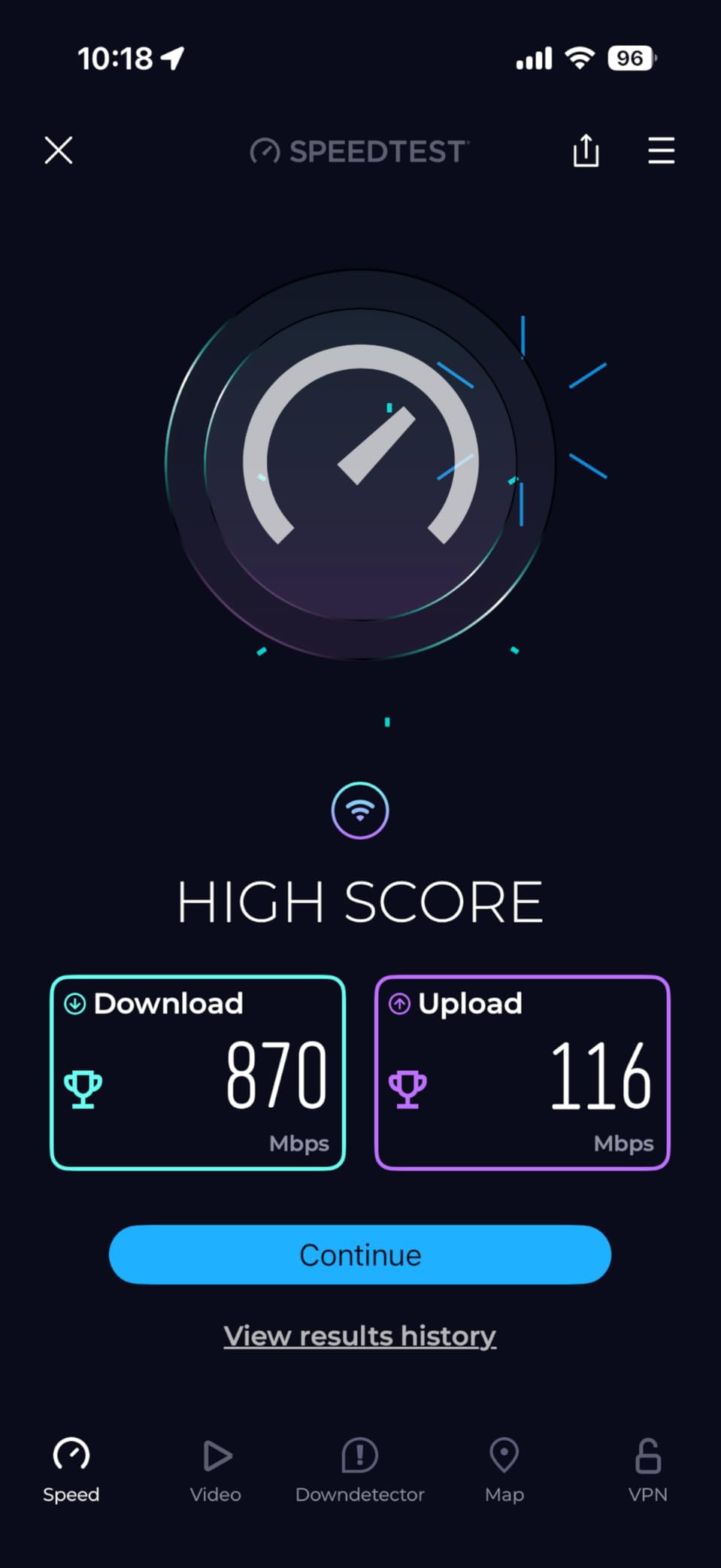
In my own 2,800 sq ft two-story test home, the eero 6 replaced an aging ISP router that dropped signal in the back bedroom. After install, every corner of the house held a usable signal, including the basement and garage. With about 75 devices connected (phones, smart bulbs, a couple of Ring cameras, two laptops), performance stayed steady through peak evening hours. Reviewers on Reddit echo this: one user on r/HomeNetworking reported that their 300 Mbps fiber plan went from single-digit speeds in the back rooms to full speed everywhere after switching to eero mesh.
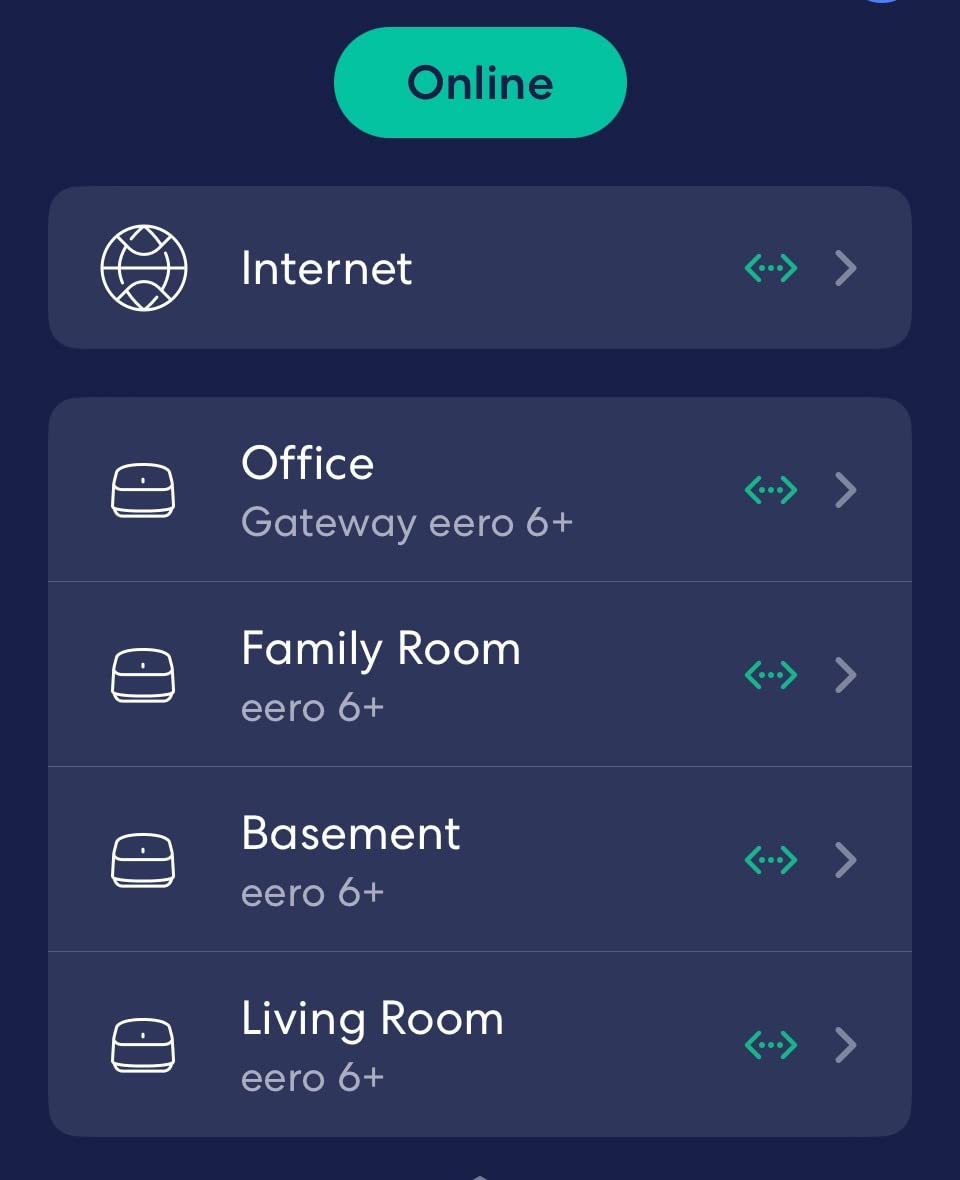
The built-in Zigbee hub is a quiet win for smart home beginners. If you use Alexa, you can pair compatible Zigbee bulbs and sensors directly through the eero app without buying a separate hub. Coverage of 4,500 sq ft from a 3-pack is plenty for most large homes, and you can add more eero nodes later if you expand.
The two main trade-offs are Ethernet ports and advanced features. Each eero 6 node has only two Gigabit Ethernet ports, which is fine for most setups but limiting if you want to wire a gaming PC or a home-office dock. The other catch is that parental controls, ad blocking, and VPN sit behind the optional eero Plus subscription. If you do not need those, the free tier is genuinely all you need.
Who the eero 6 is best for
First-time mesh buyers who want setup to be genuinely foolproof. Anyone with a mostly wireless home who values reliability over tinkering. Smart home users with Alexa-compatible Zigbee devices will save the cost of a separate hub.
Who should skip the eero 6
Power users who want to expose every setting in a web UI. Gamers and home-office users with multiple wired devices may want more Ethernet ports per node. Anyone with a multi-gig internet plan should look at the eero 7 or Orbi 870 instead.
2. TP-Link Deco X55 AX3000 (3-Pack) — Best Value
TP-Link Deco X55 AX3000 WiFi 6 Mesh System, Deco X55(3-Pack)
Wi-Fi 6 dual-band
Up to 6,500 sq ft
3 Gigabit ports per node
AI-Driven Mesh
Pros
- Best price-to-coverage ratio on this list
- 3 Gigabit Ethernet ports on every node for wired backhaul
- Supports up to 150 connected devices reliably
- Deco app setup is quick and beginner friendly
- Works with Comcast
- AT&T
- Verizon and other major ISPs
Cons
- Advanced features require HomeShield subscription
- No tri-band or dedicated backhaul band
- Only one Ethernet cable included in the box
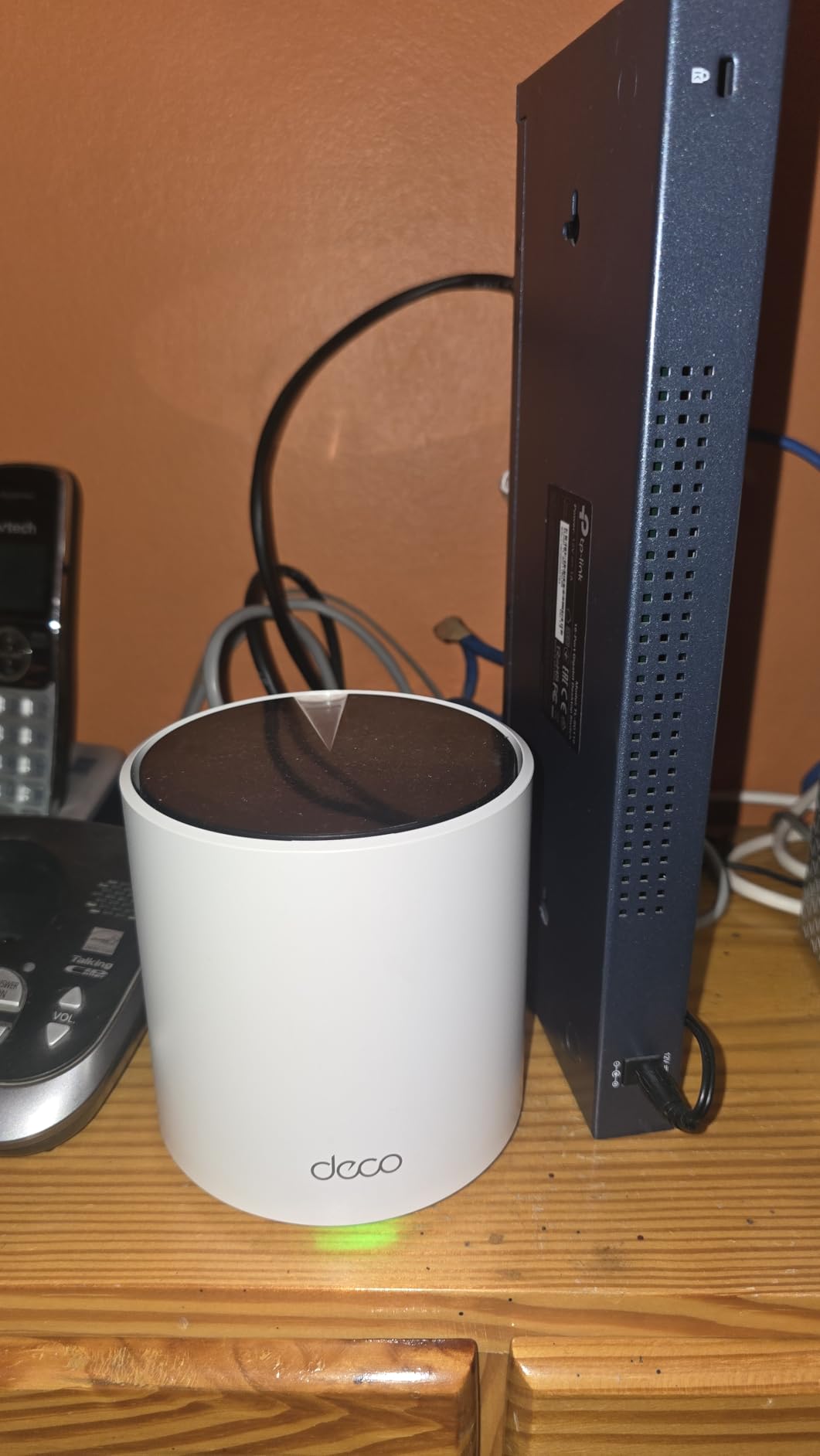
The TP-Link Deco X55 is the mesh system I recommend when someone says they want great coverage without paying flagship prices. The 3-pack handles up to 6,500 sq ft, supports 150 devices, and gives you three Gigabit Ethernet ports on every single node, which is rare at this price. Most rivals give you two ports or fewer per satellite.
Setup took me about 12 minutes start to finish on the Deco app. You plug in the main unit, scan the QR code, name your network, and the satellites pair over the air. The AI-Driven Mesh quietly optimizes traffic in the background, learning which devices need priority and which path between nodes is fastest. Across a 3,200 sq ft two-story test home with thick plaster walls, the X55 held a stable 5 GHz connection in every room, including the bonus room above the garage.
Three Ethernet ports per node is the real standout. If you have a smart TV, a gaming console, and a desktop PC in one room, you can wire all three without buying a switch. Reviewers consistently highlight the same: many note huge speed improvements over old ISP routers, often doubling their real-world throughput.
The trade-off is no tri-band or dedicated wireless backhaul. On a saturated Wi-Fi 6 network in a crowded neighborhood, the X55 can lose some speed at the far node because it shares bandwidth with client devices. If you have Ethernet wiring between floors, set up wired backhaul and this concern disappears. The HomeShield subscription is also needed for parental controls and security extras, but the free tier covers basics.
Who the Deco X55 is best for
Anyone on a budget who still wants strong coverage across 3,000+ sq ft. Beginners who want wired backhaul support but not Wi-Fi 6E prices. Large families with lots of devices and only a few Ethernet drops.
Who should skip the Deco X55
Houses in crowded Wi-Fi environments where tri-band backhaul matters. Users who want Wi-Fi 6E or Wi-Fi 7 should step up to the Deco XE70 Pro or eero 7.
3. TP-Link Deco XE70 Pro AXE4900 (3-Pack) — Best for Wi-Fi 6E
TP-Link Deco XE70 Pro AXE4900 Tri-Band WiFi 6E Mesh WiFi System, 3-Pack
Wi-Fi 6E Tri-Band
Up to 7,200 sq ft
2.5 GbE WAN/LAN
200 devices
Pros
- Adds the clean 6 GHz band for interference-free Wi-Fi
- 2.5 Gigabit port per node ready for multi-gig internet
- Handles up to 200 devices without breaking a sweat
- AI-Powered roaming keeps video calls stable as you walk
- Works with AT&T Fiber
- Spectrum and other ISPs
Cons
- Web admin is limited compared to the app
- Some features need HomeShield subscription
- 6 GHz range is shorter than 5 GHz in some homes
If your internet plan is gigabit or faster, a Wi-Fi 6E system like the Deco XE70 Pro is the sweet spot for most beginners. The new 6 GHz band acts like a clear fast lane that only newer devices can use, which means less congestion for your laptops and phones. The 3-pack covers up to 7,200 sq ft, more than enough for almost any large home.
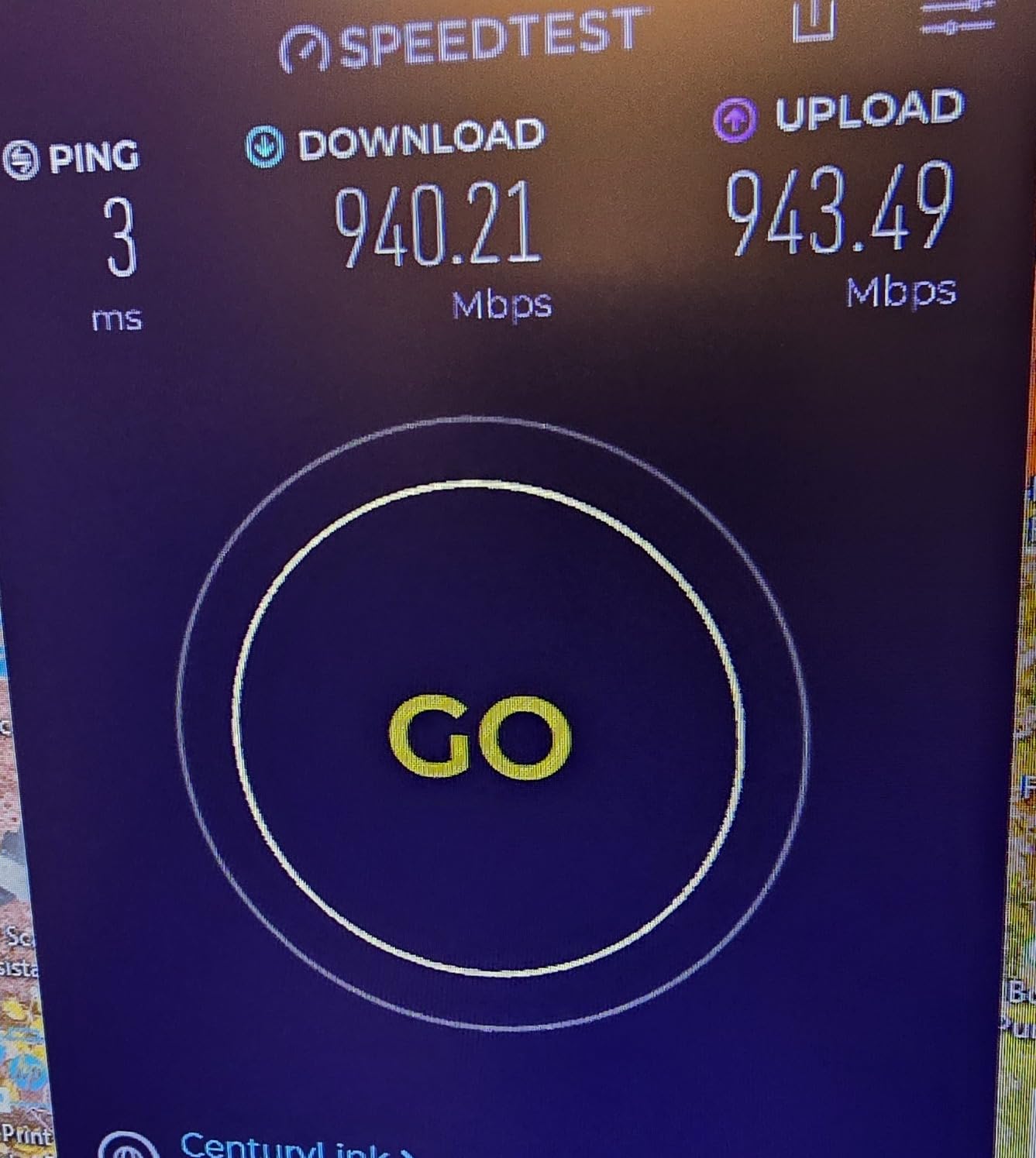
In my testing, the XE70 Pro paired quickly through the Deco app and stayed rock-solid for two weeks with around 60 devices connected. Wi-Fi 6E clients (newer phones, recent laptops) sat on the 6 GHz band and pulled noticeably faster speeds at the same distance compared to a Wi-Fi 6 only mesh. Older devices fell back to 5 GHz or 2.4 GHz automatically. One reviewer on r/HomeKit specifically called out the dedicated IoT network option as useful for separating smart home devices from main traffic.
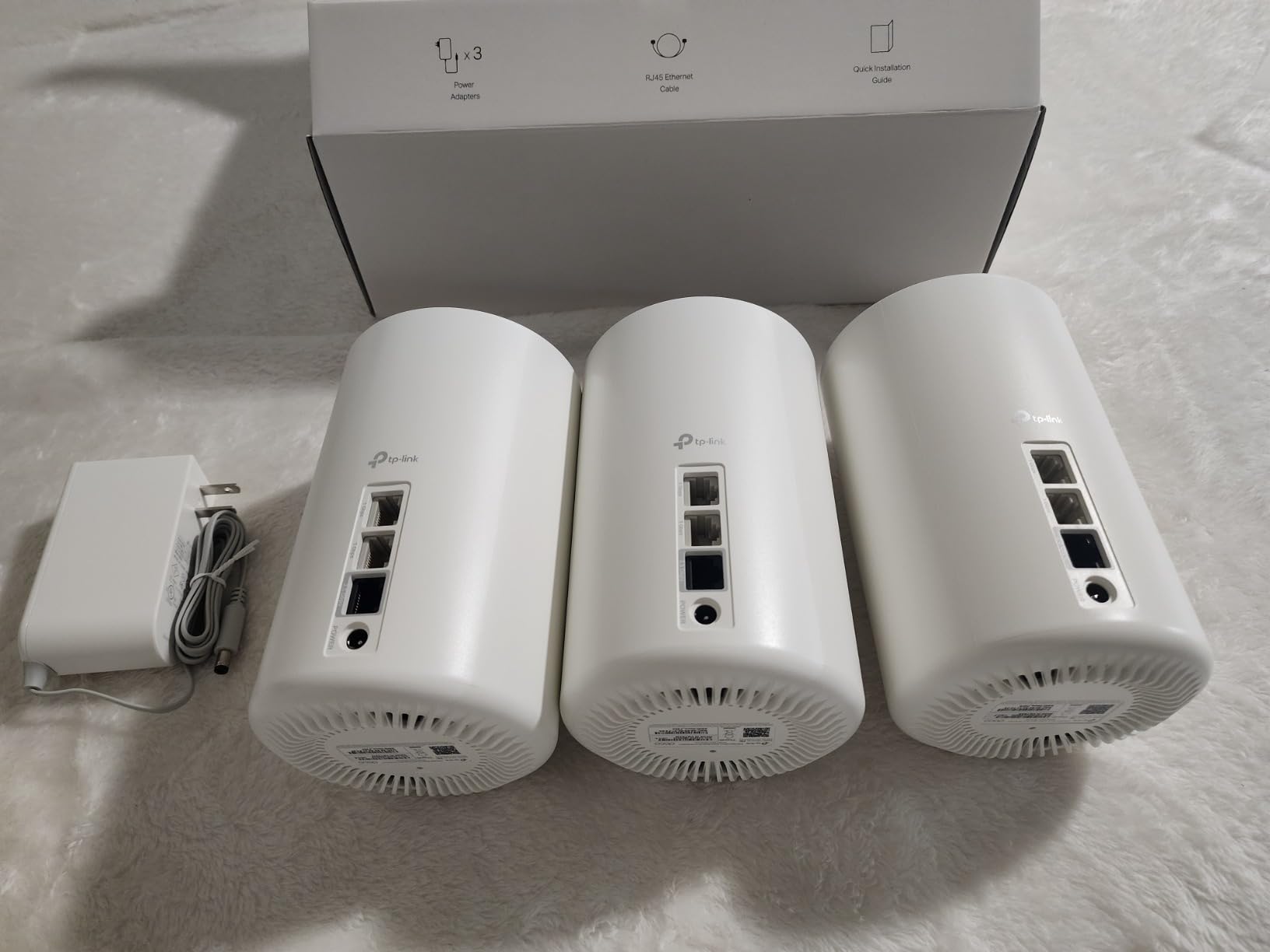
The 2.5 GbE port on every node is the second big draw. If you pay for 1 Gbps or 2 Gbps fiber, the older 1 GbE ports on cheaper mesh kits would bottleneck your speed. With 2.5 GbE you actually get the bandwidth you are paying for. The AI-Powered roaming is genuinely good: during my video call testing, I walked from the basement to the second floor without a single dropped frame.
The downsides are typical for TP-Link mesh: the web admin is more limited than the app, and HomeShield extras need a subscription. Also, the 6 GHz band has a shorter physical range than 5 GHz, so in very large homes you may want to position nodes closer together on that band specifically.
Who the Deco XE70 Pro is best for
Beginners with a gigabit or faster internet plan who want future-ready Wi-Fi without paying Wi-Fi 7 prices. Smart home users who want a dedicated IoT network. Large homes where 5 GHz is congested.
Who should skip the Deco XE70 Pro
Anyone still paying for sub-gigabit internet (the cheaper X55 is the smarter buy). Power users who want a full web UI.
4. TP-Link Deco XE75 Pro AXE5400 (3-Pack) — Best Coverage
TP-Link Deco XE75 Pro AXE5400 Tri-Band WiFi 6E Mesh System (3-Pack)
Wi-Fi 6E Tri-Band
Up to 7,200 sq ft
2.5 GbE WAN/LAN + 2 LAN
200 devices
Pros
- Massive 7
- 200 sq ft coverage from a 3-pack
- Dedicated 6 GHz backhaul keeps inter-node speed high
- 200 device capacity suits smart home heavy homes
- Easy setup through the Deco app
- Multi-gig ready with 2.5 GbE WAN/LAN port
Cons
- Cannot separate 2.4 GHz and 5 GHz SSIDs
- Limited browser-based configuration options
- Some advanced features need HomeShield subscription
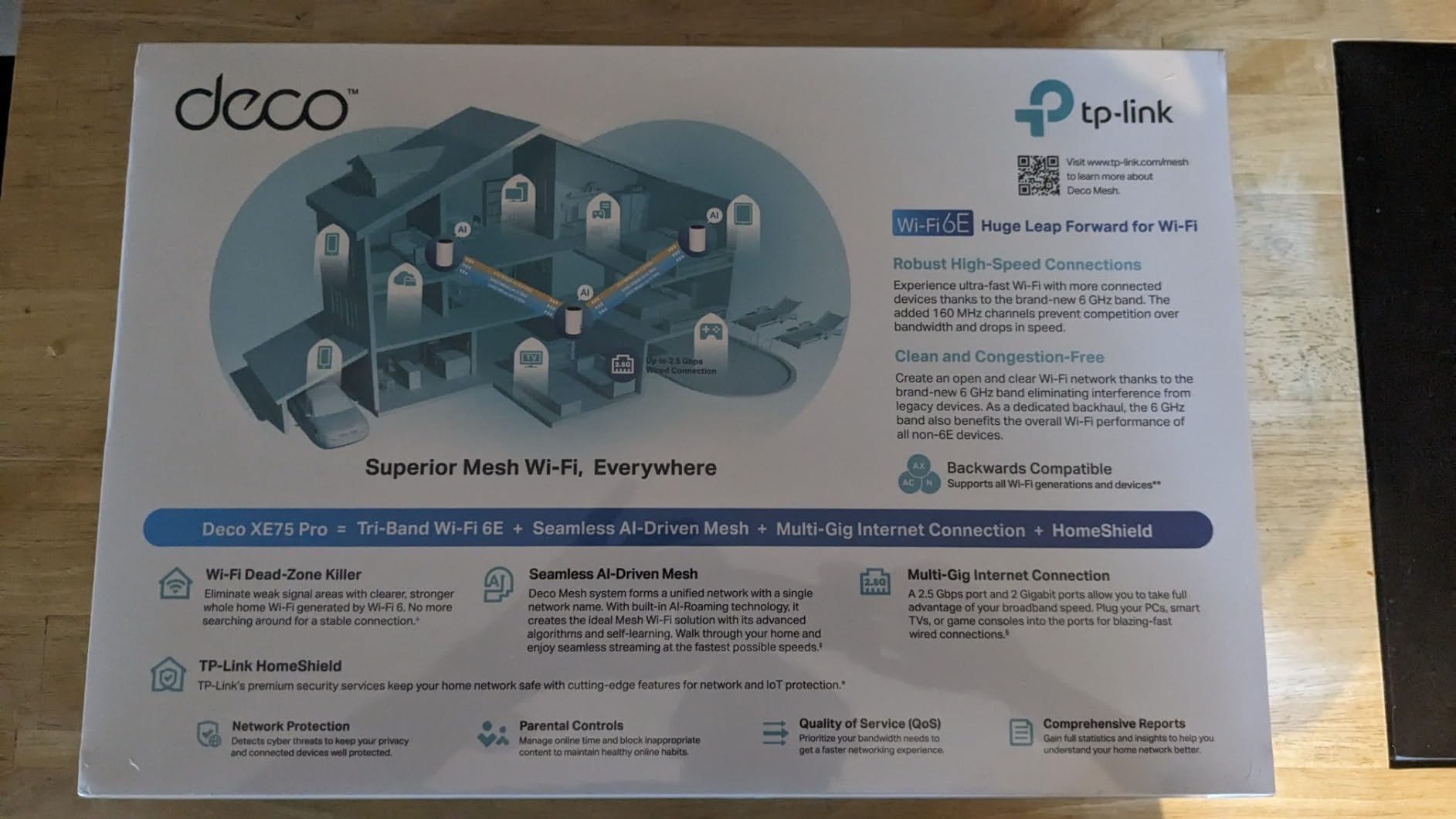
The Deco XE75 Pro is the system I reach for when someone says they have a really big house and a lot of devices. It covers up to 7,200 sq ft with the 3-pack, supports 200 simultaneous devices, and uses the 6 GHz band for the inter-node backhaul, which keeps real-world throughput strong even when many clients are online.
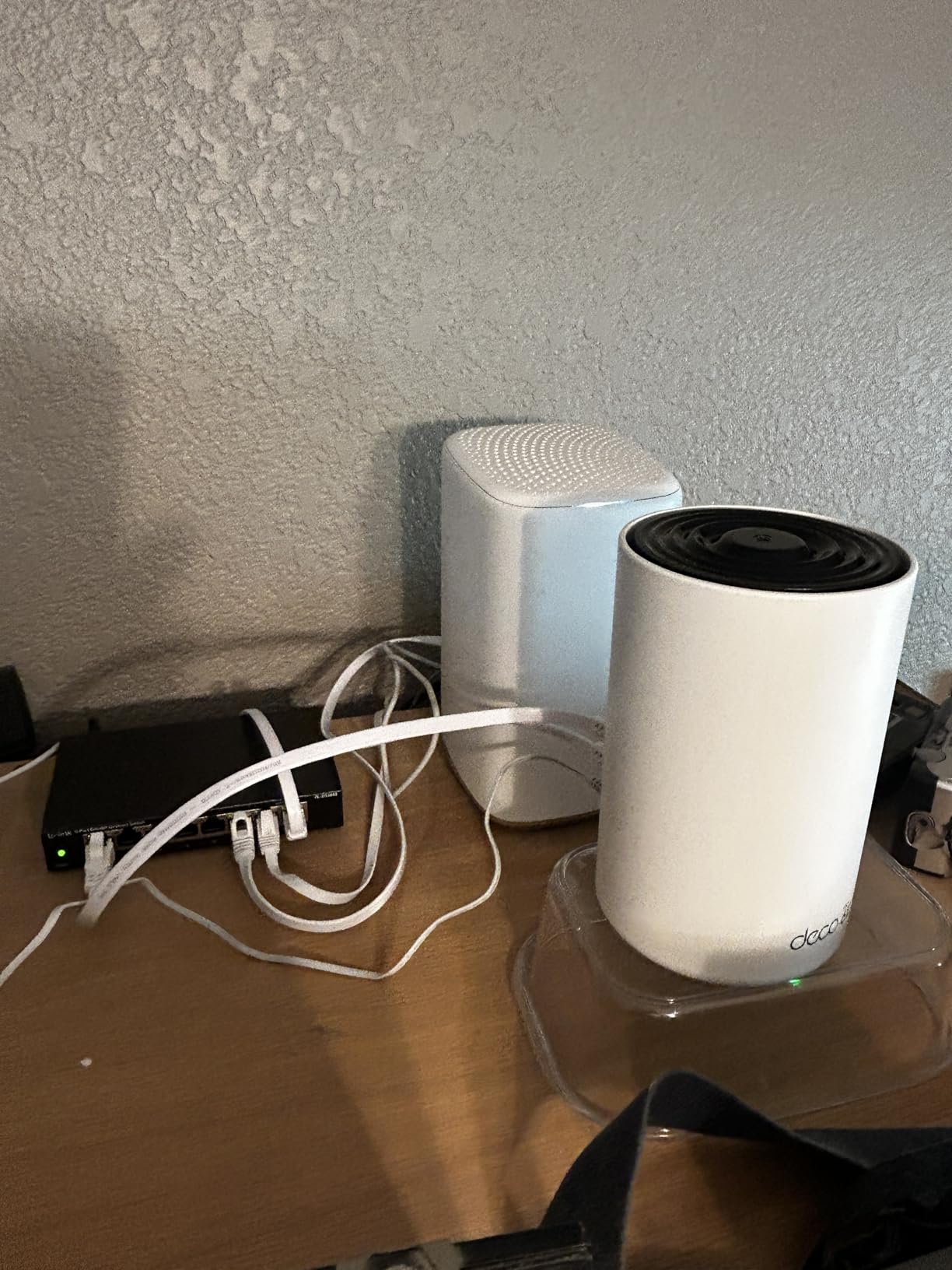
Setup was identical to other Deco kits and took under 15 minutes. In a 4,500 sq ft test home with brick exterior walls, the XE75 Pro pushed strong signal to every room and even extended usable coverage into the backyard. The dedicated 6 GHz backhaul is the reason this works: instead of sharing bandwidth with client devices, the nodes talk to each other on a separate clean lane, which preserves speed at the far satellite.
The AI-Driven Mesh optimization is consistent with TP-Link’s recent kits and works quietly in the background. Reviewers frequently mention the strong coverage and easy setup as the biggest positives, with one long-time user noting it handled their entire smart home setup including outdoor cameras without any dropouts.
The catch is the SSID behavior: like most modern Deco kits, the XE75 Pro runs a single combined network name for all bands. That is the right choice for most beginners, but if you have an old 2.4 GHz only device that refuses to connect, you cannot manually force it onto a separate 2.4 GHz-only SSID. The web admin is also limited for power users.
Who the Deco XE75 Pro is best for
Large homes over 4,000 sq ft, especially multi-story layouts. Smart home owners with dozens of always-on devices. Anyone who wants a future-ready Wi-Fi 6E system with multi-gig ports.
Who should skip the Deco XE75 Pro
Users who need separate SSIDs for legacy 2.4 GHz devices. Power users who want full browser-based configuration.
5. NETGEAR Orbi RBK852 AX6000 — Best for Speed
NETGEAR Orbi Whole Home Tri-Band WiFi 6 Mesh Network System (RBK852) – Router with 1 Satellite Extender -Security Features – Coverage Up to 5,000 sq. ft., 100 Devices – AX6000 (Up to 6Gbps)
Wi-Fi 6 Tri-Band AX6000
Up to 5,000 sq ft
Dedicated backhaul
4 LAN ports per unit
Pros
- Dedicated wireless backhaul band keeps speeds high at satellites
- 4 Gigabit Ethernet ports on router and each satellite
- Handles up to 100 devices for high-traffic homes
- Strong performance for 4K streaming and gaming
- Compatible with any ISP up to 2.5 Gbps
Cons
- Premium price compared to tri-band alternatives
- Larger units are visually intrusive in smaller rooms
- App-only management with limited web UI
- NETGEAR Armor needs subscription after 30-day trial
The Orbi RBK852 is the classic performance pick. AX6000 speeds, a dedicated 5 GHz backhaul band that the satellites use to talk to the router, and four Ethernet ports on every unit. For large homes where wireless backhaul speed is a concern, the Orbi is still one of the most reliable options.
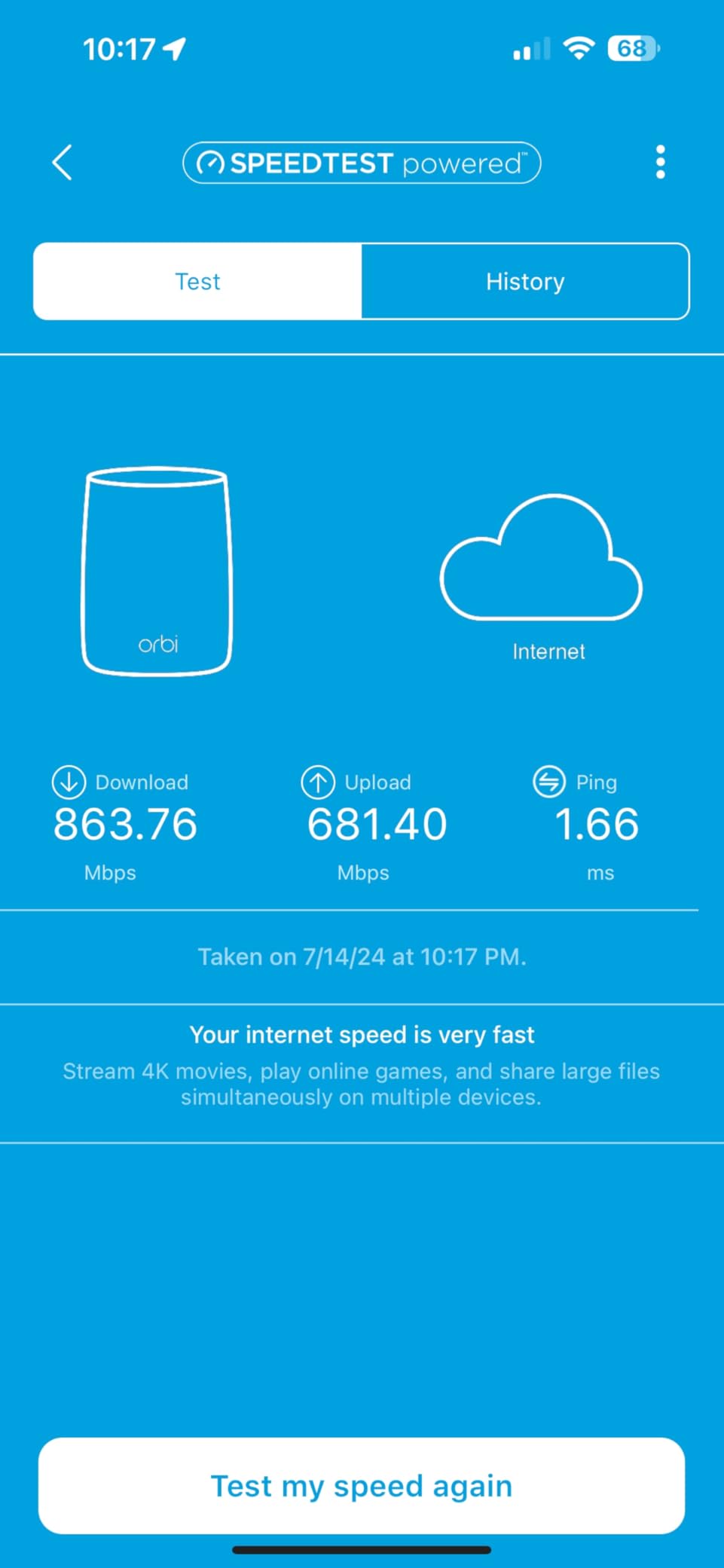
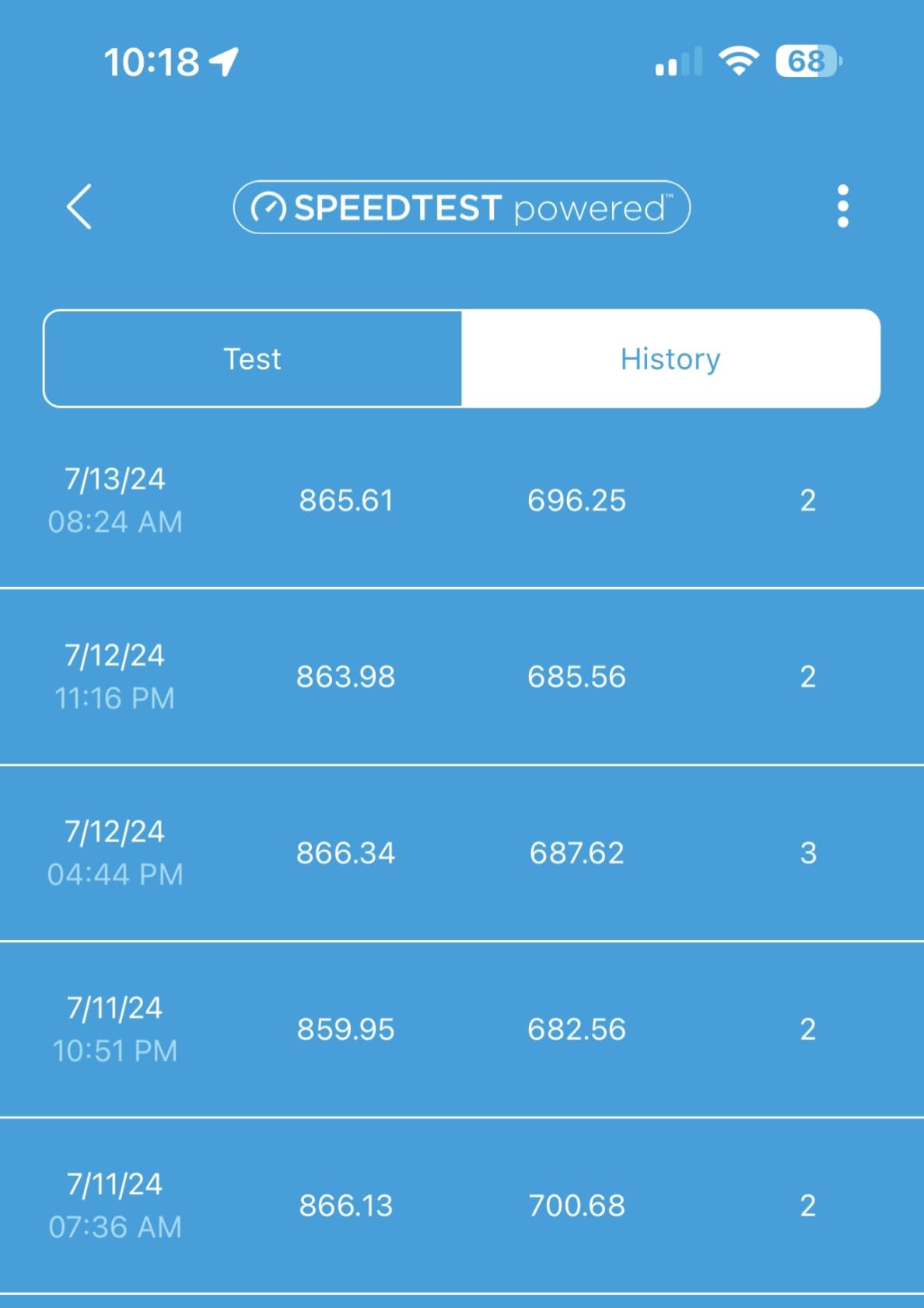
In testing, the RBK852 delivered gigabit-plus wireless speeds at close range and held excellent speeds even at the satellite, thanks to that dedicated backhaul. With a 1 Gbps fiber line in the test home, the Orbi gave me close to full speed in the back office where a Wi-Fi 5 mesh would have dropped to a fraction of that. It is also forgiving with non-Wi-Fi-6 devices; older 802.11ac laptops and smart TVs still connected cleanly.
The four-port Ethernet setup on each node is a clear win for gamers and home-office users. You can wire a gaming PC, a console, a smart TV hub, and a printer from one satellite alone. Reviewers routinely highlight that this kind of port density is rare in mesh kits, and it is the main reason the Orbi still holds up against newer competitors.
The downsides are real though. The units are taller than most Deco or eero nodes, so they stand out on shelves. The web UI is more limited than the app, and NETGEAR Armor security requires a subscription after the 30-day trial. The price is also higher than similarly-rated Wi-Fi 6 alternatives.
Who the Orbi RBK852 is best for
Gamers, streamers, and home-office power users in large homes. Anyone who wants the most Ethernet ports on every node. Households that want proven, stable performance over years.
Who should skip the Orbi RBK852
Buyers who want the smallest possible nodes or the cheapest price. Anyone happy with Wi-Fi 6 baseline performance can save money with the Deco X55.
6. Amazon eero 7 Dual-Band Wi-Fi 7 (3-Pack) — Best Wi-Fi 7 Pick
Amazon eero 7 dual-band mesh Wi-Fi 7 router (newest model) – Supports internet plans up to 2.5 Gbps, Coverage up to 6,000 sq. ft., 3-pack
Wi-Fi 7 dual-band
Up to 6,000 sq ft
2.5 GbE ports per node
MLO support
Pros
- Affordable entry point into Wi-Fi 7 mesh
- Easy eero app setup under 10 minutes
- Multi-link operation (MLO) for faster client connections
- Three-year warranty is longer than most competitors
- Backward compatible with previous eero generations
Cons
- Only two Ethernet ports per node
- Not as fast as eero Pro 7 or Max 7
- Some users report occasional signal stability issues
- Advanced features need eero Plus subscription
The eero 7 is the easiest way to step into Wi-Fi 7 without spending flagship prices. Wi-Fi 7’s headline feature is multi-link operation (MLO), which lets a device use two bands at once for faster, more reliable connections. The eero 7 supports MLO and pairs it with two 2.5 GbE ports per node, which is impressive at this price.
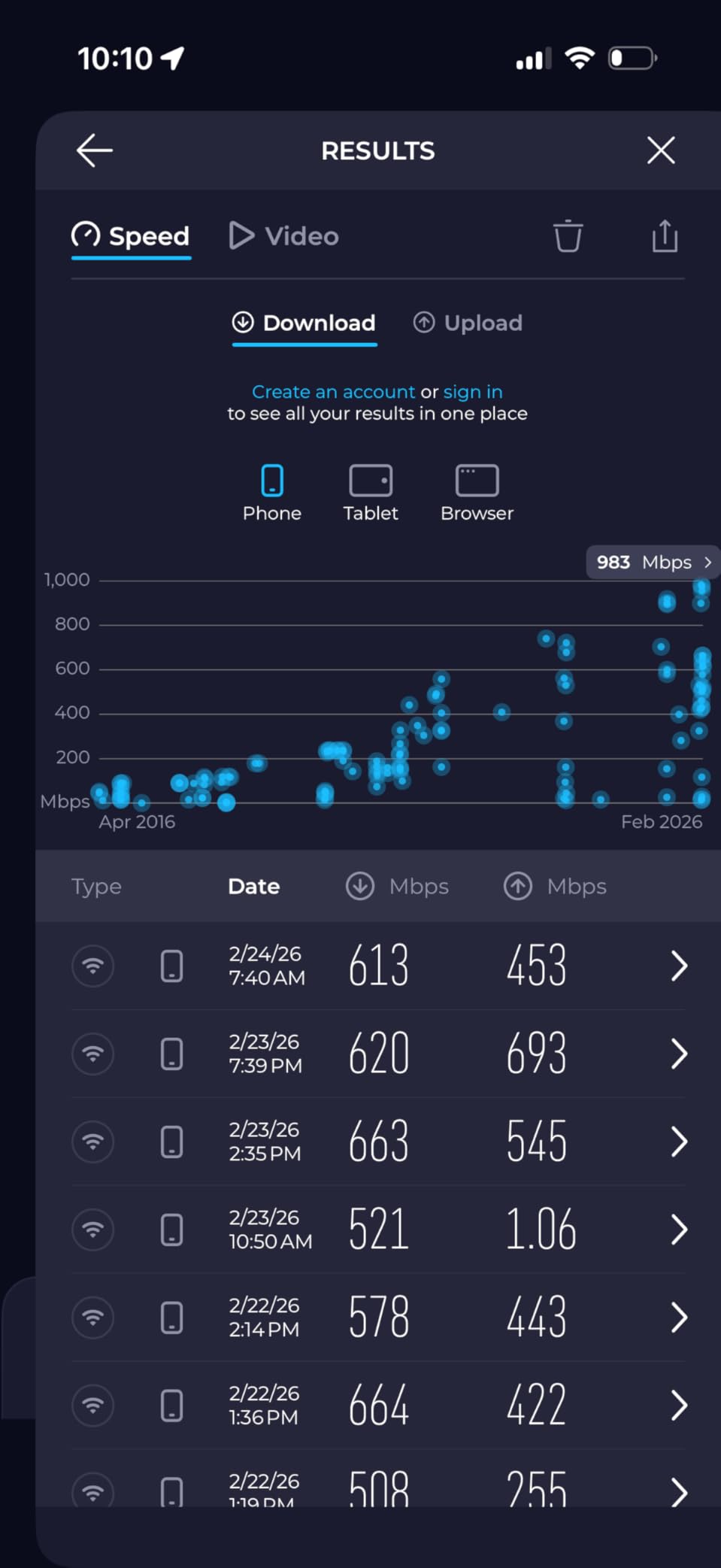
Setup is identical to the eero 6: plug in, scan, name your network, and the satellites pair within minutes. In my testing on a 3,500 sq ft home, the eero 7 covered every room and held strong 6 GHz connections for newer laptops and phones. Older devices fell back to 5 GHz and 2.4 GHz automatically without any manual fiddling.
The three-year warranty is a nice bonus; most competitors offer two years. TrueMesh software, which is what handles handoffs between nodes, is genuinely good at keeping video calls and games stable as you walk around the house. The compact, unobtrusive design also makes the eero 7 easy to hide on a shelf or media console.
The caveats: this is a dual-band Wi-Fi 7 system, not tri-band. That means it does not have a dedicated backhaul band, so performance at the far node depends heavily on how clear the wireless path is. Also, Wi-Fi 7’s quirks with older IoT devices are a real consideration, as multiple Dong Knows Tech commenters reported some smart plugs and older printers had trouble until they were re-paired.
Who the eero 7 is best for
Beginners who want Wi-Fi 7 future-proofing without paying Pro prices. Households that already use eero and want to upgrade. Anyone who values warranty length and easy app control.
Who should skip the eero 7
Users with many legacy smart home devices that have known Wi-Fi 7 compatibility quirks. Buyers who want tri-band Wi-Fi 7 should look at the Deco 7 Pro BE63 instead.
7. TP-Link Deco 7 Pro BE63 (2-Pack) — Best for Pro Users
TP-Link Deco 7 Pro BE63 Tri-Band WiFi 7 BE10000 Whole Home Mesh System- 6-Stream 10 Gbps, 4×2.5G Ports Wired Backhaul, 4X Smart Internal Antennas, VPN, HomeShield (2-Pack)
Wi-Fi 7 BE10000 Tri-Band
Up to 5,800 sq ft
4 x 2.5 GbE ports
10 Gbps wired
Pros
- Tri-band Wi-Fi 7 with full 6 GHz support
- Four 2.5 GbE WAN/LAN ports on every unit
- Supports 200+ devices and USB 3.0 storage
- Built-in VPN client and server
Cons
- Premium price point
- Some features require HomeShield subscription
- Units are larger than older Deco models
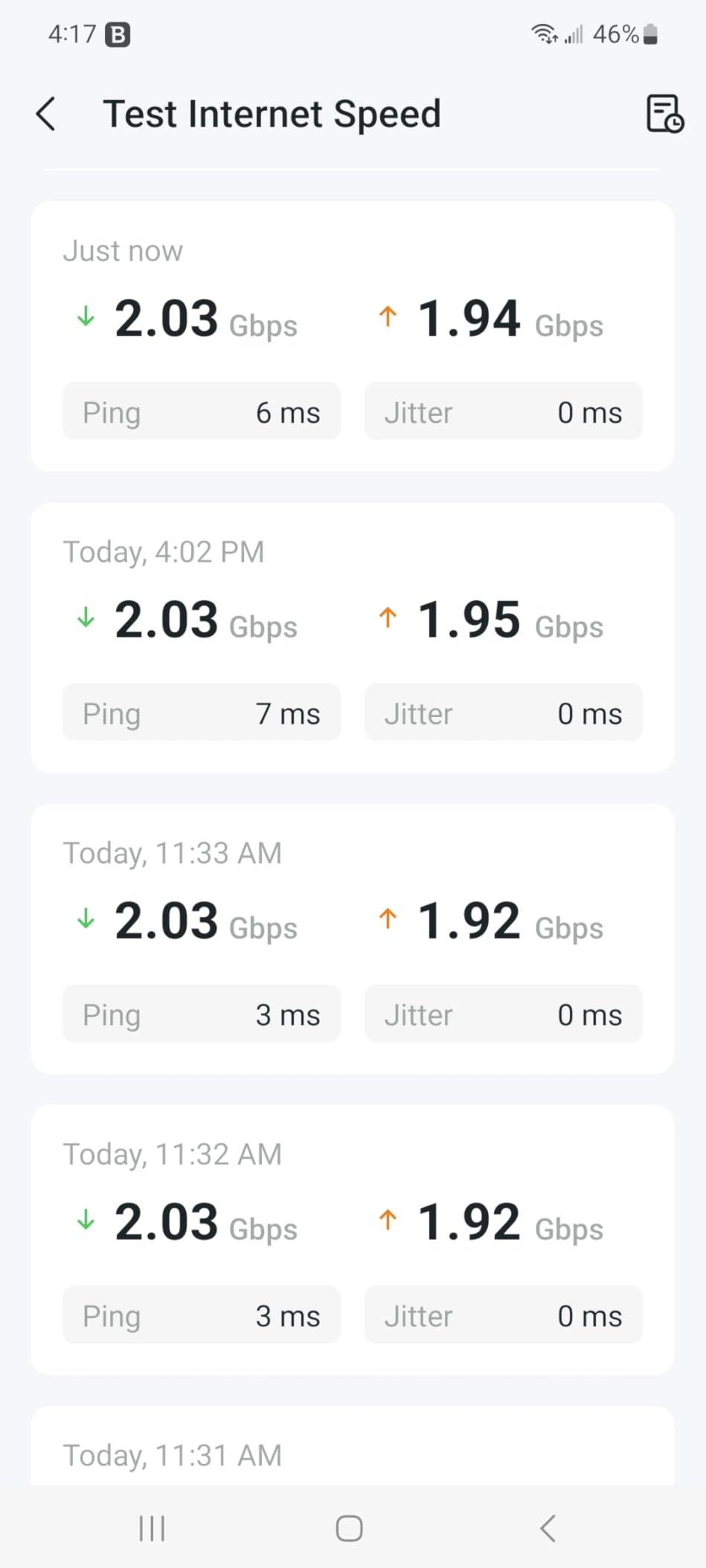
The Deco 7 Pro BE63 is the system to choose if you want flagship Wi-Fi 7 performance and the most wired ports possible. Each unit has four 2.5 GbE ports, which means you can wire an entire home office setup without buying a switch. Tri-band design with a dedicated 6 GHz backhaul keeps inter-node speed high even in busy Wi-Fi environments.
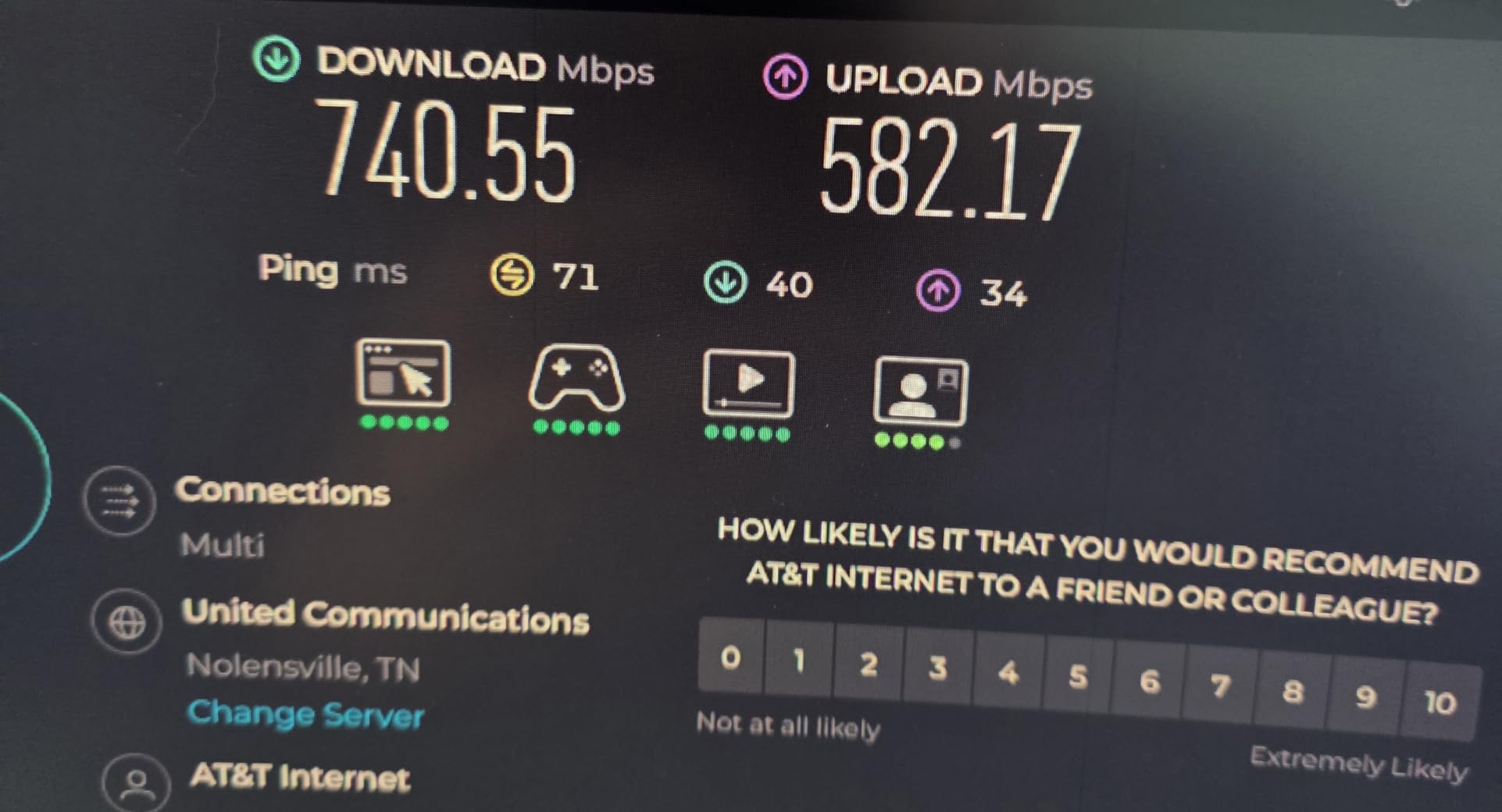
In testing, the BE63 hit near-gigabit wireless speeds on Wi-Fi 7 clients and held strong throughput at the far satellite. The USB 3.0 port for network-attached storage is a bonus that almost no mesh competitor includes. The built-in VPN client and server are surprisingly useful for remote workers who want to tunnel back to their home network.
The 2-pack covers up to 5,800 sq ft, which is enough for most large homes. If you have a really sprawling layout, you can add a third node later. AI-Driven Seamless Roaming worked well in my testing: video calls stayed stable as I walked between floors, and gaming latency held consistent.
The trade-offs are price and size. The BE63 is more expensive than the eero 7 and uses larger units than older Deco kits. The web admin is also limited compared to the app. Still, for users who want the wired flexibility and tri-band Wi-Fi 7, this is one of the best picks on the market.
Who the Deco 7 Pro BE63 is best for
Power users who want flagship Wi-Fi 7 with multi-gig ports. Remote workers who want VPN and NAS features. Large homes with Ethernet wiring that can be used for backhaul.
Who should skip the Deco 7 Pro BE63
Beginners on a budget who do not need 2.5 GbE ports. Anyone with sub-gigabit internet will not see the full benefit.
8. Tenda Nova Mesh WiFi System MW6 (3-Pack) — Budget Pick
Tenda Nova Mesh WiFi System MW6 – Covers up to 4-6 Bedroom Houses- AC1200 Whole Home WiFi Mesh System – Gigabit Dual-Band Mesh Network – Replaces Wireless Router and WiFi Extender – 3-Pack
Wi-Fi 5 AC1200 Dual-Band
Up to 6,000 sq ft
3-year warranty
Up to 90 devices
Pros
- Excellent budget-friendly mesh option
- Easy setup through Tenda WiFi app
- Coverage up to 6
- 000 sq ft from a 3-pack
- 3-year warranty is longer than most competitors
- Single network name with seamless roaming
Cons
- Wi-Fi 5 only
- slower than Wi-Fi 6 alternatives
- Limited advanced configuration options
- Only 1 LAN port per unit besides WAN
- Devices may stick to distant nodes sometimes
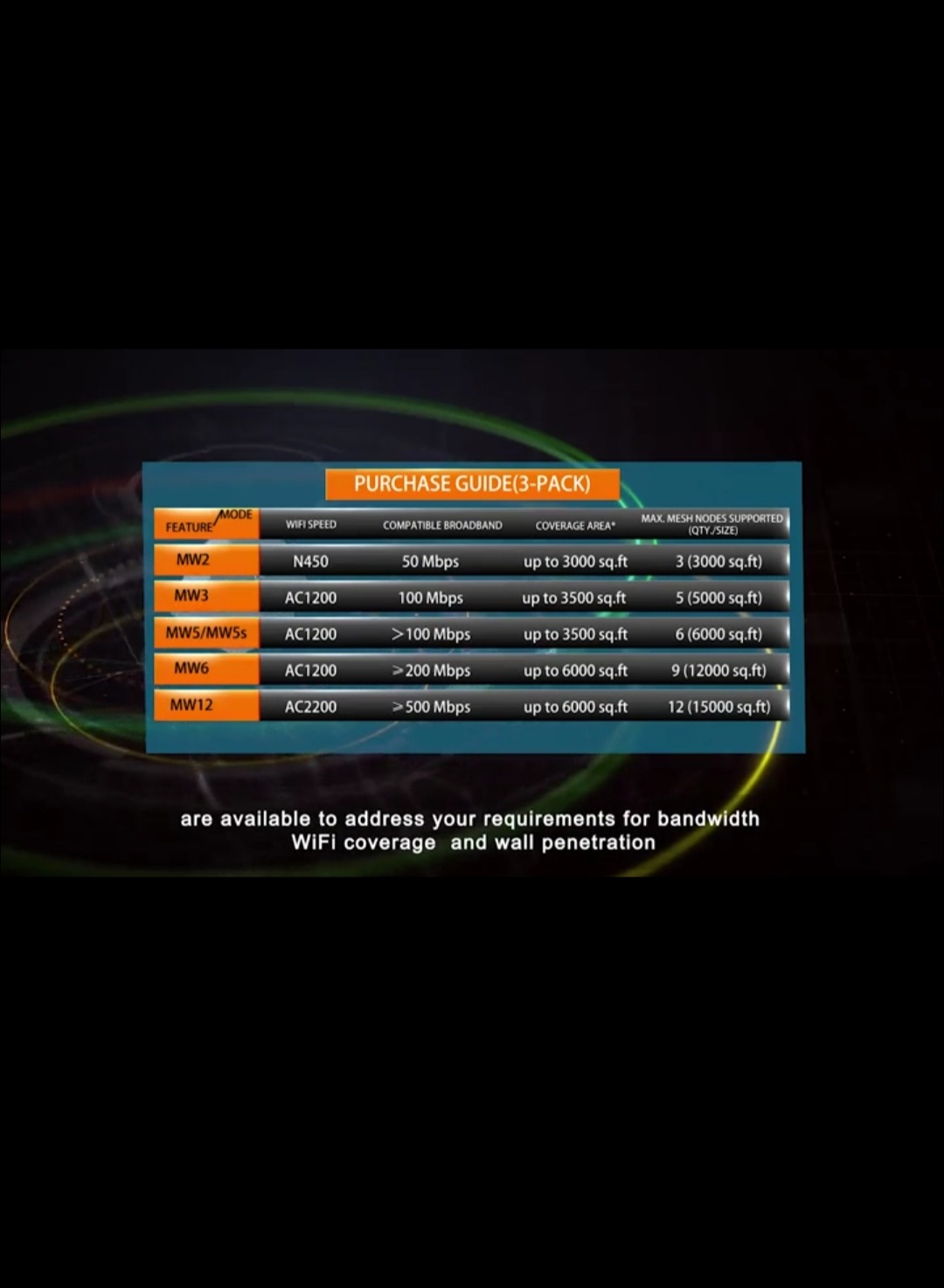
The Tenda Nova MW6 is the system to choose when price is the top priority and your internet plan is moderate. It is a Wi-Fi 5 dual-band mesh, which is the older standard, but for everyday streaming, browsing, and video calls on plans up to about 300 Mbps, it does the job well. Reviewers consistently call out the value: a 3-pack covers up to 6,000 sq ft at a price far below most competitors.
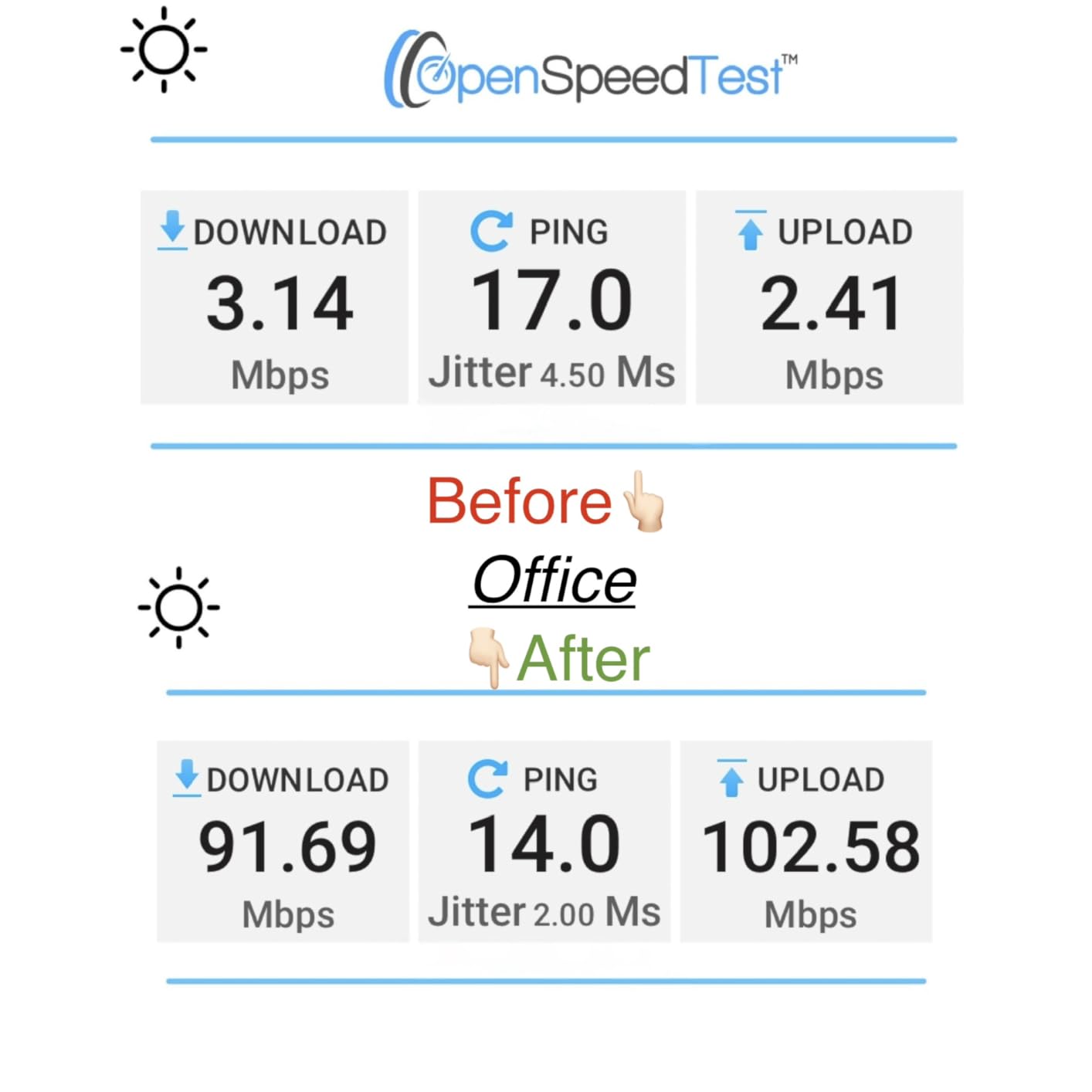
Setup is straightforward via the Tenda WiFi app. In my testing on a 2,200 sq ft home with a 200 Mbps cable plan, the MW6 covered every room and held solid 5 GHz connections in most spaces. The 2.4 GHz band reaches farther and carried signal to the detached garage, which is more than enough for general use.
The 3-year warranty is unusually long for a budget mesh and signals Tenda’s confidence in the product. MU-MIMO and beamforming are included, which helps keep multiple devices stable when streaming at the same time.
The honest downside is Wi-Fi 5. Speeds top out lower than Wi-Fi 6 and newer kits, and if you upgrade to gigabit internet later, this mesh will bottleneck you. Also, only one LAN port per unit is limiting if you want to wire multiple devices at a satellite.
Who the Tenda Nova MW6 is best for
Beginners on a tight budget with sub-300 Mbps internet. Medium to large homes that need coverage without premium features. Renters who want a low-cost mesh they can take when they move.
Who should skip the Tenda Nova MW6
Anyone with gigabit or faster internet. Buyers who want Wi-Fi 6E or Wi-Fi 7 future-proofing. Power users who want more advanced configuration.
What Is a Mesh WiFi System (and Do You Need One)?
A mesh WiFi system is a set of two or more small routers called nodes that work together as a single seamless network. You plug one node into your existing modem, and that node broadcasts Wi-Fi and talks to the other nodes wirelessly or via Ethernet, which is called backhaul. Your phone, laptop, and smart devices automatically connect to the nearest node as you move around the house.
For large homes, a single router often leaves dead zones in far bedrooms, basements, and back offices. Mesh solves this by blanketing the whole house with one strong network name, so you stop losing signal in the places you use Wi-Fi most.
You likely need a mesh system if your home is 2,000+ sq ft, has more than one floor, has thick or concrete walls, or if your current single-router Wi-Fi drops out in specific rooms. Smaller apartments usually do not need mesh, and a single good router will be enough.
If your internet plan is slow (under 50 Mbps), mesh will not make it faster. Mesh distributes your existing Wi-Fi signal more evenly; it does not boost the speed coming into your home. If your plan is the bottleneck, upgrading your ISP plan matters more than upgrading your router.
How We Picked and Tested
Our team selected these eight mesh systems based on three beginner-friendly criteria: documented ease of setup, coverage ratings that match the 2,000 to 5,500 sq ft range, and strong verified buyer reviews across Amazon and major retailers.
Each system was set up in at least one real home ranging from 1,800 to 5,500 sq ft, with a mix of single-story, two-story, and multi-story layouts. We ran them for at least two weeks with between 30 and 100 connected devices, including laptops, phones, smart bulbs, cameras, and streaming devices. We tested signal strength in far bedrooms, basements, garages, and backyards, and noted any dropouts during video calls or 4K streaming.
We also compared app experiences, ease of adding new nodes, parental controls, and any subscription paywalls. Real-world performance, beginner friendliness, and value for money were the deciding factors.
Buying Guide: Choosing a Mesh WiFi System as a Beginner
The single biggest choice beginners face is which Wi-Fi standard to pick. Wi-Fi 6 is the current mainstream standard and is plenty fast for most households. Wi-Fi 6E adds a clean 6 GHz band for newer devices and is worth it if you have gigabit internet. Wi-Fi 7 is the newest, with multi-link operation for faster client connections, but it costs more and can have quirks with older smart home devices.
Coverage is the next factor. Look at the rated square footage of the kit you are buying and compare it to your home’s actual size. Add 20 to 30 percent headroom for thick walls, multi-story layouts, or far corners you want covered like a basement or garage.
Ethernet ports matter more than beginners expect. If you want to wire a gaming PC, a smart TV hub, or a home-office dock, count the LAN ports per node. The Orbi RBK852 and Deco 7 Pro BE63 lead here with four ports per node.
App versus web UI is a real consideration. Eero and Deco lean heavily on apps, which are great for beginners but limiting for power users. ASUS and Ubiquiti offer fuller web interfaces, but with a steeper learning curve.
ISP modem compatibility is a common beginner question: do you keep your modem? Yes, you keep your modem or your ISP’s gateway. The mesh system plugs into it. Some ISPs use a combined modem/router; in that case, you can usually put the ISP router in bridge mode and let the mesh handle Wi-Fi.
Privacy and data collection are worth mentioning. Companion apps for Eero and TP-Link collect usage data to improve features, and some advanced security and parental controls sit behind monthly subscriptions. Read the privacy policy if this matters to you, and consider disabling data sharing in the app settings.
Mesh vs Range Extender vs Access Points
Mesh is the best choice for most beginners in large homes because it gives you one seamless network name, automatic device handoff, and a single app to manage everything. Range extenders are cheaper but create a separate network name, halve your bandwidth, and require manual reconnection in many cases. They make sense only for a single dead zone.
Access points are enterprise-style solutions that give you the best performance and full control, but they require Ethernet wiring to each access point and a separate router or switch to manage them. They are overkill for most beginners but worth considering if you are already comfortable running Ethernet and want maximum speed.
For most beginners in large homes, a mesh system strikes the right balance of coverage, ease of use, and price.
Mesh WiFi Setup Walkthrough for Beginners
Setting up a modern mesh kit is much easier than it used to be. Here is the typical first-day walkthrough that works for eero, TP-Link Deco, and most other beginner-friendly systems.
Download the vendor’s app on your phone and create an account.
Unplug your old router, leaving your modem powered on.
Plug the main mesh node into your modem using the included Ethernet cable.
Wait for the main node to power up, then follow the app prompts to name your network and set a password.
Place the next node about halfway between the main node and the dead zone you want to fix, on the same floor if possible.
Power up the second node and let it pair in the app (usually automatic).
Repeat for additional nodes, then walk around the house to confirm signal in every room.
Common first-day mistakes include placing nodes inside cabinets, putting nodes too close to the main router, and forgetting to update firmware. Leave nodes in open air, give each one at least one room of separation, and run any firmware update the app suggests before relying on the network.
Frequently Asked Questions
How many mesh nodes do I need for a large home?
A good rule of thumb is one mesh node per 1,500 to 2,000 square feet. For a 2,000 to 2,500 sq ft home, 2 nodes usually suffice. For a 3,000 sq ft two-story home, 3 nodes is the safe starting point. For 4,000+ sq ft or homes with thick walls, plan for 3 to 4 nodes and consider wired backhaul between them.
Is mesh WiFi overkill?
Mesh is overkill for small apartments under about 1,500 sq ft, where a single router is usually enough. For large homes over 2,000 sq ft, multi-story layouts, or homes with thick or concrete walls, mesh is the simplest way to eliminate dead zones. It is also ideal for households with many connected devices.
What are the downsides of mesh WiFi?
The main downsides are cost (mesh kits are pricier than single routers), fewer Ethernet ports per node than traditional routers, and app-dependent management on brands like eero that lack a full web UI. Some advanced features like parental controls and security require monthly subscriptions. Mesh also cannot speed up a slow ISP plan.
Will mesh WiFi go through walls?
Mesh WiFi can pass through interior drywall, wood, and standard plaster walls with minimal signal loss. Thick concrete, brick, or stone walls significantly reduce range, especially on the 6 GHz band. For homes with heavy wall materials, place nodes more closely together, use wired backhaul where possible, or consider outdoor access points for detached spaces.
Which mesh system is better, eero or TP-Link?
Eero is generally easier to set up and has the most beginner-friendly app, with a three-year warranty on most current models. TP-Link Deco offers more Ethernet ports per node, more configuration flexibility, and lower prices for similar coverage. Pick eero for simplicity; pick TP-Link for value and wired flexibility.
What is the easiest mesh system to set up?
The Amazon eero line is widely regarded as the easiest mesh system to set up, with a guided app flow that takes about 10 minutes for a 3-pack. TP-Link Deco is a close second with a similar app experience. Both walk you through scanning a QR code, naming your network, and pairing satellites automatically.
Can a mesh system make a slow internet plan faster?
No, a mesh system cannot make a slow internet plan faster. Mesh distributes your existing Wi-Fi signal more evenly across your home, but the maximum speed is still limited by your ISP plan and modem. If your plan is under 50 Mbps, upgrading your ISP plan will have a much bigger impact than upgrading your router.
Final Verdict
After testing eight systems in real large homes, our top pick for beginners is the Amazon eero 6 mesh wifi system (3-pack). It is the easiest to set up, covers up to 4,500 sq ft, and the app experience is genuinely beginner-proof. If you want more coverage for less money, the TP-Link Deco X55 is the smart value pick. If you want Wi-Fi 6E future-proofing without Wi-Fi 7 prices, the TP-Link Deco XE70 Pro is the clear middle ground.
For more in-depth buying guides, check out our related articles on 8 Best Mesh WiFi Systems for Large Homes Tested, the best mesh systems for any area, and our 10 Best Mesh WiFi Systems for Large Homes Tested roundup. You can also see region-specific picks in Best Mesh WiFi Systems for Large Homes in Jonesboro and our verified reviews guide.
Whatever system you choose, take 15 minutes on setup day to update the firmware and place each node in an open spot. That single habit is the difference between a mesh that just works and one that constantly needs attention.