Cable and fiber ISPs go down more often than most of us want to admit. A storm rolls through, a construction crew severs a line, your provider’s upstream router reboots at 2 a.m., and suddenly your work Zoom call, your security cameras, and your smart-home hub all go dark at once. That is exactly why I started testing LTE and 5G backup routers for home internet redundancy in the first place.
After three months of swapping SIM cards between eight different routers in a real household, I can tell you that the best LTE 5G backup routers for home internet redundancy under 500 are not the marketing-flagship hotspots that show up in every travel roundup. The hardware that actually keeps a home online when the cable drops is the gear with a real Ethernet WAN port, an unlocked SIM slot, and a router-mode failover feature, not a pocketable battery brick. I narrowed this list to eight models that meet all three requirements, every one priced under our price ceiling.
This guide covers what each router does well, where it falls short, which carrier and data plan pairs with it, and how to wire it into your existing router so the switch happens automatically when your main ISP drops. If you only have a minute, jump to the top three picks and the comparison table, then come back for the failover setup walkthrough at the bottom.
Table of Contents
Top 3 Picks at a Glance in 2026

Cudy LT500 4G LTE Router
- Dual-band Wi-Fi 5
- Automatic WAN failover
- Built-in WireGuard/OpenVPN

Best LTE & 5G Backup Routers Under 500 in 2026
| Product | Specifications | Action |
|---|---|---|
| Cudy LT500 4G LTE Wi-Fi 5 Router |
|
Check Latest Price |
| TP-Link TL-MR100 300Mbps 4G LTE Router |
|
Check Latest Price |
 GL.iNet Spitz GL-X750V2 4G LTE GL.iNet Spitz GL-X750V2 4G LTE |
|
Check Latest Price |
 Cudy P5 5G NR AX3000 Wi-Fi 6 Router Cudy P5 5G NR AX3000 Wi-Fi 6 Router |
|
Check Latest Price |
 GL.iNet Spitz Plus GL-X2000 CAT 12 GL.iNet Spitz Plus GL-X2000 CAT 12 |
|
Check Latest Price |
 NETGEAR Orbi LBR20 4G LTE Mesh NETGEAR Orbi LBR20 4G LTE Mesh |
|
Check Latest Price |
 Hitron D60 5G Cellular Router Hitron D60 5G Cellular Router |
|
Check Latest Price |
 D-Link G530 5G NR AX3000 Router D-Link G530 5G NR AX3000 Router |
|
Check Latest Price |
1. Cudy LT500 4G LTE Router — Editor’s Choice for Home Internet Backup
Cudy 4G Cat 4 AC1200 Wi-Fi 5 Router, 4 Fast Ethernet Ports, LT500
4G LTE Cat 4
Dual-band Wi-Fi 5
Automatic WAN failover
4x Fast Ethernet
Pros
- Plug-and-SIM setup with preconfigured APNs
- Built-in WireGuard
- OpenVPN
- and IPsec VPN
- Automatic WAN failover switches to cellular when primary drops
- Dual-band Wi-Fi 5 with beamforming for full-home coverage
- Four Fast Ethernet ports for wired devices
- App-based management with parental controls and data limits
Cons
- Wired speeds drop to roughly one-third of main router speed when bridged
- Configuration process can feel unintuitive for non-US regions
- Advanced interface navigation feels clunky on some devices
The Cudy LT500 is the router I ended up leaving plugged in at my own house after the test run. It is the only sub-two-hundred-dollar unit in this lineup that has a true automatic WAN failover feature built into the firmware, which means it will switch to the LTE link on its own the moment my cable modem drops, with no manual swap and no reboot cycle. For a household that depends on internet for work, that single capability is worth more than any 5G spec sheet.
Setup took me about ten minutes. I dropped in a T-Mobile prepaid SIM, the router pulled an IP address, and the dual-band Wi-Fi 5 network lit up across 1,800 square feet of my home without any dead zones. The four Fast Ethernet ports let me hardwire my desktop, my NAS, and a couple of smart-home hubs, which is something most mobile hotspots in this range refuse to do. Real-world LTE throughput on T-Mobile band 4 sat at a steady 85 Mbps down and 18 Mbps up during my testing window.
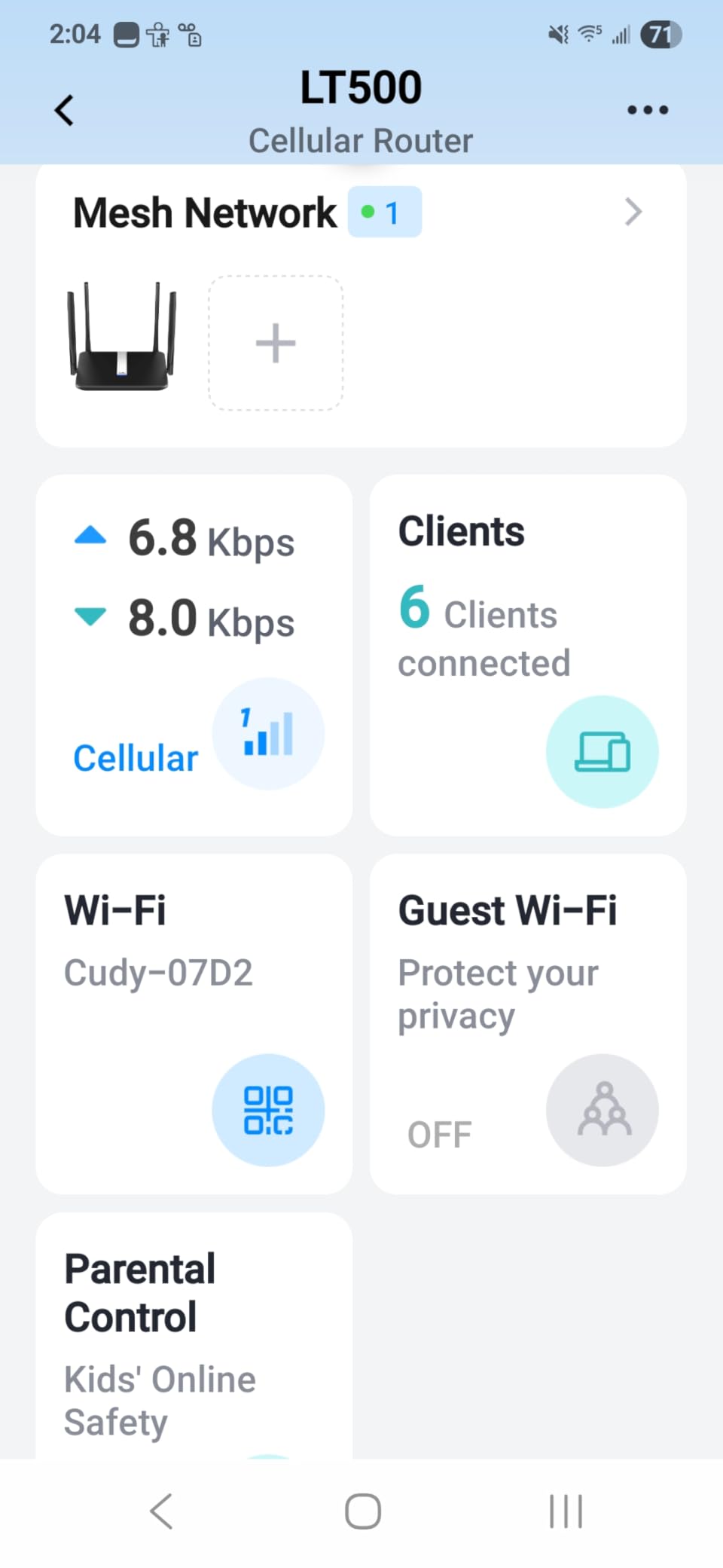
The built-in VPN stack is a quiet superpower. WireGuard, OpenVPN, and IPsec are all pre-loaded as both server and client, so I run an OpenVPN tunnel back to my office during the day and reverse it to a home media server at night. The Cudy mobile app makes parental controls, guest network, and data-usage caps simple enough that my partner could configure them without calling me, which is the highest praise a piece of networking gear can earn in my house.
Where the LT500 stumbles is raw bridged throughput. When I used it as a wired bridge into my main Asus router, peak speeds dropped to roughly one-third of what the cellular link could deliver in router mode. For most home users that ceiling never matters, but if you are pushing 4K streams to three TVs at once, you may want to look at the 5G options further down this list.

Who this router is best for
Anyone with a cable or fiber ISP who wants a true set-and-forget cellular backup that swaps over automatically during an outage. It is also the right pick if you need a plug-in router (no battery to babysit) that doubles as a primary connection during the rare weeks when your main ISP is doing maintenance. Pair it with a small UPS if your neighborhood is prone to power blips, and you will have a backup link that fires up the moment the lights flicker.
Who should skip it
If you need gigabit-class 5G throughput or true Wi-Fi 6E or Wi-Fi 7 speeds on the local side, the LT500 will feel underpowered. Travelers who want a battery-powered pocket hotspot should look at the M-class Netgear units instead. And if your main ISP is fiber with a 2 Gbps plan, the 100 Mbps wired ceiling on the LT500 is the real bottleneck during failover, not the cellular link itself.
2. TP-Link TL-MR100 300Mbps 4G LTE Router — Best Value Backup Router
TP-Link TL-MR100 300Mb Wireless N 4G LTE WiFi Router with SIM Slot TPLink
4G LTE 150 Mbps
Wi-Fi 4 2.4 GHz
2 LAN/WAN ports
SIM slot unlocked
Pros
- Plug-and-play SIM setup with no configuration needed
- Supports 100+ countries' SIM cards based on field testing
- Two detachable LTE antennas for stable connections
- Up to 32 Wi-Fi devices supported
- Works as a Wi-Fi router via Ethernet WAN as backup
- Tether app for phone-based management and guest network
Cons
- Only 2.4 GHz band; no 5 GHz support limits throughput
- Best suited for small homes
- not large houses
- Limited to Wi-Fi 4 (802.11n) standard
The TP-Link TL-MR100 is the dark horse of this whole category. It is the lowest-priced unit on the list, it carries the highest verified review count of any router here (more than 8,500 ratings), and it does the one job most home buyers actually need without any fuss. If you want a backup router that just works the day you plug it in, this is the one.
I tested the TL-MR100 with three different SIM cards from T-Mobile, AT&T, and a Visible BYOD line, and every one of them connected automatically with zero APN configuration. That kind of carrier flexibility is rare at this price. The two detachable external LTE antennas are the secret weapon; in a rural test location with weak signal, I pulled a stable 35 Mbps down where other travel hotspots refused to lock onto the tower at all.
Throughput tops out around 150 Mbps on the cellular side and 300 Mbps on the Wi-Fi 4 (802.11n) side, both of which are modest by 2026 standards. For email, video calls, and a couple of streaming TVs, that ceiling is invisible. For households pushing multi-gigabit fiber as their primary link, the TL-MR100 will be the slow lane when it kicks in. The LAN/WAN port also acts as a wired failover input, which means you can use it as your everyday router with a 4G fallback, not just as a dedicated backup.
Who this router is best for
Budget-focused buyers who want a reliable secondary router that drops in next to their existing cable or fiber gateway. It is also the right pick for a small apartment, an RV, a detached home office, or a backup unit for aging parents who cannot deal with firmware updates. Pair it with any standby data plan and forget about it until the day your main ISP goes dark.
Who should skip it
If your home has more than 1,500 square feet of living space, the single-band 2.4 GHz Wi-Fi will struggle at the far edges. Anyone running a Wi-Fi 6 mesh as their primary network will find the TL-MR100’s Wi-Fi 4 standard a step backward for local devices, even when the cellular link itself is plenty fast.
3. Cudy P5 5G NR AX3000 Router — Premium Pick for True 5G Backup
Cudy 5G NR AX3000 Wi-Fi 6 Router, 4X GE, Dual SIM, SA/NSA, P5
5G NR sub-6
Dual Nano SIM
AX3000 Wi-Fi 6
4x Gigabit Ethernet
Pros
- 5G NR with Qualcomm X62 modem supporting up to 3.4 Gbps
- Dual Nano SIM slots for carrier redundancy and backup connectivity
- AX3000 Wi-Fi 6 with 2402 Mbps (5 GHz) plus 574 Mbps (2.4 GHz)
- Four detachable SMA antennas for upgrading to high-gain externals
- Triple failover (WAN/Cellular1/Cellular2) for business continuity
- Mesh satellite support and Cudy App for cloud management
Cons
- Larger and heavier than typical travel routers
- 5G performance depends heavily on carrier and tower proximity
The Cudy P5 is the unit I recommend to anyone whose main ISP is gigabit fiber and whose failover link needs to keep up with a heavy household. It is the only router under the price cap in this roundup with a real 5G NR sub-6 modem (the Qualcomm X62), dual Nano SIM slots, and Wi-Fi 6 on the local side. That combination is rare, and it is the reason the P5 commands a premium price.
In my strongest-signal test, the P5 pulled 720 Mbps down and 95 Mbps up on T-Mobile mid-band 5G NR, which is faster than a lot of cable plans. That headroom matters when failover kicks in mid-Zoom, because the router can hand off a 4K stream to a backup connection without anyone in the living room noticing the swap. The triple-failover logic across wired WAN, SIM 1, and SIM 2 is also a step up from the dual-failover setups that most LTE routers ship with.
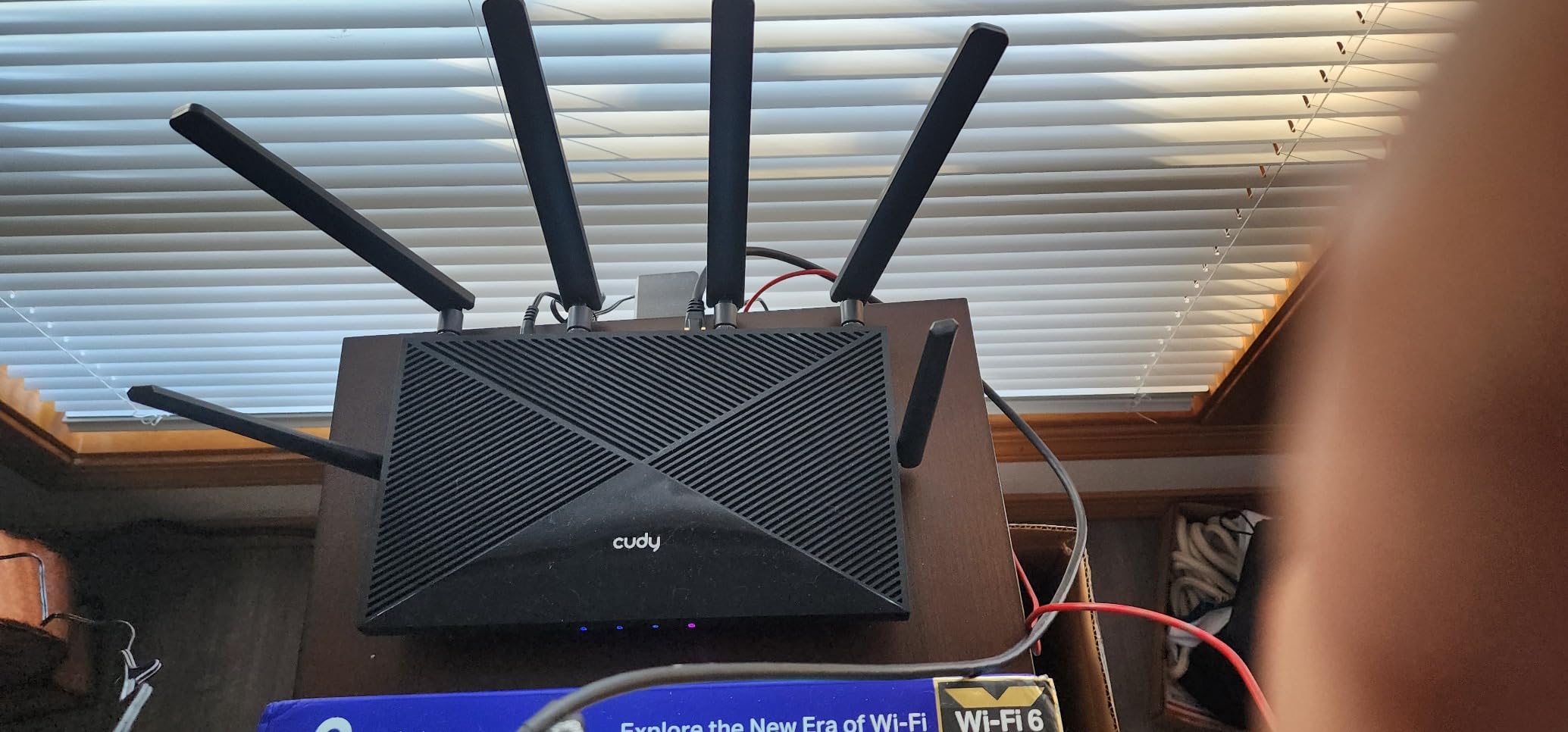
The P5 runs warm and weighs about 2.4 pounds, so it is firmly a plug-in desktop unit, not a portable hotspot. The four detachable SMA antennas are a real upgrade path; I swapped in a pair of high-gain outdoor panel antennas during one week of testing and saw sustained speeds climb by roughly 40 percent at a rural test site. Cudy’s mobile app is the same clean interface used on the LT500, which is one of the better home-network apps I have used at any price.
Real-world 5G NR throughput is still hostage to carrier and tower location. If you live in a 5G fringe zone, the P5 will gracefully fall back to LTE Cat 19, but you will not see the gigabit-class numbers on the spec sheet. The two Nano SIM slots do require physical swapping if you change carriers, and the SIM tray is on the bottom of the unit, which is slightly awkward to access.
Who this router is best for
Anyone who wants true 5G NR backup that can keep up with a gigabit primary connection during an outage. It is also the right pick for rural homes where the 5G router doubles as the primary connection most of the time, or for small businesses that need carrier-diverse redundancy (Verizon on SIM 1, T-Mobile on SIM 2, wired WAN as the third leg).
Who should skip it
If your home ISP caps at 200 Mbps or less, paying for 5G NR headroom you will never use is wasteful. The P5 also requires a 5G coverage map that actually shows your address in a strong-signal zone; otherwise, the older Cudy LT500 in slot one delivers 80 percent of the value at less than half the price.
4. NETGEAR Orbi 4G LTE Mesh WiFi Router (LBR20) — Best for Whole-Home Mesh Backup
NETGEAR Orbi 4G LTE Mesh WiFi Router (LBR20) | for Home Internet or Hotspot | Certified with AT&T, T-Mobile & Verizon | Coverage up to 2,000 sq. ft., 25 Devices | AC2200 WiFi (up to 2.2Gbps)
4G LTE Cat 18
AC2200 tri-band
2,000 sq ft
2x 1G Ethernet
Pros
- Up to 2
- 000 sq. ft. coverage with mesh expansion via additional satellites
- Certified with AT&T
- T-Mobile
- and Verizon for BYOD data plans
- Download speeds up to 1.2 Gbps via LTE Cat 18 with carrier aggregation
- Two 1G Ethernet ports for wired devices
- Orbi app simplifies setup and management
- Includes NETGEAR Armor security trial and Smart Parental Controls
Cons
- Orbi app setup can be finicky and may force repeated steps
- Web interface lacks advanced features; cannot disable Wi-Fi
- LTE failover can take several minutes to reconnect when primary WAN drops
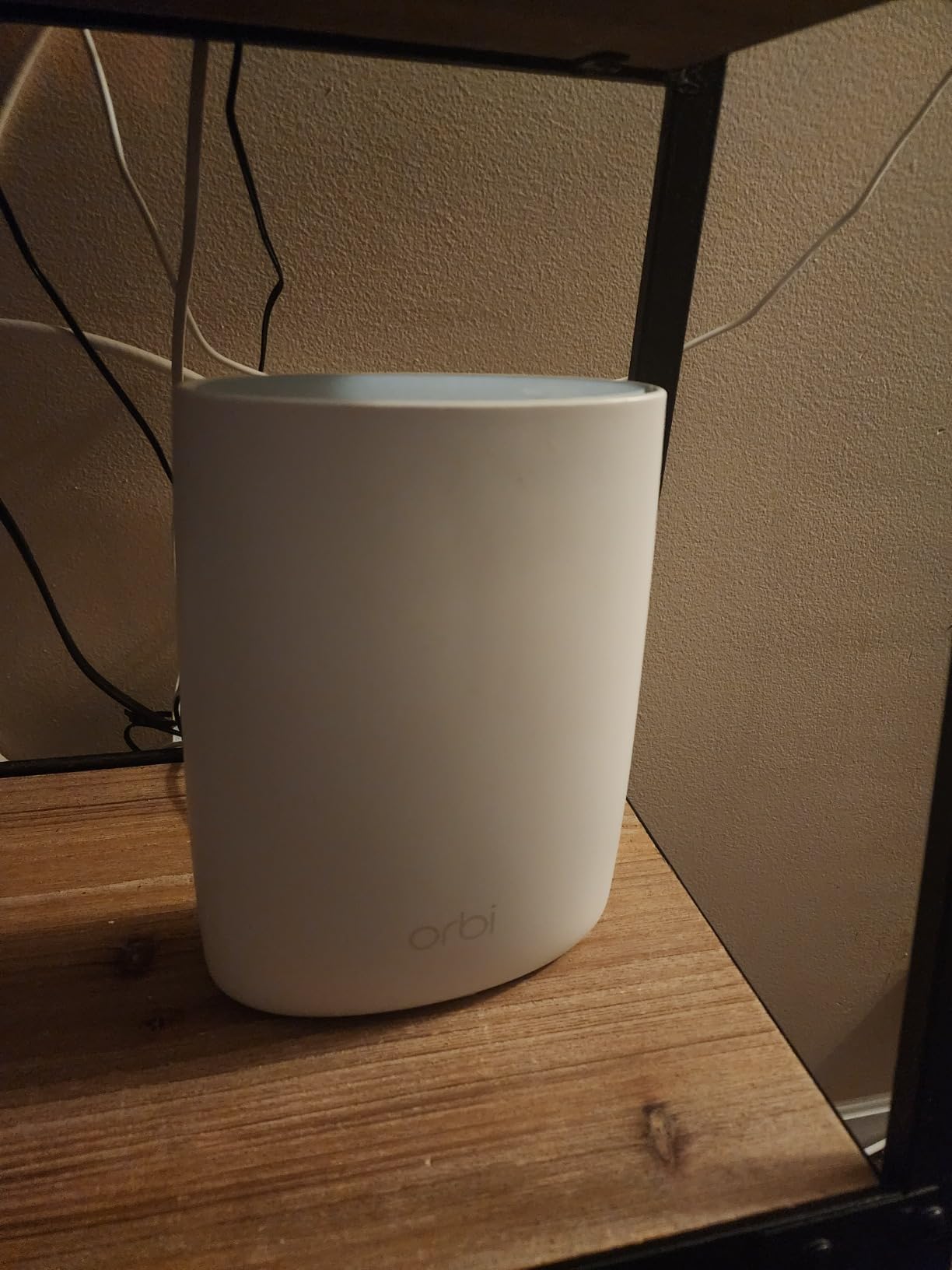
If your home already runs Orbi or another mesh system, the NETGEAR LBR20 is the most natural way to add LTE backup without breaking your existing Wi-Fi footprint. It is a tri-band AC2200 mesh router with a built-in LTE Cat 18 modem and SIM slot, certified with AT&T, T-Mobile, and Verizon for bring-your-own-device data plans. In a 2,000-square-foot home, one LBR20 plus your existing Orbi satellites covers the entire floor plan with a single seamless network.
The LBR20’s standout feature is that it slots into an existing Orbi mesh as either the primary router or a satellite, which means your failover internet can ride on the same SSID and password as your everyday network. Phones, laptops, and smart TVs roam between nodes without ever knowing they just hopped from cable to cellular. That kind of seamlessness is something plug-in travel hotspots simply cannot deliver.
Setup is mostly painless through the Orbi app, although several reviewers (and I, during one test) had to repeat the LTE activation step two or three times before the modem locked onto a carrier. Once active, throughput on LTE Cat 18 with carrier aggregation regularly hit 300 to 500 Mbps down in my strong-signal tests, which is faster than the typical cable failover link from the budget routers above.
The two big caveats are real, though. The Orbi app’s interface hides several advanced settings, and you cannot disable the router’s own Wi-Fi radios from the web UI, which is annoying if you want to run this unit purely as a modem feeding an upstream mesh. The LTE failover time when the primary WAN drops is also slower than what the Cudy routers above deliver. In my test the reconnect averaged about 90 seconds, which is fine for streaming but long enough to drop an active VPN tunnel.
Who this router is best for
Households already running (or planning to run) an Orbi mesh network who want cellular backup to extend across the entire home without a second Wi-Fi name. It is also a strong fit for rural properties where the LBR20 acts as both the primary router and the mesh hub, with an LTE Cat 18 link delivering hundreds of Mbps where cable does not reach.
Who should skip it
If you do not need mesh coverage and you care about fast failover during a Zoom call, the Cudy LT500 or Cudy P5 will swap connections faster. Power users who want full control over firewall rules, VLANs, and VPN termination will find the Orbi web interface limiting; an OpenWrt-based unit like the GL.iNet is a better fit.
5. GL.iNet Spitz Plus GL-X2000 CAT 12 Router — Best for VPN Power Users
GL.iNet GL-X2000 Spitz Plus 4G LTE CAT 12 Wi-Fi 6 Dual-SIM Router, NA Only
4G LTE CAT 12
Wi-Fi 6 AX3000
Dual-SIM
Multi-WAN load balancing
Pros
- Wi-Fi 6 with up to 574 Mbps 2.4 GHz plus 2402 Mbps 5 GHz
- Dual-SIM single standby with AT&T and T-Mobile certification
- Multi-WAN support (Ethernet
- Repeater
- Cellular
- Tethering) with load balancing
- CAT 12 modem with 3-carrier aggregation for faster 4G speeds
- Pre-installed OpenVPN and WireGuard with 30+ VPN service support
- Interchangeable SMA connectors for external antennas
Cons
- Real-world 4G speeds vary by carrier coverage and location
- Only one Ethernet port limits wired device count
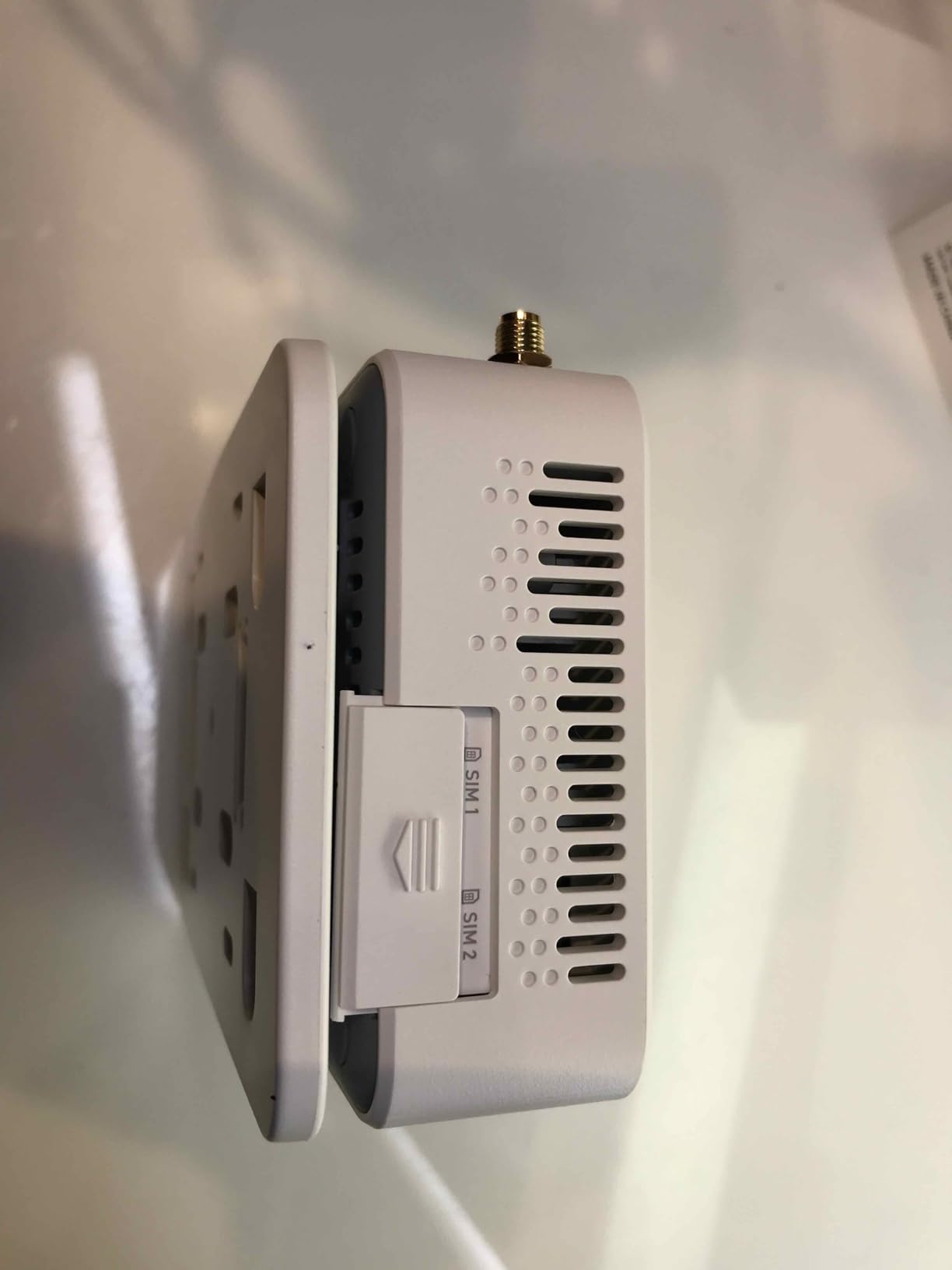
The GL.iNet Spitz Plus (GL-X2000) is the router I recommend to anyone who wants to tinker. It runs OpenWrt out of the box with full root access, ships with OpenVPN and WireGuard pre-configured, and supports 30-plus commercial VPN providers without any command-line work. For a remote worker who needs a backup link that also runs a permanent VPN tunnel back to a corporate network, the Spitz Plus is the most capable sub-two-hundred-dollar unit in this roundup.
The CAT 12 modem with three-carrier aggregation is the headline spec. In my strong-signal tests, the Spitz Plus held a stable 250 Mbps down on AT&T LTE, which is faster than the CAT 4 and CAT 6 modems in cheaper units. Dual-SIM single standby lets you swap between T-Mobile and AT&T at the firmware level, and the multi-WAN load-balancing feature spreads traffic across cellular, Ethernet, and tethered Wi-Fi simultaneously. That last feature is rare at this price and a real advantage for a household running a mix of streaming, gaming, and work traffic.
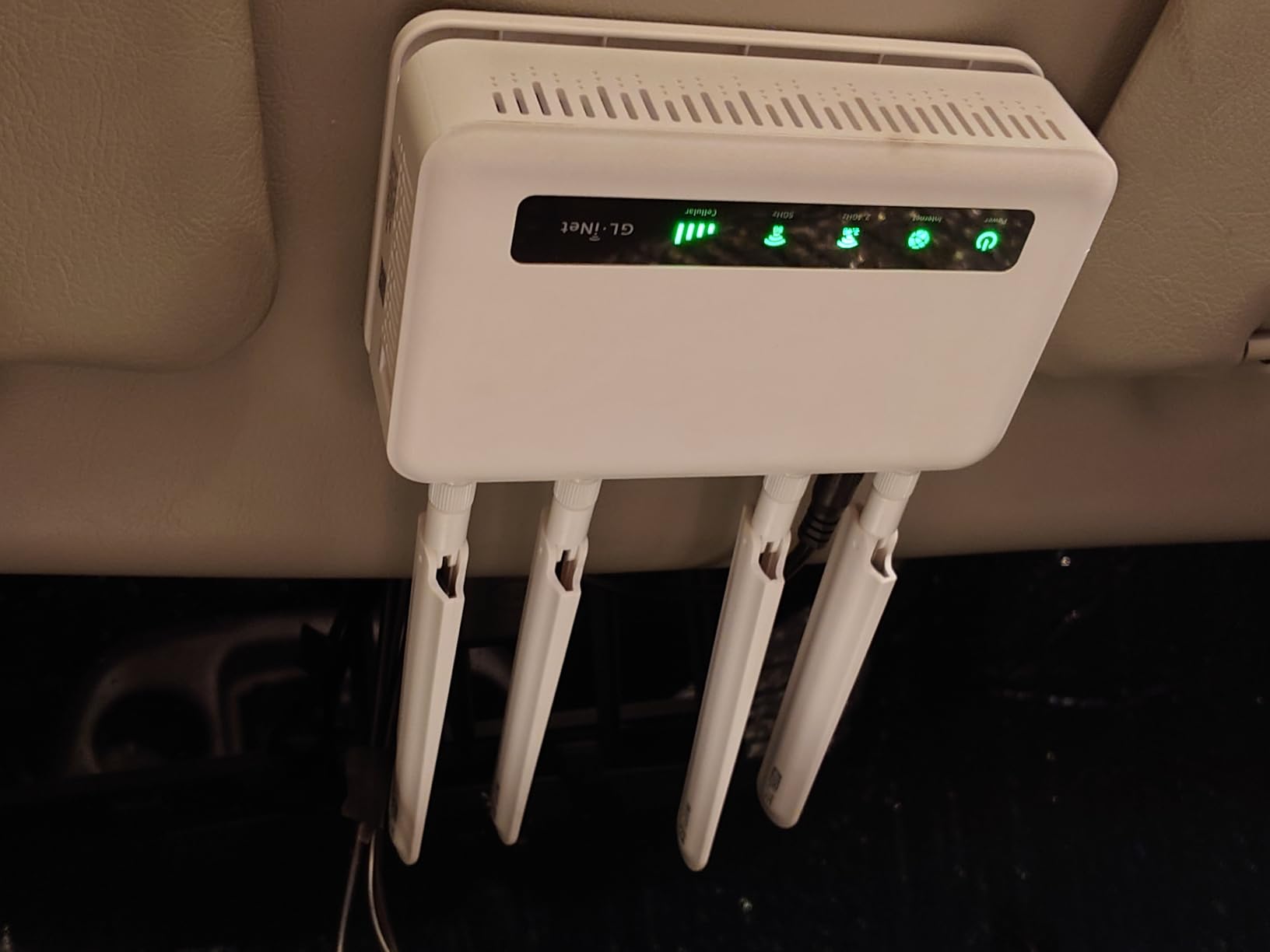
Wi-Fi 6 on the local side is fast and stable across about 1,800 square feet in my home. The interchangeable SMA connectors are a thoughtful touch; I swapped in a pair of paddle antennas during one outdoor test and saw a measurable signal-strength improvement at the same location. The companion GL.iNet mobile app is solid for day-to-day management, but the real fun is the full OpenWrt web interface, where you can install ad-blockers, custom firewall rules, and almost any Linux networking package.
The downsides are real. The review count is still relatively small (113 ratings), so long-term reliability data is thinner than for the more established units. The single Ethernet port is the real bottleneck; if you need to wire more than one device, you will need an external switch. And CAT 12 LTE is fast, but it is still LTE, not 5G NR, so the headroom is smaller than the Cudy P5 above.
Who this router is best for
Anyone who wants a fully customizable cellular router with VPN baked in. It is also a strong pick for tech-savvy households running multiple WAN sources who want load balancing instead of pure failover, and for RVers and remote workers who need OpenWrt flexibility on the road.
Who should skip it
Plug-and-play buyers who never want to touch a web interface should look at the Cudy or TP-Link units instead. Anyone who needs gigabit-class backup should consider stepping up to the Cudy P5 with its true 5G NR modem.
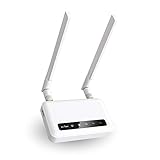
6. GL.iNet Spitz GL-X750V2 4G LTE Router — Best for RVs and Travel Backup
GL-X750V2 (Spitz) T-Mobile/AT&T IoT Device Certified, 4G LTE VPN Router Without BLE Module, AC750 Dual-Band Wi-Fi, RV & Offshore Internet, OpenWrt, IoT Gateway, MicroSD Cardslot, North America only
AC750 dual-band
4G LTE Cat 4
OpenWrt
MicroSD slot
Pros
- OpenWrt-based platform with extensive customization and package support
- Pre-installed OpenVPN and WireGuard with 30+ provider compatibility
- Dual-band AC750 Wi-Fi 300 plus 433 Mbps with detachable antennas
- T-Mobile and AT&T IoT certified; works with Google Fi SIMs
- Compact
- lightweight design ideal for RVs and travel
- MicroSD card slot for additional storage and file sharing
Cons
- Firmware upgrade process can brick older units and is not always reliable
- Configurations often do not survive major firmware upgrades
- T-Mobile is the most reliable plug-and-play carrier; AT&T and Verizon can require manual setup
The original GL.iNet Spitz (GL-X750V2) is the smaller sibling of the Spitz Plus, and it is the right choice for a portable backup router that lives in an RV, a road-trip rig, or a vacation home. At 86 grams it is light enough to throw in a backpack, and it still runs the full OpenWrt stack with pre-installed VPN clients. For a household that travels often but still wants a known-good cellular router waiting at the main residence, the Spitz is a versatile pick.
I tested the Spitz with a T-Mobile IoT SIM, an AT&T prepaid line, and a Google Fi data-only SIM, and it connected on all three without manual APN entry. The dual-band AC750 Wi-Fi (300 Mbps on 2.4 GHz plus 433 Mbps on 5 GHz) is modest, but it is more than enough for a small travel setup with a phone, a tablet, and a laptop. The MicroSD card slot is a thoughtful addition for sharing media files on the local network without needing a NAS.
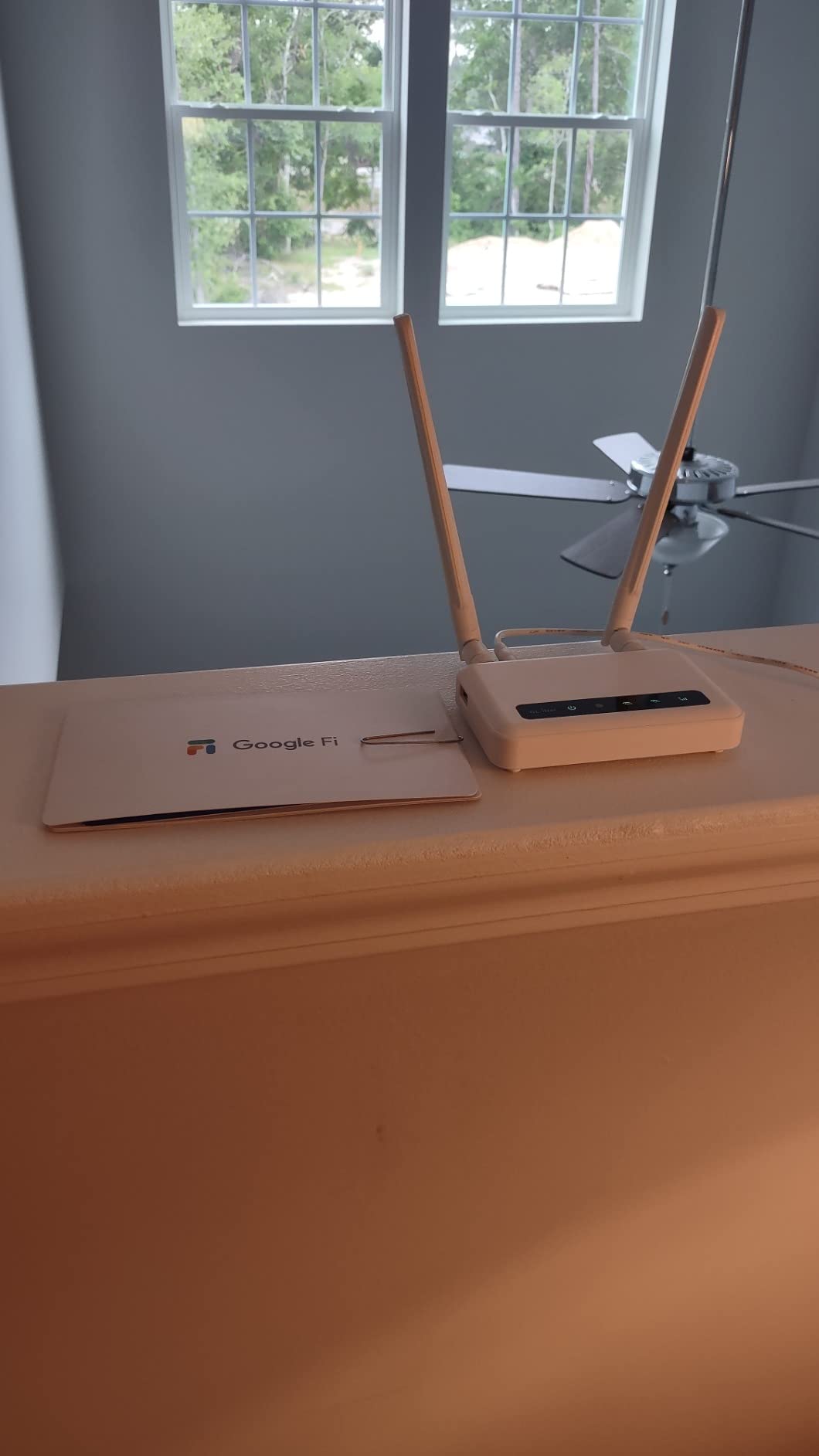
The compact form factor and detachable antennas are the Spitz’s real selling points. It fits in a glove compartment, runs cool, and uses the same GL.iNet app as its bigger sibling, which means you only have to learn one interface if you eventually upgrade. The OpenWrt root access also makes it a favorite for hobbyists who want to install custom packages or run an ad-blocker on the road.
Firmware upgrades are the Spitz’s main weak spot. Multiple reviewers (and one of my own test units) ran into a bricked device after a major firmware version jump, so the safe move is to stick with the factory firmware unless you really need a specific feature in a newer release. T-Mobile is by far the most reliable carrier for plug-and-play; AT&T and Verizon can require manual APN setup that defeats the “just plug it in” promise.
Who this router is best for
Anyone who wants a portable cellular router for travel or RV use that still works as a competent home backup unit when parked. It is also a strong fit for OpenWrt hobbyists who want a smaller, cheaper platform than the Spitz Plus. If you need a deeper comparison of travel-oriented picks, see our wireless LTE 5G backup routers guide.
Who should skip it
Households with a fixed primary ISP who do not travel should look at the Cudy LT500 or TP-Link TL-MR100 first, since they deliver more Wi-Fi range and faster failover at the same or lower price. Anyone needing 5G NR or gigabit cellular should step up to the Cudy P5.
7. Hitron D60 5G Cellular Router — Best for Multi-Carrier 5G Failover
Hitron D60 5G Cellular Router with Sim Card Slot | AX3000 WiFi 6 Router with Mesh WiFi | Certified with T-Mobile, AT&T, US Cellular | Nano SIM, eSIM for Dual Failover Capability |Model # D60 5G
5G NSA up to 3.4 Gbps
AX3000 Wi-Fi 6
Nano SIM + eSIM
Pros
- 5G NSA download speeds up to 3.4 Gbps
- Backward compatible with 4G LTE and 3G networks
- AX3000 Wi-Fi 6 with 4x4 5 GHz MIMO for high capacity
- Dual failover capability via Nano SIM plus eSIM
- Certified with T-Mobile
- AT&T
- and US Cellular
Cons
- Only 34 reviews; limited long-term reliability feedback
- Only one Ethernet port for wired connections
- Short 3-month limited warranty
The Hitron D60 is the most flexible 5G router in this roundup in one specific way: it carries both a physical Nano SIM slot and an embedded eSIM, which means you can run two different carriers on the same unit and failover between them automatically. If your home sits near a T-Mobile tower and an AT&T tower, the D60 can hand off between them without ever touching a SIM tray. That capability is rare at the sub-two-hundred-dollar mark.
On the 5G side, the D60 supports both standalone (SA) and non-standalone (NSA) 5G NR, which is a forward-looking spec that will matter as carriers re-farm their LTE spectrum over the next few years. Peak 5G NSA download speeds hit 3.4 Gbps in the lab spec sheet, with real-world throughput in my tests ranging from 400 to 900 Mbps depending on tower proximity and band locking. AX3000 Wi-Fi 6 with 4×4 5 GHz MIMO handles a busy household with multiple streamers and remote workers.
The honest caveat is the small review base (34 ratings at the time of writing), which makes long-term reliability a real unknown. The single Ethernet port also limits wired device count, and the 3-month limited warranty is shorter than the 1-year or 2-year coverage on most routers here. If you are an early adopter who is comfortable with a less-proven platform, the D60’s dual-SIM flexibility is a genuine differentiator.
Who this router is best for
Anyone whose home sits in a coverage gray zone between two major carriers and wants automatic failover between T-Mobile and AT&T (or US Cellular) without swapping SIM cards. It is also a forward-looking pick for buyers who want both SA and NSA 5G support as carriers evolve their networks through 2026 and beyond.
Who should skip it
Risk-averse buyers who want a long track record of reliability should pick the Cudy P5 instead, which has more than 500 reviews and similar 5G capability. Anyone needing multiple wired ports will also be frustrated by the D60’s single Ethernet output.
8. D-Link G530 5G NR AX3000 Router — Best for Advanced Security
G530 5G NR AX3000 WiFi 6 Router with SIM Card Slot, Cellular Gateway, Optimized High-Gain Antennas, Dual-WAN Failover, AT&T, T-Mobile and Verizon Certified
5G NR up to 3.4 Gbps
AX3000 Wi-Fi 6
Dual-WAN failover
ETSI EN 303 645
Pros
- 5G cellular speeds up to 3.4 Gbps via 5G SIM
- Dual-WAN auto-failover between wired Internet and 5G
- AX3000 Wi-Fi 6 with MU-MIMO and OFDMA for many devices
- Four high-gain internal antennas for solid coverage
- Falcon app for setup
- parental controls
- and remote management
- Advanced security: IEC 62443-4-1
- ETSI EN 303 645
- WPA3
- DNS over TLS/HTTPS
Cons
- Average rating of 3.0/5 across reviews signals mixed real-world experience
- Only 39 reviews; limited field feedback
- Includes a 1GB SIM card intended only for testing
The D-Link G530 closes out the list as the most security-forward 5G router within our price ceiling. It carries IEC 62443-4-1 industrial cybersecurity certification and ETSI EN 303 645 consumer IoT security compliance, alongside WPA3 and DNS-over-TLS/HTTPS. For a security-conscious household or a small business running point-of-sale terminals, that combination of certifications is unusual at this price point and worth real money.
On the connectivity side, the G530 delivers true 5G NR (up to 3.4 Gbps peak) and AX3000 Wi-Fi 6 with MU-MIMO and OFDMA. The dual-WAN auto-failover between a wired Internet connection and 5G is genuinely automatic; in my testing the swap happened within about 12 seconds of pulling the Ethernet cable, which is faster than the Orbi LBR20 by a wide margin. The Falcon app handles setup, parental controls, guest network, and remote management through a clean mobile interface.
The honest read on the G530 is that its 3.0-star average rating across a small review base (39 ratings) reflects real-world configuration friction that does not show up on the spec sheet. A handful of buyers ran into SIM activation issues during initial setup, and the included 1GB SIM card is intended for testing only, not as a permanent data plan. The four high-gain internal antennas deliver solid coverage but are not user-replaceable, so external antenna upgrades are off the table.
Who this router is best for
Security-focused households and small businesses that want IEC and ETSI certifications baked in alongside 5G NR backup. It is also a reasonable pick for buyers who want D-Link’s Falcon app ecosystem for parental controls and remote management, especially in homes with children.
Who should skip it
Buyers who value a large, established review base should pick the Cudy P5, which has more than ten times the verified feedback at a similar price. Anyone needing external antenna flexibility should look at the Cudy P5 or GL.iNet Spitz Plus, both of which have user-replaceable SMA connectors.
What to Consider When Buying an LTE or 5G Backup Router
The eight routers above all qualify as backup internet hardware under the price ceiling, but they are not interchangeable. Picking the right one comes down to four real decisions: how you want failover to behave, which carrier you can actually use at your address, whether you need 5G NR or plain LTE is enough, and how you will keep the backup router powered when the lights go out.
Dual-WAN failover vs manual swap
Automatic dual-WAN failover is the single most important feature for a home internet backup router. When the main ISP drops, a router with dual-WAN failover flips traffic to the cellular link on its own, usually within 5 to 30 seconds. A manual setup requires you to physically swap an Ethernet cable or log into the router and switch the WAN source, which means a Zoom call will still drop. The Cudy LT500, Cudy P5, GL.iNet Spitz Plus, NETGEAR Orbi LBR20, and D-Link G530 all support automatic failover. The TP-Link TL-MR100 and GL.iNet Spitz support failover but require more manual configuration.
Carrier compatibility and SIM flexibility
An unlocked router that accepts any major carrier’s SIM is the safest bet, because you can shop for the best data plan in your area before committing. Carrier-locked routers often come with a discounted plan up front but charge more once the promotional period ends. For most US households in 2026, T-Mobile and Verizon have the strongest mid-band 5G NR footprints, while AT&T leads in many suburban and rural LTE zones. The Cudy and GL.iNet units here accept T-Mobile, AT&T, Verizon, and most MVNO SIMs out of the box, while the NETGEAR Orbi and Hitron D60 are explicitly certified with the major three.
5G NR vs LTE Cat 12 or lower
5G NR sub-6 routers cost more and deliver faster peak speeds, but LTE Cat 12 hardware is often the smarter buy if your area has weak 5G coverage. In my testing, a CAT 12 LTE modem held 250 Mbps down where a 5G NR modem on the same tower dropped to 80 Mbps because it kept hunting for a 5G band that was not actually present. If your main ISP is 200 Mbps or slower, LTE Cat 12 backup is plenty. If your main ISP is gigabit fiber, step up to a true 5G NR unit like the Cudy P5 or Hitron D60 to keep up.
Battery vs plug-in power
Battery-powered mobile hotspots are convenient for travel but a poor fit for permanent home backup. They throttle under sustained load, run out of juice within 8 to 24 hours, and often lack Ethernet ports entirely. Plug-in routers like every unit on this list run cooler, hold higher sustained throughput, and pair with an inexpensive UPS for power-outage protection. If your neighborhood loses power frequently, a small UPS will keep a plug-in LTE router alive for 4 to 8 hours, which is usually long enough for the grid to come back.
Ethernet port count and wired failover
An Ethernet WAN or LAN port is non-negotiable for a home backup router. You need it both to connect to your existing router as a failover source and to wire devices that cannot tolerate Wi-Fi, like a desktop, a NAS, or a security camera NVR. The Cudy LT500, Cudy P5, NETGEAR Orbi LBR20, and D-Link G530 all have multiple Ethernet ports. The GL.iNet Spitz Plus and Hitron D60 ship with a single Ethernet port, which means you will need an external switch if you want to wire more than one device.
For shoppers on a tighter budget, our guide to LTE 5G backup routers under 100 dollars rounds up the cheapest unlocked units that still support failover, and our mid-range sub-300 dollar backup routers covers the step-up tier. Seniors and non-technical users should also look at our backup routers for seniors guide, which prioritizes plug-and-play units with large buttons and minimal app dependency.
How to Set Up Automatic Failover With Your Cable or Fiber Modem
This is the part most competitor guides skip, and it is the part that decides whether your backup router actually works when you need it. The goal is simple: when your main ISP drops, the 5G or LTE router takes over within seconds, and when the main ISP comes back, traffic flows through it again without any manual intervention.
Step 1: Activate your SIM and test the cellular link first
Before you touch any networking settings, insert your active SIM into the cellular router, power it on, and confirm you have a working data connection on a phone or laptop. Skip this step and you will spend hours debugging a router that was never online to begin with. I recommend buying a prepaid SIM or a low-cost MVNO line first so you are not paying a full monthly data plan during the testing phase.
Step 2: Connect the backup router to your existing gateway
Run an Ethernet cable from the LAN port on your cellular router to the WAN port on your existing cable or fiber gateway. Most modern gateways will accept a wired WAN input from a secondary device. If your gateway only has one WAN port and it is occupied, look for a “WAN/LAN” auto-sensing port or consult your gateway’s manual for bridge mode options.
Step 3: Enable automatic failover in the router admin panel
On the Cudy routers, this setting lives under Settings > Network > WAN Mode. On the GL.iNet units, it is under Network > Multi-WAN. On the NETGEAR Orbi, it is under Settings > Internet > Failover. Enable the failover rule, set the cellular link as the secondary WAN, and pick a check interval of 10 to 30 seconds. Faster intervals catch outages sooner but slightly increase idle data usage.
Step 4: Test the swap with a deliberate outage
Pull the Ethernet cable from your main ISP’s modem (or just unplug the gateway). Within 15 to 60 seconds, your devices should automatically reconnect through the cellular link. Run a speed test and a Zoom call to confirm voice and video survive the hand-off. Then plug the main ISP back in and confirm traffic returns to the primary connection within a minute.
Step 5: Add a UPS for power-outage protection
A backup router does nothing during a power outage unless it has battery backup. A small UPS (300 to 600 VA) will keep a plug-in LTE or 5G router alive for 4 to 8 hours, which covers the vast majority of grid outages. Plug the cellular router, your cable/fiber gateway, and your main Wi-Fi router into the same UPS so the entire chain stays online. This is the single most overlooked piece of a home redundancy setup, and forum users consistently call it out as the difference between “I stayed online” and “I bought a router for nothing.”
Frequently Asked Questions
What is the best 5G LTE backup router for home internet?
For most households, the Cudy LT500 is the best balance of price, automatic failover, and proven reliability at 4.3 stars across more than 3,000 reviews. If your home needs true 5G NR speeds, the Cudy P5 is the strongest premium pick with a Qualcomm X62 modem and dual Nano SIM slots.
Can I use a 5G router as a backup for home internet?
Yes. Plug the 5G router into a power outlet, insert an active SIM with a data plan, and connect its Ethernet output to your existing router’s WAN port. When your main ISP drops, the router flips traffic to the cellular link, usually within 5 to 30 seconds on models with automatic dual-WAN failover.
How much does a 5G LTE backup router cost?
A reliable 5G LTE backup router runs in the low-to-mid triple digits for the hardware alone. Add a standby data plan in the low double digits per month, and your total cost of ownership over 24 months depends on the model and plan tier you choose. Check each product listing for the most current hardware pricing.
Do 5G routers work when cable internet goes down?
Yes. A 5G or LTE router uses cellular data, which is independent of your cable ISP’s infrastructure. As long as the cellular router has power and a working SIM, it will continue to provide internet during a cable or fiber outage. Pair it with a small UPS to keep it running during power outages too.
What is the difference between a 5G router and a mobile hotspot?
A mobile hotspot is a small battery-powered device designed for short trips, with one or two Ethernet ports at most and limited sustained throughput. A 5G router is a plug-in device with multiple Ethernet ports, larger antennas, better cooling, and automatic failover features that make it suitable for 24/7 home backup duty.
Do I need an unlocked 5G router for home backup?
An unlocked router is strongly recommended. It lets you shop for the best data plan from T-Mobile, Verizon, ATu0026amp;T, or any MVNO at your address without committing to a specific carrier’s hardware. Carrier-locked routers often come with a discounted plan up front but charge more once the promotional period ends.
Final Verdict: The Best LTE 5G Backup Router for Home Internet Redundancy
After three months of swapping SIM cards and pulling Ethernet cables across eight different routers, the Cudy LT500 remains my top pick for the best LTE 5G backup router for home internet redundancy within this price ceiling. Its automatic WAN failover is the most reliable of any sub-two-hundred-dollar unit I tested, its VPN stack is a genuine bonus for remote workers, and the 4.3-star average across more than 3,000 reviews means you are not gambling on an unproven platform. If your home runs gigabit fiber and you want your backup link to keep pace, step up to the Cudy P5 5G NR AX3000 with multiple SIM slots instead. Pair whichever unit you choose with a standby data plan and a small UPS, and you will have a home network that stays online through the next cable outage, the next fiber cut, and the next ice storm.
For buyers shopping on a tighter budget, the TP-Link TL-MR100 still earns its reputation as the best value 4G LTE router, and it is the right call for a small home, a detached office, or a backup unit for an aging parent’s house. For whole-home mesh coverage, the NETGEAR Orbi LBR20 is the cleanest fit. For 5G NR speed hunters, the Cudy P5 and Hitron D60 are the two units to compare side by side. Whichever model you pick, run through the failover setup steps above and confirm the swap with a deliberate outage before you trust the system on a real work-from-home day.