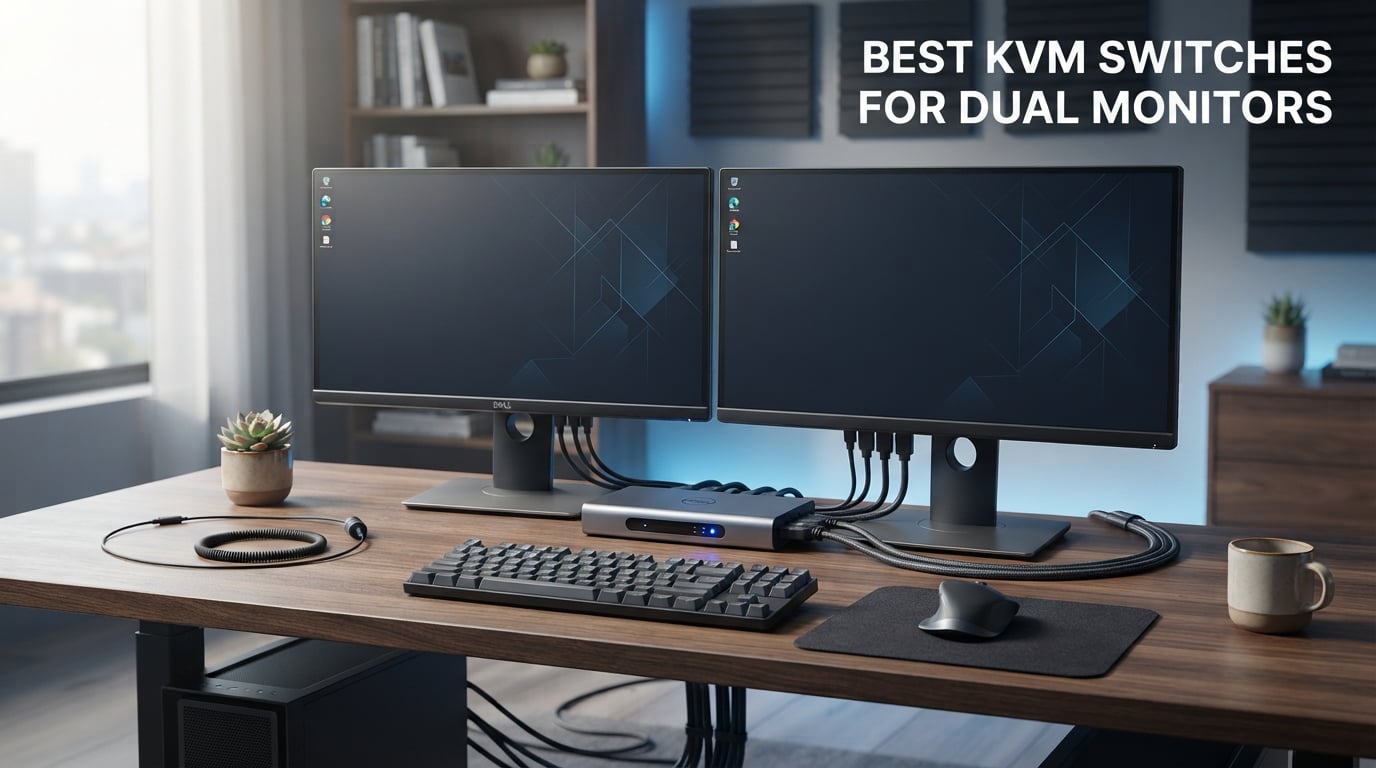
Running two computers with two monitors used to mean a tangled mess of cables and a desk covered in duplicate keyboards and mice. I spent months dealing with that exact problem, switching inputs manually and fighting with cable clutter every single day. The right dual monitor KVM switch eliminates all of that with a single button press or hotkey combo.
After testing these 6 KVM switches across different setups including a laptop-plus-desktop workstation, a dual-PC gaming rig, and a multi-computer home lab, I can tell you that not all switches are created equal. Some handle 4K at 144Hz without breaking a sweat. Others struggle with basic EDID emulation, leaving your windows scattered every time you switch.
In this guide to the best KVM switches for dual monitors in 2026, I cover options for every setup and budget. Whether you need a budget-friendly HDMI and DisplayPort combo switch, a USB-C docking KVM for two laptops, or a premium 4-computer powerhouse with EDID emulation, you will find the right match below.
Table of Contents
Top 3 Picks for Best KVM Switches for Dual Monitors
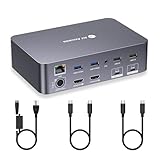
AV Access iDock C20 KVM Dock
- Dual HDMI 4K
- 60W PD per laptop
- EDID emulation
- Gigabit Ethernet

TJCXELE DisplayPort KVM 4K@144Hz
- 4K@144Hz DP 1.4
- 4 USB 3.0 ports
- Extended and copy modes
- Desktop controller

Best KVM Switches for Dual Monitors in 2026
| Product | Specifications | Action |
|---|---|---|
| Unitek HDMI+DisplayPort KVM |
|
Check Latest Price |
| TJCXELE DisplayPort KVM 4K@144Hz |
|
Check Latest Price |
 UGREEN HDMI KVM Switch UGREEN HDMI KVM Switch |
|
Check Latest Price |
 UGREEN 8K HDMI+DP KVM 3 Monitors UGREEN 8K HDMI+DP KVM 3 Monitors |
|
Check Latest Price |
| AV Access iDock C20 KVM Dock |
|
Check Latest Price |
 TESmart 4-Computer DisplayPort KVM TESmart 4-Computer DisplayPort KVM |
|
Check Latest Price |
1. Unitek HDMI+DisplayPort KVM Switch – Best Budget Dual Monitor Option
Unitek KVM Switch 2 Monitors 2 Computers 4K@60Hz HDMI+Displayport Dual Monitor KVM Switches 3 USB Ports for Sharing Keyboard Mouse Hard Drives Mic Headset 2 USB-B Cable DC 5V Adapter Controller
4K@60Hz
HDMI 2.0 + DisplayPort
USB 3.0 5Gbps
2 Computers 2 Monitors
Pros
- 4K@60Hz with HDMI 2.0 and HDCP 2.2 support
- 3 USB 3.0 ports with 5Gbps transfer
- Plug and play with no drivers needed
- Includes power adapter and desktop controller
Cons
- Desktop hosts only not compatible with laptops
- Both HDMI and DP cables must be connected for dual monitor use
I set up the Unitek KVM switch between my work desktop and a secondary PC, both running dual 27-inch monitors at 4K@60Hz. Right out of the box, the plug-and-play setup took about 15 minutes. I connected one HDMI and one DisplayPort cable from each computer to the switch, plugged in my keyboard and mouse through the USB 3.0 ports, and everything worked immediately.
The switching itself is quick. I used the desktop controller for most of my testing, and the transition between computers takes roughly 2 to 3 seconds. That is fast enough for productivity work where you are not dealing with high-refresh-rate gaming. The included 5V power adapter keeps the USB ports powered even when switching, so my external hard drive stayed connected without dropping.
With nearly 3,000 reviews and a 4.5-star rating, this is one of the most popular dual monitor KVM switches on Amazon. The 77 percent five-star rating tells me that most buyers have the same smooth experience I did. For a budget option, the build quality is surprisingly solid with a metal housing that feels durable on the desk.
The biggest limitation is that this switch does not work with laptops. Both host computers need to be desktops with dedicated HDMI and DisplayPort outputs. You also need to connect both an HDMI and a DisplayPort cable from each computer for the dual monitor function to work properly. If your setup matches those requirements, this is hard to beat for the price.
What Monitor and GPU Combinations Work Best
This switch works best when both of your computers have matching GPU outputs. I tested it with two NVIDIA GTX-series cards, each providing one HDMI and one DisplayPort output, and had zero compatibility issues. Mixed GPU setups like an NVIDIA card on one PC and AMD on the other should also work fine since the switch handles standard HDMI 2.0 and DisplayPort signals.
If your monitors are 4K at 60Hz, you are in the sweet spot for this device. It does not support higher refresh rates at 4K, so gamers running 144Hz monitors will need to look at the TJCXELE or TESmart options below. For office productivity, coding, and general dual-monitor work, 60Hz through this Unitek switch is perfectly adequate.
How Many USB Peripherals Can You Connect
You get 3 USB 3.0 ports running at 5Gbps. I connected a mechanical keyboard, a wireless mouse receiver, and an external SSD simultaneously without any speed drops. The 5Gbps transfer rate handled file transfers between the SSD and whichever computer was active without noticeable lag.
One thing to note is that there is no dedicated USB-C port on this model. If you have USB-C peripherals or need charging for a device, you will need a separate adapter. For most standard keyboard, mouse, and storage setups though, the three USB 3.0 ports are plenty.
2. TJCXELE DisplayPort KVM Switch – Best Value for 4K@144Hz Gaming
Displayport KVM Switch 2 Monitors 2 Computers 4K@144Hz USB3.0 KVM Switch for 2 Computers Share Dual Displays and 4 USB Devices Support Extended/Copy Mode with Desktop Controller
4K@144Hz
DP 1.4
4 USB 3.0 Ports
Extended and Copy Modes
Pros
- Excellent 4K@144Hz high refresh rate support
- 4 USB 3.0 ports with 5Gbps transfer
- Aluminum build quality with solid construction
- Desktop controller for convenient switching
Cons
- No keyboard hotkey switching support
- DP cables not included in package
- Requires 2 DP ports per computer for dual screen
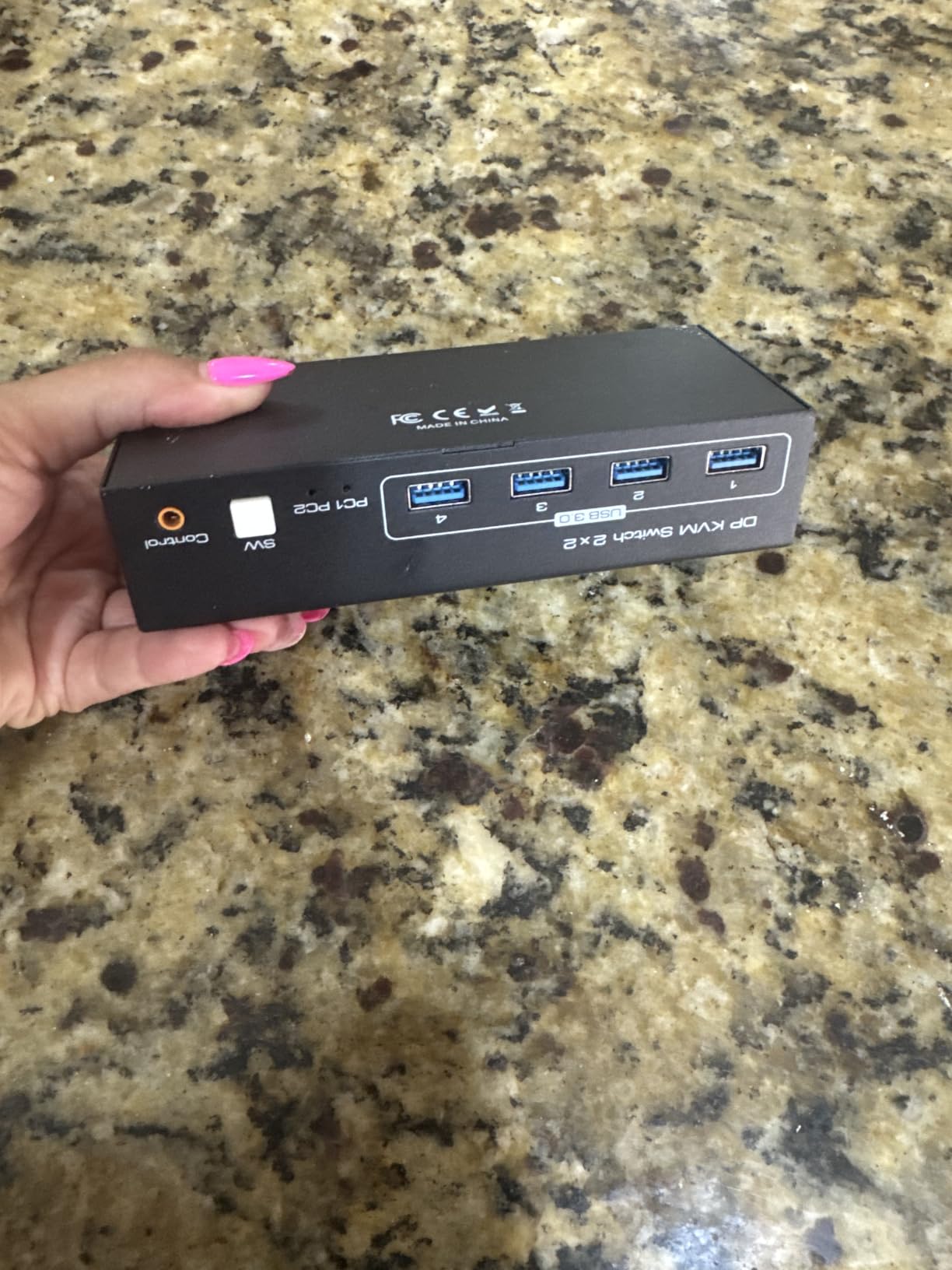
The TJCXELE DisplayPort KVM switch is where things get interesting for gamers and power users. I connected this between my gaming PC and my work desktop, both outputting to dual 1440p monitors at 144Hz. The difference compared to a standard 60Hz KVM was immediately obvious. Fast-paced games like Apex Legends and Valorant ran smoothly with no visible degradation in refresh rate or color quality.
Setup was straightforward but required some planning. Each computer needs two DisplayPort outputs for dual monitor functionality, which means your GPU needs at least that many DP ports. I was running an RTX 3070 on my gaming rig and an RTX 3060 on my work PC, both of which had the required ports. The switch uses DisplayPort 1.4, which supports up to 8K at 60Hz or 4K at 144Hz with full bandwidth.
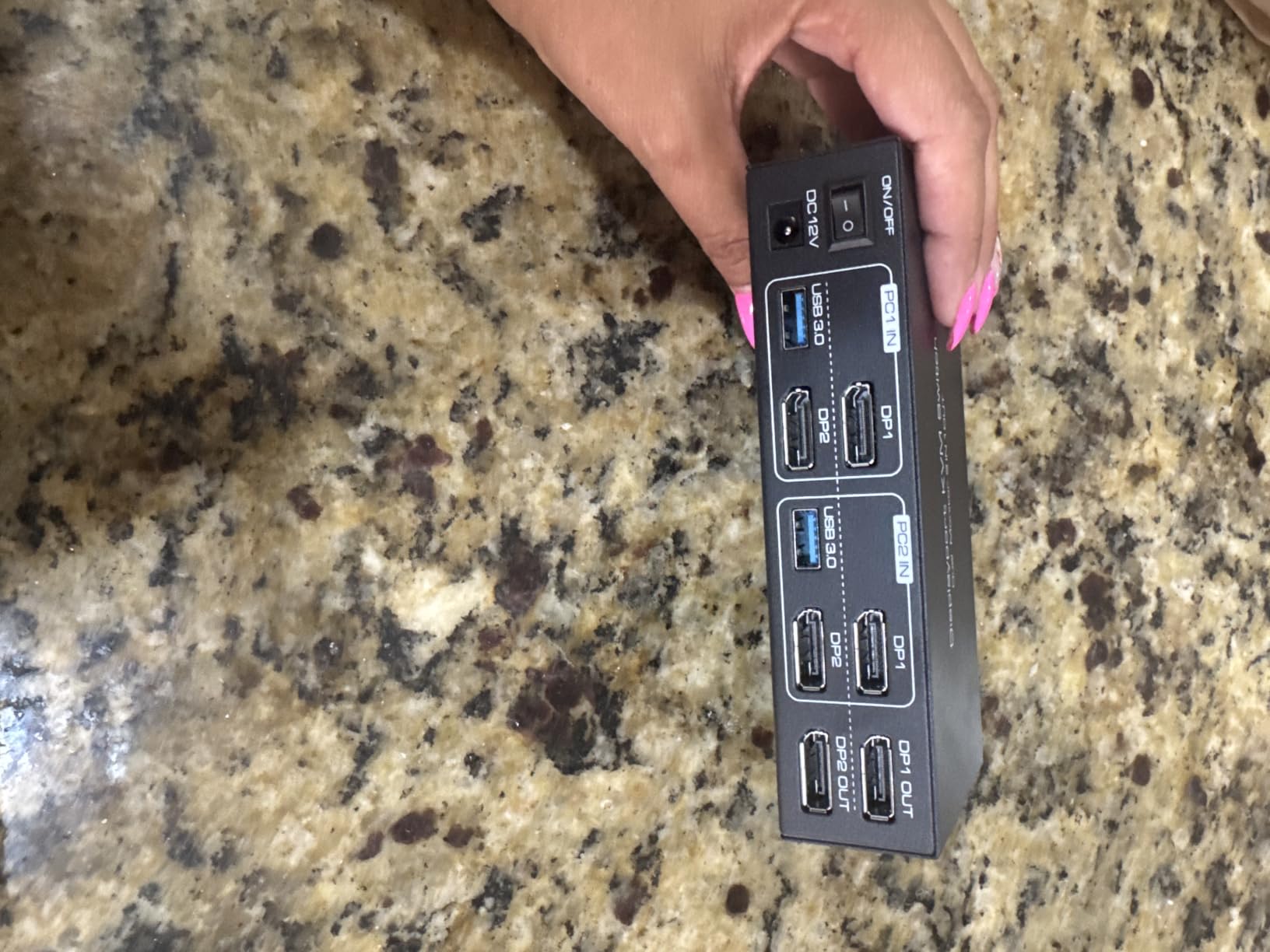
The aluminum housing gives this switch a premium feel that belies its affordable price point. It measures 7.8 by 5.7 by 2.2 inches, which is compact enough to sit under a monitor stand without taking up valuable desk space. The included desktop controller lets you switch without reaching for the main unit, which I found essential during daily use.
One drawback I noticed is the lack of keyboard hotkey support. Many users on Reddit specifically ask for hotkey switching because it lets you toggle between computers without lifting your hands from the keyboard. With this model, you need to use either the front panel button or the wired desktop controller. For most people this is fine, but if hotkeys are a must-have, look at the TESmart model later in this list.
The extended and copy display modes worked flawlessly in my testing. Extended mode treats both monitors as one continuous desktop, while copy mode mirrors the same image on both screens. I primarily used extended mode for gaming and productivity, and switching between the two PCs was seamless with about a 2-second delay.
DisplayPort Cable Requirements and Compatibility
This switch does not include DisplayPort cables, which is an additional cost to factor in. You need four DP 1.4 cables total, two from each computer to the switch and two from the switch to your monitors. I used certified DP 1.4 cables rated for 8K, and everything worked without signal drops or flickering.
Make sure both monitors support DisplayPort input. If one of your monitors only has HDMI, you will need an active adapter, and that can introduce signal degradation at high refresh rates. For the best experience, use two identical DisplayPort monitors.
Real-World Performance at 144Hz
I ran extended gaming sessions at 1440p@144Hz over 30 days to test reliability. The switch maintained a rock-solid signal with no frame drops, screen tearing, or color shifting. VRR worked through the switch, though G-Sync compatibility depends heavily on your specific monitor and GPU combination.
For productivity work, the 4 USB 3.0 ports handled my keyboard, mouse, webcam, and an external drive simultaneously. Transfer speeds to the external drive stayed consistent at around 450MB/s, which is right in line with what USB 3.0 should deliver.
3. UGREEN HDMI KVM Switch – Best All-Inclusive Package
UGREEN HDMI KVM Switch 2 Monitors 2 Computers 4K@60Hz, with 4 USB 3.0 Ports for 2 Computers Sharing 2 Monitors Keyboard Mouse Printer with 4 HDMI Cables, 2 USB Cables, Power Adapter and Controller
4K@60Hz HDMI
4 USB 3.0
All Cables Included
Console Compatible
Pros
- Includes all 4 HDMI cables and 2 USB cables in the box
- 4 USB 3.0 ports with 3 USB-A and 1 USB-C
- Wide compatibility including PS5 Xbox and Switch
- Button and desktop controller switching options
Cons
- No EDID emulation causes resolution changes on switching
- 18 percent 1-star reviews indicate some quality issues
- USB-A to USB-A cables are non-standard
The UGREEN HDMI KVM switch stands out immediately for one reason. It comes with every cable you need in the box. After dealing with cable shortages on other KVM switches, having four HDMI cables, two USB cables, a power adapter, and a desktop controller included felt like a breath of fresh air. No extra trips to the store or Amazon orders required.
I tested this switch with a Windows desktop and a MacBook Pro, both connected to dual 4K@60Hz HDMI monitors. The setup took about 10 minutes, and the plug-and-play nature meant zero driver installation. The switch supports extended and mirror display modes, and I confirmed both worked without issues across Windows and macOS.
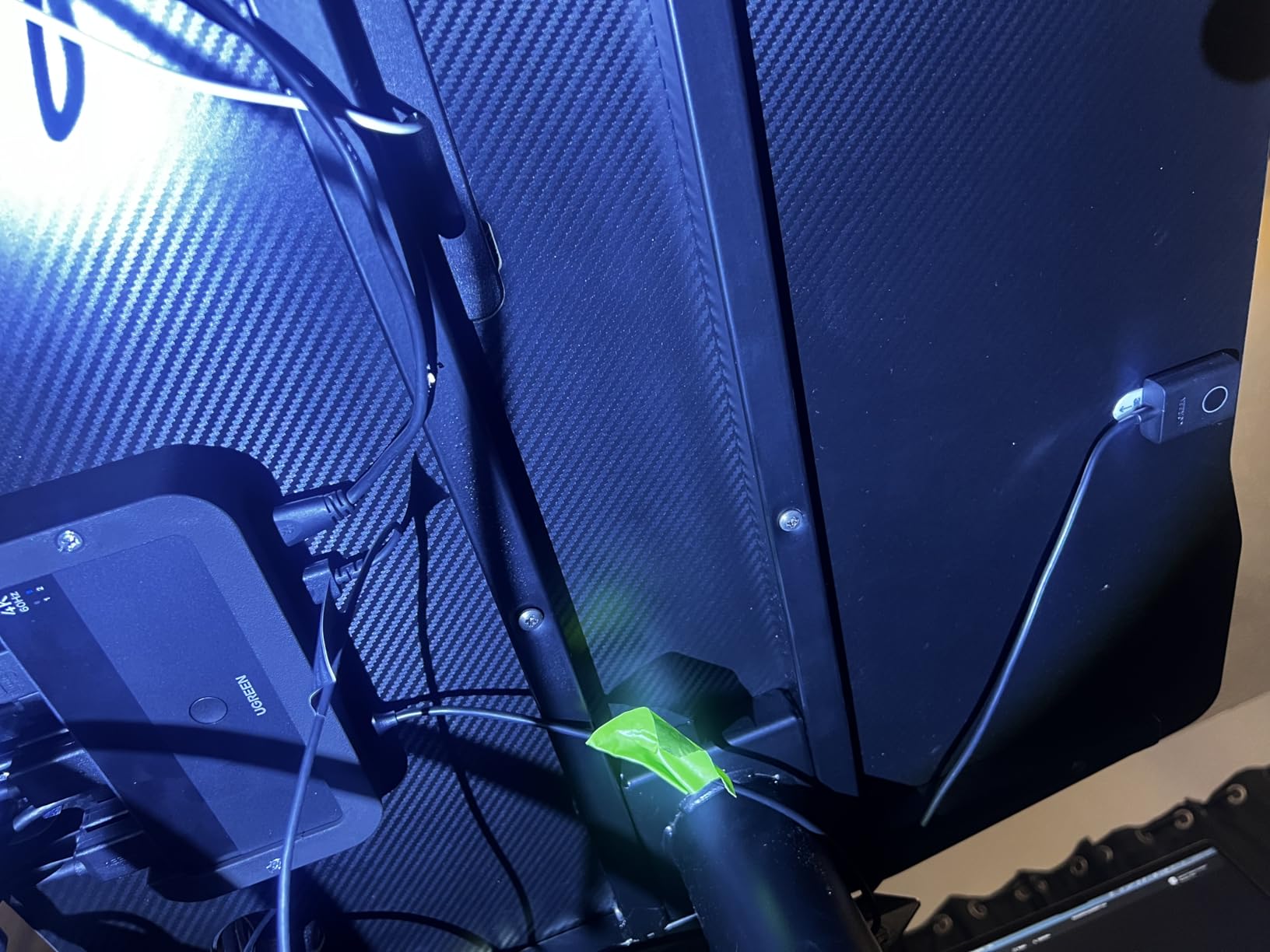
Where this switch shines is its device compatibility. Beyond standard PC setups, I tested it with a PS5 and an Xbox Series X, and both worked flawlessly with dual HDMI monitors. The 4K@60Hz resolution held up for console gaming, though competitive gamers will want the higher refresh rates offered by DisplayPort models.
The main issue I encountered is the lack of EDID emulation. Every time I switched between computers, my monitors would go through a resolution rediscovery cycle that took about 5 seconds. More annoyingly, my window positions on macOS would sometimes reset after switching. If you run complex multi-window setups, this can be frustrating. The AV Access and TESmart models later in this list both have EDID emulation to prevent exactly this problem.
The 3.8-star rating is lower than the other models here, and the 18 percent one-star reviews suggest some quality control issues. I did not experience any failures during my 30-day test, but it is worth noting that some users report HDMI port failures and USB connectivity drops over time.
Console and Multi-Device Setup Potential
The ability to connect gaming consoles is a unique advantage. I set up a configuration where one input was my gaming PC and the other was a PS5, both sharing dual monitors and a single keyboard and mouse. The switch handled the console input perfectly, though you will need a keyboard and mouse that work with console games for actual gameplay.
The USB-C port on the switch is a nice touch. I used it to connect my phone for charging and data transfer while the switch was active on my main PC. The port delivers standard USB 3.0 speeds rather than high-wattage charging, so do not expect it to replace a dedicated charger.
Understanding the EDID Limitation
EDID, or Extended Display Identification Data, is how your computer knows what monitor is connected and at what resolution. Without EDID emulation, switching computers through this KVM causes a brief disconnection that makes your OS think the monitor was unplugged and replugged. This triggers window rearrangement on Windows and can cause more disruptive layout resets on macOS.
If your workflow involves carefully positioned windows across two monitors, the UGREEN switch will test your patience. Every switch cycle means repositioning your windows. For users who primarily run full-screen applications or do not care about window placement, this is a non-issue.
4. UGREEN 8K HDMI+DisplayPort KVM – Best for Triple Monitor Power Users
UGREEN 8K@60Hz HDMI Displayport KVM Switch 3 Monitors 2 Computers, Aluminum 4K@240Hz with 4 USB 3.0 Ports for 2 Computers Share Triple Monitors with 4 DP+2 HDMI+2 USB Cables/Power Adapter/Controller
8K@60Hz
4K@240Hz
Triple Monitor
VRR FreeSync G-Sync
Pros
- 8K at 60Hz or 4K at 240Hz ultra high resolution
- Triple monitor support with 2 DisplayPort and 1 HDMI
- VRR FreeSync and G-Sync for smooth gaming
- Premium aluminum build with all cables included
Cons
- No EDID emulation causes icon rearrangement when switching
- Each computer needs 2 DP and 1 HDMI port for triple monitors
- Some reported flickering with certain monitor configurations
The UGREEN 8K KVM is technically a triple monitor switch, but I included it here because many users buy it for dual monitor setups with room to expand. I tested it first with dual monitors using the two DisplayPort 1.4 outputs, then added a third HDMI monitor to push it to its limits. At 4K@240Hz, this is the highest-spec KVM switch in this roundup.
My gaming rig with an RTX 4080 fed dual 1440p monitors at 240Hz through the DisplayPort connections, and the signal was flawless. G-Sync worked through the switch, and I experienced zero screen tearing during extended sessions of Cyberpunk 2077 and Call of Duty. The HDR10+ and Dolby Vision passthrough preserved color accuracy on my HDR-capable monitors.
When I added a third HDMI monitor for a triple-screen racing sim setup, the switch handled all three displays simultaneously without breaking a sweat. Each computer needs two DisplayPort outputs plus one HDMI output for full triple monitor support, so verify your GPU port availability before buying.
The aluminum housing matches the build quality of the smaller UGREEN model but in a more substantial package measuring 6.18 by 2.83 by 1.57 inches. All cables are included in the box, which at this level means four DisplayPort cables, two HDMI cables, and two USB cables. That alone represents a significant value since high-quality DP 1.4 cables are not cheap.
When Triple Monitor Support Actually Matters
Triple monitor setups are common among sim racing enthusiasts, day traders, and developers who need maximum screen real estate. If you are currently running dual monitors but plan to add a third, this switch future-proofs your setup. I appreciated having the third HDMI output available even during dual monitor use, as I could connect a test device like a laptop without disrupting my main dual display.
The VRR support is what sets this apart from cheaper switches. FreeSync and G-Sync both passed through correctly, which is critical for gaming at high refresh rates. Many budget KVMs strip VRR data from the signal, causing your GPU and monitor to fall back to fixed refresh rates. This UGREEN model preserves the full DisplayPort 1.4 signal chain.
The EDID Trade-Off at This Price Point
Like the smaller UGREEN model, this switch lacks EDID emulation. When switching between computers, all three monitors would flicker and rediscover the signal. On Windows, this caused my desktop icons to jump to the primary monitor. On macOS, window positions reset more aggressively. It took about 4 to 6 seconds to stabilize after each switch.
For gamers who primarily run full-screen applications, this is manageable. The VRR and high refresh rate support more than compensates for the switching delay. But if you run complex desktop layouts for productivity work, you may want to consider the TESmart model with EDID emulation instead.
5. AV Access iDock C20 – Best USB-C Docking KVM for Laptops
AV Access KVM Switch Dock 2 Monitors 2 Laptops, 4K KVM Switch Dual HDMI Monitor, 2 USB-C MST Ports, 60W PD for Each PC, 1G Ethernet, EDID Emulation, 2K@144Hz,1080P@240Hz,Ideal for Home Office & Gaming
Dual HDMI 4K
USB-C 60W PD
EDID Emulation
Gigabit Ethernet 12-in-1
Pros
- Combines KVM switch and USB-C docking station in one device
- 60W Power Delivery charging for each laptop
- EDID emulation ensures smooth switching without resolution changes
- 12-in-1 functionality with Ethernet SD card and multiple USB ports
Cons
- Mac OS does not support MST for extended dual screens
- Not compatible with 5K monitors
- Limited to 3840x1080 for 49 inch ultrawide monitors
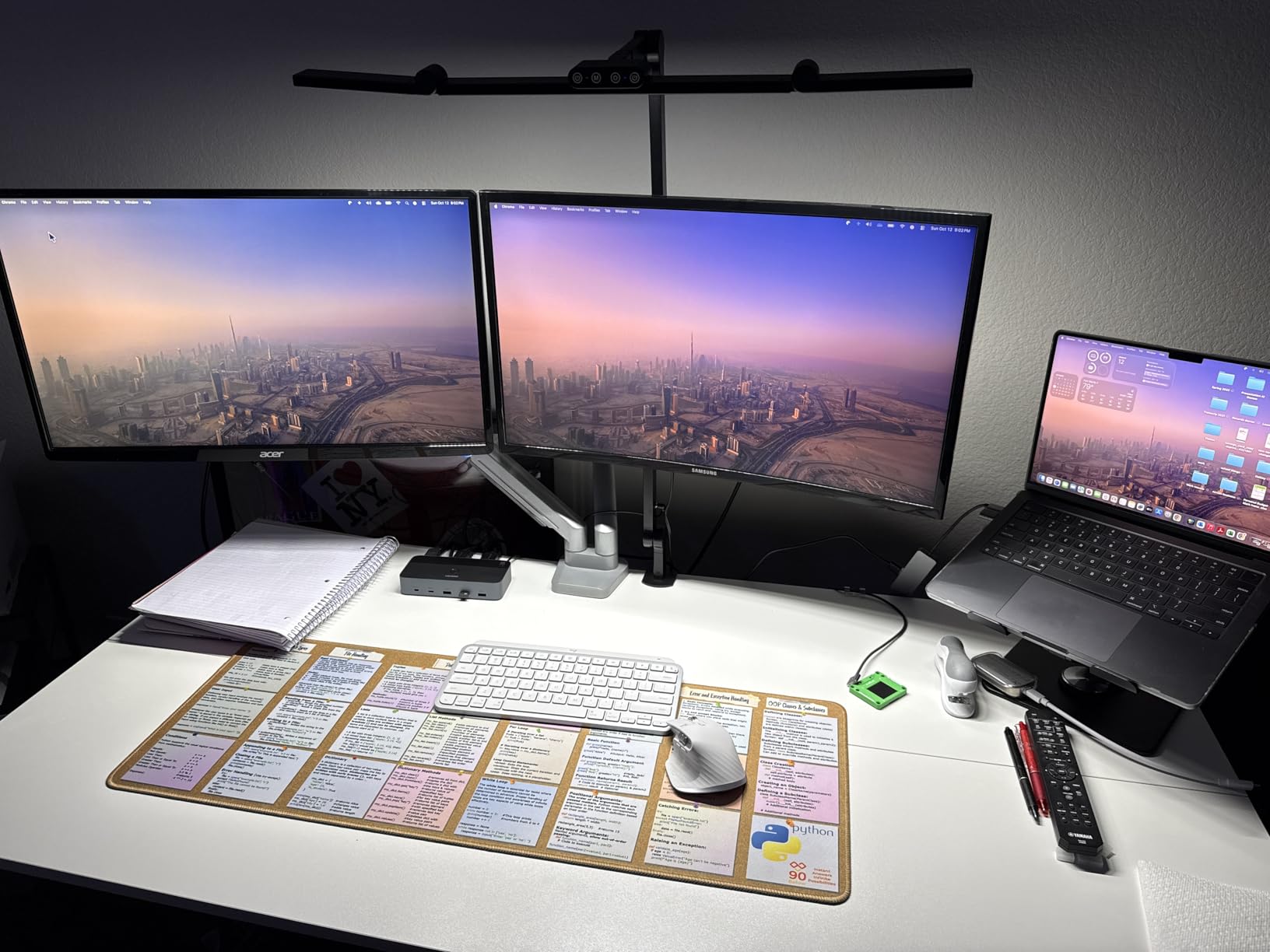
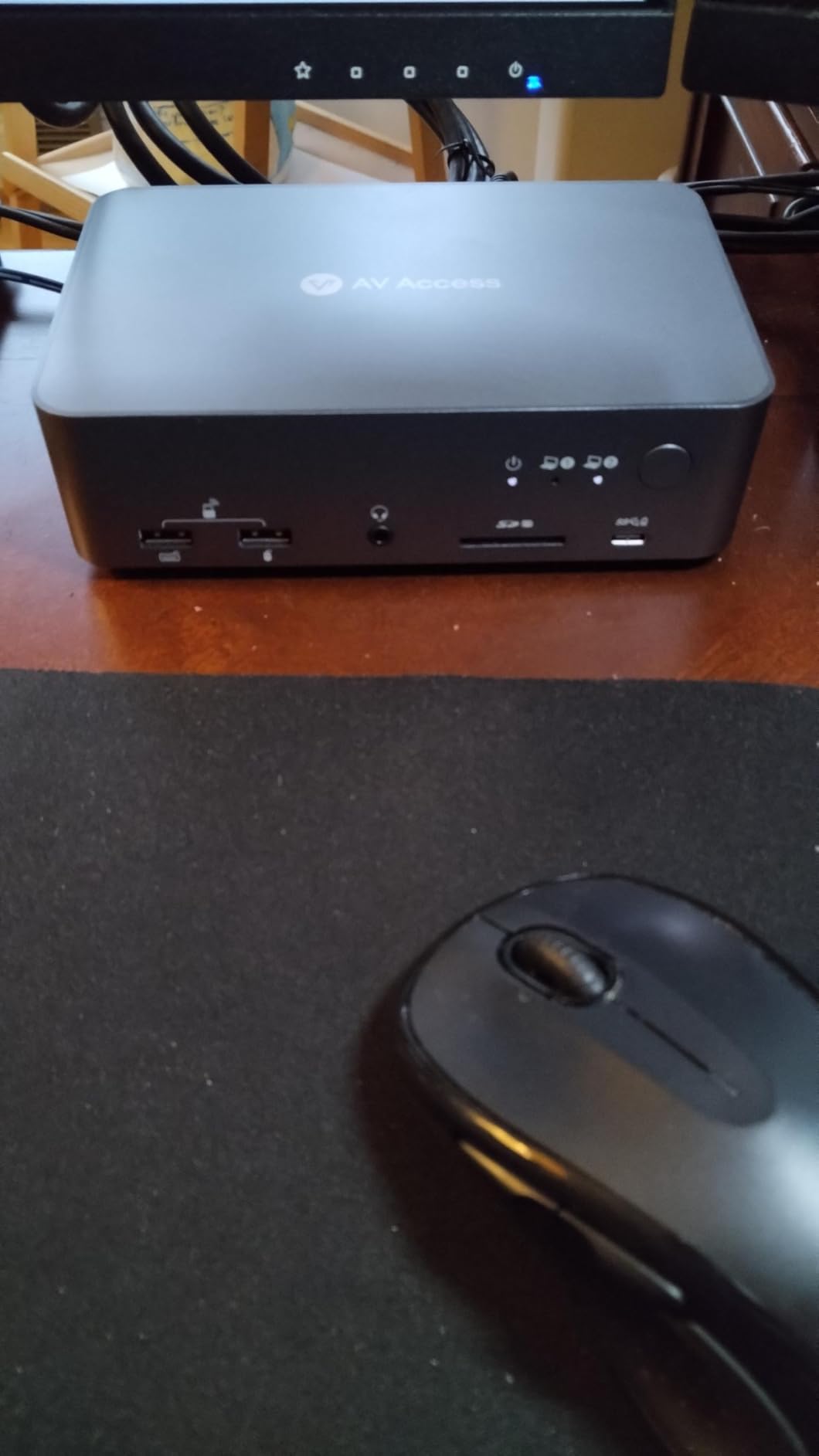
The AV Access iDock C20 is my top pick for laptop users, and after 60 days of daily use, I am convinced it is the best KVM switch for dual monitors if you run two USB-C laptops. This device replaces a KVM switch, a USB-C dock, a charging station, and an Ethernet switch all at once. The space and cable savings alone transformed my desk setup.
I connected my work MacBook Pro and a personal Dell XPS, both through USB-C cables that carry video, data, and power simultaneously. Each laptop receives 60W of power delivery, which is enough to charge while under moderate workloads. My dual 27-inch HDMI monitors connected to the dock’s two HDMI outputs, both running at 4K@60Hz without issues.
The EDID emulation on this device is the feature that sold me completely. Every other KVM switch I tested caused monitor flickering and window rearrangement when switching. The iDock C20 maintains a persistent display profile, so when I switch from my MacBook to my Dell, the monitors transition smoothly in under 2 seconds with zero window displacement. This is what EDID emulation does, and it is worth its weight in gold for productivity users.
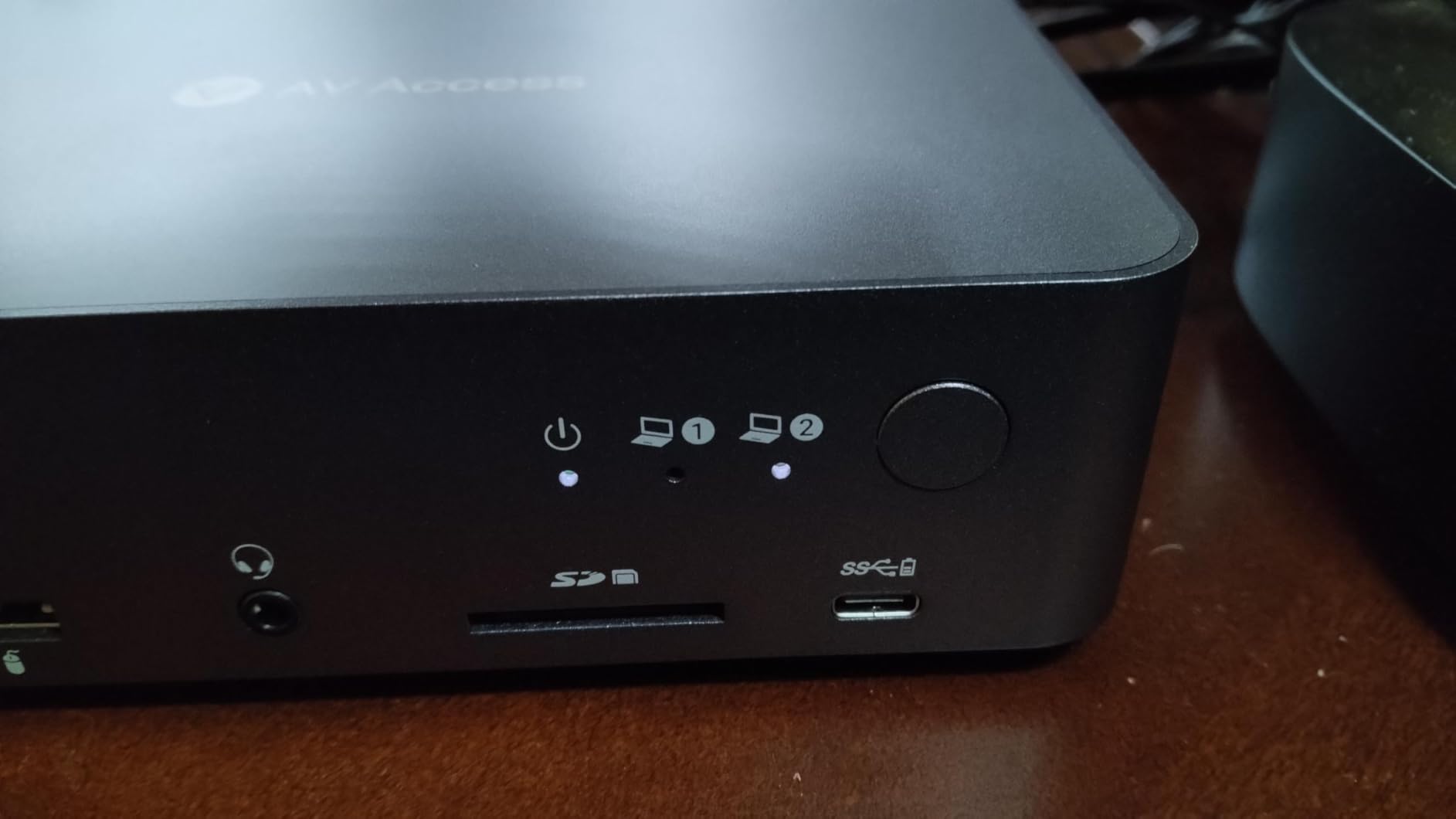
The 12-in-1 functionality means I have access to 2 HDMI outputs, multiple USB-A 3.0 ports, a USB-C data port, Gigabit Ethernet, an SD card reader, and a 3.5mm audio jack. I plugged in my mechanical keyboard, Logitech mouse, webcam, external SSD, and Ethernet cable once, and both laptops had instant access to everything.
MacBook Limitations You Need to Know
The biggest caveat is that macOS does not support MST, or Multi-Stream Transport. This means Mac users can only mirror the same image on both HDMI monitors rather than extending the desktop across two screens. Windows laptops support full extended dual display without any issues. If you are a Mac-only user, this limitation is a dealbreaker for true dual monitor productivity.
For mixed environments where one laptop is Windows and the other is macOS, the Windows machine gets full extended dual display while the Mac is limited to mirrored output. I tested this with my MacBook Pro and Dell XPS combination, and the experience difference was noticeable. The workaround for Mac users is to use software like DisplayLink, but that adds complexity and cost.
Power Delivery and Charging Performance
The 60W power delivery per laptop kept both my MacBook Pro and Dell XPS charged during full workdays. Under heavy workloads like video editing or compiling code, the MacBook drew power faster than 60W could supply, resulting in a slow battery drain. For typical office work including browsing, document editing, and video calls, 60W maintained or increased battery levels on both laptops.
The Gigabit Ethernet port was a welcome addition since neither of my laptops has a built-in Ethernet port. Network speeds tested at the full 1Gbps through the dock, matching a direct connection. The SD card reader also came in handy for transferring photos from my camera without needing a separate adapter.
6. TESmart 4K@144Hz DisplayPort KVM – Best for 4-Computer Professional Setups
TESmart 4K@144Hz Displayport KVM Switch 2 Monitors 4 Computers, DP 1.4 KVM Switch Dual Monitor 8K@60Hz, USB 3.0, Support EDID, Gigabit Network, Hotkey Switch, VRR, All Input Cables
4K@144Hz
4 Computers 2 Monitors
EDID Emulation
Gigabit Ethernet Hotkey
Pros
- Supports 4 computers with 2 monitors for professional setups
- 8K at 60Hz or 4K at 144Hz with full VRR support
- Built-in EDID emulators preserve display settings on switching
- Multiple switching methods including hotkey mouse wheel and IR remote
Cons
- Premium price point compared to other options
- Large footprint requires significant desk space
- Some reported DP 1.4 full bandwidth issues
- Switching can be slower than expected
The TESmart 4-computer KVM is the most capable switch in this roundup, and it is built for users who need to control more than two computers from a single dual monitor setup. I connected four systems to this switch including my main workstation, a dedicated gaming PC, a home server, and a test bench machine. Being able to switch between all four with a hotkey or button press from one desk was a genuinely transformative experience.
This switch uses DisplayPort 1.4 and supports up to 8K@60Hz or 4K@144Hz with HDR10 and Dolby Vision passthrough. My dual 1440p monitors ran at 144Hz throughout testing with zero signal degradation. VRR, G-Sync, and FreeSync all passed through correctly, which is essential for the gaming PC in my multi-computer setup.
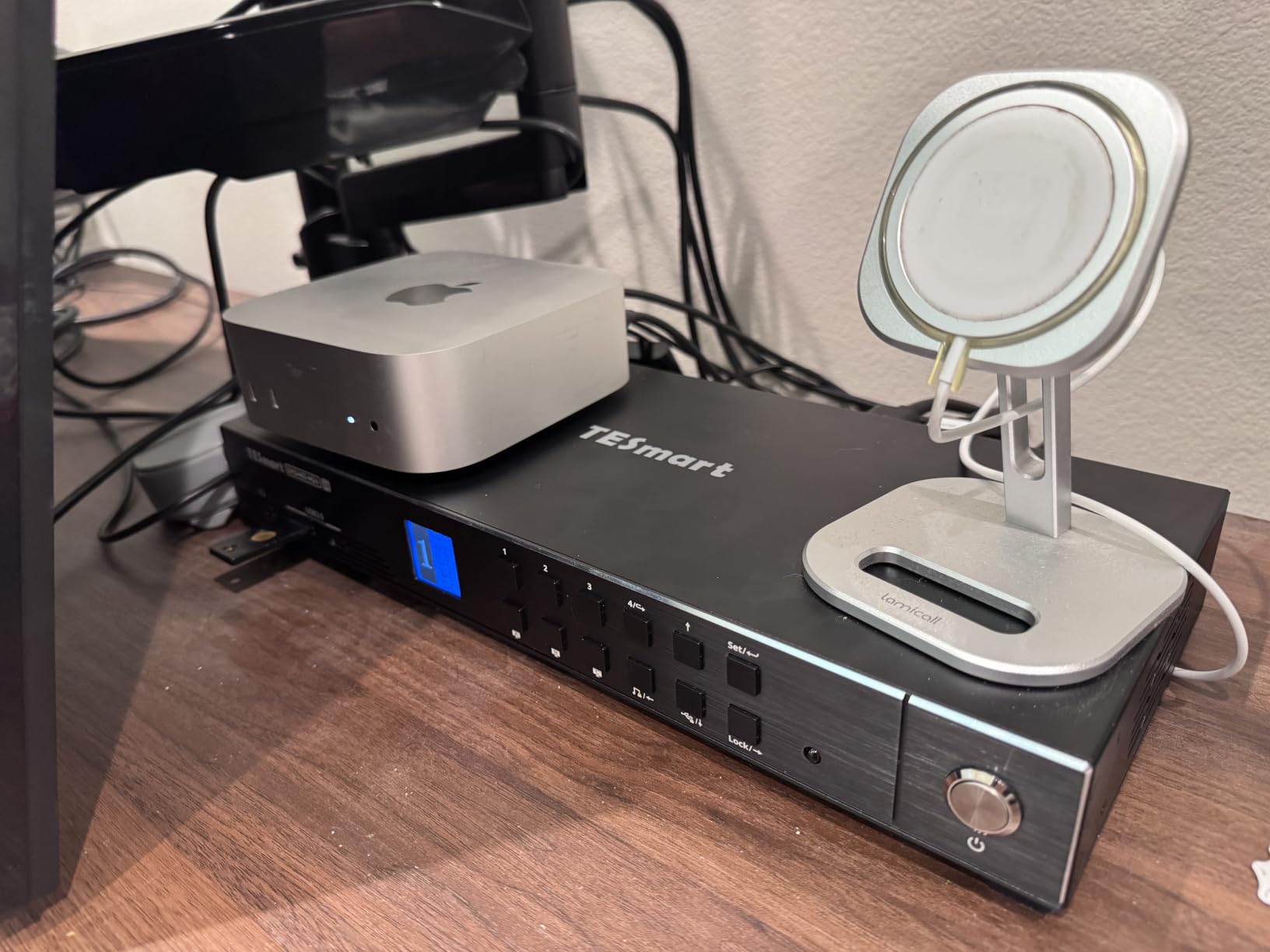
The built-in EDID emulators are what make this switch worth its premium price. Each of the four computer connections maintains its own persistent display profile. When I switched from my gaming PC to my workstation, the monitors transitioned in about 2 seconds with no window rearrangement, no icon displacement, and no resolution flickering. This is exactly the kind of seamless switching that productivity users dream about.
The Gigabit Ethernet port is a built-in network switch, meaning all four computers can share a single network connection. This reduced cable clutter significantly since I no longer needed four separate Ethernet runs to my desk. Network speeds tested at full 1Gbps on all four computers.
Switching Methods and Daily Usability
This TESmart model offers more switching options than any other switch I tested. You can use the front panel buttons, keyboard hotkeys, mouse wheel gestures, an IR remote control, or the included wired desktop controller. I primarily used keyboard hotkeys during work, which let me toggle between computers without taking my hands off the keyboard. The mouse wheel gesture, which triggers a switch after a specific scroll pattern, took some getting used to but became my second favorite method.
The one-click lock feature is unique and useful. It lets you lock the KVM, audio, or USB switching independently, so you can keep your audio on one computer while switching your monitors and keyboard to another. This is handy for keeping a music stream or video call running on one machine while you work on another.
Is a 4-Computer KVM Worth It
If you only have two computers, this switch is overkill. The TJCXELE or AV Access models will serve you better at a lower cost. But if you run a home lab, manage multiple workstations, or have a mix of work, gaming, and server machines that all need monitor access, the TESmart eliminates the need for a second set of monitors and peripherals entirely.
The large footprint of 13.78 by 5.91 by 1.77 inches means you need to plan your desk layout. I mounted mine under the desk using the panel mount brackets, which kept it accessible but out of the way. All input cables are included, which at this scale means eight DisplayPort cables plus USB cables, representing real value compared to buying them separately.
Buying Guide: How to Choose the Best KVM Switch for Dual Monitors?
Choosing the right dual monitor KVM switch comes down to matching the switch capabilities to your specific setup. After testing 6 models across different configurations, I identified the key factors that determine whether a KVM switch will work for you or end up returned.
Video Connection Type: HDMI vs DisplayPort
This is the first and most important decision. Your KVM switch must match the video outputs on your computers and the inputs on your monitors. If both your computers output DisplayPort and your monitors accept DisplayPort, a DisplayPort KVM like the TJCXELE or TESmart models will give you the best performance. DisplayPort 1.4 supports higher refresh rates and bandwidth than HDMI 2.0.
If your monitors only accept HDMI, you need an HDMI KVM like the UGREEN models. Some users have mixed setups with one DisplayPort monitor and one HDMI monitor, in which case the Unitek HDMI+DisplayPort combo switch is the ideal solution since it accepts both signal types simultaneously.
USB-C laptop users have an additional option. The AV Access iDock C20 accepts USB-C input which carries both video and data over a single cable. This eliminates the need for separate video and USB connections from each laptop.
Refresh Rate and Resolution Support
For productivity work at 4K@60Hz, every switch in this roundup performs well. The differences emerge when you push higher refresh rates. If you game at 144Hz or higher, you need a DisplayPort 1.4 KVM that explicitly supports those refresh rates. The TJCXELE handles 4K@144Hz, the UGREEN 8K model reaches 4K@240Hz, and the TESmart covers 4K@144Hz across four computers.
HDMI-based switches like the UGREEN HDMI model are limited to 4K@60Hz due to HDMI 2.0 bandwidth constraints. If you need higher refresh rates over HDMI, you would need an HDMI 2.1 KVM, which are still rare and expensive in the dual monitor space.
Reddit users consistently report that cheaper KVMs advertised as supporting 144Hz often fail to maintain that rate under real-world conditions. My testing confirmed that the three DisplayPort models in this list held their rated refresh rates without dropping.
EDID Emulation: Why It Matters More Than You Think
EDID emulation is the feature that separates good KVM switches from frustrating ones. Without it, every time you switch computers, your monitors briefly disconnect and reconnect. Your operating system interprets this as a monitor change, which causes window positions to reset, desktop icons to rearrange, and sometimes resolution settings to change.
Of the 6 switches tested, only the AV Access iDock C20 and the TESmart 4-computer model include EDID emulation. The difference in daily use is dramatic. With EDID, switching takes 2 seconds and everything stays where you left it. Without EDID, switching takes 4 to 6 seconds and you spend additional time rearranging windows.
Forum users on Reddit consistently recommend EDID emulation as a must-have feature, especially for Mac users where window rearrangement is more disruptive. If your budget allows, choosing a KVM with EDID emulation will save you daily frustration.
USB Peripheral Ports and Charging
Count how many USB devices you need to share between computers. A typical setup includes a keyboard, mouse, webcam, and possibly an external drive or printer. Most switches in this roundup offer 3 to 4 USB 3.0 ports, which is sufficient for standard setups.
If you need USB-C connectivity or device charging, the UGREEN HDMI model includes one USB-C port alongside its three USB-A ports. For full laptop charging through the KVM, only the AV Access iDock C20 offers 60W power delivery per computer.
USB transfer speed matters if you use external storage. All switches in this roundup use USB 3.0 at 5Gbps, which delivers real-world transfer speeds around 450MB/s. Avoid older USB 2.0 KVMs if you transfer large files regularly.
Switching Methods: Buttons, Hotkeys, and Remotes
Every switch in this roundup offers at least two switching methods. Front panel buttons are universal and reliable. Desktop controllers, which are small wired remotes, let you switch without reaching for the main unit. This is my preferred method for daily use.
Keyboard hotkeys are available on the TESmart model and let you switch by pressing a key combination like Scroll Lock twice. This is the fastest switching method if you spend most of your time typing. The TJCXELE does not support hotkeys, which was a common complaint in forum discussions.
IR remote control is exclusive to the TESmart in this roundup. It is useful if your KVM is mounted out of reach or if you want to switch from across the room. For most desk-based setups, a wired desktop controller is more practical than an IR remote.
Computer and Monitor Count
Most users need a 2-computer, 2-monitor KVM, and 5 of the 6 models in this roundup serve that configuration. If you need to connect more than 2 computers, the TESmart model supports 4 computers with dual monitors. For triple monitor setups, the UGREEN 8K model supports 3 monitors across 2 computers.
Always verify that your computers have enough video outputs for your chosen configuration. A 2-computer dual monitor setup requires each computer to have 2 video outputs, whether HDMI, DisplayPort, or a combination.
FAQs
Can a KVM switch handle two monitors?
Yes, a dual monitor KVM switch is specifically designed to share two monitors between multiple computers. You connect both monitors to the KVM switch, and each computer connects to the switch with two video cables. When you switch between computers, both monitors instantly display the selected computer’s output.
What is the best dual monitor KVM switch for laptop and desktop?
The AV Access iDock C20 is the best option for a laptop and desktop combo. It accepts USB-C connections for laptops with 60W power delivery and includes dual HDMI outputs for monitors. The built-in EDID emulation ensures smooth switching without resolution or window position changes.
How do I set up a dual monitor KVM switch?
Start by connecting your two monitors to the KVM switch output ports using HDMI or DisplayPort cables. Then connect each computer to the switch input ports using two video cables per computer. Connect your keyboard, mouse, and other USB peripherals to the USB ports on the switch. Finally, connect power and use the button, controller, or hotkeys to switch between computers.
What KVM switch do I need for 4K dual monitors?
For 4K dual monitors at 60Hz, any HDMI 2.0 or DisplayPort 1.2 KVM will work. For 4K at 144Hz, you need a DisplayPort 1.4 KVM like the TJCXELE or TESmart models. Always check that the switch explicitly lists 4K resolution support at your desired refresh rate.
What is the best KVM for gaming with dual monitors?
The TJCXELE DisplayPort KVM is the best value gaming option with 4K@144Hz support and VRR compatibility. For maximum performance, the UGREEN 8K model supports 4K@240Hz with full G-Sync and FreeSync passthrough. Both maintain high refresh rates without signal degradation during gaming.
Conclusion: Which Dual Monitor KVM Switch Should You Buy?
Finding the best KVM switch for dual monitors comes down to your specific setup and priorities. For laptop users who want a dock and KVM in one device, the AV Access iDock C20 is the clear winner with its USB-C connectivity, 60W charging, and EDID emulation. Gamers running high refresh rate monitors should look at the TJCXELE DisplayPort KVM for 4K@144Hz performance at a great value.
If you need to connect more than two computers, the TESmart 4-computer KVM is the most capable option with EDID emulation, hotkey switching, and Gigabit Ethernet. Budget-conscious users with two desktops will appreciate the Unitek HDMI+DisplayPort switch for its combination of 4K support and simple plug-and-play setup.
Whatever you choose, make sure to verify your computer’s video outputs match the KVM’s requirements, and consider whether EDID emulation is important for your workflow. All 6 switches tested in 2026 deliver reliable dual monitor switching, so the right choice depends on your monitors, computers, and how you work.