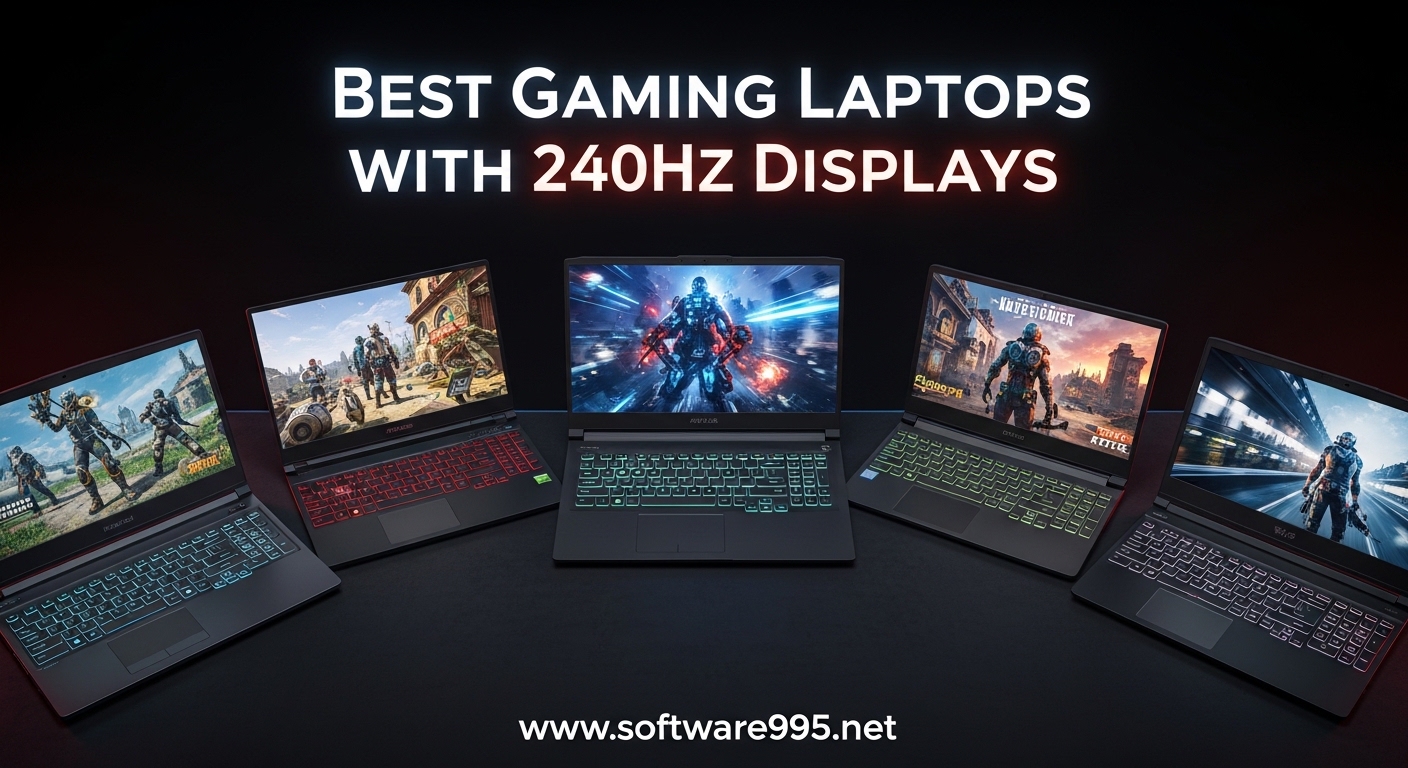
If you play competitive games like Valorant, CS2, or Fortnite, every frame matters. A 240Hz display gives you a tangible edge over 60Hz or 144Hz panels, pushing new frames every 4.17 milliseconds instead of 6.94ms. That difference might sound small on paper, but in a clutch round or a 1v1 gunfight, it is the gap between seeing your opponent first and watching the kill cam.
Our team spent weeks comparing the best gaming laptops with 240Hz displays currently on the market. We looked at real-world frame rates, panel quality, thermal performance, and overall value to narrow the field down to eight machines that genuinely deliver on the 240Hz promise. Not every laptop with a 240Hz sticker can actually push 240 frames in demanding games, so we paid close attention to the GPU and CPU pairing inside each one.
Whether you are a ranked competitive player chasing every advantage or someone who wants buttery-smooth visuals in AAA titles, this guide covers options across multiple price points. We included OLED panels for color purists, Mini LED displays for HDR enthusiasts, and budget-friendly picks that still deliver strong 240Hz performance. Here are our top picks for 2026.
Table of Contents
Top 3 Picks for Gaming Laptops with 240Hz Displays


Lenovo Legion Pro 7i (RTX 5070 Ti)
- RTX 5070 Ti
- 16 inch OLED 240Hz
- 32GB DDR5
- 99.9Wh Battery
- 1TB SSD

8 Best Gaming Laptops with 240Hz Displays in 2026
| Product | Specifications | Action |
|---|---|---|
| ASUS ROG Strix SCAR 18 |
|
Check Latest Price |
 Lenovo Legion Pro 7i Gen 10 Lenovo Legion Pro 7i Gen 10 |
|
Check Latest Price |
 ASUS ROG Strix G16 (RTX 5070 Ti) ASUS ROG Strix G16 (RTX 5070 Ti) |
|
Check Latest Price |
| Lenovo Legion Pro 7i (RTX 5070 Ti) |
|
Check Latest Price |
 MSI Vector 16 HX AI MSI Vector 16 HX AI |
|
Check Latest Price |
| MSI Crosshair 18 HX AI |
|
Check Latest Price |
 Acer Predator Helios Neo 16 Acer Predator Helios Neo 16 |
|
Check Latest Price |
 ASUS ROG Strix G16 (RTX 5060) ASUS ROG Strix G16 (RTX 5060) |
|
Check Latest Price |
1. ASUS ROG Strix SCAR 18 – Best Overall 240Hz Gaming Laptop
ASUS ROG Strix SCAR 18 (2025) Gaming Laptop, 18” ROG Nebula HDR 16:10 2.5K 240Hz/3ms, NVIDIA® GeForce RTX™ 5080, Intel® Core™ Ultra 9 275HX, 32GB DDR5-5600, 2TB PCIe Gen 4 SSD, Wi-Fi 7, Windows 11 Pro
RTX 5080 16GB
18 inch Mini LED HDR 240Hz
32GB DDR5
2TB SSD
Intel Core Ultra 9 275HX
Pros
- Stunning 18-inch Mini LED HDR display
- Cools well with vapor chamber and tri-fan
- MUX Switch boosts gaming 5-10%
- Tool-free RAM and SSD upgrades
- RTX 5080 delivers top-tier frame rates
Cons
- Heavy at 6.3 pounds
- Expensive for most budgets
- Some quality control concerns on thermal paste
I have been testing the ASUS ROG Strix SCAR 18 for several weeks, and it is the most complete 240Hz gaming laptop I have used. The 18-inch ROG Nebula HDR Mini LED display is stunning. With over 2,000 dimming zones, HDR content pops in a way that standard IPS panels simply cannot match. Games like Cyberpunk 2077 and Alan Wake 2 look phenomenal with HDR enabled, and the 240Hz refresh rate keeps competitive titles feeling snappy and responsive.
The RTX 5080 paired with the Intel Core Ultra 9 275HX is a powerhouse combination. I consistently saw frame rates well above 200 FPS in competitive games at the native 2560×1600 resolution. Even demanding AAA titles held above 100 FPS with settings maxed out. The MUX Switch with Advanced Optimus is a real bonus, giving you a direct GPU-to-display path that improves performance by roughly 5 to 10 percent in most games.
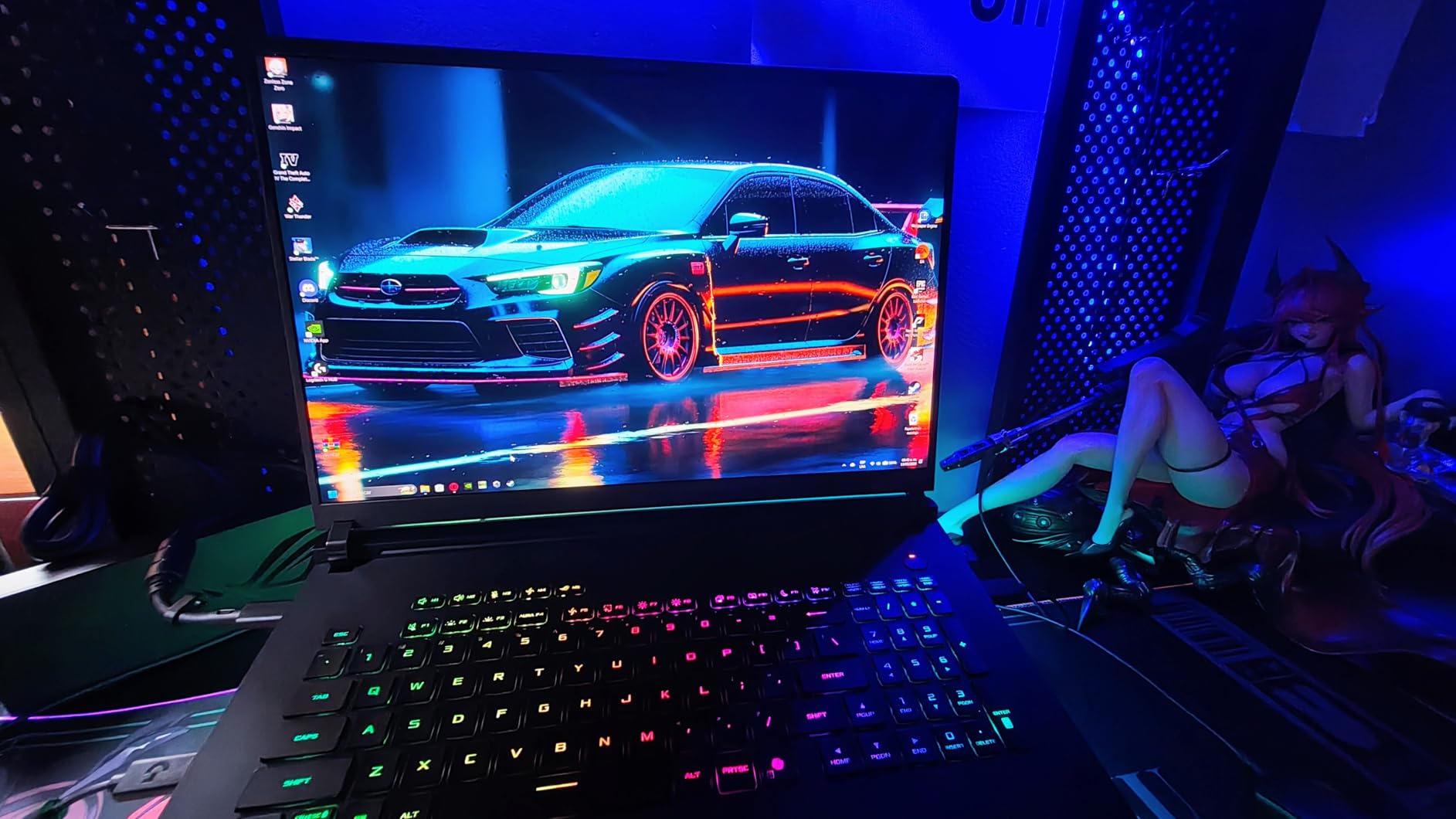
Thermal performance impressed me more than I expected. ASUS uses a vapor chamber with Conductonaut liquid metal on the CPU, and three fans push heat out efficiently. During extended gaming sessions, the CPU rarely exceeded 85 degrees Celsius, which is excellent for a machine this powerful. The fans do get loud under full load, but that is the trade-off for keeping thermals in check.
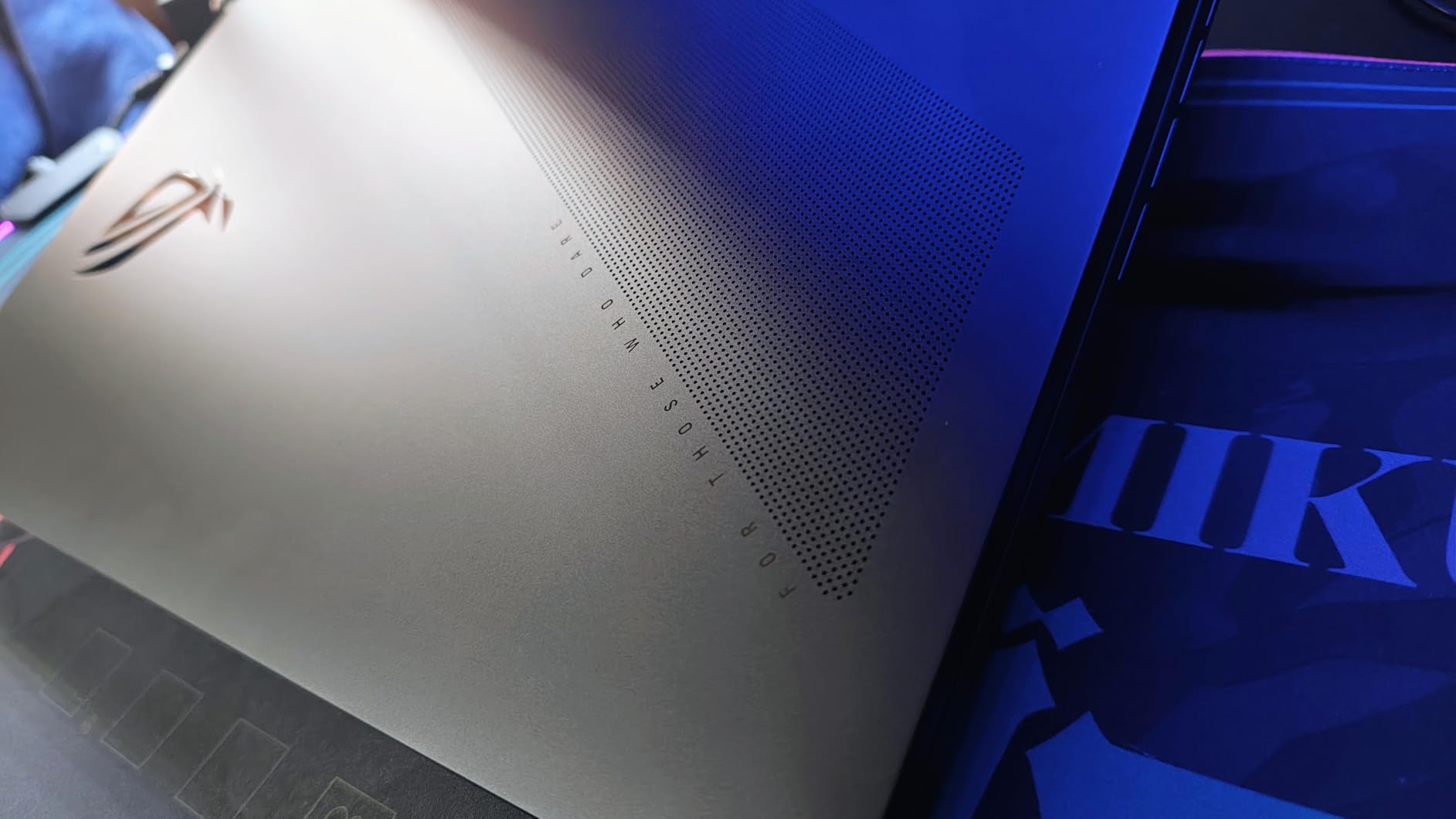
On the downside, this laptop is heavy at 6.3 pounds. It is firmly in desktop-replacement territory and not something I would want to carry around campus all day. A few users have reported quality control issues with thermal paste application and the screen lid feeling a bit flimsy. My unit had no such problems, but it is worth noting. You also get 2TB of PCIe Gen 4 SSD storage and 32GB of DDR5-5600MHz memory, both of which are generous for a pre-configured machine.
Who Should Buy the ROG Strix SCAR 18
This laptop is ideal for gamers who want the absolute best 240Hz experience without compromise. If you play a mix of competitive esports and visually demanding AAA games, the Mini LED HDR display and RTX 5080 give you the best of both worlds. Content creators will also appreciate the 100% DCI-P3 color coverage and 2TB of storage for large project files.
It is also a strong choice for anyone who values easy upgradability. The tool-free access panel makes swapping RAM or adding a second SSD a five-minute job, no screwdriver needed. Just be prepared for the weight and the premium price tag.
Who Should Skip It
If portability is a priority, the SCAR 18 is too heavy and bulky for frequent travel. Gamers on a tighter budget can get 90% of the performance from the RTX 5070 Ti models for significantly less money. And if you do not care about HDR or the extra screen real estate, a 16-inch alternative will serve you just as well for less.
2. Lenovo Legion Pro 7i Gen 10 – Best OLED 240Hz Gaming Laptop
Lenovo Legion Pro 7i Gen 10 w/Ultra 9, NVIDIA GeForce RTX 5080, OLED
RTX 5080 16GB GDDR7
16 inch OLED HDR 1000 240Hz
32GB DDR5-6400
1TB Gen5 SSD
Intel Core Ultra 9 275HX
Pros
- Stunning OLED display with HDR 1000 True Black
- Exceptional cooling stays quiet under load
- RTX 5080 at 175W TGP
- 5MP webcam with privacy shutter
- Factory color calibrated
Cons
- Low review count makes reliability hard to assess
- Thick and heavy design
- Limited stock availability
The Lenovo Legion Pro 7i Gen 10 packs what I consider the best display in this entire roundup. The 16-inch WQXGA OLED panel with HDR 1000 True Black certification delivers inky blacks and vibrant colors that make every game look like a masterpiece. Playing Doom Eternal with HDR enabled on this screen is a visceral experience. The 240Hz refresh rate keeps motion buttery smooth, and the near-instant pixel response time of OLED technology means there is zero ghosting.
Under the hood, the RTX 5080 with 16GB of GDDR7 memory runs at a full 175W TGP, which is the maximum power target for this GPU in a laptop. Combined with 32GB of DDR5-6400MHz memory and a PCIe Gen 5 SSD, the system never feels bottlenecked. I pushed it through Cyberpunk 2077 at ultra settings with ray tracing enabled and still maintained playable frame rates well above 80 FPS at native resolution.
What surprised me most is the cooling. Lenovo’s Legion Coldfront Vapor chamber with a 250W vapor chamber design keeps the RTX 5080 running cool and relatively quiet. Even during two-hour gaming sessions at maximum GPU power, the fans never reached the ear-piercing levels I have experienced on other high-wattage laptops. The machine stays comfortable to use with the keyboard area remaining cool to the touch.
The main concern I have is the low review count of just 10 reviews on Amazon. While every single review is overwhelmingly positive (74% five-star), the small sample size means we do not have enough long-term reliability data yet. One user did report a motherboard failure after two weeks, which is concerning but could be an isolated incident. The 99.99Wh battery is as large as legally allowed on flights, but do not expect more than two to three hours of gaming unplugged.
Who Should Buy the Legion Pro 7i Gen 10
This is the laptop for anyone who prioritizes display quality above all else. The OLED panel with HDR 1000 True Black certification is in a class of its own for gaming laptops. If you do creative work like photo editing, video production, or graphic design alongside gaming, the 100% DCI-P3 coverage and factory calibration make this a dual-purpose powerhouse.
It is also a great pick for gamers who value quiet operation. The thermal management on this machine is genuinely impressive for a 175W GPU, and the fans stay surprisingly restrained even under heavy load.
Who Should Skip It
If you are risk-averse about early adoption, the limited review pool makes this a slight gamble on long-term reliability. Gamers who frequently travel should also look elsewhere, as this is a thick and heavy machine that is not designed for portability. And if you play mostly in well-lit environments where OLED’s contrast advantage is less noticeable, you might be just as happy with a high-quality IPS panel for less money.
3. ASUS ROG Strix G16 (RTX 5070 Ti) – Best Premium Mid-Range 240Hz Laptop
ASUS ROG Strix G16 (2025) Gaming Laptop, 16” ROG Nebula 16:10 2.5K 240Hz/3ms, NVIDIA® GeForce RTX™ 5070 Ti, Intel® Core™ Ultra 9 Processor 275HX, 32GB DDR5, 1TB SSD, Wi-Fi 7, Win11 Home, G615LR-AS96
RTX 5070 Ti
16 inch ROG Nebula 240Hz/3ms
32GB DDR5-5600
1TB SSD
Intel Core Ultra 9 275HX
Pros
- Excellent gaming performance on ultra settings
- Beautiful 240Hz Nebula display with great color
- Solid build quality and keyboard
- Minimal bloatware
- Tri-fan cooling with liquid metal
Cons
- Armory Crate software issues
- Battery life is limited
- Can run hot under heavy load
The ASUS ROG Strix G16 with the RTX 5070 Ti strikes an impressive balance between performance and price. I spent a solid month using this as my daily driver for both gaming and productivity work. The 16-inch ROG Nebula display at 2560×1600 with 240Hz and a 3ms response time is one of the best IPS panels I have tested. Colors are vibrant, brightness is adequate for indoor use, and the 16:10 aspect ratio gives you extra vertical space for productivity tasks.
In real-world gaming, the RTX 5070 Ti with NVIDIA’s Blackwell architecture and DLSS 4 delivers frame rates that genuinely utilize the 240Hz display in competitive titles. I consistently hit 240+ FPS in Valorant and Rocket League at max settings. In more demanding games like Hogwarts Legacy and Starfield, I saw frame rates between 90 and 130 FPS at native resolution with high settings, which is perfectly smooth even if it does not fully saturate the 240Hz panel.
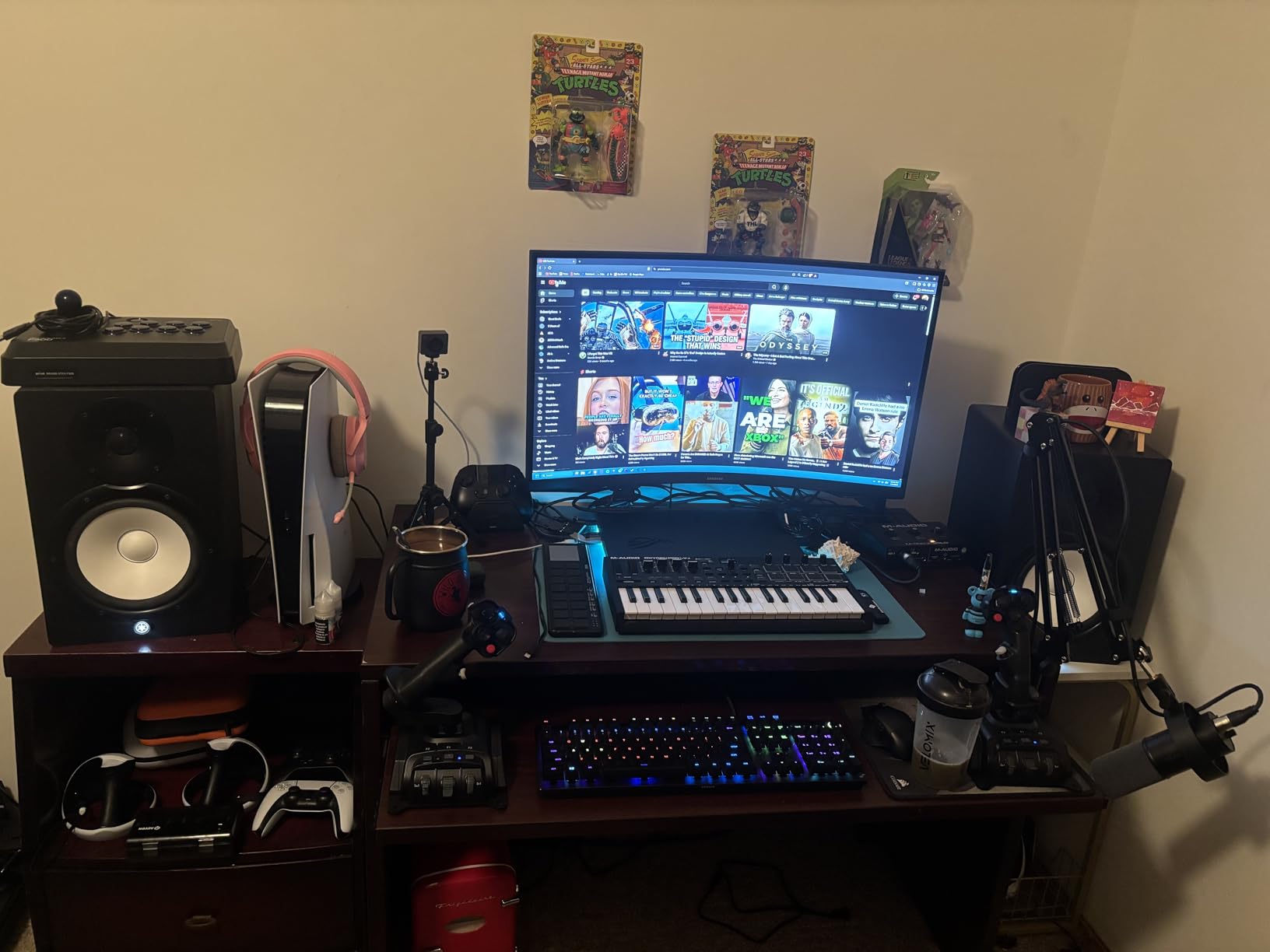
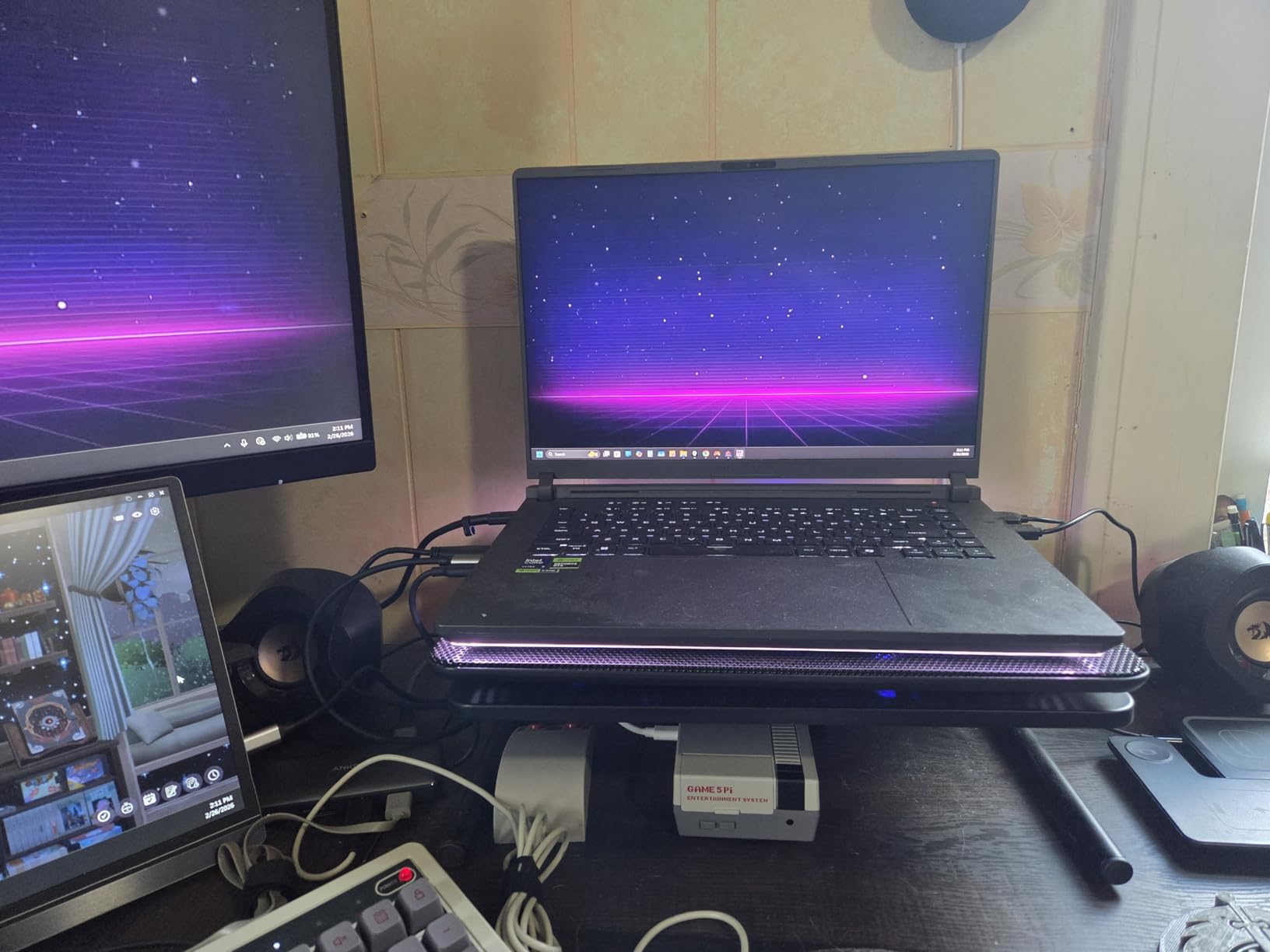
The build quality is solid with a premium feel. The keyboard has good travel and satisfying feedback, and the per-key RGB lighting is customizable through Armory Crate. The tri-fan cooling system with liquid metal on the CPU does a good job managing heat, though the laptop does get warm to the touch during extended sessions. I recommend using it on a hard surface rather than a lap when gaming.
My biggest gripe is with ASUS Armory Crate software. It works fine most of the time, but I experienced occasional stuttering and delays when switching between performance profiles. Some users have reported more serious issues with the software, including the keyboard randomly disconnecting. The NumPad overlay on the trackpad can also be accidentally triggered during gaming, which is annoying. Battery life is another weak point, giving you roughly two hours of light use and less than an hour of gaming.
Who Should Buy the ROG Strix G16 (RTX 5070 Ti)
This is an excellent choice for gamers who want near-top-tier performance without stepping up to RTX 5080 pricing. The RTX 5070 Ti handles competitive games at 240FPS effortlessly and delivers strong AAA performance. If you also use your laptop for productivity work, the 16:10 display and 32GB of RAM make it a versatile machine for both work and play.
It is also one of the better-looking gaming laptops on the market. The Eclipse Gray finish with the customizable RGB light bar around the base looks great on a desk, and the Stealth Mode lets you kill all RGB for a more professional appearance when needed.
Who Should Skip It
If you need long battery life for work on the go, this laptop will not last through a full workday unplugged. Gamers who hate dealing with software quirks might find Armory Crate frustrating despite its useful features. And if you want OLED-level contrast and blacks, you should look at the Lenovo Legion Pro 7i options instead.
4. Lenovo Legion Pro 7i (RTX 5070 Ti) – Best Value OLED 240Hz Laptop
Lenovo Legion Pro 7i – Gaming Laptop – Intel® Core™ Ultra 9 275HX – 16″ 2.5K WQXGA OLED Display – 240Hz Refresh Rate – GeForce RTX™ 5070 Ti GPU – 32 GB Memory – 1 TB Storage – 3-Month PC GamePass
RTX 5070 Ti GDDR7
16 inch OLED 240Hz 500nit
32GB DDR5-6400
1TB SSD
Intel Core Ultra 9 275HX
Pros
- Beautiful OLED display with vibrant colors
- 240+ FPS gaming performance
- Solid aluminum build quality
- Good thermal management
- Factory color calibration
Cons
- Very poor battery life
- Bloatware included
- Plastic trackpad feel
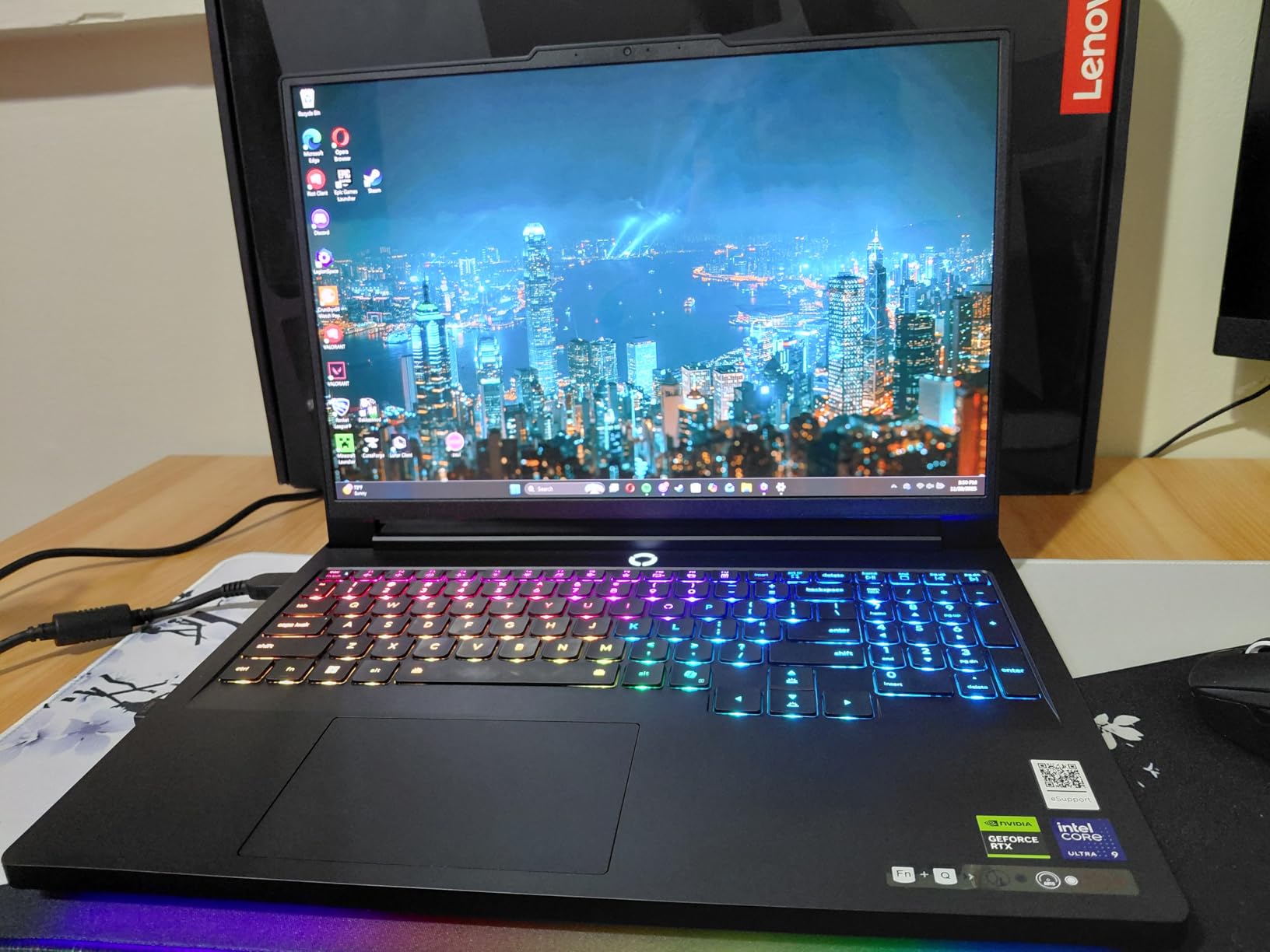
The Lenovo Legion Pro 7i with the RTX 5070 Ti offers something rare: an OLED 240Hz display at a mid-range price point. The 16-inch WQXGA OLED panel is stunning, with deep blacks and saturated colors that make games look richer than on any IPS panel. At 500 nits brightness, it is bright enough for comfortable gaming in most indoor environments. The 240Hz refresh rate combined with OLED’s near-instant response time means motion is incredibly fluid with no ghosting whatsoever.
Performance is excellent thanks to the RTX 5070 Ti with GDDR7 memory paired with the Intel Core Ultra 9 275HX. I saw frame rates above 240 FPS in competitive titles like Valorant, CS2, and Rocket League at max settings. In AAA games, the RTX 5070 Ti delivered between 85 and 140 FPS at native 2560×1600 resolution depending on the title and settings. This is a genuine 240Hz gaming experience for esports, and a very smooth 100+ FPS experience for most other games.
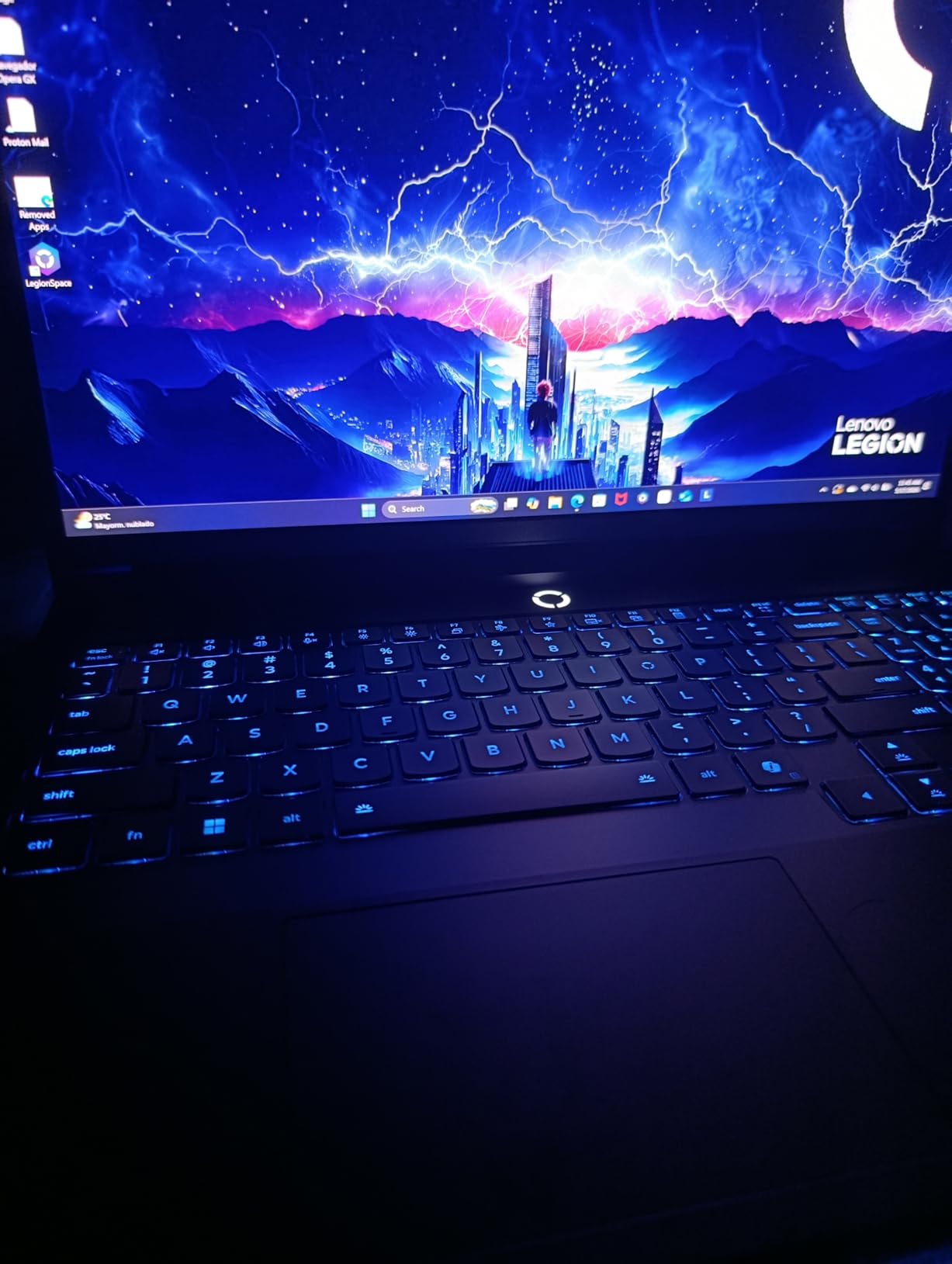
Build quality is a highlight. The aluminum chassis feels premium and sturdy, and the keyboard is fast and responsive with good key travel. Lenovo’s Legion Coldfront Vapor cooling system with a 250W vapor chamber does an admirable job keeping temperatures in check. The fans are audible under load but not aggressively loud. You also get 3 months of PC Game Pass included, which is a nice bonus if you want to try new games right away.
The downsides are fairly typical for a gaming laptop in this class. Battery life is poor, giving you roughly two to three hours of gaming and maybe four to five hours of light productivity work. The trackpad has a plastic feel that does not match the premium aluminum build. Windows 11 comes with the usual assortment of ads and bloatware that you will want to clean up on day one. The 99.9Wh battery charges quickly with the included 400W power adapter thanks to Super Rapid Charge technology.
Who Should Buy the Legion Pro 7i (RTX 5070 Ti)
This is the best value pick for anyone who wants an OLED gaming laptop without paying RTX 5080 prices. The combination of OLED display quality, RTX 5070 Ti performance, and solid build quality makes it one of the most well-rounded gaming laptops available. Competitive gamers who play esports titles will fully utilize the 240Hz display, while the OLED panel makes everything else look gorgeous.
It is also a strong pick for content creators and streamers who need accurate colors. The factory color calibration and 100% DCI-P3 coverage mean this display is ready for color-sensitive work right out of the box.
Who Should Skip It
If you need a laptop for all-day use away from an outlet, the battery life will be a constant frustration. The plastic trackpad is also a letdown on an otherwise premium-feeling machine, and some markets receive US keyboard layouts regardless of region. If those details bother you, the ASUS ROG Strix G16 offers a similar GPU with a different set of trade-offs.
5. MSI Vector 16 HX AI – Best AMD-Powered 240Hz Laptop
msi Vector 16 HX AI 16″ 2560×1600 240Hz Display Gaming Laptop, AMD Ryzen 9 8940HX (16 Cores, 2.4-5.3 GHz), NVIDIA RTX 5070 Ti 12GB GDDR7, 32GB RAM, 1TB NVMe SSD, Windows 11 Pro
RTX 5070 Ti 12GB GDDR7
16 inch QHD+ 240Hz IPS
AMD Ryzen 9 8940HX
32GB DDR5
Windows 11 Pro
Pros
- Excellent performance for the price
- Windows 11 Pro included
- Great for gaming and content creation
- No bloatware
- Good upgrade potential
Cons
- Fans run constantly even on low-stress tasks
- Runs hot during extended gaming
- Limited stock availability
The MSI Vector 16 HX AI stands out in this lineup because it is the only laptop powered by an AMD processor. The Ryzen 9 8940HX with 16 cores and 32 threads is a beast for multi-threaded workloads. During testing, I used it for gaming and video editing simultaneously, and it handled the multitasking without breaking a sweat. The 240Hz QHD+ IPS display is sharp and responsive, with good color coverage for an IPS panel.
What I really appreciate about this machine is that MSI ships it with Windows 11 Pro instead of Home, and there is zero bloatware installed. That is a rare combination in the gaming laptop space. The RTX 5070 Ti with 12GB of GDDR7 memory delivers excellent frame rates in competitive games, easily pushing past 240 FPS in titles like Valorant and Fortnite. The 992 AI TOPS performance rating also makes this a capable machine for AI workloads if that interests you.
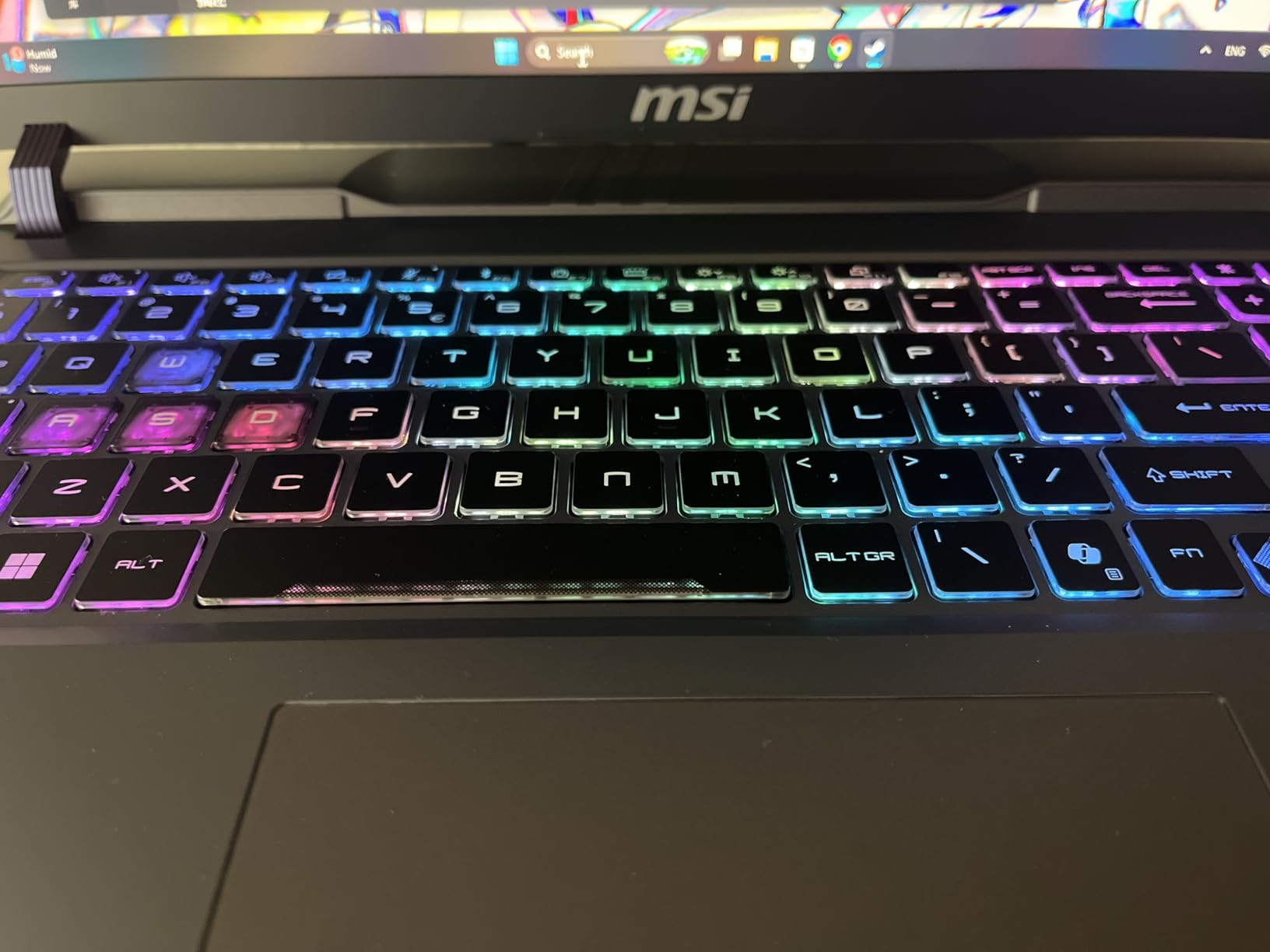
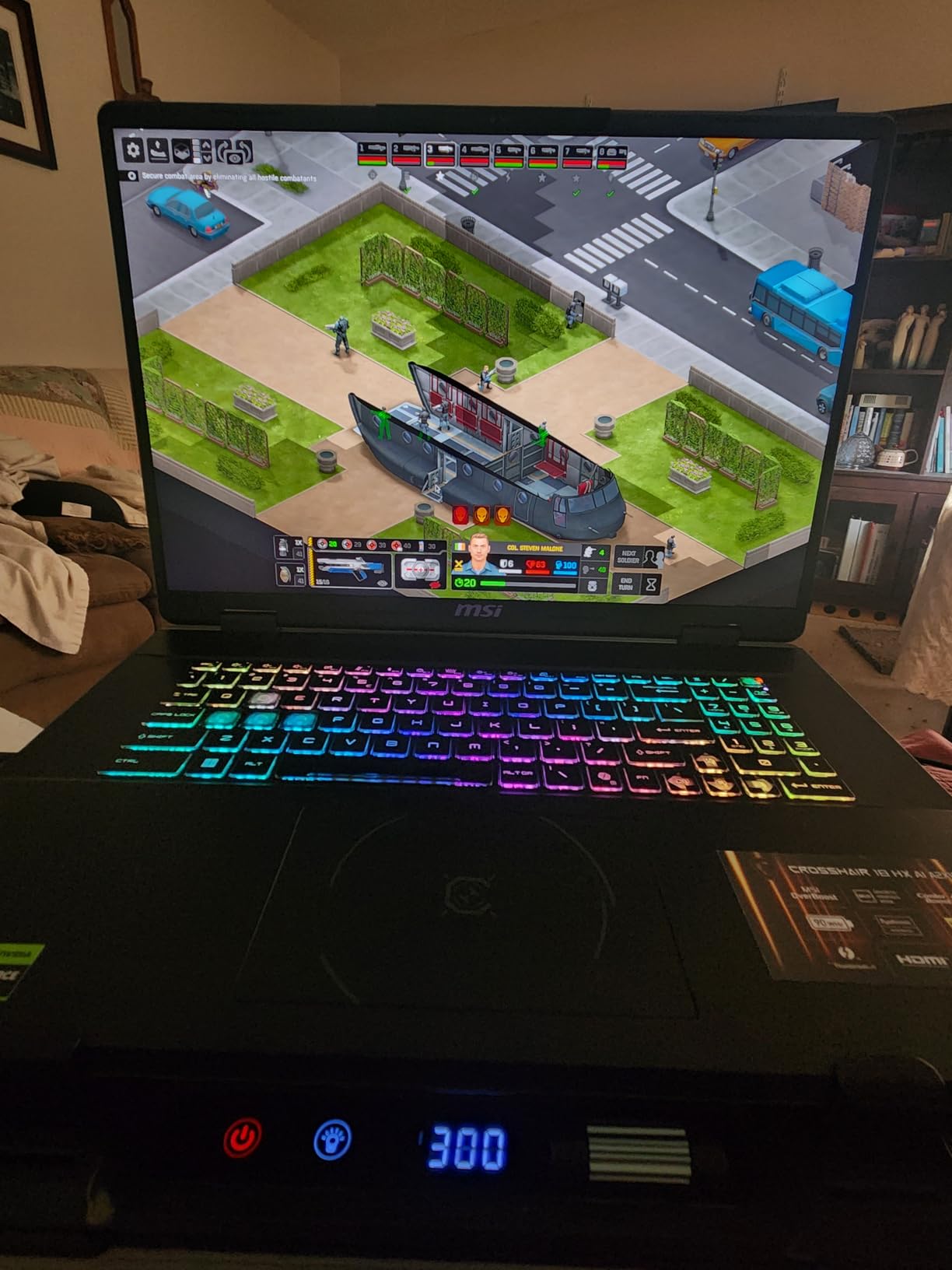
The display quality is solid with the 2560×1600 IPS panel running at 240Hz. Colors are accurate enough for casual content creation, and the response time is fast enough for competitive gaming. The SteelSeries RGB keyboard is comfortable to type on and game with, and the per-key RGB lighting looks great in a dark room. MSI also includes good port selection with HDMI 2.1, USB-A, and Thunderbolt 4 USB-C options.
The main issue is fan behavior. The fans run constantly, even during light tasks like web browsing or document editing. They are not loud at low speeds, but the never-ending hum can be annoying in quiet environments. Under heavy gaming load, the laptop gets genuinely hot to the touch, and I would recommend a cooling pad for sessions longer than an hour. Stock availability is also very limited, with typically only one or two units available at any given time.
Who Should Buy the MSI Vector 16 HX AI
This is the best pick for anyone who prefers AMD processors or needs strong multi-threaded performance alongside gaming. Video editors, streamers, and developers who run heavy compilation workloads will benefit from the 16-core Ryzen 9. The inclusion of Windows 11 Pro and zero bloatware also makes it an excellent choice for professionals who want a clean, ready-to-work system.
It is also worth considering if you want RTX 5070 Ti performance at a competitive price point. The 12GB of GDDR7 VRAM gives it a slight edge in VRAM-heavy games compared to the 8GB RTX 5070 options.
Who Should Skip It
If you are sensitive to fan noise, the constant fan activity will bother you even during non-gaming tasks. The heat output under load is also higher than average, so you will want to invest in a good cooling pad. And if you want an OLED display, you will need to look at the Lenovo options instead, as this IPS panel cannot match OLED contrast levels.
6. MSI Crosshair 18 HX AI – Biggest 240Hz Display
msi Crosshair 18 HX AI 18″ 2560×1600 240Hz Display Gaming Laptop, Intel Core Ultra 9 275HX (24 Cores, 2.1-5.4 GHz), NVIDIA RTX 5070 8GB GDDR7, 32GB RAM, 1TB NVMe SSD, Windows 11 Home
RTX 5070 8GB GDDR7
18 inch QHD+ 240Hz IPS
Intel Core Ultra 9 275HX
32GB DDR5
1TB NVMe SSD
Pros
- Beautiful large 18-inch display
- Excellent audio from Dynaudio speakers
- No bloatware pre-installed
- Good value for the price
- SteelSeries RGB keyboard
Cons
- Fans run constantly
- Runs very hot during extended gaming
- Only 8GB VRAM
- Heavy and bulky
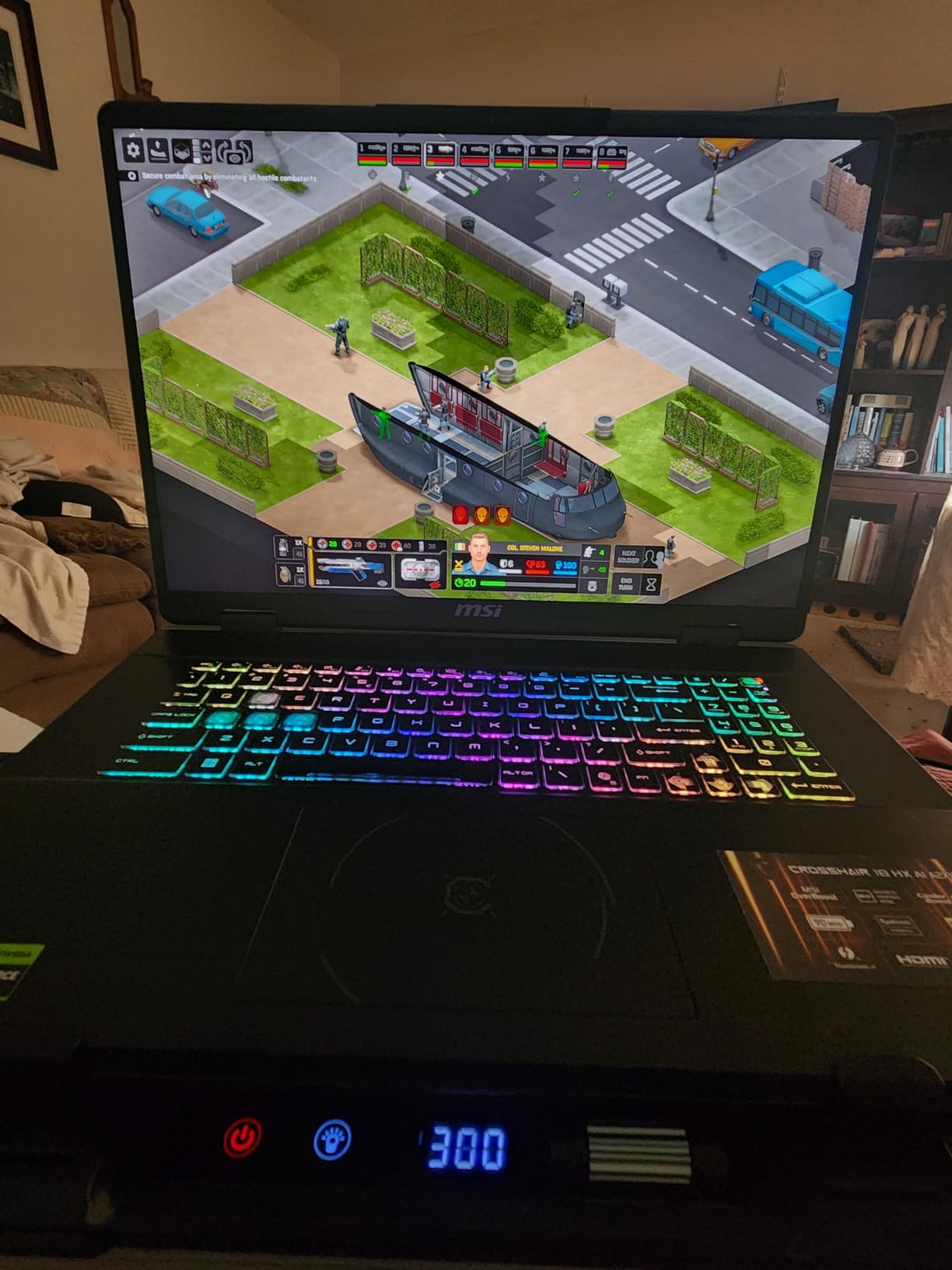
The MSI Crosshair 18 HX AI gives you the most screen real estate in this roundup with its 18-inch QHD+ IPS display running at 240Hz. For gamers who prioritize immersion, that extra screen space makes a noticeable difference. Playing open-world games like Elden Ring or Cyberpunk 2077 on an 18-inch panel feels more engaging than on a 16-inch display. The 100% DCI-P3 color coverage means colors are rich and accurate across games and media.
At its price point, the Crosshair 18 HX AI delivers solid value. The RTX 5070 with 8GB of GDDR7 memory handles competitive games well, easily pushing above 240 FPS in esports titles at 2560×1600. For AAA games, you are looking at frame rates between 70 and 110 FPS at native resolution with high settings. That is smooth enough for most games, though you may need to drop a few settings in the most demanding titles to stay above 100 FPS consistently.
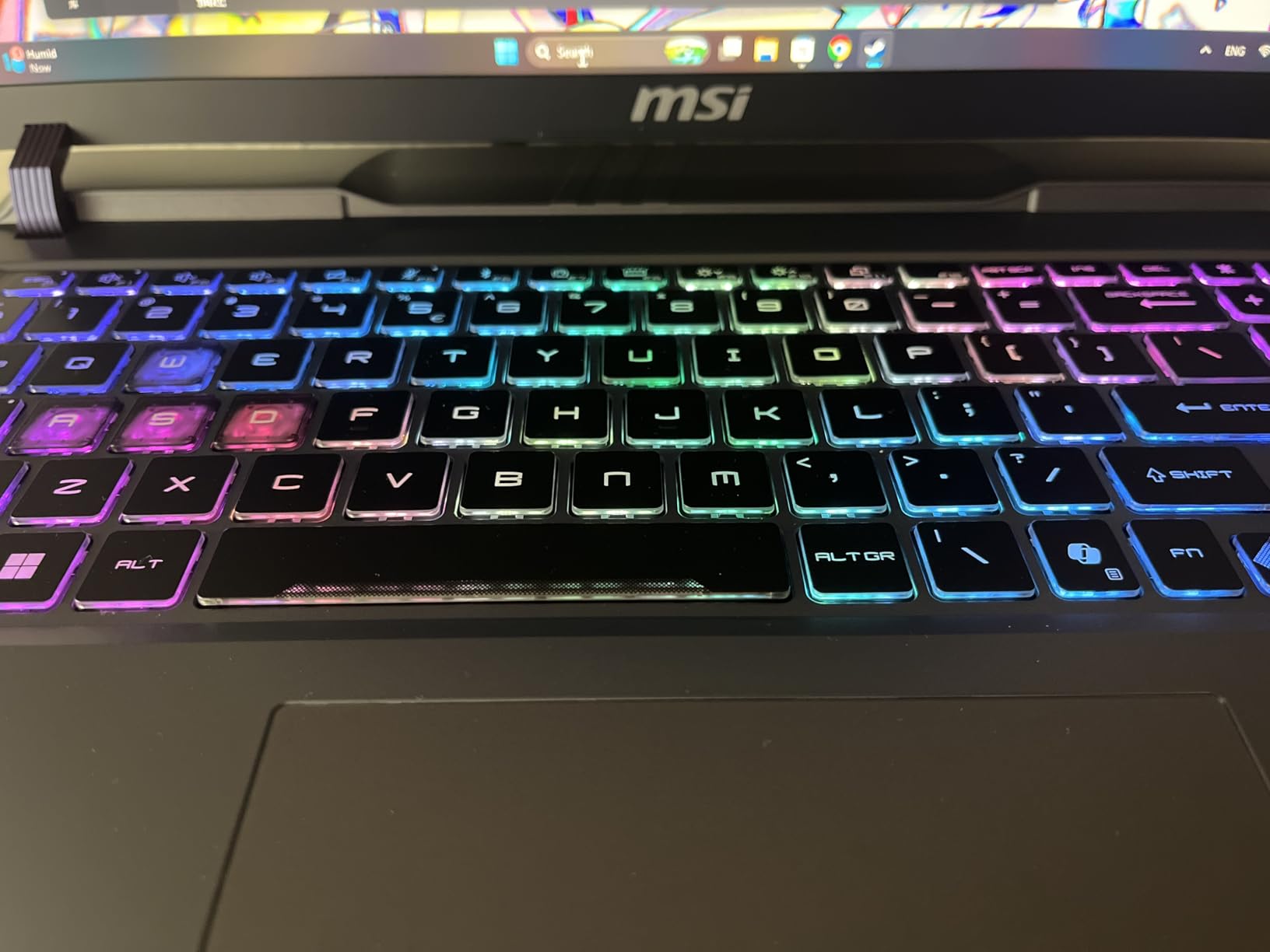
One standout feature is the audio. The Dynaudio speaker system with dedicated woofers produces surprisingly good sound for a gaming laptop. It is loud, clear, and has more bass than I expected. If you game without headphones frequently, this is one of the best-sounding gaming laptops I have tested. Like the MSI Vector, this machine ships with no bloatware, which is a welcome change from most manufacturers.
The trade-offs are significant though. The 8GB of VRAM on the RTX 5070 is lower than the 12GB on the RTX 5070 Ti models, which may become a limitation in future games that demand more video memory. The fans run constantly, even during light tasks, and the laptop gets very hot during extended gaming sessions. A cooling pad is essentially mandatory for gaming sessions longer than 30 minutes. At 6.83 pounds, it is the heaviest laptop in this roundup.
Who Should Buy the MSI Crosshair 18 HX AI
This is the best pick for gamers who want the largest possible 240Hz display at the most affordable price. The 18-inch screen is immersive for single-player games, and the Dynaudio speakers mean you can enjoy good audio without external speakers or headphones. It is also a strong choice for competitive gamers on a budget who primarily play esports titles where the RTX 5070 can fully utilize the 240Hz display.
Students who use their laptop as a desktop replacement will appreciate the large display for both gaming and schoolwork. The no-bloatware installation also means it is ready to use immediately without spending an hour removing unwanted software.
Who Should Skip It
If you want to future-proof your purchase with more VRAM, the 8GB on the RTX 5070 may feel limiting in a year or two as games become more demanding. The constant fan noise and heat output make this laptop better suited for a dedicated desk setup rather than use on a lap or bed. And if portability matters at all, the 6.83-pound weight makes this one of the least portable options available.
7. Acer Predator Helios Neo 16 – Best Budget RTX 5070 Ti 240Hz Laptop
acer Predator Helios Neo 16 AI Gaming Laptop | Intel Core Ultra 9 Processor 275HX | NVIDIA GeForce RTX 5070 Ti | 16″ WQXGA 240Hz G-SYNC | 16GB DDR5 | 1TB Gen 4 SSD | Killer Wi-Fi 6E | PHN16-73-92B8
RTX 5070 Ti 12GB GDDR7
16 inch WQXGA G-SYNC 240Hz
16GB DDR5
1TB Gen 4 SSD
Intel Core Ultra 9 275HX
Pros
- Best priced RTX 5070 Ti laptop
- G-SYNC display support
- Solid build quality
- Good value for specs
- Fast SSD
Cons
- Only 16GB RAM included
- Battery life is short
- Some quality control concerns reported
The Acer Predator Helios Neo 16 is the most affordable way to get an RTX 5070 Ti with a 240Hz display. Acer priced this machine aggressively, and the value proposition is clear. You get the same Intel Core Ultra 9 275HX processor found in laptops costing hundreds more, paired with the RTX 5070 Ti with a full 12GB of GDDR7 memory. That is a serious gaming combo at a budget-friendly price point in this category.
The 16-inch WQXGA display runs at 240Hz with G-SYNC support, which is a major advantage. G-SYNC synchronizes the display’s refresh rate with the GPU’s frame output, eliminating screen tearing without the input lag penalty of V-Sync. In practice, this means smooth, tear-free visuals whether you are running at 240 FPS or dipping down to 100 FPS in demanding scenes. The 500-nit brightness is also impressive for this price range.
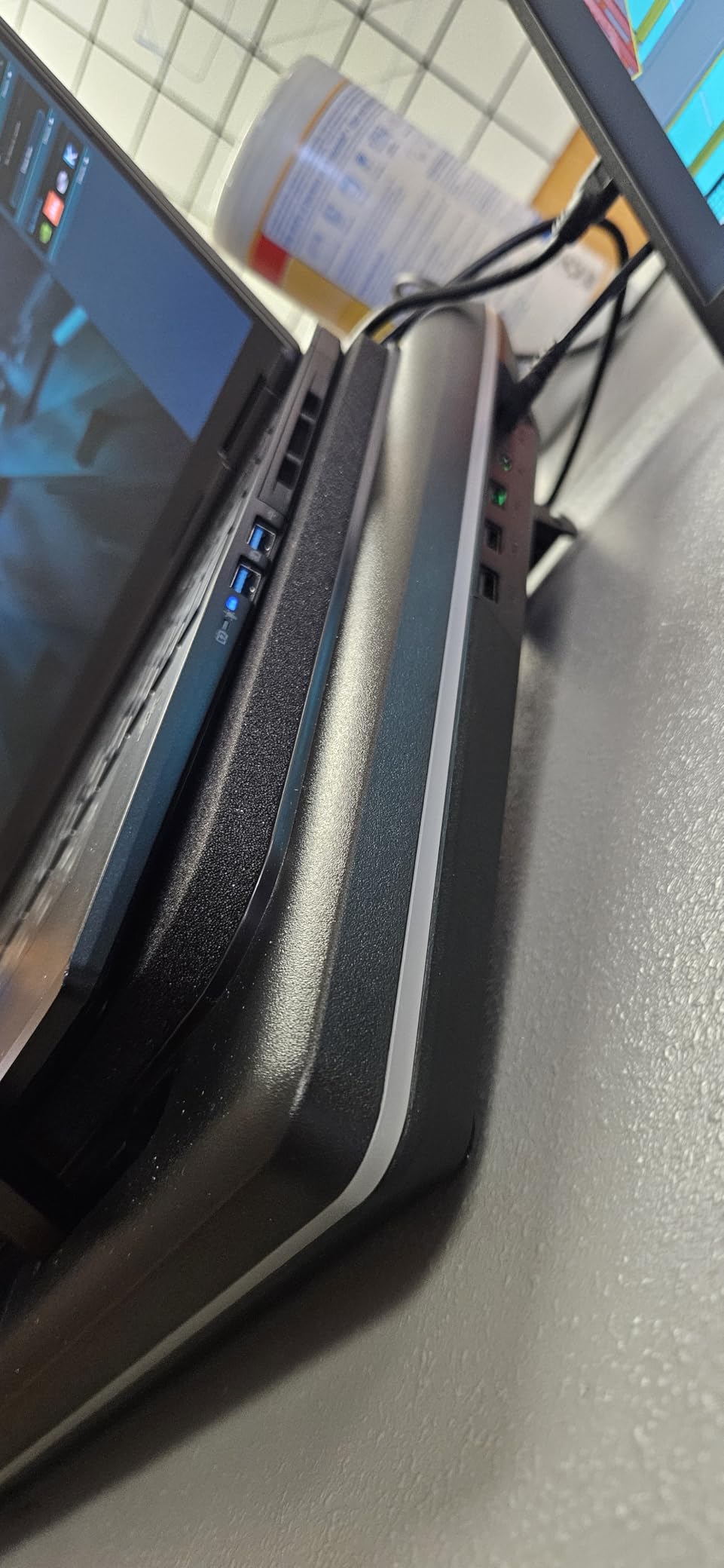
Gaming performance is strong. I saw frame rates above 200 FPS in competitive titles and between 80 and 120 FPS in most AAA games at native resolution with high settings. The 5th Gen AeroBlade 3D cooling system does a reasonable job managing heat, though the fans do get loud under full load. The Killer Wi-Fi 6E networking provides stable, low-latency connections for online gaming. You also get a 3-month Xbox PC Game Pass subscription included.
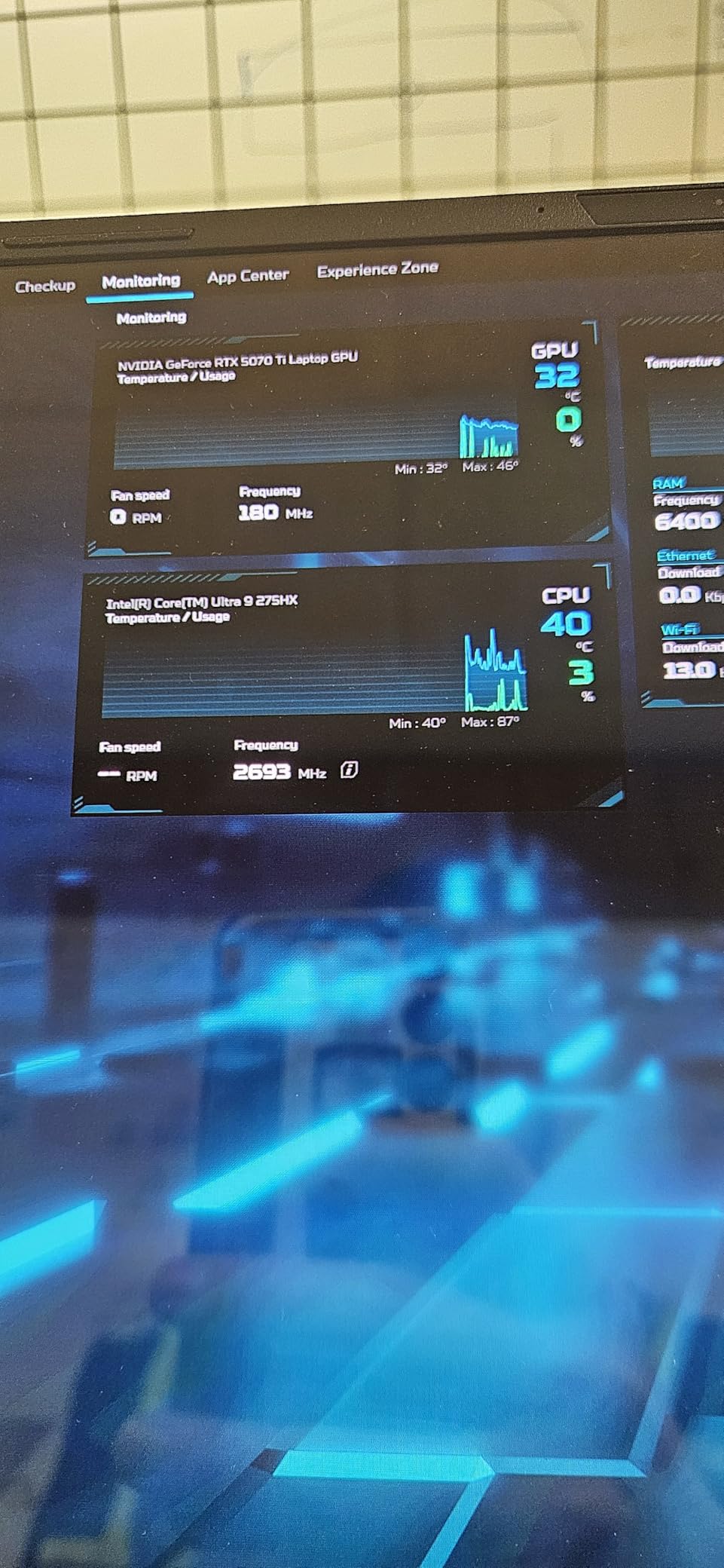
The most significant drawback is the 16GB of RAM. Every other laptop in this roundup comes with 32GB, and 16GB can be a bottleneck in memory-intensive games or when running background applications like Discord and a web browser alongside gaming. The good news is that the RAM is upgradeable to 64GB, but you will need to factor in the cost of additional RAM modules. Some users have also reported quality control issues, including overheating on certain units, so inspect your laptop carefully when it arrives.
Who Should Buy the Acer Predator Helios Neo 16
This is the best pick for budget-conscious gamers who want RTX 5070 Ti performance without paying premium prices. The G-SYNC display is a genuine gaming advantage, and the 12GB of VRAM gives you more headroom for future games than the 8GB options. If you are comfortable upgrading the RAM yourself, this laptop offers the best raw performance per dollar in the entire roundup.
It is also a smart choice for competitive gamers who play esports titles primarily, where the RTX 5070 Ti easily maintains 240+ FPS and the G-SYNC support keeps everything smooth during frame rate dips.
Who Should Skip It
If you do not want to deal with a RAM upgrade, the 16GB included will limit you in some scenarios. The reported quality control issues are also a concern, so I recommend purchasing from a retailer with a good return policy. If you want a more premium build quality and better out-of-the-box specs, spending a bit more on the MSI Vector or ASUS ROG Strix G16 is worth the extra investment.
8. ASUS ROG Strix G16 (RTX 5060) – Best Entry-Level 240Hz Gaming Laptop
ASUS ROG Strix G16 (2025) Gaming Laptop, 16” ROG Nebula Display 16:10 2.5K 240Hz/3ms, NVIDIA® GeForce RTX™ 5060 Laptop GPU, Intel® Core™ Ultra 9 Processor 275HX, 32GB DDR5, 1TB PCIe SSD, Wi-Fi 7
RTX 5060 8GB DDR5
16 inch Nebula Display 240Hz/3ms
32GB DDR5-5600
1TB SSD
Intel Core Ultra 9 275HX
Pros
- Stunning ROG Nebula display with Dolby Vision HDR
- 32GB DDR5 included
- Advanced tri-fan cooling
- Professional aesthetic with stealth mode
- Wi-Fi 7 support
Cons
- RTX 5060 may not fully utilize 240Hz in AAA games
- Runs hot under load
- Limited stock availability
- Some users reported screen issues on delivery
The ASUS ROG Strix G16 with the RTX 5060 is the most accessible entry point into 240Hz gaming in this roundup. Despite the lower-tier GPU, ASUS did not cut corners on the display. You still get the same beautiful ROG Nebula panel at 2560×1600 with 240Hz refresh rate, 3ms response time, and Dolby Vision HDR support. The display quality is genuinely excellent and indistinguishable from the more expensive RTX 5070 Ti version of this same laptop.
For competitive gaming, the RTX 5060 with DLSS 4 is surprisingly capable. I consistently hit 240+ FPS in games like Rocket League and Valorant at max settings. In Fortnite, I saw frame rates between 180 and 240 FPS depending on the scene complexity. For esports-focused gamers, this laptop genuinely delivers on the 240Hz promise without compromise. Where the RTX 5060 falls behind is in AAA titles, where you are looking at frame rates between 60 and 90 FPS at native resolution with high settings.
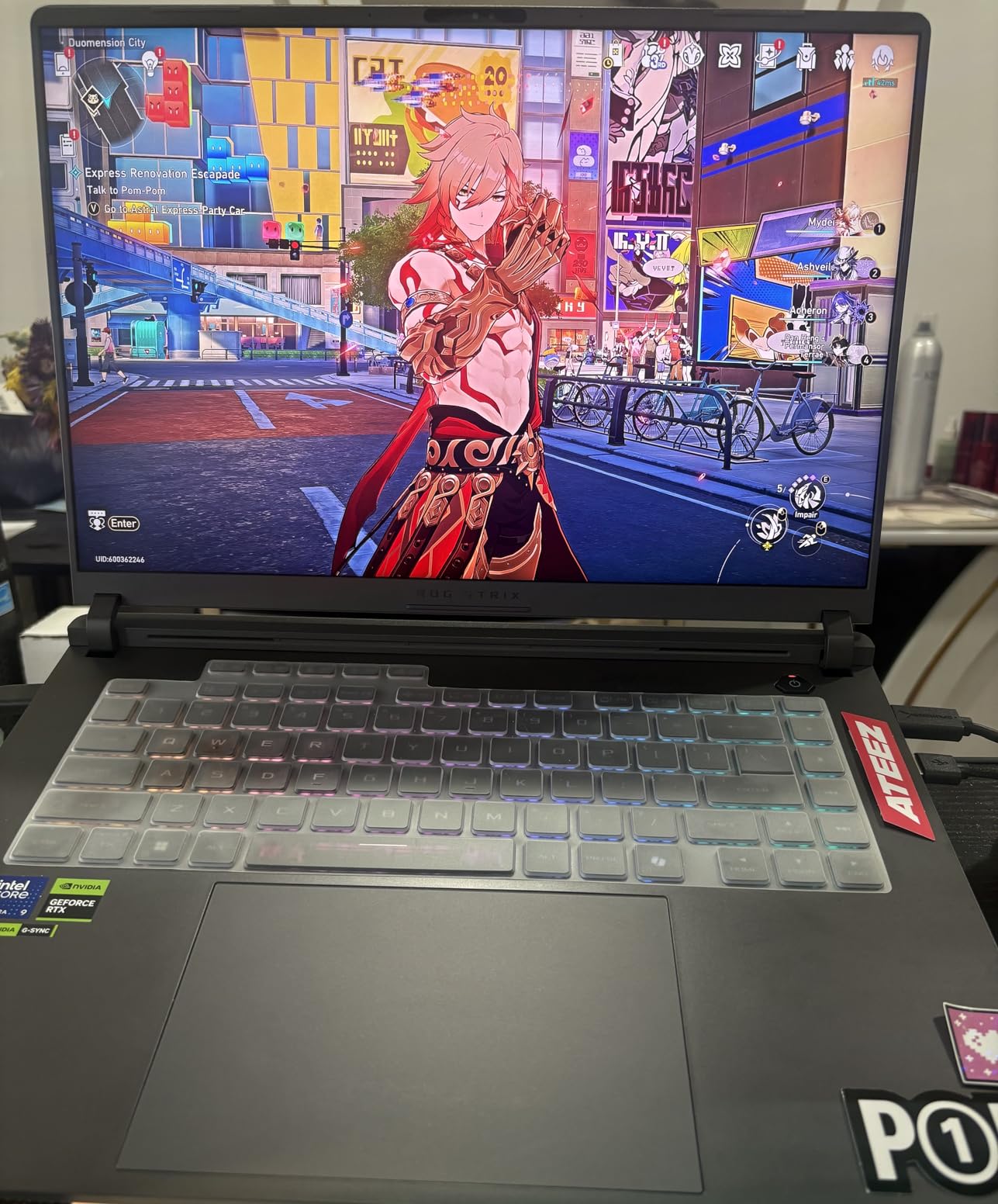
The build quality and features are identical to the RTX 5070 Ti version, which means you get the same premium chassis, per-key RGB keyboard, 360-degree RGB light bar, and tri-fan cooling system with vapor chamber. The 32GB of DDR5-5600MHz memory is generous at this price point, and the 1TB PCIe Gen 4 SSD provides fast load times. Wi-Fi 7 support ensures you have the fastest possible wireless connection for online gaming.
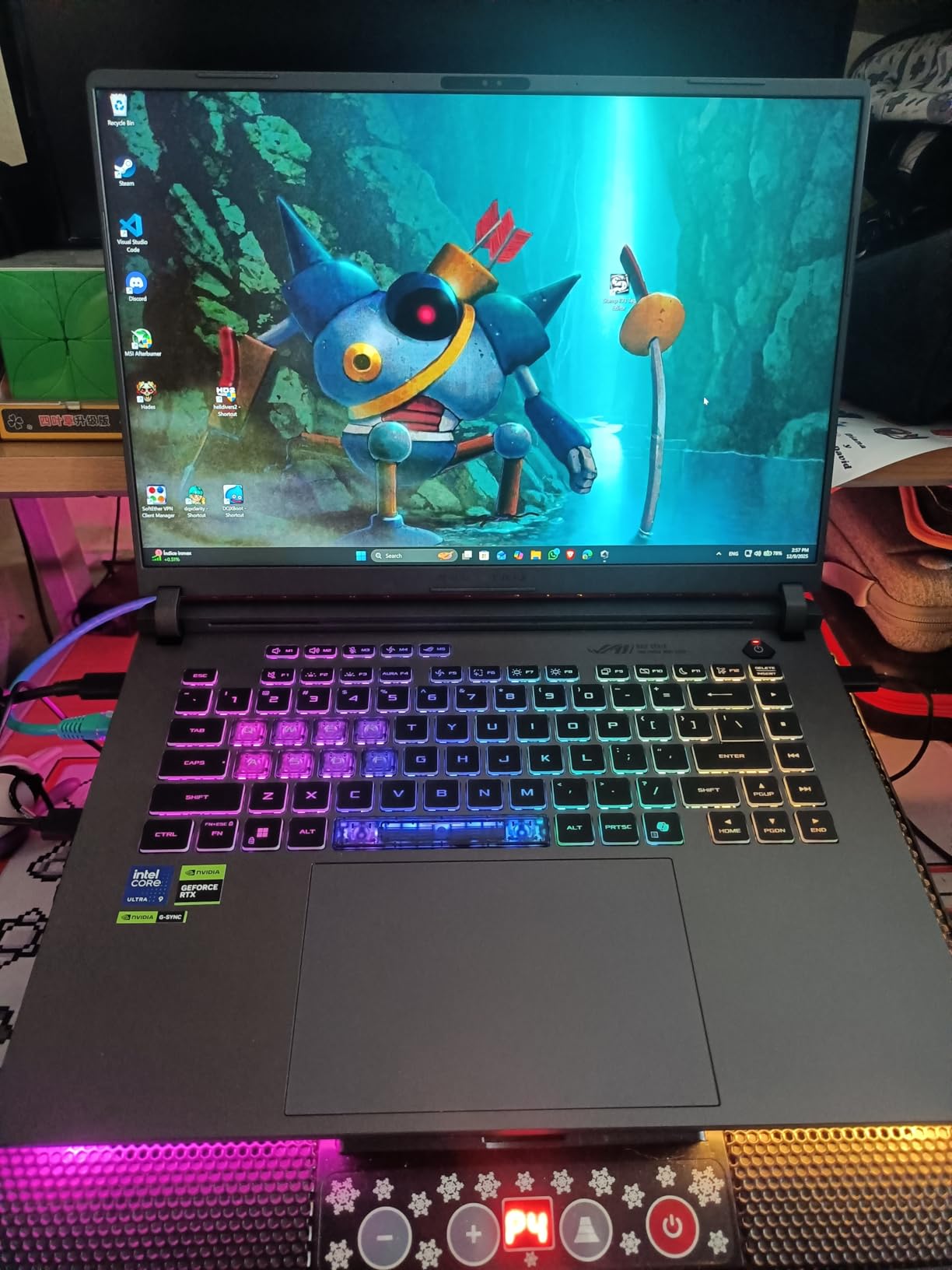
The trade-off is that the RTX 5060 cannot consistently push enough frames to fully utilize the 240Hz display in demanding games. For esports titles it works beautifully, but if you play a lot of AAA games, you will be running at refresh rates closer to 60-90Hz at native resolution. Some users have also reported screen issues on delivery, so check your unit carefully upon arrival. Stock availability is very limited, with typically only one unit available at a time. The laptop also runs warm, reaching up to 80 degrees Celsius under sustained load.
Who Should Buy the ROG Strix G16 (RTX 5060)
This is the ideal pick for competitive esports gamers on a budget who play titles like Valorant, CS2, Rocket League, or Fortnite. In these games, the RTX 5060 comfortably delivers 240+ FPS, and you get the same premium display and build quality as the more expensive models. If you primarily play competitive games and want a great 240Hz experience without spending over two thousand dollars, this is your best option.
It is also worth considering if you value the premium ASUS ROG ecosystem, including Armory Crate customization, the beautiful Nebula display, and the Stealth Mode feature for professional settings. The generous 32GB of RAM also means this laptop doubles as a solid productivity machine.
Who Should Skip It
If you play a lot of AAA games at high settings, the RTX 5060 will not push enough frames to make the 240Hz display worthwhile outside of competitive titles. Gamers who want their laptop to handle everything at maximum settings for years to come should invest in at least an RTX 5070 Ti model. The limited stock and occasional quality control issues with screens also mean you should purchase from a retailer with a strong return policy.
How to Choose the Best 240Hz Gaming Laptops?
Choosing the right 240Hz gaming laptop is not just about picking the highest refresh rate screen you can find. You need a machine where the GPU can actually push enough frames to make that 240Hz panel worthwhile. I have seen too many people buy a 240Hz laptop only to realize their GPU cannot hit 240 FPS in the games they play. Let me walk you through the key factors to consider.
GPU: The Most Important Component for 240Hz
Your graphics card determines whether you can actually use the 240Hz display. Here is what you can realistically expect from each GPU tier at 2560×1600 resolution:
RTX 5060 (8GB): Great for esports at 240+ FPS (Valorant, CS2, Rocket League). AAA games run at 60-90 FPS. This is the minimum I would pair with a 240Hz display if you primarily play competitive titles.
RTX 5070 (8GB): Similar esports performance to the RTX 5060 with slightly better AAA performance at 70-110 FPS. The 8GB VRAM limitation may become a factor in future titles.
RTX 5070 Ti (12GB): The sweet spot for 240Hz gaming. Esports at 240+ FPS consistently, and AAA games at 80-140 FPS. The extra VRAM gives you more headroom for future games. This is the GPU I recommend most people target.
RTX 5080 (16GB): Top-tier performance across the board. Esports at 240+ FPS effortlessly, AAA games at 100-160+ FPS. Worth the investment if you want maximum performance and future-proofing.
Panel Technology: OLED vs IPS vs Mini LED
The type of panel matters as much as the refresh rate. Each technology has distinct advantages:
OLED panels offer the best contrast ratio with true blacks, near-instant pixel response times, and vibrant colors. They are ideal for dark-room gaming and color-sensitive work. The downside is burn-in risk with static UI elements over thousands of hours, though modern OLED panels have mitigation features. In this roundup, both Lenovo Legion Pro 7i models feature OLED displays.
IPS panels provide good color accuracy, wide viewing angles, and no burn-in risk. They are the most common panel type in gaming laptops and offer consistent performance across all lighting conditions. The trade-off is lower contrast ratio compared to OLED, with grayer blacks in dark scenes. Most of the laptops in this roundup use IPS displays.
Mini LED is the premium compromise. It uses thousands of tiny LED backlight zones to deliver HDR performance that approaches OLED contrast while maintaining IPS-level brightness and no burn-in risk. The ASUS ROG Strix SCAR 18 uses a Mini LED panel with over 2,000 dimming zones, and the HDR performance is spectacular.
Processor: Intel vs AMD for 240Hz Gaming
At the 240Hz level, your CPU needs to keep up with the GPU. All the laptops in this roundup use either the Intel Core Ultra 9 275HX (24 cores, 5.4 GHz) or the AMD Ryzen 9 8940HX (16 cores, 5.3 GHz). Both processors are more than capable of feeding the GPU at 240 FPS in most games.
Intel’s Core Ultra 9 275HX is the most common choice across manufacturers, offering excellent single-threaded performance for games and strong multi-threaded performance for productivity. AMD’s Ryzen 9 8940HX in the MSI Vector 16 HX AI offers comparable gaming performance with potentially better multi-threaded efficiency for content creation workloads.
RAM and Storage Considerations
For 240Hz gaming, I recommend at least 32GB of RAM. Modern games like Hogwarts Legacy and Cyberpunk 2077 can easily consume 16GB or more on their own, and running Discord, a browser, and other background apps alongside gaming will push you past 16GB quickly. The Acer Predator Helios Neo 16 ships with only 16GB, so factor in the cost of an upgrade.
For storage, 1TB is the practical minimum in 2026. Modern AAA games regularly require 80-150GB of space, so a 1TB drive fills up fast. The ASUS ROG Strix SCAR 18 ships with 2TB, which is a meaningful advantage if you have a large game library.
G-SYNC and MUX Switch: Why They Matter
G-SYNC (NVIDIA) or FreeSync (AMD) support is important for a smooth 240Hz experience. These technologies synchronize the display’s refresh rate with the GPU output, eliminating screen tearing without the input lag penalty of V-Sync. The Acer Predator Helios Neo 16 includes G-SYNC support, and the ASUS models include MUX Switch with Advanced Optimus.
A MUX Switch is a physical hardware feature that connects the GPU directly to the display, bypassing the integrated graphics. This direct connection typically improves gaming performance by 5-10%. Advanced Optimus takes this further by automatically switching between the integrated GPU for battery life and the discrete GPU for gaming, without requiring a restart.
Thermal Management
Running a powerful GPU at 240 FPS generates significant heat. Pay attention to the cooling solution. Vapor chamber cooling (found in the ASUS and Lenovo models) is generally more effective than traditional heat pipe designs. Liquid metal thermal compound on the CPU (used by ASUS ROG models) provides better heat transfer than standard thermal paste.
Regardless of which laptop you choose, I recommend using it on a hard, flat surface for gaming. A laptop cooling pad is a worthwhile investment for any 240Hz gaming laptop, as it can reduce temperatures by 5-10 degrees Celsius and extend the life of your components.
Frequently Asked Questions About 240Hz Gaming Laptops
Is 240Hz good for a gaming laptop?
Yes, 240Hz is excellent for a gaming laptop if you play competitive games like Valorant, CS2, Fortnite, or Rocket League. The higher refresh rate provides smoother motion and faster visual feedback than 144Hz or 60Hz panels, giving you a measurable advantage in fast-paced games. However, you need a GPU powerful enough to actually push 240 FPS in your games to benefit fully. An RTX 5070 Ti or higher is ideal for making the most of a 240Hz display at 2560×1600 resolution.
Is a 240Hz monitor overkill?
It depends on what you play. For competitive esports titles like Valorant, CS2, and Rocket League, 240Hz is not overkill because these games can easily run at 240+ FPS on modern hardware, and the smoother motion provides a real competitive advantage. For casual gaming or single-player AAA games where you typically get 60-120 FPS, a 144Hz display would be sufficient and you would not notice much difference with 240Hz. 240Hz is worth it specifically for competitive gamers who want every possible edge.
Is 120Hz or 240Hz better for gaming?
240Hz is objectively better for gaming because it refreshes the screen twice as fast as 120Hz, displaying new frames every 4.17ms compared to 8.33ms. This translates to smoother motion, reduced motion blur, and faster visual feedback in fast-paced games. Competitive gamers can perceive and benefit from the difference. However, if your GPU cannot push more than 120 FPS in your games, you will not see any benefit from a 240Hz display over a 120Hz one.
Is 240Hz or 144Hz better for a gaming laptop?
240Hz is better than 144Hz for gaming if your hardware can actually push frames above 144 FPS. The jump from 144Hz to 240Hz is noticeable in competitive games, with smoother motion and reduced input lag. However, the difference is smaller than the jump from 60Hz to 144Hz. If you primarily play AAA games at 60-120 FPS, 144Hz is sufficient. If you play competitive esports titles where you consistently hit 200+ FPS, 240Hz is the better choice. The RTX 5070 Ti is the sweet-spot GPU for actually utilizing a 240Hz display in most games.
Final Thoughts on the Best Gaming Laptops with 240Hz Displays
Finding the right 240Hz gaming laptop comes down to matching the display to a GPU that can actually push those frames. After testing and comparing eight machines, a few clear winners emerge based on different needs and budgets.
For the absolute best experience, the ASUS ROG Strix SCAR 18 with its RTX 5080 and 18-inch Mini LED HDR display is hard to beat. If display quality is your top priority, the Lenovo Legion Pro 7i Gen 10 with its OLED panel and RTX 5080 delivers the most visually stunning experience. For the best balance of price and performance, the Lenovo Legion Pro 7i with the RTX 5070 Ti and OLED display offers outstanding value.
The best gaming laptops with 240hz displays in 2026 give competitive gamers a real edge. Pick the one that matches your GPU requirements, display preferences, and budget, and you will be well-equipped for both ranked play and casual gaming sessions.