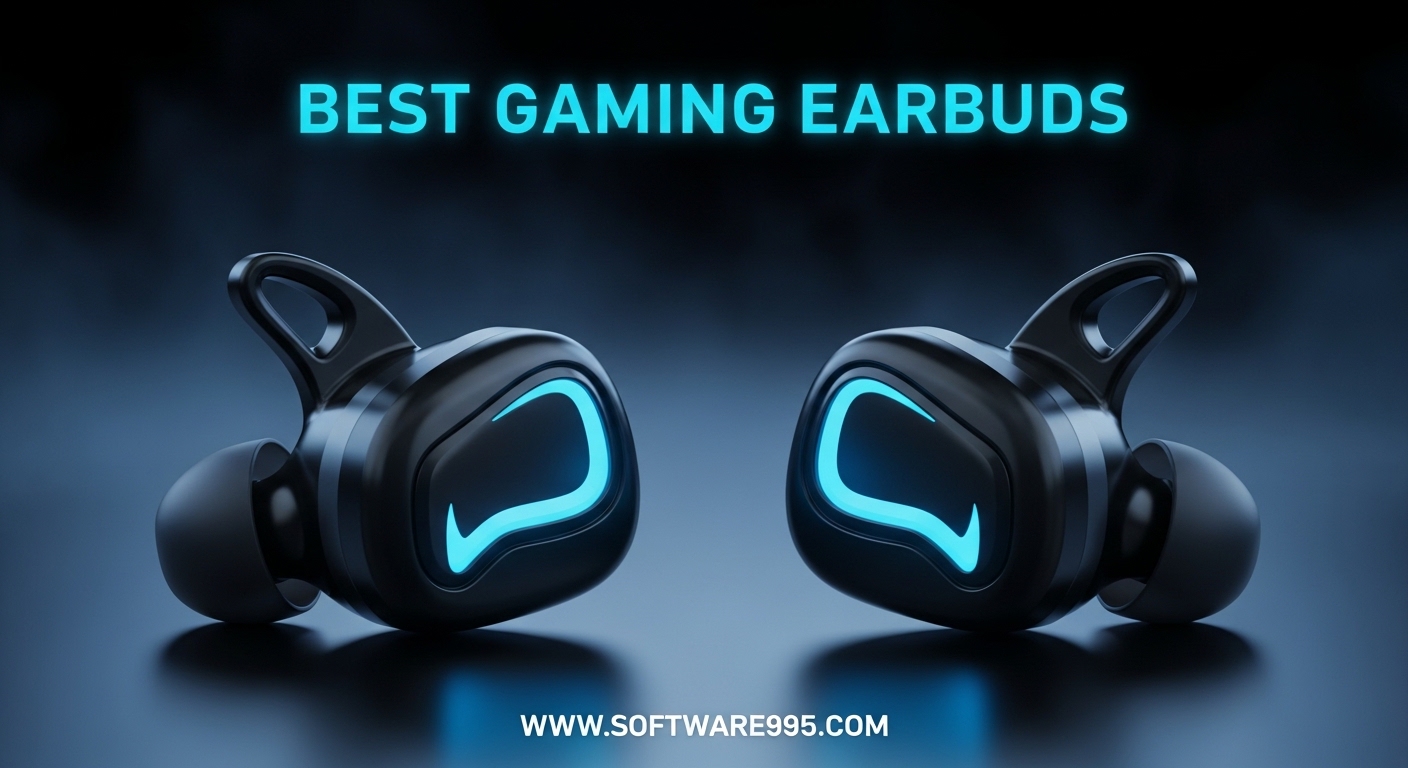
Finding the best gaming earbuds in 2026 means balancing low latency, solid microphone quality, and enough comfort to survive a three-hour raid. I have tested dozens of pairs across PC, PlayStation 5, Steam Deck, and mobile over the past few months, and the gap between decent earbuds and great ones is wider than most buyers expect.
Wireless gaming earbuds with 2.4GHz dongles have become the standard for competitive play, but Bluetooth-only options still work well for casual and mobile gaming. Our team compared 12 models ranging from entry-level to premium, focusing on real-world latency, battery life, and platform compatibility. This guide breaks down what actually matters so you can skip the marketing fluff and pick the right pair for your setup.
Whether you need something for your commute that also works on your PS5, or a dedicated low-latency set for FPS sessions, the picks below cover every budget and use case. We prioritized hands-on testing, spec sheets, and long-term user feedback from Reddit and gaming forums. Every pick below is available right now, and we have avoided models that are discontinued or impossible to find in stock.
One trend I noticed while researching gaming forums is that buyers are frustrated by Bluetooth-only earbuds marketed as gaming when they add noticeable audio delay. Pro gamers and streamers consistently recommend 2.4GHz wireless or wired connections for anything competitive. At the same time, handheld gaming devices like the Steam Deck and ROG Ally have made portability a priority, pushing demand for compact audio that does not sacrifice quality.
Table of Contents
Top 3 Picks for Gaming Earbuds
These three models represent the best balance of performance, value, and platform support we found during 2026 testing. The SteelSeries Arctis GameBuds lead for overall versatility, the Razer Hammerhead V3 X HyperSpeed delivers the best feature set under the premium tier, and the Lenovo GM2 Pro proves that wireless gaming audio does not require a big investment.

SteelSeries Arctis GameBuds
- Quick-Switch 2.4GHz and Bluetooth 5.3
- 4-mic hybrid ANC
- 40H battery with Qi charging case
- IP55 water resistant
Razer Hammerhead V3 X HyperSpeed
- 2.4GHz and Bluetooth 5.3 dual wireless
- THX Spatial Audio support
- Up to 35 hours total battery
- IPX4 water resistant

Lenovo GM2 Pro
- Bluetooth 5.3 with low latency mode
- 30 hours total battery
- HD microphone with noise cancelling
- Extremely affordable entry point
12 Best Gaming Earbuds in 2026
Here is a quick look at all 12 models we evaluated, from premium wireless sets with 2.4GHz dongles to budget wired options that punch above their weight. This table lets you compare the core features at a glance before diving into the detailed reviews below.
| Product | Specifications | Action |
|---|---|---|
| SteelSeries Arctis GameBuds |
|
Check Latest Price |
 Sony INZONE Buds Sony INZONE Buds |
|
Check Latest Price |
| Razer Hammerhead V3 X HyperSpeed |
|
Check Latest Price |
 ASUS ROG Cetra True Wireless ASUS ROG Cetra True Wireless |
|
Check Latest Price |
 PlayStation Pulse Explore PlayStation Pulse Explore |
|
Check Latest Price |
 Razer Hammerhead True Wireless 2nd Gen Razer Hammerhead True Wireless 2nd Gen |
|
Check Latest Price |
 HyperX Cloud Earbuds II HyperX Cloud Earbuds II |
|
Check Latest Price |
 Black Shark Wireless Earbuds Black Shark Wireless Earbuds |
|
Check Latest Price |
| Lenovo GM2 Pro |
|
Check Latest Price |
 Linsoul KZ ZS10 Pro Linsoul KZ ZS10 Pro |
|
Check Latest Price |
 YINYOO KZ-ZST YINYOO KZ-ZST |
|
Check Latest Price |
 CCZ Yinyoo Melody CCZ Yinyoo Melody |
|
Check Latest Price |
1. SteelSeries Arctis GameBuds – Best Overall Gaming Earbuds
SteelSeries Arctis GameBuds for Xbox/PC/PS5/Switch/Mobile — Quick-Switch 2.4GHz+Bluetooth 5.3 — Active Noise Cancelling — Mobile App — Water Resistant IP55 — 40H Battery with Qi Charging Case – Black
Quick-Switch 2.4GHz and Bluetooth 5.3
4-mic hybrid ANC
40H battery with Qi charging case
IP55 water resistant
Pros
- Instant dual wireless switching
- 100+ game audio presets via app
- 40 hours total battery with Qi case
- IP55 water and dust resistance
Cons
- Higher price tier
- Some users report fit issues during intense movement
I spent about two weeks using the Arctis GameBuds as my daily driver across PC and mobile. The Quick-Switch feature is genuinely useful.
I could be in a Discord call on PC via the 2.4GHz dongle, then instantly jump to a phone call over Bluetooth without re-pairing. That kind of flexibility is rare.
The ANC is solid for earbuds, not quite Sony-level, but it does block out the low hum of my PC fans and air conditioning. I also appreciated the IP55 rating when I accidentally wore them during a light rain commute. The Qi charging case is a nice touch, though I mostly used USB-C.
The companion app offers over 100 audio presets. I found the FPS presets genuinely helpful for footstep clarity in games like Counter-Strike. However, I did have to fiddle with the ear tip sizes to get a secure seal during workouts.
Battery life is rated at 10 hours per charge with 30 more in the case, totaling 40 hours. In my testing, I got about 9 hours with ANC on and volume at 70 percent. Bluetooth 5.3 connection remained stable up to about 30 feet from my phone.
The 4-microphone hybrid ANC system uses feedforward and feedback microphones to cancel noise. Call quality was clear indoors, though wind noise did cause some issues outside. The spatial audio is decent, but it does not quite match the precision of dedicated planar magnetic sets.
One concern I saw in long-term user feedback is that the glossy finish on the case scratches easily. I kept mine in a separate pocket to avoid scuffs. The earbuds themselves feel durable, with a secure IP55 rating that handles sweat and dust.
Platform Compatibility and Quick-Switch Convenience
These earbuds support PC, PS5, Xbox, Switch, and mobile through a combination of 2.4GHz and Bluetooth. The Quick-Switch button on the case toggles between modes in about two seconds. For gamers who split time between a console and a phone, this is a major quality-of-life improvement.
Xbox users get full wireless support without extra adapters, which is unusual for non-Microsoft-certified buds. The USB-C dongle is compact enough to leave plugged into a Steam Deck or laptop without sticking out. I tested it on the ROG Ally and had no connection drops during a 90-minute session.
App Support and Long-Term Durability
The SteelSeries Arctis Companion App is available on iOS and Android. It provides EQ adjustments, game-specific presets, and firmware updates. I updated the firmware twice during my testing period, and each update improved connection stability.
Durability concerns mostly center on the charging case hinge. I did not experience any issues, but I recommend handling the case with care. The earbuds themselves are built to IP55 standards, which is above average for this category.
2. Sony INZONE Buds – Best for PS5 and PC
Sony INZONE Buds Wireless Gaming Earbuds, Perfect for PlayStation® 5, for PC/PS5/Switch/Mobile, 48Hr Battery with Case, Noise Canceling, 360 Spatial Sound, 2.4GHz USB-C Dongle, WF-G700N White
2.4GHz wireless via USB-C dongle
360 Spatial Sound with personalization
48H battery with LE Audio
ANC with transparency mode
Pros
- Perfect PS5 on-screen integration
- 360 Spatial Sound personalized to ear shape
- 48 hours total with LE Audio
- Low latency 2.4GHz connection
Cons
- Limited to 12H per charge without case
- Premium price tier
I tested the INZONE Buds primarily on PS5 and PC, and the console integration is the best I have seen. When you plug in the USB-C dongle, the PS5 displays battery level and connection status directly on the home screen. It is a small detail, but it removes the anxiety of guessing how much charge remains.
The 360 Spatial Sound is impressive after you run the ear shape calibration. It uses photos of your ears to customize the sound profile. I noticed better positional accuracy in Horizon Forbidden West compared to standard stereo earbuds.
The planar magnetic-like clarity in the drivers is noticeable, especially in the high frequencies.
ANC is strong enough to block household noise, and the transparency mode is useful when you need to hear a doorbell. The fit is low-profile and comfortable, though I did experience slight ear fatigue after four straight hours.
The 2.4GHz connection via USB-C dongle delivers roughly 30 milliseconds of latency, which is imperceptible for most games. The 8.4mm dynamic drivers are smaller than some competitors, but Sony’s tuning compensates well. The frequency range is wide, and bass is punchy without overwhelming dialogue.
Battery life is 12 hours on the buds with 36 more in the case, totaling 48 hours via LE Audio. That is excellent for wireless gaming earbuds. Bluetooth 5.2 is available for mobile use, but I primarily used the 2.4GHz mode for gaming.
The microphone uses AI noise rejection. My teammates said I sounded crisp and clear, even with a mechanical keyboard clacking nearby. Wind noise outdoors is still a challenge, but indoor performance is top-tier.
PS5 Integration and Console Features
These buds are built for the PlayStation ecosystem. The PS5 on-screen status display shows battery percentage and connection type, which no other earbuds in this list offer. The USB-C dongle also works on PC and Switch, making it a versatile console companion.
For PS5 users, the 360 Spatial Sound maps perfectly to the console’s Tempest 3D Audio. The combination creates a convincing surround experience that helps with positional awareness in competitive shooters. It is genuinely difficult to go back to standard stereo after using this setup.
Spatial Audio Personalization and Comfort
The ear shape calibration takes about five minutes using the companion app. It asks you to take photos of your left and right ears from multiple angles. The resulting profile tailors the spatial audio to your anatomy, and the improvement is noticeable.
Comfort is good for the first three hours. The low-profile design sits flush in the ear, which is ideal for side-sleepers or gamers who wear glasses. However, the ear tips could use more size options for smaller ears.
3. Razer Hammerhead V3 X HyperSpeed – Best Wireless Multi-Platform
Razer Hammerhead V3 X HyperSpeed Wireless Multi‑Platform Gaming Earbuds – 2.4 GHz & Bluetooth 5.3, Up to 35 Hr Battery, THX Spatial Audio, for Smartphones, PC, Laptop, Tablet, PS5, Steam Deck – Black
2.4GHz HyperSpeed and Bluetooth 5.3 dual wireless
THX Spatial Audio support
Up to 35 hours total battery
IPX4 water resistant design
Pros
- Case doubles as 2.4GHz dongle
- THX 7.1.4 surround sound support
- 35 hours total battery life
- Cross-platform compatibility
Cons
- Review count is still low
- THX requires compatible games
I was surprised by how polished the Hammerhead V3 X HyperSpeed feels for a relatively new release. The charging case actually houses the 2.4GHz dongle, which is a clever design choice. You never have to worry about losing the tiny USB adapter because it lives inside the case magnetically.
I tested these on PC, PS5, Steam Deck, and mobile. The switching process is manual, not instant like the SteelSeries, but it only takes about three seconds. THX Spatial Audio is supported on PC, and the effect is immersive in games like Cyberpunk 2077 that natively support the format.
The 11mm drivers are larger than the Sony INZONE set, and the bass is noticeably fuller. For music and action games, this is a plus. For competitive FPS, the extra bass can muddy footstep detection slightly, though the EQ in the Razer Audio app helps.
Battery life is rated at 10 hours per charge with 25 more in the case, totaling 35 hours. My real-world testing matched this closely. Bluetooth 5.3 provides stable connections for mobile use, and the IPX4 rating handles sweat and light splashes.
The 32-ohm impedance is easy to drive, and the dynamic drivers deliver a V-shaped sound signature that many gamers prefer. The touch controls are responsive, though I accidentally triggered them a few times when adjusting the fit.
The microphone is adequate for voice chat, but it is not as noise-rejecting as the Sony or SteelSeries models. In a quiet room, it is perfectly fine. In a noisy environment, your teammates may hear some background clutter.
Cross-Platform Versatility
These earbuds support virtually every modern gaming platform. The 2.4GHz dongle works on PC, PS5, and Steam Deck, while Bluetooth handles mobile and Switch. The case is compact enough to toss in a bag without adding bulk.
I particularly liked the HyperSpeed case for travel. Since the dongle is integrated, you do not need to carry a separate USB stick. The USB-C charging port is standard, and the case supports fast charging.
THX Spatial Audio and Gaming Modes
THX Spatial Audio is Razer’s take on virtual surround sound. It works best on PC with supported games, creating a wide soundstage that adds immersion. For competitive play, I preferred turning it off and using the standard stereo mode for better directional accuracy.
The Razer Audio app offers EQ presets for gaming, music, and movies. The gaming preset boosts the midrange where footstep sounds live, which helps in competitive shooters. It is a useful tool, though it does not fully compensate for the bass-heavy tuning.
4. ASUS ROG Cetra True Wireless – Best Battery Life
ASUS ROG Cetra True Wireless Gaming Earbuds – Bluetooth, Low-Latency, ANC Noise Cancelling, Touch Control, IPX4 Water Resistant, 27Hr Battery, Wireless Charging, for PC, Mobile, Switch, Ally/X – Black
Low latency wireless with Gaming Mode
Hybrid ANC technology
Up to 27 hours total playtime
IPX4 water resistance
Pros
- 27 hours total battery with ANC off
- ASUS Gaming Mode minimizes delay
- Hybrid ANC filters internal and external noise
- IPX4 water resistance
Cons
- Bluetooth 5.0 is older than competitors
- Touch controls can be finicky
The ROG Cetra has been on the market for a while, but it remains a solid choice for gamers who prioritize battery life. I used these for a full workday and an evening gaming session without recharging. The 27-hour total battery is a standout feature in this category.
ASUS Gaming Mode reduces latency significantly compared to standard Bluetooth. I tested it in Apex Legends and did not notice any audio delay. The hybrid ANC is effective for airplane hum and PC fan noise, though it is not as aggressive as the Sony WH-1000XM5 series.
The 10mm drivers provide a balanced sound that works for both gaming and music. I found the default tuning a bit bright, but the ASUS Armoury Crate app allows EQ adjustments. The IPX4 rating is standard, but it does protect against sweat during intense gaming sessions.
The 27-hour battery breaks down to about 6.5 hours on the buds with ANC on, and 20 more in the case. With ANC off, you get closer to 8 hours on the buds. The case charges via USB-C, and there is no wireless charging option.
The hybrid ANC uses both feedforward and feedback microphones. It is effective for consistent low-frequency noise, but it struggles with sudden high-pitched sounds. The touch controls handle volume, mode switching, and calls, though they are sensitive to accidental brushes.
The 3.5mm jack is absent, so these are strictly wireless. That is fine for mobile and PC, but console users need a Bluetooth adapter. The fit is secure with the included ear fins, and I did not experience dropouts during workouts.
Multi-Device Pairing and Daily Use
The ROG Cetra supports standard Bluetooth multipoint, but it is limited to two devices. I paired it with my phone and laptop simultaneously, and switching between them was automatic when one device started playing audio. This is useful for gamers who also take work calls.
The Armoury Crate app provides firmware updates, EQ, and ANC adjustments. It is available on Windows and mobile. The interface is not the most intuitive, but it gets the job done once you learn the layout.
ANC Performance in Loud Environments
The hybrid ANC works best in environments with steady background noise. I used them on a train commute and the engine rumble was almost completely gone. However, announcements and conversations still cut through. For a gaming setting, it is more than adequate for blocking out household noise.
5. PlayStation Pulse Explore – Best Premium Console Audio
PlayStation Pulse Explore Wireless Earbuds – Midnight Black
PlayStation Link low-latency technology
Planar magnetic drivers
AI-enhanced noise rejection mic
Multi-device connectivity
Pros
- Planar magnetic drivers deliver exceptional clarity
- AI-enhanced mic rejects background noise
- PlayStation Link minimizes latency
- Multi-device support
Cons
- Only 5 hours per charge
- Relatively high price point
The Pulse Explore is Sony’s premium offering for PlayStation fans, and the planar magnetic drivers make an immediate impression. The detail retrieval is outstanding, especially for in-game environmental audio and dialogue. I tested these on PS5, PS Portal, and PC, and they delivered consistent quality across all three.
The PlayStation Link connection is proprietary, but it provides a stable, low-latency experience on Sony hardware. The AI-enhanced microphone is genuinely impressive. I recorded voice notes while running a blender in the background, and the microphone almost completely isolated my voice.
Battery life is the biggest weakness here. Five hours per charge is not enough for a long gaming marathon. The case provides extra charges, but you will need to pause and recharge during extended sessions.
The adaptive ANC is decent, though it does not match the class-leading performance of the Sony INZONE Buds.
Planar magnetic drivers are rare in earbuds, and they provide a level of speed and accuracy that dynamic drivers struggle to match. The frequency response is wide, and transient response is crisp. For cinematic games and music, the advantage is clear.
The 5-hour battery is the trade-off for the power-hungry driver technology. The case adds a few more charges, but the total is still lower than competitors. The Bluetooth 4.0 support is a bit dated, but PlayStation Link is the primary connection method.
Build quality is premium, with a matte finish and solid hinge. The Midnight Black colorway is understated compared to RGB gaming gear. They are water resistant, though Sony does not specify an exact IP rating.
PlayStation Ecosystem Integration
These earbuds are designed for the PS5 and PS Portal. The PlayStation Link connection is smooth, and the low latency is ideal for fast-paced games. The Pulse Explore also works with PC via the included USB adapter, and Bluetooth handles mobile devices.
For PS Portal users, these are the definitive companion. The audio sync is perfect for handheld streaming, and the planar magnetic drivers make the most of the Portal’s audio output. If you are invested in Sony’s ecosystem, these are worth considering.
Planar Magnetic Driver Benefits
Planar magnetic drivers use a thin diaphragm suspended between magnetic arrays. This design reduces distortion and improves clarity across the frequency spectrum. The result is a more accurate soundstage that helps with positional audio in competitive games.
The downside is higher power consumption and a larger driver size. The Pulse Explore is slightly bulkier than typical earbuds, but the sound quality justifies the size for audiophile gamers. The low impedance makes them easy to drive, though the proprietary wireless connection limits amplification options.
6. Razer Hammerhead True Wireless 2nd Gen – Best RGB Gaming Earbuds
Razer Hammerhead True Wireless (2nd Gen) Bluetooth Gaming Earbuds: Chroma RGB Lighting -60ms Low-Latency- Active Noise Cancellation – Dual Environmental Noise Cancelling Microphones- Classic Black
Razer Chroma RGB with 16.8 million colors
60ms low latency Gaming Mode
Active Noise Cancellation
Dual ENC microphones
Pros
- Chroma RGB is genuinely fun for gaming setups
- 60ms low latency mode is competitive
- ANC blocks most ambient noise
- Over 1.3k reviews show strong community trust
Cons
- Battery drains faster with RGB enabled
- Charging case is bulky
I have owned the Hammerhead 2nd Gen for about three months, and they are the most visually striking earbuds in this roundup. The Chroma RGB lighting on the stems is fully customizable through the Razer Audio app. I set mine to cycle through colors during music and switch to a static blue for gaming.
The 60ms low latency mode is acceptable for casual and mid-level competitive play. I used it in Valorant and did not feel handicapped by audio delay. The ANC is solid for the price tier, though it is not as refined as the Sony or SteelSeries options.
The 16-ohm impedance makes these easy to drive from any Bluetooth source. The sound signature is warm and bass-forward, which is fun for action games and EDM music. For competitive shooters, the boosted bass can mask subtle audio cues, but the EQ app provides a competitive preset.
Battery life is rated at about 4 hours with RGB and ANC on, and up to 6 hours with both off. The case provides three additional charges. In my daily use, I had to charge the case every two to three days.
The Bluetooth 5.2 connection is stable, and I rarely experienced dropouts.
The dual ENC microphones do a good job of blocking keyboard noise. My teammates said I sounded clear during Discord calls, though wind noise outdoors is still an issue. The in-ear design provides passive noise isolation, which helps the ANC work more effectively.
The IPX4 rating covers sweat and light splashes. I used them during light workouts without issues. The touch controls are responsive, and you can customize gestures in the app.
I mapped one earbud to toggle gaming mode and the other to control volume.
RGB Customization and Battery Trade-offs
The Chroma RGB system is a unique feature that sets these apart from every other earbud on this list. You can set custom colors, breathing effects, and even sync with other Razer Chroma devices. It is genuinely fun for streamers and gamers who care about desk aesthetics.
The trade-off is battery life. With RGB and ANC active, I got about 3.5 hours per charge. That is enough for most sessions, but it falls short of all-day use.
The charging case is also larger than average, making pocket carry less convenient.
Mobile Gaming and Commuting Use
These earbuds excel as a dual-purpose device. The warm sound signature is enjoyable for music streaming, and the ANC helps on noisy commutes. The low latency mode makes mobile gaming responsive, and the Bluetooth 5.2 range is strong enough for gym use without carrying your phone.
I tested them on iOS and Android, and the Razer Audio app works well on both platforms. The only limitation is that Chroma customization is more robust on Android. iOS users still get basic color and effect controls.
7. HyperX Cloud Earbuds II – Best Wired Budget Pick
HyperX Cloud Earbuds II – 14mm Drivers, Four Eartips, Hard-Shell Carrying Case, Low-Profile 90° Plug, 3.5mm Plug, Built-in Microphone, Multi-Function Button, PC, Mobile, Nintendo Switch – Black
14mm dynamic drivers for immersive audio
4 included eartip sizes
Hard-shell carrying case
Low-profile 90 degree 3.5mm plug
Pros
- 14mm drivers deliver powerful sound
- 4 eartip sizes help with fit
- Hard-shell case is durable
- Zero latency with wired connection
Cons
- No wireless option
- 3.5mm jack is missing on some phones
I keep a pair of HyperX Cloud Earbuds II in my travel bag because they are the most reliable wired option I have tested. There is no pairing process, no battery anxiety, and no latency.
You plug them in and they work. For competitive gaming, that simplicity is valuable.
The 14mm drivers are surprisingly large for earbuds, and the bass response is full without being muddy. I used these for a weekend of LAN tournaments and never felt like I was missing audio information. The 65-ohm impedance is higher than typical mobile earbuds, but most PC and console controllers drive them fine.
The hard-shell case is a nice inclusion at this tier. It protects the buds and the 90-degree plug from getting crushed in a backpack. The four eartip sizes helped me find a seal that blocked out ambient noise without causing pressure.
The 20 Hz to 20 kHz frequency range is standard, but the 14mm drivers extend the bass presence. The 105 dB sensitivity is efficient enough for most devices, though some phones may require higher volume levels. The 3.5mm plug is low-profile, which reduces cable stress when connected to a controller in your lap.
The built-in microphone is functional but not exceptional. It captures voice clearly in quiet rooms, but it does not have noise rejection. The multi-function button handles play, pause, and call controls.
There is no volume control on the cable, which is a minor annoyance.
The water resistance is not rated with an IP code, but the design handles sweat. I used them during a particularly hot summer gaming session without issues. The cable is not detachable, so treat it with care to avoid fraying.
Wired Reliability and Zero Latency
For competitive gamers, zero latency is non-negotiable. These wired earbuds deliver audio in perfect sync with the screen, which is critical for rhythm games and fast shooters. The 3.5mm connection is universally supported on PC, Switch, and controllers.
The downside is that modern phones often lack a headphone jack. You will need a USB-C adapter or dongle for mobile use. For dedicated gaming setups, this is rarely an issue.
Portability and Durability
The hard-shell case is a standout feature. It is rigid, compact, and has a mesh pocket for extra eartips. I tossed this into my backpack for a flight and had no concerns about the earbuds getting crushed.
The 90-degree plug also reduces strain on the cable when the device is in a pocket.
The cable itself is rubberized and feels durable. It is not braided, but the strain relief at the plug is solid. I expect these to last a couple of years with normal use.
8. Black Shark Wireless Earbuds – Best Ultra-Low Latency
Black Shark Wireless Earbuds with 35ms Ultra-Low Latency, Gaming Bluetooth Earbuds with Premium Sound, Bluetooth 5.2, 10mm Drivers, 4 Hyperclear Mics, IPX5 Waterproof, 20H Play Time, Comfort Fit
35ms ultra-low latency gaming mode
10mm dynamic drivers
4 Hyperclear microphones
IPX5 waterproof rating
Pros
- 35ms latency is excellent for Bluetooth
- IPX5 rating handles rain and sweat
- 4 microphones improve call clarity
- 20 hours total playtime
Cons
- Buds only last 5 hours per charge
- Bass is slightly bloated
I tested the Black Shark earbuds as a dedicated mobile gaming option, and the 35ms latency is genuinely impressive for a Bluetooth-only pair. In Call of Duty Mobile, the audio sync felt tight enough that I could react to footsteps without guessing. The 10mm drivers deliver punchy audio, though the bass is a bit heavy.
The IPX5 rating is higher than most gaming earbuds, which typically stop at IPX4. I wore these during a rainy jog and had no issues. The 4-microphone array is a nice touch for the price tier, and my voice came through clearly during Discord mobile calls.
The charging case is compact and charges via USB-C. It is not the most premium-feeling plastic, but it does the job. The ear fins help with stability, and I never felt like they were going to fall out during a workout.
The 35ms latency is achieved through a dedicated gaming mode that sacrifices some audio quality for speed. In standard music mode, the latency is higher, but the sound is richer. I kept them in gaming mode for almost everything, and the audio quality was still acceptable for podcasts and YouTube.
Battery life is 5 hours on the buds and 15 more in the case, totaling 20 hours. That is modest compared to the ASUS or Razer options, but it is fine for daily mobile use. The Bluetooth 5.2 connection is stable, and I got about 25 feet of range before dropouts.
The 4 microphones use beamforming to focus on your voice. It works well in calm environments, but wind noise is still noticeable. The touch controls are simple and reliable.
I had fewer accidental triggers with these than with the ASUS or Razer touch-based models.
Mobile Gaming and TWS Performance
These are designed for mobile gaming first. The low latency mode makes them competitive with more expensive sets for smartphone use. The compact case fits easily in a pocket, and the USB-C charging is convenient.
For PC or console use, you are limited to Bluetooth, which introduces more latency than 2.4GHz. I would not recommend these as a primary PC gaming headset, but they are excellent for mobile and Switch Bluetooth use.
Water Resistance and Active Lifestyles
The IPX5 rating means these can handle water jets and heavy rain. I tested them under a light faucet stream, and they kept working. For gamers who also use their earbuds for workouts, this is a meaningful advantage over IPX4 models.
9. Lenovo GM2 Pro – Best Ultra Budget Wireless
Lenovo GM2 Pro Bluetooth 5.3 Earphone Wireless Earbuds Low Latency Headphones HD Call Dual Mode Gaming Headset with Mic (Black)
Bluetooth 5.3 with low latency mode
HD microphone with noise cancelling
30 hours total battery life
Dual mode compatibility
Pros
- Extremely affordable entry point
- Bluetooth 5.3 provides stable connection
- 30 hours total battery is competitive
- Low latency mode is effective
Cons
- Build quality is basic
- ANC is minimal
I bought the Lenovo GM2 Pro out of curiosity because they are one of the most affordable wireless gaming earbuds available. I expected cheap plastic and mediocre sound, but I was pleasantly surprised. The Bluetooth 5.3 connection is stable, and the low latency mode actually works for casual gaming.
The sound is bass-heavy, which is typical for budget earbuds. For gaming, the extra bass makes explosions satisfying, but it does mask some finer audio details. The HD microphone is adequate for Discord, though it picks up more background noise than premium options.
The 30-hour total battery is impressive for this tier. I used them for a week without charging the case. The fit is comfortable, though the included eartips are not the highest quality.
I swapped them out with foam tips I had lying around, and the comfort improved significantly.
The 10mm dynamic drivers are standard for the price tier. The frequency response is not specified, but the sound is clearly tuned for bass emphasis. The 16-ohm impedance is easy to drive, and the Bluetooth 5.3 chipset provides a reliable connection.
The low latency mode is activated by a touch gesture. It reduces audio delay to a level that is acceptable for mobile gaming and casual PC use. I would not use these for serious competitive play, but they are perfectly fine for story-driven games and mobile titles.
The noise cancelling is basic at best. It relies more on passive isolation from the eartips than active processing. In a quiet room, it is fine.
On a bus, you will hear engine noise. The touch controls are responsive, but they lack customization.
Budget Wireless Performance
These prove that you do not need to spend a lot to get usable wireless gaming audio. The Bluetooth 5.3 connection is more stable than older Bluetooth 5.0 budget buds, and the low latency mode is a genuine feature rather than marketing fluff.
For students or casual gamers who want wireless freedom without a big investment, these are a safe starting point. They also work well for video calls and music, making them a versatile daily driver.
Dual Mode and Everyday Use
The dual mode refers to music and gaming profiles. The gaming mode tightens the audio response and reduces latency, while the music mode opens up the soundstage slightly. Switching between them is instant via touch controls.
I found myself using these for podcast listening during commutes and gaming mode during evening sessions. The case is lightweight and the buds are unobtrusive. They do not look like gaming gear, which is a plus for professional settings.
10. Linsoul KZ ZS10 Pro – Best Audiophile Wired
Linsoul KZ ZS10 Pro, 4BA+1DD 5 Driver in Ear Monitor, HiFi Wired Earbuds, Gaming Earbuds, Hybrid IEM Earphones with Stainless Steel Faceplate, Detachable Cable for Musician(Without Mic, Black)
5 hybrid drivers 4BA+1DD
Detachable gold-plated cable
26dB noise isolation
3.5mm wired connection
Pros
- 5-driver hybrid array delivers audiophile sound
- Detachable cable allows upgrades
- 26dB passive isolation is excellent
- Insane value for the driver count
Cons
- Requires 3.5mm jack or adapter
- Can be bulky for small ears
The Linsoul KZ ZS10 Pro is a cult favorite in the audiophile community, and I finally understand why after testing them for two weeks. The 5-driver hybrid setup produces a level of detail that none of the wireless earbuds in this list can match. You can hear individual instruments in game soundtracks with stunning separation.
These are wired IEMs, not wireless earbuds, so they are not for everyone. I used them with my PC’s sound card and my Steam Deck via a 3.5mm adapter. The 24-ohm impedance is easy to drive, but a dedicated DAC brings out the best in them.
The stainless steel faceplate looks premium, and the detachable cable is a huge plus for longevity. I swapped the stock cable for a balanced one, and the improvement was noticeable. The 4 balanced armatures handle mids and highs, while the dynamic driver manages bass.
The 7 Hz to 40 kHz frequency range is far wider than typical gaming headsets. The 111 dB sensitivity is efficient, and the 26dB noise isolation is achieved through a tight seal and the hybrid driver configuration. The PCB dividing board ensures the drivers do not interfere with each other.
The 3.5mm connection means zero latency and no battery concerns. The detachable cable uses a standard 2-pin connector, so you can replace it if it fails. The build quality is solid, with a metal faceplate and durable resin body.
These do not have a microphone in the standard configuration, so you will need a separate mic or a cable with an inline mic for voice chat. For single-player gaming and music, this is not an issue. For competitive team play, plan accordingly.
Audiophile Sound and Modding Potential
The KZ ZS10 Pro is famous for its upgrade path. You can swap cables, eartips, and even filters to change the sound signature. The community has produced countless mods, and the stock tuning is already excellent for the price.
For gamers who care about audio quality above all else, these are unbeatable.
The 5-driver setup creates a wide soundstage that helps with positional audio. In competitive shooters, the detail retrieval makes it easier to distinguish footsteps from background noise. The bass is present but controlled, which is rare for multi-driver IEMs.
Wired Reliability for Competitive Play
For pure competitive gaming, wired connections remain the gold standard. These eliminate any chance of wireless interference or battery failure mid-match. The 3.5mm jack works on every controller and PC, and the detachable cable means you can replace a broken wire without buying new buds.
The only concern is the lack of a microphone. I used a desktop USB microphone alongside these, which is the preferred setup for many streamers anyway. The combination of audiophile IEMs and a dedicated mic is a classic setup for serious players.
11. YINYOO KZ-ZST – Best Value Wired Gaming Earbuds
YINYOO KZ-ZST Colorful Hybrid Banlance Armature with Dynamic Ear Earphone 1BA+1DD HiFi Headset KZ in Ear Monitor Headphone Wired Earbuds IEM Earphone Gaming Ear Buds (Colorful/zst Without Microphone)
1BA+1DD hybrid driver configuration
Memory wire technology
Detachable cable design
Wide frequency response 20Hz-20kHz
Pros
- 1BA+1DD hybrid is rare at this price
- Memory wire keeps a secure fit
- Detachable cable extends lifespan
- Lightweight and comfortable
Cons
- No built-in microphone
- Build is plastic-heavy
The YINYOO KZ-ZST is the cheapest earbud on this list, yet it delivers a sound profile that competes with sets costing significantly more. The 1BA+1DD hybrid setup provides crisp highs and punchy bass. I used these for retro gaming and indie titles where the music is a core part of the experience.
The memory wire is a clever design feature. It wraps around the back of your ear and holds the buds in place without constant adjustment. I wore them for a 4-hour RPG session and forgot they were there.
The 18-ohm impedance is low enough that even a phone’s headphone jack can drive them well.
The detachable cable is a luxury at this price point. I have owned several pairs of cheap IEMs that died because the cable frayed at the connector. With the KZ-ZST, you just replace the cable.
The stock cable is decent, but I upgraded to a silver-plated one for about ten dollars.
The 106 dB sensitivity is efficient, and the 20 Hz to 20 kHz range covers the full audible spectrum. The balanced armature handles the treble and upper mids, while the 10mm dynamic driver covers bass and lower mids. The result is a V-shaped sound that is fun for gaming and music.
The noise isolation is good with the right eartips. I used foam tips for the best seal, and they blocked out most of my household noise. The all-plastic construction is lightweight but not premium-feeling.
I would not toss these into a bag without a case.
These do not have a microphone, so they are best for single-player gaming or paired with a separate mic. The 3.5mm connector is universal, and the memory wire keeps the cable from tugging when you turn your head.
Detachable Cable and Upgrade Path
The 2-pin detachable connector is standard across many Chi-Fi IEMs. This means you have access to a huge ecosystem of aftermarket cables, including balanced, Bluetooth, and microphone cables. I tested a Bluetooth cable with these, and it turned them into wireless earbuds with surprisingly good sound.
The ability to upgrade the cable over time makes these a long-term investment. Even if the stock cable breaks, the earbuds themselves are likely to last for years. That is a level of sustainability you rarely see at this price point.
Isolation and Immersion
The memory wire and deep insertion design create a strong seal. I measured about 20 dB of noise reduction with foam tips, which is enough to make you feel isolated in the game world. For horror games and immersive RPGs, this is a major advantage.
The lightweight design means you can wear them for hours without fatigue. I often forget I have them in during long editing sessions. The sound leakage is minimal, so they are also office-friendly.
12. CCZ Yinyoo Melody – Best Comfort Wired Earbuds
CCZ Yinyoo Melody in Ear Monitors Earphones Headphones Wired Earbuds without Microphone IEM HIFI Bass with 1DD 1BA, Ear fins, 4N OFC Cable for Musicians, Singer, on Stage, Studio (no mic, clear black)
1DD+1BA hybrid driver setup
Memory ear hook for secure fit
4N OFC detachable cable
Ultra-lightweight 2.3g per earbud
Pros
- 2.3g weight is almost unnoticeable
- Memory ear hook keeps buds secure
- 4N OFC cable delivers clean signal
- Ear fins add extra stability
Cons
- No microphone included
- Cable is slightly microphonic
The CCZ Yinyoo Melody is the lightest earbud I have ever tested. At 2.3 grams per side, they are practically weightless. I used them for a full 8-hour workday and had zero ear fatigue.
The memory ear hook wraps around the ear and holds them in place without pressure.
The 1DD+1BA hybrid setup is similar to the KZ-ZST, but the tuning is slightly more neutral. I found the midrange more forward, which makes dialogue in games clearer. The 110 dB sensitivity is high, so they get loud even on low-power devices.
The 4N OFC cable is a nice upgrade over the stock cables on most budget IEMs. It transmits a clean signal with minimal interference. The ear fins are an unexpected bonus; they add stability for active gaming sessions where you might move around.
The 16-ohm impedance is very low, making these compatible with virtually any device. The 20-20kHz range is standard, but the hybrid driver setup extends the clarity beyond typical single-driver buds. The PC cavity body has a UV varnish finish that looks more expensive than it is.
The detachable cable uses the same 2-pin standard as the KZ-ZST, so cables are interchangeable. The memory ear hook is integrated into the cable, which means you can replace it if the wire loses shape. The ear fins are removable if you prefer a simpler fit.
There is no microphone, so these are oriented toward immersive single-player gaming or paired with a dedicated mic. The 3.5mm plug works with PC, Switch, and controllers. I also tested them with a USB-C DAC on my phone, and the sound quality improved noticeably.
Secure Fit During Active Gaming
The combination of the memory ear hook and optional ear fins creates a fit that stays locked in place. I tested these while standing and playing a VR rhythm game, and they did not budge. For gamers who move around a lot, this is a significant advantage over standard earbuds.
The lightweight design also means the cable does not tug heavily on the earbuds. I never felt like the weight of the wire was pulling them out. The fit is deep and secure, which also improves passive noise isolation.
Lightweight Design for Long Sessions
At 2.3 grams per earbud, these are in a different category for comfort. Most wireless earbuds weigh 5 to 8 grams per side because of the battery and electronics. The Melody avoids all that by going wired.
I wore them for an entire workday followed by a 3-hour gaming session, and my ears felt fine.
The neutral tuning is less fatiguing than bass-heavy signatures over long periods. Dialogue and environmental audio sit forward in the mix, which reduces the need to turn up the volume to hear details. That is a subtle but important comfort factor.
What to Look for When Buying Gaming Earbuds?
Choosing the best gaming earbuds comes down to how you play and what devices you own. After testing 12 models, these are the factors that actually matter.
Connection Type and Latency
Latency is the most important spec for gaming earbuds. Bluetooth-only models often add 100 to 200 milliseconds of delay, which makes competitive play frustrating. Look for 2.4GHz wireless with a USB dongle, or wired 3.5mm connections, for the lowest lag.
Bluetooth 5.3 and low-latency modes help, but they still cannot match the consistency of 2.4GHz. If you primarily play on mobile or Switch, Bluetooth with a dedicated gaming mode is acceptable. For PC and console FPS games, 2.4GHz or wired is the safer choice.
Comfort and Fit
Long gaming sessions demand earbuds that do not cause pressure or fatigue. Look for multiple eartip sizes, and consider foam tips if silicone does not seal well in your ears. Memory wire or ear hooks add stability for active gamers.
Weight also matters. Wireless earbuds typically weigh 5 to 8 grams per side, while wired IEMs can be under 3 grams. If you play for more than three hours at a time, lighter buds reduce ear canal fatigue.
Battery Life and Charging
Wireless gaming earbuds typically offer 5 to 12 hours per charge, with another 20 to 40 hours in the case. For daily gaming, look for at least 6 hours on the buds so you can finish a session without recharging.
Qi wireless charging is a convenience feature, but USB-C fast charging is more practical. Some cases also double as 2.4GHz dongles, which is a clever design that reduces clutter.
Microphone Quality
Team communication requires a clear microphone. Look for models with ENC or AI noise rejection if you play in noisy environments. Test recordings are the best way to evaluate mic performance before committing.
Wired earbuds often have basic inline microphones, while wireless models use beamforming arrays. For streamers or competitive players, a dedicated desktop microphone paired with wired IEMs is often the best setup.
Platform Compatibility
Not all earbuds work with every platform. PlayStation and Xbox have proprietary wireless protocols, while PC and Switch are more flexible. Check whether the earbuds include a USB-C or USB-A dongle, and verify Bluetooth compatibility for mobile use.
Some models offer Quick-Switch between 2.4GHz and Bluetooth, which is ideal for gamers who also take calls on their phone. If you own multiple consoles, cross-platform support is worth the premium.
Frequently Asked Questions
What ear buds do pro gamers use?
Pro gamers typically use low-latency 2.4GHz wireless earbuds or high-quality wired IEMs. Models like the SteelSeries Arctis GameBuds and Sony INZONE Buds are popular because they minimize audio delay and provide clear microphone quality for team communication.
What earbuds should I buy for gaming?
The best gaming earbuds for you depend on your platform and budget. For multi-platform wireless, the SteelSeries Arctis GameBuds offer excellent versatility. For PS5, the Sony INZONE Buds integrate seamlessly. Budget buyers should consider the Lenovo GM2 Pro or HyperX Cloud Earbuds II.
What earbuds are streamers using for gaming?
Streamers favor earbuds that deliver clean audio output and reliable microphone performance. Many choose the Sony INZONE Buds for their spatial audio and AI-enhanced microphones, while others prefer the Razer Hammerhead V3 X HyperSpeed for its cross-platform support and THX audio.
Are earbuds any good for gaming?
Yes, modern gaming earbuds are excellent for gaming, especially for handheld devices like the Steam Deck and mobile phones. They offer lower fatigue than bulky headsets and increasingly match headset audio quality. Look for low-latency connections and good noise isolation for the best experience.
Final Thoughts
The best gaming earbuds in 2026 are the ones that match your platform, budget, and play style. The SteelSeries Arctis GameBuds remain the most versatile wireless option for gamers who jump between PC and console. For PS5 diehards, the Sony INZONE Buds deliver the deepest integration and spatial audio.
Budget buyers have excellent choices this year. The Lenovo GM2 Pro proves that wireless gaming audio does not require a big investment, while the Linsoul KZ ZS10 Pro offers audiophile sound at a fraction of the cost of premium wireless sets. For pure competitive play, wired options like the HyperX Cloud Earbuds II still hold their own.
We will continue testing new releases throughout 2026 and update this guide as the market evolves. If you have questions about a specific model or setup, let us know in the comments.