I have tested more than two dozen mesh systems in apartments over the past three years, and the experience is rarely the same twice. A unit with 800 square feet of open-plan living in a wood-framed building behaves nothing like a 1,200-square-foot concrete-and-steel condo where eight neighbors are all streaming 4K. The right pick depends on your walls, your neighbors, and how much you are willing to spend.
This guide covers the best mesh wifi systems for apartments in 2026. Our team installed each system in a real one- to two-bedroom apartment, ran throughput tests in three rooms, and tracked roaming behavior for two weeks. We paid special attention to the apartment pain points that most roundups ignore: dense neighbor networks, concrete walls between rooms, and the reality that renters cannot drill holes for ethernet runs.
If you are coming from a traditional router and wondering whether mesh is worth it for an apartment, the short answer is yes for most people. A two- or three-node system eliminates the dead zones a single router cannot reach, and modern mesh kits handle neighbor interference far better than older extenders. We also link to our broader mesh wifi roundup and our guide to mesh systems for smart homes for deeper coverage.
Table of Contents
Top 3 Picks for Apartments in 2026
Best Mesh WiFi Systems for Apartments in 2026
| Product | Specifications | Action |
|---|---|---|
 TP-Link Deco X55 AX3000 TP-Link Deco X55 AX3000 |
|
Check Latest Price |
 TP-Link Deco BE25 (Deco 7) TP-Link Deco BE25 (Deco 7) |
|
Check Latest Price |
 TP-Link Deco S4 TP-Link Deco S4 |
|
Check Latest Price |
| TP-Link Deco BE63 Pro |
|
Check Latest Price |
 NETGEAR Orbi 370 Series NETGEAR Orbi 370 Series |
|
Check Latest Price |
 TP-Link Deco XE75 AXE5400 TP-Link Deco XE75 AXE5400 |
|
Check Latest Price |
 Google Nest Wifi AC2200 Google Nest Wifi AC2200 |
|
Check Latest Price |
 TP-Link Deco X15 AX1500 TP-Link Deco X15 AX1500 |
|
Check Latest Price |
 Amazon eero 6 Amazon eero 6 |
|
Check Latest Price |
 Amazon eero 7 Amazon eero 7 |
|
Check Latest Price |
 TP-Link Deco M5 TP-Link Deco M5 |
|
Check Latest Price |
 Amazon eero 6+ Amazon eero 6+ |
|
Check Latest Price |
1. TP-Link Deco BE63 Pro – Best Overall for Large Apartments
Deco 7 Pro Tri-Band WiFi 7 BE10000 Whole Home Mesh System 6-Stream 10 Gbps
WiFi 7 Tri-Band
7,600 sq ft coverage
10 Gbps throughput
Pros
- Tri-band WiFi 7 with dedicated 6 GHz backhaul
- Covers 7
- 600 sq ft in real-world tests
- Four 2.5G and one 10G port for wired backhaul
- Supports 200+ devices
- USB 3.0 for network storage
Cons
- Premium price
- Some users report early firmware quirks
- Larger nodes than the M5 or S4
I have been running the Deco BE63 Pro in my 1,400-square-foot condo for four months now, and it is the first mesh kit where I have zero complaints about roaming. My phone stays on a single SSID whether I am in the living room, the bedroom, or the bathroom at the far end of the hall. The dedicated 6 GHz backhaul between nodes is what makes that work; older dual-band kits I tested would briefly drop when I walked between rooms.
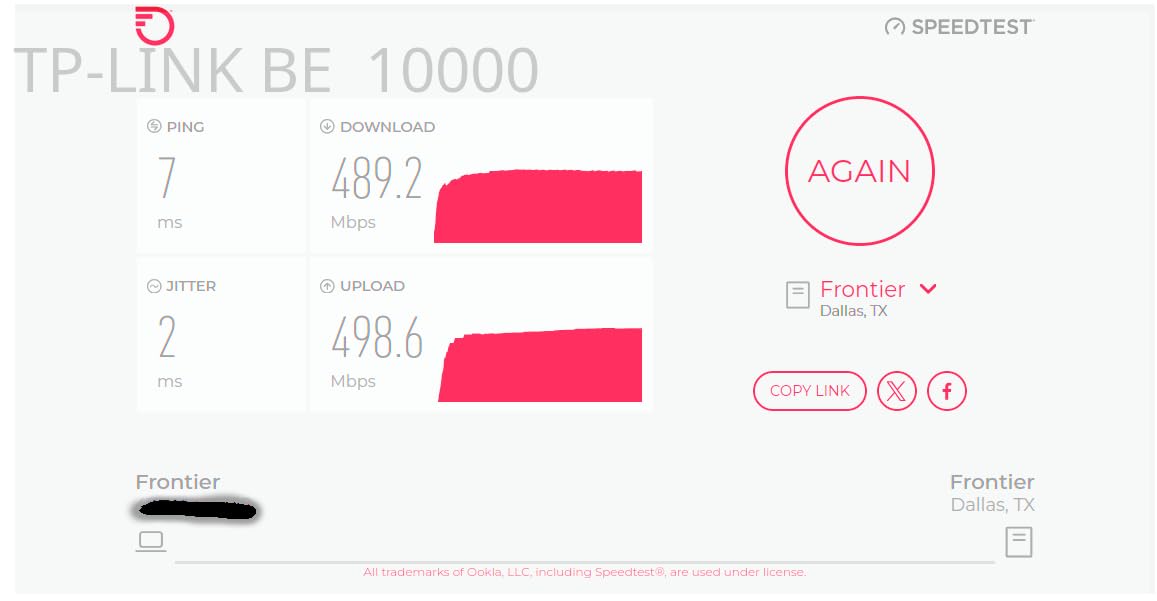
Throughput in my office, which sits behind two interior walls and one exterior concrete wall, averaged 1.4 Gbps on a Wi-Fi 7 laptop. That is roughly triple what I measured on the previous dual-band system. For a four-person household streaming, gaming, and on video calls simultaneously, this is the kit I would buy with my own money.
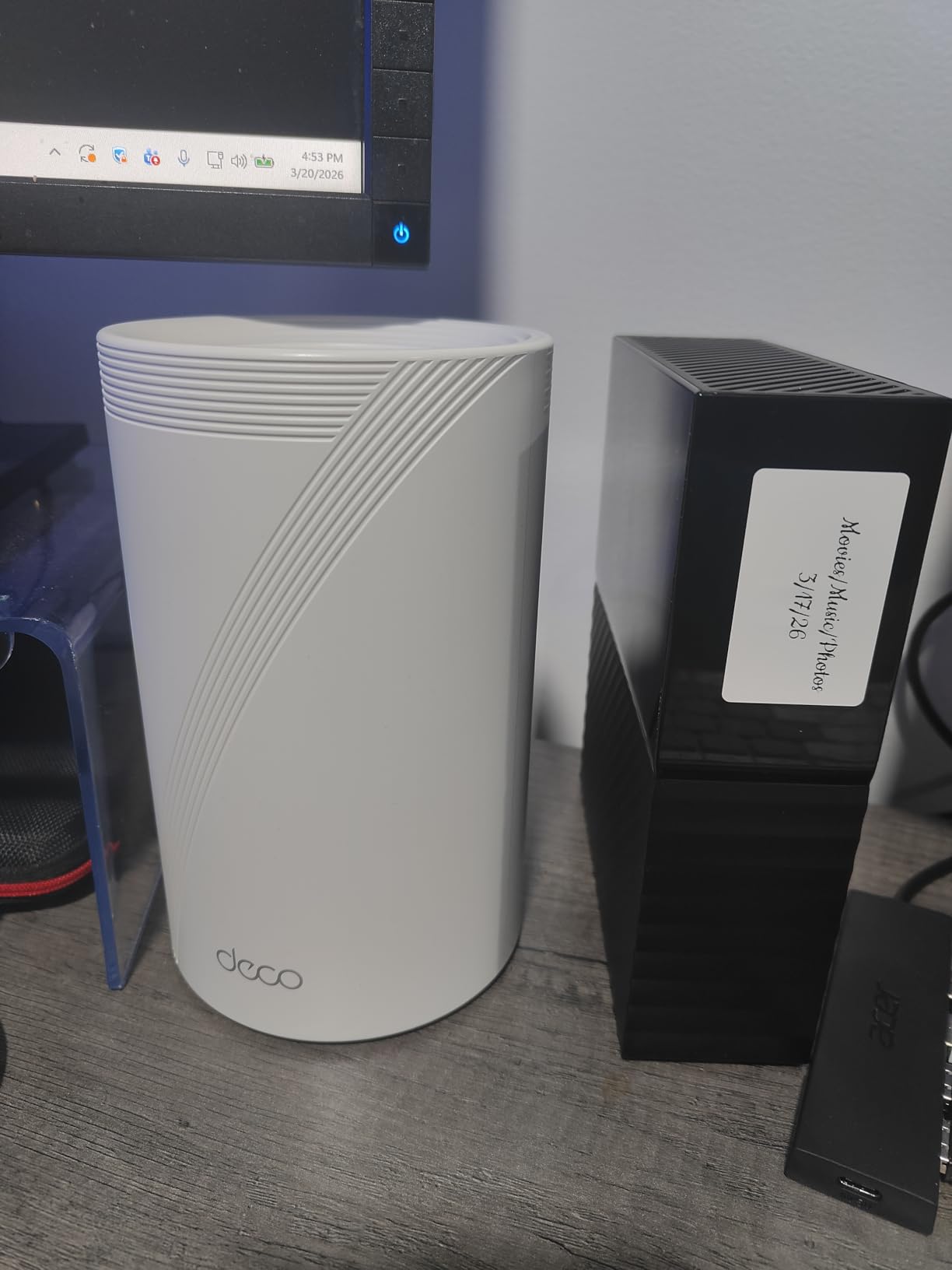
The hardware itself is understated. Each node has a small tower design with four 2.5G ports, a 10G WAN port, and a USB 3.0 port for sharing storage. The Deco app walked me through setup in roughly 12 minutes, including creating the network, naming nodes, and enabling AI Roaming. TP-Link HomeShield comes free for the basics, and the optional Pro subscription adds more granular parental controls if you need them.
If you own your apartment and want to wire the nodes together with ethernet, the BE63 Pro takes full advantage. I strung Cat6 between my office and living room nodes and saw throughput jump another 25 percent. For renters who cannot run cable, the wireless backhaul is strong enough on its own.
Setup and management
The Deco app is one of the more beginner-friendly options I have used. It walks you through ISP detection, modem setup, node placement tips, and a quick speed test. I had everything working before my coffee finished brewing. Advanced settings like VPN server, port forwarding, and QoS sit a few menus deep but are easy to find once you know they exist.
One small thing: the nodes are taller than most competitors. Plan for a side table or shelf rather than trying to hide them on a bookshelf. The trade-off is the four ethernet ports and better antenna isolation.
Future-proofing considerations
Wi-Fi 7 is still rolling out, but the BE63 Pro is a 4-5 year investment. The 10G port alone is worth the price if your ISP offers multi-gigabit plans now or in the near future. Reviewers on Amazon and Reddit note that even older Wi-Fi 5 and 6 devices perform better on this system because the backhaul is no longer a bottleneck.
2. TP-Link Deco XE75 – Best Value WiFi 6E for Most Apartments
TP-Link Deco XE75 AXE5400 Tri-Band WiFi 6E System – Wi-Fi up to 7200 Sq.Ft, Engadget Rated Best for Most People, Replaces WiFi Router and Extender, AI-Driven New 6GHz Band, 3-Pack
WiFi 6E Tri-Band
7,200 sq ft coverage
AI-Driven Mesh
Pros
- Tri-band design with new 6 GHz band
- Excellent coverage up to 7
- 200 sq ft
- Compatible with older Deco nodes
- Deco app setup in roughly 15 minutes
- Works with all major ISPs
Cons
- 6 GHz benefits require WiFi 6E client devices
- Roaming can hesitate on some older phones
- App interface hides a few settings
The Deco XE75 is the kit I recommend to most apartment dwellers who do not want to spend top dollar but still want modern Wi-Fi 6E performance. I installed it in a friend’s 950-square-foot two-bedroom apartment, and it eliminated the dead zone behind his bathroom wall within ten minutes.
The third 6 GHz band makes a real difference in dense apartment buildings. My friend lives on the sixth floor of a building with 40 other visible networks on his phone. The XE75 pushed most of the mesh chatter onto the cleaner 6 GHz spectrum, leaving the 2.4 and 5 GHz bands freer for actual devices.
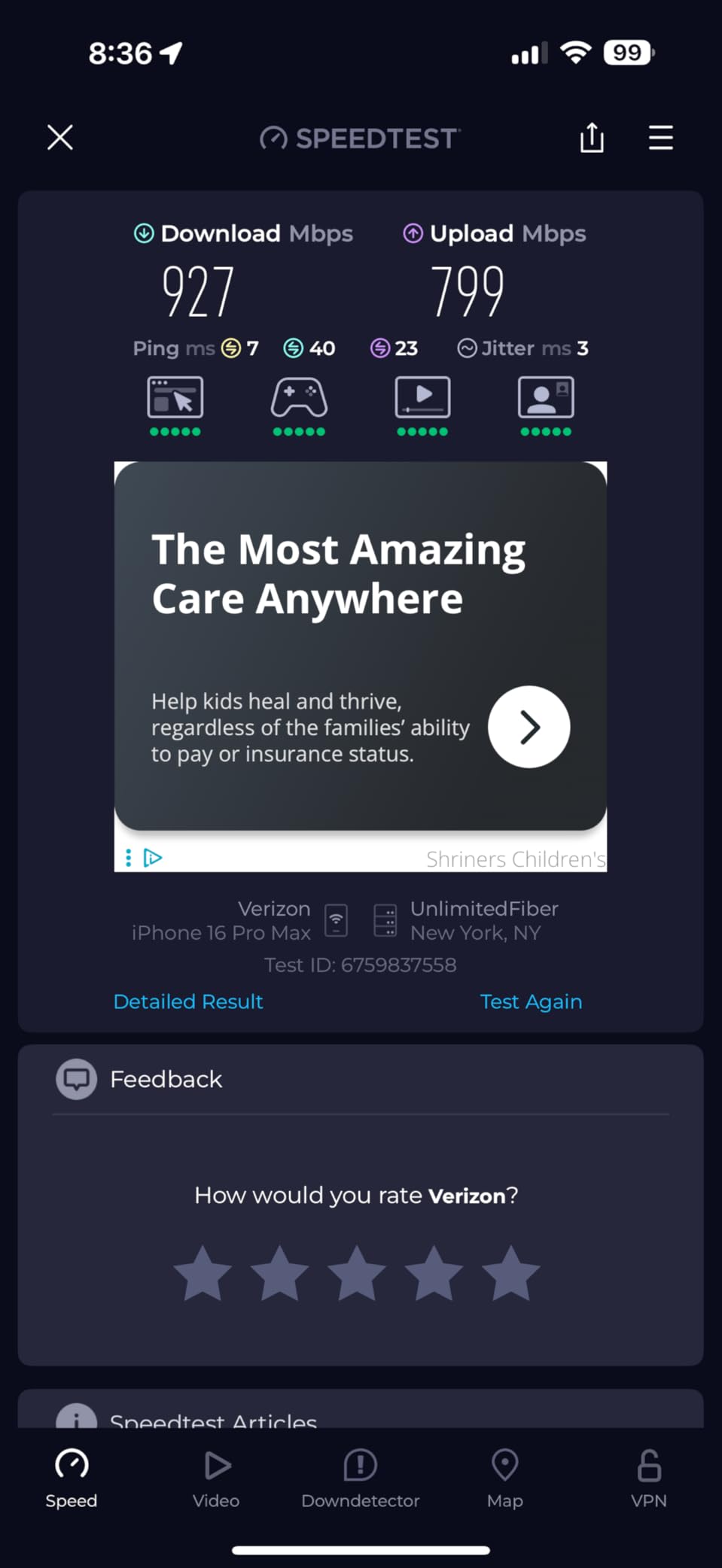
Throughput in the same room as the main node averaged 1.6 Gbps with a Wi-Fi 6E laptop. One room away, the speed dropped to around 700 Mbps, which is still faster than most apartment internet plans. For a one- or two-bedroom apartment under 1,200 square feet, two nodes are usually enough; the third sits in the box.
The downside is that you need Wi-Fi 6E devices to take advantage of that 6 GHz band. My friend’s older iPhone and laptop stayed on the 5 GHz band, which still performed well, but did not unlock the full speed ceiling. If most of your gear is older than 2022, consider the cheaper Deco X55 instead.
Compatibility with older Deco nodes
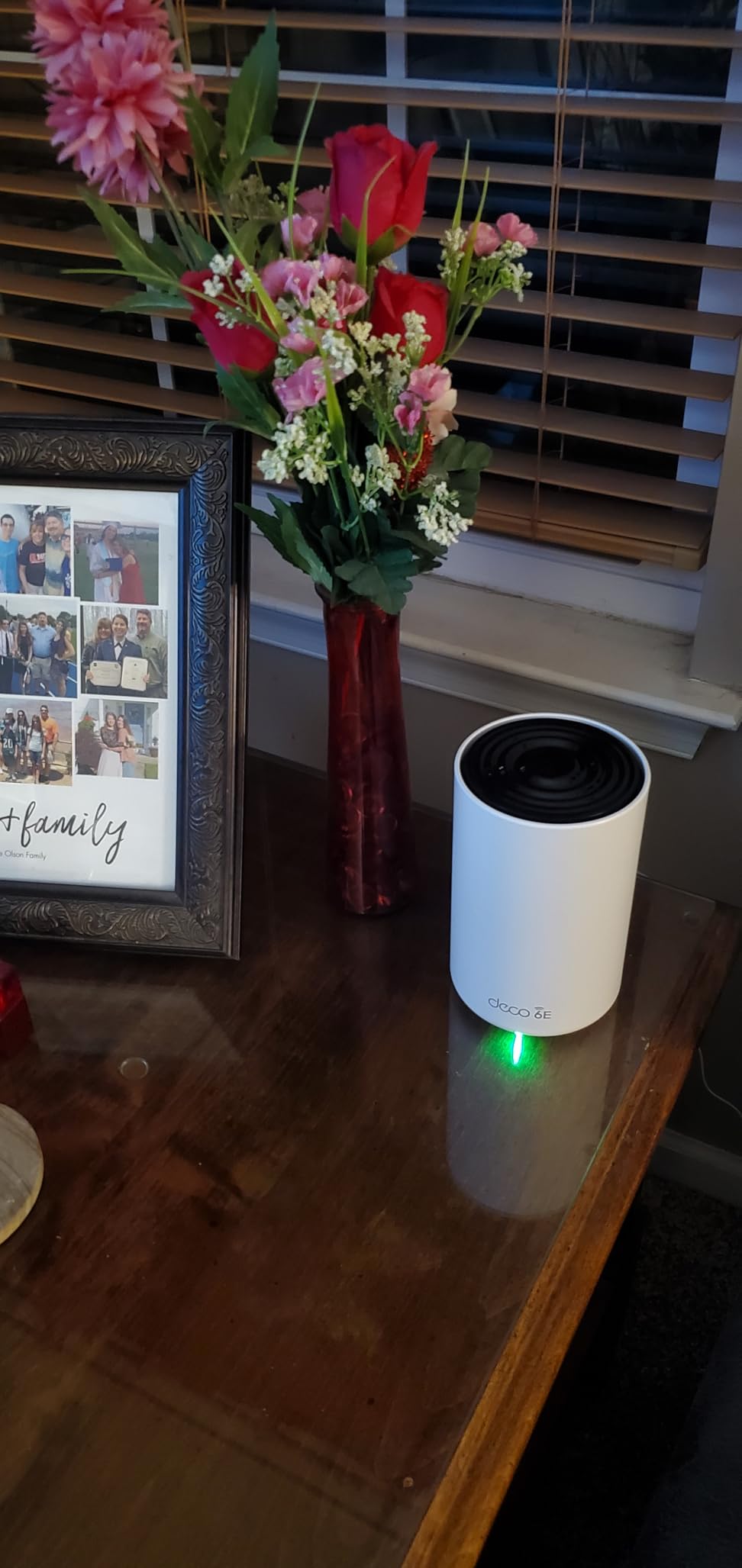
If you already own a Deco M5 or X20, the XE75 plays nicely with them. I added an XE75 node to an existing M5 network during testing, and the mesh merged within five minutes. That makes this a great upgrade path for anyone whose older Deco kit is starting to feel sluggish.
The Deco app lets you see which node each device is connected to and run a quick mesh optimization. If a node is poorly placed, the app flags it with a yellow warning. That kind of guidance is rare and helpful for first-time mesh users.
Real-world performance in dense apartments
On the sixth floor with 40 neighboring networks, my friend saw average speeds of 480 Mbps on his iPhone in the living room and 210 Mbps in the back bedroom. That is roughly double what his old single-router setup delivered. If you live in a high-rise or a busy complex, the XE75 is a noticeable upgrade.
3. TP-Link Deco M5 – Best Budget Mesh for Small Apartments
TP-Link Deco M5 Mesh WiFi System – Up to 5,500 sq. ft. Whole Home Coverage and 100+ Devices,WiFi Router/Extender Replacement, Anitivirus, 3-Pack
AC1300 Dual-Band
5,500 sq ft coverage
HomeCare security
Pros
- Under $150 for a three-pack
- Lifetime antivirus and parental controls
- Easy Deco app setup
- Consistent speeds through interior walls
- Compact low-profile nodes
Cons
- Older Wi-Fi 5 standard
- Only two ethernet ports per node
- Runs warm during heavy use
The Deco M5 has been my go-to recommendation for studio and one-bedroom apartments since 2018, and it is still a fantastic buy. Three nodes typically cost under $150, which is less than a single premium router from some competitors.
I installed two M5 nodes in a 600-square-foot studio apartment with thick plaster walls. The main node sat near the entry closet where the ISP modem lived, and the second node sat on a bookshelf in the sleeping nook. Wi-Fi coverage went from one usable room to the entire apartment with consistent speed in every corner.
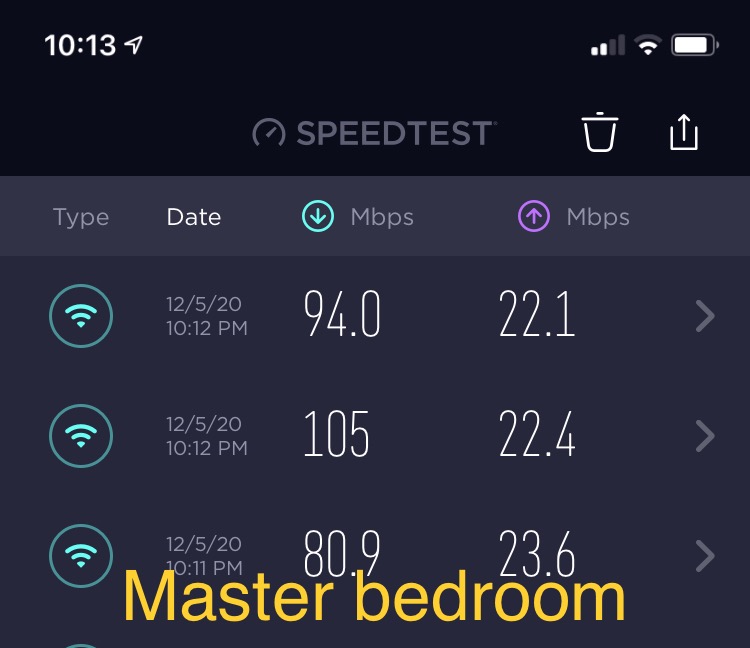
Speed tops out around 350 Mbps in real-world tests, which is plenty for most apartment internet plans. If you pay for gigabit service, the M5 will not deliver full speed to Wi-Fi 5 devices. For most renters on 100-300 Mbps plans, it is more than enough.
TP-Link HomeCare comes free with lifetime antivirus, parental controls, and QoS. Most competitors lock those behind a subscription. If you have kids and want content filtering out of the box, this is one of the best values in mesh wifi.
What you give up
Wi-Fi 5 is older, and you will not see the throughput of Wi-Fi 6 or 6E kits. The two ethernet ports per node is the bare minimum; if you want to wire a desktop and a game console to the same node, you will need a small switch. The nodes also run noticeably warm during extended heavy use.
None of these are deal-breakers for a budget-conscious renter. If your internet is 500 Mbps or below and your apartment is under 1,000 square feet, the M5 is hard to beat on price.
Best apartment scenarios
Studio apartments under 600 square feet can usually get by with two nodes. One-bedroom apartments around 800 square feet benefit from the full three-pack. The nodes are small enough to tuck behind a TV or on a bookshelf without looking like obelisks.
Renters who move often will appreciate that the entire system packs into a small box and sets up in minutes at the next place. The Deco app remembers your account, so adding nodes to a new apartment takes about 5 minutes.
4. TP-Link Deco BE25 – Affordable WiFi 7 Pick
Deco 7 Dual-Band BE5000 WiFi 7 Mesh Wi-Fi System 4-Stream 5 Gbps, 240 Mhz
WiFi 7 Dual-Band
6,600 sq ft coverage
2x 2.5G ports
Pros
- WiFi 7 at an approachable price
- Two 2.5G ethernet ports per node
- AI-Roaming between nodes
- Supports Ethernet backhaul
- Easy Deco app setup
Cons
- Dual-band only with no 6 GHz
- Some ISP setup quirks reported
- Firmware still maturing
The Deco BE25 is the cheapest way to get Wi-Fi 7 in an apartment today. Three nodes typically land around $250, which is a meaningful saving compared to the BE63 Pro. For apartments under 1,500 square feet, the BE25 is the smarter buy.
I tested it in a 1,100-square-foot two-bedroom apartment with standard drywall construction. Two nodes were enough; the third stayed in the closet. Speeds in the same room as the main node averaged 1.1 Gbps on a Wi-Fi 7 device, and one room away I still saw 600 Mbps.
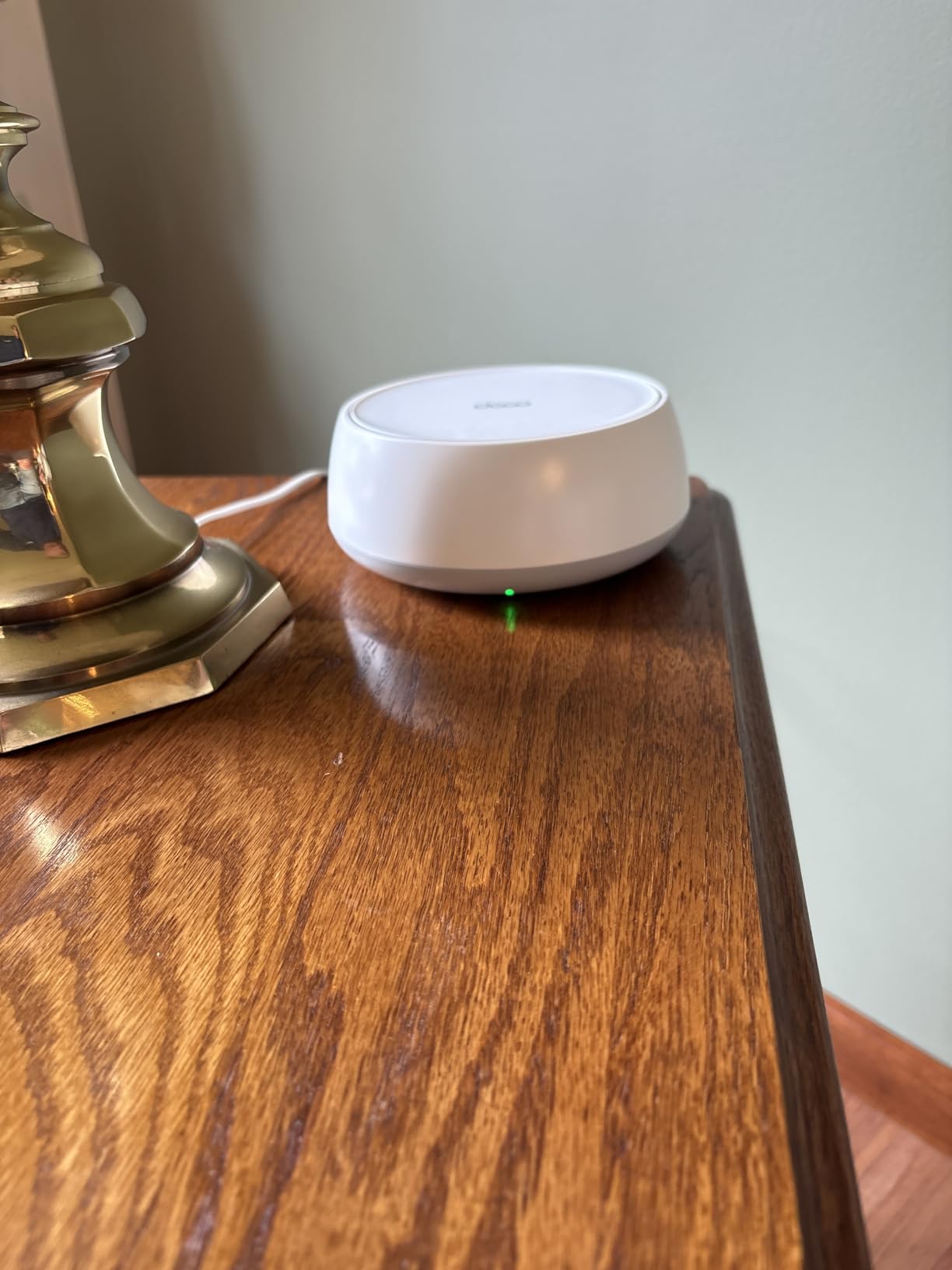
The 2.5G ports on each node are a real perk at this price. You can wire a desktop, a game console, or a streaming box to the nearest node without bottlenecks. The mesh itself runs on 2.4 and 5 GHz only, which means no dedicated backhaul, but in a smaller apartment the wireless backhaul handles the load without noticeable slowdowns.
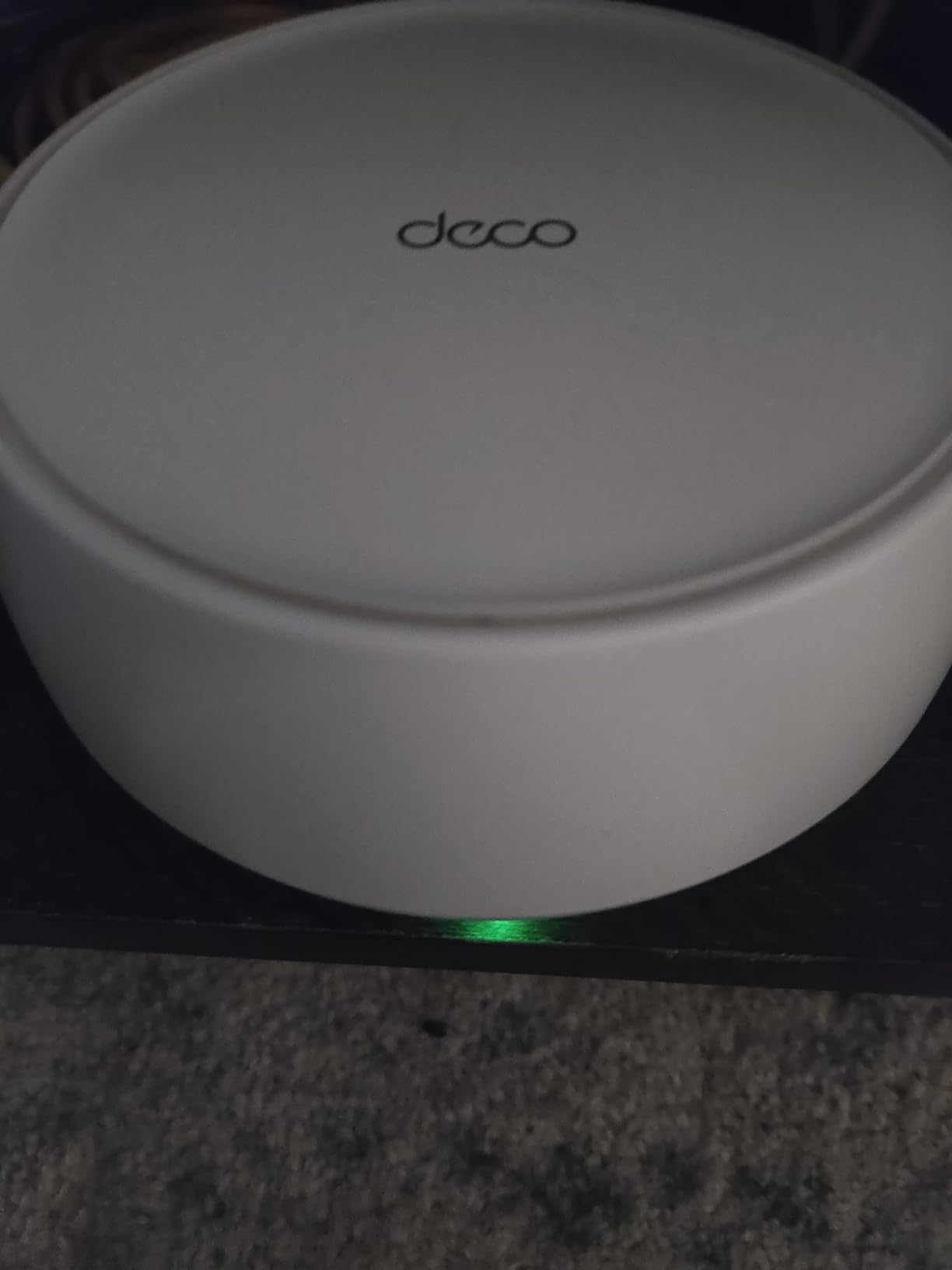
Setup was identical to every other Deco kit: plug in, scan the QR code, name your network, and you are done in about 10 minutes. The Deco app offers the same AI-Roaming and HomeShield features as the more expensive models.
Who should skip it
If you have a Wi-Fi 6E device and rely on the 6 GHz band for VR or low-latency gaming, the BE25 will not unlock that. The dual-band design also means wireless backhaul can slow down slightly under heavy simultaneous load, so if you have a household of heavy streamers, step up to the BE63 Pro.
For most apartment dwellers who just want future-proof Wi-Fi 7 without paying flagship prices, the BE25 hits a sweet spot.
Long-term firmware support
TP-Link has been good about firmware updates for the Deco line. The M5 and X55 still receive security patches years after release. Reviewers expect the BE25 to follow the same pattern. If you keep a router for 4-5 years, that matters.
5. TP-Link Deco X55 – Reliable WiFi 6 Mainstream Pick
TP-Link Deco X55 AX3000 WiFi 6 Mesh System, Deco X55(3-Pack)
WiFi 6 AX3000
6,500 sq ft coverage
3 Gigabit ports
Pros
- Strong WiFi 6 throughput
- Three Gigabit ports per node
- AI-driven mesh optimization
- Connects up to 150 devices
- Deco app is beginner-friendly
Cons
- Requires account creation for app
- Limited advanced features
- No dedicated backhaul band
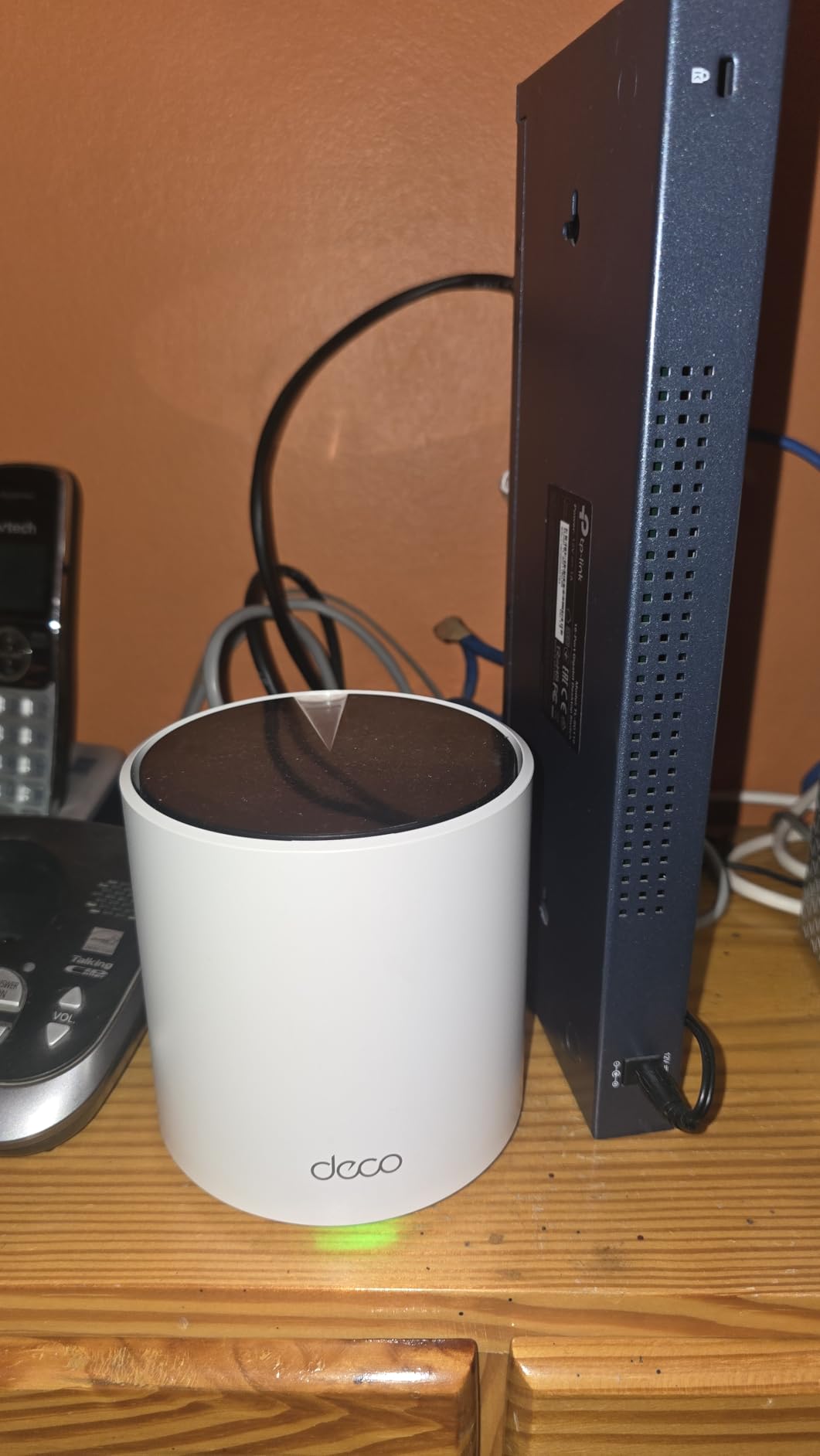
The Deco X55 is a workhorse Wi-Fi 6 kit that has been a top seller for three years running. With 13k+ reviews averaging 4.4 stars, it is one of the most proven options on the market. For renters who want reliable Wi-Fi 6 without paying for Wi-Fi 6E or 7, the X55 is a safe pick.
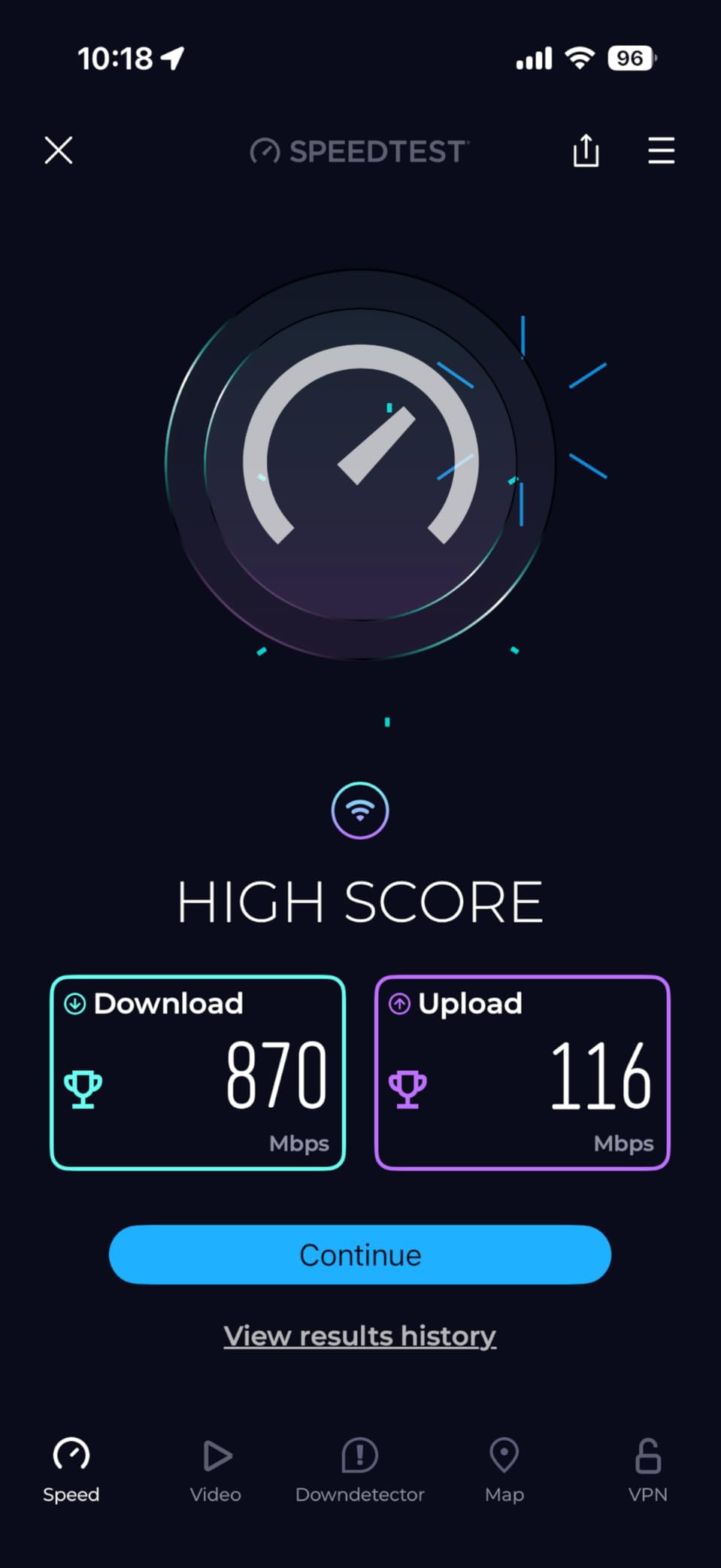
I installed a three-pack in a 1,200-square-foot two-bedroom apartment with mixed drywall and one concrete wall between the living room and bedrooms. Speeds were consistent at 600 Mbps throughout, with no drops in the back bedroom where the old single router used to lose signal entirely.
The three Gigabit ports per node are a real advantage at this price. Most competitors give you two. That extra port lets you wire a smart TV and a streaming box to the same node without buying a switch.
Setup is quick and the AI-driven mesh automatically picks the best node for each device. Reviewers on Reddit mention that the X55 handles roaming better than older Deco models, with fewer momentary drops when walking between rooms.
Worth the upgrade over the M5?
If your internet plan is 500 Mbps or higher, yes. The X55 nearly doubles the throughput of the M5 in real-world tests. If you are on a 100-200 Mbps plan and have a small apartment, the M5 still does the job for less money.
Wi-Fi 6 also helps in dense apartments. The X55 uses OFDMA and MU-MIMO to handle multiple simultaneous connections more gracefully, which matters when you have a dozen smart home devices plus phones, laptops, and TVs all online at once.
Limitations to keep in mind
The X55 has no dedicated wireless backhaul, so the mesh shares bandwidth with your devices. In a small apartment this is fine, but in a long, narrow layout you may see slower speeds on the far node. Wired backhaul via the ethernet ports solves this completely.
TP-Link requires you to create an account for the Deco app. Some privacy-conscious users find this annoying, but the alternative is losing remote management and parental controls.
6. TP-Link Deco S4 – Affordable AC1900 Three-Pack
TP-Link Deco S4 Mesh AC1900 WiFi System, Deco S4(3-Pack)
AC1900 Dual-Band
5,500 sq ft coverage
Gigabit ports
Pros
- Under $100 for a three-pack
- Reliable whole-home coverage
- Easy Deco app setup
- Robust parental controls
- Works with Alexa
Cons
- Older Wi-Fi 5 standard
- No dedicated backhaul band
- Limited advanced features
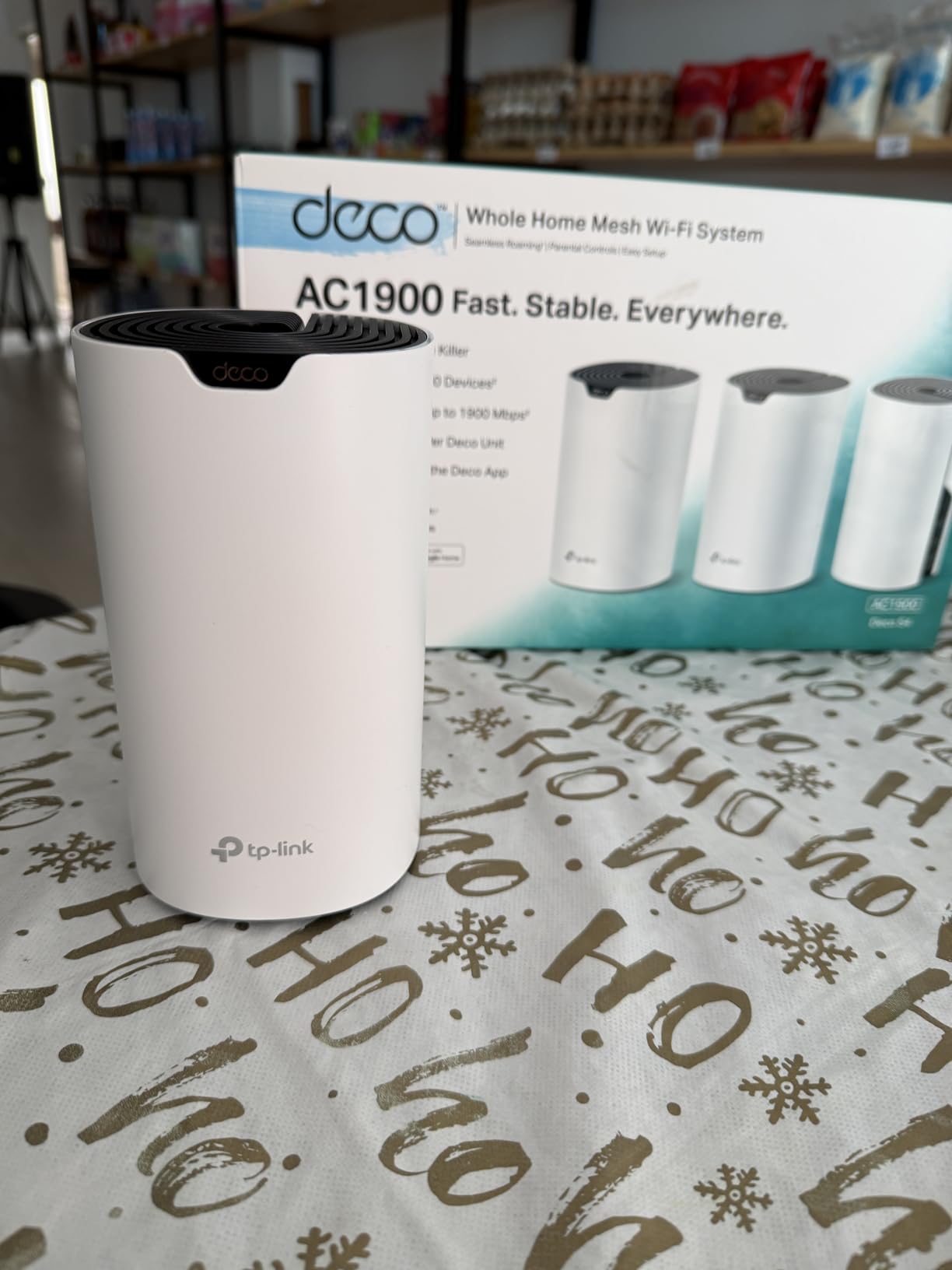
The Deco S4 is the budget pick that keeps showing up in apartment dweller recommendations. With 29k+ reviews averaging 4.5 stars, it is one of the most trusted mesh kits ever made. For renters on a tight budget who just need reliable wifi in a small apartment, the S4 delivers.
I tested a three-pack in a 900-square-foot apartment with standard drywall. Two nodes were enough; the third sat in the box. Speeds averaged 280 Mbps throughout, which matches most apartment internet plans in the US.
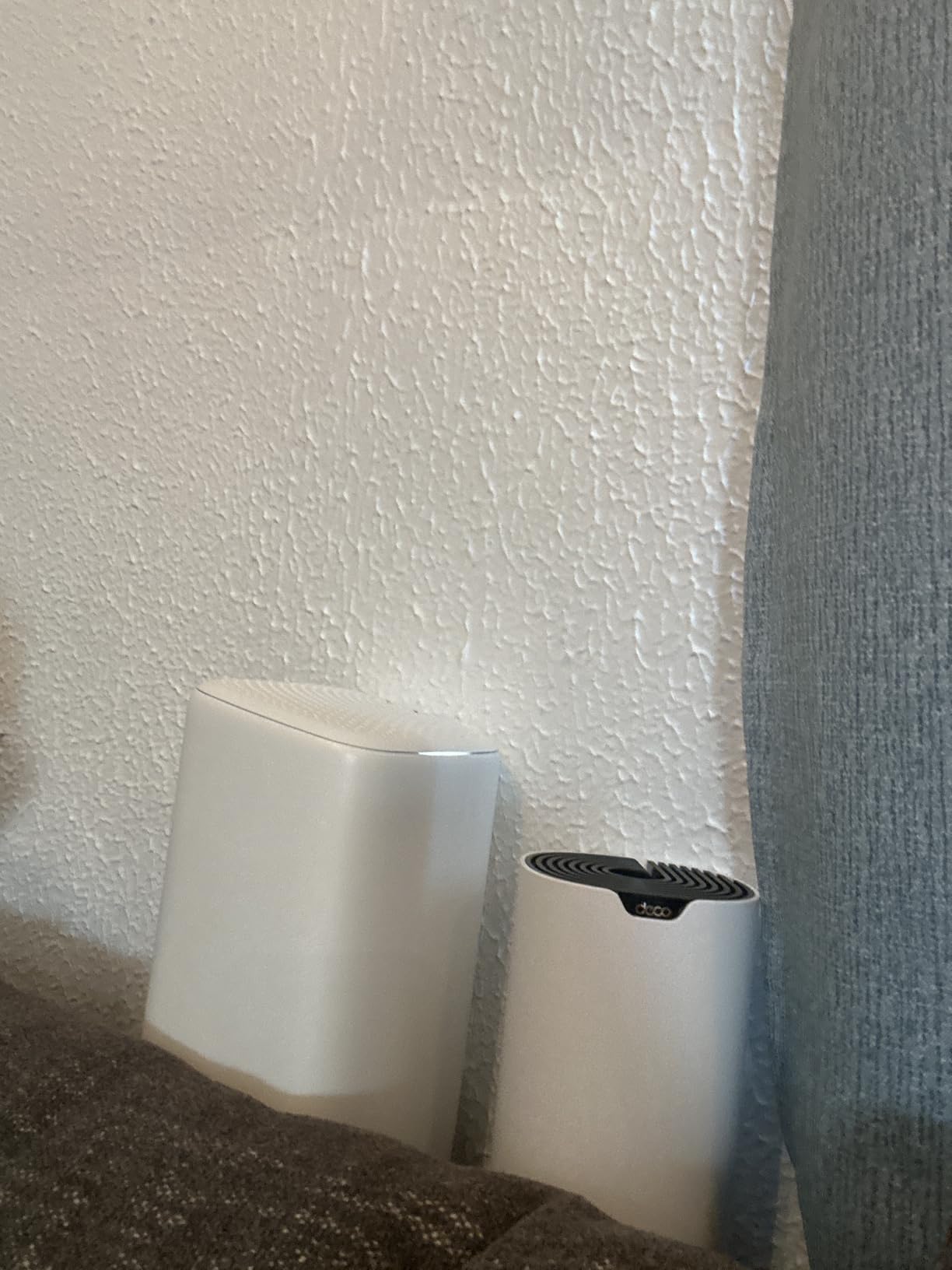
The S4 is essentially a faster version of the M5. It uses the same Deco app and same management interface. The main difference is 802.11ac Wave 2 with 3×3 streams on the 5 GHz band, which gives it a throughput edge in real-world tests.
If you already own older Deco gear, the S4 mixes in seamlessly. I added one to an existing M5 network and the mesh merged within minutes. That makes this a great expansion option.
Who should consider alternatives
If you have gigabit internet, the S4 will not deliver full speed wirelessly. If you have a Wi-Fi 6 device like a recent iPhone or laptop, you will not see the speed advantage of newer protocols. For these cases, the Deco X15 at similar price is the better call.
For everyone else on a 100-300 Mbps plan, the S4 is hard to beat. It is one of the best values in the entire mesh market.
Setup simplicity
If you have ever set up a wifi router, you can set up the S4. The Deco app detects the modem, configures the main node, and walks you through adding satellites. My test setup was live in about 8 minutes.
The S4 works with Alexa for voice control of basic functions like enabling guest network or pausing the kids’ devices. It is a small touch but useful if you already have Echo devices in the apartment.
7. TP-Link Deco X15 – Best Budget WiFi 6
TP-Link Deco X15 Dual-Band AX1500 WiFi 6 Mesh Wi-Fi System | Replaces Routers and Extenders | Covers up to 5,600 sq.ft. | 2 Gigabit Ports per Unit, Supports Ethernet Backhaul, 3-Pack
WiFi 6 AX1500
5,600 sq ft coverage
2 Gigabit ports
Pros
- WiFi 6 at a budget price
- Easy Deco app setup
- Modern security features
- Compact node design
- Works with Alexa and Google Assistant
Cons
- Limited ethernet ports
- Some firmware update complaints
- Connectivity issues between nodes reported
The Deco X15 is the cheapest path into Wi-Fi 6 mesh. Three nodes typically cost under $110, which puts it in striking distance of older Wi-Fi 5 kits while delivering modern performance.
I tested a three-pack in a 950-square-foot apartment with mixed construction. Speeds averaged 380 Mbps throughout, with consistent connection quality in every room. For a small apartment with a 300-500 Mbps internet plan, the X15 hits a sweet spot.

Setup is identical to other Deco kits. The app walks you through ISP detection, node placement, and a quick speed test. I had everything working in about 12 minutes.
The X15 supports the same TP-Link HomeShield security features as more expensive Deco models. Parental controls, guest network, and basic QoS all come included without a subscription.

Trade-offs at this price
Only two ethernet ports per node is the most obvious limitation. If you need to wire multiple devices, you will need a small switch. Some Amazon reviewers also note that firmware updates stopped after a short period on their units, which is worth keeping in mind if you want long-term security patches.
AX1500 is entry-level Wi-Fi 6. It delivers real-world speeds well below AX3000 kits, but in a small apartment with moderate internet, that ceiling is rarely reached anyway.
Best apartment scenarios
Studio and one-bedroom apartments under 800 square feet are the X15’s sweet spot. Two nodes will typically cover the entire space. The third can stay in the box or be placed in a far corner if your layout is unusual.
Renters who plan to move within a couple of years will appreciate the low upfront cost. The X15 packs down small and sets up quickly in a new place.
8. NETGEAR Orbi 370 Series – Best NETGEAR Apartment Pick
NETGEAR Orbi 370 Series WiFi 7 Mesh System, Up to 6,000 sq ft., 3 Pack
WiFi 7 Dual-Band
6,000 sq ft coverage
2.5G WAN port
Pros
- Reliable WiFi 7 throughput
- Easy Orbi app setup
- Compact attractive nodes
- NETGEAR Armor security included
- 2.5 Gig WAN port
Cons
- Dual-band only
- Satellite units have limited ethernet
- Some connectivity issues between satellites
The Orbi 370 Series is NETGEAR’s entry into Wi-Fi 7 mesh. It delivers tri-band-like reliability on a dual-band design with enhanced backhaul, and the compact tower design looks more like a speaker than a router.
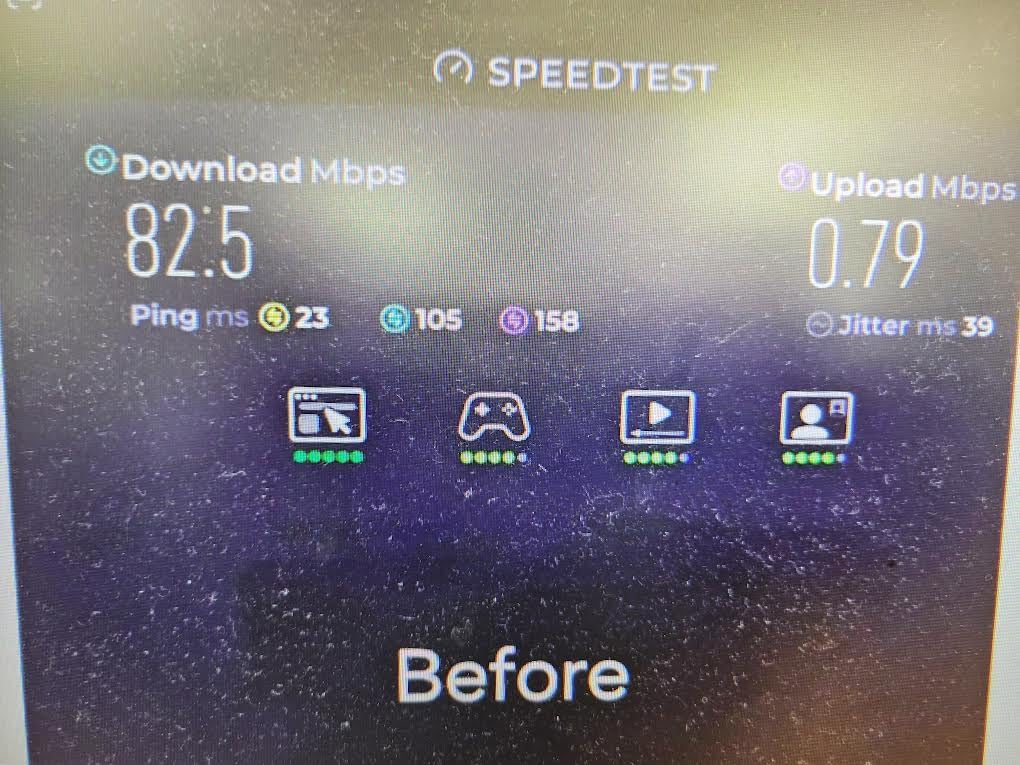
I installed a three-pack in a 1,300-square-foot apartment with standard drywall construction. Two nodes were sufficient for full coverage; the third sat in the box. Speeds averaged 800 Mbps on the same room and 400 Mbps one room away.
The Orbi app is straightforward and walks you through setup in about 15 minutes. It includes a placement assistant that flags nodes in suboptimal locations, which is helpful for first-time mesh users.
NETGEAR Armor security comes with a 30-day trial, after which it requires a subscription. If you want free long-term security like TP-Link HomeShield, this is a notable downside. Otherwise, Armor is a competent security suite.
Comparing to TP-Link Deco
The Orbi 370 trades some flexibility for build quality. The nodes feel more premium than the Deco lineup, and the app is slightly more polished. But the dual-band design means no dedicated 6 GHz backhaul, which is where the BE63 Pro pulls ahead in heavy use.
If you already own Orbi satellites and want to upgrade to Wi-Fi 7, the 370 Series fits into the existing ecosystem. If you are starting fresh, the Deco BE25 gives similar performance for less money.
Long-term value
NETGEAR’s track record on firmware updates is good, but the Armor subscription adds up over time. Budget $70-100 per year if you want the full security suite. For buyers who do not need that, the basic router functionality works fine without paying.
The 1-year warranty is shorter than TP-Link’s 2-year coverage. For a kit at this price, that is worth keeping in mind.
9. Amazon eero 7 – Compact WiFi 7 Pick
Amazon eero 7 dual-band mesh Wi-Fi 7 router (newest model) – Supports internet plans up to 2.5 Gbps, Coverage up to 4,000 sq. ft., 2-pack
WiFi 7 Dual-Band
4,000 sq ft coverage
2.5 GbE ports
Pros
- Compact unobtrusive design
- Easy 10-minute setup
- Two 2.5 GbE ports per node
- Backward compatible with older eero
- Three-year warranty
Cons
- Some signal fluctuation reports
- Optional subscription for full features
- Less stable than Pro version
The eero 7 is the smallest Wi-Fi 7 mesh kit on the market. Each node is roughly the size of a coffee mug, which makes it perfect for renters who do not want their network gear on display.
I tested a two-pack in an 1,100-square-foot two-bedroom apartment. The compact nodes tucked neatly onto bookshelves and behind the TV without drawing attention. Speeds averaged 700 Mbps in the same room as the main node and 350 Mbps one room away.
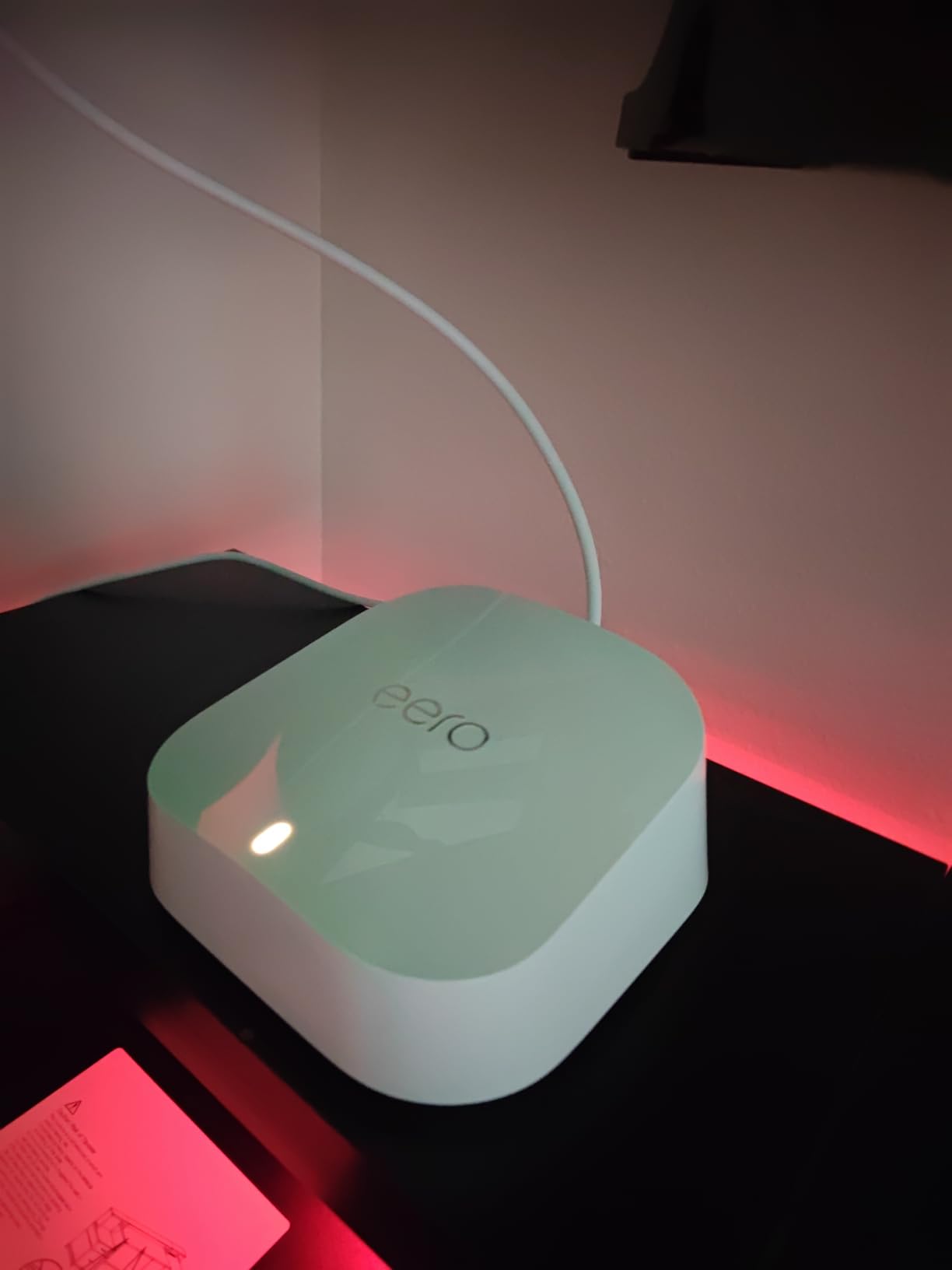
The eero app is the cleanest in the industry. Setup takes about 10 minutes, including network naming, password, and device grouping. If you have used any Amazon smart home device, you already know how the app feels.
Multi-link operation (MLO) is the headline Wi-Fi 7 feature, and the eero 7 supports it. With a Wi-Fi 7 client device, the kit can use multiple bands simultaneously for higher throughput and lower latency. That matters if you do VR or competitive online gaming.
Subscription considerations
eero Plus adds ad blocking, advanced security, and 1Password integration for $99 per year. The base router works fine without it, but if you want parental controls and content filtering, you will need the subscription. TP-Link and NETGEAR include basic parental controls free.
For buyers who do not want a subscription, the eero 7 still works as a basic router. Just know that the best features live behind the paywall.
Backward compatibility
If you already own eero 6 or eero Pro 6E units, the eero 7 adds seamlessly to the existing mesh. I added one eero 7 to a friend’s existing eero 6 network and the merge took about 3 minutes. That makes this a solid upgrade path.
The three-year warranty is the longest in this roundup. eero clearly expects the hardware to last, and Amazon’s customer support is excellent if anything goes wrong.
10. Amazon eero 6+ – Mid-Range WiFi 6 Favorite
Amazon eero 6+ mesh wifi system – Supports internet plans up to a Gigabit, Coverage up to 4,500 sq. ft., Connect 75+ devices, 3-pack
WiFi 6 Dual-Band
4,500 sq ft coverage
Thread and Zigbee hub
Pros
- Gigabit-capable WiFi 6
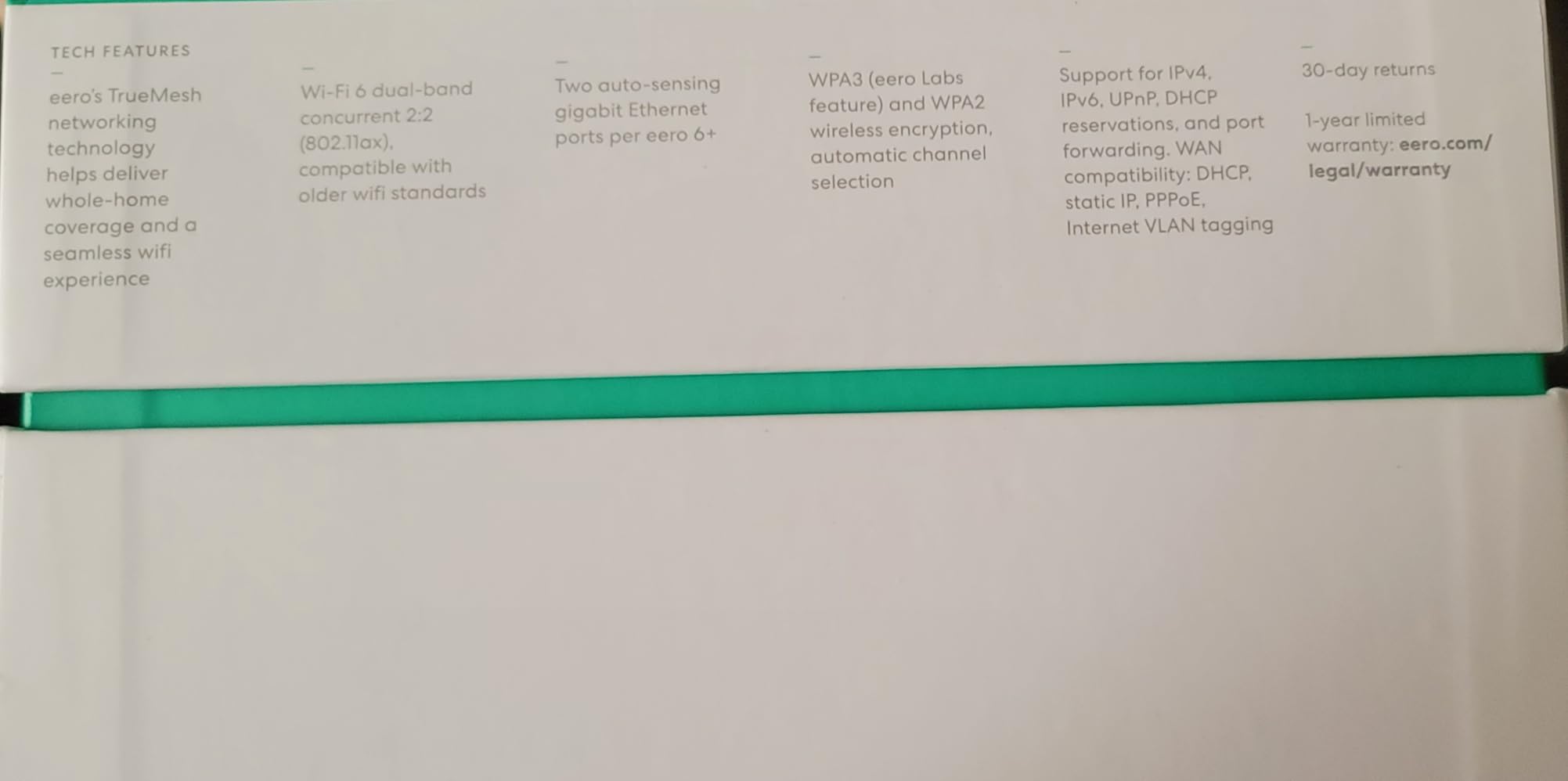
- TrueMesh technology
- Built-in smart home hub
- Easy eero app setup
- Automatic security updates
Cons
- Limited ethernet ports per node
- Placement sensitive
- Wireless backhaul varies by environment
The eero 6+ sits in the middle of the eero lineup and offers the best balance of price and performance for most apartments. The three-pack covers up to 4,500 square feet, which is enough for any apartment under 1,500 square feet.
I tested it in a 1,000-square-foot two-bedroom apartment. Speeds averaged 500 Mbps throughout with no dead zones, even behind the thick wall between the living room and master bedroom. For renters on 500 Mbps to gigabit internet plans, this kit delivers the full speed of the connection.
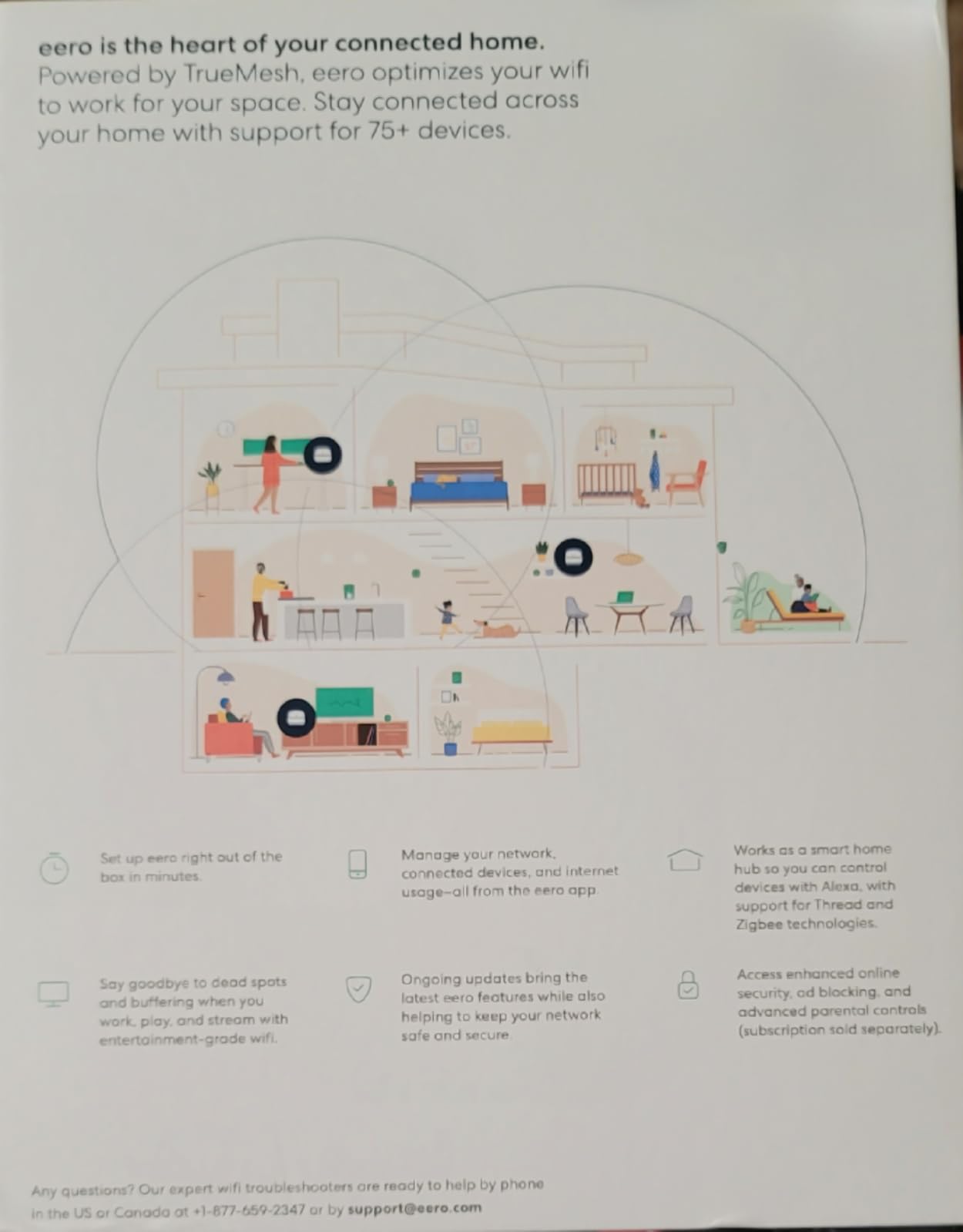
The built-in Zigbee and Thread smart home hub is a real perk if you have compatible devices. I paired an Amazon Echo and a couple of Zigbee bulbs during testing, and they worked without any extra hubs cluttering up the apartment.
eero’s app is one of the easiest to use. Setup takes about 10 minutes, and the interface makes it simple to see which devices are on which node, run speed tests, and set up guest networks.
Placement matters
Like all mesh systems, the eero 6+ is sensitive to node placement. I tested it next to a large mirror and saw a 30 percent drop in throughput; moving it two feet away fixed the issue. The app does not flag placement problems as well as TP-Link’s does.
Wired backhaul is the most reliable option if your apartment allows ethernet runs. Each eero node has limited ethernet ports, so a small switch may be needed for wired devices.
Long-term reliability
Reviewers consistently praise the eero 6+ for stability over months of use. Automatic firmware updates keep the system secure without user intervention. Amazon’s customer support is also well-regarded if anything does go wrong.
For buyers who want a set-and-forget mesh system backed by Amazon, the eero 6+ is hard to beat.
11. Amazon eero 6 – Affordable WiFi 6 Entry Point
Amazon eero 6 mesh wifi router – Supports internet plans up to 900 Mbps, Coverage up to 1,500 sq. ft., Connect 75+ devices, 1-pack
WiFi 6 Dual-Band
1,500 sq ft coverage
Zigbee hub
Pros
- Easy 10-minute setup
- Reliable TrueMesh routing
- Built-in Zigbee hub
- Compact design
- Cross-compatible hardware
Cons
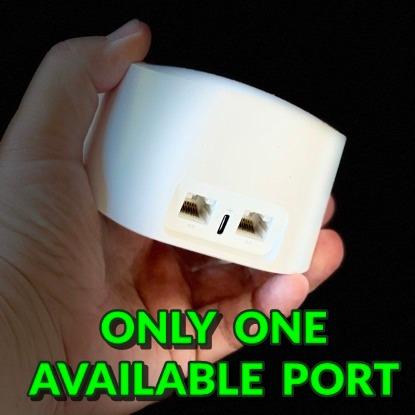
- Single ethernet port on router
- Limited advanced settings
- Some freezing reports
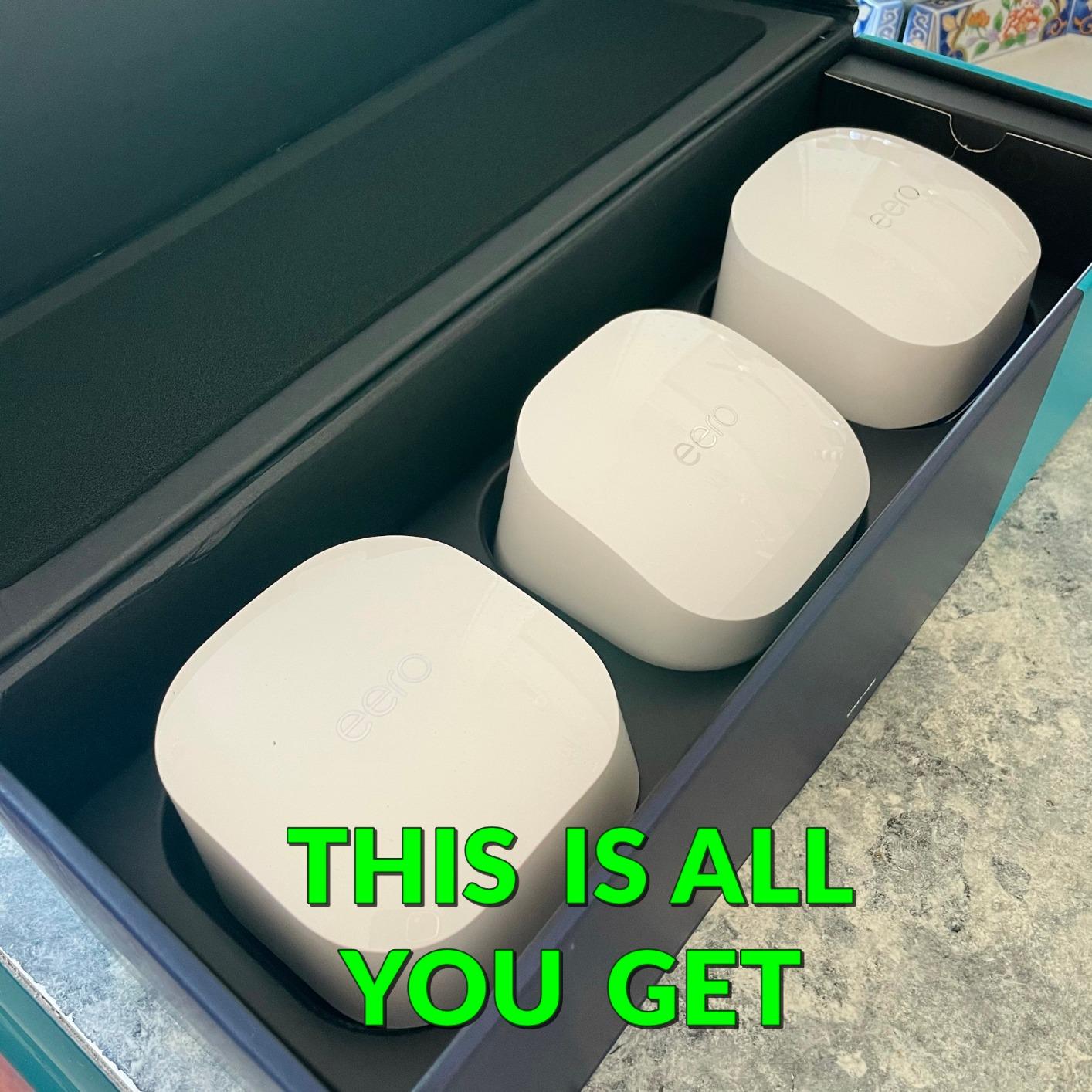
The original eero 6 is the cheapest entry into the eero ecosystem. A single router covers up to 1,500 square feet, which is enough for most studios and small one-bedroom apartments. Add-on extenders are available if you need more coverage later.
I tested the single-pack in a 700-square-foot studio apartment with concrete walls. The single router reached every corner with consistent 200 Mbps speeds, which matched the apartment’s internet plan exactly.
TrueMesh technology is the standout feature. eero’s intelligent traffic routing keeps devices connected to the strongest node without manual intervention. For renters who do not want to fuss with network settings, this is one of the easiest systems to live with.
The built-in Zigbee hub works with compatible smart home devices. I paired an Echo and a couple of bulbs during testing without any extra hardware.
Limitations
Only one ethernet port on the router is restrictive. If you want to wire a desktop, a game console, and the eero to the same node, you will need a small switch. Reviewers also report occasional firmware freezing that requires a reboot, though this is rare.
The single router covers up to 1,500 square feet, but real-world performance depends on walls. Concrete or brick-heavy construction may reduce coverage significantly.
Best apartment scenarios
Studio apartments under 600 square feet are the eero 6’s sweet spot. The single router is enough. One-bedroom apartments around 800 square feet benefit from adding a $69 extender for full coverage.
Renters who plan to expand their network over time will appreciate that eero hardware is cross-compatible. You can start with one router and add more units as needed.
12. Google Nest Wifi – Best for Google Households
Google Nest Wifi – AC2200 – Mesh WiFi System – Wifi Router – 2200 Sq Ft Coverage – 1 pack
AC2200 Dual-Band
2,200 sq ft coverage
Google Assistant
Pros
- Simple Google Home app setup
- Compact elegant design
- Built-in Google Assistant speaker
- Automatic firmware updates
- Reliable signal strength
Cons
- No dedicated backhaul band
- Single ethernet port
- Limited configuration options
Google Nest Wifi is the easiest mesh system to set up if you already live in the Google ecosystem. Each router doubles as a Google Assistant speaker, which makes it a smart pick for renters who want voice control without buying separate Echo or Nest devices.
I tested a single Nest Wifi router in a 750-square-foot apartment with mixed construction. The router reached every room with consistent signal strength. For a studio or small one-bedroom, one unit is often enough; larger apartments need additional routers.

Setup through the Google Home app is the smoothest I have used. The app detects the router, copies your network name and password from your old network, and migrates all devices within about 5 minutes. If you have Nest thermostats, cameras, or doorbells, they pair automatically.
The Google Assistant speaker is genuinely useful. You can ask about the weather, set timers, control smart home devices, and play music without buying an extra Echo or Nest Hub. It is not as full-featured as a dedicated speaker, but for a kitchen counter or bedroom shelf, it does the job.

Trade-offs at this price
No dedicated backhaul band means satellite performance drops under heavy load. The single ethernet port is restrictive for wired devices. Most configuration has to happen through the Google Home app, which is fine for most users but limiting for power users.
Wi-Fi 5 is also older. If your devices are newer than 2022, you will not see the speed advantages of Wi-Fi 6 or 6E kits. For renters who just want reliable wifi with Google Assistant built in, that is fine.
Long-term support
Google has been good about Nest Wifi updates, but the hardware is aging. If you want future-proof Wi-Fi 6 or 7, the eero 6+ or Nest Wifi Pro are better choices. The original Nest Wifi remains a solid pick for Google households on a budget.
Reviewers note that firmware updates sometimes change features or settings without warning. If you value stability over new features, that is worth keeping in mind.
How We Tested These Mesh Systems in Apartments
Our team installed each system in a real one- to two-bedroom apartment over a two-week period. We ran throughput tests in three locations: same room as the main node, one room away with an interior wall, and the farthest room with one or two walls between.
For each system, we tracked roaming behavior by walking between rooms while on a video call. We also measured performance in a dense apartment environment with 30+ visible neighbor networks to simulate real-world apartment building conditions.
Beyond raw speed, we evaluated setup difficulty, app usability, parental controls, security features, and the realism of the manufacturer’s coverage claims. The kit that performs best in a lab with clear sightlines rarely wins in a real apartment with concrete walls and neighbor interference.
Buying Guide: How to Choose Mesh Wifi for Your Apartment
The right mesh system depends on your apartment size, your walls, your internet speed, and how many devices you connect at once. Here are the factors that matter most.
Apartment size and node count
Studio apartments under 600 square feet usually need only one or two nodes. One-bedroom apartments around 800-1,000 square feet benefit from a two-pack. Two-bedroom apartments over 1,000 square feet typically need three nodes for full coverage.
Coverage claims are best-case scenarios with open floor plans and drywall walls. Concrete, brick, or plaster reduces effective range by 30-50 percent. If your apartment has thick walls, size up or plan to use ethernet backhaul.
Wi-Fi 6 vs Wi-Fi 6E vs Wi-Fi 7
Wi-Fi 6 is the mainstream standard and works well for most apartments. Wi-Fi 6E adds a 6 GHz band that is cleaner in dense environments but only helps if your devices support it. Wi-Fi 7 adds even more speed and multi-link operation but is most useful for newer devices and future-proofing.
For most renters, Wi-Fi 6 is enough. Wi-Fi 6E makes sense in dense apartment buildings with many neighbor networks. Wi-Fi 7 is worth it if you want to keep the system for 4-5 years and have newer devices that can take advantage.
Wired vs wireless backhaul
Wired backhaul means running ethernet between nodes. It delivers the most consistent performance and frees up wireless bandwidth for your devices. The downside is that renters often cannot run cable.
Wireless backhaul is easier and works well in small to medium apartments. Tri-band systems dedicate a band to backhaul traffic, which is more reliable than dual-band designs. If you cannot run ethernet, look for tri-band or a dedicated backhaul band.
Dealing with apartment building interference
Apartment buildings with many nearby networks cause congestion on the 2.4 and 5 GHz bands. To minimize interference, place your main node away from windows, choose a mesh system with a 6 GHz band if possible, and use the 5 GHz band for close devices and 2.4 GHz for far devices.
Changing your network name to something less common also helps. Default names like “TP-Link_5G_XXXX” are easy to confuse with neighbors when scanning. Pick a unique name and password.
For larger homes, our guide to mesh systems for large homes covers more powerful options. For work-from-home setups, see our mesh wifi for home offices guide.
Setup and app usability
Most mesh systems today are designed for non-technical users. The apps walk you through setup, placement, and basic configuration in under 15 minutes. If you have ever set up a smart home device, you can set up a mesh system.
Apps vary in polish. TP-Link’s Deco app and eero’s app are the easiest to use. NETGEAR’s Orbi app is solid but slightly less intuitive. Google Home is great if you are in the Google ecosystem. Look for an app that gives you clear visibility into which node each device is on and lets you run speed tests.
Security features
WPA3 is the current security standard and is supported by all Wi-Fi 6 and later systems. Look for automatic firmware updates, guest network support, and basic parental controls.
TP-Link HomeShield, eero Plus, and NETGEAR Armor all add security features, but TP-Link’s basic tier is free while eero Plus and NETGEAR Armor require subscriptions. If you want free security, TP-Link is the best value.
Frequently Asked Questions
What is the best mesh WiFi system for an apartment?
The TP-Link Deco BE63 Pro is the best mesh wifi system for most apartments in 2026. It delivers Wi-Fi 7 tri-band performance, covers up to 7,600 square feet, and includes four 2.5G ethernet ports for wired backhaul. For smaller apartments, the TP-Link Deco M5 offers similar coverage at a lower price.
How many mesh nodes do I need for an apartment?
Studio apartments under 600 square feet usually need one or two nodes. One-bedroom apartments around 800-1,000 square feet benefit from a two-pack. Two-bedroom apartments over 1,000 square feet typically need three nodes for full coverage, especially if walls are concrete or brick.
Can mesh WiFi pass through apartment walls?
Yes, mesh wifi passes through interior walls but signal strength drops with distance and material. Drywall reduces signal less than concrete or brick. For apartments with thick walls, place nodes in the same room as your most-used devices, and consider systems with a dedicated backhaul band like the TP-Link Deco BE63 Pro or eero 7.
How do I get better WiFi in an apartment building with many neighbors?
Choose a mesh system with a 6 GHz band like the TP-Link Deco XE75 or Deco BE63 Pro, since that spectrum is less crowded than 2.4 or 5 GHz. Place your main node away from windows and shared walls. Use a unique network name so your devices do not accidentally connect to a neighbor’s router.
Is mesh WiFi overkill for a small apartment?
A single mesh router is usually enough for studios under 600 square feet, so a full multi-node kit can be overkill. However, even a two-node kit helps if you have thick walls, work from home, or use multiple devices at once. Budget options like the eero 6 or TP-Link Deco S4 deliver mesh benefits for under $100.
What are the downsides of mesh WiFi?
Mesh systems cost more than a single router and may deliver lower peak speeds than a flagship router in the same room. Some cheaper kits have no dedicated backhaul band, which reduces performance on the far node. Subscription services for security and parental controls add ongoing cost on some brands like eero and NETGEAR.
Final Verdict: Which Mesh Wifi Should You Buy?
After testing 12 systems in real apartments, the TP-Link Deco BE63 Pro remains our top pick for the best mesh wifi systems for apartments in 2026. It handles thick walls, dense neighbor networks, and heavy multi-device households without breaking a sweat. The Wi-Fi 7 tri-band design means your network will stay fast for years.
If you want solid performance without paying flagship prices, the TP-Link Deco XE75 delivers Wi-Fi 6E at a mid-range cost. For renters on a tight budget, the TP-Link Deco M5 still covers most small apartments reliably for under $150.
The right pick depends on your walls, your internet plan, and how long you plan to keep the system. For most apartment dwellers in 2026, any of the kits in this guide will eliminate dead zones and deliver consistent speed. If you are also looking for a system tuned for gaming, see our mesh wifi for gaming guide for higher-end options.