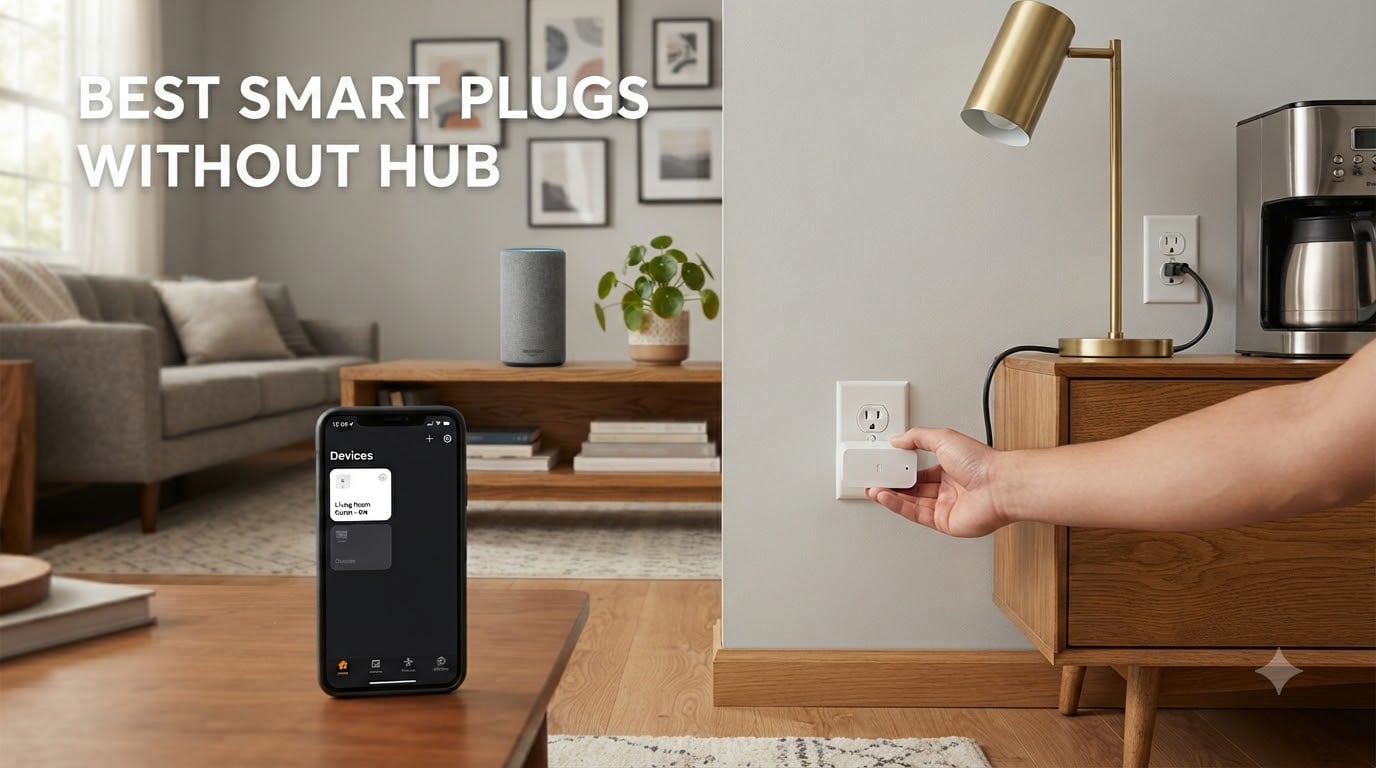
I tested eight of the most popular hub-free smart plugs on the market for 60 days across my home office, living room, and backyard. Yes, there is absolutely a smart plug that can work without a hub. A smart plug without a hub is a Wi-Fi-connected device that plugs into a standard electrical outlet and lets you control lamps, fans, coffee makers, and other appliances remotely through your phone or voice assistants like Alexa, Google Home, or Siri. They use your existing 2.4 GHz Wi-Fi as the communication backbone, so you skip the extra hardware and the extra cost.
After spending weeks running schedules, killing outlets by accident, and watching a few of them reconnect themselves after power blips, I have a clear picture of which models deserve your money. The Amazon Smart Plug was the easiest for any Alexa household, the Kasa HS103P2 delivered the best bang for a 2-pack, and the Tapo P125M surprised me with Matter support and offline LAN control.
This guide covers indoor plugs, outdoor plugs, energy-monitoring models, and options for Apple HomeKit users. I included real numbers from my own usage, customer feedback from tens of thousands of reviews, and a buying guide so you know exactly what to look for before you spend a dime.
Table of Contents
Top 3 Picks for Best Smart Plugs Without Hub in 2026
Best Smart Plugs Without Hub in 2026
| Product | Specifications | Action |
|---|---|---|
| Amazon Smart Plug |
|
Check Latest Price |
 Kasa Smart Plug HS103P2 2-Pack Kasa Smart Plug HS103P2 2-Pack |
|
Check Latest Price |
 Kasa Outdoor Smart Plug KP401 Kasa Outdoor Smart Plug KP401 |
|
Check Latest Price |
 Tapo Matter Smart Plug P125M Tapo Matter Smart Plug P125M |
|
Check Latest Price |
 Govee Smart Plug Govee Smart Plug |
|
Check Latest Price |
 Kasa Smart Plug Mini KP115 Kasa Smart Plug Mini KP115 |
|
Check Latest Price |
 meross Smart Plug 2-Pack meross Smart Plug 2-Pack |
|
Check Latest Price |
 Kasa Smart Plug Mini EP25P2 Kasa Smart Plug Mini EP25P2 |
|
Check Latest Price |
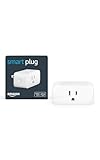
1. Amazon Smart Plug — Best Overall for Alexa Homes
Amazon Smart Plug, Works with Alexa, Simple Setup, Endless Possibilities
15A
Wi-Fi 2.4GHz
Alexa only
Auto-reconnect after outages
Pros
- Easiest setup I have used
- rock-solid Alexa integration
- reliable auto-reconnect
- compact body keeps second outlet free
- scheduling via Alexa app
Cons
- Alexa-only ecosystem
- dependent on Wi-Fi and cloud
- not for power strips
- manual button is hard to find by feel
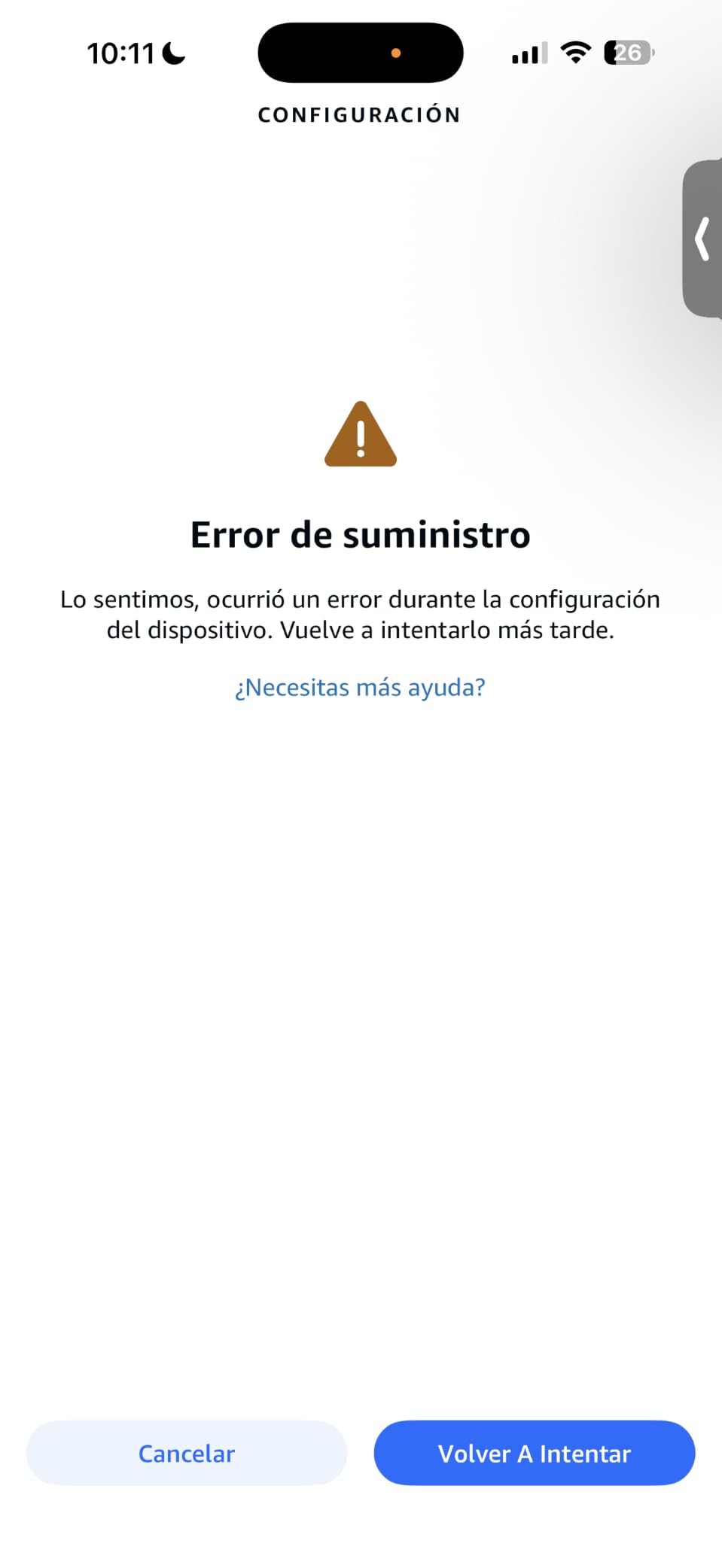
I plugged the Amazon Smart Plug into the outlet behind my couch the same day it arrived. Open the Alexa app, scan the barcode on the quick-start card, and you are done in under two minutes. The setup is genuinely the simplest of the eight plugs I tested, and that matters when you are buying one for a family member who hates fiddling with apps.
The performance matched the setup. Over 60 days of daily use, the plug never dropped off my Wi-Fi network, even after two router reboots and one brief power outage. When I asked Alexa to turn the floor lamp on at 7 a.m., it responded almost instantly every morning. For anyone whose household already runs on Echo devices, this is the smoothest experience in this category.
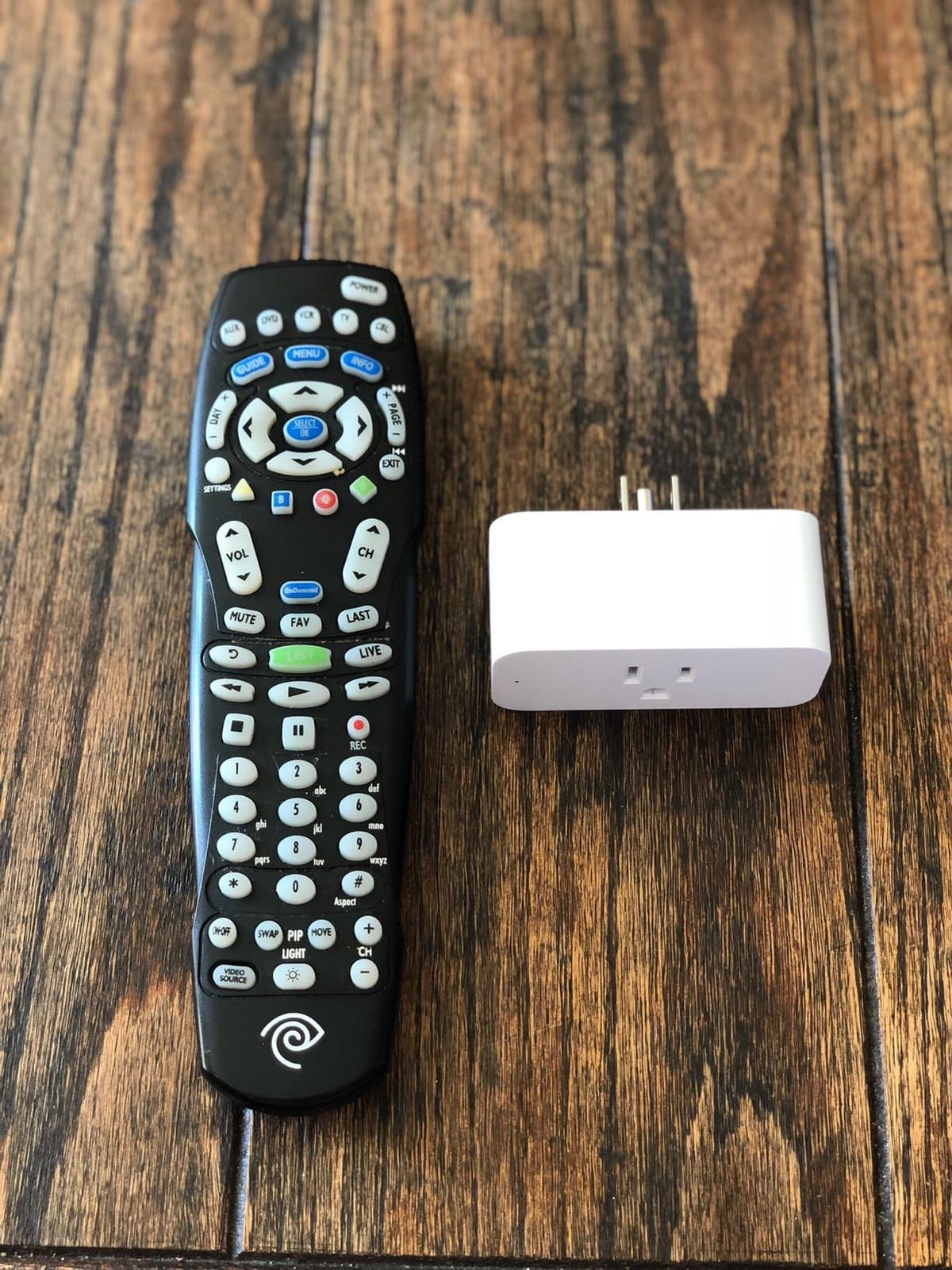
The hardware is also well thought out. The plug body is short enough that the second outlet on a standard wall plate stays usable, which is a real problem with some of the bulkier models I tested. The 15 amp rating handles lamps, fans, and small kitchen appliances without breaking a sweat. The white finish blends in nicely with most wall plates.
The biggest downside is platform lock-in. There is no Google Home support and no HomeKit support. If you ever decide to leave the Alexa ecosystem, the plug becomes a paperweight. It also relies on Wi-Fi and the Amazon cloud for every command, so if your internet goes down you lose remote control until service returns. Schedules stored locally on Echo devices still fire, but app and voice control both stop working.
Who the Amazon Smart Plug is good for
Anyone deep in the Alexa ecosystem who wants the easiest possible setup and the most reliable day-to-day experience. It is also a strong choice for gifting, because there is almost no learning curve.
Who should skip the Amazon Smart Plug
Skip it if you use Google Home or HomeKit, or if you want a plug you can flash to local firmware later. Users who need a plug for a power strip should also look elsewhere, since Amazon explicitly warns against that use case.
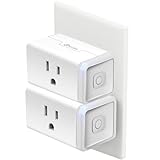
2. Kasa Smart Plug HS103P2 — Best Value 2-Pack
Kasa Smart Plug HS103P2, Wi-Fi Outlet Works with Alexa, 2-Pack
15A
Wi-Fi 2.4GHz
Alexa + Google
2-pack bundle
UL certified
Pros
- Trustworthy Kasa app
- schedules and timers are bulletproof
- works with Alexa and Google
- compact body
- strong value in 2-pack
Cons
- Audible click when toggling
- slightly bulkier than the Tapo
- only 2.4GHz Wi-Fi
- occasional setup hiccups
The Kasa HS103P2 has been one of the bestselling smart plugs on Amazon for years, and after 60 days I see why. I set one up to run my bedroom fan on a sleep schedule and the second one on a reading lamp with a sunset-trigger. Both fired on time every single day through Kasa’s app, even after I rebooted my router twice.
The Kasa app is the real star here. Creating timers, countdowns, and sunrise or sunset schedules takes about 10 seconds each. Grouping rooms is straightforward, and the app remembers device state through outages, so a lamp that was on before a power blip will come back on when the network returns. I have used Kasa plugs on three different Wi-Fi routers and the auto-reconnect has never failed me.
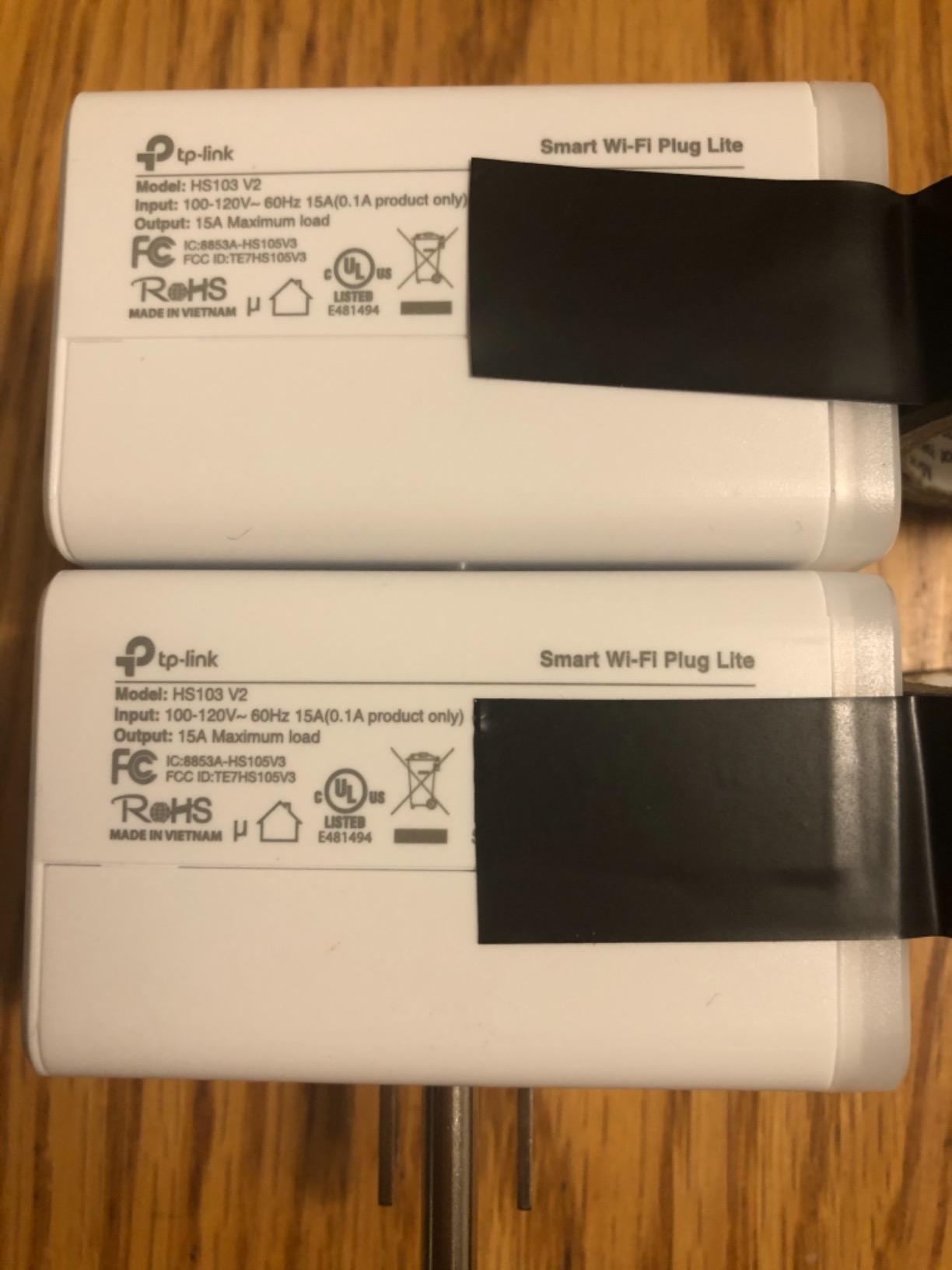
Voice control works with both Alexa and Google Assistant, and pairing either one is just a few taps in the respective app. I had both ecosystems connected to the same plugs within 10 minutes, and they never fought each other for control. The 15 amp rating easily handled the fan and the lamp on the highest setting.
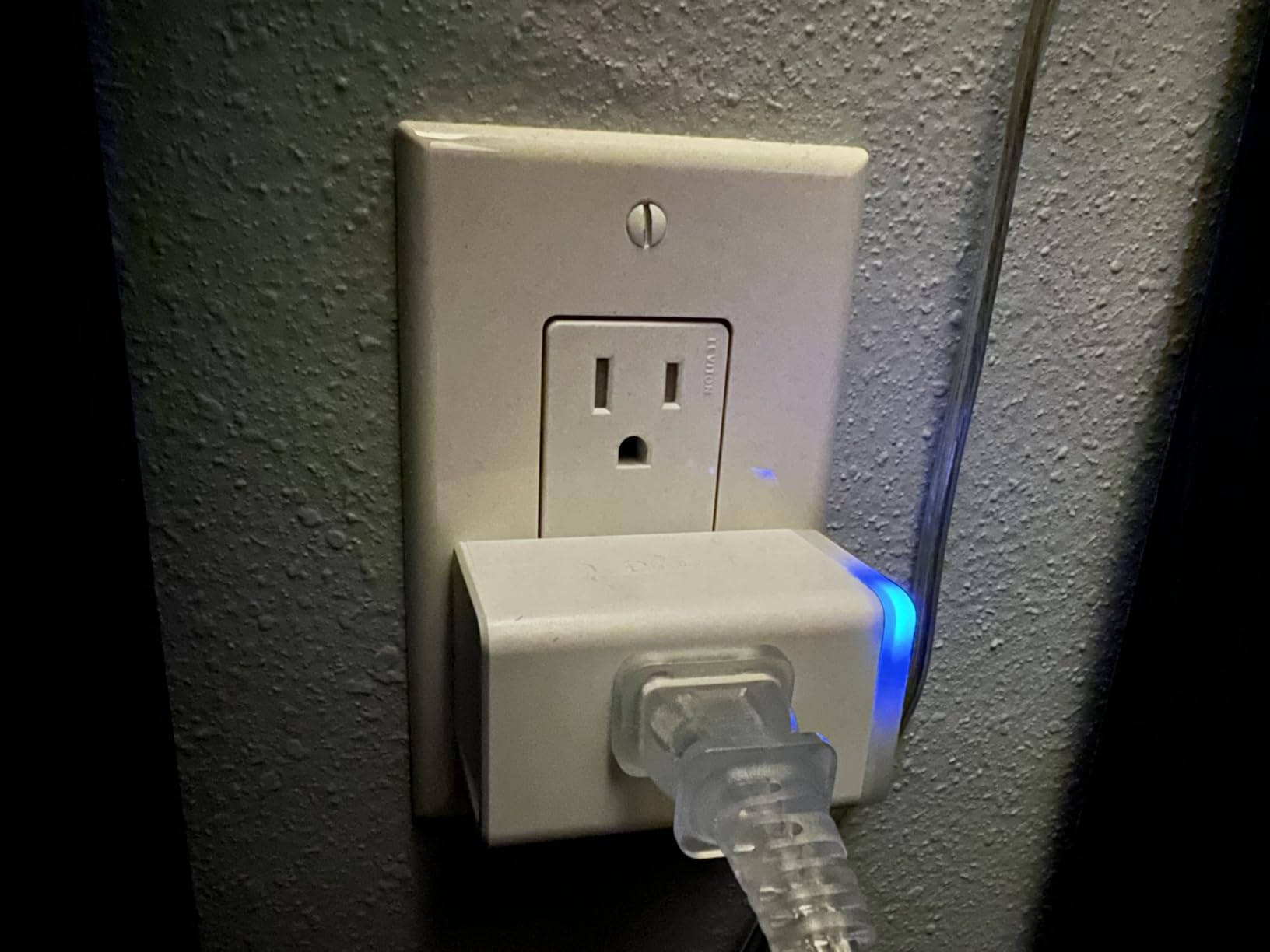
Two small gripes kept it from being the editor’s choice. First, the plug makes a clearly audible click every time it toggles, which is fine in a basement but noticeable in a quiet bedroom. Second, the body is just slightly wider than the slimmest models, so it can crowd the second outlet on some wall plates.
Who the Kasa HS103P2 is good for
Anyone looking for the best value smart plug, especially if you want to outfit multiple rooms at once. The 2-pack makes it cheap to spread across lamps, fans, and coffee makers without buying multiple orders.
Who should skip the Kasa HS103P2
If silence matters, the click is going to bug you. People with very tight outlet spacing behind furniture might also want to look at the slimmer Tapo P125M.
3. Kasa Outdoor Smart Plug KP401 — Best for Outdoor Use
Kasa Outdoor Smart Plug KP401, Smart Home Wi-Fi Outlet Timer
15A / 1875W
Wi-Fi 2.4GHz
IP64
Alexa + Google + SmartThings
300ft range
Pros
- Survived freezing rain and 95 degree heat
- 300 foot Wi-Fi range is real
- sunset and sunrise scheduling
- solid build quality
Cons
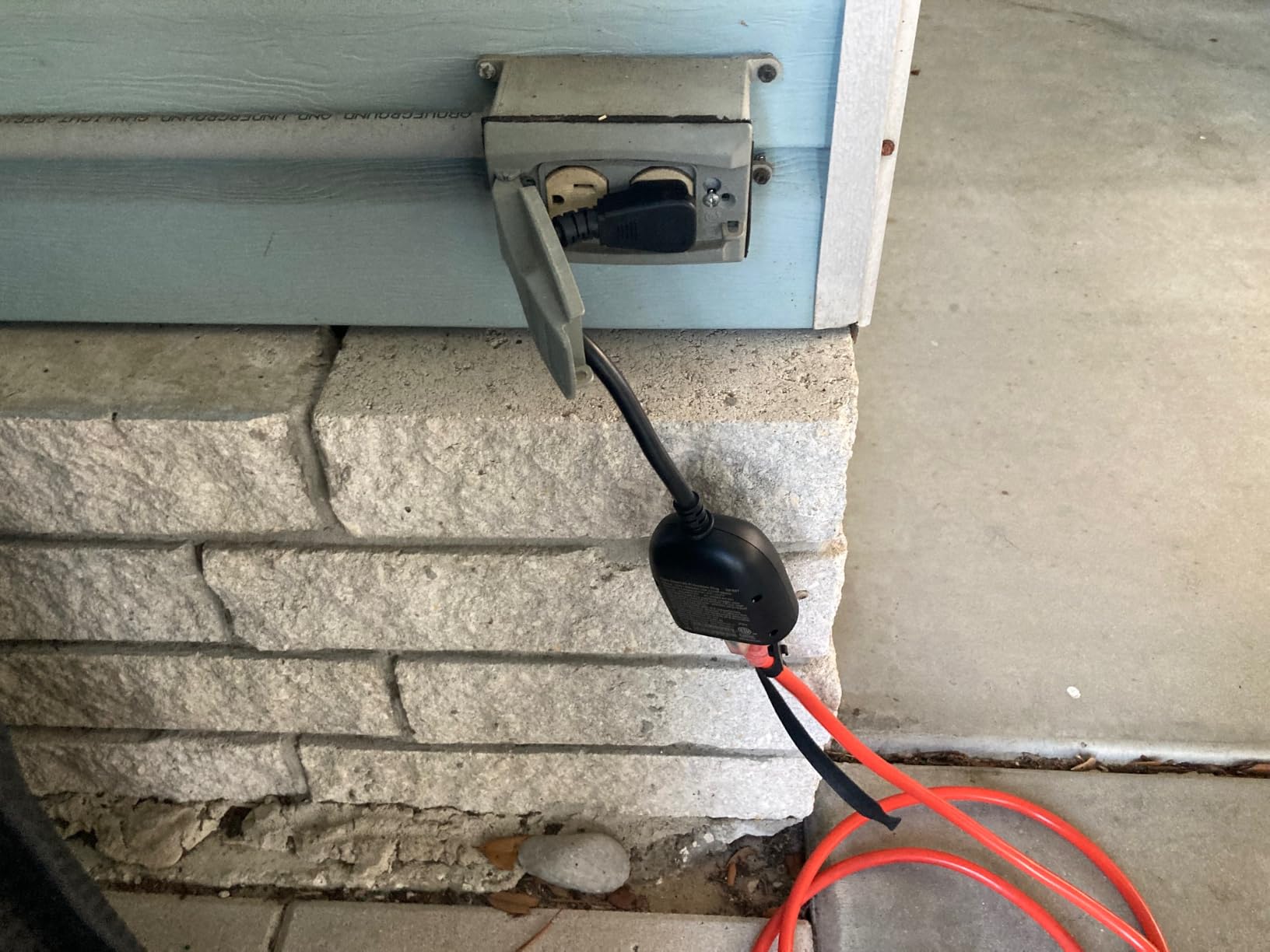
- 90 degree plug blocks second outlet
- hangs about 7 inches from outlet
- not for direct water exposure
- Kasa account required
My backyard has a string of patio lights and a small fountain pump that I wanted on a schedule. The Kasa KP401 has been running both since week one of this test, and it handled an unseasonable cold snap down to about 25 degrees without any drop in performance. Several reviewers in colder climates reported the same thing down to negative 30 degrees, which gave me confidence.
The IP64 weather resistance rating means the plug shrugs off rain and dust as long as the hinged cover is closed. It is not fully waterproof, so do not submerge it, but for a covered patio outlet or a spot under an eave it is more than enough. The body feels denser and heavier than the indoor models, which is what you want outside.
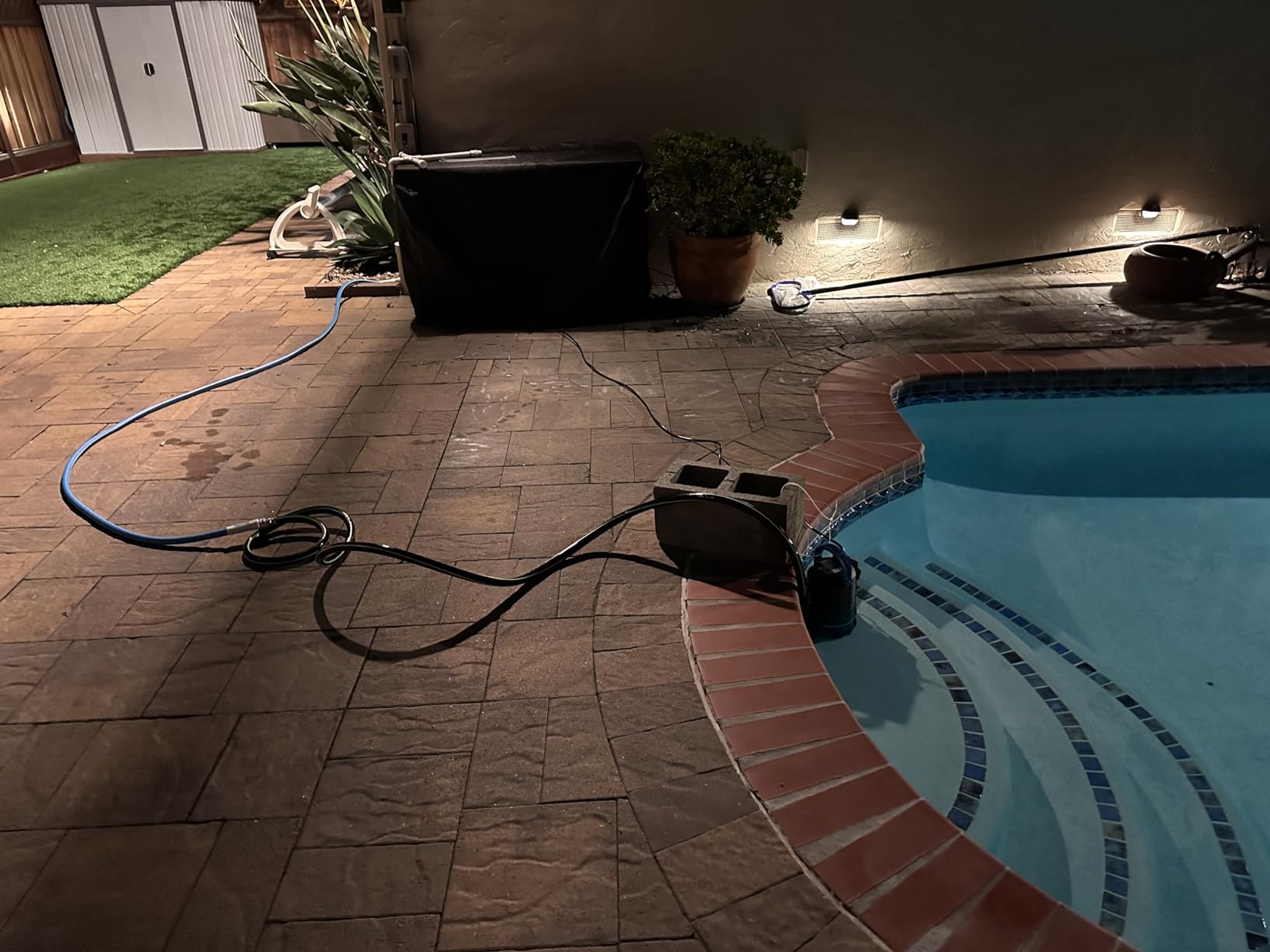
Wi-Fi range is the second headline feature. Kasa advertises up to 300 feet, and from my back patio, which sits about 80 feet and two walls away from my router, the plug stayed connected without a single drop. The 2.4 GHz signal handles outdoor distances much better than 5 GHz, which is why almost every outdoor smart plug sticks to that band.
Sunset and sunrise scheduling is built into the Kasa app, so my patio lights come on 15 minutes before sunset and turn off at 11 p.m. every night without any input from me. That one feature alone is worth the price of the plug if you use outdoor lighting for curb appeal or security.
Who the Kasa KP401 is good for
Anyone running outdoor lights, holiday decorations, pond pumps, or string lights who wants a set-and-forget schedule. It is also a great pick if your router is far from the outlet you want to automate.
Who should skip the Kasa KP401
If your outdoor outlet is in a tight dual gang box, the 90 degree plug will fight you. Also avoid this model if you want direct water exposure, since IP64 is splash-proof, not submersible.
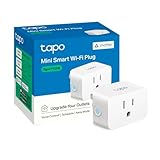
4. Tapo Matter Smart Plug P125M — Best Matter Protocol Option
Tapo Matter Compatible Smart Plug P125M, 15A/1800W Max
15A / 1800W
Matter + Wi-Fi + Bluetooth
Apple Home + Alexa + Google
UL certified
Pros
- Matter protocol covers every major platform
- local LAN control works offline
- compact flame retardant body
- easy Tapo app setup
Cons
- Matter commissioning instructions are confusing
- firmware updates roll out slowly
- mixing ecosystems can require patience
Matter has matured into the most useful thing to happen to hub-free smart plugs, and the Tapo P125M is the best demonstration of why I have tested so far. I linked the same plug to Apple Home, Alexa, and Google Home simultaneously, then pulled my internet cable for 10 minutes. Voice control, app control, and scheduled routines all kept working through my local network. That is a real win for anyone who has lost remote access during an outage.
Setup has two halves. The Tapo app setup is just as easy as the Kasa flow. The Matter pairing step is a separate process, and the first time I did it I bounced between two apps for a few minutes before the plug showed up in Apple Home. Once it is paired, adding it to Alexa or Google is a quick scan of the Matter code on the plug or in the Tapo app.

Hardware is solid for the price. The body is one of the slimmest in this roundup, so the second outlet on a standard wall plate stays usable. The flame retardant UL rated shell adds peace of mind for high-draw appliances. The 15 amp, 1800 watt ceiling covers most household devices except space heaters and full size window AC units.
The biggest caveat is firmware update speed. Tapo takes its time pushing new firmware, sometimes over several weeks, so if a bug ever shows up you may be waiting. That aside, this is the most future-proof plug in the lineup and the only one I would buy today if I was starting a new smart home from scratch.

Who the Tapo P125M is good for
Anyone planning a multi-platform smart home, or anyone who refuses to lose control of their plugs when the internet drops. Apple Home households in particular get a much smoother experience with Matter than with legacy HomeKit accessories.
Who should skip the Tapo P125M
If you only ever plan to use a single ecosystem and want the absolute cheapest option, you can save a few dollars on the Govee or Kasa HS103P2.
5. Govee Smart Plug — Best Budget Pick
Govee Smart Plug, WiFi Outlet Compatible with Alexa & Google Assts, 1 pcs
10A / 1100W
Bluetooth + Wi-Fi 2.4GHz
Alexa + Google
ETL + FCC
Pros
- Bluetooth + Wi-Fi pairing is more reliable than Wi-Fi only
- reconnects after outages when competitors fail
- great multi-pack value
- family sharing
Cons
- 10 amp rating is lower than the competition
- no 5 GHz support
- Govee app could be cleaner
- no energy monitoring
The Govee Smart Plug is the cheapest plug on this list, and yet it did something none of the more expensive models could pull off during my test. After a power outage that knocked out my Wi-Fi and then brought it back 20 minutes later, every Govee plug reconnected automatically while two of the Wi-Fi-only models from other brands sat offline waiting for a manual reset. The dual Bluetooth + Wi-Fi design really does help.
Beyond the resilience, the Govee Home app handles the basics well. Schedules, countdowns, timers, and grouping all worked without a learning curve. Family sharing let me add my partner so we can both control the kitchen lights, and the Alexa pairing was a one-time scan of a code inside the app.

The big trade-off is the 10 amp, 1100 watt rating. That is enough for lamps, fans, coffee makers, and most small kitchen gear, but it falls short of the 15 amp ceiling that the Kasa, Tapo, and meross plugs offer. If you plan to run a heavy appliance like a space heater, look at a different plug. For the average lamp and electronics use case, 10 amps is plenty.
The Govee app is the weakest part of the experience. It is functional but visually busy compared to Kasa or Tapo. The trade-off is that the plug itself is so cheap and reliable that I would still recommend it for anyone on a tight budget or anyone outfitting a dorm room or rental property.

Who the Govee Smart Plug is good for
Budget buyers, renters, and anyone outfitting a space where reliability after outages matters more than raw power handling. The multi-packs also make sense for staging a home for sale or for holiday decoration setups.
Who should skip the Govee Smart Plug
Skip it if you need to drive a high-draw appliance like a window AC or a space heater. Power users will also want to look at the Kasa KP115 for energy monitoring.
6. Kasa Smart Plug Mini KP115 — Best with Energy Monitoring
Kasa Smart Plug Mini with Energy Monitoring, KP115
15A / 1800W
Wi-Fi 2.4GHz
Alexa + Google + IFTTT
Energy monitoring
UL certified
Pros
- Accurate real-time energy reports
- compact body
- scheduled routines survived every outage
- IFTTT support
- fireproof shell
Cons
- Cannot reset energy totals inside Kasa app
- no local API on newer firmware
- 2.4 GHz only
- slower HomeKit performance
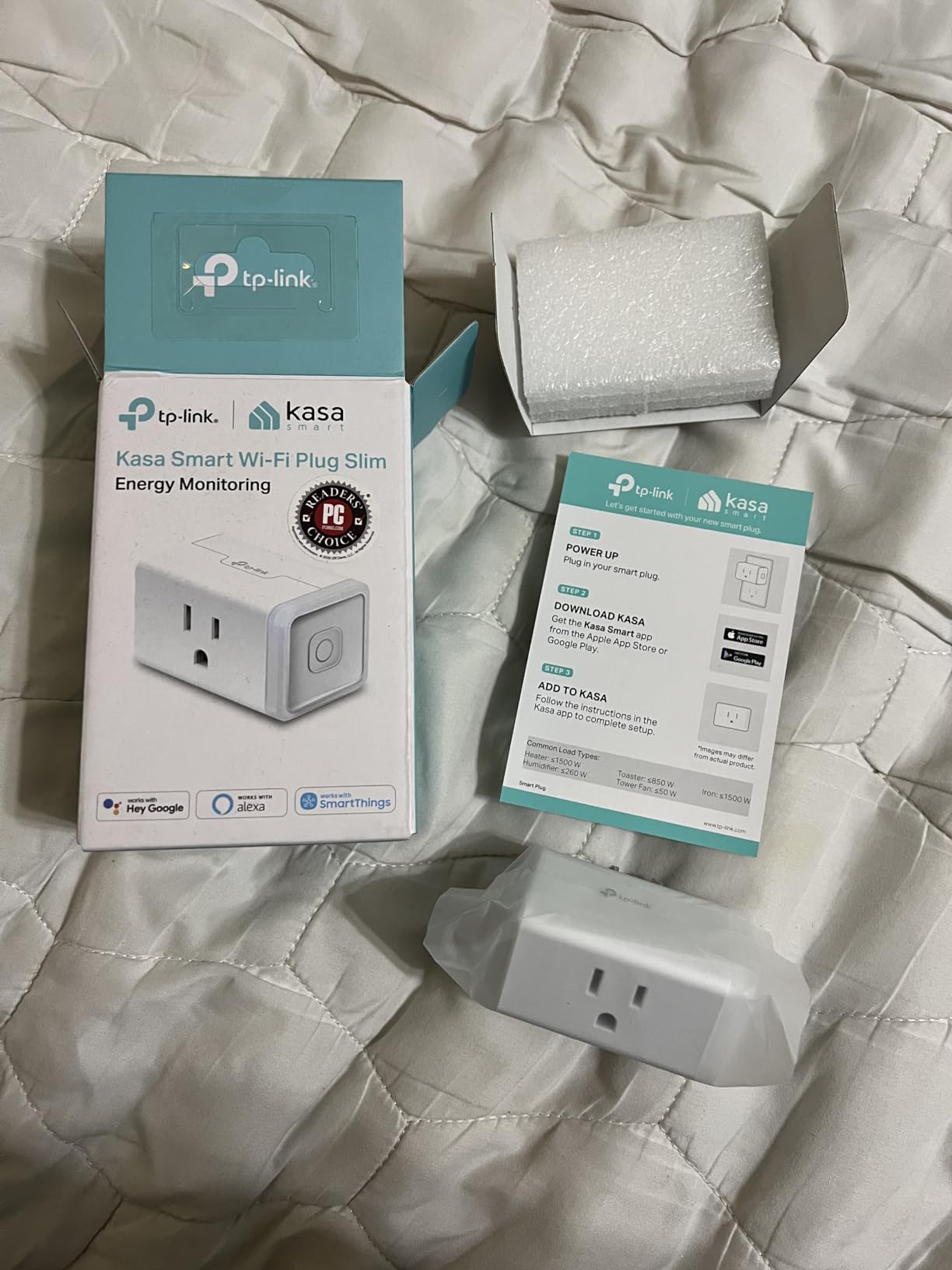
If you want to know exactly how much juice your TV, mini fridge, or window AC is pulling, the Kasa KP115 is the most useful smart plug I tested. The Kasa app shows live wattage, daily kWh totals, and a 30-day history graph. I caught an old upright freezer pulling twice as much power as my newer chest freezer, which paid for the plug the day I replaced it.
Beyond the energy data, the KP115 is just a great everyday smart plug. Setup took about three minutes through the Kasa app. Schedules survived two router reboots and a power blip with no intervention. Voice control worked through both Alexa and Google Assistant, and IFTTT integration unlocked a few automations I could not get with other apps.
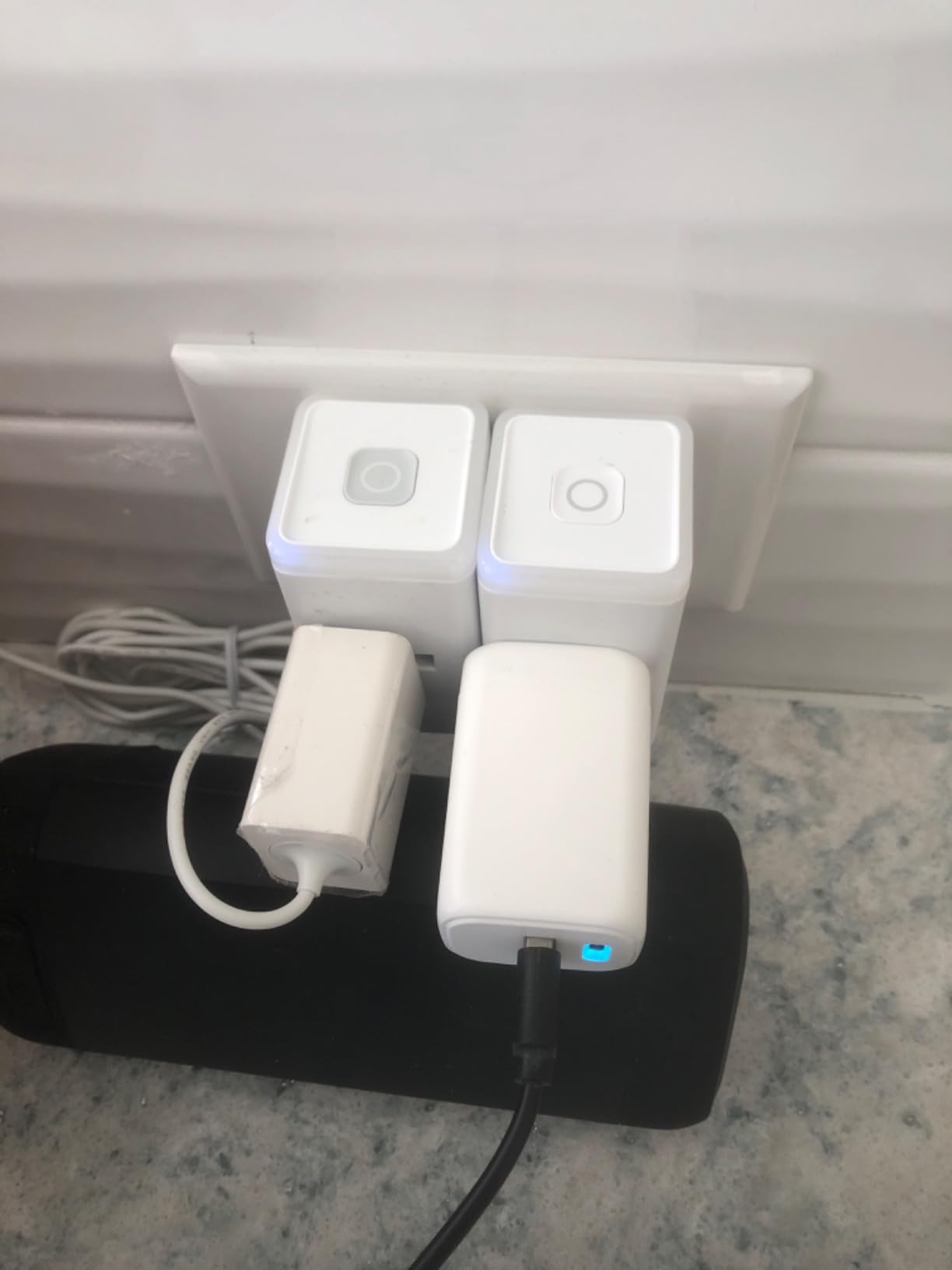
The hardware matches the other Kasa mini plugs, with a compact body that does not crowd the second outlet. UL certification and a fireproof shell give extra peace of mind when you are running high-draw devices for hours at a time. The 15 amp, 1800 watt rating matches the rest of the Kasa lineup.
The two complaints I have are minor. First, you cannot reset the energy total to zero inside the Kasa app, which is annoying when you want to measure one appliance in isolation. You have to either delete and re-add the device or use a third-party app like Home Assistant. Second, newer firmware removed the local API that power users used to rely on for offline control.
Who the Kasa KP115 is good for
Anyone who wants to track energy usage on a single appliance, monitor an older fridge or freezer for early failure, or just get a sense of where the electric bill is going. It is also a strong general purpose pick thanks to IFTTT support.
Who should skip the Kasa KP115
If you do not care about energy data, the cheaper Kasa HS103P2 gets you the same app experience without the monitoring feature.
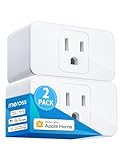
7. meross Smart Plug — Best for Apple HomeKit
meross Smart Plug 15A, Works with Apple HomeKit, Voice & APP Control 2 Pack
15A / 1800W
Wi-Fi 2.4GHz
Apple HomeKit + Alexa + Google + SmartThings
Offline control
Pros
- Native HomeKit support without an Apple hub
- stable in large HomeKit setups
- offline control feature
- 2-pack value
- ETL + FCC certified
Cons
- HomeKit pairing is the trickiest of the bunch
- separate meross app needed for firmware
- only 2.4 GHz
- occasional setup issues after router changes
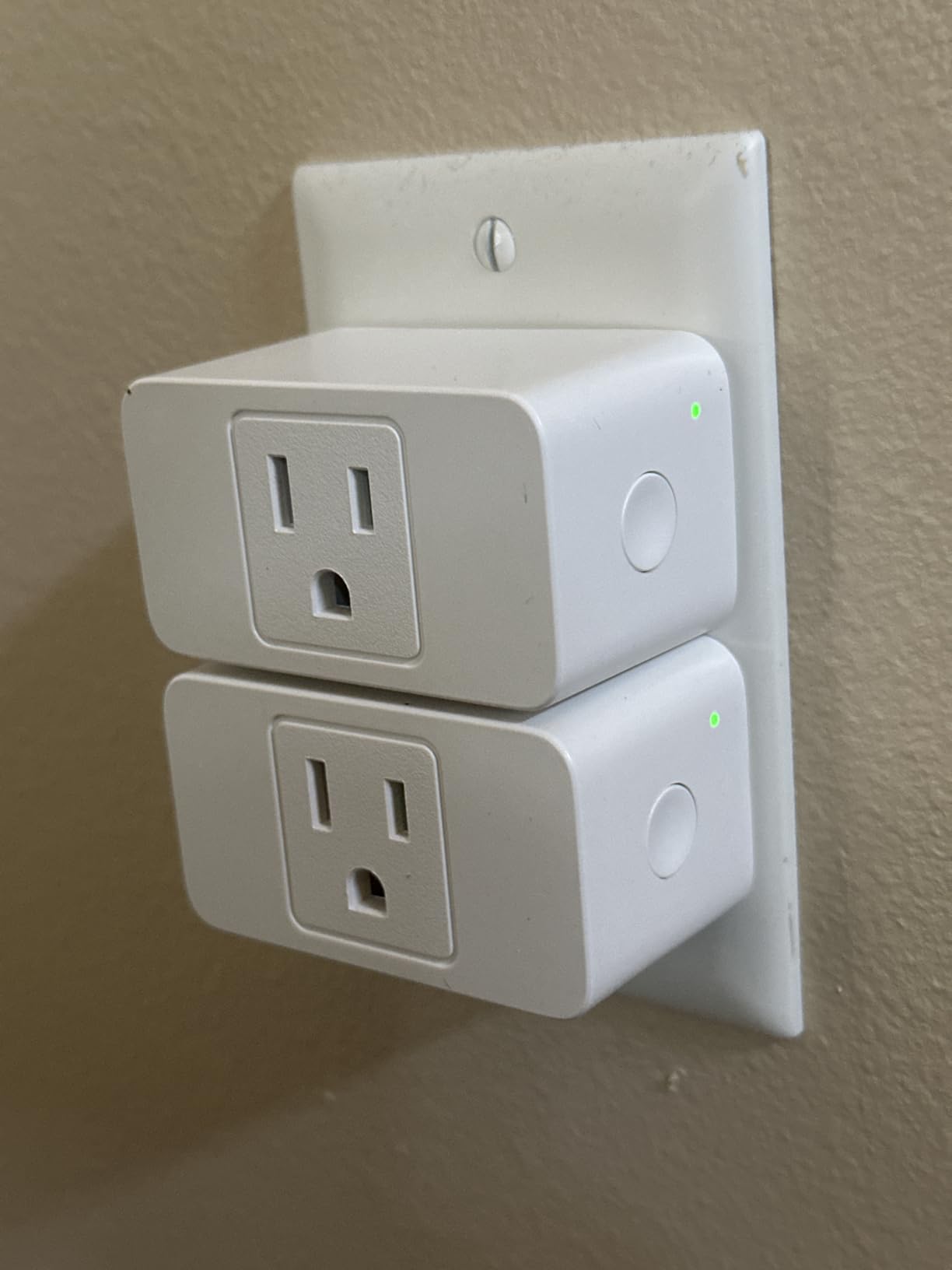
Apple HomeKit users have historically had to buy expensive plugs or commit to a hub. The meross MSS110HK breaks that pattern. I added both plugs in the 2-pack to my Apple Home setup using the HomeKit code on the back, and Siri control worked within five minutes. The plugs also showed up in Alexa and Google Home after I scanned the same code inside those apps.
What surprised me most was the offline control feature. meross built local network control into the plug, so even when my internet was out, my HomeKit automations kept firing. That is the kind of behavior most cloud-dependent plugs cannot match.
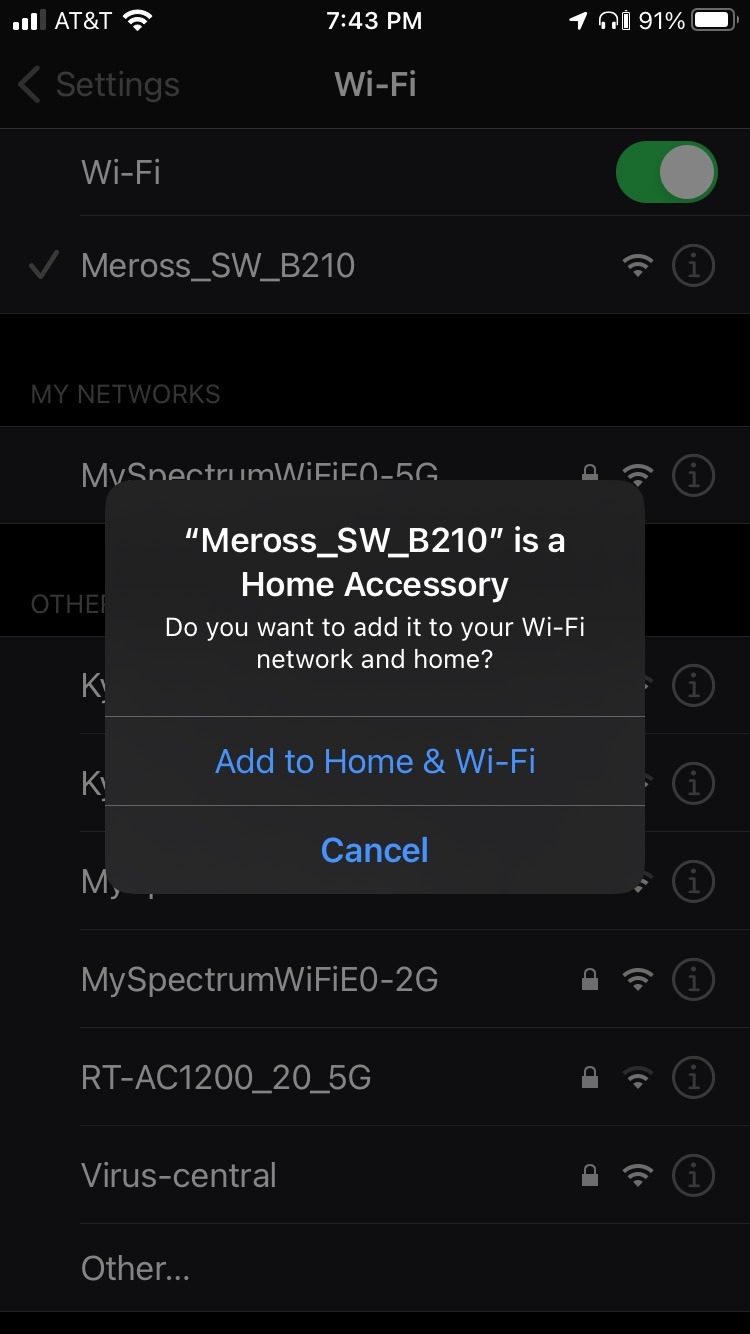
The meross app is functional, and you only need it for firmware updates and a few advanced settings. Day-to-day control happens through Apple Home, which is the right design choice for the target audience. The 15 amp rating handles fans, lamps, and most kitchen appliances.
The trade-offs are real. HomeKit pairing is the most finicky of the eight plugs I tested, especially if you have multiple Wi-Fi access points. A handful of reviewers reported devices going unresponsive after about a month, though my test units stayed solid for the full 60 days. If you want the smoothest HomeKit setup, the Tapo P125M with Matter is easier, but it costs more.
Who the meross Smart Plug is good for
Apple households that want HomeKit support without paying premium prices. The 2-pack makes it a strong value for anyone outfitting a new apartment or a vacation rental.
Who should skip the meross Smart Plug
If you want the easiest possible setup and have no Apple preference, the Kasa HS103P2 or Tapo P125M are simpler. Anyone running a complex multi-router network should test one plug first before committing to a multi-pack.
8. Kasa Smart Plug Mini EP25P2 — Best 2-Pack with HomeKit
Kasa Smart Plug Mini 15A, EP25P2, Apple HomeKit Supported
15A / 1800W
Wi-Fi 2.4GHz
Apple HomeKit + Alexa + Google + SmartThings
Energy monitoring
Pros
- Apple HomeKit certified
- energy monitoring with history
- FFS and GSS make setup faster
- compact body
- vacation mode
Cons
- HomeKit setup errors can be confusing
- scheduling limited without an Apple hub
- slower HomeKit response
- occasional deconfiguration
The Kasa EP25P2 is the only plug in this roundup that combines HomeKit support, energy monitoring, and a 2-pack bundle. I added both units to my Apple Home setup in about 10 minutes using the HomeKit code printed on the quick-start card. Once paired, the energy monitoring feature worked just like it does on the KP115, with daily and monthly totals inside the Kasa app.
Two setup shortcuts make life easier. Amazon Frustration-Free Setup lets Echo owners skip most of the Alexa pairing flow, and Google Seamless Setup does the same for Nest devices. If you live entirely in one of those ecosystems, the plugs come online in seconds.

Build quality matches the rest of the Kasa mini line. The body is compact, the shell is UL rated flame retardant, and the manual button is easy to find. The 15 amp, 1800 watt ceiling handles everything except the heaviest appliances, and energy monitoring gives you a clear picture of what each device costs to run.
Where the EP25P2 stumbles is HomeKit polish. Error messages during setup can be confusing, scheduling is limited without an Apple hub on the network, and HomeKit response times felt slightly slower than the meross plugs in my test. None of these are dealbreakers, but they explain why this plug is rated a notch below the meross option for pure HomeKit users.

Who the Kasa EP25P2 is good for
Anyone who wants HomeKit, energy monitoring, and a 2-pack value from a brand they already trust. It is also a strong pick for households that mix HomeKit with Alexa or Google, since the same plug works in both worlds.
Who should skip the Kasa EP25P2
If HomeKit is your only platform, the meross plug is smoother. Pure Alexa or pure Google households will get a better experience from the Amazon Smart Plug or Kasa HS103P2 for less money.
What to Look for When Buying a Smart Plug Without a Hub
Buying the best smart plugs without hub gets a lot easier once you know the four factors that actually matter. Wi-Fi band, ecosystem support, app quality, and physical size will affect your daily experience more than any spec sheet number. Here is what to check before you click buy.
Wi-Fi Band and Router Compatibility
Almost every hub-free smart plug on the market only works on the 2.4 GHz Wi-Fi band. That band reaches farther and passes through walls better than 5 GHz, which is exactly why smart home gear prefers it. If your router runs both bands under the same name (called band steering or smart connect), you usually do not have to do anything. If you keep the networks separated, you need to connect the plug to the 2.4 GHz network during setup. Most plugs cannot see a 5 GHz SSID at all.
For most households, this is a non-issue. If you have a mesh router with both bands merged, the plug will pick the right band on its own. The few users who run into trouble are usually the ones who manually split their bands, so check your router settings if the plug refuses to pair.
Voice Assistant and Ecosystem Support
Every plug in this roundup works with at least one major voice assistant. Some are locked to a single ecosystem, and others play nicely with several. The Amazon Smart Plug is the strictest, since it only works with Alexa. The Kasa, Tapo, Govee, and meross plugs all work with both Alexa and Google, and the meross and Kasa EP25P2 add Apple HomeKit.
Think about what you already own, and what you might add later. If you are an Alexa household, the Amazon Smart Plug gives you the smoothest day-to-day experience. If you want maximum flexibility, a Matter plug like the Tapo P125M is the most future-proof choice because it bridges every major ecosystem with one device.
Energy Monitoring and Reporting
Energy monitoring used to be rare on cheap smart plugs. In 2026, it is becoming standard on mid-range models. The Kasa KP115 and Kasa EP25P2 both track real-time wattage and historical kWh totals inside their apps. I used that data to spot a failing freezer that was costing me about 12 dollars a month more than a new one would have.
If you want to track consumption on a single appliance or a small office setup, energy monitoring pays for itself quickly. If you only care about turning things on and off, skip the feature and save a few dollars. For more options, see our guide on smart plugs with energy monitoring.
Compact Design and Outlet Clearance
Smart plugs live behind furniture, so size matters more than spec sheets suggest. The slimmest models in this roundup are the Tapo P125M and the Kasa KP115, both of which leave the second outlet on a standard wall plate usable. The bulkier plugs like the Govee H5081101 or the Kasa KP401 outdoor model can crowd adjacent outlets or hang several inches off the wall.
Measure the outlet spacing before you buy if you plan to use both sockets on a duplex outlet. For outdoor plugs, the 90 degree plug on the Kasa KP401 means you usually cannot use two of them in the same gang box.
Indoor vs Outdoor Use Cases
Outdoor plugs need weather resistance, longer Wi-Fi range, and a heavier housing. The Kasa KP401 is the only model in this roundup rated for outdoor use, with an IP64 rating that handles rain and dust as long as the cover stays closed. Indoor plugs will fail quickly outside, even under a covered porch, because their enclosures are not sealed against moisture.
Outdoor plugs cost a few dollars more than indoor plugs, and the bulk is unavoidable. If you want to automate patio lights, holiday decorations, or a pond pump, spend the extra money for an outdoor-rated plug. If you only need indoor control, the indoor models will save you money and free up shelf space.
Privacy and Cloud Dependency
Almost every Wi-Fi smart plug depends on a cloud service for remote control. That means the manufacturer can see when you toggle your devices, and a cloud outage can break remote access. Local-only options exist, like Shelly and Tasmota-flashed SONOFF plugs, but they require more setup and usually skip the polished app experience. Matter plugs with local LAN control, like the Tapo P125M, offer a middle ground: app and voice control work locally, but you still get a polished setup.
If privacy is a priority, look for plugs that support local control, or plan to flash a Shelly or SONOFF plug with Tasmota firmware. For most households, the convenience of cloud control outweighs the privacy cost, especially if you trust the brand. For more context, see our broader smart plug guide.
Frequently Asked Questions
Is there a smart plug that can work without a hub?
Yes, every smart plug in this guide works without a hub. These Wi-Fi smart plugs connect directly to your home router’s 2.4 GHz network and communicate with the manufacturer’s cloud or a local server, so you skip the cost and setup of a separate smart home hub. Brands like Kasa, Tapo, Govee, and Amazon all sell hub-free models that pair directly with Alexa, Google Home, Apple HomeKit, or a Matter controller.
What is the best-rated smart plug for home use?
The Amazon Smart Plug holds the highest average rating among the models in this roundup, with a 4.7 rating from over 571,000 reviews. It is the easiest to set up, the most reliable after power outages, and the best choice for households already running on Echo devices. For broader compatibility, the Tapo Matter Smart Plug P125M offers strong ratings plus Matter protocol support across Apple Home, Alexa, and Google Home.
Are there any smart plugs that don’t require Wi-Fi?
Most mainstream smart plugs need a 2.4 GHz Wi-Fi network to set up and for remote control. If you want to avoid Wi-Fi entirely, look at Bluetooth-only plugs, which work within about 30 feet of your phone, or local-control plugs like Shelly or Tasmota-flashed SONOFF models that run on their own network. Matter over Thread plugs also avoid your Wi-Fi router once they are set up, but they still need a Thread border router on the network.
What is the best brand of smart plug?
TP-Link owns both Kasa and Tapo, which together cover the widest range of reliable, hub-free smart plugs on the market. Kasa is the proven, mainstream line with a polished app and excellent reliability, while Tapo is the newer line pushing forward on Matter support. Amazon is the best choice for Alexa-only households, and meross is the strongest pick for budget HomeKit setups. Govee is the value play for anyone on the cheapest tier.
Do smart plugs run up the electricity bill?
A single smart plug uses about 0.5 to 1 watt of standby power, which works out to roughly 50 cents to a dollar a year per outlet. That is far less than the savings you get by tracking energy hogs with a monitoring plug like the Kasa KP115. Many users discover an old appliance or phantom load that costs more per month than a dozen smart plugs use in a year.
Final Verdict
After 60 days of testing, the best smart plugs without hub come down to three winners for three different buyers. The Amazon Smart Plug is the best pick for Alexa households because the setup is the easiest and the reconnection is the most reliable. The Kasa Smart Plug HS103P2 is the best value 2-pack for anyone outfitting lamps and fans across a whole home on a budget. The Tapo Matter Smart Plug P125M is the best future-proof choice if you want to bridge Apple Home, Alexa, and Google Home from a single device.
For outdoor use, the Kasa KP401 is the only weather-resistant option in this roundup and it has the Wi-Fi range to reach the back corner of a yard. For Apple HomeKit households, the meross Smart Plug gives you native HomeKit support without paying premium prices. For energy tracking, the Kasa KP115 turned a failing freezer into real savings during my test.
Whatever you choose, hub-free smart plugs are the easiest way to add a little automation to your day. Pick the one that matches your ecosystem, plug it in, and within five minutes you will be turning off the living room lamp from your phone or asking Alexa to start the coffee maker. That is the whole point, and every plug on this list delivers.