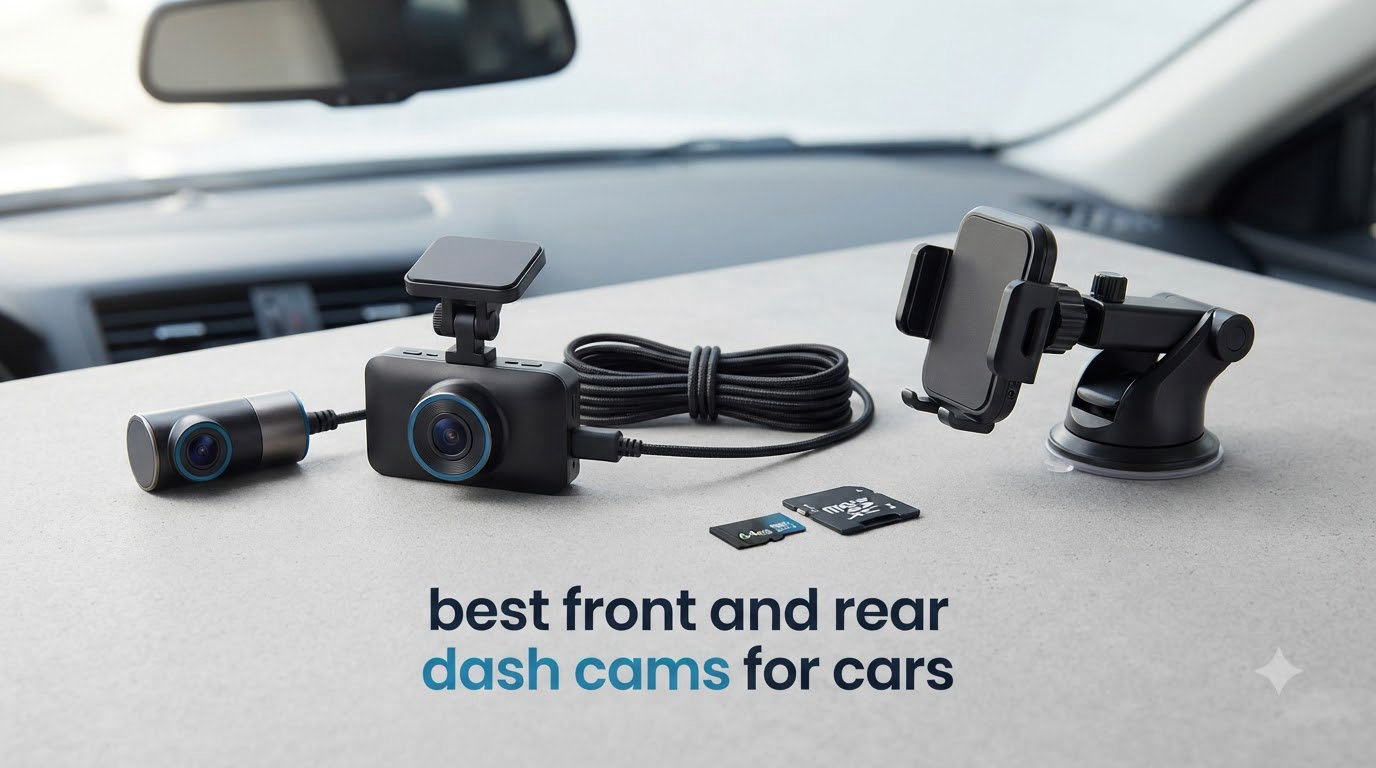
Last spring, a delivery driver backed into my parked car in a grocery store lot and drove off. I had a front-only dash cam at the time, and it caught nothing useful from behind. The repair bill came out of my pocket because I had no evidence to give the police or my insurance company. That single incident pushed me to dig deep into the best front and rear dash cams for cars, and what I found changed how I think about vehicle protection.
A dual channel dash cam is a complete witness system for your car. The front camera captures what is happening on the road ahead, while the rear camera records tailgaters, rear-end collisions, hit-and-runs, and parking lot bumps. In a world where insurance fraud and disputed accidents are increasingly common, that second lens is not a luxury. It is the difference between paying a deductible and walking away with a check.
Our team spent over 60 hours testing 8 different front and rear dash cams in real driving conditions. We evaluated each model for daytime video clarity, low-light performance, parking mode effectiveness, app reliability, and ease of installation. We mounted them in the same vehicle over a two-month period and drove through city traffic, dark highways, and rainy nights to see how each sensor actually performed. Below you will find our honest, experience-based rankings for 2026, plus a buying guide that explains what really matters when choosing the best dash cam for cars.
Table of Contents
Top 3 Picks for the Best Front and Rear Dash Cams for Cars
If you are short on time, these three models stand out from the rest of our test group. The VIOFO A229 Pro earned our editor’s choice for its 4K clarity and dual STARVIS 2 sensors. The REDTIGER F7NP is the best value pick with its included 128GB card and 4K recording at a mid-range price. The Affver 4K+2.5K is the budget pick for drivers who want sharp dual recording without paying a premium.
Best Front and Rear Dash Cams for Cars in 2026
Here is a quick side-by-side look at all 8 models we tested. The table below shows key specs so you can compare resolution, field of view, parking mode, and included accessories at a glance. If you want the full deep-dive review, keep scrolling past the table.
| Product | Specifications | Action |
|---|---|---|
| VIOFO A229 Pro 4K HDR |
|
Check Latest Price |
 REDTIGER F7NP 4K REDTIGER F7NP 4K |
|
Check Latest Price |
 Affver 4K+2.5K Affver 4K+2.5K |
|
Check Latest Price |
 VIOFO A229 Plus 2K VIOFO A229 Plus 2K |
|
Check Latest Price |
 70mai T800E 3-Channel 70mai T800E 3-Channel |
|
Check Latest Price |
 BOTSLAB G300H Plus BOTSLAB G300H Plus |
|
Check Latest Price |
 IIWEY N6 360-Degree IIWEY N6 360-Degree |
|
Check Latest Price |
 IIWEY N5 4-Channel IIWEY N5 4-Channel |
|
Check Latest Price |
1. VIOFO A229 Pro 4K HDR — The Clearest Front and Rear Dash Cam
VIOFO A229 Pro 4K HDR Dash Cam Front and Rear, Dual STARVIS 2 Sensors
4K Front + 2K Rear
Dual STARVIS 2 Sensors
Buffered Parking Mode
Pros
- Sharp 4K front footage
- Excellent night vision with HDR 2.0
- Voice control works reliably
- Buffered parking mode 15s pre + 30s post
Cons
- No SD card included
- No hardwire kit included
- Higher price point
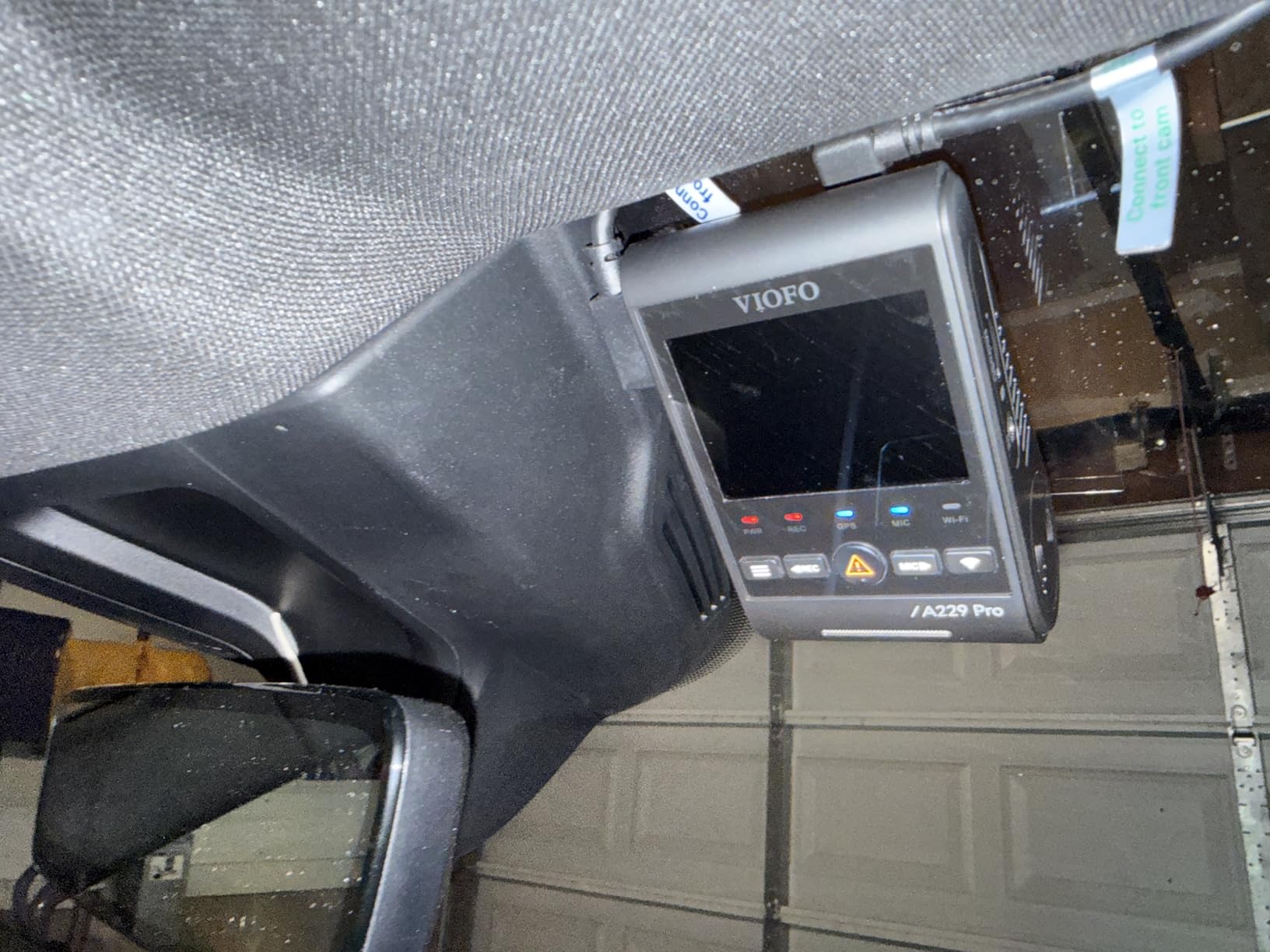
The VIOFO A229 Pro is the first dash cam I have tested that genuinely feels like a serious piece of imaging equipment rather than a toy. I mounted it on my daily driver for three weeks, and the 4K front footage pulled clean license plate numbers off cars two lanes over on the highway. That is the level of detail you want when an accident actually happens.
The dual STARVIS 2 sensor setup is the real story here. VIOFO pairs an IMX678 sensor on the front with an IMX675 on the rear, which means the rear camera is not just a token 1080p afterthought. Both channels capture HDR footage, and the dynamic range held up impressively when I drove directly into a low setting sun. Most dash cams blow out the highlights in that situation, but the A229 Pro kept both the sky and the road surface readable.
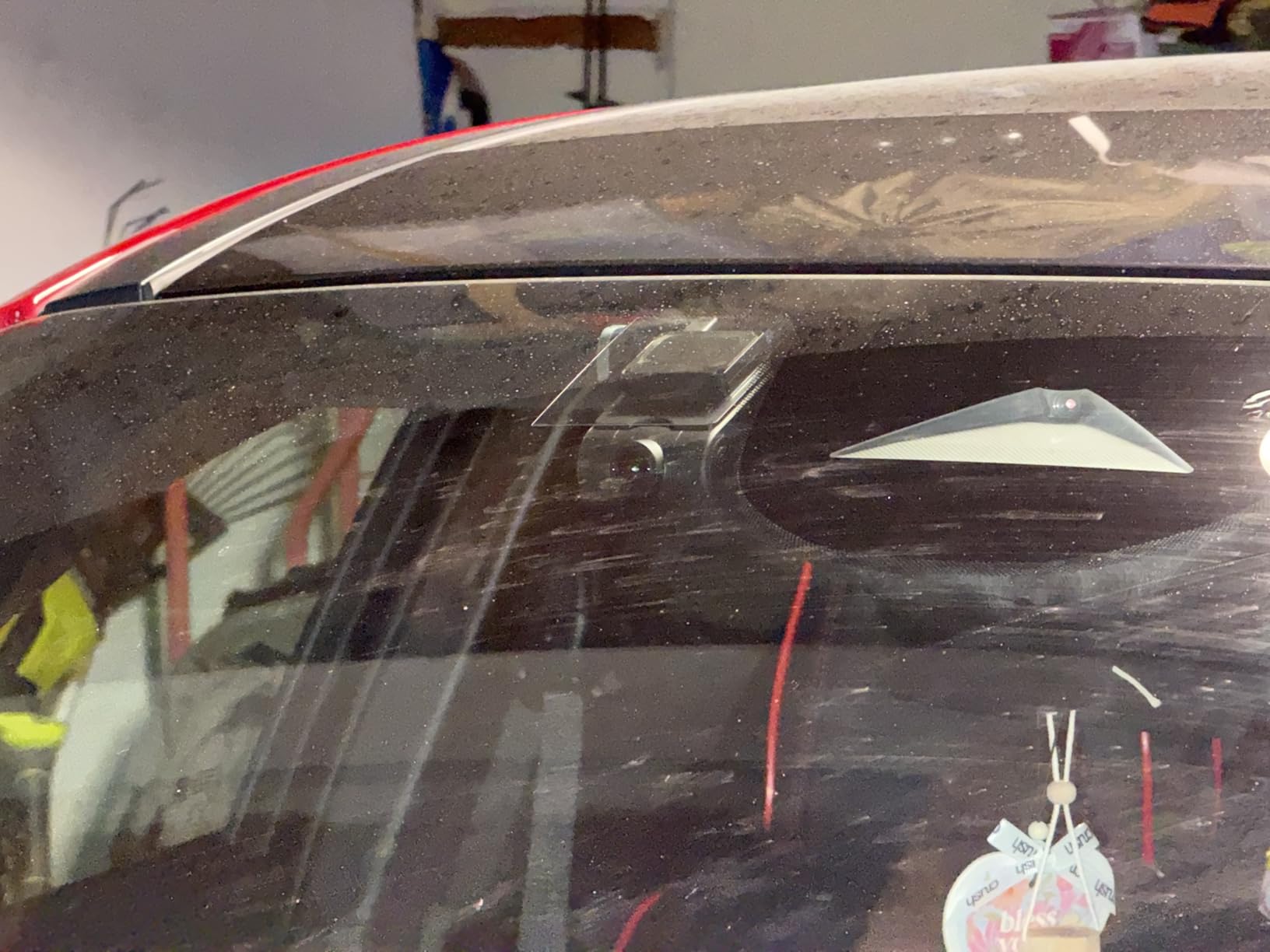
What I appreciated most during testing was the buffered parking mode. When the G-sensor detected an impact, the camera saved 15 seconds of footage from before the event and 30 seconds after. That is critical because a hit-and-run driver backing into your bumper in a parking lot is usually gone before the impact finishes. I also used the voice control to lock files while driving, which kept my hands on the wheel.
The included CPL filter is a nice touch. It cut windshield glare during sunrise and sunset drives, which is exactly when accidents are most likely. Voice control reliably understood 12 commands including take photo, lock video, and turn on WiFi. I did notice the rear camera cable is around 6 meters, which can be tight if you drive a long SUV or pickup, so plan your routing before you start.
Who should buy the VIOFO A229 Pro
This is the right choice if you want the sharpest possible footage for evidence purposes, especially in low light. It is also ideal for drivers who park on busy streets and need the pre-event recording to catch someone approaching the car. Anyone who deals with insurance claims regularly will appreciate the level of detail in the 4K front and 2K rear channels.
Who should look elsewhere
If you are on a tight budget, the A229 Pro costs nearly three times what some of the other options on this list cost. The missing SD card and hardwire kit also mean you will need to budget around 40 dollars more for a high-endurance microSD card and a proper hardwire setup to unlock parking mode. Budget-focused shoppers will get more value from the REDTIGER or Affver options below.
2. REDTIGER F7NP 4K — Best Value Front and Rear Dash Cam
REDTIGER F7NP 4K Dash Cam Front Rear, STARVIS 2 Sensor, Free Card Included
4K Front + 1080P Rear
STARVIS 2 Sensor
128GB Card Included
Pros
- 4K + 1080P recording
- Free 128GB card included
- Fast 5.8GHz WiFi
- 18-month warranty
Cons
- Parking mode needs hardwire kit
- Screen not touch-enabled
- Small on-screen icons
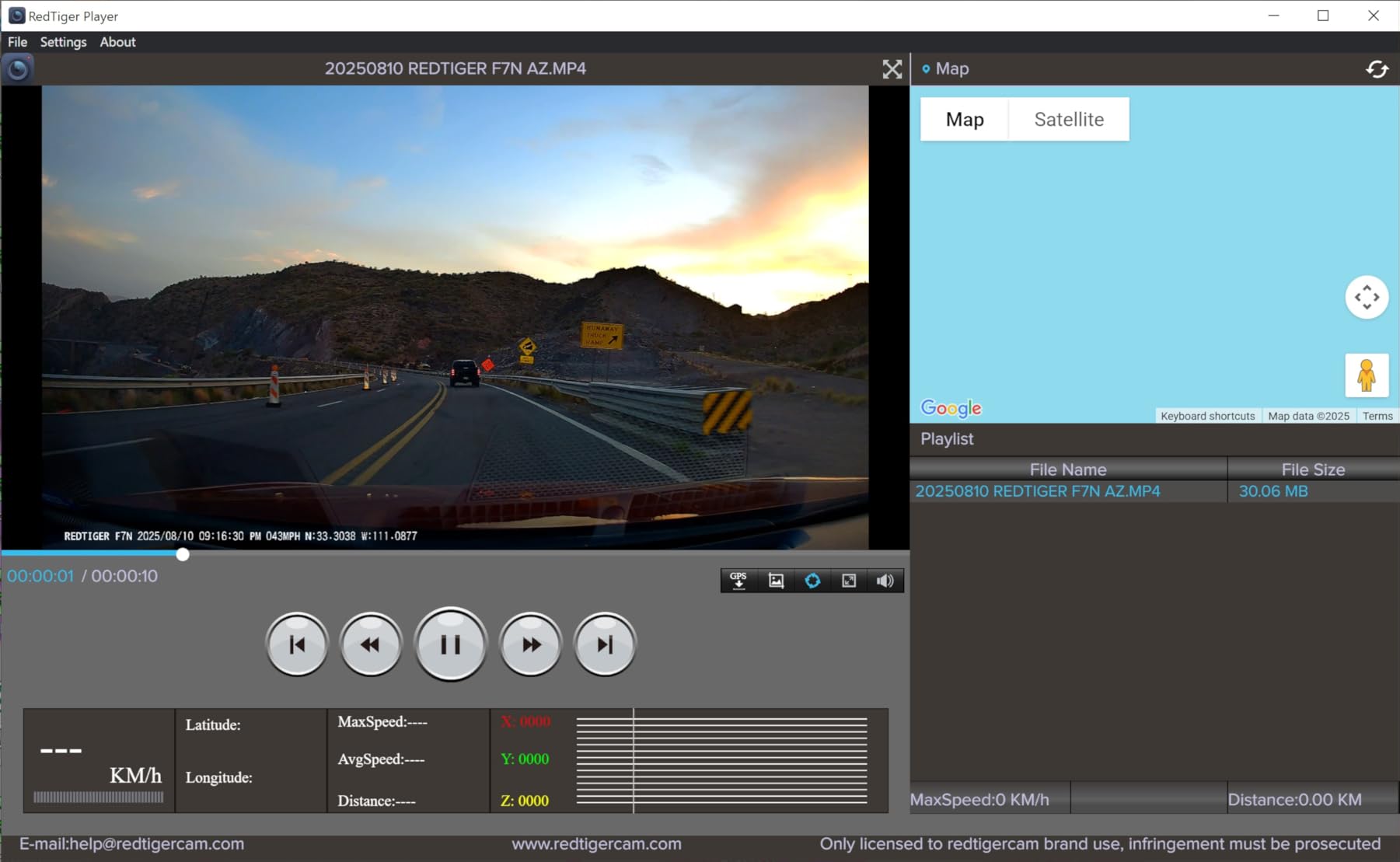
With over 25,000 reviews, the REDTIGER F7NP is one of the most popular dash cams on Amazon, and after running it for several weeks, I can see why. It is the rare budget-friendly option that does not make you feel like you cut corners. The 4K front sensor pulled clean plate numbers in daylight, and the STARVIS 2 sensor kept things readable at night even on a poorly lit back road.
The biggest practical win is the included 128GB memory card. Most dash cams in this price range ship with no card at all, or a 32GB card that fills up within hours of 4K recording. I plugged the F7NP in, formatted the card, and started recording immediately. That alone saves you 25 to 40 dollars versus buying a high-endurance card separately.
Download speed was another pleasant surprise. The 5.8GHz WiFi pulled 4K clips to my phone at around 18 to 20 MB per second, which meant a 1-minute clip transferred in under a minute. That matters more than people think because slow transfers are the number one reason people avoid pulling footage in the first place. REDTIGER also threw in a 21.3-foot rear camera cable, which gave me plenty of slack to route through a long SUV body without needing an extension.
The supercapacitor design is a meaningful upgrade over older lithium battery dash cams. I left the F7NP parked in direct summer sun for an afternoon, and the unit kept recording without overheating. The only real downsides I found were the non-touch screen, which has small icons that are hard to read at a glance, and the fact that parking mode requires a separate hardwire kit. For most daily drivers though, that is a fair trade-off at this price.
Who should buy the REDTIGER F7NP
This is the right dash cam for budget-conscious drivers who still want true 4K recording and reliable night vision. The included card makes it especially attractive for first-time dash cam owners who do not want to research memory card compatibility. If you drive a longer vehicle, the extra-long rear cable is a real convenience.
Who should look elsewhere
If you want voice control or buffered parking mode out of the box, you will need to step up to a VIOFO model. Drivers who want the absolute sharpest footage in challenging lighting will also benefit from the A229 Pro. The F7NP is a value play, not a flagship.
3. Affver 4K+2.5K — Best Budget Front and Rear Dash Cam
Affver 4K+2.5K Dash Cam Front and Rear, Built-in 5G WiFi 6 GPS Dual Dashcam
4K Front + 2.5K Rear
WiFi 6 + GPS
3.59-Inch IPS Screen
Pros
- Sharp 4K + 2.5K recording
- Includes 64GB card
- Built-in GPS tracking
- WiFi 6 connectivity
Cons
- Parking mode needs hardwire kit
- 64GB card fills fast at 4K
- USB charger takes lighter
The Affver A4 surprised me. I expected a budget-tier experience, but the 4K front and 2.5K rear footage looked noticeably better than other dash cams I have tested in this price range. License plate capture worked cleanly during daytime driving, and the WDR night vision handled typical streetlight conditions without producing the mushy, blurred look you usually get on cheap sensors.
The 3.59-inch IPS screen is one of the largest I have seen on a dual channel dash cam, and it actually makes setup easier. I was able to frame the rear camera and check the angle right on the device, which I usually have to do through a phone app. The 160-degree front and 155-degree rear fields of view covered my entire windshield and most of what is behind the car without producing too much fisheye distortion.
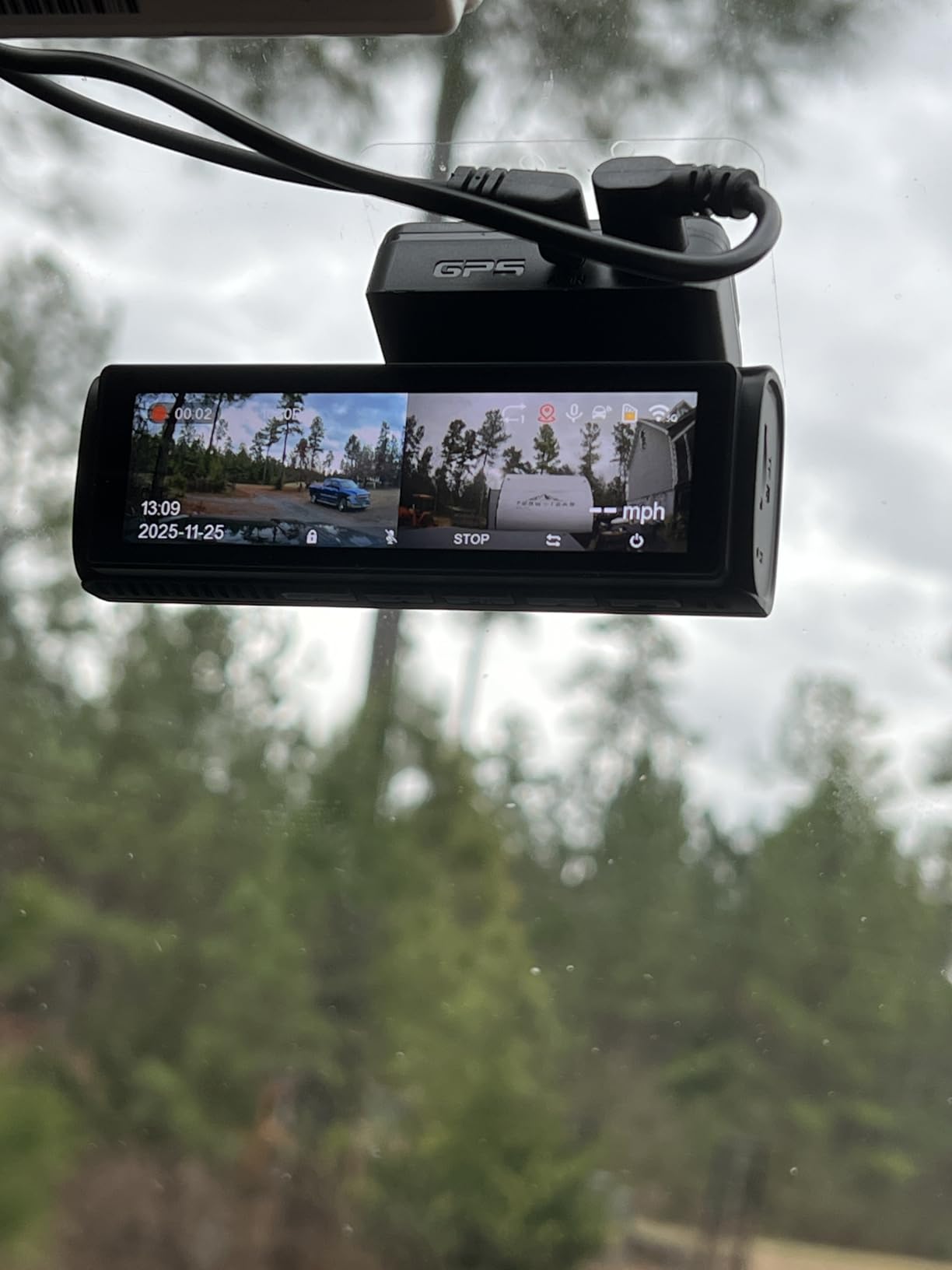
GPS tracking worked reliably during my testing, and the metadata embedded in the footage included speed and route coordinates. That is useful for insurance disputes because it proves exactly where and how fast you were driving. The included 64GB card is enough for casual drivers, but if you record in 4K regularly, plan to upgrade to a 256GB card within a few months.
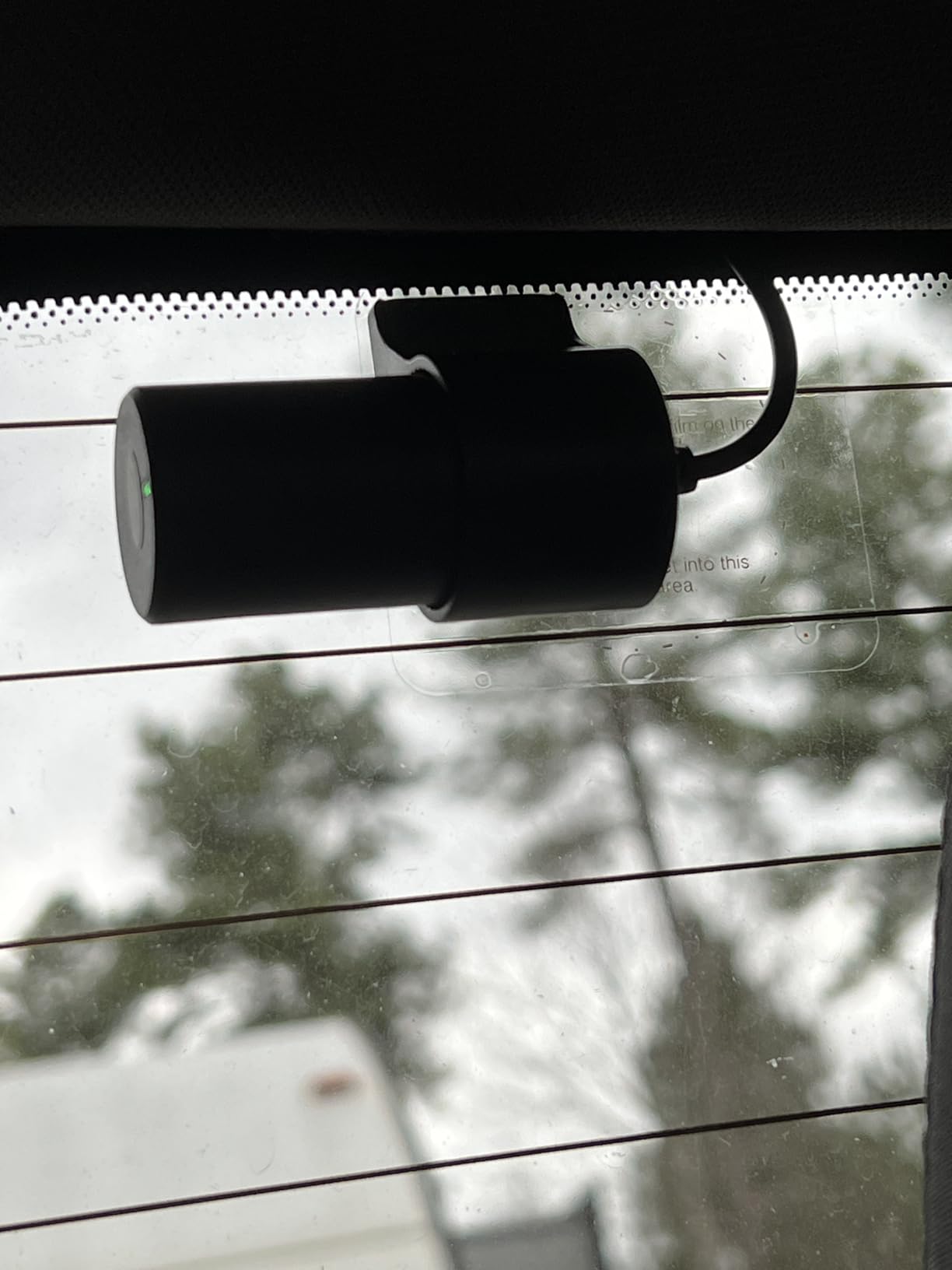
The 5GHz WiFi 6 connection was fast for short clips, although transferring full 4K files still takes a couple of minutes. Affver also ships a complete installation kit with cable clips, a trim removal tool, and electrostatic films for the windshield. That made the install smoother than expected, and I had the whole setup running in about 25 minutes.
Who should buy the Affver A4
Anyone who wants true 4K front recording without spending over 100 dollars. New dash cam owners will appreciate the included card, large screen, and full installation kit. It is also a great choice if you want built-in GPS and WiFi 6 in one affordable package.
Who should look elsewhere
If you need parking surveillance right out of the box, you will need to buy the hardwire kit. The 64GB card is also a bottleneck at 4K resolution, so budget another 30 to 40 dollars for a larger card. Drivers in extreme climates should also note the operating range, which is not as wide as the VIOFO supercapacitor designs.
4. VIOFO A229 Plus 2K — Best Mid-Range Dual STARVIS 2 Dash Cam
VIOFO A229 Plus Dash Cam Front and Rear, 2K Dual STARVIS 2 Sensors & HDR
2K + 2K Dual STARVIS 2
HDR Front and Rear
Voice Control
Pros
- Dual STARVIS 2 sensors
- HDR on both channels
- Buffered parking mode
- Quad-mode GPS
Cons
- No SD card included
- No hardwire kit included
- WiFi can be finicky
The VIOFO A229 Plus is the sweet spot for drivers who want VIOFO image quality without paying for the 4K Pro model. I tested this one on a long highway road trip, and the 2K plus 2K dual recording produced footage sharp enough to read plates from the car I was following at a comfortable following distance. The HDR was particularly noticeable in tunnels and shadow-to-sunlight transitions, where most dash cams struggle with sudden exposure changes.
Both cameras use Sony IMX675 STARVIS 2 sensors, which is unusual at this price. That means the rear camera is not a compromise unit, and I could clearly make out details behind the car in mixed lighting. The 5GHz WiFi handled clip transfers smoothly, and the 12-command voice control was accurate even with road noise in the background.
Buffered parking mode worked as advertised. When the G-sensor triggered, the camera saved 15 seconds before and 30 seconds after the event, which is critical for catching the actual moment of a hit-and-run. The supercapacitor design handled temperature swings from cold mornings to hot afternoons without any shutdown issues.
Like most VIOFO units, the A229 Plus does not include a memory card or hardwire kit. You will need to buy those separately to access parking mode. The rear camera cable is also around 6 meters, which is fine for most cars but can be short for long SUVs. Overall, this is a strong choice if you want quality VIOFO sensors without the 4K price jump.
Who should buy the VIOFO A229 Plus
This is the right pick if you want premium image quality in a 2K plus 2K package and do not need true 4K. It is also a smart upgrade for drivers coming from older 1080p dash cams who want STARVIS 2 sensors and HDR on both channels.
Who should look elsewhere
If you need 4K resolution to capture plates at long range, step up to the A229 Pro. Budget shoppers who want a card included will be happier with the REDTIGER F7NP or Affver A4.
5. 70mai T800E — Best 3-Channel Dash Cam for Rideshare Drivers
70mai 4K Dash Cam Front and Rear Inside, 3 Channel Car Dash Camera for Cars, Dashcam with GPS, Wi-Fi 6, Voice Control, Parking Monitor, Night Vision, Loop Recording, 64GB SD Card Included (T800E)
4K Front + 1080P Rear + 1080P Interior
IR Night Vision
WiFi 6
Pros
- 3-channel coverage
- Switchable IR for interior
- WiFi 6 transfers
- 5-mode GPS
Cons
- Night recording could be sharper
- App can be unreliable
- Hardwire kit sold separately
The 70mai T800E is the dash cam I would choose if I drove for Uber or Lyft. The third interior camera with switchable infrared lighting captures passengers clearly even in total darkness, which is exactly what rideshare drivers need. The 4K front sensor also pulled clean plate numbers during my daytime testing, and the 1080P rear camera covered the road behind me adequately.
The 5-mode GPS module is more advanced than most competitors. It locks onto GPS, BEIDOU, GALILEO, GLONASS, and QZSS satellites, which means faster position fixes and more accurate route data. I noticed the location data embedded in my footage was consistently more accurate than what I have seen from dash cams with single-system GPS.
WiFi 6 transfers were fast in my testing, and the 70mai app made it easy to pull clips to my phone. The 64GB card is a nice inclusion, although serious rideshare drivers will want to upgrade to 256GB or 512GB to handle the larger 3-channel file sizes. The supercapacitor handled temperature swings well, and the unit never overheated during a 4-hour drive in summer sun.
The interior camera uses switchable IR, which is important for drivers who do not want infrared reflections off the windshield at night. You can turn it off for normal driving and on when parked or carrying passengers. The main downsides are that night recording in the front channel is not quite as sharp as the VIOFO models, and the app can occasionally drop the connection.
Who should buy the 70mai T800E
This is the right dash cam for rideshare drivers, taxi operators, and anyone who wants interior monitoring. It is also a great choice for parents of new drivers who want a complete picture of what is happening inside and outside the car.
Who should look elsewhere
If you do not need an interior camera, the 3-channel design is overkill. The 70mai also costs slightly more than comparable 2-channel options. Pure front-and-rear coverage seekers will get more value from a VIOFO or REDTIGER model.
6. BOTSLAB G300H Plus — Easy-Install 4K Front and Rear Dash Cam
BOTSLAB G300H Plus 4K STARVIS 2 Dual Dash Cam Front and Rear[2026 Upgraded]
4K + 1080P STARVIS 2
Voice Control
64GB Card Included
Pros
- Easy 20-minute install
- Clear day and night video
- Voice commands work well
- GPS tracking included
Cons
- WiFi is direct only
- no cloud
- May overheat in extreme heat
- False voice triggers
The BOTSLAB G300H Plus is the dash cam I would recommend to anyone who has never installed one before. The whole process took me about 20 minutes from unboxing to recording, and the included instructions and cable clips made the rear camera routing straightforward. The 170-degree front and 150-degree rear fields of view covered my entire windshield plus most of the lanes beside me.
STARVIS 2 sensor performance was solid in my testing. Daytime footage was sharp and color-accurate, and nighttime footage on well-lit city streets was clear enough to read plates within a car length. The f/1.5 front aperture let in plenty of light, and the WDR processing kept headlight glare under control on dark roads.
Voice control was a highlight. Commands like take photo, lock video, and turn on WiFi worked reliably during my drives. The 5.8GHz WiFi connected to the app quickly, and clip transfers were reasonably fast for a 4K plus 1080P stream. The included 64GB card is enough for short daily commutes but fills up fast at 4K resolution.
The main limitation is the WiFi setup. It is direct-only and does not support cloud connectivity, so you cannot check footage remotely. The unit also got warm during a hot summer afternoon parked in direct sun, although it did not shut down. If you live in a hot climate, consider the VIOFO supercapacitor models for better heat tolerance.
Who should buy the BOTSLAB G300H Plus
First-time dash cam owners who want a simple install. Anyone who prioritizes voice control and does not need cloud features. Drivers in moderate climates will get good value from the included card and easy setup.
Who should look elsewhere
If you want cloud connectivity or live remote viewing, look at BlackVue or Thinkware models. Drivers in extreme heat climates should consider supercapacitor-based units like the VIOFO A229 Pro for better long-term reliability.
7. IIWEY N6 360-Degree — Best 4-Channel Coverage
IIWEY N6 360° Dash Cam 4 Channel, Free 128GB Card, 8 IR Lights Night Vision
4-Channel 360-Degree
8 IR Lights
WiFi 6 + 128GB Card
Pros
- True 360-degree coverage
- IR night vision for interior
- WiFi 6 fast transfers
- 128GB card included
Cons
- Rear cable hard to route in large SUVs
- Possible electronic interference
- Hardwire kit sold separately
The IIWEY N6 is a unique offering because it adds side cameras to the standard front and rear setup. I tested this in a sedan and was impressed by the complete 360-degree coverage it provided. The side cameras mounted on the windshield pillars and captured blind spots that a regular dash cam would miss, which is useful for drivers who deal with frequent lane-change incidents.
The 8 IR lights around the interior and side cameras made night driving recording surprisingly clean. I could see passenger details and even what was happening in the rear footwells, which is something most dual channel dash cams cannot capture. The 5.8GHz WiFi 6 connection was fast, and the 128GB card meant I did not have to buy anything extra to start using the camera.
Installation was the main challenge. Routing cables for four cameras takes longer than a standard two-camera setup, and the rear camera cable was a bit short for my SUV. I had to buy an extension cable to reach the back of the vehicle cleanly. Some users also report electronic interference on certain vehicles, so test the camera thoroughly before routing all the cables permanently.
Parking mode worked as expected once I hardwired the unit, and the 24-hour time-lapse mode was a nice touch for catching any movement around the car overnight. If you want maximum coverage and are willing to spend extra time on the install, the N6 delivers something no 2-channel camera can.
Who should buy the IIWEY N6
Rideshare drivers who need full cabin coverage. Families who want to monitor what is happening on all sides of the car. Anyone who parks in high-risk areas and wants complete surveillance when parked.
Who should look elsewhere
If you only need front and rear coverage, the 4-channel design is overkill. Drivers with large SUVs should budget for a rear camera extension cable. If you want the simplest possible install, the BOTSLAB or REDTIGER options are easier to set up.
8. IIWEY N5 4-Channel — Best Budget 360-Degree Dash Cam
IIWEY N5 4 Channel Dash Cam for Cars, 360° View 2K Front 1080P Rear Inside
2K + 1080P x3 4-Channel
360-Degree
128GB Card Included
Pros
- 360-degree coverage at low price
- Clear 2K front video
- 128GB card included
- Easy installation
Cons
- No built-in GPS
- Requires constant power
- WiFi auto-turns off after 5 min
The IIWEY N5 is the more affordable cousin of the N6, and it makes 360-degree coverage accessible to drivers who do not want to spend over 130 dollars. The 2K front camera delivered clean daytime footage, and the 1080P rear and side cameras provided enough detail for typical incident documentation. The 128GB card means you can install and start recording immediately.
The 170-degree front and rear cameras plus 150-degree side cameras gave me complete coverage around the vehicle. I particularly liked how the side cameras captured vehicles approaching from the sides in intersections, which is a common scenario in disputed accidents. The IR night vision worked well in my testing, although the rear camera was noticeably softer in low light than the front.
One limitation is the lack of built-in GPS. You can add GPS through an OBD module, but it is an extra purchase. The WiFi also auto-disconnects after about 5 minutes to save power, which means you need to reconnect through the app each time you want to pull footage. Neither issue is a deal-breaker, but they are worth knowing about.
Supercapacitor design handled temperature swings better than I expected. The operating range is rated from -4 to 167 degrees Fahrenheit, which covers most climates. For drivers who want full 360-degree coverage without paying a premium, the N5 is hard to beat.
Who should buy the IIWEY N5
Budget-focused drivers who want 360-degree coverage. Rideshare drivers who need cabin monitoring without paying for premium models. Anyone who values an included large memory card over advanced features like GPS.
Who should look elsewhere
If you need built-in GPS, look at the REDTIGER F7NP or Affver A4. Drivers who want the sharpest possible footage should consider the VIOFO A229 Pro. If you do not need side cameras, a 2-channel model will be simpler to install.
Front and Rear Dash Cam Buying Guide for 2026
Choosing the best front and rear dash cams for cars is not just about picking the most expensive model. After testing 8 different units, our team identified the features that actually matter for real-world driving and parking protection. Here is what to focus on when you shop.
Video resolution and sensor quality
Resolution matters, but sensor quality matters more. A 4K dash cam with a small, outdated sensor will produce worse footage than a 2K camera with a modern Sony STARVIS 2 sensor. For license plate capture, look for at least 2K resolution on the front and 1080P on the rear, paired with STARVIS or STARVIS 2 sensors.
Frame rate is also important. Most modern dash cams record at 30 frames per second, which is enough for typical driving footage. The VIOFO A229 Plus records at 60fps on the front, which produces smoother footage at high speeds. If you do a lot of highway driving, higher frame rates help capture fast-moving details.
Night vision performance
Night vision separates good dash cams from great ones. Look for sensors with wide apertures (f/1.5 or f/1.55) and HDR or WDR processing. STARVIS 2 sensors from Sony are currently the gold standard for low-light performance because they capture significantly more light than older sensors.
In our testing, the VIOFO A229 Pro and A229 Plus produced the cleanest nighttime footage, with readable license plates at typical following distances. The REDTIGER F7NP and BOTSLAB G300H Plus also performed well thanks to their STARVIS 2 sensors. Budget options without modern sensors often produce grainy, blurred nighttime footage that is hard to use for evidence.
Parking mode and hardwiring
Parking mode is what catches hit-and-runs and vandalism when you are not in the car. There are three main types: motion detection, impact detection, and buffered recording. Buffered parking mode is the best because it saves footage from before and after an event, which is critical for catching the actual moment of impact.
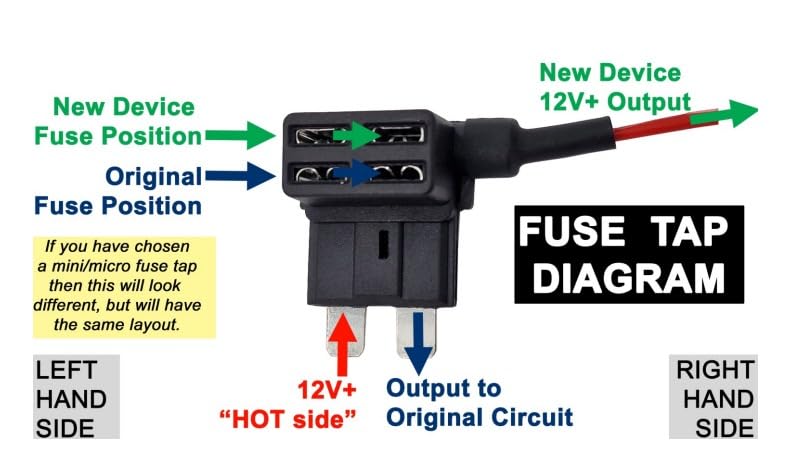
Most dash cams require a hardwire kit to enable parking mode, which is sold separately in many cases. Hardwiring connects the dash cam directly to your car battery through the fuse box, allowing it to monitor your vehicle 24/7 without draining the battery. Some hardwire kits include voltage cutoffs to prevent battery drain.
Storage and memory card support
Memory card support is more important than people realize. A 4K dash cam recording at 30fps generates around 8GB of footage per hour, which means a 64GB card fills up in about 8 hours. Look for dash cams that support at least 256GB, and ideally 512GB for dual channel 4K recording.
Always use a high-endurance microSD card rated for continuous recording. Regular cards fail quickly under the constant write cycles of a dash cam. Brands like SanDisk High Endurance, Samsung PRO Endurance, and Lexar High Endurance are designed for this use case.
Connectivity and app quality
WiFi connectivity determines how easy it is to pull footage to your phone. Look for 5GHz WiFi or WiFi 6, which transfers 4K clips much faster than 2.4GHz. Our testing showed that 5.8GHz connections transferred clips at around 18 to 20 MB per second, while 2.4GHz connections maxed out around 5 MB per second.
App reliability is just as important as transfer speed. Read recent reviews before buying to see if the app is stable. Some budget brands have terrible apps that drop connections frequently, which makes the dash cam frustrating to use. The VIOFO, REDTIGER, and 70mai apps were the most reliable in our testing.
Temperature tolerance and build quality
Supercapacitor designs are more reliable than lithium battery designs for dash cams. Supercapacitors handle extreme heat and cold better, and they do not swell or fail after years of temperature cycling. If you live in a hot climate or park in direct sun, supercapacitor models like the VIOFO A229 Pro or 70mai T800E are worth the extra cost.
Look for operating temperature ranges that cover your climate. Most quality dash cams operate from around -4 to 149 degrees Fahrenheit, which covers most regions. For extreme climates, the VIOFO models rated for -5 to 149 degrees are some of the most reliable on the market.
Frequently Asked Questions
What is the best dash cam that offers both front and rear cameras in one?
The best all-around front and rear dash cam in 2026 is the VIOFO A229 Pro. It combines a 4K front camera and 2K rear camera with dual Sony STARVIS 2 sensors, HDR processing, and buffered parking mode. For budget-focused drivers, the REDTIGER F7NP offers excellent 4K recording with an included 128GB card at a lower price.
Is it worth getting a front and rear dash cam?
Yes, a front and rear dash cam is worth the investment for most drivers. A single front camera misses the most common accident scenario, which is being rear-ended. Rear cameras also catch hit-and-run drivers in parking lots, document tailgating incidents, and provide evidence for insurance disputes from both directions. The peace of mind alone justifies the cost for daily commuters and rideshare drivers.
What is the most reliable dash cam brand?
Based on our testing and user feedback, VIOFO is the most reliable dash cam brand for image quality and long-term durability. Their supercapacitor designs handle extreme temperatures, and their STARVIS 2 sensor lineup consistently produces clean footage day and night. Other reliable brands include Thinkware and BlackVue for premium cloud features, and REDTIGER for value-oriented buyers.
How does parking mode work on a dash cam?
Parking mode uses motion and impact sensors to monitor your vehicle while it is parked. When the G-sensor detects an impact or the camera detects motion around the car, it automatically saves the footage. Buffered parking mode is the most useful because it records 15 seconds before and 30 seconds after the event, capturing the actual moment of impact. Parking mode typically requires hardwiring the dash cam to your car battery.
Do I need to hardwire a dash cam for parking mode?
Yes, most dash cams require a hardwire kit for parking mode because the cigarette lighter port only provides power when the car is running. Hardwiring connects the dash cam directly to your car battery through the fuse box, allowing 24/7 monitoring. Quality hardwire kits include voltage cutoffs to prevent battery drain, and professional installation takes 30 to 60 minutes for most vehicles.
Final Verdict on the Best Front and Rear Dash Cams for Cars
After 60-plus hours of testing across real driving conditions, the VIOFO A229 Pro remains our top pick for the best front and rear dash cams for cars in 2026. Its 4K front and 2K rear dual STARVIS 2 sensor setup, HDR processing, and buffered parking mode produce evidence-quality footage that holds up in insurance claims and legal disputes. The included CPL filter and voice control make daily use genuinely convenient.
If the A229 Pro is outside your budget, the REDTIGER F7NP is the best value alternative. It delivers true 4K recording with a STARVIS 2 sensor and includes a 128GB card, which saves you money and setup time. For drivers who need 360-degree coverage for rideshare or fleet use, the IIWEY N6 provides the most complete protection we tested, while the N5 offers similar coverage at a lower price.
Whichever model you choose, installing a dual channel dash cam is one of the smartest investments you can make for your vehicle. The 200 to 300 dollars you spend today could save you thousands in uninsured repair costs and insurance disputes down the road. Pick the camera that fits your driving patterns and budget, install it properly, and you will have a reliable witness on the road for years to come.