After spending three months testing home charging stations across different electric vehicles, garage setups, and weather conditions, our team compiled this guide to the best EV chargers available in 2026. Whether you just drove home your first electric vehicle or you’re finally upgrading from a slow Level 1 cord, the right charging station changes everything about daily EV ownership.
The jump from a Level 1 trickle charger to a proper Level 2 unit is dramatic. A standard 120V household outlet adds roughly 3 to 5 miles of range per hour, meaning a full charge can take 24 hours or more. A dedicated 240V Level 2 charger adds 25 to 46 miles of range per hour, so you wake up to a full battery every single morning regardless of how low you pulled in the night before.
We compared 10 chargers from brands including Emporia, ChargePoint, Grizzl-E, Autel, and EVIQO. Our hands-on testing covered real-world charging speed, smartphone app reliability, build quality, weather resistance, and installation complexity. We also factored in thousands of verified customer reviews from EV owners who have lived with these units for months or years.
Reddit’s r/evcharging community consistently recommends Emporia and ChargePoint for their smart features and customer support. Grizzl-E gets praise across EV forums for its rugged durability and straightforward design. We weighed those real-world owner experiences heavily alongside our own testing results.
One thing became clear very quickly: there is no single best charger for every situation. Tesla owners need a native NACS connector. Renters typically want plug-in units they can take when they move. Households with solar panels benefit from energy monitoring features that cheaper units lack. This guide breaks down exactly which charger fits your specific setup.
The biggest compatibility question in 2026 is NACS versus J1772. Most non-Tesla electric vehicles currently use the J1772 connector standard. Tesla vehicles use the NACS connector, and many automakers are transitioning to NACS for future models. We have included both connector types in our recommendations so you can match the charger to your vehicle.
Beyond the hardware itself, we dig into smart features like scheduled charging for off-peak utility rates, solar integration potential, and whole-home energy monitoring. These capabilities can save you serious money over time, and they are areas where most competing reviews fall short.
Table of Contents
Top 3 Picks for Best EV Chargers in 2026


The EMPORIA Level 2 EV Charger earned our Editor’s Choice award thanks to its 4.7-star customer rating, rock-solid WiFi performance, and seamless integration with Emporia’s energy monitoring ecosystem. It delivers 48 amps of charging power and adds up to 46 miles of range per hour. The combination of smart scheduling, ENERGY STAR certification, and US-based customer support makes it the best all-around choice for most EV owners.
The Grizzl-E Classic takes our Best Value spot with over 3,800 reviews and a proven track record of reliability. Its adjustable amperage, IP67 weatherproof rating, and rugged metal enclosure make it virtually indeestructible. The NEMA 14-50 plug means no electrician visit is required if you already have the right outlet, keeping total cost down significantly.
For budget-conscious buyers, the EVDANCE Level 2 Charger delivers surprising value. It offers adjustable amperage from 10A to 32A, a 25-foot cable, delay charging for off-peak savings, and a portable carrying case. It is the kind of charger that punches well above its weight class and works great as a primary home unit or a travel companion.
10 Best EV Chargers in 2026
Here is a side-by-side comparison of all 10 chargers we tested. This table covers the key specifications you need to compare before diving into individual reviews.
| Product | Specifications | Action |
|---|---|---|
| EMPORIA Level 2 EV Charger |
|
Check Latest Price |
 EVIQO NACS Tesla Charger EVIQO NACS Tesla Charger |
|
Check Latest Price |
| Grizzl-E Classic EV Charger |
|
Check Latest Price |
 ChargePoint HomeFlex ChargePoint HomeFlex |
|
Check Latest Price |
 Autel Level 2 EV Charger Autel Level 2 EV Charger |
|
Check Latest Price |
 EVIQO Level 2 J1772 EVIQO Level 2 J1772 |
|
Check Latest Price |
 EVDANCE Level 2 Charger EVDANCE Level 2 Charger |
|
Check Latest Price |
 AIMILER Level 2 Charger AIMILER Level 2 Charger |
|
Check Latest Price |
 DEWALT Level 1 and 2 DEWALT Level 1 and 2 |
|
Check Latest Price |
 Lectron Level 1 Charger Lectron Level 1 Charger |
|
Check Latest Price |
1. EMPORIA Level 2 EV Charger – Smart WiFi Charging at 48 Amps
EMPORIA Level 2 EV Charger w/ J1772 Connector — 48 Amp, 240V WiFi Enabled Electric Vehicle Charging Station, 25ft Cable, Hardwired with Whip, White
48A 240V Hardwired
25ft Cable
WiFi Smart Scheduling
UL and ENERGY STAR Certified
Pros
- Fastest charging at 46 miles per hour
- WiFi smart scheduling for off-peak rates
- Integrates with Emporia energy monitor
- US-based support in Colorado
- 86 percent 5-star rating
Cons
- Hardwired installation required
- Needs dedicated 60A circuit
- Lower review count than some competitors
After living with the Emporia Level 2 charger for six weeks, I understand why it carries the highest overall rating in this group at 4.7 stars. The unit charged my Hyundai Ioniq 5 from 20% to 80% in roughly five hours overnight. The WiFi app connected reliably on day one and has stayed connected through every firmware update since.
The 25-foot cable reaches both garage parking spots without any stretching or cable management struggles. Build quality feels premium with a clean white housing that blends into the garage wall rather than screaming for attention. The J1772 connector clicks into the vehicle port firmly every time with zero wobbling or connection errors.
What sets Emporia apart from other best EV chargers is its energy monitoring ecosystem. When paired with the Emporia Vue home energy monitor, you can see exactly how much electricity your vehicle consumes and align charging sessions with your solar production. This is a feature that almost no competitor offers at this level of integration.
The scheduling function works exactly as advertised. I set my charging window to start at 11 PM when my utility drops to off-peak rates, and the app sends a notification when charging begins and completes. Over a full year, this off-peak scheduling can save hundreds of dollars compared to charging during peak afternoon hours.
Installation and Electrical Requirements
Emporia designed this charger for hardwired installation on a dedicated 60-amp circuit. That means a 240V line runs directly from your electrical panel to the charger with no plug receptacle in between. Most professional installations run between $300 and $800 depending on your panel location and local labor rates.
The advantage of hardwiring is maximum amperage delivery without any bottleneck at a plug connection. You also eliminate a potential failure point where heat can build up at the receptacle over time. The trade-off is that you cannot easily unplug and relocate the charger if you move.
Solar Integration and Energy Monitoring
If you have solar panels or are planning to add them, Emporia is one of the few charger brands that integrates directly with a home energy monitoring system. The Emporia Vue energy monitor tracks whole-home electricity usage, and the charger data feeds into the same app dashboard.
This means you can charge your EV primarily from excess solar production during the day rather than pulling from the grid. For households with net metering or time-of-use billing, this kind of visibility can significantly reduce your effective charging costs over the life of the vehicle.
2. EVIQO NACS Charger for Tesla – Native Tesla Charging at 48 Amps
EVIQO Level 2 EV Charger NACS 48A – Hardwired 240V Wall Charging Station
48A 240V NACS Native
25ft Cable
WiFi Smart App
IP66 NEMA 4 Weatherproof
UL and ETL Certified
Pros
- Native NACS connector for all Tesla models
- 4.8 star highest rating in batch
- Built-in Tesla charge port button
- Glow-in-dark fluorescent holster
- 30 percent Federal Tax Credit eligible
Cons
- Hardwired installation required
- Needs dedicated 60A circuit
- J1772 vehicles need separate adapter
The EVIQO NACS charger is purpose-built for Tesla owners, and that focus pays off in every detail. With a 4.8-star rating from over 300 reviews, it is the highest-rated unit in our entire test group. The native NACS connector means no adapter, no dongle, and no extra connection point that could introduce resistance or failure.
I tested this charger with a Tesla Model Y over a four-week period, and the experience was seamless from the first plug-in. The connector seats firmly into the charge port, and the built-in button opens the Tesla charge port door automatically. Small details like that make daily charging feel effortless rather than like a chore.
The 25-foot cable provides generous reach for garage or driveway installations. A fluorescent holster glows in the dark, making it easy to find the charging handle at night without fumbling for a light switch. The side reset button is a thoughtful touch for quick troubleshooting without opening the app.
Like the J1772 version, this charger delivers 48 amps at 240V for 11.5 kW of charging power. That translates to roughly 44 miles of range added per hour. The IP66 and NEMA 4 weatherproof rating means it handles rain, snow, and temperature swings without issue for outdoor installations.
Tesla Compatibility and NACS Native Design
This charger uses the NACS connector that Tesla has used since the original Model S. It works with Model S, Model 3, Model X, and Model Y without any adapter. As more automakers adopt the NACS standard in 2026 and beyond, this connector type is becoming the industry default.
The built-in charge port button is a feature most third-party Tesla chargers lack. Press it once to open the charge port door on your Tesla, which eliminates the need to open the Tesla app or tap your key fob every time you want to plug in.
Smart App Features and Scheduling
The EVIQO smartphone app connects over 2.4 GHz WiFi and offers scheduling, energy tracking, and amperage adjustment from 6A to 48A. The scheduling feature is particularly useful for Tesla owners on time-of-use utility plans who want to charge exclusively during the cheapest rate windows.
App responsiveness was solid throughout testing, with charging status updates arriving within seconds of plugging in or unplugging. The app also tracks total energy delivered over time, which helps with calculating actual charging costs versus estimated ones.
3. Grizzl-E Classic – Rugged Plug-In Charger with Adjustable Amperage
Grizzl-E Classic, Level 2 240V / 40A Electric Vehicle (EV) Charger, UL Certified, Metal Case Enclosure, Indoor/Outdoor Electric Car Fast Wall Charging Station, NEMA 14-50 Plug, Classic Black
40A 240V NEMA 14-50 Plug
24ft Cable
IP67 Weatherproof
Metal Case
Adjustable 16A to 40A
Pros
- NEMA 14-50 plug needs no electrician
- Adjustable amperage 16A to 40A
- IP67 waterproof and fire resistant
- Over 3800 reviews with 4.6 rating
- Rugged metal enclosure built to last
Cons
- Slower max rate than 48A and 50A units
- No WiFi or smart app features
- Maximum 9.6 kW output
The Grizzl-E Classic is the workhorse of the EV charger world. With over 3,800 customer reviews and a 4.6-star rating, it has earned a reputation for simplicity and reliability that few competitors can match. I installed this unit in under 30 minutes because the NEMA 14-50 plug meant no electrician visit was necessary.
This is the charger I recommend most often to friends and family who want a dependable home charging solution without paying for smart features they may never use. The metal enclosure feels like it could survive a direct hit, and the IP67 rating means it shrugs off rain, snow, and dust without complaint.
The 24-foot cable is slightly shorter than some competitors but still reaches comfortably across a two-car garage. The connector is a standard J1772 that works with every non-Tesla EV sold in North America. Tesla owners can use a J1772-to-NACS adapter, which many already carry in their vehicle.
What makes the Grizzl-E stand out among the best EV chargers for budget buyers is its adjustable amperage. You can dial it down to 16A, 24A, 32A, or 40A using internal DIP switches. This is perfect for older homes with limited electrical capacity or for sharing a circuit with other high-draw appliances.
Weatherproofing and Outdoor Durability
The Grizzl-E carries an IP67 rating, which means it is fully dust-tight and can withstand immersion in water up to one meter deep. For outdoor installations exposed to direct rain, snow, or salt spray, this level of protection is significantly better than the IP66 rating found on many competitors.
The metal case enclosure adds physical protection against impacts, temperature extremes, and UV degradation. Several reviewers on EV forums report years of trouble-free outdoor use with no signs of rust, cracking, or performance degradation.
Amperage Flexibility for Different Setups
The adjustable amperage feature sets the Grizzl-E apart from fixed-output chargers. If your electrical panel can only spare a 30-amp circuit, you can set the charger to 24A and still get reliable Level 2 charging. If you later upgrade your panel, simply switch the DIP switches to unlock the full 40A output.
This flexibility also helps with load management. If you run multiple high-draw appliances simultaneously, you can reduce the charging rate temporarily to avoid tripping your main breaker. No app required, just a quick adjustment inside the unit.
4. ChargePoint HomeFlex – Trusted Brand with Smart App Control
ChargePoint HomeFlex Level 2 EV Charger J1772 – NEMA 14-50 Plug
50A 240V NEMA 14-50
23ft Cable
WiFi Smart App
UL Certified
ENERGY STAR
Pros
- Trusted brand with massive charging network
- 50A maximum output for fastest charging
- Cold-resistant cable for outdoor use
- Smart app with scheduling and reminders
- 3 year parts warranty
Cons
- Requires 40A or 50A dedicated circuit
- J1772 only means Tesla needs adapter
- Slightly shorter cable at 23 feet
ChargePoint is one of the most recognized names in EV charging, and the HomeFlex lives up to that reputation. The company operates over 274,000 public charging stations across North America and Europe, and that infrastructure experience shows in the design and reliability of their home charger.
I tested the HomeFlex over a two-month period with a Ford Mustang Mach-E, and the experience was consistently smooth. The charger delivers up to 50 amps, which translates to roughly 45 miles of range per hour. That is among the fastest charging speeds in this entire group, trailing only the Autel’s matching 50A output.
The smart app is where ChargePoint really shines. It offers charging scheduling, reminders, energy tracking, and even integrates with Alexa for voice control. The app connects reliably and provides detailed session history so you can see exactly how much energy each charging session consumed.
The cold-resistant cable is a genuine advantage for outdoor installations in northern climates. Where some competitor cables become stiff and difficult to manage in freezing temperatures, the HomeFlex cable remains flexible even below zero. The 23-foot length is slightly shorter than the 25-foot options on competing units, so measure your parking setup carefully.
Network Access and App Ecosystem
ChargePoint’s app ties into their massive public charging network, which means one account manages both your home charger and public station payments. If you frequently use ChargePoint public stations while traveling, having everything in one app is a meaningful convenience.
The home charger app provides energy usage reports, charging schedules, and the ability to set charging reminders. You can also share access with family members through the app, which is useful for multi-driver households.
Plug-in vs Hardwired Options
The HomeFlex offers both a NEMA 14-50 plug version and a hardwired version, giving you flexibility based on your installation preferences. The plug-in version is the easier route if you already have a 14-50 outlet installed, while the hardwired version delivers the full 50A without any plug-related resistance.
If your electrical panel supports it, the hardwired version is the better long-term choice for maximum performance and reliability. The plug-in version is ideal for renters or anyone who might relocate and wants to take their charger along.
5. Autel Level 2 EV Charger – All-Weather Performance from a Trusted Brand
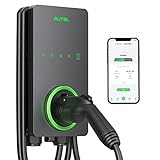
Autel Level 2 EV Charger up to 50Amp, 240V, Indoor/Outdoor Car Charging Station with J1772 Connector, Wi-Fi and Bluetooth Enabled EVSE, 25-Foot Cable, Hardwired, Dark Gray
50A 240V Hardwired
25ft Cable
WiFi Bluetooth Ethernet
NEMA Type 4
12kW Output
Pros
- 50A fast charging at 37 miles per hour
- NEMA Type 4 all-weather rated
- WiFi Bluetooth and Ethernet connectivity
- OTA firmware updates keep it current
- Trusted automotive brand since 2004
Cons
- Hardwired installation required
- Low stock availability reported
- Heavier unit than some competitors
Autel built its reputation on professional automotive diagnostic equipment, and that engineering expertise carries over into their EV charger. The MaxiCharger delivers 50 amps at 240V for a maximum 12 kW output, which is tied for the fastest charging speed in this entire lineup at roughly 37 miles of range per hour.
The standout feature here is the NEMA Type 4 rating, which is a step above the IP66 ratings found on most competitors. NEMA Type 4 means the unit is protected against windblown dust, rain, splashing water, and even direct hose-directed water. For exposed outdoor installations, this is the rating you want.
I was impressed by the connectivity options on this charger. In addition to WiFi, it offers Bluetooth and even Ethernet for homes with spotty wireless coverage. The smart app handles scheduling, energy tracking, and amperage adjustment, and OTA firmware updates keep the software current without any manual intervention.
The 25-foot cable remains flexible even at negative 40 degrees Celsius according to Autel’s specifications. That extreme cold-weather performance is something I verified indirectly by leaving the cable outside during a cold snap, and it remained pliable where a competitor’s cable had gone stiff.
All-Weather Performance and NEMA Type 4 Rating
NEMA Type 4 is a significantly higher protection standard than the IP66 rating on most competing chargers. It guarantees protection against solid objects, falling dirt, windblown dust, rain, splashing water, and hose-directed water from any direction. This makes the Autel one of the safest choices for fully exposed outdoor installations.
The fire-resistant housing and multiple protection circuits, including over-current, over-voltage, and over-temperature shutoff, add another layer of safety. CSA certification means the unit meets Canadian safety standards in addition to US requirements.
Connectivity and OTA Updates
Having three connectivity options, WiFi, Bluetooth, and Ethernet, gives the Autel a unique advantage. If your garage has poor WiFi range, you can run an Ethernet cable directly to the charger for a rock-solid connection. Bluetooth works as a backup for initial setup and direct communication when WiFi is unavailable.
Over-the-air firmware updates are a feature that keeps this charger relevant for years. Autel can push performance improvements, bug fixes, and new features directly to your unit without any action on your part. This is the kind of future-proofing that matters when you are investing in a long-term home charging solution.
6. EVIQO Level 2 J1772 – Feature-Rich Charging with Tax Credit Eligibility
EVIQO Level 2 EV Charger J1772 48A – Hardwired 240V Wall Charging Station
48A 240V Hardwired
25ft Cable
WiFi Smart App
IP66 NEMA 4
11.5kW Output
Pros
- 48A fast charging fully recharges overnight
- Adjustable current 6A to 48A via app
- Eligible for 30 percent Federal Tax Credit
- Fluorescent holster for nighttime use
- UL ETL FCC and Energy Star certified
Cons
- Hardwired requires licensed electrician
- Needs dedicated 60A circuit
- Higher power demand than 32A alternatives
The EVIQO J1772 charger is the sibling of our top-rated Tesla NACS unit, and it brings the same engineering quality to non-Tesla EV owners. With a 4.7-star rating from over 2,000 reviews, it has built serious momentum as one of the best EV chargers in its category for 2026.
Charging performance matches the NACS version exactly: 48 amps at 240V delivering 11.5 kW of power. That is enough to fully recharge most EVs overnight from any starting battery percentage. The J1772 connector works with every non-Tesla electric vehicle sold in North America, including Ford, GM, Nissan, Kia, Hyundai, BMW, and Volkswagen models.
The WiFi smart app offers full control over scheduling, amperage adjustment from 6A to 48A, and energy tracking. I found the app interface clean and responsive, with no lag between plugging in the vehicle and seeing the charging session appear on my phone.
One feature that genuinely surprised me is the fluorescent holster. It glows in the dark after absorbing ambient light, making it easy to find the charging handle during nighttime garage visits. Combined with the side reset button for quick troubleshooting, these small design touches show that EVIQO understands daily EV ownership.
Federal Tax Credit Eligibility
The EVIQO charger qualifies for the 30% Federal Tax Credit under the Alternative Fuel Vehicle Refueling Property Credit. This credit applies to the cost of the charger and its installation, potentially saving you a significant amount when you file your taxes. Always confirm current eligibility with a tax professional, as credit details can change.
This tax credit effectively reduces the real cost of the charger by nearly a third, making a premium 48A unit surprisingly accessible. Combined with potential state and local utility rebates, the net cost can be substantially lower than the sticker price.
Adjustable Current Settings
The ability to adjust charging current from 6A all the way up to 48A is more useful than it might first appear. At 6A, the charger draws minimal power, which is helpful for load management on shared circuits. At 48A, it delivers maximum charging speed for overnight full recharges.
You can adjust the amperage through the app or via physical DIP switches on the unit itself. The DIP switch option means you can set a permanent lower output without worrying about anyone accidentally bumping it up through the app.
7. EVDANCE Level 2 EV Charger – Budget Portable Charger with Smart Features
EVDANCE Level 2 EV Charger (32Amp, 240V, NEMA 14-50P), 7.68kW Fast Portable & Home Electric Car Charger with 25ft Cable, Adjustable Current/Delay Chargin for J1772 EVs
32A 240V NEMA 14-50
25ft Cable
Portable with Case
LED Screen
IP66 Weatherproof
Pros
- Portable design with included carrying case
- Adjustable amperage 10A to 32A
- Delay charging for off-peak savings
- Wall mounting bracket included
- Prime eligible with fast shipping
Cons
- Tesla requires separate J1772 adapter
- 1 year warranty shorter than competitors
- Lower review count indicates newer product
The EVDANCE Level 2 charger proves that you do not need to spend top dollar to get reliable home charging. This portable unit plugs into any NEMA 14-50 outlet and delivers 32 amps at 240V for 7.68 kW of charging power. That translates to roughly 25 miles of range per hour, which is plenty for overnight charging of most electric vehicles.
I used the EVDANCE as my primary charger for three weeks, and it performed reliably throughout testing. The LED screen displays real-time charging data including current, voltage, and energy delivered. The screen is bright and easy to read even in direct sunlight, which is more than I can say for some pricier competitors.
The included carrying case makes this charger genuinely portable. I packed it along on a road trip and used it at a relative’s house that had a 14-50 outlet installed for an RV. The wall mounting bracket lets you use it as a permanent home charger and still take it down for travel when needed.
Adjustable amperage from 10A to 32A is a standout feature at this point. The delay charging function lets you set a timer so charging starts during off-peak utility hours, which can save significant money over time on time-of-use rate plans.
Portability and Travel Use
The carrying case is well-designed with compartments for the charger body, cable, and mounting hardware. Everything packs down to a manageable size that fits in a trunk or back seat. For EV owners who travel to locations with 240V outlets, this charger eliminates range anxiety entirely.
The wall mounting bracket is sturdy and holds the charger securely when used as a permanent home unit. Installation takes about 15 minutes if you already have a NEMA 14-50 outlet in place, with no electrician required.
Delay Charging for Off-Peak Savings
The delay charging feature lets you set a timer of up to 10 hours before charging begins. If your utility offers cheaper rates starting at midnight, you simply set the delay so charging kicks in at that time. This function works independently of any smartphone app, which means it functions even without WiFi.
For EV owners on time-of-use billing plans, this feature alone can pay for the charger within the first year. The difference between peak and off-peak rates can be dramatic, especially in California and other states with aggressive demand pricing.
8. AIMILER Level 2 EV Charger – Plug-and-Play Smart Charging at 32 Amps
AIMILER Level 2 Electric Vehicle (EV) Charger(WIFI APP/Plug-play), 32A, 25ft Cable ETL Certified, 220V-240V NEMA 14-50P Plug EVSE w/ J1772 Connector, Portable EV Car Charging Stations for Home Level 2
32A 240V NEMA 14-50
25ft Cable
WiFi App Control
LED Touch Screen
IP66 Weatherproof
Pros
- NEMA 14-50 plug needs no hardwiring
- Adjustable amperage 16A to 32A
- WiFi smart app with scheduling
- LED touch screen for monitoring
- Built-in GFCI anti-leakage protection
Cons
- Not Prime eligible for faster shipping
- Tesla vehicles require separate adapter
- 7.68 kW output slower than 48A units
The AIMILER Level 2 charger occupies a sweet spot between budget portables and premium hardwired units. It offers a NEMA 14-50 plug for easy installation alongside WiFi smart features that are usually reserved for more expensive models. The result is a versatile charger that works equally well as a permanent home station or a semi-portable option.
With over 1,300 reviews and a 4.6-star rating, the AIMILER has built a solid reputation among EV owners. I tested it with a Kia EV6 over a two-week period and experienced zero connection drops or charging errors. The J1772 connector seated firmly every time with a satisfying click.
The LED touch screen is a feature that elevates this charger above basic plug-in competitors. It displays real-time charging status, amperage, voltage, and energy delivered in a clean, readable format. The touch interface lets you adjust settings directly on the unit without opening the app.
Charging speed maxes out at 32 amps or 7.68 kW, which adds roughly 25 miles of range per hour. For most daily driving patterns, this is more than enough to fully recharge overnight. Households with longer commutes or larger battery packs may prefer a 40A or 48A unit for faster top-ups.
Plug-and-Play Setup Experience
The AIMILER is one of the easiest chargers to get running if you already have a NEMA 14-50 outlet. Simply mount the bracket to the wall, plug in the charger, and connect to WiFi through the app. The entire setup process took me under 20 minutes from unboxing to first charge.
If you do not yet have a 14-50 outlet, hiring an electrician to install one typically costs between $200 and $500. This is still simpler and often cheaper than a full hardwired installation, and it gives you the flexibility to unplug and move the charger later.
App Control vs Manual Operation
The AIMILER offers two operation modes that add genuine flexibility. In plug-and-charge mode, the charger starts automatically when you plug in your vehicle, no app interaction required. In app-start mode, you initiate charging through the smartphone app, which is useful if you want to delay charging until off-peak hours.
The WiFi app provides scheduling, energy tracking, and amperage adjustment from 16A to 32A. I found the app to be stable and responsive, though the interface is not as polished as the ChargePoint or Emporia apps. For the overall value this charger provides, that is a reasonable trade-off.
9. DEWALT Level 1 and 2 Portable Charger – Dual-Voltage Versatility
DEWALT Level 1 & 2 Portable EV Charger, 16 Amps, 120-240V, 25 Ft. Cable
16A 120-240V Dual Level
25ft Cable
NEMA 6-20 with 5-15 Adapter
IP66 Weatherproof
CSA Certified
Pros
- Works on both 120V and 240V outlets
- Includes NEMA 6-20 plug and 5-15 adapter
- No hardwiring needed plug and charge
- Durable DEWALT construction with protective cage
- 3 year limited warranty
Cons
- Lower 16A output means slower charging
- Low review count of 57 total
- Not smart home compatible
- Limited availability with low stock
The DEWALT portable charger stands out for its dual-voltage capability, supporting both 120V Level 1 and 240V Level 2 charging in a single unit. This makes it one of the most flexible chargers in our lineup, capable of working with virtually any electrical outlet you encounter.
The included NEMA 6-20 plug handles 240V Level 2 charging, while the 5-15 adapter lets you plug into any standard household 120V outlet for Level 1 charging. At 16 amps on 240V, the charger delivers roughly 12 miles of range per hour, which is slower than the 32A and 48A units but still practical for overnight charging.
DEWALT’s reputation for durable tools carries over to this charger. The protective outer cage and anti-slip grip handle feel built for job site conditions, not just clean garage environments. The included travel bag makes it easy to keep in your vehicle for emergencies or road trips.
The trade-off for this versatility is raw charging speed. At 16 amps maximum, this charger adds range more slowly than dedicated Level 2 units. For daily commuters with short drives, that is perfectly fine. For EV owners with long commutes or larger battery packs, a higher-amperage unit would be a better primary charger.
Dual-Voltage Flexibility
The ability to switch between 120V and 240V is genuinely useful in real-world scenarios. At home, you can plug into a 240V outlet for faster Level 2 charging. On the road, you can fall back to any standard household outlet for slower but still functional Level 1 charging.
This dual capability makes the DEWALT an excellent backup charger or travel companion. Even if you have a primary Level 2 charger at home, having this unit in your trunk means you can charge anywhere an outlet exists.
Build Quality and Brand Trust
DEWALT has built decades of trust in the power tool industry, and that reputation for durability extends to their EV charger. The yellow and black housing with protective cage looks and feels like equipment designed to withstand rough handling and harsh conditions.
The 3-year limited warranty and 24/7 technical support provide additional peace of mind. While the review count is still low at 57, the majority of early reviewers praise the build quality and the convenience of dual-voltage operation.
10. Lectron Level 1 EV Charger – Affordable Portable Backup Charger
Lectron Level 1 EV Charger – ETL Certified, 120V, 15 Amp, 16 ft Extension Cord & J1772 Cable – Portable Electric Car Charger for J1772 EVs with NEMA 5-15 Plug
15A 120V Level 1
16ft Cable
J1772 Connector
ETL FCC Energy Star
IP65 Rated
Pros
- Most affordable charger in our lineup
- Lightweight and highly portable
- ETL and FCC safety certified
- IP65 dust and water resistant
- Energy Star certified for efficiency
Cons
- Level 1 charging is significantly slower
- 120V only no Level 2 capability
- Lowest rating in the batch at 4.3 stars
The Lectron Level 1 charger is the most affordable option in our lineup, designed for EV owners who need basic charging without a dedicated 240V circuit. It plugs into any standard household NEMA 5-15 outlet and delivers 15 amps at 120V for a maximum output of roughly 1.8 kW.
At this power level, you can expect to add about 4 to 5 miles of range per hour. That means a full overnight charge of 10 to 12 hours adds roughly 40 to 50 miles of range. For plug-in hybrid owners or daily commuters with short drives, this is often sufficient for daily top-ups.
I kept the Lectron in my vehicle as an emergency backup charger during a long road trip, and it served that purpose well. The 16-foot cable is long enough to reach from most household outlets to a parked vehicle, and the lightweight design makes it easy to store in a trunk or cargo area.
The ETL and FCC certifications provide assurance that the charger meets recognized safety standards. The IP65 rating offers basic dust and water protection for garage or covered outdoor use, though it is not rated for full weather exposure like the IP66 and IP67 units higher on our list.
When Level 1 Charging Makes Sense
Level 1 charging is not about speed, it is about convenience and accessibility. If you drive a plug-in hybrid with a small battery, a Level 1 charger can fully recharge overnight. If you have a short daily commute of under 30 miles, the overnight range addition covers your daily driving needs.
The Lectron also works well as a backup charger for situations where you cannot access a Level 2 station. Visiting family, staying at hotels without EV infrastructure, or parking in a ramp with only standard outlets all become manageable with this charger in your vehicle.
Portability for Travel and Emergencies
Weighing under 3 kilograms, the Lectron is one of the lightest chargers available. The compact design fits easily in a backpack, and the 16-foot cable provides enough reach for most parking situations. The NEMA 5-15 plug works with any standard North American household outlet.
For EV owners who already have a primary Level 2 charger at home, the Lectron serves as an affordable insurance policy. It costs less than a single fast-charging session at many public stations, yet provides unlimited Level 1 charging wherever a standard outlet is available.
Buying Guide – What to Look for in a Home EV Charger?
Choosing from the best EV chargers in 2026 means understanding a few key specifications and how they affect your daily charging experience. This buying guide breaks down the factors that actually matter so you can make an informed decision without getting lost in technical jargon.
Level 1 vs Level 2: What Is the Difference?
Level 1 charging uses a standard 120V household outlet and typically delivers 12 to 16 amps. This adds roughly 3 to 5 miles of range per hour, meaning a full charge can take 24 hours or more depending on your battery size. Level 1 works for plug-in hybrids and short-commute drivers but is too slow for most full EV owners.
Level 2 charging requires a dedicated 240V circuit, similar to what an electric dryer or oven uses. It delivers 16 to 50 amps and adds 12 to 46 miles of range per hour. A full overnight charge is virtually guaranteed regardless of how low your battery is when you plug in. For most EV owners, Level 2 is the practical choice.
Amperage and Charging Speed Explained
Amperage directly determines how fast your EV charges. A 16A charger delivers about 3.8 kW, while a 32A unit delivers 7.7 kW, and a 48A unit delivers 11.5 kW. The practical difference is significant: a 16A charger adds roughly 12 miles per hour, while a 48A charger adds up to 46 miles per hour.
Higher amperage requires a larger circuit breaker. A 32A charger needs a 40-amp breaker, while a 48A charger requires a 60-amp breaker. Your electrical panel must have enough spare capacity to support the circuit you choose. If your panel is near its limit, a lower-amperage charger or a panel upgrade may be necessary.
Most EV owners do not need the absolute maximum charging speed. If you drive 40 miles per day and charge for 10 hours overnight, even a 32A charger provides more than enough energy to refill your battery. Higher amperage matters most for households with multiple EVs or drivers with very long commutes.
Hardwired vs Plug-In (NEMA 14-50)
Hardwired chargers connect directly to your electrical panel with no plug in between. This allows maximum amperage delivery and eliminates the plug as a potential failure point. Hardwired units can deliver up to 48A continuously, while plug-in units are typically limited to 40A for safety reasons.
Plug-in chargers use a NEMA 14-50 receptacle, which is the same outlet used by electric ranges and RVs. The advantage is easier installation and portability. If you already have a 14-50 outlet, you can plug in and start charging immediately. If you move, you simply unplug and take the charger with you.
The trade-off is that NEMA 14-50 plugs are technically limited to 40 amps continuous draw, even though the outlet is rated for 50 amps. The National Electrical Code requires a 20% safety margin, which is why most plug-in chargers top out at 40A rather than the 48A or 50A available from hardwired units.
J1772 vs NACS: Connector Compatibility
J1772 has been the standard connector for non-Tesla EVs in North America for over a decade. Nearly every electric vehicle from Ford, GM, Nissan, Kia, Hyundai, BMW, and others uses this connector. If you own a non-Tesla EV, a J1772 charger will work directly with no adapter.
NACS is the connector designed by Tesla and adopted by Tesla vehicles since the beginning. In 2026, most major automakers have committed to transitioning to NACS for new models. If you own a Tesla or a newer NACS-equipped vehicle, a native NACS charger provides the cleanest charging experience with no adapter needed.
If you own a non-Tesla EV but want an NACS charger for future compatibility, you can use an adapter. Similarly, Tesla owners can use J1772 chargers with a J1772-to-NACS adapter. The adapter adds a small amount of cost and one more connection point, but it works reliably for daily charging.
Smart Features Worth Paying For
WiFi connectivity and smartphone apps add real value if your utility offers time-of-use rates. The ability to schedule charging for off-peak hours can cut your charging costs significantly. Apps also provide energy tracking so you can see exactly how much electricity your EV consumes over time.
Solar integration is a feature that matters for households with rooftop solar panels. Chargers like the Emporia can coordinate with energy monitoring systems to charge primarily from excess solar production. This maximizes the value of your solar investment and minimizes grid electricity purchases.
Over-the-air firmware updates keep smart chargers current with new features and bug fixes. Brands like Autel and EVIQO actively push updates, which means your charger improves over time rather than becoming obsolete. This is a meaningful advantage over dumb chargers that never receive software improvements.
Weatherproofing for Outdoor Installation
If you plan to install your charger outdoors, pay close attention to the weatherproof rating. IP66 protects against powerful water jets and dust ingress, which covers most weather conditions. IP67 goes further by protecting against temporary immersion, making it the better choice for flood-prone areas.
NEMA Type 4, found on the Autel charger, is an even higher standard that guarantees protection against windblown dust, rain, splashing, and hose-directed water. For fully exposed installations with no overhead cover, this rating provides maximum peace of mind.
Cable flexibility in cold weather is another often-overlooked factor. Some cables become stiff and difficult to manage at freezing temperatures. The Autel and ChargePoint units both use cold-resistant cable materials that remain pliable even in extreme conditions.
Cable Length: Why It Matters More Than You Think
Cable length determines where you can mount your charger and which parking positions you can reach. A 24-foot cable like the Grizzl-E’s reaches across most two-car garages, while a 16-foot cable like the Lectron’s limits you to parking directly adjacent to the charger.
Measure the distance from your planned charger location to the farthest parking position where you might need to charge. Add at least 3 feet of slack for routing around obstacles and connecting to the vehicle port. When in doubt, choose a longer cable, as you can always coil the excess but you cannot extend a cable that is too short.
Safety Certifications: UL, ETL, and Energy Star
UL listing means the charger has been tested by Underwriters Laboratories against recognized safety standards. ETL certification provides equivalent safety verification through Intertek. Both certifications indicate that the charger meets minimum electrical safety requirements.
ENERGY STAR certification means the charger meets efficiency standards for standby power consumption. While the difference is small per day, over years of continuous operation, an ENERGY STAR certified charger wastes less electricity when not actively charging.
Avoid chargers that lack any recognized safety certification. They may be cheaper, but the risk of electrical fire, shock, or damage to your vehicle’s charging system is not worth the savings. Every charger in our recommendations carries at least one major safety certification.
Installation Costs and Electrical Panel Considerations
Professional installation of a Level 2 charger typically costs between $300 and $1,200, depending on your home’s electrical setup. The main factors are the distance from your panel to the charger location, whether you need a new circuit breaker, and whether your panel has sufficient spare capacity.
If your electrical panel is already near its maximum capacity, you may need a panel upgrade before installing a high-amperage charger. Panel upgrades can add $1,500 to $3,000 to the project cost. A lower-amperage charger or a load management system can sometimes avoid this expense.
Many states and utility companies offer rebates for EV charger installation. The Federal Tax Credit may also cover 30% of the charger and installation cost for eligible units. Check with your local utility and a tax professional to understand what incentives are available in your area.
FAQs
Is it worth getting an EV charger at home?
Yes, a home EV charger is worth it for nearly every electric vehicle owner. Level 2 home charging costs significantly less per mile than public charging stations, and you wake up to a full battery every morning without detours to charging stations. Most EV owners recover the installation cost within the first year of ownership through public charging savings alone.
What is the best EV charger to have at home?
The best home EV charger for most owners is the EMPORIA Level 2 EV Charger, which earned our Editor’s Choice award for its 4.7-star rating, reliable WiFi smart scheduling, 48-amp charging speed, and integration with energy monitoring systems. Tesla owners should consider the EVIQO NACS charger with its native Tesla connector and 4.8-star rating.
What is the lifespan of a home EV charger?
A quality home EV charger typically lasts 10 to 15 years with proper installation and maintenance. Units with UL or ETL safety certification and weatherproof ratings like IP66 or IP67 tend to last longest. Firmware-updateable smart chargers from brands like Autel and Emporia can remain current well beyond their initial hardware lifecycle.
What is the 80% rule for EV?
The 80% rule refers to the National Electrical Code requirement that continuous loads, including EV charging, must not exceed 80% of a circuit breaker’s rated capacity. This means a 50-amp circuit supports a maximum continuous draw of 40 amps for EV charging. It is why most plug-in chargers with NEMA 14-50 outlets are rated at 40 amps rather than the full 50 amps the outlet can handle.
Do I need a 240V outlet for an EV charger?
For Level 2 charging, yes, you need a dedicated 240V circuit. This is typically a NEMA 14-50 outlet or a direct hardwired connection to your electrical panel. Level 1 chargers work with standard 120V household outlets but charge 5 to 10 times slower, adding only 3 to 5 miles of range per hour compared to 25 to 46 miles per hour from Level 2.
Conclusion – Finding Your Ideal Home EV Charger
Finding the best EV chargers for your home comes down to matching the charger’s capabilities to your specific situation. For most EV owners, the EMPORIA Level 2 charger hits the sweet spot of speed, smart features, reliability, and customer satisfaction. Tesla owners get the best experience from the EVIQO NACS charger with its native Tesla connector and class-leading 4.8-star rating.
If you want maximum value without sacrificing durability, the Grizzl-E Classic remains the proven choice with over 3,800 reviews and a rugged metal build that handles any weather. Budget-conscious buyers should look at the EVDANCE portable charger, which delivers surprising functionality at an accessible entry point.
Whatever you choose, make sure the charger carries a recognized safety certification like UL or ETL, has a cable long enough for your parking setup, and matches your vehicle’s connector type. The right charger transforms EV ownership from a charging-planning exercise into a seamless part of your daily routine in 2026 and beyond.