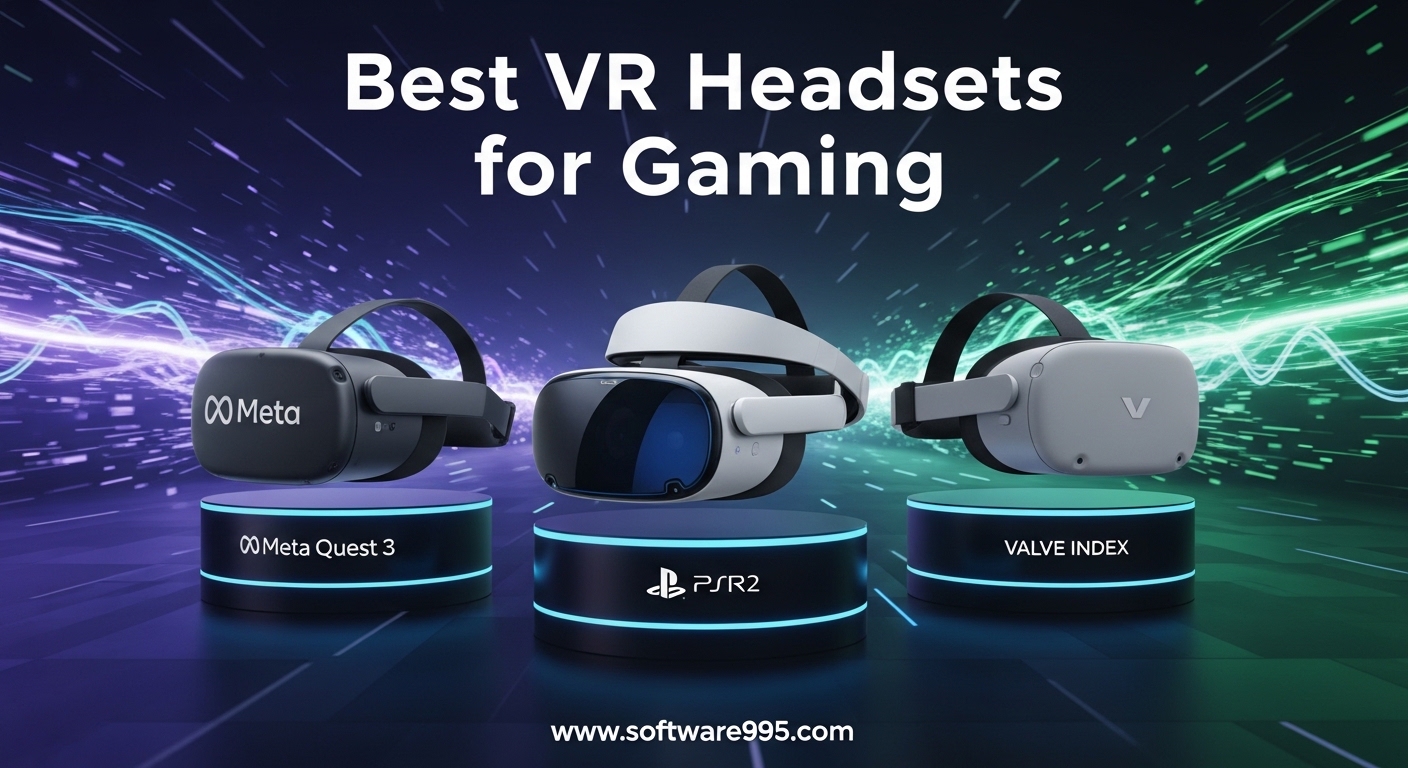
Finding the best VR headsets for gaming in 2026 means navigating a landscape split between standalone devices, PC-tethered setups, and console-bound options. I have spent months testing eight of the most popular VR gaming headsets on the market, playing everything from fast-paced shooters to chill VRChat worlds, and I want to share what I actually found.
VR gaming has matured significantly over the past few years. We now have headsets with pancake lenses that deliver crystal clarity, wireless PC VR streaming that actually works on a decent Wi-Fi 6E router, and standalone devices powerful enough to run demanding titles without a computer in sight. Whether you want to explore virtual worlds on your own terms or push the limits of your gaming PC, there is a headset on this list that fits.
This guide covers eight VR gaming headsets I tested head-to-head. I evaluated each one on display quality, tracking accuracy, comfort during extended sessions, game library access, and overall value. I will walk you through my real experience with each headset, highlight the technical details that matter, and help you figure out which one is right for your gaming setup.
Table of Contents
Top 3 Picks for VR Headsets for Gaming



8 Best VR Headsets for Gaming in 2026
| Product | Specifications | Action |
|---|---|---|
| Meta Quest 3 512GB |
|
Check Latest Price |
| Meta Quest 3S 128GB |
|
Check Latest Price |
| PlayStation VR Headset |
|
Check Latest Price |
 Meta Quest 2 256GB Meta Quest 2 256GB |
|
Check Latest Price |
 Meta Quest Pro Meta Quest Pro |
|
Check Latest Price |
 Valve Index VR Full Kit Valve Index VR Full Kit |
|
Check Latest Price |
 HTC Vive XR Elite HTC Vive XR Elite |
|
Check Latest Price |
 HTC Vive Focus Vision HTC Vive Focus Vision |
|
Check Latest Price |
1. Meta Quest 3 512GB – Best Overall VR Headset
Meta Quest 3 512GB | Virtual Reality — VR Headset — Gorilla Tag Bundle
4K Infinite Display
120Hz Refresh Rate
Pancake Lenses
Snapdragon XR2 Gen 2
512GB Storage
400g Weight
Pros
- Stunning 30% sharper resolution with pancake lenses
- Excellent wireless PC VR via Air Link
- Superior full-color passthrough for mixed reality
- Lightweight design at just 400 grams
- 512GB storage for large game library
Cons
- Stock strap could be more comfortable
- Requires mobile app for initial setup
- Charging needs high-power 18W+ adapter
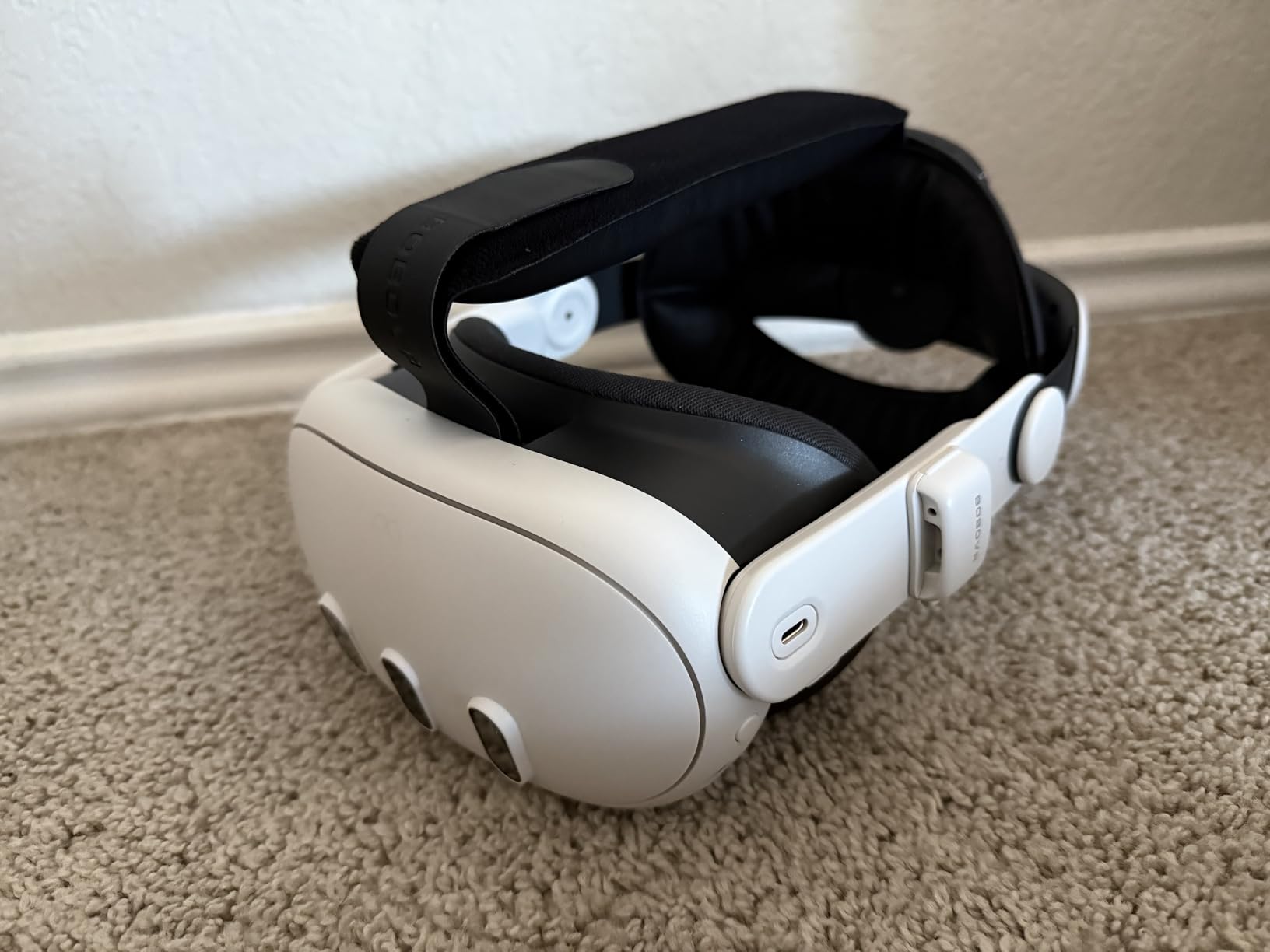
The Meta Quest 3 immediately impressed me the moment I put it on. The pancake lenses make a real difference compared to older fresnel designs, everything looks crisp from edge to edge without the blurry halos I was used to seeing. I spent an entire weekend playing through Asgard’s Wrath 2 and the visual clarity held up beautifully even during fast combat sequences.
Wireless PC VR streaming through Air Link was a pleasant surprise. Connected to my Wi-Fi 6E router, I played Half-Life: Alyx with barely any perceptible lag. The Snapdragon XR2 Gen 2 processor handles the encoding overhead well, and the 120Hz refresh rate keeps motion smooth even when things get hectic on screen.
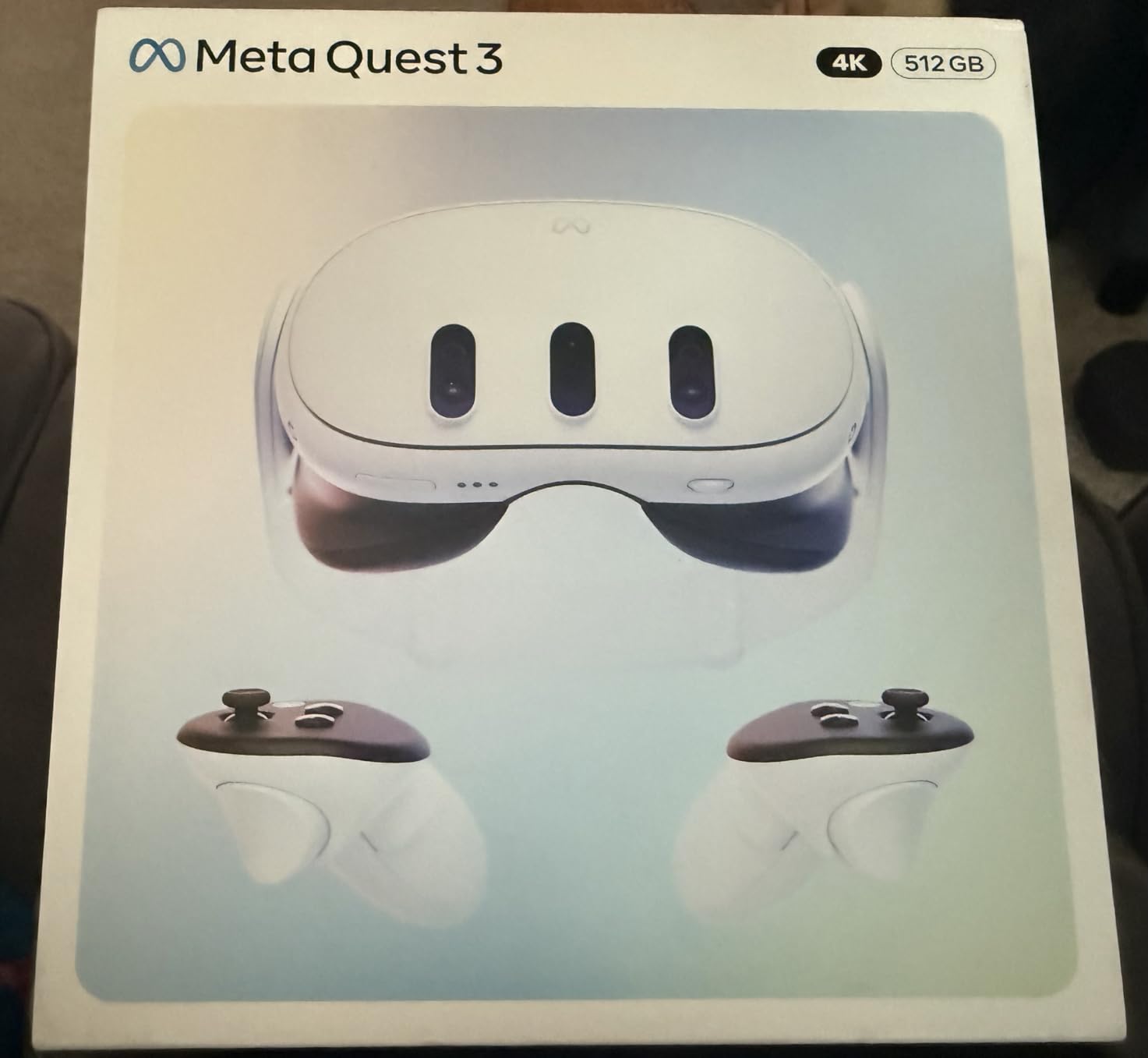
On the technical side, the 4K Infinite Display delivers 4128×2208 pixels combined, which translates to nearly 30% more sharpness than the Quest 2. The full-color passthrough cameras are good enough that I could read my phone notifications without taking the headset off. The Touch Plus controllers ditched the tracking rings, making them feel lighter and more natural in the hand. Battery life averaged about 2.2 hours of active gaming, which is decent for a standalone unit.
The main downsides I noticed were the stock headstrap and the charging situation. After about 90 minutes, the strap pressure on my forehead became noticeable. I ended up buying a third-party halo strap, which completely solved the issue. The headset also needs a powerful 18W+ charger for reasonable charging speeds, and the included one feels underpowered.
Who Should Buy the Meta Quest 3
The Quest 3 is the right pick if you want one headset that does everything well. It works standalone for casual gaming and fitness, streams PC VR wirelessly for demanding titles, and handles mixed reality apps with its color passthrough. If you have a decent Wi-Fi setup and want to play both standalone and PC VR games without buying separate headsets, this is your best option.
It is also the smartest choice for anyone already invested in the Meta ecosystem. The 512GB model gives you plenty of room for the growing library of Quest-native titles, and backward compatibility with Quest 2 games means you have over 500 titles available from day one.
Who Should Skip the Meta Quest 3
If you exclusively play PC VR and already have base stations set up, a dedicated PC VR headset like the Valve Index might serve you better for pure visual fidelity and tracking precision. The Quest 3’s wireless compression, while minimal, still introduces a slight quality reduction compared to a direct DisplayPort connection.
Budget-conscious buyers who just want to try VR without spending much should look at the Quest 3S or Quest 2 instead. The Quest 3’s premium features like pancake lenses and color passthrough are nice, but not strictly necessary for enjoying VR games.
2. Meta Quest 3S 128GB – Best Budget VR Headset
Meta Quest 3S 128GB | Virtual Reality — VR Headset — Gorilla Tag Bundle
Snapdragon XR2 Gen 2
8GB RAM
1832x1920 Display
Full-Color Passthrough
128GB Storage
515g Weight
Pros
- Excellent entry-level price with XR2 Gen 2 power
- Full-color passthrough for mixed reality
- Easy setup for complete beginners
- Access to same Quest game library
- Good 2.5 hour battery life
Cons
- 128GB storage fills up fast for serious gamers
- Stock headstrap uncomfortable over time
- Can overheat during demanding sessions
The Quest 3S surprised me with how much it gets right at its price point. It shares the same Snapdragon XR2 Gen 2 processor and 8GB RAM as the more expensive Quest 3, so performance in standalone games feels nearly identical. I played Beat Saber, Superhot VR, and Population One back-to-back and the gameplay was smooth throughout.
Setting it up was straightforward. I downloaded the Meta Horizon app, paired the headset, and was inside a game within ten minutes of unboxing. The full-color passthrough is a real step up from the grainy black-and-white passthrough on older budget headsets, making mixed reality apps actually usable for the first time at this price range.
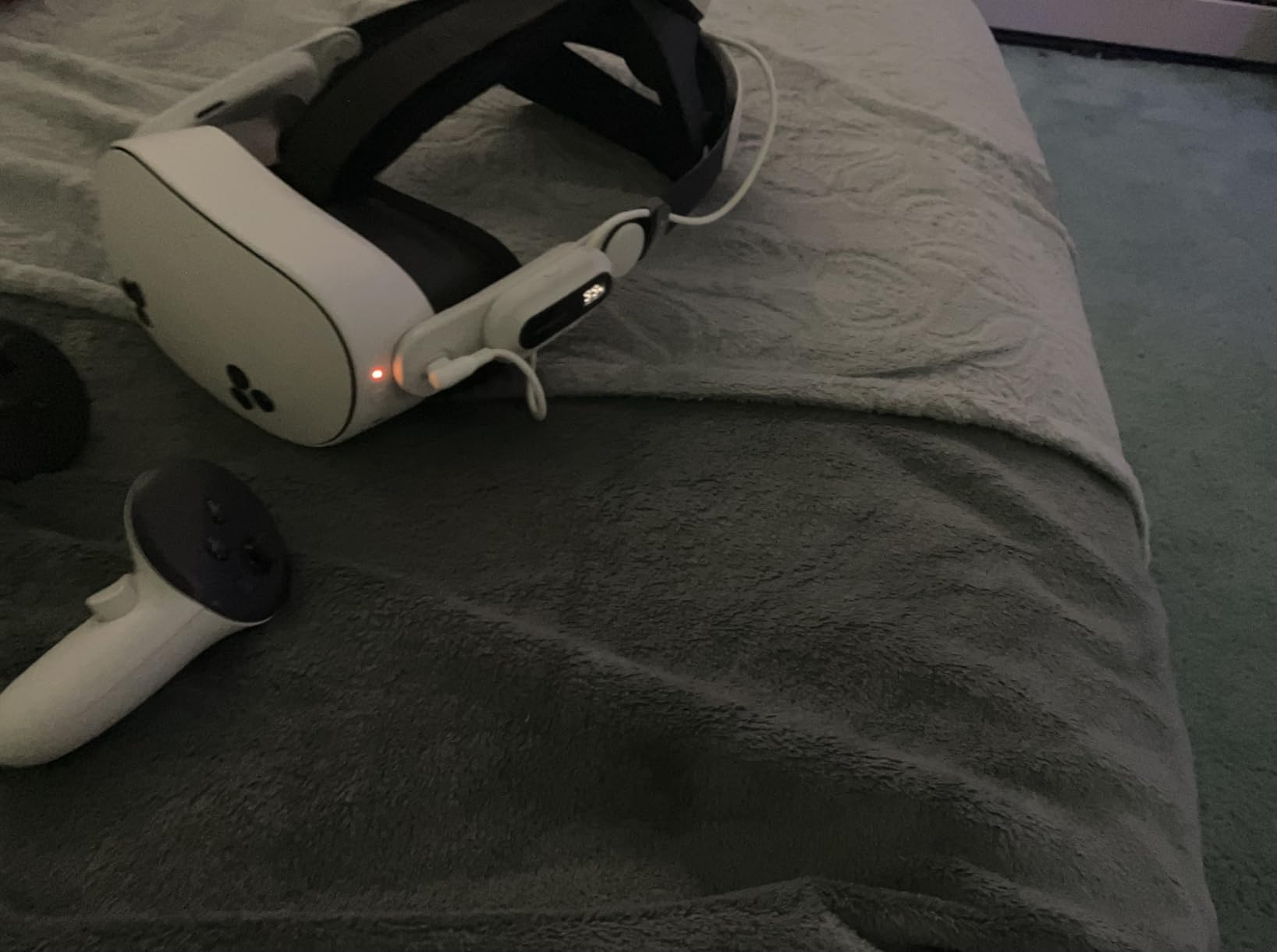
Technically, the 1832×1920 per eye resolution uses fresnel lenses instead of the pancake lenses found on the Quest 3. This means you get some god-ray effects on high-contrast scenes, but for most games the difference is not dramatic enough to ruin the experience. The 60Hz to 120Hz variable refresh rate keeps things smooth, and the 8GB of RAM handles multitasking between apps without issues.
The 128GB storage is the real limitation here. After installing about 15 moderate-sized games, I was already down to 40GB free. If you plan to download a lot of standalone titles or record gameplay footage, you will run into space constraints quickly. The stock headstrap also left me wanting more comfort after about an hour of play, similar to the Quest 3.
Who Should Buy the Meta Quest 3S
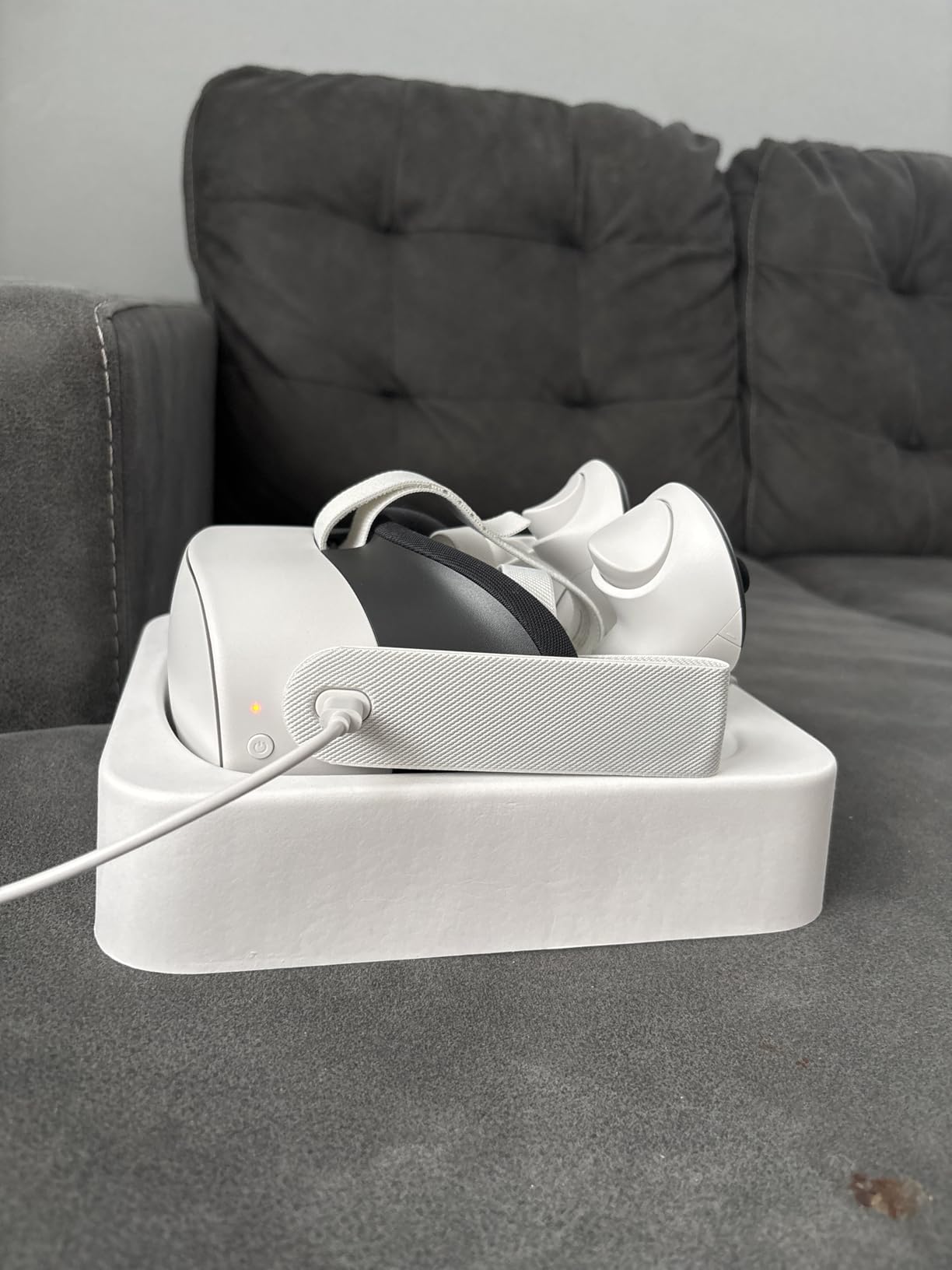
The 3S is ideal for first-time VR buyers who want to experience what virtual reality gaming is all about without a large upfront investment. It delivers 90% of the Quest 3 experience at a significantly lower price, and you get access to the exact same game library. If you are curious about VR but not ready to commit to the premium tier, start here.
It is also a great second headset for households that already have one VR unit. Kids or guests can use the 3S while you use the Quest 3, and multiplayer games work between the two without any issues.
Who Should Skip the Meta Quest 3S
Avid gamers who know they will download dozens of titles should skip the 128GB model and go straight for the Quest 3 with 512GB of storage. Running out of space mid-session and having to delete games to install new ones gets old fast.
If visual clarity is your top priority, the fresnel lenses on the 3S will not match the edge-to-edge sharpness of the Quest 3’s pancake lenses. For flight sim enthusiasts or anyone sensitive to visual artifacts, the upgrade to the Quest 3 is worth it.
3. PlayStation VR Headset + Camera Bundle – Best for Console Gamers
PlayStation VR Headset + Camera Bundle [Discontinued] (Renewed)
OLED Display
1080p Resolution
110 Degree FOV
PS4 and PS5 Compatible
Renewed Bundle
5.73 Pounds
Pros
- Affordable console VR entry point
- OLED display with deep blacks
- Works with PS5 using adapter
- Plug and play simplicity
- Strong PS VR exclusive game library
Cons
- Renewed quality varies between units
- Motion controllers sold separately
- Camera adapter for PS5 not included
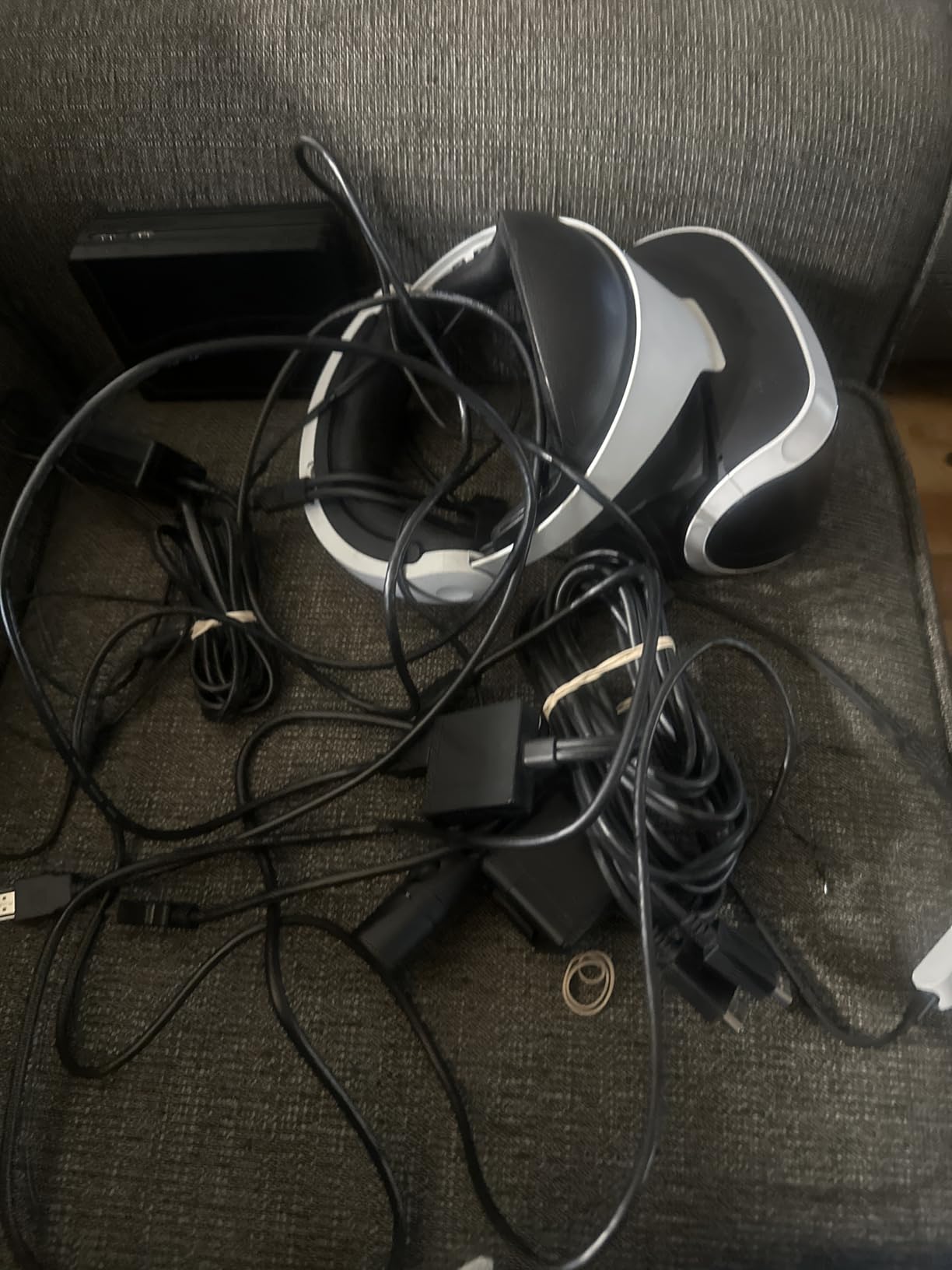
The original PlayStation VR still holds up as a solid console VR option, and this renewed bundle keeps the entry price low. I hooked it up to my PS4 first, and the plug-and-play setup was refreshingly simple. No base stations to mount, no PC specs to worry about. Just plug in the processor unit, connect the camera, and you are in VR within minutes.
The OLED display produces rich, deep blacks that LCD-based headsets cannot match. Playing games like Astro Bot Rescue Mission and Blood and Truth, the contrast makes a real difference in darker scenes. The 110-degree field of view is adequate, and the headset sits comfortably on my head without too much pressure on the bridge of my nose.
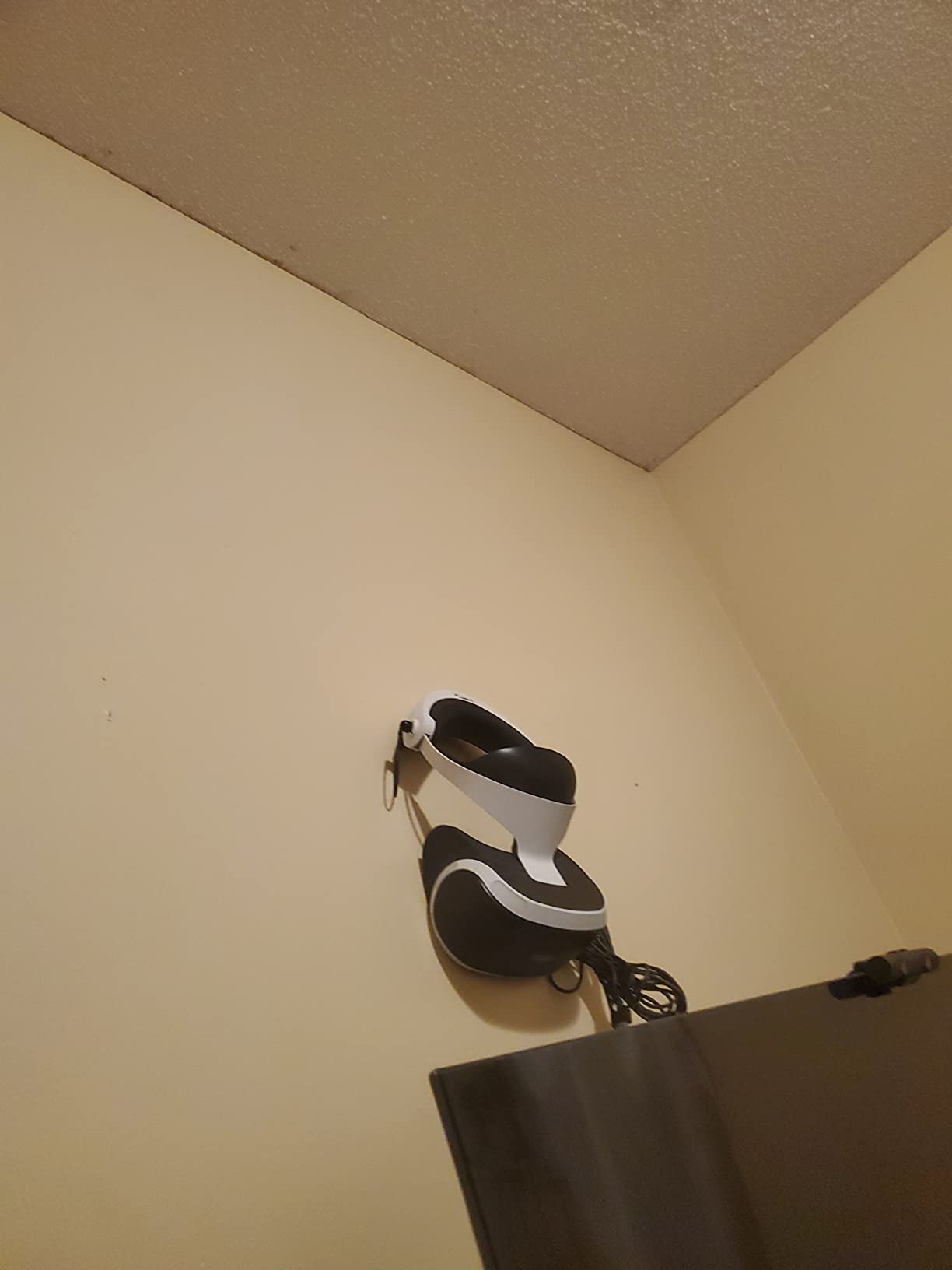
On the technical front, the 1920×1080 resolution splits across both eyes at 960×1080 per eye, which is lower than modern standalone headsets. The OLED panel compensates somewhat with excellent color reproduction and zero backlight bleed. The headset uses a single display with a optical block splitting the image, which can cause slight crosstalk in some games. Tracking relies on the PlayStation Camera, which is adequate for seated or standing play but less precise for room-scale VR.
The biggest thing to watch out for with this renewed bundle is condition consistency. My unit arrived in good shape, but I have read reports from users who received units with peeling foam, scratched lenses, or missing parts. The 90-day warranty on renewed units offers limited protection, so inspect everything carefully when it arrives.
Who Should Buy the PlayStation VR
PS4 or PS5 owners who want to try VR without spending much should look at this bundle. The PS VR library includes some genuine gems like Astro Bot, Wipeout Omega Collection, and Resident Evil 7 VR that you cannot play on any other headset. If you already own a PlayStation console, this is the most cost-effective way to get into VR gaming.
It is also a good fit for families or casual gamers who prefer a simple setup. There are no base stations to install and no PC requirements to worry about. Just connect it to your console and go.
Who Should Skip the PlayStation VR
If you want the sharpest visuals or room-scale tracking, this headset will disappoint. The 1080p resolution shows its age compared to modern 4K displays, and the single-camera tracking has noticeable dead zones. PC gamers should look at dedicated PC VR headsets instead.
Anyone buying this renewed bundle should be prepared for variable quality. If you want a guaranteed-new experience, consider saving up for a PlayStation VR2 or a standalone Quest headset instead.
4. Meta Quest 2 256GB – Best Value Standalone VR
Meta Quest 2 — Advanced All-In-One Virtual Reality Headset — 256 GB
1832x1920 Display
90Hz Refresh Rate
Snapdragon XR2
256GB Storage
1.83 Pounds
Wireless
Pros
- Massive 22k+ review community with proven reliability
- Excellent wireless freedom with Air Link PC VR
- Over 250 native titles plus SteamVR access
- Comfortable fit with adjustable IPD
- No PC or console required for standalone play
Cons
- Battery lasts only 2-3 hours during heavy use
- Stock strap uncomfortable and prone to breaking
- Can feel front-heavy during extended sessions
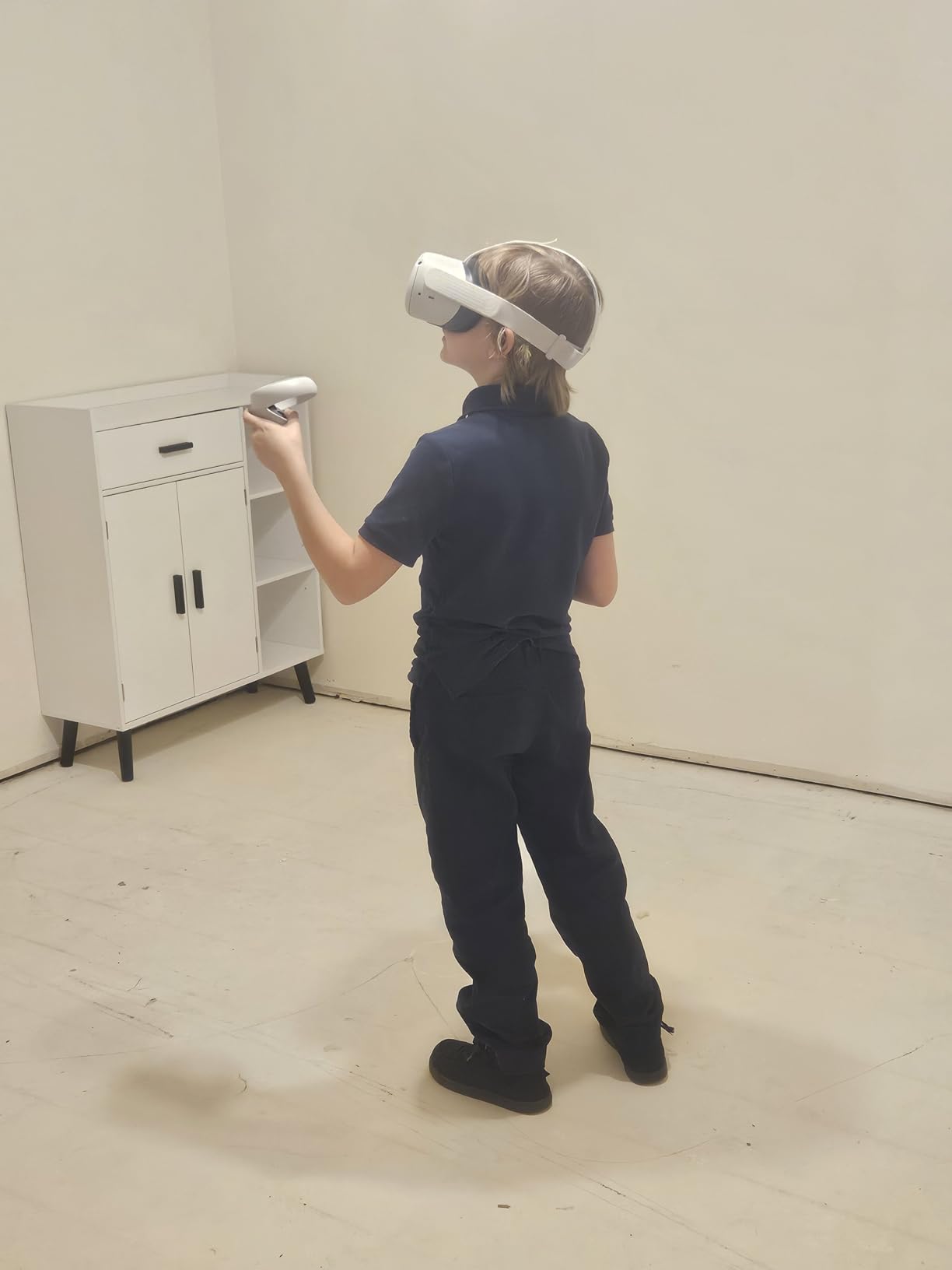
The Quest 2 remains one of the most popular VR headsets ever made, and after using it extensively, I understand why. With over 22,000 reviews and a 4.7-star rating, this headset has proven itself across millions of gaming sessions. I fired up some of my favorite titles like The Walking Dead: Saints and Sinners and Contractors, and the Snapdragon XR2 processor handled them without breaking a sweat.
What makes the Quest 2 special is its versatility. In standalone mode, it runs over 250 apps and games natively with no external hardware needed. Flip on Air Link, connect to a good router, and suddenly you are playing PC VR games from your Steam library. That dual-use capability at this price is hard to beat.
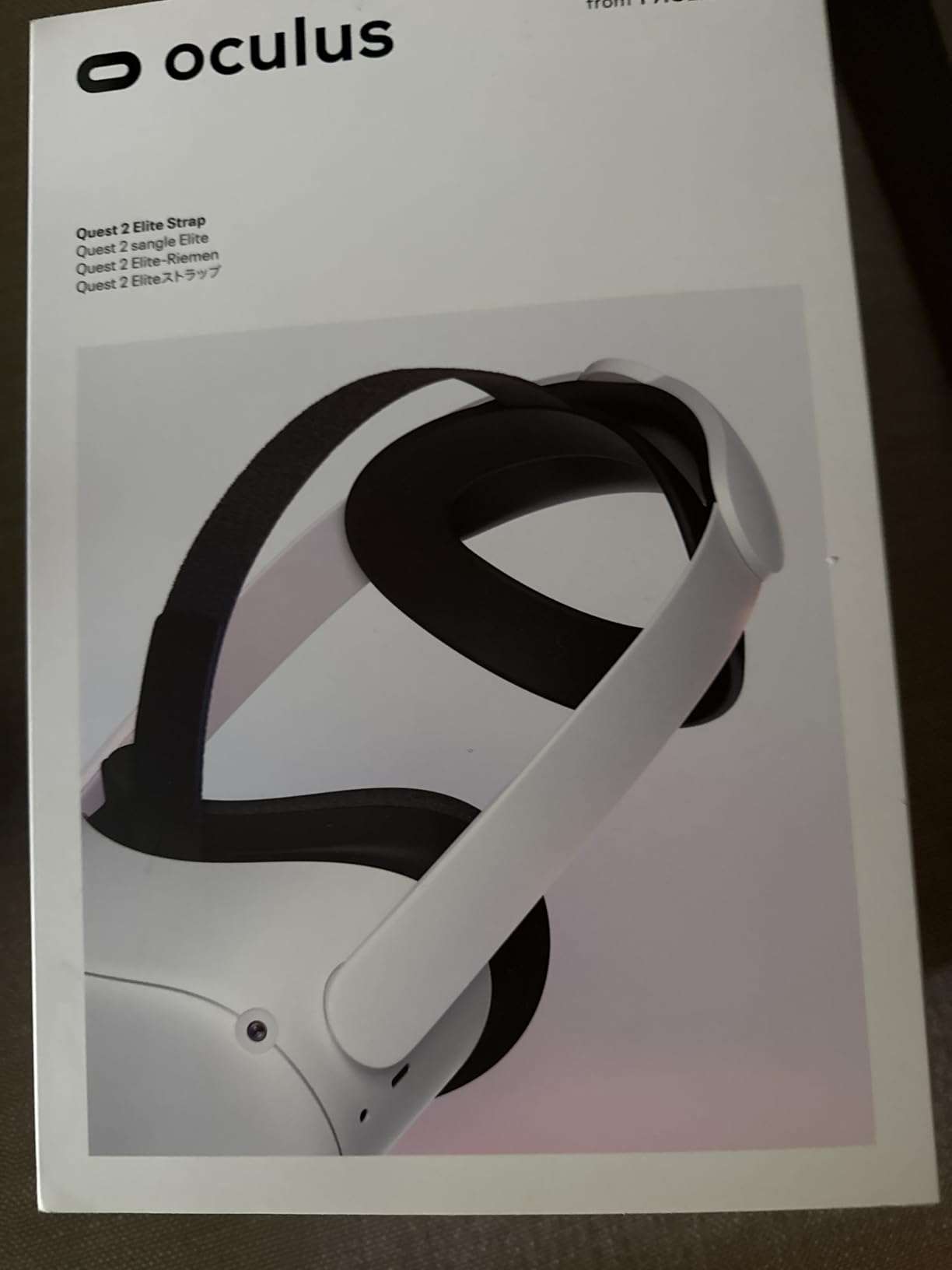
The 1832×1920 per eye resolution at 90Hz delivers a clear picture for most games. The LCD display produces bright, vibrant colors, though it does not have the deep blacks of an OLED panel. Inside-out tracking with four cameras works reliably for most gaming scenarios. I noticed occasional tracking loss when controllers were held behind my back for extended periods, but this rarely affected actual gameplay.
The 3D positional audio built into the headset is surprisingly good for casual gaming. For competitive multiplayer titles, I still preferred plugging in wired earbuds through the 3.5mm jack. The 256GB storage on this model gives you plenty of room for a large game library, which is a significant advantage over the base 128GB model if you plan to go all-in on VR gaming.
Who Should Buy the Meta Quest 2
The Quest 2 is perfect for anyone who wants proven VR performance at a competitive price. The massive user base means abundant troubleshooting resources, accessory options, and multiplayer lobbies. If you want a headset that just works and has the biggest standalone game library, the Quest 2 delivers.
It is also a strong pick for PC gamers on a budget. With Air Link and a Wi-Fi 6 router, you get wireless PC VR streaming that rivals more expensive dedicated PC VR setups for a fraction of the cost.
Who Should Skip the Meta Quest 2
If visual clarity is your primary concern, the Quest 2’s fresnel lenses and lower resolution show their age next to the Quest 3’s pancake optics. The god-ray effect on bright objects in dark environments is noticeable and can be distracting in games with high contrast scenes.
Anyone bothered by the requirement for a Meta account should look elsewhere. You cannot use the Quest 2 without linking it to a Meta account during setup, and this requirement is non-negotiable.
5. Meta Quest Pro – Best for VR Enthusiasts and Productivity
Meta Quest Pro
Pancake Lenses
12GB RAM
256GB Storage
Eye and Face Tracking
106 Degree FOV
879g Weight
Pros
- World-class counter-balanced comfort for long sessions
- Advanced pancake lenses with quantum dot technology
- Real-time eye and face tracking for avatar expressions
- Touch Pro controllers with self-tracking cameras
- Multitasking with multiple resizable virtual screens
Cons
- Screen door effect still visible on close inspection
- Discontinued product with limited ongoing support
- Passthrough cameras can be blurry for AR use
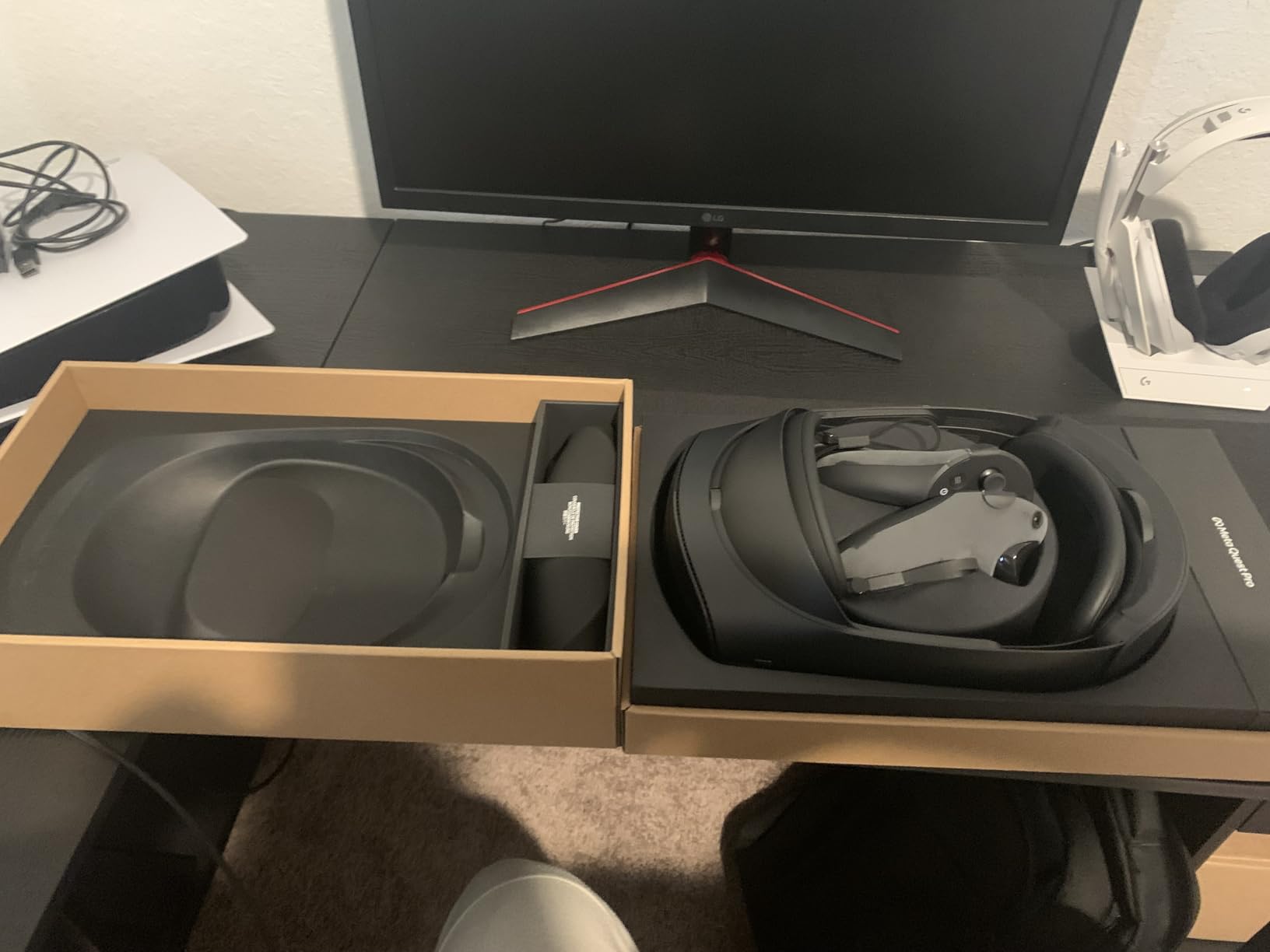
The Meta Quest Pro occupies an interesting space. It was designed as a premium device for professionals and enthusiasts, and that focus shows in its build quality and comfort. The counter-balanced design distributes weight more evenly than any other headset I tested. I wore it for a three-hour VRChat session without the forehead fatigue I typically experience with other units.
The pancake lenses with quantum dot technology and local dimming produce vibrant, accurate colors. Text clarity for reading virtual monitors and productivity apps is noticeably better than on the Quest 2. I set up three resizable virtual screens and worked in a virtual office for an afternoon, and the experience was genuinely productive rather than a novelty.
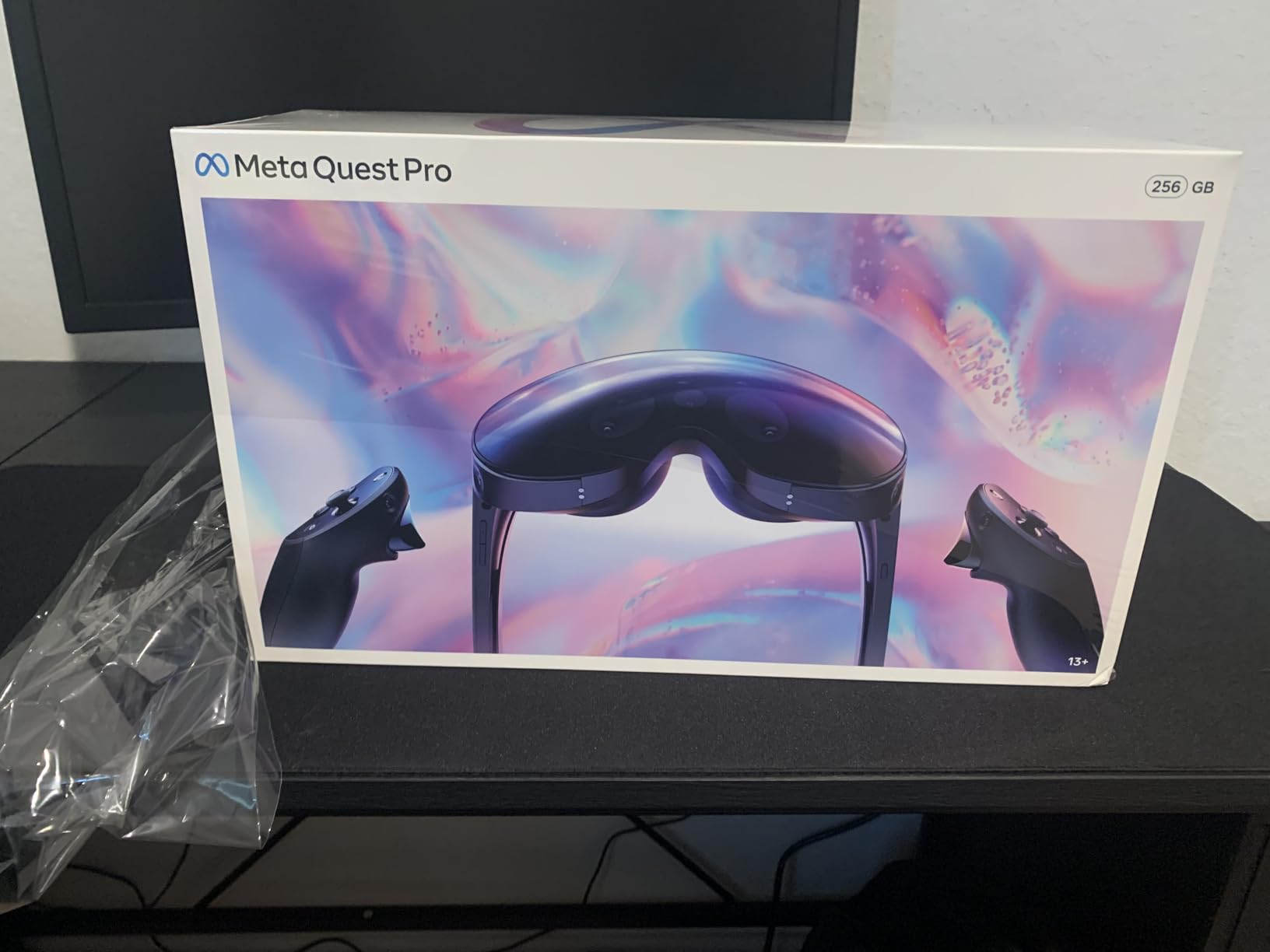
Under the hood, the Quest Pro packs 12GB RAM and 256GB storage with the same Snapdragon XR2 Gen 1 platform as the Quest 2. The 10 advanced VR/MR sensors enable eye tracking, face tracking, and precise controller tracking without external base stations. The Touch Pro controllers are a real highlight, featuring self-tracking cameras that maintain position even when held behind your back or under your legs.
The main technical weakness is the screen door effect. Despite the increased pixel density from quantum dot panels, you can still make out the pixel grid when looking at bright, uniform surfaces. The passthrough cameras also produce noticeably blurry images compared to the Quest 3, making mixed reality less convincing. Battery life takes a hit when all the advanced tracking features are active.
Who Should Buy the Meta Quest Pro
The Quest Pro makes sense for VRChat enthusiasts who want their avatar to replicate their facial expressions in real time. The eye and face tracking creates natural avatar movements that are impossible with other headsets in this price range. It is also worth considering if you want to use VR for productivity with multiple virtual monitors.
VR enthusiasts who value comfort above all else should look at the Pro. The counter-balanced design and premium materials make it the most comfortable headset I tested for sessions longer than two hours.
Who Should Skip the Meta Quest Pro
The Quest Pro has been discontinued by Meta, which means limited future software updates and support. At its current price point, the Quest 3 offers better overall value with newer internals, better passthrough, and ongoing support from Meta.
Pure gamers who do not care about eye tracking or productivity features get more bang for their buck with the Quest 3. The Pro’s gaming performance is comparable to the Quest 2, so you are mostly paying for comfort and tracking features rather than raw gaming power.
6. Valve Index VR Full Kit – Best Premium PC VR Experience
Valve Index VR Full Kit (Renewed)
1440x1600 Per Eye
Up to 144Hz
132 Degree FOV
Knuckles Controllers
Base Station Tracking
16 Pounds
Pros
- Industry-leading Knuckles controllers with finger tracking
- Wide 132-degree field of view for immersion
- Up to 144Hz refresh rate for buttery smooth motion
- Excellent off-ear audio quality
- Full SteamVR ecosystem integration
Cons
- Requires powerful gaming PC and base station setup
- Very expensive even as a renewed unit
- Renewed units often have cable or controller issues
The Valve Index has been the gold standard for PC VR since it launched, and it still earns that reputation in 2026. The first thing that struck me was the 132-degree field of view, which is significantly wider than the Meta Quest headsets. Playing Half-Life: Alyx on the Index feels more immersive because your peripheral vision is filled rather than looking through binoculars.
The Knuckles controllers are genuinely the best VR controllers I have used. Individual finger tracking lets you naturally grip objects, point, and make hand gestures without thinking about button mappings. During combat sequences, picking up weapons and manipulating objects felt instinctive in a way that no other controller has matched.
On the technical side, the 1440×1600 per eye resolution at up to 144Hz refresh rate delivers exceptionally smooth motion. The off-ear speakers sit just above your ears, providing immersive spatial audio without pressing against them. Base station tracking with two Lighthouse base stations gives sub-millimeter accuracy across a room-scale play area, which is why flight sim and racing sim enthusiasts consistently recommend the Index.
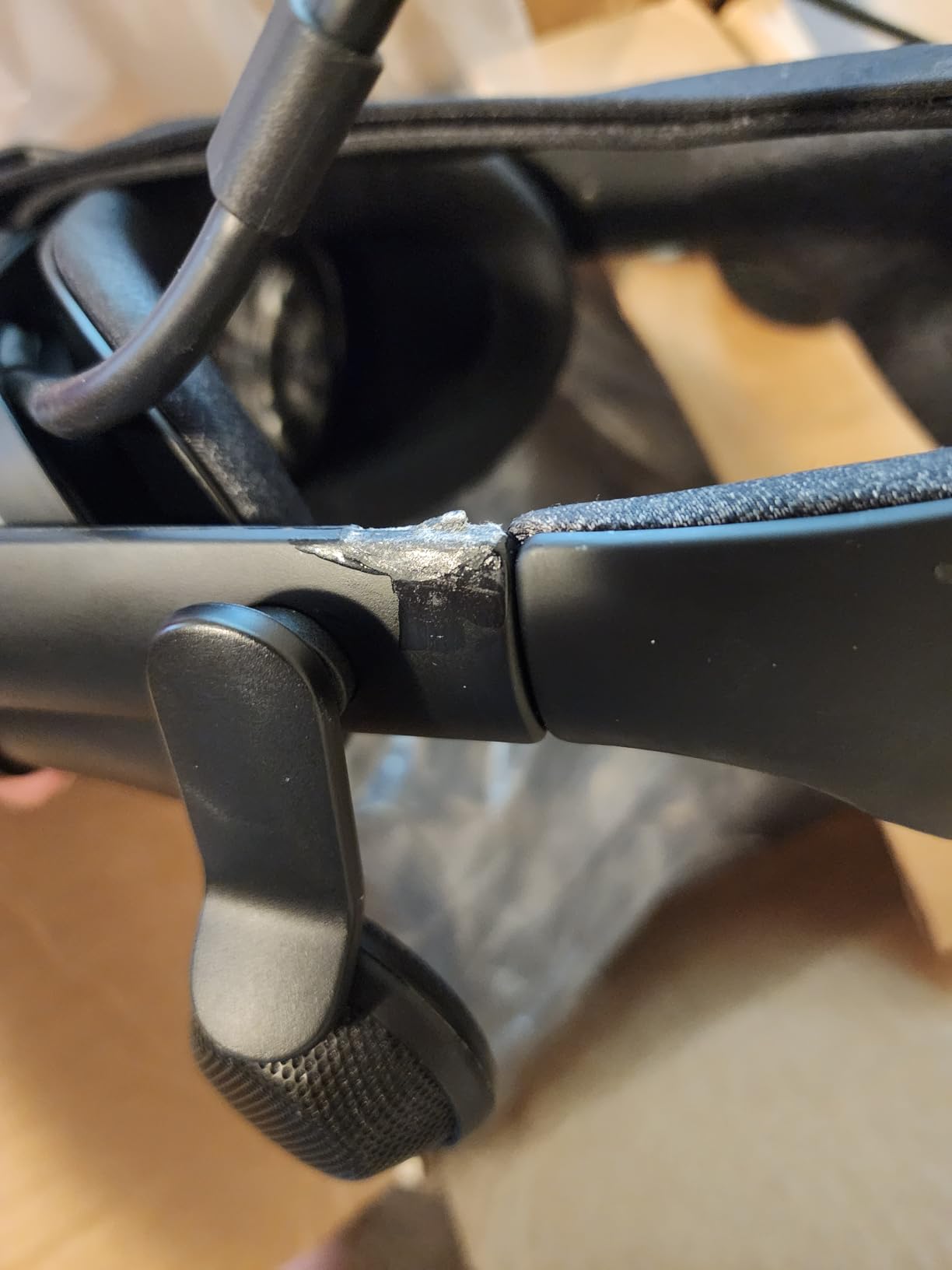
The trade-off is complexity. Setting up base stations requires drilling into walls or using tripod mounts. The headset tethers you to your PC with a thick cable that can snag during active gameplay. And this renewed unit comes with only a 90-day warranty, which is concerning given reports of cable and controller defects in refurbished Index kits.
Who Should Buy the Valve Index
PC VR purists with powerful gaming rigs should seriously consider the Index. If you primarily play SteamVR games and want the best tracking accuracy, widest field of view, and most capable controllers in the business, nothing else matches the Index at this level. Flight sim and racing sim enthusiasts benefit enormously from the precise tracking and wide FOV.
It is also the right choice if you already own base stations from a previous Vive setup. The Index headset and controllers are compatible with existing Lighthouse hardware, reducing the total investment.
Who Should Skip the Valve Index
If you want wireless VR or standalone capability, the Index is not for you. It is a tethered, PC-only headset with no wireless option. You also need a high-end gaming PC with a strong GPU to push the high refresh rates and resolutions the Index is capable of.
Budget-conscious buyers should consider that even renewed units carry a premium price tag. After factoring in base stations, mounting hardware, and a sufficiently powerful PC, the total cost can easily double the headset price alone. The Quest 3 with Air Link provides a wireless PC VR experience for significantly less total investment.
7. HTC Vive XR Elite – Best Lightweight Mixed Reality Headset
HTC Vive XR Elite with Deluxe Pack — Mixed Reality and PC VR Headset + Controllers
3840x1920 Combined Resolution
90Hz Refresh Rate
110 Degree FOV
Inside-Out Tracking
128GB Storage
Hot-Swappable Battery
Pros
- Lightweight and compact design for travel and long sessions
- Diopter adjustment dials for glasses-free viewing
- Full-color passthrough with depth sensor for mixed reality
- Base station-free setup with inside-out tracking
- Hot-swappable battery for extended play
Cons
- Battery lasts only 30 minutes with face tracking enabled
- Limited standalone content library compared to Meta
- Uncomfortable broom-handle controller design
The HTC Vive XR Elite immediately caught my attention with its compact, lightweight frame. At just 515 grams without the battery cradle, it is one of the lightest full-featured VR headsets available. I was able to play for over two hours without the neck strain I usually get from heavier headsets, which made it my go-to for extended sessions.
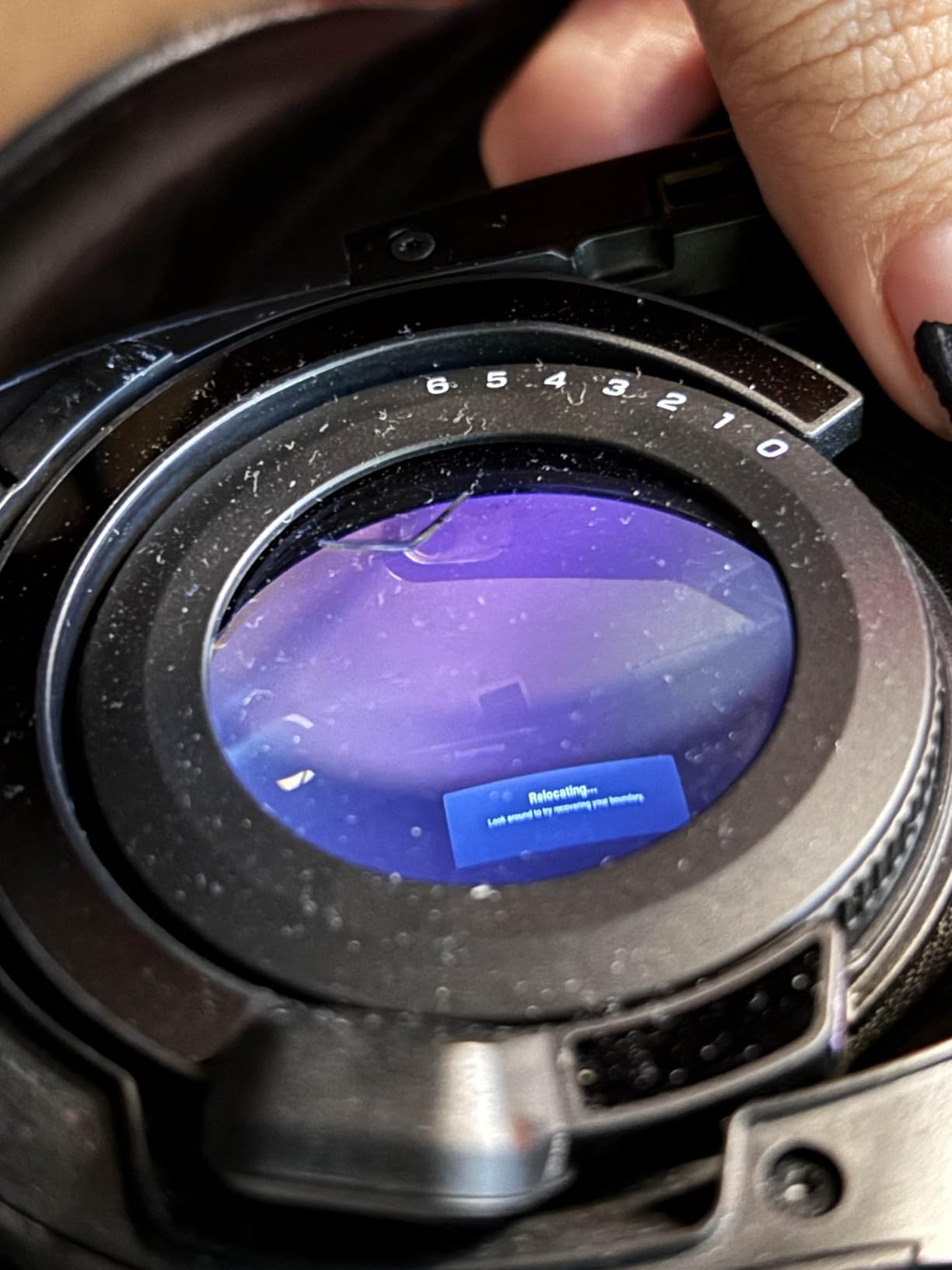
The diopter adjustment dials are a standout feature for glasses wearers. I was able to dial in my prescription and play without my glasses, which eliminates the fogging and fit issues that plague many other headsets. This alone makes the XR Elite worth considering if you wear corrective lenses and have struggled with VR comfort.
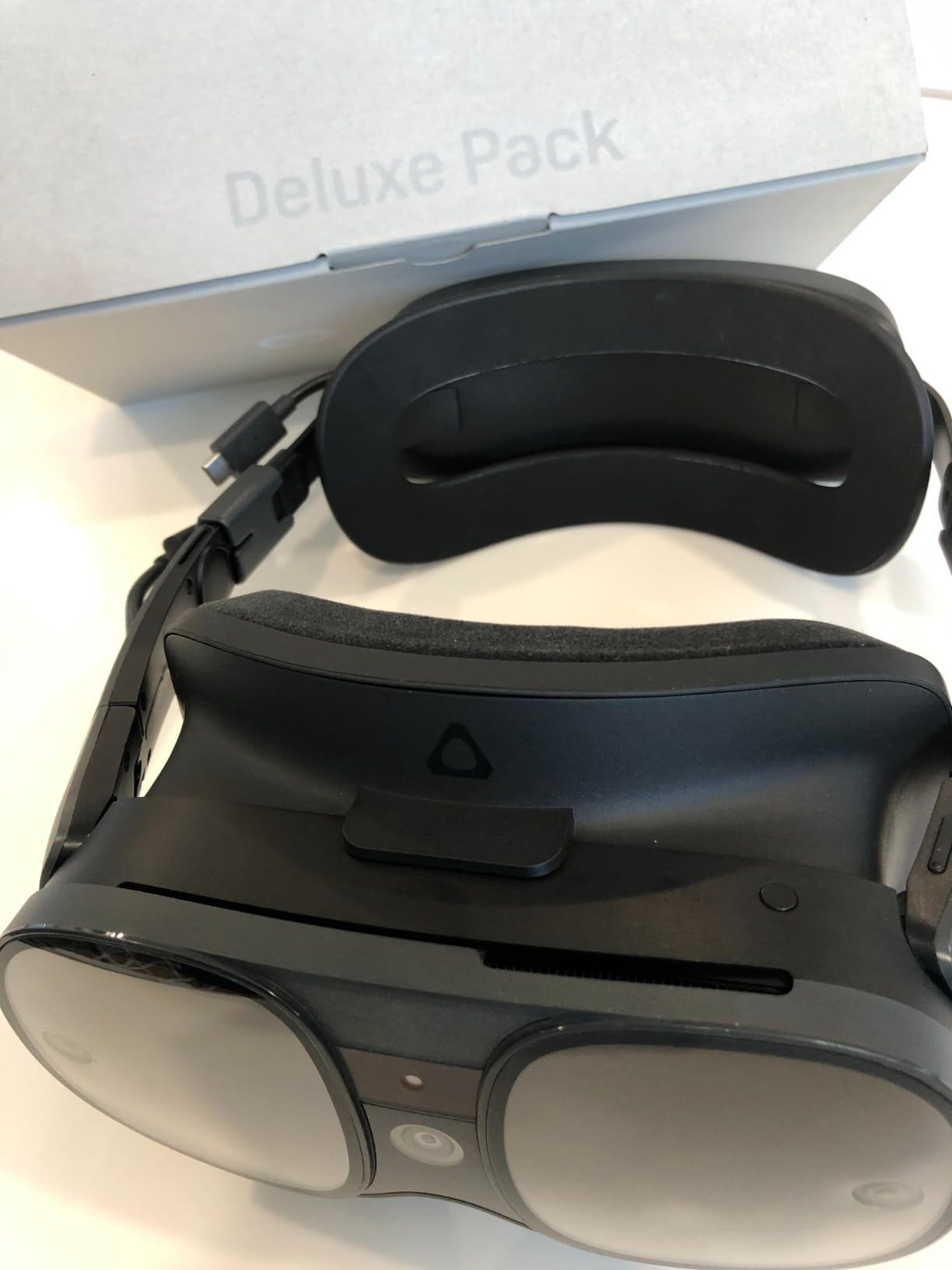
Technical specifications include a 3840×1920 combined resolution across dual LCD displays running at 90Hz. The 19 pixels per degree density delivers sharp text and clear textures in most games. The four wide-FOV tracking cameras provide reliable inside-out tracking without base stations. The full-color passthrough with depth sensor enables convincing mixed reality experiences, though the passthrough image quality is not as clear as the Quest 3’s.
The main frustrations I had were with battery life and the standalone content library. With face tracking enabled, the battery drained in about 30 minutes. For standard VR gaming, I got closer to the claimed 2 hours. The HTC standalone store has far fewer titles than the Meta Quest store, so you will likely want to connect to a PC for the best game selection. The broom-handle shaped controllers also felt awkward in my hands compared to the ergonomic designs from Meta and Valve.
Who Should Buy the HTC Vive XR Elite
Glasses wearers who want a headset with built-in diopter adjustments should look at the XR Elite first. The ability to play VR without wearing glasses underneath is a significant quality-of-life improvement. It is also a strong choice for anyone who values portability and wants a headset they can easily pack for travel.
Mixed reality enthusiasts who want a base station-free setup with passthrough capabilities will appreciate the XR Elite’s balance of standalone and PC VR functionality in a compact form factor.
Who Should Skip the HTC Vive XR Elite
If you primarily want standalone VR gaming, the XR Elite’s limited app store cannot compete with Meta’s massive library. Most of the best VR games require a PC connection through USB or Wi-Fi streaming, which adds complexity and latency.
Anyone who values battery life for long play sessions will be disappointed. The hot-swappable battery system helps, but you need spare batteries to get through marathon gaming sessions, and those are additional costs to factor in.
8. HTC Vive Focus Vision – Best High-Resolution PC VR Headset
HTC Vive Focus Vision Wired Bundle — XR Headset with DisplayPort PC VR Streaming Kit
2448x2448 Per Eye 5K
120 Degree FOV
90Hz Refresh Rate
DisplayPort Streaming
Auto-IPD
128GB Storage
Pros
- Stunning 5K resolution per eye for maximum clarity
- DisplayPort mode for lossless PC VR streaming
- Built-in eye tracking and 26-point hand tracking
- Hot-swappable battery for uninterrupted gaming
- 10 hit games included with purchase
Cons
- Software bugs and stability issues across HTC and SteamVR
- Streaming kit underpowered at 30W needs 45W for stability
- Fresnel lenses reduce visual clarity despite 5K resolution
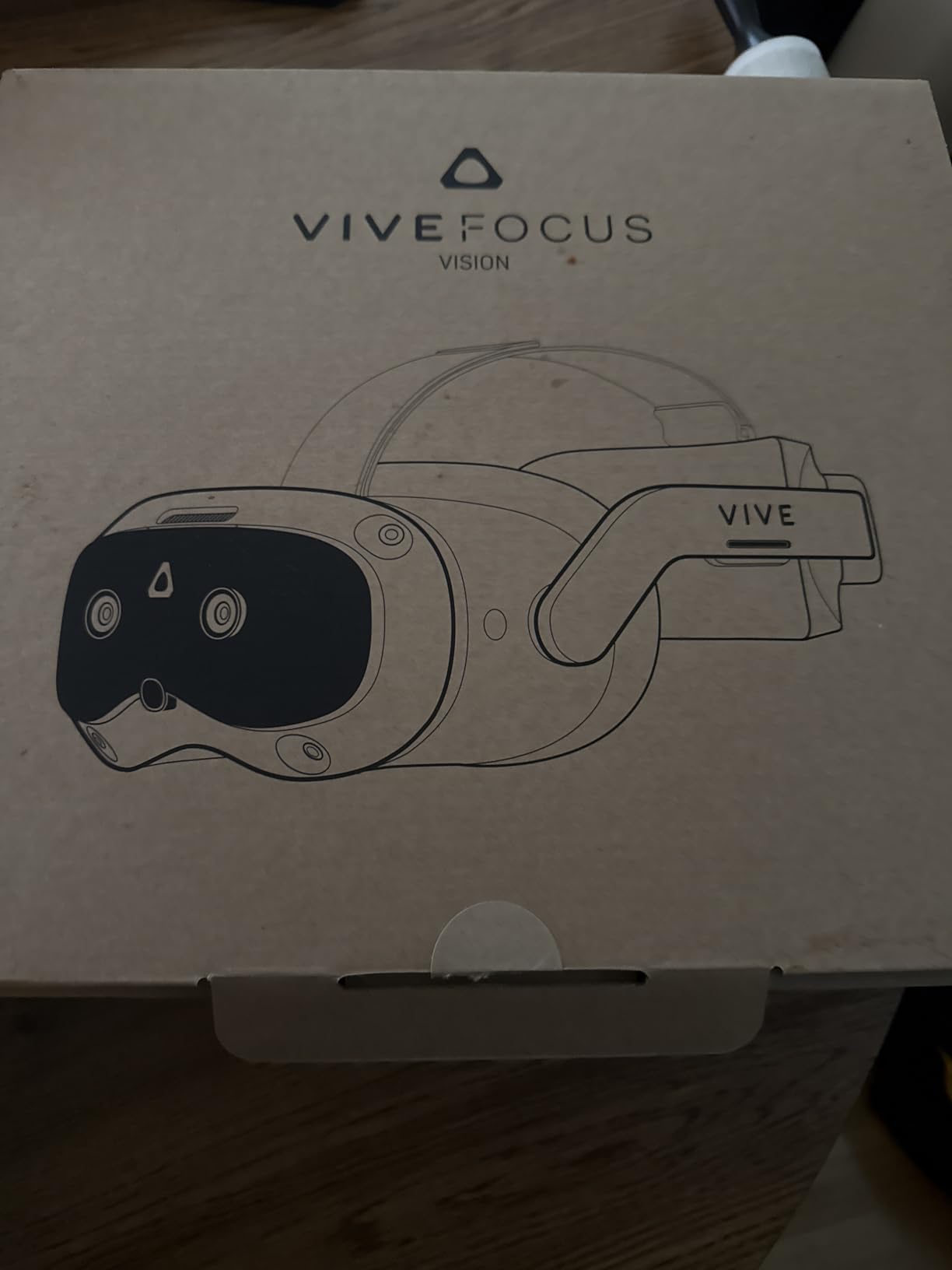
The HTC Vive Focus Vision promises an impressive spec sheet, and on paper, the 5K resolution per eye is jaw-dropping. The DisplayPort streaming kit sets this headset apart from competitors by offering a direct, lossless connection to your PC, bypassing the compression artifacts you get with wireless streaming. Playing Microsoft Flight Simulator in 5K VR was genuinely breathtaking on the occasions when everything worked smoothly.
The auto-IPD adjustment is a nice touch. The headset physically adjusts the lens spacing based on your eye position, which removes one common setup frustration. The 3D spatial audio from the built-in dual-driver speakers delivers clear, directional sound. Having a 3.5mm headphone jack is a welcome addition for audiophiles who prefer their own headsets.
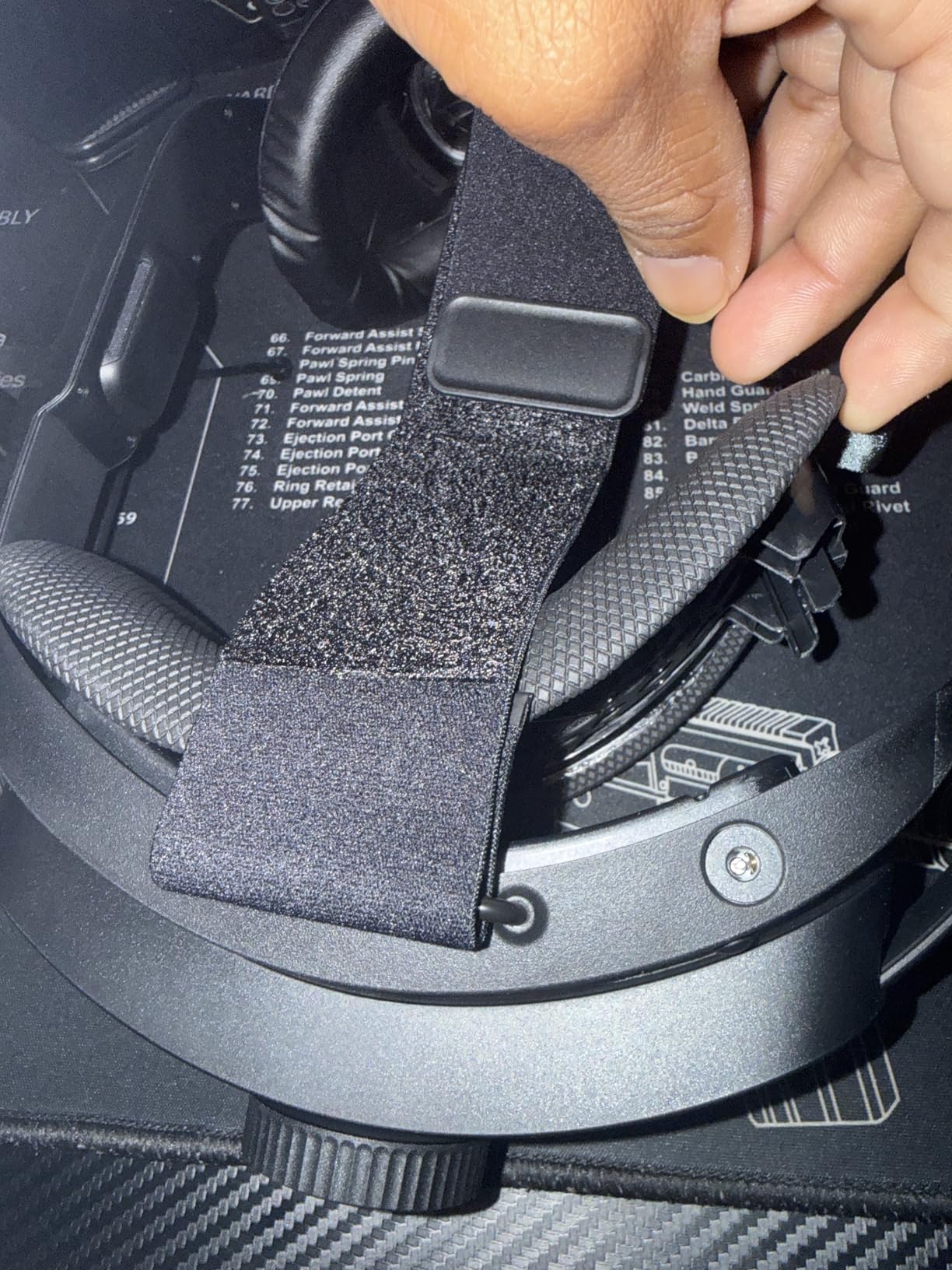
Technically, the 2448×2448 per eye resolution combined with a 120-degree field of view gives you a wider, taller view of virtual worlds than most headsets can offer. The infrared floodlight enables hand tracking even in low-light conditions. The 26-point precision hand tracking system captures detailed finger movements. The bundle includes 10 hit games like Arizona Sunshine, After the Fall, and Les Mills Bodycombat, which adds real value to the purchase.
The frustrating part is the software. Running the Focus Vision requires both HTC’s VIVE software and SteamVR simultaneously for PC gaming, and the interaction between the two is buggy. I experienced crashes, tracking stutters, and settings that would not persist between sessions. The fresnel lenses also undermine the 5K resolution with god rays and reduced edge clarity, which is a shame given the otherwise impressive display specs. The included streaming kit is underpowered at 30W when it needs 45W for stable DisplayPort performance.
Who Should Buy the HTC Vive Focus Vision
Tech enthusiasts who want the highest pixel count available and are willing to troubleshoot software issues should consider the Focus Vision. When it works correctly, the 5K resolution and DisplayPort connection deliver PC VR image quality that wireless headsets cannot match. It is also a strong option for VR content creators who need eye tracking and face tracking for streaming.
Users who want a comprehensive all-in-one package with included games and accessories will appreciate the bundled value. The 10 included games represent a solid starting library without any additional purchases.
Who Should Skip the HTC Vive Focus Vision
Anyone who wants a plug-and-play experience should avoid the Focus Vision. The software situation requires patience and troubleshooting that casual users will not enjoy. If you just want to put on a headset and start playing within minutes, the Quest 3 or Quest 3S is far more user-friendly.
The high price point combined with the software instability makes this a risky purchase. At this price level, you expect everything to work flawlessly, and the Focus Vision falls short of that expectation. Consider the Valve Index for a more polished premium PC VR experience at a similar total cost.
How to Choose the Best VR Headset for Gamings?
Picking the right VR headset comes down to understanding a few key factors. I have broken down the most important considerations to help you make the right choice for your gaming setup and budget.
Display Resolution and Lens Type
Resolution per eye is the most important factor for visual clarity. Look for at least 1832×1920 per eye for a sharp image with minimal screen door effect. Pancake lenses, found on the Meta Quest 3 and Quest Pro, deliver better edge-to-edge clarity than traditional fresnel lenses. Fresnel lenses create god rays on bright objects and reduce sharpness at the edges of your view.
Refresh Rate and Motion Sickness
Higher refresh rates reduce motion sickness and make fast-moving games feel smoother. Look for at least 90Hz, with 120Hz being ideal for competitive gaming. The Valve Index goes up to 144Hz, which is noticeably smoother during rapid head movements. If you are prone to motion sickness, prioritize headsets with higher refresh rates and lower latency.
Standalone vs PC VR vs Console VR
Standalone headsets like the Meta Quest series work without any external hardware, making them the most convenient option. PC VR headsets like the Valve Index and HTC Vive Focus Vision connect to a gaming PC for better graphics and access to SteamVR games. Console VR like the PlayStation VR plugs directly into your PlayStation console. Think about where you want to play and what hardware you already own before choosing.
Tracking Technology
Inside-out tracking uses cameras on the headset to track your position and controllers. It is convenient because it requires no external hardware, but it can lose tracking when controllers are outside the camera view. Base station tracking, used by the Valve Index, requires mounted sensors in your room but delivers the most precise tracking available. For most gamers, inside-out tracking is accurate enough.
Comfort and Weight
VR headsets range from about 400 grams to nearly 900 grams. Lighter headsets like the Meta Quest 3 at 400 grams are more comfortable for extended sessions. The Meta Quest Pro’s counter-balanced design distributes weight better than headsets with all the weight in front. If you plan to play for more than an hour at a time, comfort should be a high priority. Aftermarket headstraps can improve comfort significantly on most headsets.
Game Library and Ecosystem
The Meta Quest store has the largest standalone game library with over 500 titles. SteamVR offers the widest selection of PC VR games. PlayStation VR has exclusive titles like Astro Bot that are not available elsewhere. Consider what games you want to play and make sure they are available on your chosen platform. The Quest headsets can access both their native store and SteamVR via Air Link or Link cable, giving you the most game options overall.
PC Requirements for Tethered VR
If you plan to play PC VR games, you need a capable gaming PC. For basic PC VR, look for at least an NVIDIA RTX 3060 or equivalent GPU, 16GB RAM, and a recent Intel i5 or AMD Ryzen 5 processor. For high-end headsets like the HTC Vive Focus Vision running at 5K resolution, an RTX 4070 or better is recommended. Wireless PC VR streaming also requires a Wi-Fi 6 or Wi-Fi 6E router for the best experience.
Battery Life and Play Time
Standalone headsets typically last 2 to 2.5 hours on a charge during active gaming. The Meta Quest 3S claims 2.5 hours, which I found accurate for moderate use. Heavy games with mixed reality features enabled drain batteries faster. Look for headsets with hot-swappable batteries like the HTC Vive XR Elite and Focus Vision if you want to extend play sessions without waiting for a recharge.
FAQs
What is the #1 VR headset?
The Meta Quest 3 is the best overall VR headset for gaming in 2026. It offers an excellent balance of standalone capability, wireless PC VR streaming via Air Link, sharp pancake lenses, and access to the largest standalone game library. Our testing confirmed it delivers the best all-around experience for most gamers.
Is Oculus or PS5 VR better?
It depends on your setup. Meta Quest headsets (formerly Oculus) offer standalone wireless gaming plus PC VR streaming, making them more versatile. PlayStation VR2 delivers excellent visuals for PS5 exclusives but is limited to the PlayStation console. For most gamers, the Quest 3 provides better overall value because it works standalone, with PCs, and has a larger game library.
Why is VR dying out?
VR is not dying, but the market is consolidating. Sales growth has slowed compared to the pandemic peak, and some high-profile products like the Apple Vision Pro did not achieve mass adoption. However, the Meta Quest platform continues to grow its user base, and dedicated VR gamers remain active. The technology is maturing rather than declining, with better headsets at lower prices becoming available each year.
Do VR headsets work with PC?
Yes, most VR headsets work with PCs in different ways. The Meta Quest series connects wirelessly via Air Link or with a USB-C Link cable for PC VR gaming. Dedicated PC VR headsets like the Valve Index and HTC Vive Focus Vision connect directly via DisplayPort and USB. You need a capable gaming PC with a decent GPU (RTX 3060 or better recommended) for smooth PC VR performance.
Can VR headsets cause motion sickness?
Yes, VR can cause motion sickness, especially for new users. It happens when your eyes see movement but your inner ear does not feel it. Higher refresh rates (90Hz or above), lower latency, and gradual acclimatization help reduce symptoms. Starting with stationary games like Beat Saber and working up to movement-based titles helps most people build tolerance over a few weeks.
Final Thoughts on the Best VR Headsets for Gaming
After testing all eight headsets, the Meta Quest 3 stands out as the best VR headset for gaming for most people in 2026. It hits the sweet spot between visual quality, standalone convenience, PC VR capability, and game library access. The pancake lenses and 4K display deliver clarity that makes a real difference during extended gaming sessions.
For budget-conscious buyers, the Meta Quest 3S offers an excellent entry point that shares the same processor and game library at a lower price. Console gamers should look at the PlayStation VR for affordable access to exclusive titles. And for PC VR enthusiasts who demand the absolute best tracking and controllers, the Valve Index remains a compelling choice despite its age.
Whichever headset you choose, VR gaming in 2026 offers more compelling experiences than ever before. The game libraries are deeper, the hardware is more refined, and the setup is simpler than it was even two years ago. Pick the headset that matches your gaming platform and budget, and you will be exploring virtual worlds in no time.