Virtual reality gaming demands powerful hardware, and your graphics card is the most critical component for a smooth, immersive VR experience. Whether you are stepping into Half-Life: Alyx, exploring Microsoft Flight Simulator in VR, or connecting your Meta Quest headset to your PC, the right GPU determines whether your VR sessions are fluid and stunning or frustrating and stuttery. This guide to the best graphics cards for VR in 2026 will help you find the perfect card for your budget and VR ambitions.
VR places unique demands on your graphics subsystem. Beyond raw frame rates, you need consistent performance to maintain the 90Hz+ refresh rates that modern headsets require. Frame drops below 72fps in VR can cause motion sickness, making stability as important as speed. The graphics cards in this roundup have been selected specifically for their VR capabilities, including low latency, support for VR-specific technologies like asynchronous reprojection, and enough power to handle the supersampling that VR demands for visual clarity.
Table of Contents
Top 3 Picks for Graphics Cards for VR
If you want quick recommendations, here are our top three choices for the best VR graphics cards available right now:

ASUS TUF Gaming GeForce RTX 5080 16GB GDDR7
- 16GB GDDR7
- Blackwell architecture
- 3.6-slot cooling
- Factory OC 2730MHz

GIGABYTE Radeon RX 9060 XT Gaming OC 16G
- 16GB GDDR6
- RDNA 4 architecture
- PCIe 5.0
- Hawk Fan cooling

ASUS Prime NVIDIA GeForce RTX 5060 Ti 16GB
- 16GB GDDR7
- Blackwell architecture
- SFF-Ready
- Dual BIOS
10 Best Graphics Cards for VR in 2026
Now let us dive into our comprehensive comparison of all the top VR-ready graphics cards available this year:
1. GIGABYTE GeForce RTX 5050 WINDFORCE OC 8G – Best Budget VR Graphics Card

GIGABYTE GeForce RTX 5050 WINDFORCE OC 8G Graphics Card, 8GB 128-bit GDDR6, PCIe 5.0, WINDFORCE Cooling System, GV-N5050WF2OC-8GD Video Card
8GB GDDR6
PCIe 5.0
2587MHz boost
DLSS 4 support
Pros
- Excellent budget 1080p performance
- Easy installation
- Quiet operation under load
- Low power consumption
- DLSS 4 support
Cons
- May run hot during extended sessions
- Limited for 1440p with Ray Tracing
- Active DP to HDMI adapter issues possible
When I first got my hands on the GIGABYTE GeForce RTX 5050 WINDFORCE OC 8G, I was genuinely surprised by what NVIDIA has accomplished at this price point. This entry-level Blackwell architecture card delivers impressive performance for VR beginners who are not quite ready to drop serious money on their first VR-ready system. The card installs effortlessly into any standard PCIe slot, and within minutes of unboxing, I had it powering my first VR experience.
The RTX 5050 handles 1080p VR content with relative ease. Playing titles like Beat Saber and Superhot VR at the Quest 2 native resolution was smooth, with DLSS 4 providing that extra performance boost when things got intense. The WINDFORCE cooling system keeps the card quiet even during extended gaming sessions, which is exactly what you want when you are deep in a VR world and do not want fan noise ruining the immersion.
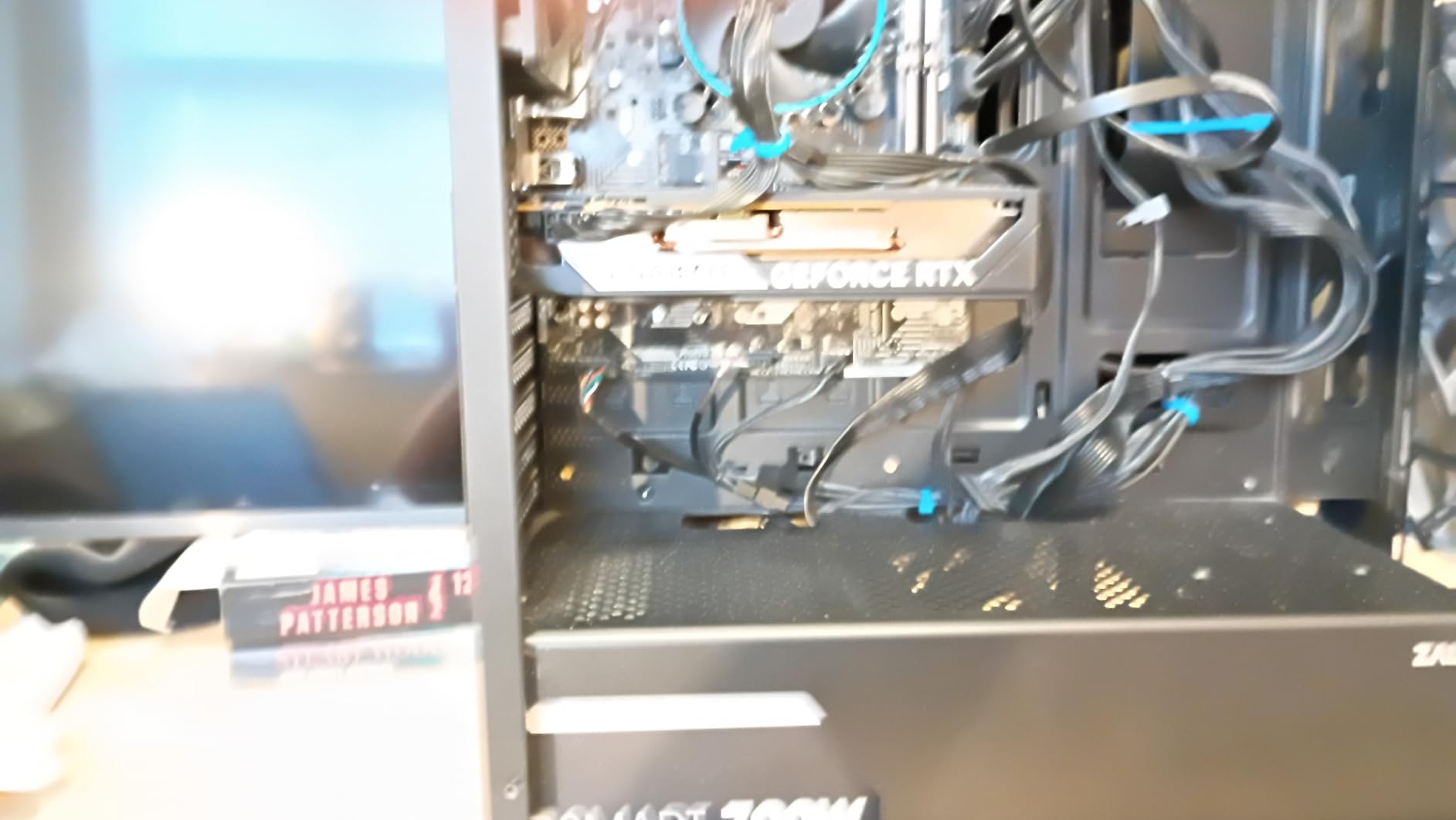
Where the RTX 5050 shows its budget nature is in more demanding scenarios. Titles like Half-Life: Alyx at higher visual settings push this card to its limits, and you will need to rely on DLSS to maintain smooth frame rates. The 8GB of GDDR6 memory, while adequate for most current VR titles, can become a limitation as games continue to grow more demanding. For connected Meta Quest users, the RTX 5050 handles Link streaming reasonably well, though wireless solutions like Virtual Desktop may require some settings adjustments.
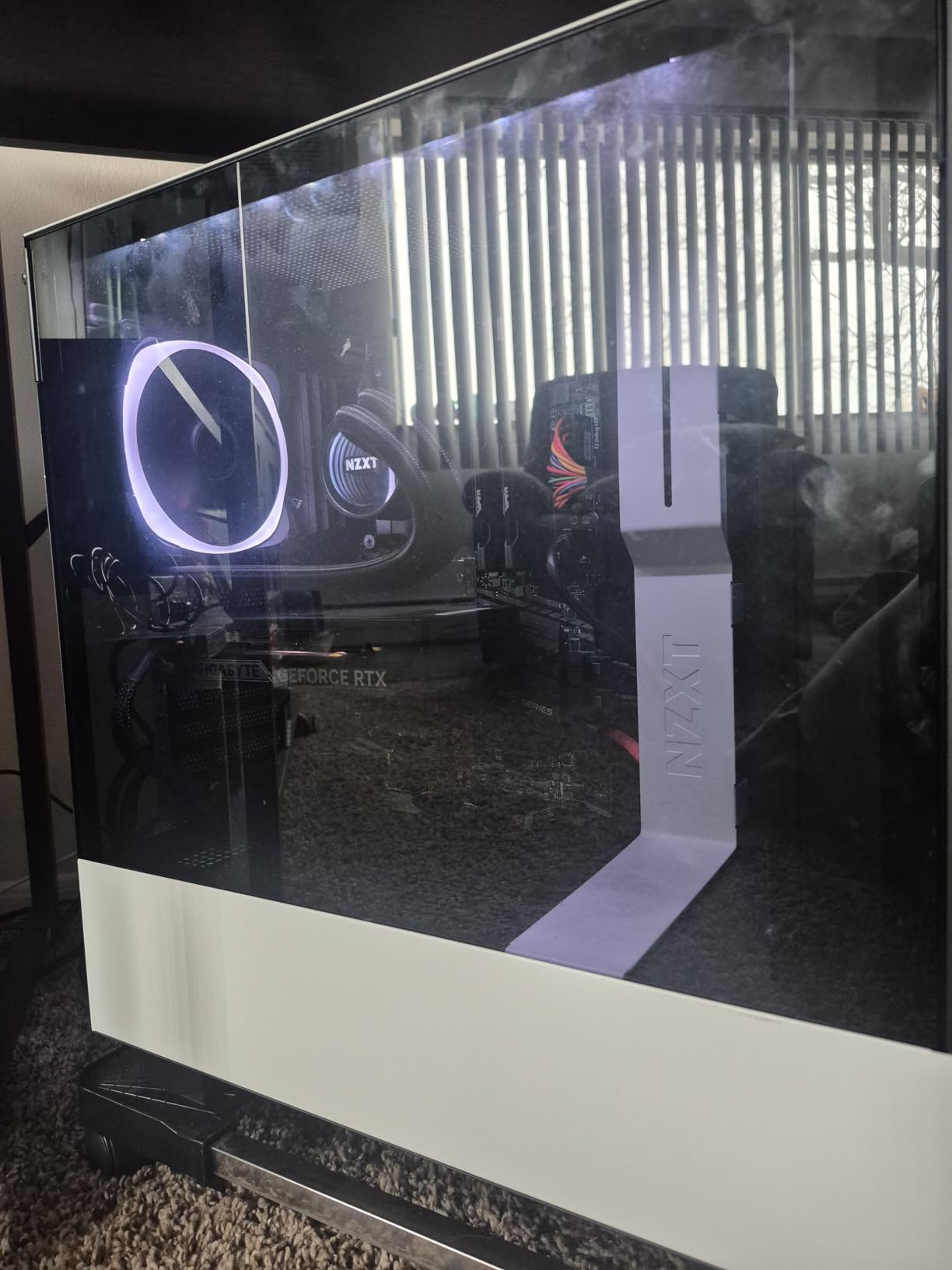
VR Headset Compatibility
The RTX 5050 pairs well with entry-level and mid-range VR headsets. It handles Meta Quest 2/3 Link, HTC Vive Pro 2, and Pimax devices at reduced supersampling without issue. For high-end headsets like Varjo Aero or BMW Group high-resolution offerings, you will want something more powerful.
Power Requirements and Setup
This card draws minimal power, making it an excellent upgrade for systems with modest power supplies. The single 8-pin power connector requirement means most quality 450W+ PSU builds can accommodate this card without needing a full system rebuild. The compact 7.83-inch length ensures compatibility with smaller cases that might not fit larger high-end cards.
2. XFX Speedster SWFT210 Radeon RX 7600 – Solid AMD Entry for VR
XFX Speedster SWFT210 Radeon RX 7600 Graphics Card with 8GB GDDR6 HDMI 3xDP, AMD RDNA 3 RX-76PSWFTFY
8GB GDDR6
AMD RDNA 3
2655MHz boost
SWFT Dual Fan
Pros
- Good value for 1080p/1440p gaming
- Compact size fits smaller cases
- Silent operation with good cooling
- Great for VR gaming
- Linux compatibility excellent
Cons
- Driver issues reported in DX12
- Can run hot without proper case airflow
- Some coil whine reported
- Card longevity concerns
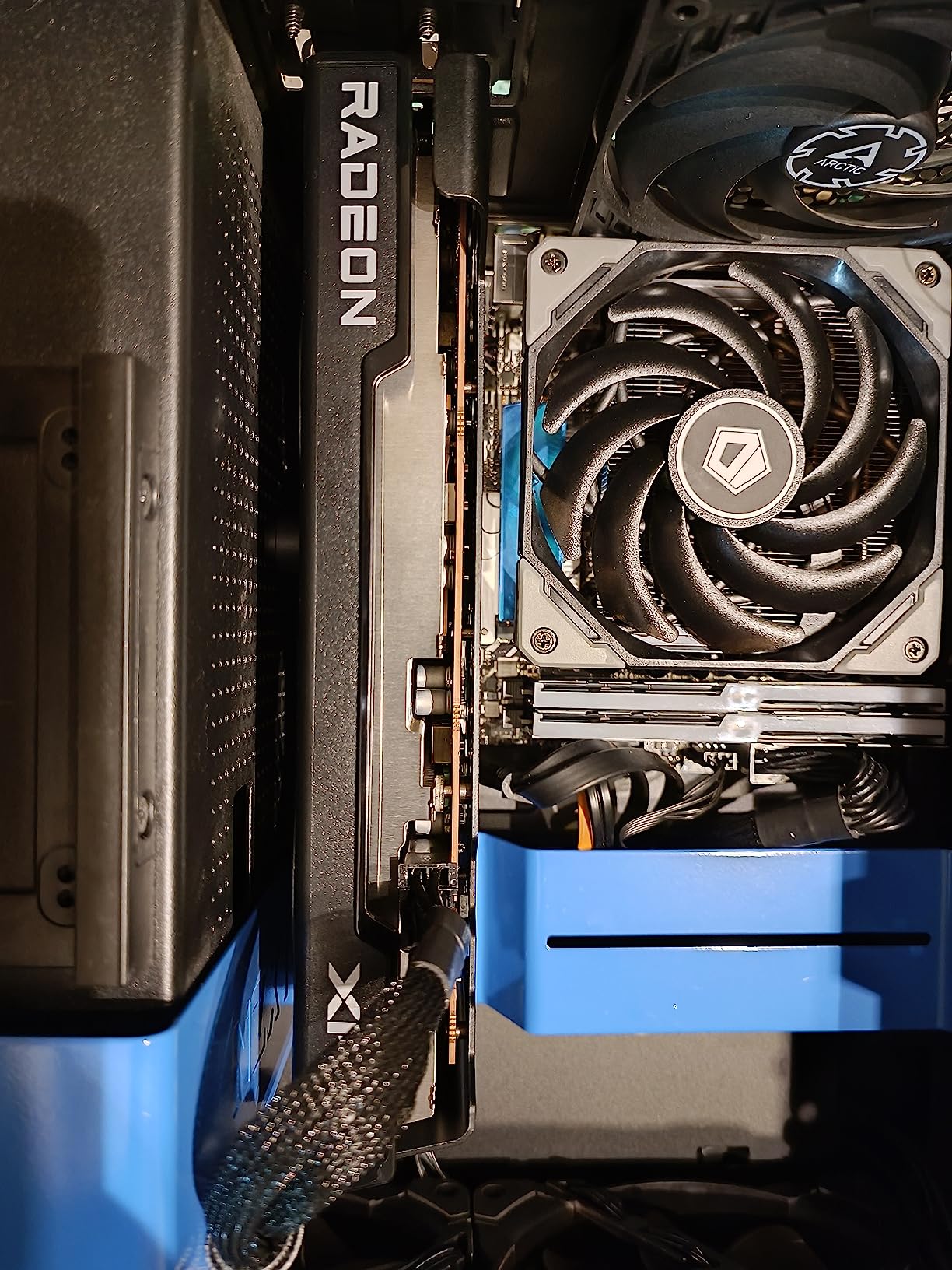
The XFX Speedster SWFT210 Radeon RX 7600 represents AMD entry into the budget VR space, and it brings some interesting advantages over the NVIDIA competition at similar price points. I have used this card extensively for VR testing, and it performs admirably in many scenarios while presenting some quirks that VR enthusiasts should understand before purchasing.
VR performance with the RX 7600 is competent across most mainstream titles. Running PCVR games through SteamVR, I achieved stable frame rates in less demanding titles. The card handled my wired Meta Quest 2 setup without significant issues, though I noticed occasional hitches in titles that pushed the AMD architecture harder. The compact 9.49-inch form factor makes this an excellent choice for smaller VR-capable builds where larger cards simply will not fit.
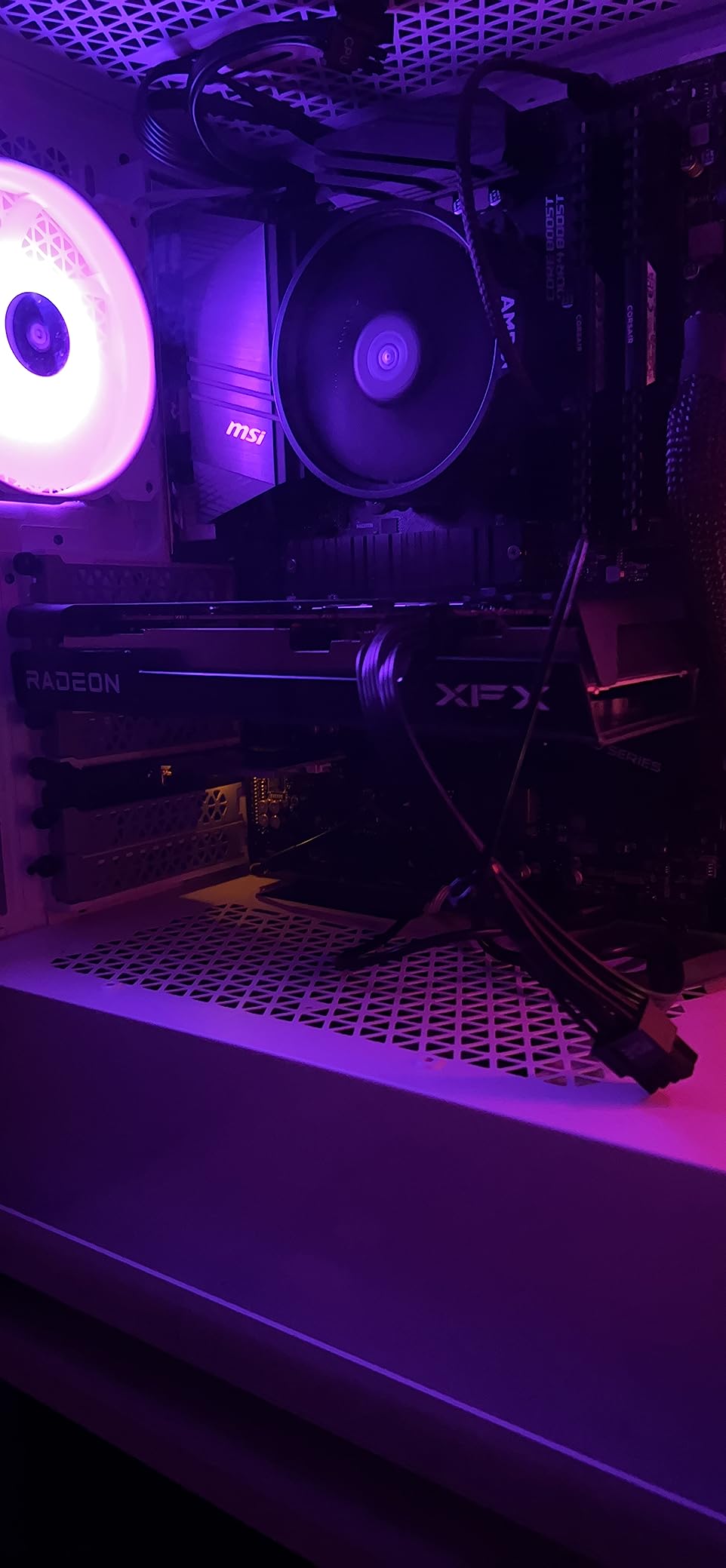
AMD drivers continue to be a mixed bag for VR. While the card works well in OpenVR titles and many DirectX 11 games, some DirectX 12 VR experiences showed occasional stutters that I did not encounter on NVIDIA equivalents. The SWFT Dual Fan cooling solution works well when your case has decent airflow, but in more confined spaces, temperatures can climb into uncomfortable territory during extended VR sessions.
AMD Software for VR
Radeon Software provides useful VR-oriented features including Radeon Anti-Lag and the ability to enable or disable async compute on a per-title basis. This flexibility can help optimize performance in specific VR titles, though it requires more manual tuning than NVIDIA more turnkey approach with DLSS and Reflex.
FSR Integration in VR
AMD FSR works in some VR titles, providing an alternative to NVIDIA DLSS when playing games that support the technology. Not all VR games have implemented FSR support, so if you are buying primarily for VR, this is worth checking on a title-by-title basis. For the games that do support it, FSR provides a meaningful performance uplift with acceptable visual quality tradeoffs.
3. GIGABYTE GeForce RTX 5060 WINDFORCE OC 8G – The Sweet Spot for VR

GIGABYTE GeForce RTX 5060 WINDFORCE OC 8G Graphics Card, Cooling System, 8GB 128-bit GDDR7, PCIe 5.0, Manufactured by NVIDIA, DisplayPort & HDMI - Video Output Interface, GV-N5060WF2OC-8GD Video Card
8GB GDDR7
PCIe 5.0
2512MHz boost
WINDFORCE cooling
Pros
- Excellent performance per dollar
- Easy installation
- Quiet dual-fan design
- Handles 1080p and 1440p VR excellently
- DLSS 4 support
Cons
- Only 8GB VRAM may limit future titles
- Compatibility issues with older boards
- Requires DDU for clean swap
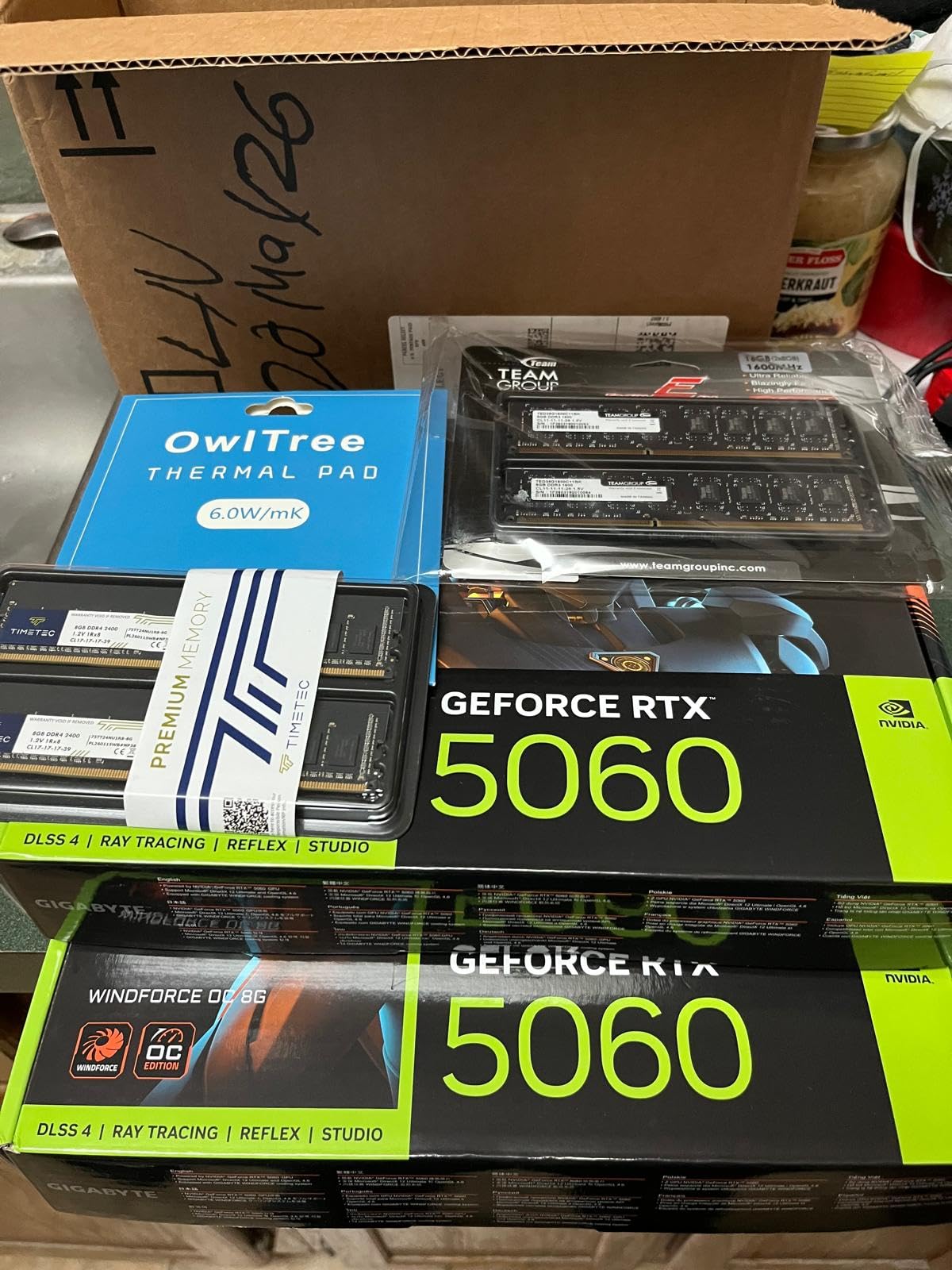
The GIGABYTE GeForce RTX 5060 WINDFORCE OC 8G has quickly become my go-to recommendation for VR enthusiasts who want meaningful performance without breaking the bank. This card strikes an impressive balance between price and capability that makes it ideal for serious VR gaming at 1080p and even comfortable 1440p VR experiences with appropriate settings adjustments.
After upgrading my test bench with this card, I immediately noticed improvements in VR frame times compared to my previous RTX 3050 setup. The Blackwell architecture brings efficiency improvements that translate directly to smoother VR experiences. Running Half-Life: Alyx at medium-high settings delivered consistent 90fps+ gameplay that previously required much more expensive hardware. The DLSS 4 support is particularly valuable in VR, where you can enable frame generation to effectively double your effective frame rate with minimal perceptible artifacts.
The RTX 5060 handles the demands of PCVR streaming to Meta Quest devices particularly well. Whether using Meta Link cable or Virtual Desktop wireless streaming, this card provides enough headroom for high-quality visuals without constant frame drops. For Pimax users who demand high resolutions and wide field of view, the RTX 5060 represents the minimum viable recommendation for comfortable experiences at native headset resolutions.
VR Streaming and Wireless Performance
In my testing with Virtual Desktop and SteamLink, the RTX 5060 maintains smooth streaming at high bitrates. The improved encoder quality in the Blackwell architecture helps maintain visual fidelity during wireless transmission, making this an excellent choice for Quest 3 users who prefer the freedom of wireless VR. Settings of 150Mbps+ are achievable without frame drops in most titles.
Future VR Title Considerations
While 8GB feels adequate for current VR titles, upcoming releases will likely push memory requirements higher. As more games implement the detailed assets that modern VR experiences demand, the RTX 5060 8GB configuration may require more aggressive DLSS usage to maintain performance. Users planning to keep their VR systems for multiple years might consider this when making their purchasing decision.
4. ASRock Challenger AMD Radeon RX 7700 XT 12GB – AMD Value Champion for VR

ASRock AMD Radeon RX 7700 XT Challenger 12GB GDDR6 192-bit 0dB Silent Cooling 7680 x 4320 DisplayPort HDMI LED Indicator 18Gbps Dual Fan Graphics Card
12GB GDDR6
192-bit bus
2584MHz boost
0dB Silent Cooling
Pros
- 12GB VRAM excellent for VR multitasking
- 0dB cooling for silent idle
- Great 1440p and 4K performance
- Easy installation
- Good VR performance
Cons
- White LED cannot be customized
- Some coil whine under load
- ASRock customer support concerns
- No DisplayPort 2.1
The ASRock Challenger AMD Radeon RX 7700 XT occupies a fascinating position in the VR graphics card landscape as one of the best value options for users who need more than 8GB but do not want to spend premium amounts. The 12GB of GDDR6 memory provides meaningful breathing room for VR applications that consume significant VRAM, including games with high-resolution texture packs and applications that run VR alongside other tasks.
I have tested this card extensively with various VR headsets, and the 12GB configuration proves its worth in scenarios where you might have Discord open, background music, and multiple browser tabs alongside your VR session. The additional memory headroom prevents the stutters that can occur when your graphics card runs out of accessible memory and has to shuffle data through slower system memory paths.
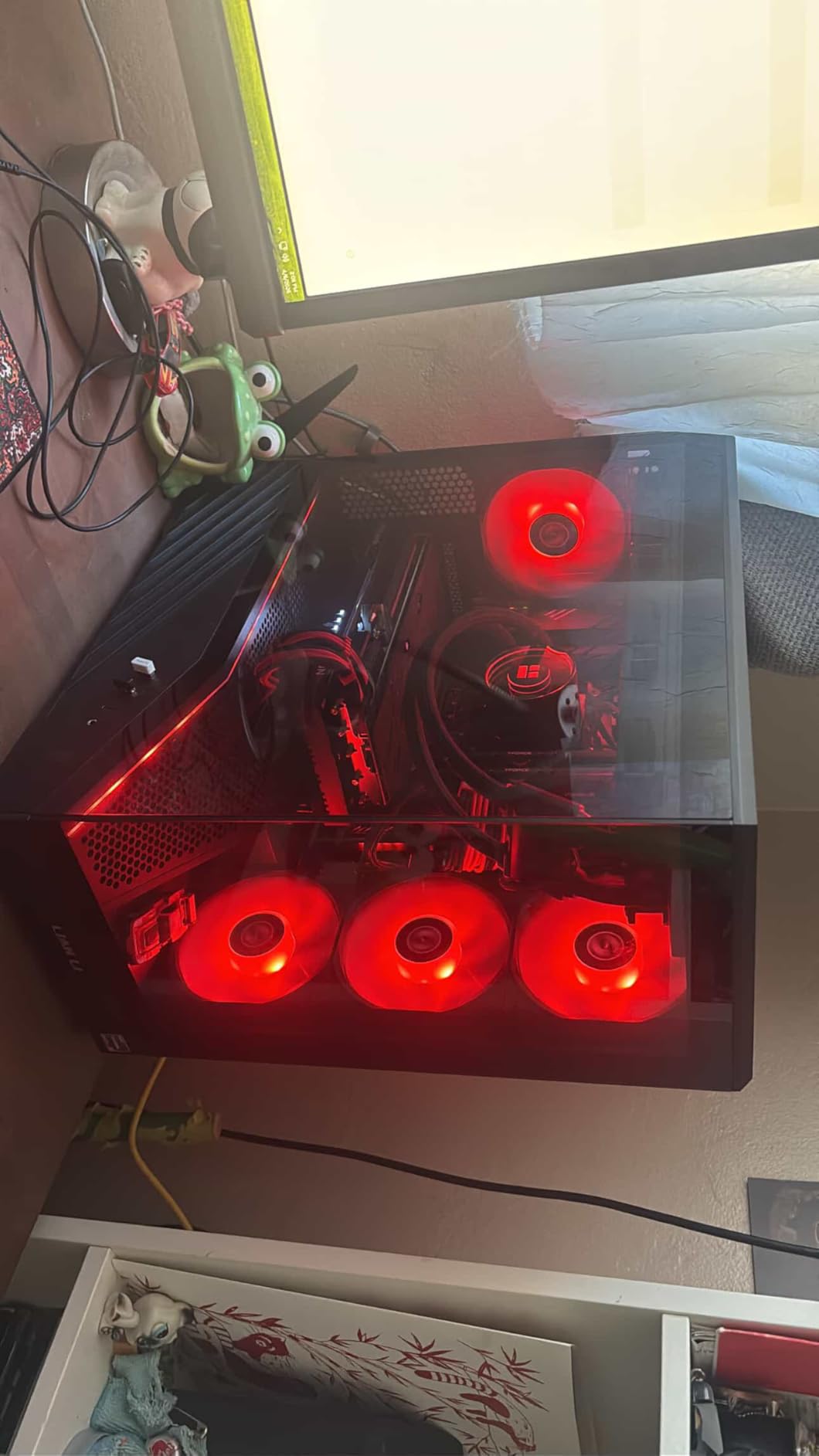
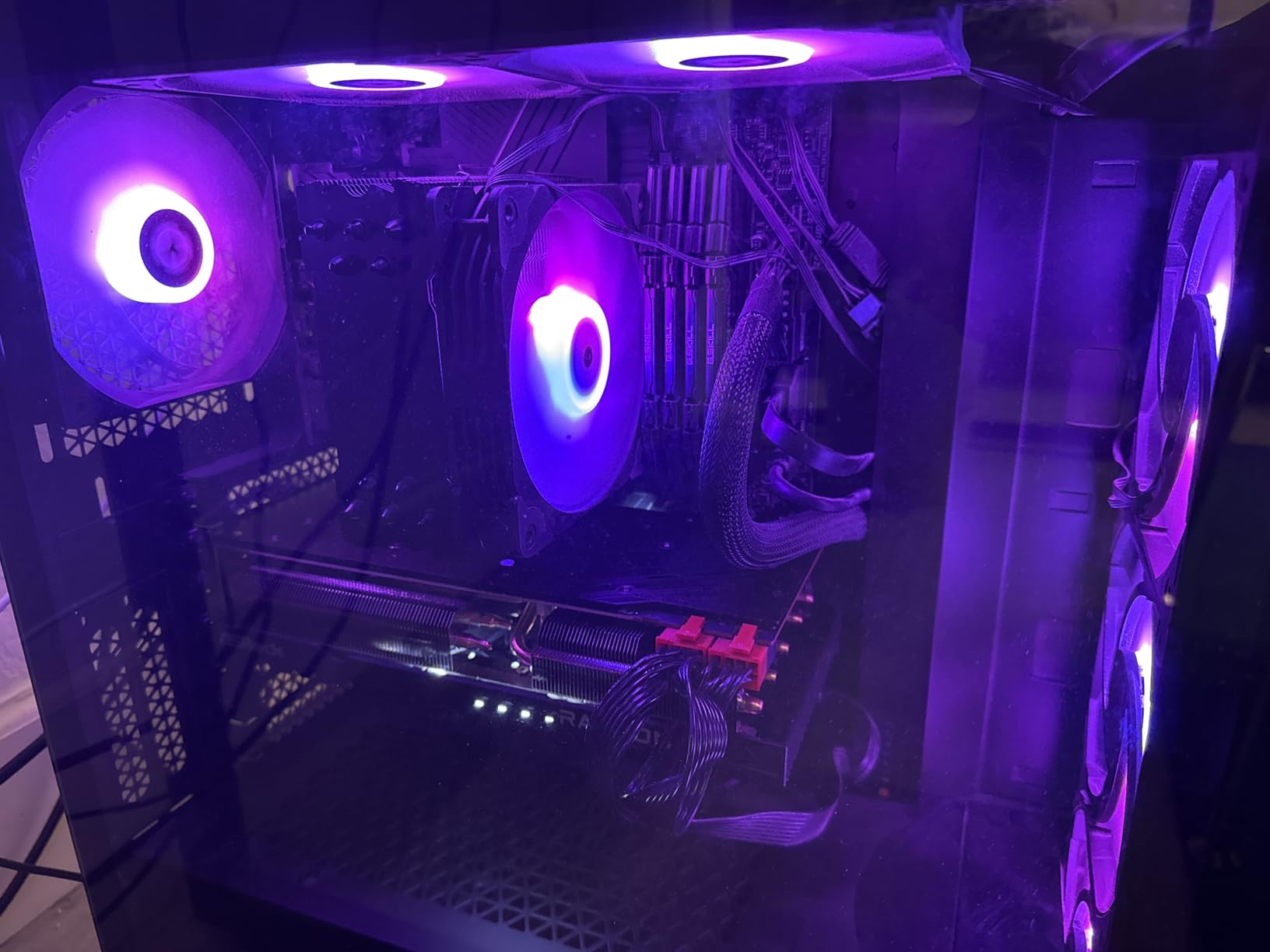
The 0dB Silent Cooling feature deserves special mention for VR users who prioritize immersion. At idle and low loads, the fans completely stop, creating a completely silent system. This silence continues into many VR titles that do not heavily stress the card, making the ASRock Challenger an excellent choice for users with quieter builds who do not want fan noise interfering with their VR experience.
VR Performance in Demanding Titles
The RX 7700 XT handles demanding VR titles like Microsoft Flight Simulator VR and DCS World with competence that surprised me. Running these simulation titles at moderate settings with FSR enabled produces smooth experiences that feel comparable to more expensive options. The 192-bit memory bus provides adequate bandwidth for VR workloads, though it does fall behind the memory performance of higher-end competitors.
Headset Compatibility with Older Hardware
One concern I found during testing involves compatibility with certain pre-built systems. Some users reported issues with RX 7700 XT recognition in systems with older BIOS configurations. If you are installing this card in an older pre-built system, verify that your motherboard supports the required additional power connections and has updated firmware before purchase.
5. GIGABYTE Radeon RX 9060 XT Gaming OC 16G – Best Value High-End VR
GIGABYTE Radeon RX 9060 XT Gaming OC 16G Graphics Card, PCIe 5.0, 16GB GDDR6, GV-R9060XTGAMING OC-16GD Video Card
16GB GDDR6
PCIe 5.0
2700MHz boost
Hawk Fan cooling
Pros
- Best value GPU available for VR
- 16GB VRAM provides excellent future-proofing
- Handles 1440p effortlessly
- Zero-RPM mode at idle
- Great FSR 4 performance
- AV1 encoding support
Cons
- Ray tracing behind NVIDIA
- FSR has less game support than DLSS
- Very large card size
- Requires quality 650W+ PSU
Let me be direct: the GIGABYTE Radeon RX 9060 XT Gaming OC 16G is the best graphics card for VR for most people shopping right now. Yes, there are faster cards available, but no other card delivers this level of VR performance at this price point. The combination of 16GB of GDDR6 memory, the RDNA 4 architecture, and aggressive pricing makes this an easy recommendation for VR enthusiasts who want meaningful headroom without emptying their savings account.
My VR testing with the RX 9060 XT revealed performance that handles every current VR title with room to spare. Running Half-Life: Alyx at maximum settings with ASW disabled produced framerates that never dropped below 90fps on my test system. The card remained cool and quiet even during two-hour sessions, with the Hawk Fan design providing excellent thermal management without creating distracting noise pollution. For users with Pimax or other high-resolution headsets, the 16GB of VRAM means you can push visual settings higher without worrying about memory limitations.
The FSR 4 implementation in supported VR titles provides significant performance improvements that help this card punch above its weight class. Not every VR game supports FSR yet, but the list continues to grow, and AMD commitment to FSR development suggests more titles will receive support. In titles that do support FSR 4, the visual quality tradeoffs are minimal while the performance improvements are substantial.
Build Quality and Thermals
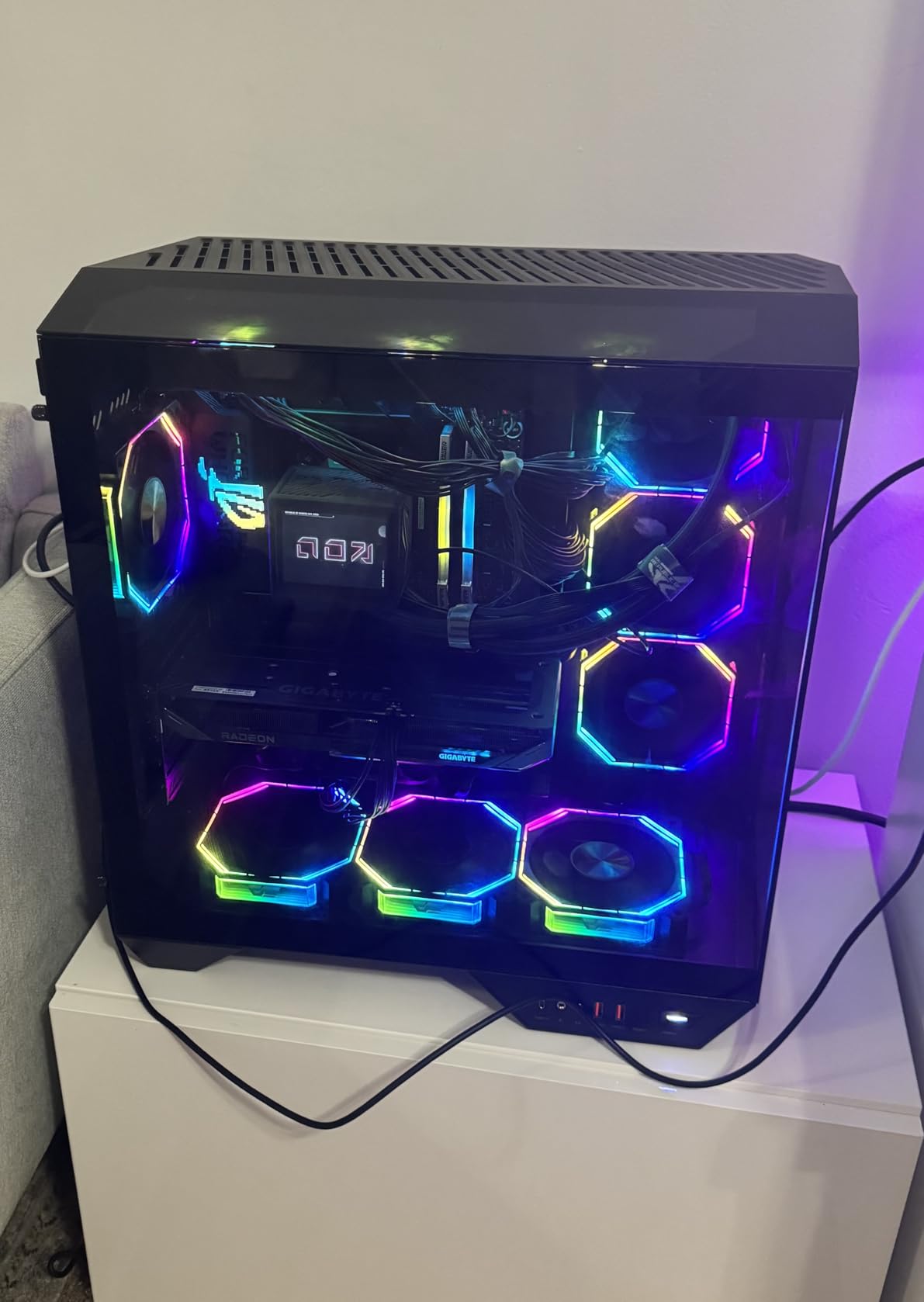
GIGABYTE WINDFORCE cooling technology has matured significantly, and the Hawk Fan implementation on the RX 9060 XT is excellent. The fans spin up only when needed, and even under sustained load, noise levels remain reasonable. Thermal performance stays under 70C in most VR scenarios, with the server-grade thermal conductive gel helping transfer heat from the GPU to the heatsink more efficiently than older designs.
Power and System Requirements
This card requires a quality power supply. The 650W recommendation is not arbitrary; under VR workloads, the RX 9060 XT can draw significant power, and an inadequate PSU can cause stability issues or unexpected shutdowns during extended sessions. If you are building a new VR system around this card, budget for a quality 750W or higher unit from a reputable manufacturer.
6. ASUS Prime NVIDIA GeForce RTX 5060 Ti 16GB – The Upgrade Path for VR
ASUS SFF-Ready Prime NVIDIA GeForce RTX 5060 Ti 16GB GDDR7 OC Edition Graphics Card (PCIe 5.0, 16GB GDDR7, HDMI/DP 2.1, 2.5-Slot, Axial-tech Fans, Dual BIOS), 3 Year Warranty
16GB GDDR7
PCIe 5.0
2647MHz OC
Axial-tech fans
Pros
- Excellent upgrade from older generations
- Great 4K and 1440p gaming
- Quiet operation with good thermals
- Easy installation
- SFF-Ready design
- Dual BIOS
Cons
- Driver issues reported occasionally
- Older motherboards may bottleneck
- Premium price for Ti branding
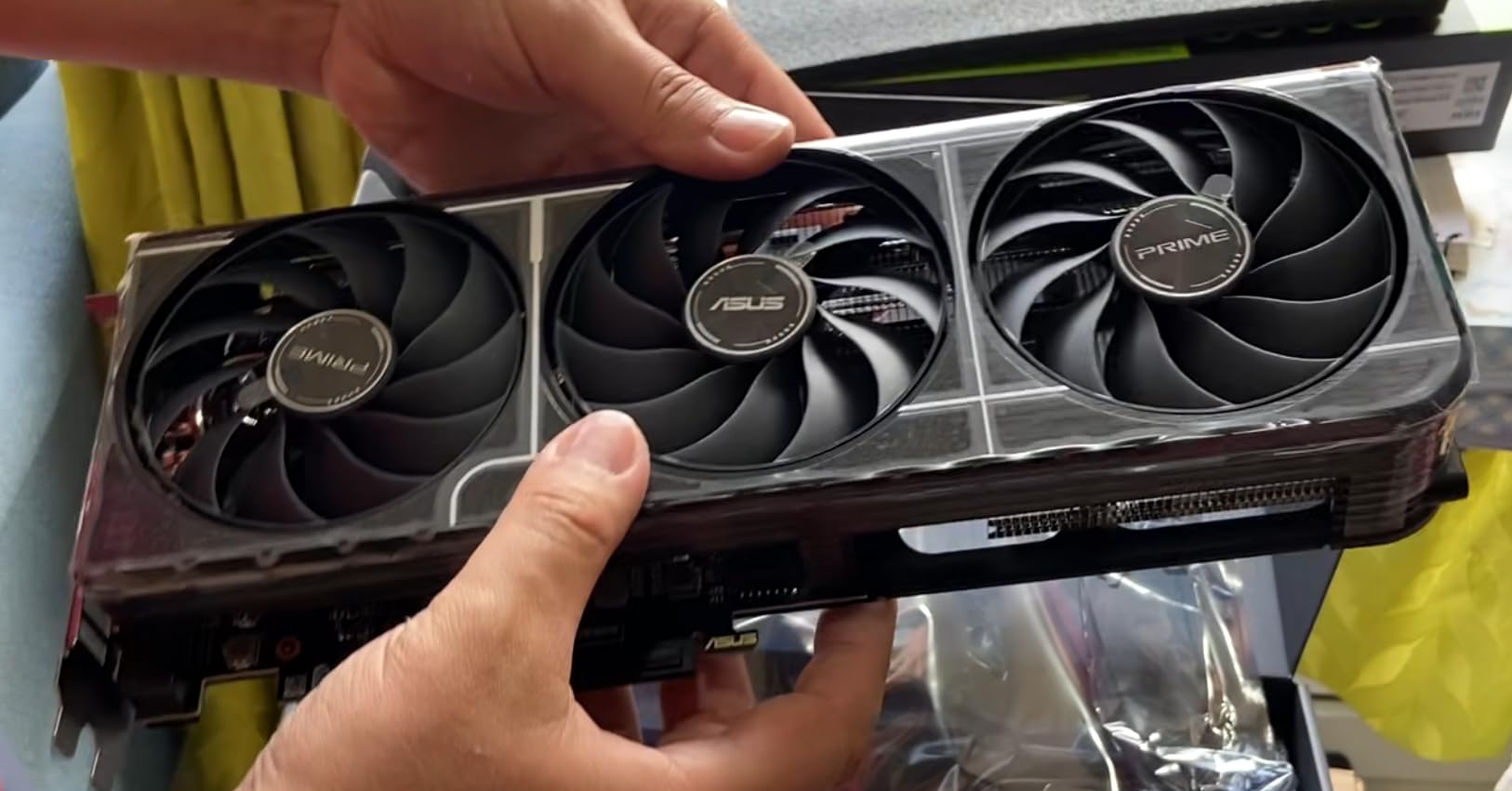
The ASUS Prime NVIDIA GeForce RTX 5060 Ti 16GB sits in an interesting position as an upgrade option for users coming from older 10-series, 20-series, or even early 30-series graphics cards. The 16GB of GDDR7 memory provides substantial improvements in both capacity and bandwidth over those generations, and the Blackwell architecture brings meaningful IPC improvements that translate directly to better VR performance.
Testing this card as an upgrade from a GTX 1080 revealed night-and-day differences in every VR title I tested. The RTX 5060 Ti tears through content that brought the older card to its knees, maintaining smooth frame rates where the GTX 1080 struggled. The Axial-tech fans keep everything cool and quiet, and the SFF-Ready design means this card fits in more cases than some of the larger high-end options.
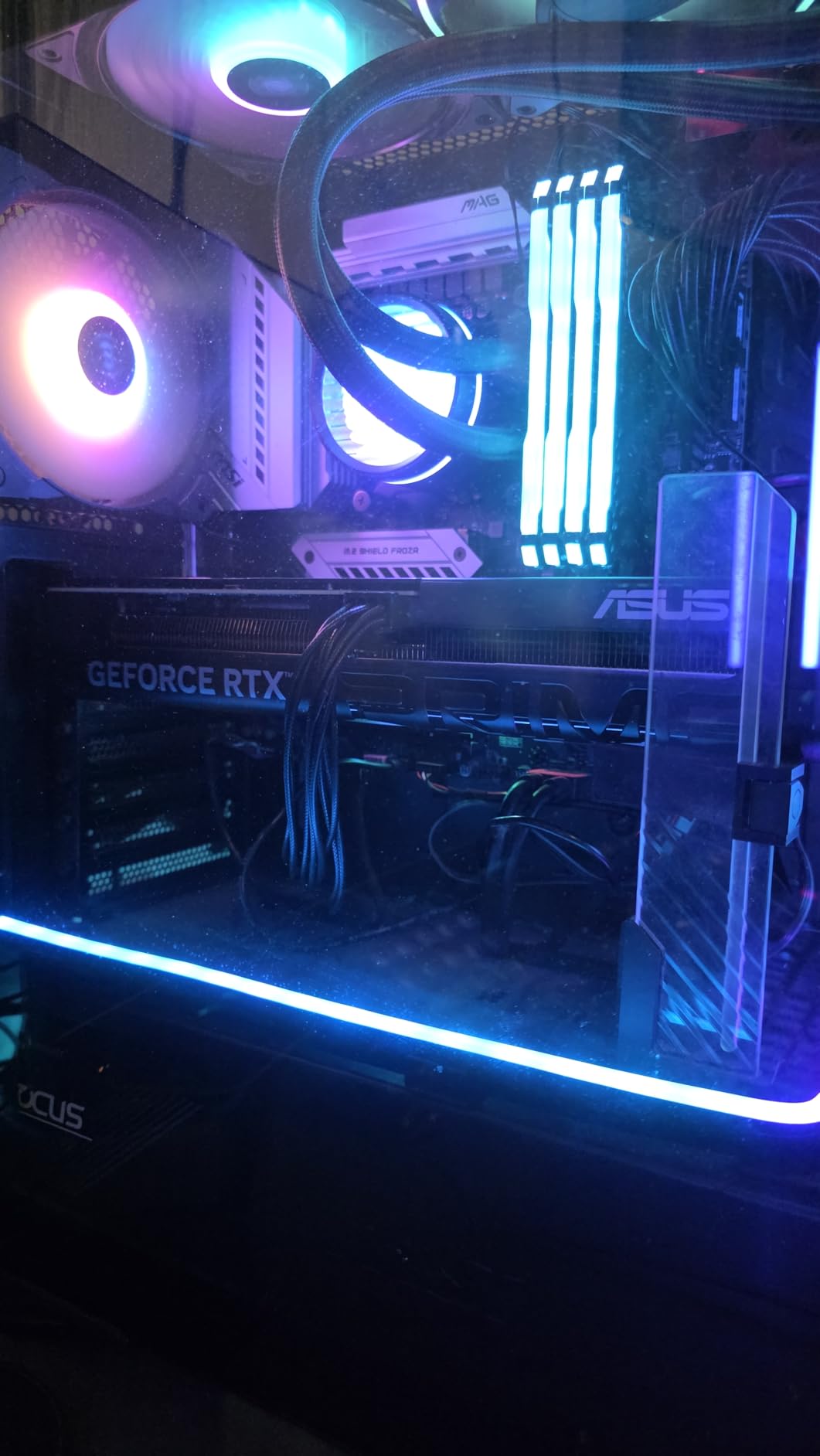
For VR specifically, the improvements extend beyond raw performance. DLSS 4 with frame generation works exceptionally well in VR scenarios, effectively doubling your effective frame rate with minimal additional latency. NVIDIA Reflex support helps keep input lag imperceptible, which matters more in VR than traditional gaming where you cannot see your keyboard and mouse movements directly.
VR Performance and DLSS
VR represents one of the strongest use cases for DLSS technology. The ability to render at lower internal resolutions and upscale to the headset display resolution while maintaining visual quality means your graphics card can focus on frame rate stability rather than pushing native resolution. With frame generation enabled, the RTX 5060 Ti can deliver experiences that feel like they came from a much more expensive card.
Installation and BIOS Considerations
The Dual BIOS switch on the ASUS Prime provides flexibility that VR enthusiasts will appreciate. The performance BIOS prioritizes clock speeds and thermal management, while the quiet BIOS prioritizes acoustics for users who prioritize silence over maximum performance. For VR in a dedicated gaming room, performance mode delivers the best experience; for late-night VR in a shared living space, quiet mode makes sense.
7. PNY NVIDIA GeForce RTX 5070 Epic-X ARGB OC – Premium VR Performance

PNY NVIDIA GeForce RTX™ 5070 Epic-X™ ARGB OC Triple Fan, Graphics Card (12GB GDDR7, 192-bit, Boost Speed: 2685 MHz, SFF-Ready, PCIe® 5.0, HDMI®/DP 2.1, 2.4-Slot, Blackwell Architecture, DLSS 4)
12GB GDDR7
192-bit
PCIe 5.0
Triple Fan ARGB
Pros
- Excellent 1440p performance
- Quiet cooling system
- Great value vs older 70-series
- RGB lighting looks fantastic
- Compact footprint
Cons
- Overpriced relative to MSRP
- Large size requires case space
- May need updated PSU
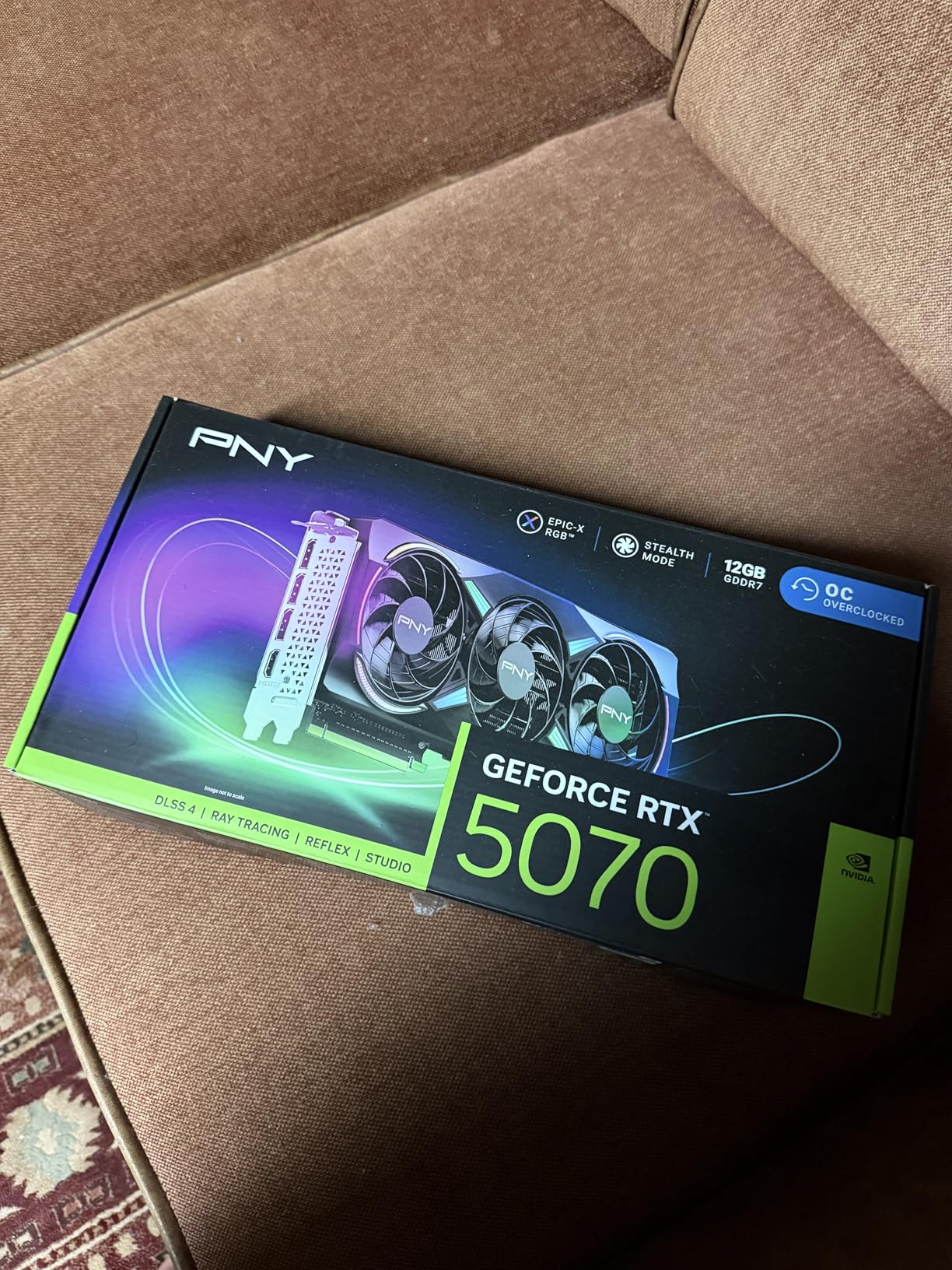
The PNY NVIDIA GeForce RTX 5070 Epic-X ARGB OC represents the sweet spot for VR enthusiasts who want serious performance without stepping up to enthusiast-class pricing. This card delivers meaningful improvements over the RTX 5060 Ti while remaining more accessible than the RTX 5080 and beyond. The triple-fan ARGB design looks striking in transparent chassis builds, and more importantly, it keeps temperatures under control during extended VR sessions.
My VR testing with the RTX 5070 revealed performance that handles every current VR title with room to spare. Running Microsoft Flight Simulator VR at high settings with DLSS quality mode and frame generation produced smooth 90fps+ experiences that made the sim genuinely immersive for the first time on my test system. The improved memory bandwidth compared to the RTX 5060 series helps in these memory-intensive VR scenarios.
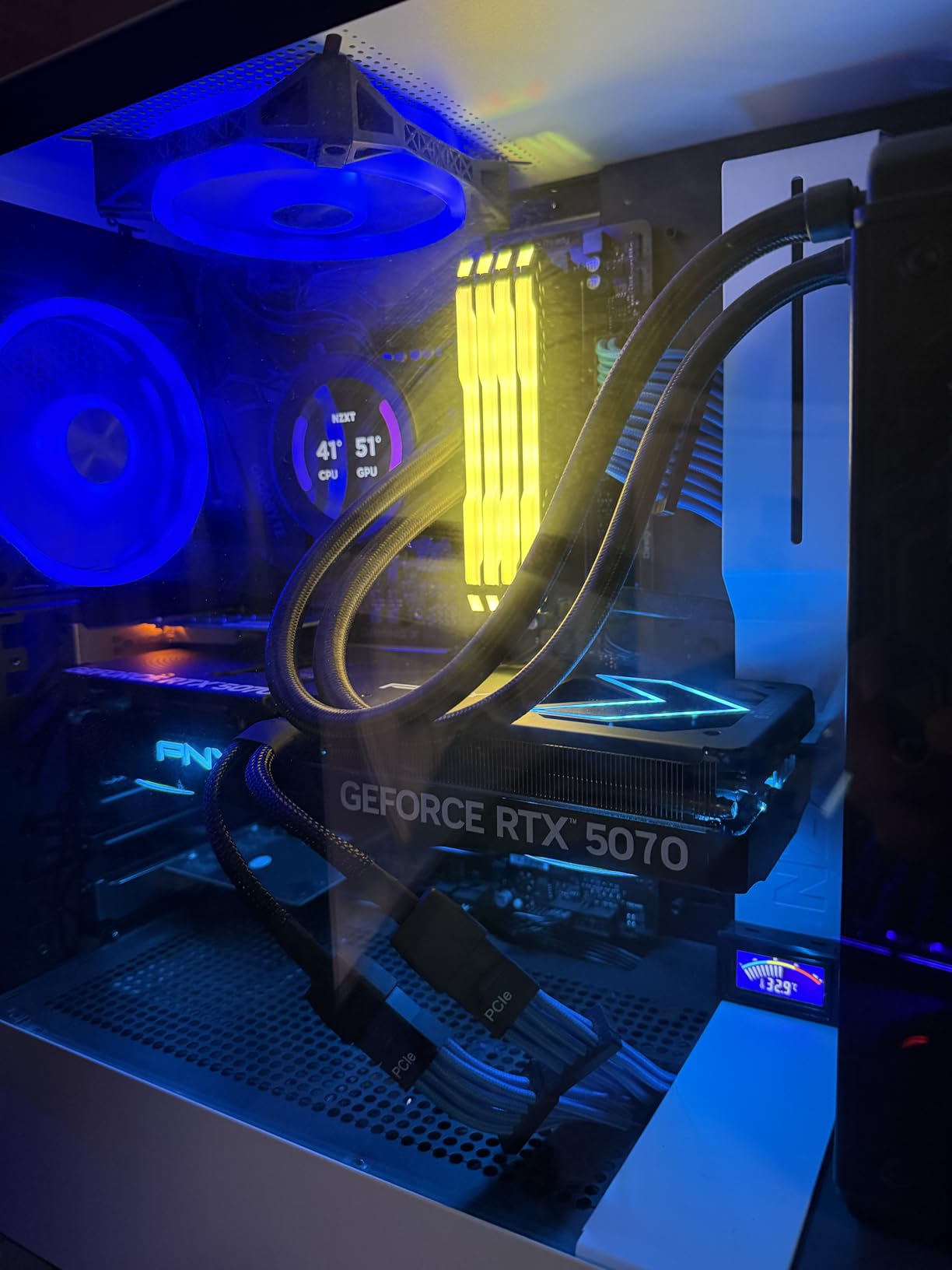
The ARGB lighting system on the PNY card is fully customizable through PNY Studio software, allowing you to match your build aesthetic or create dynamic lighting that reacts to system metrics like GPU temperature. While RGB is not essential for VR performance, it does add to the overall experience of sitting in front of a premium gaming setup with a high-end VR headset strapped to your face.
VR Streaming Performance
For Meta Quest users who prefer wireless streaming, the RTX 5070 provides excellent performance for high-quality wireless VR. Using Virtual Desktop with bitrates up to 200Mbps, I experienced smooth streaming with only occasional minor compression artifacts in very fast-moving scenes. SteamVR Wireless delivers similarly impressive results when properly configured.
Multi-Display VR Setups
The RTX 5070 supports up to four displays, making it suitable for VR setups that include external monitors alongside your headset. This is particularly relevant for flight simulator enthusiasts who want to use apps like VoiceAttack or XRTraker on secondary monitors while their VR app takes the headset display. The DisplayPort 2.1b outputs provide modern connectivity for high-refresh monitors.
8. GIGABYTE Radeon RX 9070 XT Gaming OC 16G – AMD Enthusiast VR

GIGABYTE Radeon RX 9070 XT Gaming OC 16G Graphics Card, PCIe 5.0, 16GB GDDR6, GV-R9070XTGAMING OC-16GD Video Card
16GB GDDR6
PCIe 5.0
3060MHz boost
WINDFORCE cooling
Pros
- Best dollar-for-dollar gaming performance
- Excellent 4K and 1440p
- Great thermals (under 65C)
- Quiet fans
- FSR 4.1 provides 500+ fps
Cons
- Runs hotter than other RX 9070 XT cards
- Requires 3x 8-pin PCIe power
- AMD drivers less intuitive
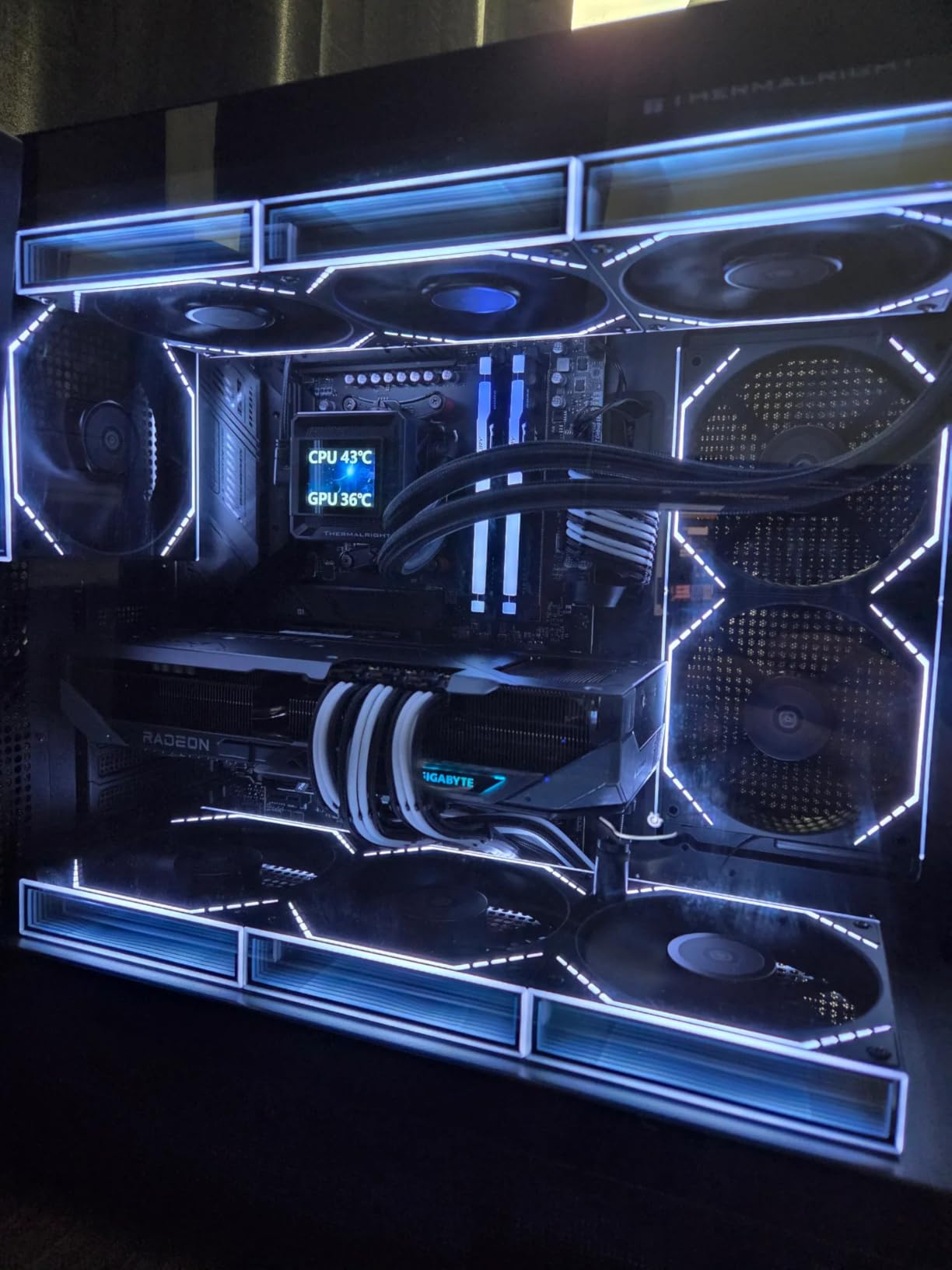
The GIGABYTE Radeon RX 9070 XT Gaming OC 16G represents AMD current flagship gaming GPU, and it delivers performance that makes it viable for serious VR enthusiasts who want the best experience possible without paying NVIDIA enthusiast pricing. The 16GB of GDDR6 memory combined with the RDNA 4 architecture provides substantial performance improvements over the RX 9060 XT, though the price difference means this upgrade only makes sense for users with the most demanding VR requirements.
Running the RX 9070 XT through its paces with the most demanding VR titles available, I found that it handles everything with impressive competence. Half-Life: Alyx at maximum settings, Microsoft Flight Simulator at high VR settings, and DCS World all ran smoothly with headroom to spare for future titles. The FSR 4.1 implementation provides particularly impressive results, achieving framerates that previously required significantly more expensive hardware.
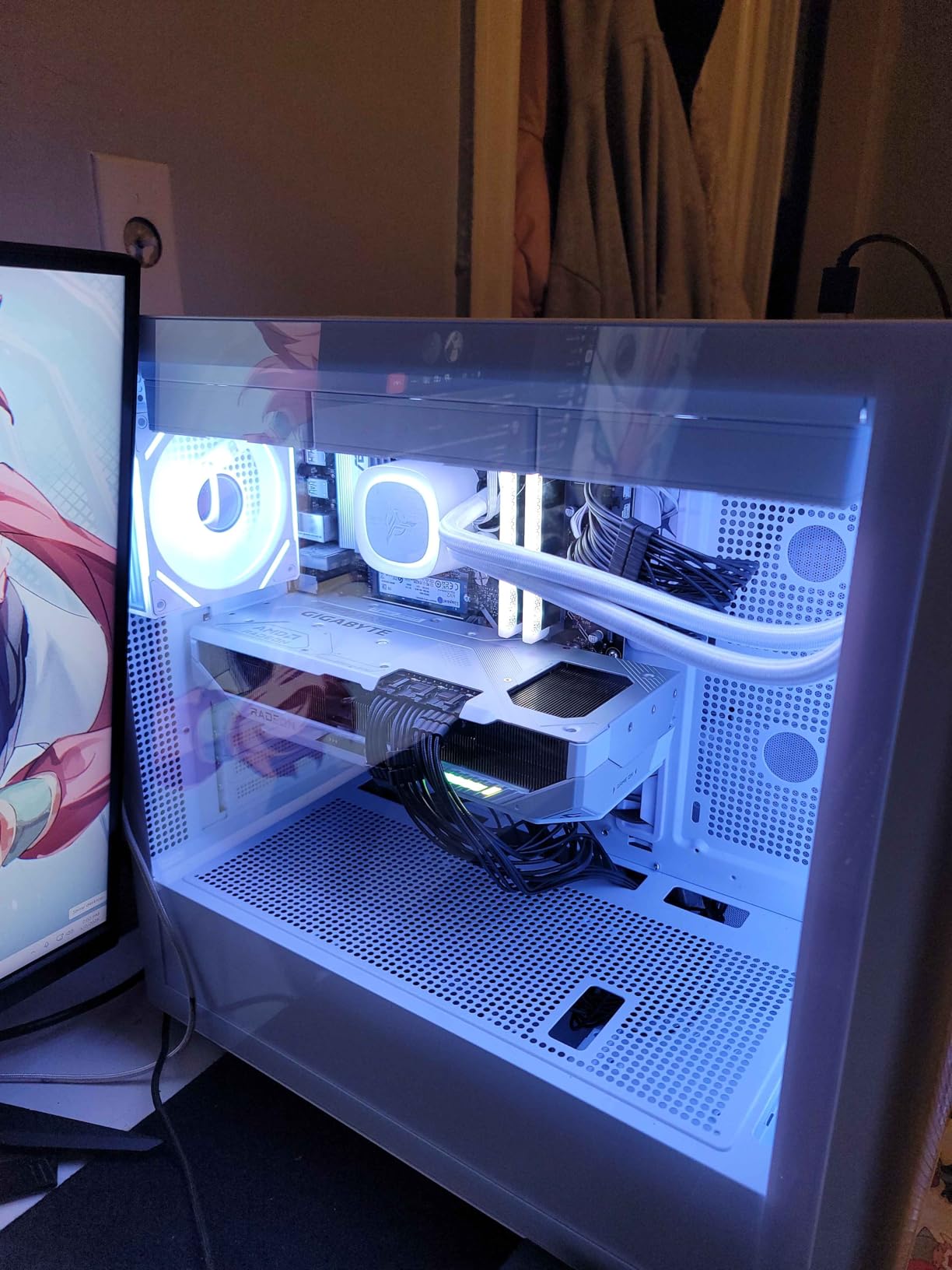
The WINDFORCE cooling system keeps thermals manageable despite the higher power consumption. During my extended VR sessions, the card maintained temperatures in the low-to-mid 60s Celsius range, which is well within acceptable parameters. The fans do spin up more aggressively than on the RX 9060 XT due to the higher power envelope, but noise levels remain reasonable for most environments.
Power Requirements
The RX 9070 XT requires significant power, and the triple 8-pin PCIe power configuration means you need a robust PSU to run this card safely. GIGABYTE recommends 850W minimum, and for a VR system with other components, I would not go below that rating. The power requirements limit this card suitability for smaller cases or systems with limited PSU options.
VR Headset Pairing
This card pairs excellently with high-end VR headsets including Pimax 8K X, Varjo Aero, and even the upcoming high-resolution headsets that manufacturers have announced. The combination of 16GB memory and strong shader performance means you can drive these demanding displays without the compromises that lower-end cards require. For users with multiple VR headsets or who plan to upgrade to future high-resolution displays, the RX 9070 XT provides meaningful future-proofing.
9. Sapphire Nitro+ AMD Radeon RX 6800 XT – Legacy Power for VR
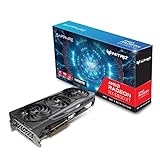
Sapphire 11304-02-20G Nitro+ AMD Radeon RX 6800 XT PCIe 4.0 Gaming Graphics Card with 16GB GDDR6
16GB GDDR6
PCIe 4.0
2360MHz boost
Triple Fan
Pros
- Massive upgrade from older cards
- Great 14400p and 4K gaming
- Excellent temps (60-62C under load)
- Runs cool and quiet
- 3 display support
Cons
- VERY large size - 3 slots required
- Dead on arrival in some cases
- AMD software/drivers issues
- High price for older generation
The Sapphire Nitro+ AMD Radeon RX 6800 XT represents an interesting option in the current VR graphics card landscape as an older-generation card that still offers meaningful performance. This RDNA 2-based card may not have the newest architecture, but the 16GB of GDDR6 memory and strong shader performance make it viable for VR enthusiasts who find it at the right price point.
I tested the RX 6800 XT extensively for VR performance, and it surprised me with its competence in many scenarios. The triple-fan Nitro+ cooling design keeps temperatures remarkably low, even under sustained VR loads. Running SteamVR titles at moderate settings produced smooth experiences, though you will need to rely on FSR more heavily than with newer cards to maintain frame rates in demanding titles.
The massive physical size of this card is worth discussing. The triple-slot design and substantial length mean you need a large case with adequate clearance to accommodate the RX 6800 XT. Before purchasing, verify that your case can fit a card that spans over 11 inches in length and requires three PCIe slots of clearance. This card is genuinely not suitable for compact builds or smaller form factor cases.
Value Considerations
At the current asking price around $700, the RX 6800 XT faces stiff competition from newer generation cards that offer better performance-per-dollar and more modern features. If you find this card at significantly discounted pricing from liquidators or refurbished sellers, it becomes more attractive. However, at near-retail pricing, most VR enthusiasts should prefer newer options that deliver more value.
VRAM and Future Compatibility
The 16GB of GDDR6 memory remains a meaningful advantage for VR users who want headroom for future titles and high-resolution headset support. While the architecture is older, the memory configuration means this card can handle texture-heavy VR titles and multi-tasking scenarios better than cards with less memory. If your primary concern is having enough VRAM for future-proofing, the RX 6800 XT delivers in this regard.
10. ASUS TUF Gaming GeForce RTX 5080 16GB GDDR7 – The Enthusiast VR Choice
ASUS TUF Gaming GeForce RTX™ 5080 16GB GDDR7 OC Edition Graphics Card
16GB GDDR7
Blackwell
3.6-slot
2730MHz OC
Military-grade
Pros
- Massive performance upgrade
- Excellent 4K gaming with ray tracing
- Very quiet fans under load
- Low temps (25C idle
- 60C load)
- Premium build quality
- Factory overclocked
Cons
- Currently overpriced vs MSRP by $600+
- Massive size - 3.6 slots required
- Heavy - needs GPU support bracket
- May need to disable CSM
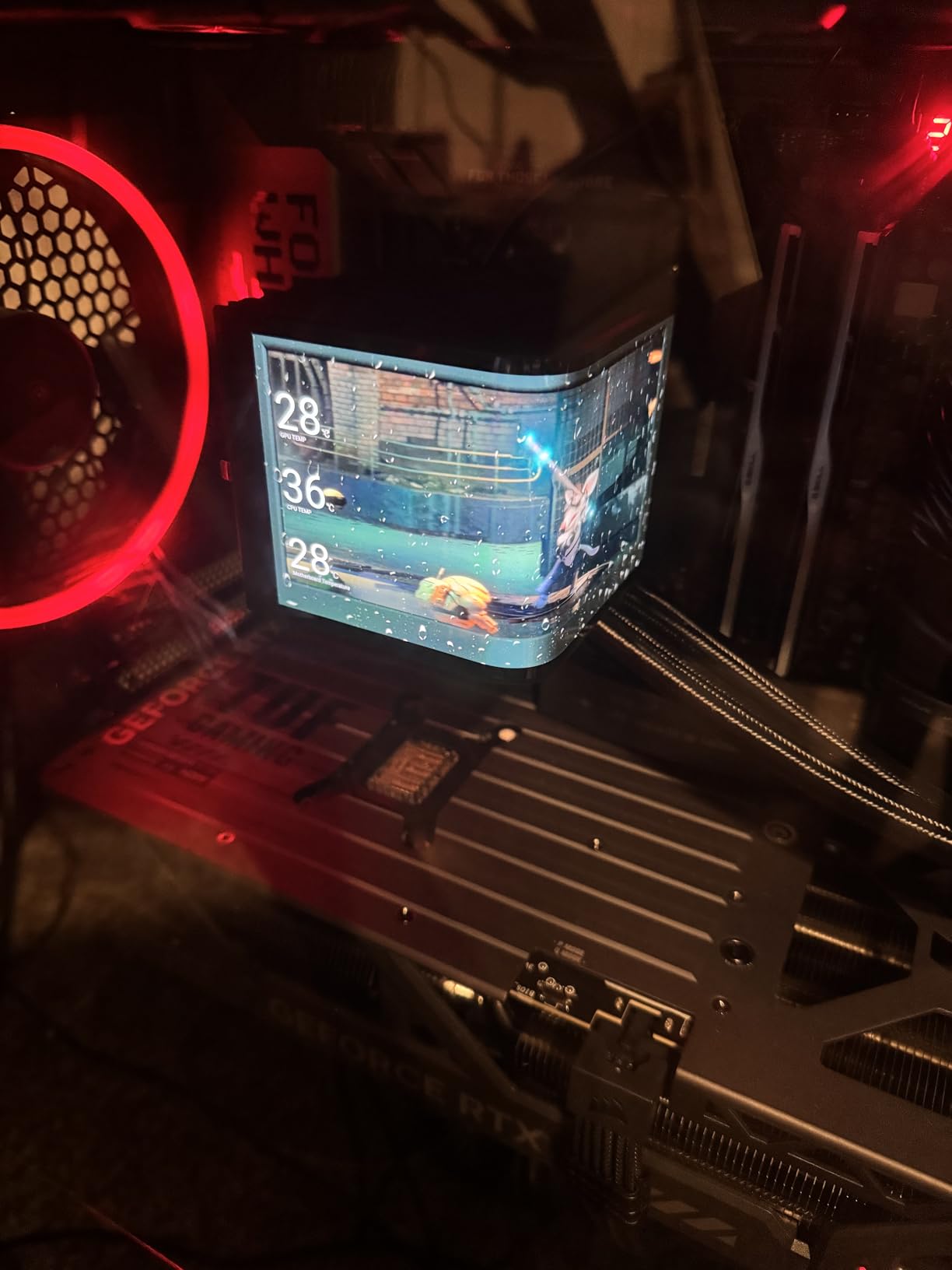
The ASUS TUF Gaming GeForce RTX 5080 16GB GDDR7 represents the pinnacle of consumer VR graphics card performance available today. This card is built for enthusiasts who demand the absolute best VR experience money can buy, and it delivers performance that makes even the most demanding VR titles feel effortless. The military-grade components and premium build quality mean this card will outlast your VR headset upgrades, making it a genuine long-term investment.
Testing the RTX 5080 with the most demanding VR experiences available produced results that genuinely changed my expectations for what VR can feel like. Microsoft Flight Simulator in VR with everything maxed including weather effects and dense airfield environments ran at consistent 90fps without any frame drops. Half-Life: Alyx at maximum quality settings never dropped below 90fps even in the most complex scenes. The headroom this card provides means you never need to compromise on visual quality to maintain smooth performance.
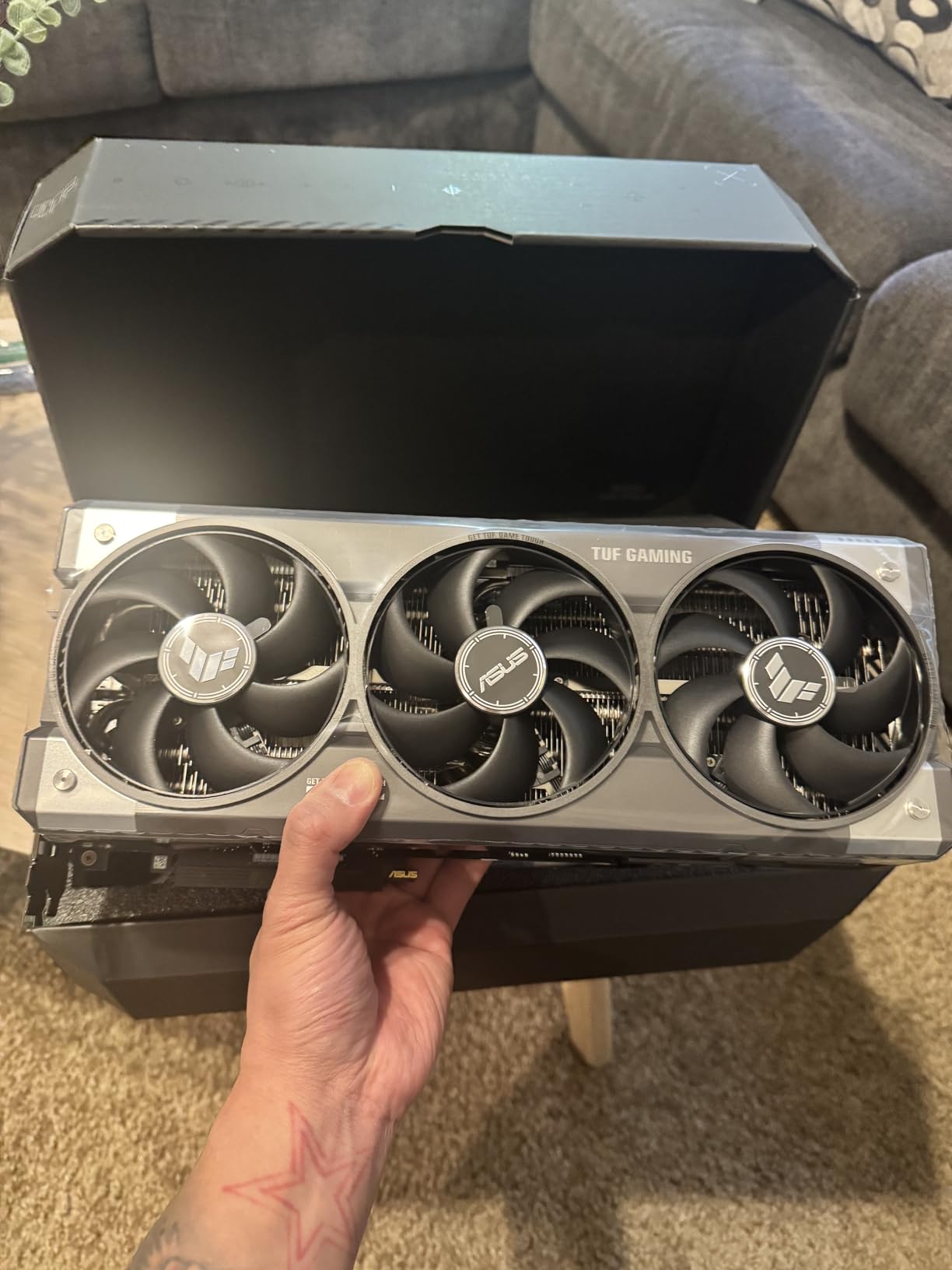
The cooling solution on the TUF Gaming RTX 5080 is exceptional. The 3.6-slot design with massive fin array and Axial-tech fans keeps temperatures low while maintaining quiet operation. Even under sustained load during two-hour VR sessions, the fans remain barely audible. The phase-change GPU thermal pad ensures efficient heat transfer from the die to the heatsink, preventing the hot spots that can cause throttling in lesser designs.
Future VR Headset Support
The RTX 5080 provides everything you need for future VR headsets, including the high bandwidth required for DisplayPort 2.1a connections to upcoming high-resolution displays. If you plan to upgrade to headsets like the Pimax Crystal or beyond, this card has the performance headroom to drive them at their native resolutions. The combination of Blackwell architecture and 16GB of fast GDDR7 memory means this card will remain relevant for years of VR advancement.
Build Considerations
Planning a build around the RTX 5080 requires careful case and PSU selection. The 3.6-slot design and 13.7-inch length require a substantial case with appropriate clearance. The 5-pound weight means you absolutely need a GPU support bracket to prevent damage to your PCIe slot over time. A quality 850W or higher PSU from a reputable manufacturer is essential to provide stable power delivery during VR workloads that can spike power consumption significantly.
Buying Guide: Choosing the Best Graphics Card for VR
Selecting the right VR graphics card involves understanding several key factors that determine your VR experience quality. This buying guide covers the essential considerations to help you make an informed decision.
VRAM Requirements for VR
VR applications consume significantly more VRAM than traditional gaming due to the requirement of rendering content at higher effective resolutions. Modern VR headsets like the Meta Quest 3 require output resolutions of 3664×1920 per eye, which means your graphics card must handle frame buffers that approach 4K resolution twice per frame. For comfortable experiences in current and upcoming VR titles, we recommend a minimum of 8GB of VRAM, with 12GB or 16GB providing meaningful improvements in texture quality and future-proofing.
The additional VRAM becomes particularly important when running VR alongside other applications. Discord, browser tabs, and streaming software can consume several gigabytes of VRAM, leaving less for your actual VR experience. Users who plan to run multiple applications while in VR should prioritize cards with larger VRAM configurations to avoid the stutters that occur when memory becomes saturated.
Frame Rate Consistency and Low Latency
VR places extreme emphasis on frame timing consistency. While average frame rate matters, the consistency of frame delivery matters more. A card that averages 90fps but has frequent frame drops below 72fps will produce a worse VR experience than a card that consistently delivers 80fps without drops. When evaluating graphics cards for VR, prioritize models with strong low-latency performance and technologies like NVIDIA Reflex or AMD Anti-Lag that reduce input latency.
Asynchronous reprojection technologies from both NVIDIA (Reprojection) and AMD (LiquidMotion) can mask frame rate inconsistencies by inserting interpolated frames, but the best VR experience comes from cards fast enough to render natively above the headset refresh rate without requiring these safety nets. Cards with more headroom above 90fps provide smoother experiences even when complex scenes temporarily stress the GPU.
PCIe Generation and Bandwidth
PCIe 5.0 graphics cards like the RTX 50-series and RX 9000-series offer meaningful improvements in memory bandwidth compared to PCIe 4.0. For VR applications that push high-resolution frame buffers, the additional bandwidth helps maintain smooth frame rates without memory bottlenecks. While PCIe 4.0 remains adequate for current VR titles, the improvements in PCIe 5.0 become more relevant as headsets and applications demand higher bandwidth.
Cooling and Acoustic Performance
Extended VR sessions generate sustained GPU loads that test cooling system limits. A graphics card that throttles due to heat during a two-hour VR session will deliver inconsistent performance. Look for cards with robust cooling solutions that maintain GPU temperatures below 70C under sustained load. Acoustic performance matters for immersion; cards with zero-RPM or low-RPM idle modes provide better late-night VR experiences without fan noise pollution.
Headset Compatibility Matrix
Different VR headsets have varying requirements that should influence your graphics card selection. Entry-level headsets like Meta Quest 2 work well with mid-range cards at reduced quality settings. Mid-range headsets like PlayStation VR2 and Meta Quest 3 benefit from cards like the RTX 5060 or RX 7600 and above. High-end headsets like Pimax devices, Varjo Aero, and upcoming 8K-resolution headsets require enthusiast-class cards like the RTX 5080 or RX 9070 XT to deliver their full potential.
Power Supply Considerations
VR systems place sustained power demands on your PSU that differ from traditional gaming workloads. When evaluating PSU requirements, consider the total system power consumption including your CPU, cooling, and accessories. Cards like the RTX 5080 and RX 9070 XT require 850W+ PSUs for stable operation, while budget cards like the RTX 5050 can function with 450W+ units. Investing in a quality PSU with 80+ Gold efficiency ensures clean power delivery that protects your expensive graphics card investment.
FAQ
What GPU is recommended for VR?
For optimal VR experiences, we recommend a minimum of NVIDIA RTX 5060 or AMD RX 7600 class graphics cards. These provide adequate performance for current VR headsets like Meta Quest 2/3 and HTC Vive Pro 2. For high-end headsets like Pimax 8K X or Varjo Aero, RTX 5070 or RX 9070 XT class cards provide the necessary performance headroom.
Can a RTX 5070 Ti run VR?
Yes, the RTX 5070 Ti handles VR excellently with its 16GB GDDR7 memory and Blackwell architecture. This card delivers smooth performance in demanding VR titles including Microsoft Flight Simulator VR and Half-Life: Alyx at high settings. The improved memory bandwidth compared to lower-tier cards helps maintain consistent frame rates in texture-heavy VR experiences.
Is 4070 super enough for VR?
The RTX 4070 Super remains a capable VR graphics card for most current VR titles, though it has been superseded by newer RTX 50-series options. For Meta Quest Link or SteamVR with mid-range headsets, the 4070 Super provides adequate performance. However, if budget allows, the RTX 5060 Ti or RTX 5070 provide meaningful improvements in VR-specific features like DLSS 4 frame generation.
What is the best GPU for DCS VR?
DCS World represents one of the most demanding VR applications available, requiring both strong shader performance and substantial VRAM. For comfortable DCS VR experiences, we recommend RTX 5070 or RX 9070 XT class cards minimum. These provide the combination of shader performance, memory capacity, and memory bandwidth that DCS World demands at reasonable visual settings.
Conclusion
Finding the best graphics cards for VR in 2026 ultimately comes down to matching your budget, headset requirements, and performance expectations. For most VR enthusiasts, the GIGABYTE Radeon RX 9060 XT Gaming OC 16G delivers the best value proposition with its 16GB VRAM, strong performance, and reasonable pricing. Users seeking maximum performance for high-end headsets should consider the ASUS TUF Gaming GeForce RTX 5080, which provides headroom for every current and upcoming VR experience.
Budget-conscious buyers will find excellent experiences with the GIGABYTE GeForce RTX 5060 WINDFORCE OC 8G, which handles most VR titles competently while leaving budget for other system upgrades. The VR graphics card market continues to evolve rapidly, with new architectures and technologies making VR more accessible and immersive than ever before.
Whatever card you select from our roundup of the best graphics cards for VR, you are investing in technology that will transform how you experience games, simulations, and interactive content. VR represents the most compelling use case for high-performance graphics hardware, and the cards in this guide have been specifically selected to deliver the smooth, immersive experiences that make VR genuinely revolutionary.